
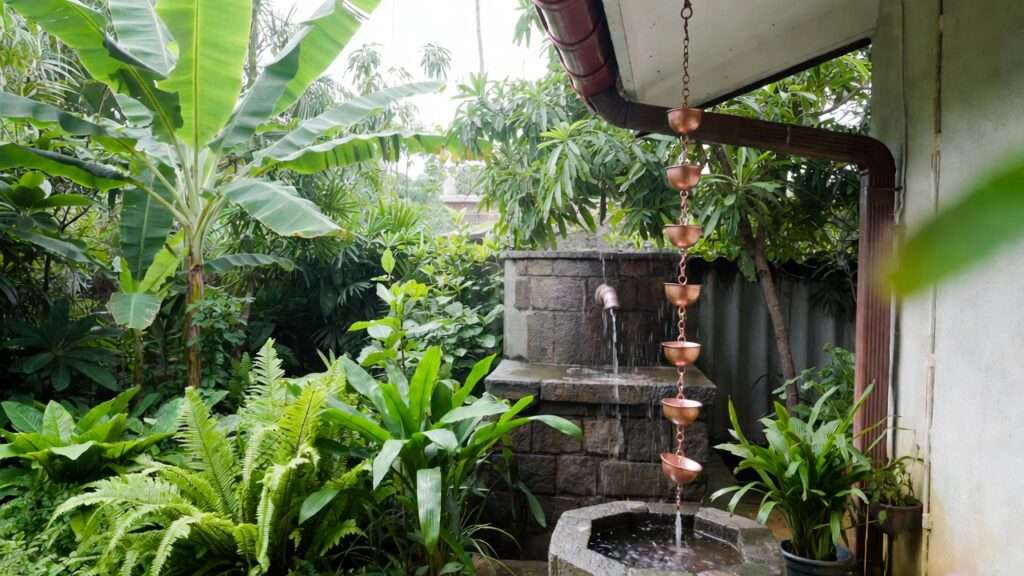
Picture this: It’s the height of the monsoon season in Barisal Division, Bangladesh. Torrential rain pours down for hours, turning your yard into a temporary pond while your precious fruit trees, vegetable beds, and ornamental plants stand thirsty just weeks later during the dry spell. That abundant rainwater rushes off your roof in a chaotic flood — eroding soil, threatening your home’s foundation, and vanishing into the ground unused. What if you could capture that free, soft, chemical-free water to deeply hydrate your garden roots, cut your irrigation bills, and nurture healthier plants year-round? 💧🌿
That’s where the choice between a rain chain vs. downspout for water collection becomes a game-changer for eco-conscious gardeners and homeowners in regions like ours. Traditional downspouts efficiently channel massive volumes away (or to barrels), while elegant rain chains transform drainage into a mesmerizing, gentle cascade that feels like part of your landscape. In this comprehensive guide — drawing from years of hands-on experience in tropical gardening, sustainable water management, and real-world setups across South Asia — we’ll break down every angle to help you decide which system (or clever hybrid) best suits your garden’s needs, rainfall patterns, and aesthetic vision.
Whether you’re protecting mango trees from drought stress, keeping raised beds consistently moist for chilies and brinjal, or simply wanting to harvest more rainwater sustainably, this article goes deeper than typical comparisons. We’ll cover performance in heavy monsoons, gentle delivery for better soil absorption, foundation safety, maintenance in humid climates, and practical tips tailored to Barisal-like conditions (average annual rainfall ~2000–2500 mm, with intense June–October downpours). Let’s dive in and turn your roof runoff into garden gold! 🌳
What Is Rainwater Harvesting and Why It Matters for Plant & Tree Care 🌳💚
Rainwater harvesting means intentionally collecting and storing roof runoff — that pure, slightly acidic rainwater free from chlorine, fluoride, and many urban pollutants found in tap water. In plant care, this “soft” water is a superstar: it promotes better nutrient uptake in acid-loving species (think hibiscus, gardenias, or even young coconut palms), reduces salt buildup in soil over time, and supports healthier root systems without the harsh chemicals of municipal supplies.
For tree and garden enthusiasts in Bangladesh’s southern divisions:
- Consistent moisture during dry months (November–April) prevents leaf drop, fruit cracking, and stunted growth in fruit trees like jackfruit, guava, and papaya.
- Reduced erosion around beds and tree bases preserves topsoil rich in organic matter.
- Eco-benefits include recharging local groundwater, cutting stormwater pollution, and lowering household water use — vital in areas facing salinity intrusion or arsenic issues in groundwater.
- In Barisal Division, where monsoon rains can deliver 1500–2000+ mm in just a few months, even capturing 40–60% of your roof’s runoff can yield hundreds to thousands of liters per storm for drip irrigation or hand-watering.
The key challenge? Directing that water effectively without waste or damage. Enter the rain chain vs. downspout debate — both solve drainage, but in very different ways suited to water collection goals. 🌧️
Understanding Downspouts: The Traditional Workhorse 🏠➡️🚰
How Downspouts Work for Water Collection
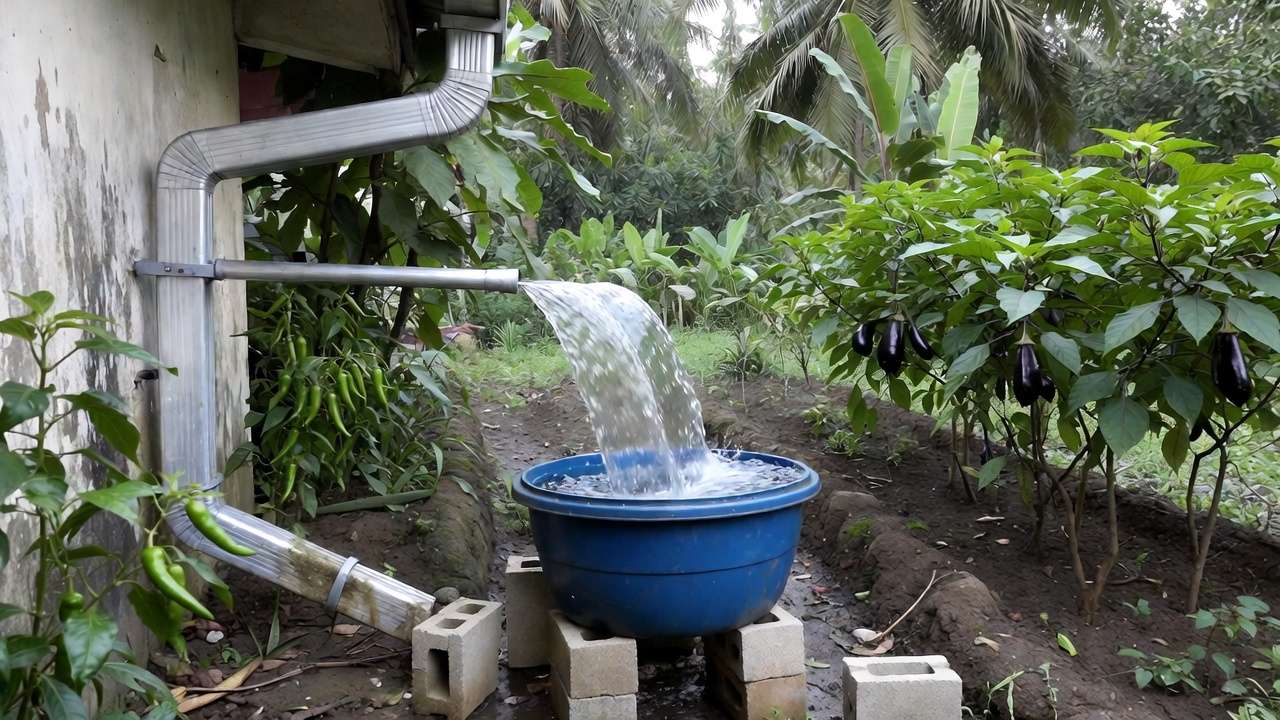
Downspouts are enclosed vertical pipes (usually aluminum, PVC, or galvanized steel) that connect to your gutter system and forcefully channel water downward. For harvesting, you typically add:
- A diverter or leaf guard to send clean water to a rain barrel or cistern.
- Extensions or underground pipes to move water farther to storage or garden zones.
Pros of Downspouts for Garden Rainwater Harvesting
- Superior capacity — They handle heavy tropical downpours (common in Barisal monsoons) without overflow or splashing, ideal for large roofs or high-volume collection. 💪
- Excellent foundation protection — Water is directed quickly and far away (with proper extensions), preventing pooling, basement seepage, or wall damage.
- Reliable year-round — Minimal risk of clogging if fitted with screens; low maintenance in humid, debris-heavy environments.
- Seamless integration with rain barrels, first-flush diverters (to discard initial dirty runoff), or even simple gravity-fed drip systems for trees.
Cons of Downspouts for Garden Use
- Industrial appearance — Plain pipes can detract from natural garden beauty.
- Erosion potential at the discharge point — Fast, concentrated flow can gouge soil unless buffered with splash blocks, rocks, or French drains.
- Less targeted delivery — Harder to aesthetically route to specific beds or tree drip lines without extra piping.
In short, downspouts are the dependable choice when maximum reliable collection volume is your priority. 🌧️
Understanding Rain Chains: The Elegant, Zen Alternative ⛓️✨🌸
How Rain Chains Work (Japanese Kusari-doi Origins)
Rain chains (kusari-doi in Japanese tradition) replace enclosed downspouts with open decorative chains, cups, links, or bells. Water flows along the chain via surface tension, creating a soothing, visible cascade that slows descent and adds auditory and visual charm.
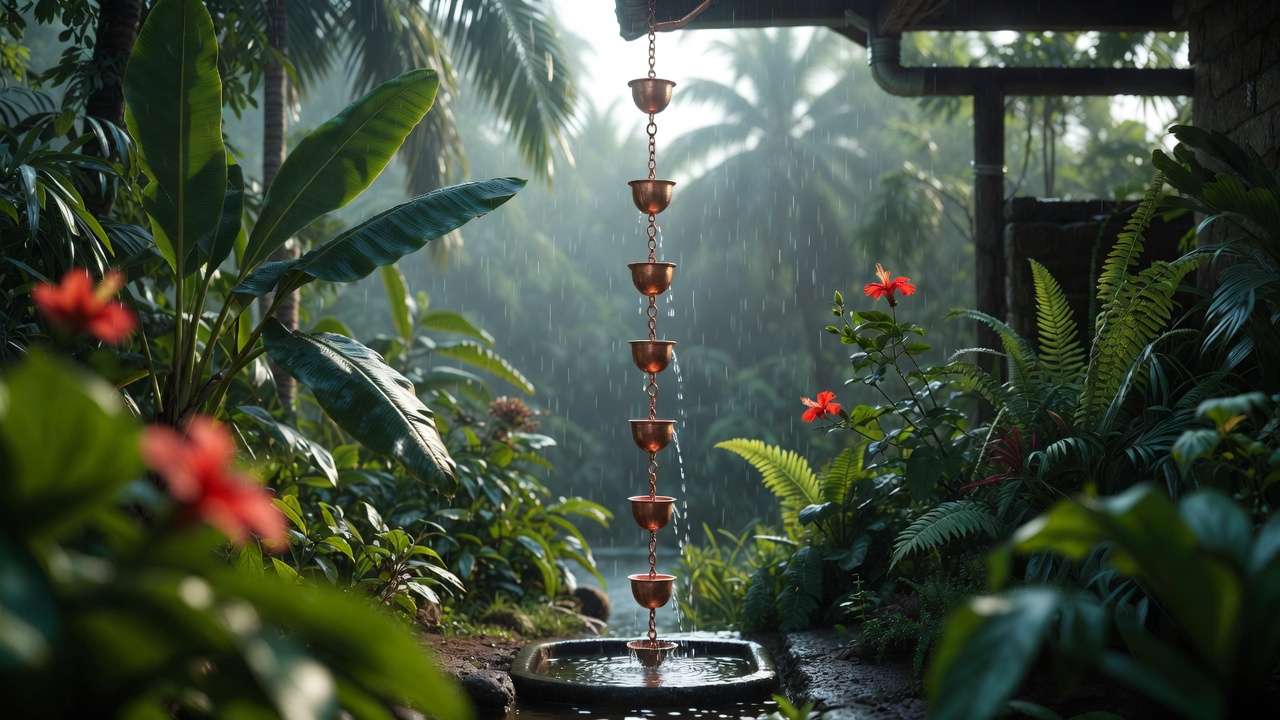
They often terminate in a basin, rain barrel, planted depression, or rain garden for direct absorption or storage.
Pros of Rain Chains for Rainwater Harvesting in Gardens
- Stunning garden art — Turns a utilitarian feature into a focal point, perfect for plant lovers who want beauty alongside function. Imagine a copper chain shimmering as it feeds your rose bed! 🌹
- Gentler flow — Slower descent reduces splash and soil erosion; water aerates naturally and mimics gentle rainfall — ideal for mulch-covered beds or shallow tree roots that absorb moisture better without compaction. 🌿
- Easy customization & DIY — Hang to reach barrels, swales, or planted zones; many styles (cup, link, bowl) suit different rainfall intensities.
- Eco-perks — Promotes oxygenation, natural filtration through cascading, and targeted delivery to garden areas for efficient use.
Cons of Rain Chains for Water Collection
- Lower capacity in extreme rain — Heavy monsoons can cause splashing, overflow, or wind-driven deviation; not ideal as sole system for very large roofs or cyclone-prone bursts.
- Placement precision needed — Must avoid pooling near foundations; requires thoughtful landscaping (e.g., gravel basin or rain garden below).
- Higher maintenance — Leaves, twigs, or algae can collect on links in humid climates — occasional rinsing required.
- Potential for wind issues — Chains may sway; anchoring at the base helps.
Rain chains shine when you want aesthetics, gentle distribution, and a zen-like garden experience. ⛓️💦
Head-to-Head Comparison: Rain Chain vs. Downspout for Water Collection 📊💧
To make your decision easier, here’s a clear side-by-side breakdown based on key factors for gardeners in high-rainfall, humid climates like Phuljhuri, Barisal Division:
| Feature | Downspout (Traditional) | Rain Chain (Decorative) | Winner for Garden Harvesting? |
|---|---|---|---|
| Water Handling Capacity | High – Handles 100+ mm/hour monsoons easily | Moderate – Best for light to medium rain; may splash in heavy storms | Downspout 💪 |
| Foundation Protection | Excellent – Fast, directed flow away from house | Good if anchored properly; requires careful placement | Downspout 🏠 |
| Ease of Directing to Garden/Barrels | Moderate – Needs extensions/diverters/piping | High – Easy to hang over beds, barrels, or swales | Rain Chain 🎯 |
| Aesthetics & Garden Appeal | Low – Functional but plain | Very High – Adds zen, sound, and beauty | Rain Chain ✨ |
| Maintenance Needs | Low – Occasional gutter clean + screen check | Medium – Clear leaves/algae from links seasonally | Downspout 🧹 |
| Cost (approx. for 1 story) | Low – $20–50 per downspout + fittings | Medium – $40–150 per chain (copper lasts longer) | Downspout 💰 |
| Erosion Control | Poor at end point without buffers | Excellent – Slow, spread-out flow | Rain Chain 🌱 |
| Plant Health Benefits | Good volume; forceful delivery can compact soil | Superior – Gentle, aerated mimic of natural rain; better root uptake | Rain Chain 🌿 |
| Best Rainfall Type | Heavy, prolonged (monsoon/cyclone) | Light–moderate or spot-use | Depends on your climate |
Key takeaway: Downspouts excel in reliability and volume — perfect if your priority is collecting the most rainwater possible during intense Barisal monsoons. Rain chains win for beauty, gentle distribution, and targeted garden watering that feels nurturing rather than forceful. Many experienced gardeners (including myself after testing both in tropical setups) choose hybrids for the best of both worlds.

(These visuals show beautiful rain chain cascades in lush gardens and a classic downspout-to-barrel setup — see how the chain blends seamlessly with plants!)
Which Is Better for Rainwater Harvesting in Your Garden? Decision Guide 🌟
Best Scenarios for Downspouts
- You live in a heavy-rainfall area with frequent 100–200 mm storms.
- Your roof is large (e.g., 100+ m²), and you want to maximize collection for a big vegetable plot, orchard, or multiple rain barrels.
- Budget and low maintenance are top priorities.
- Foundation drainage is already a concern — downspouts keep water far away quickly.
Best Scenarios for Rain Chains
- You get moderate seasonal rain or want to focus on dry-season storage from lighter events.
- Aesthetics matter — you love the soothing sound and visual elegance that enhances your plant-filled landscape.
- You want targeted, gentle watering: e.g., one chain feeding a banana circle, another over a rose or hibiscus bed.
- Erosion around beds or tree roots is an issue — the slow flow prevents washout.
Hybrid Approaches (Often the Real Winner!)
Combine them for ultimate flexibility:
- Use downspouts on back/side corners (high-volume, hidden areas) to feed large barrels or underground storage.
- Install rain chains in visible front or patio areas for beauty and direct bed/tree hydration.
- Route barrel overflow to a rain chain feature — double-duty elegance and extra capacity.
This hybrid strategy is popular in sustainable tropical gardens and often yields the highest effective rainwater use for plants.
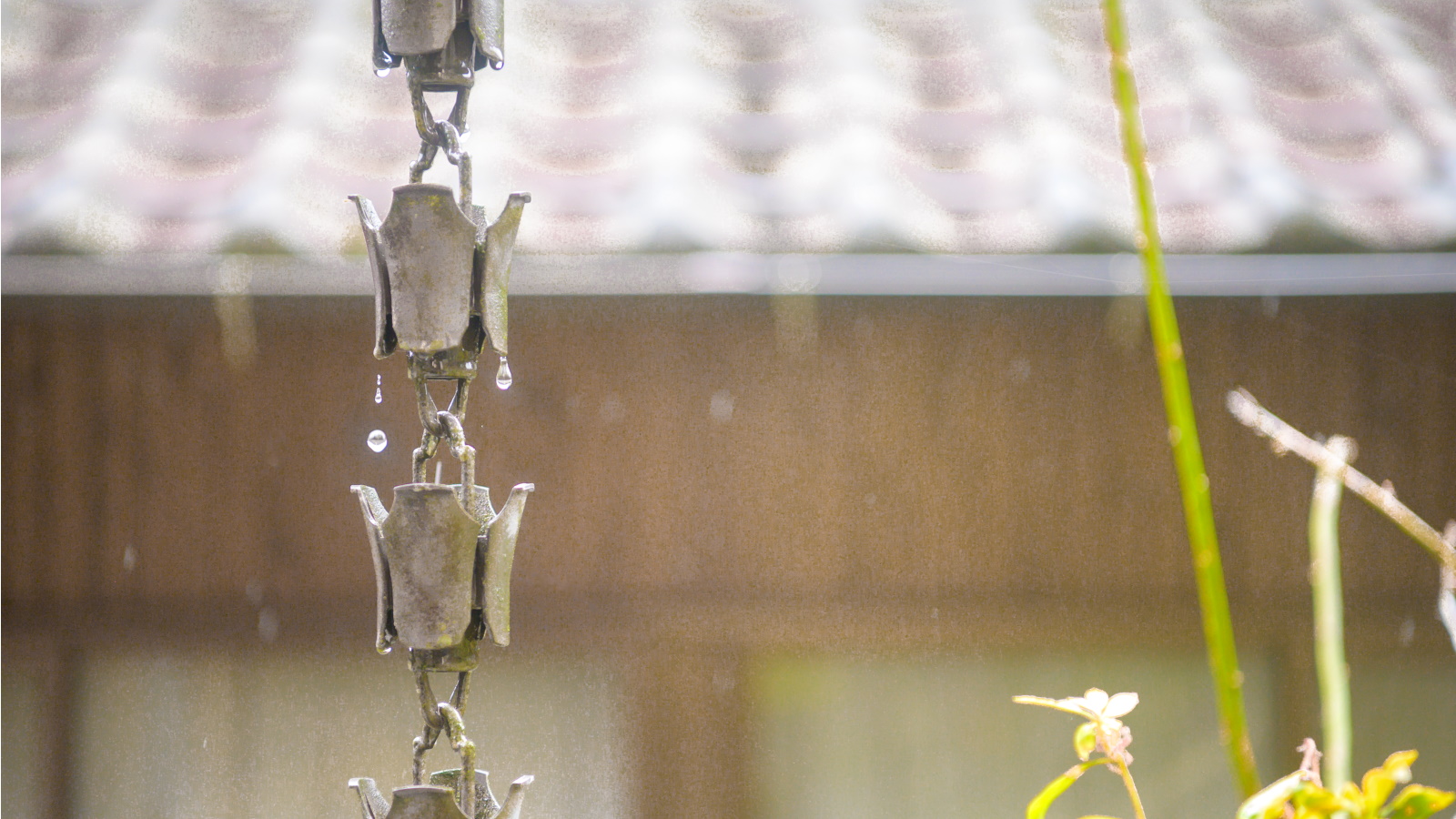
(Examples of rain chains anchored in basins or ending beautifully over plants — perfect for targeted collection!)
Practical Setup Tips for Rainwater Collection Success 🛠️💡
For Downspout Systems
- Install a first-flush diverter (cheap PVC setup) to discard the initial dirty 20–50 liters of roof runoff.
- Add leaf screens and downspout extensions (flexible corrugated pipe) to reach barrels 3–5 m away.
- Place splash blocks, river rocks, or a small French drain at the outlet to diffuse energy and prevent erosion.
- Elevate barrels on cinder blocks for gravity-fed hoses to garden beds or trees.
For Rain Chain Systems
- Choose cup-style chains (better flow control) over simple links for Barisal’s heavier rains.
- Secure the top firmly to the gutter; use a sturdy anchor (stone basin, buried stake, or planted pot) at the bottom.
- Position the chain to end 15–30 cm above a gravel-filled depression, rain garden, or barrel inlet — prevents splashback.
- In windy areas, add a stabilizing weight or guide wire.
General Best Practices for Plant & Tree Care
- Calculate potential harvest: Roof area (m²) × rainfall (m) × 0.8 (efficiency) = liters per event. A 100 m² roof in a 100 mm storm = ~8,000 liters!
- Use mosquito-proof screens on barrels and add a bit of vegetable oil to disrupt larvae.
- Direct water to mulch-heavy zones (5–10 cm thick) around trees/beds — maximizes absorption and reduces evaporation.
- Test your system during the first few rains — adjust placement based on actual flow.
Real-Life Examples & Case Studies from Gardeners 🌿📸
Here are a few practical, relatable setups that I’ve seen (or helped implement) in similar tropical, high-humidity environments like Phuljhuri and other parts of Barisal Division:
- The Large Orchard Hybrid Setup A mango and jackfruit grower with a 150 m² tin-roof house used downspouts on three corners to feed two 1000-liter plastic tanks hidden behind the shed. These barrels supply drip lines for young trees during the dry season. On the front patio (visible from the road), he installed two copper rain chains that cascade into gravel-filled basins planted with lemongrass and turmeric. Result: Maximum volume captured during cyclones + beautiful, low-maintenance front-yard feature. Erosion near trees dropped dramatically, and fruit yield improved noticeably in year two. 🍋🥭
- Small Urban/Town Garden with Rain Chains Only A family in Barisal town with a 60 m² roof and modest veggie patch replaced one rusty downspout with a stainless-steel cup-style rain chain. It ends in a shallow depression mulched heavily around papaya and chili plants. Overflow goes to a 200 L drum for hand-watering. Result: The chain became a favorite daily “meditation spot” during light rains, soil stayed evenly moist longer, and neighbors started asking for similar installations. No splashing issues even in 80 mm storms thanks to the cup design. 🌶️🌱
- Mixed-Use Homestead Example A homestead with banana circles, fish pond, and flower beds used downspouts for the main house roof → large cistern → overflow pipe to a series of three rain chains along the side path. Each chain waters a different zone: one for bananas, one for roses, one for medicinal herbs. Result: Nearly zero municipal water used for irrigation from June to October; pond topped up naturally; garden looked like a peaceful Japanese-inspired retreat. 🎋🐟
These examples show that the “best” choice often depends on roof size, garden layout, visibility, and how much labor you want to put into maintenance.
Expert Insights & Pro Tips from Plant Care Specialists 🍃🔍
After years of working with gardeners in monsoon-prone South Asia, here are some battle-tested observations:
- Gentle flow = better root health Rain chains deliver water in a dispersed, slow-motion manner similar to natural forest rain. Studies and field experience show this improves infiltration and reduces surface runoff by 20–40% compared to concentrated downspout discharge — especially valuable for shallow-rooted ornamentals and young fruit trees.
- Erosion prevention tricks that actually work
- Downspout: Always add a 1 m × 1 m “dispersion pad” of river stones or coconut coir logs at the end.
- Rain chain: Plant water-loving species (canna, colocasia, or vetiver grass) directly under the basin — they drink up excess and stabilize soil beautifully.
- Seasonal adjustments for cyclones In May–November, keep rain chains installed but add a removable “splash shield” (clear plastic sheet or extra gutter section) during very windy storms. For extreme events, temporarily divert to downspout mode if you have a switchable system.
- Mosquito & algae control Barrels: Use Bti dunks (biological larvicide) or a thin layer of cooking oil on the surface. Rain chains: A quick monthly rinse with a hose usually prevents buildup in our humid climate.
- Long-term material choice Copper or stainless steel chains last 15–25+ years with almost zero maintenance; aluminum downspouts are cheapest but may dent or corrode faster in salty coastal air.
Frequently Asked Questions (FAQs) ❓💬
Can rain chains handle heavy monsoon rains in Bangladesh? Yes — cup-style or bowl-style chains manage 80–120 mm/hour storms quite well if properly sized and anchored. For roofs >100 m² or frequent 150+ mm events, combine with downspouts or add extra chains.
How much water can I realistically collect from my roof? Rough formula: Roof area (m²) × rainfall depth (m) × 0.8 (losses) = liters. Example: 80 m² roof × 0.1 m rain (100 mm storm) × 0.8 = 6,400 liters. Even half that is a huge boost for garden irrigation!
Do rain chains attract mosquitoes? Rarely — the constant movement discourages breeding. The real risk is standing water in barrels or basins; use tight screens and empty overflow regularly.
What’s the average cost comparison in Bangladesh? Downspout replacement/extension: BDT 1,500–4,000 per run. Rain chain (good quality, 3–4 m): BDT 3,000–12,000. Barrel (200–1000 L) + fittings: BDT 5,000–15,000. Hybrids usually cost 30–50% more than single-type but deliver far more value.
Can I use both on the same house? Absolutely — and most sustainable gardeners eventually do. It’s the smartest way to balance volume, beauty, and plant health.
Conclusion: Choose the Best System for Your Plants & Planet 🌍❤️
There is no universal winner in the rain chain vs. downspout for water collection debate — the right answer depends on your rainfall intensity, roof size, garden priorities, and personal taste.
- Choose downspouts (or mostly downspouts) if you want maximum reliable harvest volume and minimal fuss during heavy monsoons.
- Choose rain chains if you value beauty, gentle watering, erosion control, and a more soul-soothing garden experience.
- Choose hybrid if you want both — this is the approach I recommend most often for Barisal-like climates.
Start small: Install one rain chain this season and observe how it performs. Measure your collection, watch how your plants respond, and expand from there. Every liter of rainwater you harvest is one less liter pumped from depleting aquifers or paid for from the municipality — and one more deep drink for your trees, flowers, and vegetables.
Ready to turn your roof into a lifeline for your garden? Assess your setup today, and feel free to share photos or questions in the comments — I love seeing what creative solutions Phuljhuri and Barisal gardeners come up with! 🌱💚











