
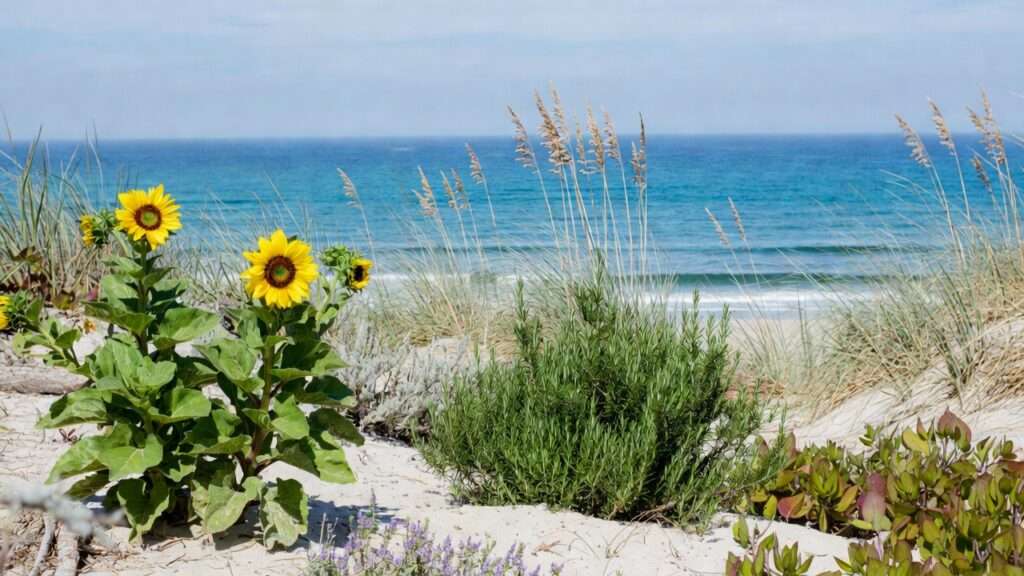
Imagine stepping onto your deck at sunrise, the salty breeze whispering through vibrant blooms and swaying grasses, your garden bursting with color despite weeks without rain and relentless ocean winds. No more dragging hoses across the sand or watching thirsty plants wilt under the sun—your seaside oasis thrives effortlessly, saving water, time, and money while framing that breathtaking view. 🌅
If you own or dream of an oceanfront property, you know the unique challenges: constant salt spray that scorches leaves, drying winds that strip moisture, nutrient-poor sandy soil that drains too quickly, and increasing drought pressures from changing weather patterns. Many traditional garden plants simply can’t survive these harsh conditions without heavy irrigation and constant care.
That’s where oceanfront drought-tolerant plants shine. These resilient selections—often native or well-adapted to coastal environments—are built to handle salt, wind, sand, and low water while delivering stunning beauty, supporting pollinators 🦋, preventing erosion, and creating low-maintenance landscapes that look effortlessly elegant. Once established (usually after the first year), many cut irrigation needs by 50-70%, aligning perfectly with water-wise gardening and local restrictions in coastal areas.
In this comprehensive guide, we’ll explore the best oceanfront drought-tolerant plants, why they succeed where others fail, design ideas to maximize their impact, step-by-step planting and care tips from coastal horticulture experts, and answers to common questions. Drawing from university extension resources (like UF/IFAS and USDA guidelines), real-world coastal successes, and proven xeriscaping principles, this is your go-to resource for transforming challenging beachfront spaces into sustainable, show-stopping gardens.
Why Choose Drought-Tolerant Plants for Oceanfront Properties? 💧
Coastal gardening isn’t just about aesthetics—it’s about resilience and responsibility.
- Water conservation: With droughts becoming more frequent and water restrictions common in seaside communities, drought-tolerant plants reduce reliance on irrigation. Many thrive on natural rainfall once rooted deeply.
- Lower maintenance & costs: Less watering, fewer replacements, and minimal fertilizing mean more time enjoying the view and less on yard work.
- Erosion control & ecology: Deep-rooted species stabilize dunes and sandy slopes, while flowers attract butterflies, bees, and birds, boosting biodiversity.
- Climate resilience: These plants withstand extreme weather—high winds, salt overload, and dry spells—making your garden more hurricane-ready.
Coastal extension services emphasize that selecting salt- and drought-tolerant species supports sustainable landscaping, reduces runoff pollution, and preserves fragile beach ecosystems. It’s a win for your property and the planet! 🌍
Understanding Coastal Challenges: What Makes a Plant “Oceanfront-Ready”? 🌬️
Oceanfront conditions test plants in multiple ways:
- Salt spray tolerance: Airborne salt from waves coats leaves, causing burn or desiccation. High-tolerance plants have waxy cuticles, silvery foliage, or flexible structures that shed salt. Ratings: high (direct exposure), moderate (some protection), low.
- Wind resistance: Constant gusts dry out plants and snap brittle stems. Winners have low, mounding growth, flexible canes, or tough leaves.
- Drought tolerance: Sandy soils drain fast, holding little water or nutrients. Adaptations include deep taproots, succulent leaves, or reduced foliage.
- Sandy soil adaptation: Low fertility and quick drainage favor plants that need minimal amendments—avoid heavy feeders that grow leggy.
Pro tip from experts: Focus on natives or Mediterranean-origin plants for the best match. Plant in zones—front dunes for ultra-tough groundcovers, protected back areas for shrubs. Minimal soil amendments (light compost) help establishment without altering natural drainage. 🌱
Top Oceanfront Drought-Tolerant Plants: Our Expert Picks 🌸
Here are standout performers, selected for proven performance in coastal trials and gardens. Each includes USDA zones, size, key features, tolerance ratings, benefits, and tips. (Focus on high salt + drought combos for true oceanfront success.)
Groundcovers & Low Growers 🌱
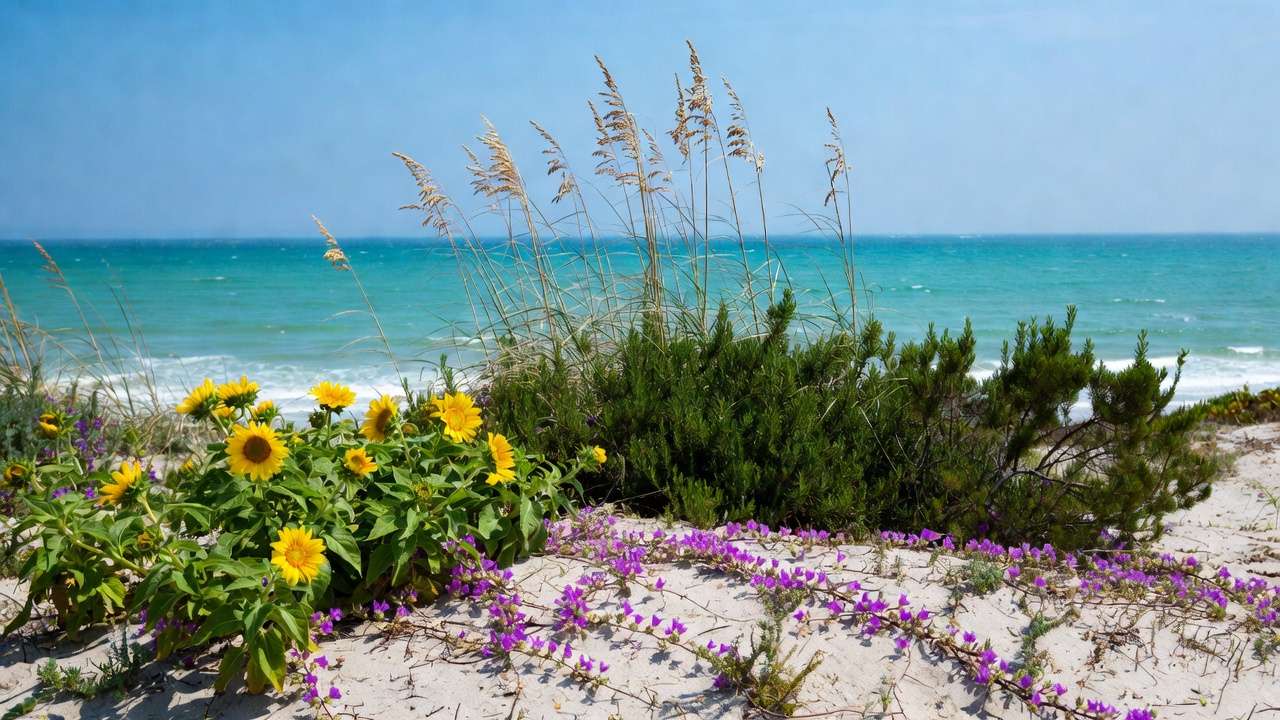
- Beach Sunflower (Helianthus debilis) Zones: 8–11 | Height: 1–2 ft | Spread: 2–4 ft Bright yellow daisy-like flowers with dark centers bloom year-round in warm climates. High salt spray, wind, and drought tolerance; excellent dune stabilizer. Attracts butterflies 🦋. Why it thrives: Native pioneer species built for sand and sea. Tip: Plant in full sun; shear lightly for bushiness. Avoid overwatering once established.
- Railroad Vine (Ipomoea pes-caprae) Zones: 9–11 | Height: 6–12 in | Spread: 10+ ft Purple trumpet flowers, glossy leaves, rapid spreading vine. High salt, drought, and sand-binding ability. Why it thrives: Iconic beach creeper that roots at nodes for erosion control. Tip: Great for dunes; full sun. Can be aggressive—contain if needed.
- Sea Oats (Uniola paniculata) Zones: 7–11 | Height: 3–6 ft | Spread: 2–3 ft Graceful seed heads sway in wind; bronze fall color. High salt and drought; key for dune stabilization (check local regulations—often protected). Why it thrives: Traps sand, builds dunes naturally. Tip: Full sun; minimal water after year 1.
- Yarrow (Achillea millefolium) Zones: 3–9 | Height: 1–3 ft | Spread: 1–2 ft Flat-topped white/pink/yellow blooms, feathery foliage. High drought, moderate-high salt, wind-resistant. Pollinator favorite. Tip: Cut back after bloom for rebloom; full sun.
Perennials & Flowers 🌸
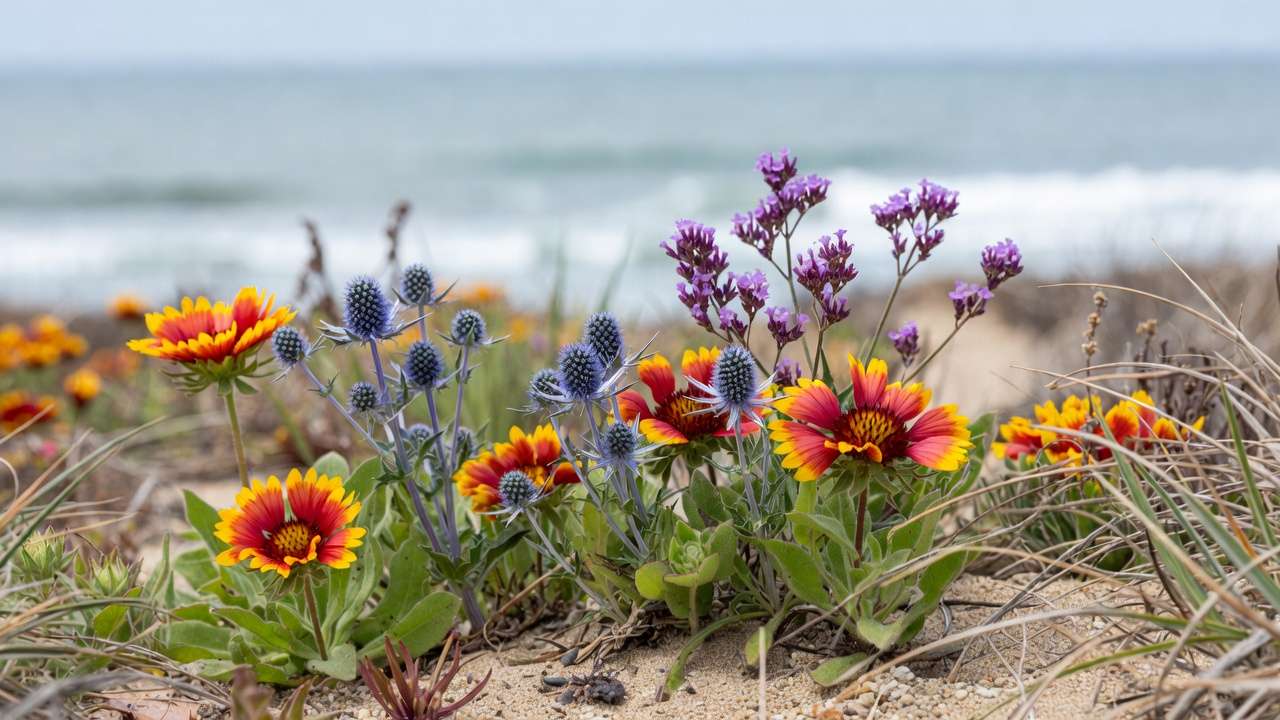
- Blanket Flower (Gaillardia pulchella) Zones: 3–10 | Height: 1–2 ft | Spread: 1–2 ft Fiery red/yellow daisy blooms all season. High salt, drought, and heat tolerance; butterfly magnet 🦋. Why it thrives: Native wildflower laughs at sandy, salty sites. Tip: Deadhead for continuous flowers; self-seeds nicely.
- Sea Lavender (Limonium spp.) Zones: 5–9 | Height: 1–2 ft | Spread: 1–2 ft Papery purple sprays last months. Ultra-high salt and drought tolerance. Tip: Full sun; great cut flower.
- Sea Holly (Eryngium spp.) Zones: 4–9 | Height: 2–4 ft | Spread: 1–2 ft Metallic blue thistle-like flowers, spiky leaves. High drought and salt. Architectural texture. Tip: Loves poor soil; avoid rich amendments.
- Black-Eyed Susan (Rudbeckia hirta) Zones: 3–9 | Height: 1–3 ft | Spread: 1–2 ft Golden petals, dark centers; long bloom. Moderate-high salt, excellent drought. Pollinators love it. Tip: Full sun; biennial but self-seeds.
Grasses & Ornamentals 🌾
- Switchgrass (Panicum virgatum) Zones: 5–9 | Height: 3–6 ft | Spread: 2–3 ft Airy plumes, fall color. High drought, moderate salt, wind-swaying beauty. Tip: Native; cut back in late winter.
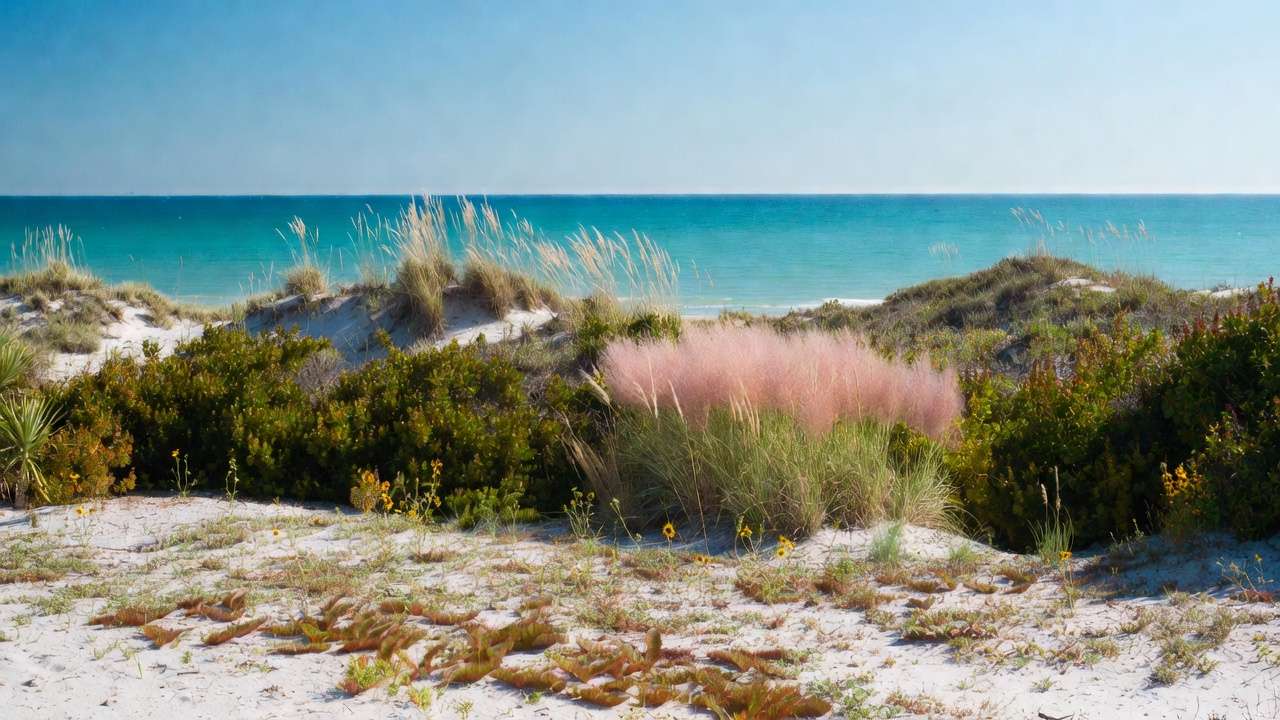
- Muhly Grass (Muhlenbergia capillaris) Zones: 6–10 | Height: 2–4 ft | Spread: 2–3 ft Pink misty clouds in fall. Moderate salt, high drought. Stunning in masses. Tip: Full sun; dramatic coastal accent.
Shrubs & Small Trees 🌳
- Rosemary (Rosmarinus officinalis) Zones: 8–10 | Height: 2–6 ft | Spread: 3–5 ft Fragrant evergreen, blue blooms. High drought, salt, wind tolerance; edible! Tip: Hedge or specimen; prune after flowering.
- Wax Myrtle (Morella cerifera) Zones: 7–10 | Height: 10–20 ft | Spread: 8–15 ft Berries for birds, dense foliage. High salt, drought; great windbreak. Tip: Native; tolerates pruning.
- Beach Rose (Rosa rugosa) Zones: 3–9 | Height: 4–6 ft | Spread: 4–6 ft Thorny, fragrant pink/white blooms, red hips. Legendary salt tolerance (“beach rose”). Tip: Full sun; hips for wildlife/jelly.
- Seagrape (Coccoloba uvifera) Zones: 9–11 | Height: 10–30 ft | Spread: similar Large round leaves, edible fruit. High salt, drought; tropical vibe. Tip: Tree or large shrub; wind-resistant.
These picks go beyond basics—offering layered interest, wildlife support, and proven longevity in tough spots.
Design Ideas: Creating a Stunning, Water-Wise Oceanfront Garden 🌺🏖️
The secret to a breathtaking coastal garden isn’t cramming in every plant—it’s thoughtful layering, strategic placement, and letting nature’s toughest performers shine. Here are proven design approaches that maximize beauty, functionality, and resilience while keeping water use minimal.
- Layer for Wind Protection & Visual Depth Create natural windbreaks with taller, flexible plants at the back or sides:
- Rear/upper layer: Wax Myrtle, Seagrape, or Switchgrass to buffer strong gusts and frame the view.
- Mid layer: Beach Rose, Rosemary, Sea Holly, and Muhly Grass for texture, color, and moderate height.
- Front/ground layer: Railroad Vine, Beach Sunflower, Blanket Flower, and Sea Oats to hug the sand, stabilize soil, and soften edges. This tiered structure reduces wind speed by up to 50% near the house while creating that classic “coastal meadow” look.
- Color & Texture Palettes That Pop Against Blue Water
- Silvery-blue serenity: Combine Sea Lavender, Sea Holly, Yarrow (silver forms), and Rosemary for a cool, Mediterranean vibe that reflects sunlight and hides salt burn.
- Vibrant wildflower energy: Mix Blanket Flower, Beach Sunflower, Black-Eyed Susan, and pink Muhly Grass clouds for bold summer-to-fall color that dances in the breeze.
- Tropical elegance (warmer zones): Seagrape’s big round leaves paired with Railroad Vine and occasional Beach Rose for lush yet tough contrast. Tip: Use gravel, crushed shell, or light-colored rock mulch instead of organic mulch—better drainage, less weed competition, and a clean beachy aesthetic.
- Functional Layout Examples
- Front dune / public beach side: Focus on native groundcovers (Sea Oats, Railroad Vine, Beach Sunflower) planted in drifts for maximum erosion control and low visual impact (many areas have regulations protecting dune vegetation).
- Protected backyard / poolside oasis: Mix taller shrubs (Wax Myrtle hedges, Rosemary borders) with flowering perennials and grasses for privacy, fragrance, and pollinator pockets. Add a few strategic boulders or driftwood for structure.
- Xeriscape “no-lawn” zones: Replace turf with wide swaths of Yarrow, Blanket Flower, and Muhly Grass—dramatic, colorful, and virtually no mowing or watering after establishment.
- Pollinator & Wildlife Bonus 🦋🐦 Dedicate small pockets to nectar-rich bloomers (Blanket Flower, Beach Sunflower, Black-Eyed Susan) near seating areas. Birds love Wax Myrtle berries and Beach Rose hips. These additions turn your garden into a mini coastal habitat without extra effort.
Pro designer insight: Start small—convert one 10×10 ft section first. Observe how wind, salt, and sun hit different spots over a season, then expand with confidence. The result? A garden that looks intentional, expensive, and completely low-maintenance.
Planting and Care Guide: Step-by-Step for Success 🌱
Success with oceanfront drought-tolerant plants hinges on smart establishment—give them the best start, then step back and let them thrive.
- Site Preparation
- Test soil if possible (most sandy coastal soils are already ideal—pH 6.0–7.5).
- Lightly incorporate well-aged compost or seaweed-based organic matter (1–2 inches max) to improve initial water retention without changing drainage too much.
- Avoid heavy tilling—it destroys natural structure.
- Best Planting Times
- Fall (September–November) or early spring (March–April) in most zones—cooler air reduces stress while roots grow before summer heat.
- Avoid peak summer planting unless you can provide consistent deep watering for 3–6 months.
- Planting Technique
- Dig holes twice as wide as the root ball, same depth.
- Set plants slightly high (crown 1–2 inches above soil) to prevent rot in occasional heavy rains.
- Backfill with native soil; water deeply to settle roots.
- Space according to mature size—crowding leads to weak growth in windy sites.
- Watering Strategy
- First 4–8 weeks: Water deeply 2–3 times per week (depending on rainfall).
- Months 3–12: Reduce to once every 7–10 days, encouraging deep roots.
- Year 2+: Rely mostly on natural rainfall; supplemental water only during extended dry spells (>3–4 weeks no rain).
- Always water early morning to reduce evaporation and fungal risk.
- Ongoing Maintenance
- Fertilizer: Minimal! Use slow-release, low-nitrogen organic once at planting; skip afterward to avoid leggy, salt-sensitive growth.
- Pruning: Light shaping after bloom (perennials/shrubs) or late winter (grasses). Remove dead material to improve airflow.
- Weeding: Hand-pull early; dense planting + mulch smothers most weeds.
- Pests/Diseases: Rare—these tough species resist most issues. Watch for occasional aphids on new growth (blast with water).
- Common Mistakes to Avoid
- Overwatering after establishment → root rot.
- Planting in too much shade → weak, stretched growth.
- Using rich potting soil or heavy mulch → poor drainage, fungal problems.
- Ignoring local dune protection rules → fines or forced removal.
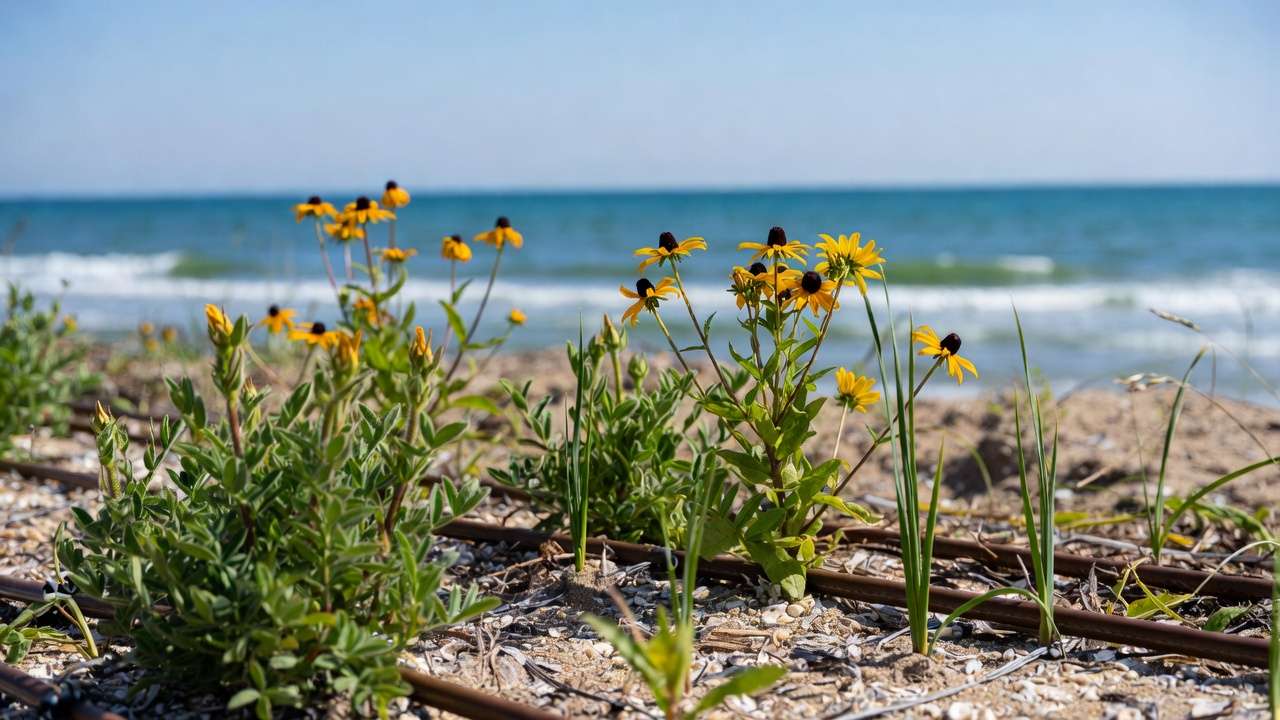
Follow these steps and most of these plants become practically bulletproof in coastal conditions.
FAQs: Your Oceanfront Drought-Tolerant Questions Answered ❓🌊
Here are the most common questions coastal gardeners ask when planning or troubleshooting water-wise oceanfront landscapes. These answers draw from university extension services, experienced seaside horticulturists, and real-world successes.
- Are these plants invasive in my area? Most of the recommended plants are either native (Beach Sunflower, Sea Oats, Wax Myrtle, Blanket Flower) or well-behaved non-natives (Rosemary, Yarrow). Railroad Vine can spread aggressively in ideal conditions—contain it to dunes or use it intentionally as a groundcover. Always check with your local extension office or native plant society for regional invasiveness alerts.
- What if I live in a colder coastal zone (USDA 6 or below)? Opt for cold-hardy standouts: Beach Rose (Rosa rugosa) thrives down to zone 3, Yarrow (Achillea millefolium), Switchgrass (Panicum virgatum), Sea Holly (Eryngium), and Black-Eyed Susan handle frost beautifully. Avoid tropical picks like Seagrape and Railroad Vine. Focus on natives from your region’s coastal ecosystems for best results.
- How do I protect new plants from salt spray during establishment? Install temporary burlap or shade cloth windbreaks on the ocean side for the first 6–12 months. Plant slightly behind natural dune contours or existing vegetation for protection. Water deeply after windy/salty days to rinse foliage. Most of these plants toughen up quickly once roots are established.
- Should I prioritize native plants over non-natives? Natives (Sea Oats, Wax Myrtle, Beach Sunflower, Blanket Flower) are usually the gold standard—they support local wildlife best, require zero extra fuss, and are already adapted to your exact microclimate. Non-natives like Rosemary and Sea Lavender add fragrance, structure, and color without becoming problematic in most coastal settings. A balanced mix often gives the most visually appealing result.
- Can these plants survive near a pool with salt-water splash? Yes—many (especially Sea Lavender, Sea Holly, Rosemary, Beach Rose) tolerate occasional saltwater overspray from pools. Avoid direct heavy splashing on foliage; good drainage prevents root issues.
- How much sun do they really need? Full sun (6+ hours direct) is ideal for nearly all listed plants. In very exposed sites, partial afternoon shade from taller shrubs or structures can reduce stress without sacrificing blooms.
- Do I need to fertilize them? Rarely. These plants evolved in low-nutrient sandy soils. A light application of slow-release, low-nitrogen organic fertilizer at planting is usually enough. Over-fertilizing causes weak, floppy growth that’s more vulnerable to wind and salt.
- What about erosion control on my dunes? Sea Oats, Railroad Vine, Beach Sunflower, and Beach Rose are top performers for binding sand and building dunes. Plant in staggered rows parallel to the shoreline. Check local regulations—many areas protect dune vegetation and may require permits.
- Will these plants attract too many bugs or wildlife? They attract desirable pollinators (butterflies 🦋, bees) and birds (via Wax Myrtle berries, Beach Rose hips). Serious pest issues are uncommon—the tough foliage deters most damaging insects.
- How long until they look “established” and truly low-maintenance? Typically 1–2 growing seasons. Year 1: focus on deep, infrequent watering. Year 2: plants develop extensive root systems and handle drought, salt, and wind with minimal help. By year 3, most require almost zero intervention beyond occasional pruning.
Conclusion: Transform Your Coastal Space Sustainably 🌴💚
Creating an oceanfront garden that’s beautiful, resilient, and water-wise isn’t just possible—it’s one of the most rewarding ways to connect with your seaside location. By choosing oceanfront drought-tolerant plants like Beach Sunflower, Blanket Flower, Sea Oats, Rosemary, and Muhly Grass, you’re investing in a landscape that laughs at salt spray, thrives on neglect, saves significant water, prevents erosion, and supports local wildlife—all while framing that million-dollar view with effortless style.
Start small: Pick one tough corner of your property, plant a mix of groundcovers, perennials, and a few strategic shrubs, then watch them take hold. Consult your local cooperative extension office for region-specific advice and native plant sources—they’re invaluable partners in coastal success.
Your low-maintenance seaside paradise is closer than you think. Plant once, enjoy forever. 🌊✨











