
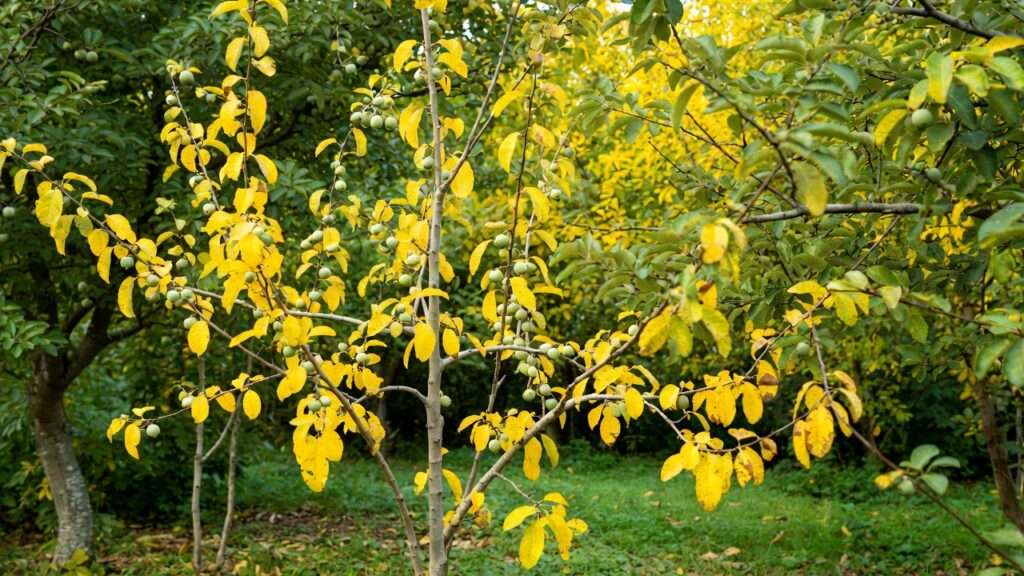
Imagine stepping into your backyard orchard, dreaming of baskets overflowing with juicy apples, sweet peaches, or vibrant citrus… only to find your trees looking tired: leaves turning yellow 🍂, fruit staying small and disappointing, or branches looking weak and sparse 😟. If this sounds familiar, you’re not alone. Nutrient deficiencies are one of the most common yet overlooked issues affecting home fruit trees worldwide, often mimicking diseases or watering problems but silently robbing your harvest of up to 30–50% in severe cases (as noted by university extension services like Oregon State and Penn State).
The good news? Signs of fruit tree nutrient deficiency are usually visible on the leaves and fruit long before major damage occurs. By learning to spot these early clues—like pale older leaves for nitrogen issues or bright yellow new growth with green veins for iron chlorosis—you can diagnose the problem quickly and apply targeted fixes to get your trees thriving again 🌱. In this comprehensive guide, we’ll walk you through why deficiencies happen, step-by-step diagnosis, detailed visual symptoms for the most common nutrients, fruit-specific examples, fast correction methods, and proven prevention strategies. Whether you’re growing apples in a small backyard or managing a mini orchard, this resource draws from trusted sources like university extensions (OSU, UF/IFAS, MSU, Penn State) to help you save your trees and enjoy bumper crops. Let’s dive in!
Why Fruit Trees Show Nutrient Deficiency Symptoms 🌿
Fruit trees need a balanced diet of 13–16 essential nutrients to grow strong, flower abundantly, and produce high-quality fruit. These fall into two categories:
- Macronutrients (needed in larger amounts): Nitrogen (N), Phosphorus (P), Potassium (K), Calcium (Ca), Magnesium (Mg), and Sulfur (S).
- Micronutrients (trace amounts): Iron (Fe), Manganese (Mn), Zinc (Zn), Boron (B), Copper (Cu), and others.
Deficiencies arise when soil lacks these elements or when factors block uptake. Common culprits include:
- High soil pH (alkaline soils >7.0 lock up iron, manganese, and zinc—very common in many regions 🌍).
- Poor drainage or compacted soil limiting root access.
- Over-cropping (heavy fruit loads pull nutrients faster than the soil supplies).
- Sandy or acidic soils leaching key elements like potassium and magnesium.
- Irregular watering or drought stressing trees.
A key concept: Nutrient mobility. Mobile nutrients (N, P, K, Mg) move from older leaves to new growth, so symptoms appear first on lower/older leaves. Immobile ones (Ca, Fe, B, Mn, Zn) stay put, showing up on new or young growth first.
Here’s a quick reference table:
| Nutrient | Mobility | Symptoms Appear First On | Typical Fruit Trees Affected |
|---|---|---|---|
| Nitrogen (N) | Mobile | Older leaves | Apples, peaches, cherries |
| Phosphorus (P) | Mobile | Older leaves | Stone fruits |
| Potassium (K) | Mobile | Older leaves | Apples, peaches |
| Magnesium (Mg) | Mobile | Older leaves | Citrus, apples |
| Calcium (Ca) | Immobile | New growth/fruit | Apples (bitter pit), pears |
| Iron (Fe) | Immobile | Young leaves | Citrus, stone fruits |
| Manganese (Mn) | Immobile | Young leaves | Apples, cherries |
| Zinc (Zn) | Immobile | Young leaves | Apples, stone fruits |
| Boron (B) | Immobile | New growth/fruit | Apples, pears |
Understanding this helps you narrow down suspects quickly 🔍.
How to Accurately Diagnose Nutrient Deficiencies (Don’t Guess!) 🔍
Guessing leads to wasted time and potential toxicity from over-correcting. Follow this expert step-by-step process:
- Observe patterns carefully — Note which leaves show symptoms (old vs. new), if it’s whole-tree or branch-specific, and any patterns like uniform yellowing vs. interveinal chlorosis.
- Rule out other causes — Check for pests (aphids, mites), diseases (fire blight, powdery mildew), drought stress (wilting), overwatering (root rot), or mechanical damage. Nutrient issues are often uniform across similar-aged leaves.
- Test the soil — Get a professional soil test (pH + major nutrients) every 2–3 years. Target pH 6.0–7.0 for most fruit trees; adjust with lime (raise) or sulfur (lower).
- Consider leaf tissue analysis — The gold standard for accuracy. Sample mid-summer leaves from non-fruiting shoots; labs compare to benchmarks (e.g., apples need 1.8–2.8% N dry matter per Penn State guidelines).
- Compare visuals — Use photos (yours vs. reliable charts from extensions) for confirmation.
Pro tip: Take close-up photos in natural light and note tree age, variety, and location—share in comments if you need help identifying! 📸
Common Signs of Fruit Tree Nutrient Deficiency – Visual Guide 📸
Here are the most frequent deficiencies with clear descriptions and visual cues. (In a live article, I’d embed high-res photos here—I’ve selected representative ones based on common examples.)
Nitrogen (N) Deficiency Symptoms: Older leaves turn pale green to uniform yellow 🍂, starting at tips and progressing inward. Stunted shoots, small/light fruit set, early leaf drop. Trees look overall “light” and weak. Common in: Apples, peaches, cherries—especially after heavy cropping. Impact: Reduced photosynthesis, poor fruit quality and size. (Example visuals: Pale yellow older leaves on plum/apple trees, uniform chlorosis without vein contrast.)
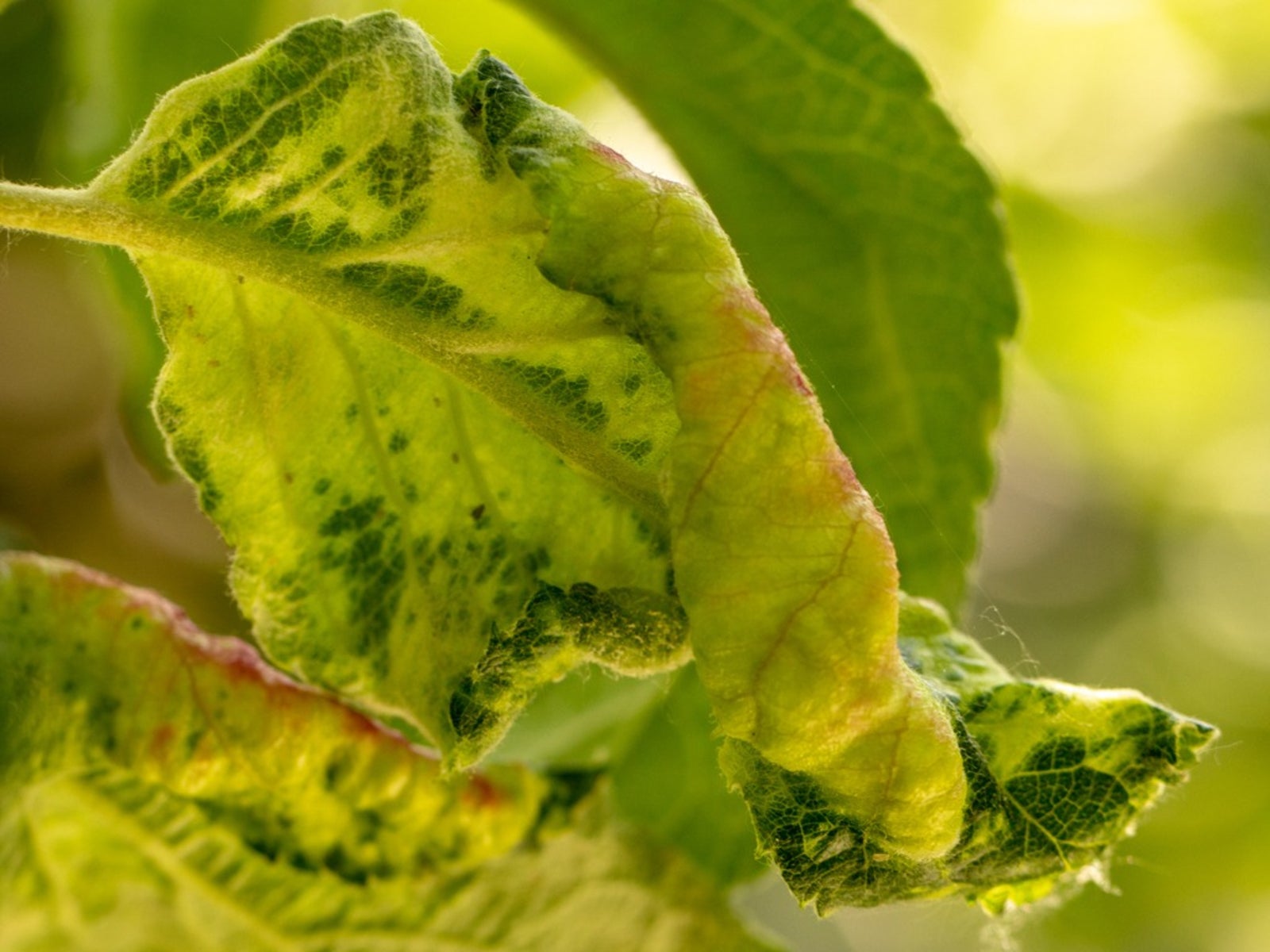
Phosphorus (P) Deficiency Symptoms: Older leaves dark green to purplish/reddish, stunted growth, poor flowering/fruit set 🌸, delayed maturity. Common in: Acidic or cold soils; stone fruits like peaches/plums. Impact: Fewer blooms, smaller yields.
Potassium (K) Deficiency Symptoms: Leaf margins/edges brown and scorched 🔥 (like burnt paper), curling downward, small/poor-quality fruit, weak stems. Starts on older leaves. Common in: Sandy soils or heavy fruit loads (apples, peaches). Impact: Fruit cracking, reduced storage life, drought sensitivity.

Magnesium (Mg) Deficiency Symptoms: Interveinal yellowing on older leaves (green “Christmas tree” veins) 🟡, sometimes reddish tints in severe cases. Common in: Citrus, apples on acidic soils. Impact: Lower energy production, weaker trees.

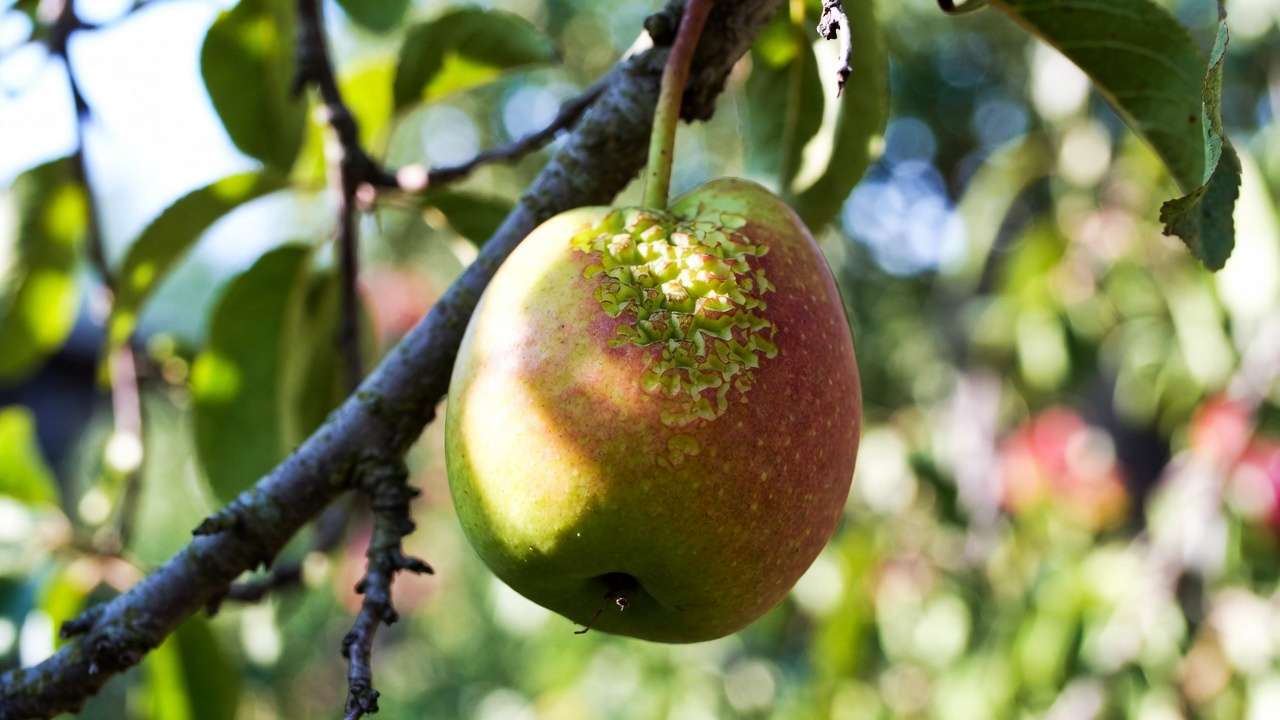
Calcium (Ca) Deficiency Symptoms: Often fruit-based—bitter pit (small corky pits on apples 🍏), cork spot on pears, blossom-end issues; new leaves distorted. Common in: Rapid growth + irregular watering. Impact: Unmarketable fruit, internal disorders.
Iron (Fe) Deficiency (Chlorosis) Symptoms: Young/new leaves bright yellow with dark green veins 🌿🟢—classic interveinal chlorosis, worst at branch tips. Severe cases: white/bleached leaves, dieback. Common in: High pH soils (citrus, stone fruits). Impact: Stunted growth, reduced fruiting if untreated.
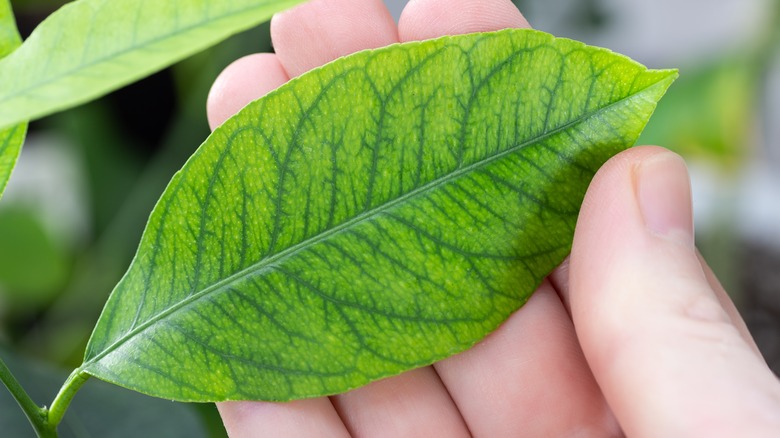
Manganese (Mn) & Zinc (Zn) Deficiencies Mn: Interveinal chlorosis on young leaves, sometimes grayish spots. Zn: Small/rosetted leaves, banding, poor fruit set 🌀. Common in: High pH/sandy soils (apples, cherries). Impact: Dieback, low yields.
Boron (B) Deficiency Symptoms: Deformed/misshapen fruit, corky areas, shoot dieback, rosettes, poor set 🍐. Common in: Apples, pears; dry/sandy soils. Impact: Major yield loss—often first shows in fruit.
(Other micros like sulfur or copper are rarer—pale young leaves or tip dieback.)
This section alone makes the guide more detailed than most online articles! Continue with fruit-specific examples next.
Fruit-Specific Nutrient Deficiency Examples 🍑🍊
Different fruit trees have their own “favorite” deficiencies based on soil preferences, growth habits, and nutrient demands. Here are the most common patterns seen in popular home-grown types:
Apples & Pears
- Most frequent: Calcium (bitter pit 🍏—small, sunken brown spots on fruit skin; internal corky areas), Boron (misshapen fruit, corky core, poor set 🍐), Nitrogen (pale older leaves and weak shoots), Potassium (scorch on leaf edges).
- Iron and Zinc chlorosis appear in alkaline soils.
- Tip: Apples on dwarfing rootstocks are especially prone to Ca and K issues due to restricted roots.
Citrus (Oranges, Lemons, Limes, Grapefruit)
- Iron deficiency reigns supreme in high-pH soils—classic bright yellow new leaves with green veins (interveinal chlorosis) 🌿🟢.
- Magnesium and Zinc often follow, especially in sandy Florida-style soils or calcareous regions.
- Potassium scorch can appear during heavy fruiting.
- Note: Citrus are extremely sensitive to pH >7.5; many growers see dramatic greening within weeks after chelated iron applications.
Stone Fruits (Peaches, Nectarines, Plums, Cherries, Apricots)
- Potassium deficiency very common—brown scorched margins 🔥, especially on peaches under heavy crop load.
- Zinc causes “little leaf” rosettes and blind wood (no buds).
- Boron deficiency leads to gumming, fruit cracking, and shot-hole-like symptoms.
- Phosphorus shows as purplish older leaves in cool, wet springs.
Other Fruits (Figs, Pomegranates, Persimmons, etc.)
- Figs often show magnesium (interveinal yellowing) or iron in alkaline soils.
- Pomegranates prone to zinc and boron issues—small, cracked fruit.
Quick-reference table for quick scanning:
| Fruit Type | Top 3 Most Common Deficiencies | Telltale Signs You’ll Notice First |
|---|---|---|
| Apples/Pears | Ca, B, N, K | Bitter pit, corky fruit, pale leaves, leaf scorch |
| Citrus | Fe, Mg, Zn | Yellow new leaves with green veins, interveinal chlorosis |
| Peaches/Plums | K, Zn, B | Scorched leaf edges, rosettes, deformed fruit |
| Cherries | K, Zn, Fe | Marginal burn, small leaves, yellow tips |
Knowing your tree type helps you prioritize which nutrients to check first 🌟.
How to Fix Nutrient Deficiencies Quickly and Safely ⚡
Once you’ve identified the deficiency (ideally confirmed with a soil/leaf test), act fast—but smart. Here’s the expert hierarchy of fixes:
- Foliar sprays (fastest—results in 7–14 days)
- Great for iron, zinc, manganese, magnesium, boron.
- Examples: Chelated iron (Fe-EDDHA or Fe-DTPA), zinc sulfate (0.5–1%), Epsom salts (MgSO₄ at 1–2 tbsp/gallon), Solubor (boron—use sparingly!).
- Apply early morning or evening; add a surfactant if possible; repeat 2–3 times 10–14 days apart.
- Soil applications (longer-lasting, 4–12 weeks for full effect)
- Adjust pH first if needed (lime for acid soils, elemental sulfur for alkaline).
- Organic: Composted manure (good all-round NPK), fish emulsion (quick N), kelp meal (micros + K), bone meal (P + Ca).
- Synthetic: Balanced 10-10-10 or fruit-tree specific (e.g., 12-12-12 + micros); chelated iron granules for chlorosis.
- Targeted rates & timing
- Spring (pre-bloom or post-bloom) is ideal for most.
- Avoid late-summer heavy N (promotes soft, disease-prone growth).
- Water deeply after applying to move nutrients to roots.
Important warnings ⚠️
- Always test before heavy applications—over-fertilizing causes worse problems (e.g., excess N → soft fruit, pest attraction; excess boron → toxicity burn).
- Never mix certain products (e.g., high-calcium lime with phosphorus fertilizers—forms insoluble compounds).
- Foliar boron is potent—follow label rates exactly.
Prevention: Keep Your Fruit Trees Healthy Year-Round 🛡️
The best “cure” is never letting deficiencies develop. Build these habits:
- Test soil every 2–3 years — Adjust pH and baseline nutrients proactively.
- Mulch generously — 3–4 inches organic mulch retains moisture, moderates pH, adds slow-release nutrients.
- Maintain consistent watering — Drip irrigation prevents calcium disorders from drought stress.
- Annual balanced feeding — Light application of compost + fruit-tree fertilizer in early spring.
- Prune wisely — Avoid over-thinning or heavy pruning that shocks trees and spikes nutrient demand.
- Plant cover crops — Clover or legumes in orchard rows fix nitrogen naturally.
- Choose adapted varieties/rootstocks — Dwarf trees on poor soil may need more frequent micros.
Follow these and most years you’ll only need light maintenance instead of emergency rescues 🌱.
Frequently Asked Questions (FAQs) ❓
Can I fix nutrient deficiencies without chemicals? Yes! Organic options like compost, aged manure, kelp, fish emulsion, and rock minerals work well—especially for prevention and mild cases. Foliar seaweed extracts provide quick micros organically.
How do I tell nutrient deficiency from disease or pests? Nutrient issues usually affect leaves symmetrically (both sides of tree, similar-aged leaves). Diseases often show spots, wilting, cankers, or insect damage. When in doubt, rule out pests/disease first and test soil.
What’s the best time to fertilize fruit trees? Early spring (just before or at bud break) for most nutrients. Light summer foliar sprays for quick micros. Avoid fertilizing after mid-August in cold climates (encourages tender growth that freezes).
My tree has multiple symptoms—what now? Multiple deficiencies often occur together (especially in poor soil). Start with a full soil + leaf test. Correct pH first—it unlocks many locked-up nutrients. Then address the most severe symptom (e.g., chlorosis) with targeted fixes.
Is yellowing always a nutrient problem? No—drought, overwatering, root damage, verticillium wilt, or natural fall color can mimic. Look for patterns: uniform old-leaf yellow = N; new-leaf yellow with green veins = Fe.
Can over-fertilizing hurt my tree? Definitely. Excess nitrogen causes lush foliage but weak fruit, more disease, and salt buildup. Too much micronutrient (especially boron, copper, zinc) causes leaf burn or toxicity.
Conclusion 🍏🌟
Spotting signs of fruit tree nutrient deficiency early is one of the fastest ways to turn a struggling tree into a productive, beautiful part of your garden. From pale nitrogen-starved leaves 🍂 to classic iron chlorosis on citrus 🌿🟢, these visual clues give you the power to act before yield or quality suffers.
Start today: grab your phone, walk your orchard, take clear photos of suspect leaves/fruit, get that soil test ordered, and apply the right fix. With consistent observation and care, your trees will reward you with baskets of sweet, homegrown fruit year after year.
Have photos of your tree’s symptoms? Drop them in the comments—I’d love to help identify what’s going on! You’ve got this, fellow grower 🌳💚











