
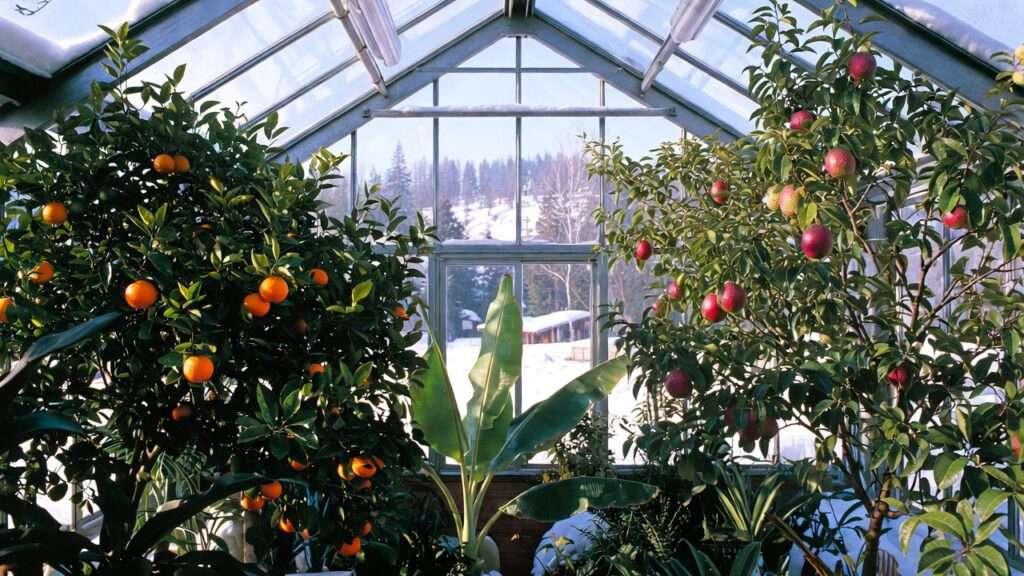
Imagine stepping into your greenhouse on a chilly winter day and plucking a ripe, juicy mango or a cluster of sweet bananas right from your own trees — while snow dusts the ground outside ❄️🍌. For gardeners in cooler climates, this dream isn’t just fantasy. With the right setup, tropical fruit trees for greenhouse growing allow you to cultivate exotic favorites like citrus, guava, banana, and even avocado year-round, overcoming frost, short seasons, and unsuitable outdoor conditions.
As a horticulturist with over 15 years of experience helping home growers push their zones in controlled environments, I’ve seen countless gardeners transform ordinary greenhouses into personal tropical paradises. The key? Selecting dwarf or container-friendly varieties, maintaining proper heat and humidity, and using smart pollination and pruning techniques. In this comprehensive guide, you’ll discover the absolute best tropical fruit trees suited for greenhouse cultivation, detailed care strategies, common pitfalls to avoid, and proven tips for consistent harvests — even in zones 4–8. Whether you’re a beginner eyeing your first Meyer lemon or an enthusiast ready to tackle mangoes, this article delivers the in-depth, practical advice you need to succeed 🍊🌿.
Why Grow Tropical Fruit Trees in a Greenhouse? Benefits & Realistic Expectations 🌱
Growing tropical fruit trees outdoors is limited to warm USDA zones 9–11, but a greenhouse changes everything. It creates a microclimate where you control temperature (ideally 55–85°F), humidity (60–80%), and light — protecting delicate plants from freezes while extending the growing season indefinitely.
Key benefits include:
- Year-round production — Many varieties fruit multiple times annually with proper care.
- Protection from elements — No more worrying about late frosts killing blooms or winter damage.
- Pest reduction — Enclosed spaces make monitoring and organic controls easier.
- Space efficiency — Dwarf varieties thrive in large pots (15–50 gallons), perfect for patios, backyards, or even attached sunrooms.
- Nutritional & joy factor — Homegrown exotic fruits are fresher, often more flavorful, and packed with vitamins (think vitamin C from guava or potassium from bananas) 🍍.
Realistic expectations: Heating a greenhouse in cold winters adds costs (electric or propane), and some trees need hand-pollination or supplemental lights during short days. But with energy-efficient setups like insulated panels or passive solar, many growers keep bills manageable while enjoying fresh tropical harvests.
This approach suits hobbyists, urban gardeners, and exotic fruit lovers in temperate or cold regions who crave the impossible — tropical bounty at home!
Choosing the Right Greenhouse Setup for Tropical Success 🏠
Success starts with the structure. For tropicals, prioritize:
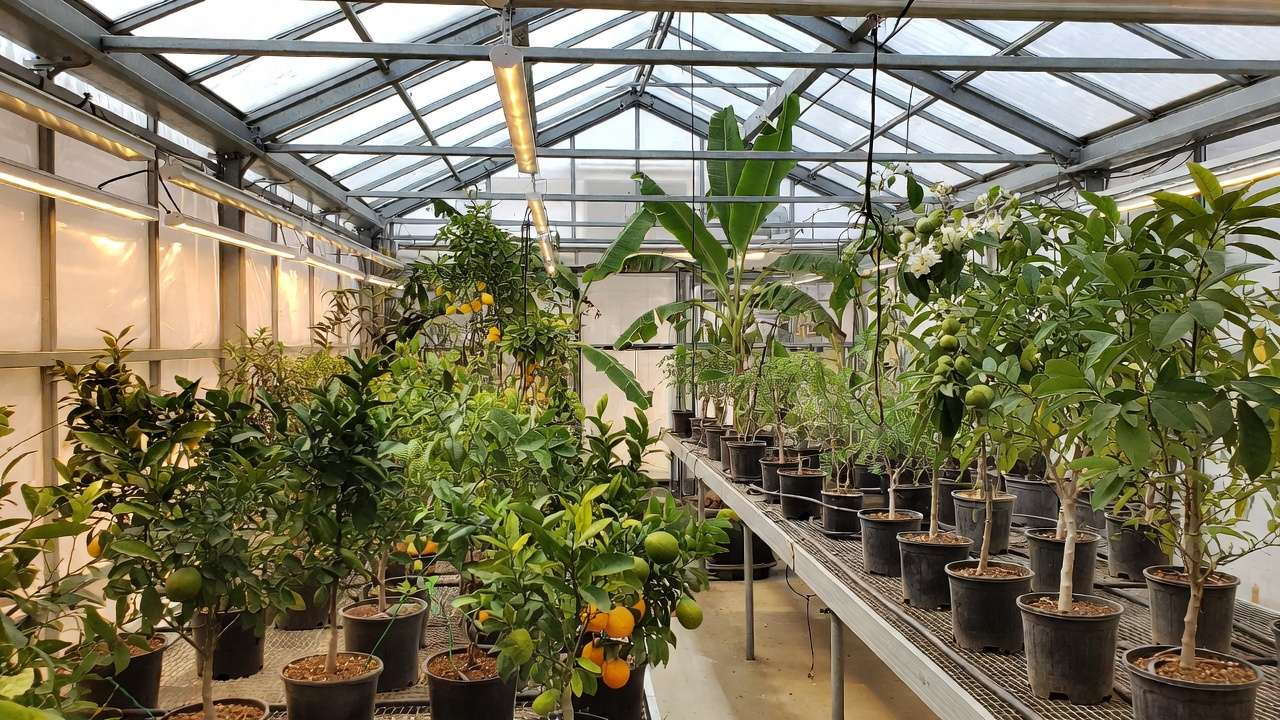
- Heating: Minimum 50–55°F at night (many tolerate brief dips to 45°F). Options include electric heaters with thermostats, propane, or geothermal/climate battery systems for efficiency 💡.
- Size & layout: At least 10×12 ft for 2–4 trees; allow 8–12 ft height for mature dwarfs. Use benches or ground beds with good drainage.
- Materials: Polycarbonate panels (twin-wall for insulation) outperform single-layer plastic; glass offers clarity but less insulation.
- Ventilation & humidity: Automatic vents, fans, and misters/humidifiers prevent mold and encourage airflow.
- Lighting: Supplemental full-spectrum LEDs (especially winter) for 12–16 hours/day in low-light zones.
- Containers & soil: Large fabric or plastic pots with well-draining mix (cactus/succulent blend + compost + perlite). Avoid heavy garden soil to prevent root rot 🚰.
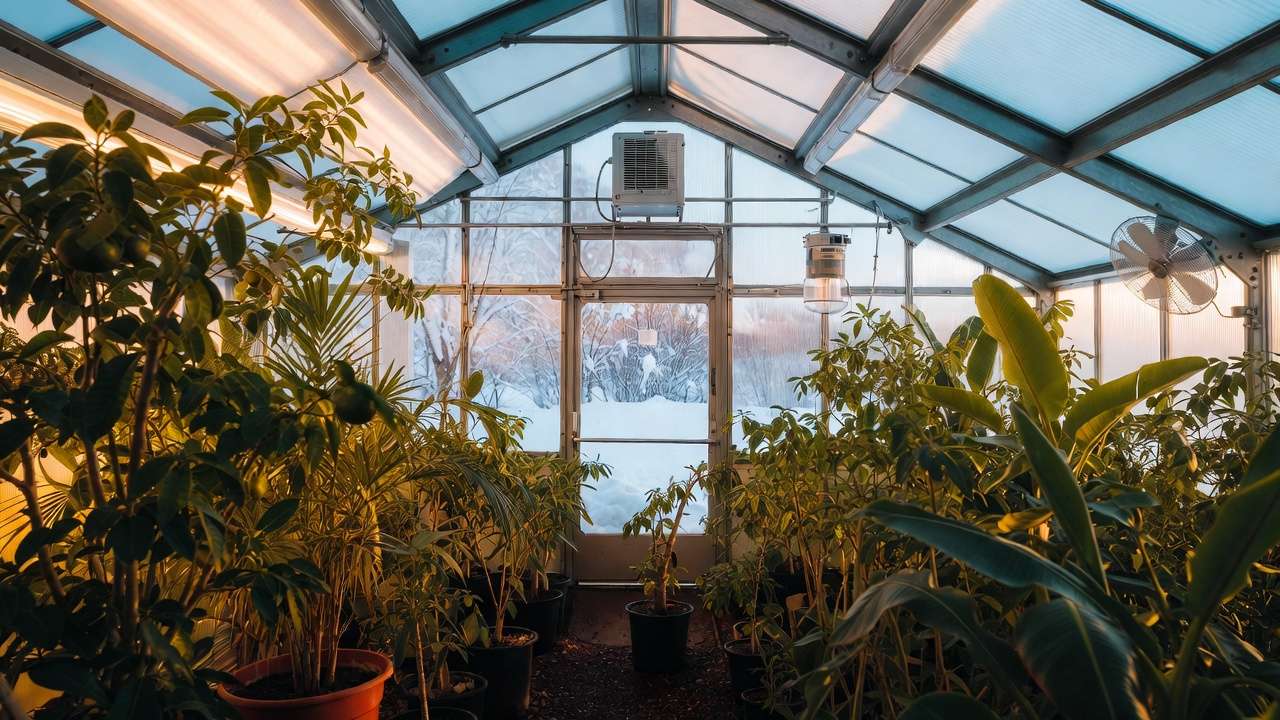
Invest in a quality thermometer/hygrometer and monitor closely — consistency is key to tropical health.
Top 10 Best Tropical Fruit Trees for Greenhouse Growing 🌟
Here are my top recommendations, prioritized by ease, reliability, and yield in greenhouse settings. All favor dwarf or semi-dwarf varieties for manageability.
Meyer Lemon & Other Citrus (e.g., Key Lime, Satsuma Mandarin, Kumquat) 🍋 The undisputed champion for beginners! Meyer lemons are cold-hardy (down to ~28°F briefly), self-fertile, and bloom fragrantly year-round.
-
- Best varieties: Improved Meyer, Bearss Lime, Owari Satsuma.
- Mature size: 6–10 ft in pots.
- Fruiting: 1–2 crops/year; hand-pollinate if needed.
- Pros: Forgiving, aromatic flowers, continuous small harvests.
- Cons: Watch for scale insects. Expect 20–50 fruits per mature tree annually.
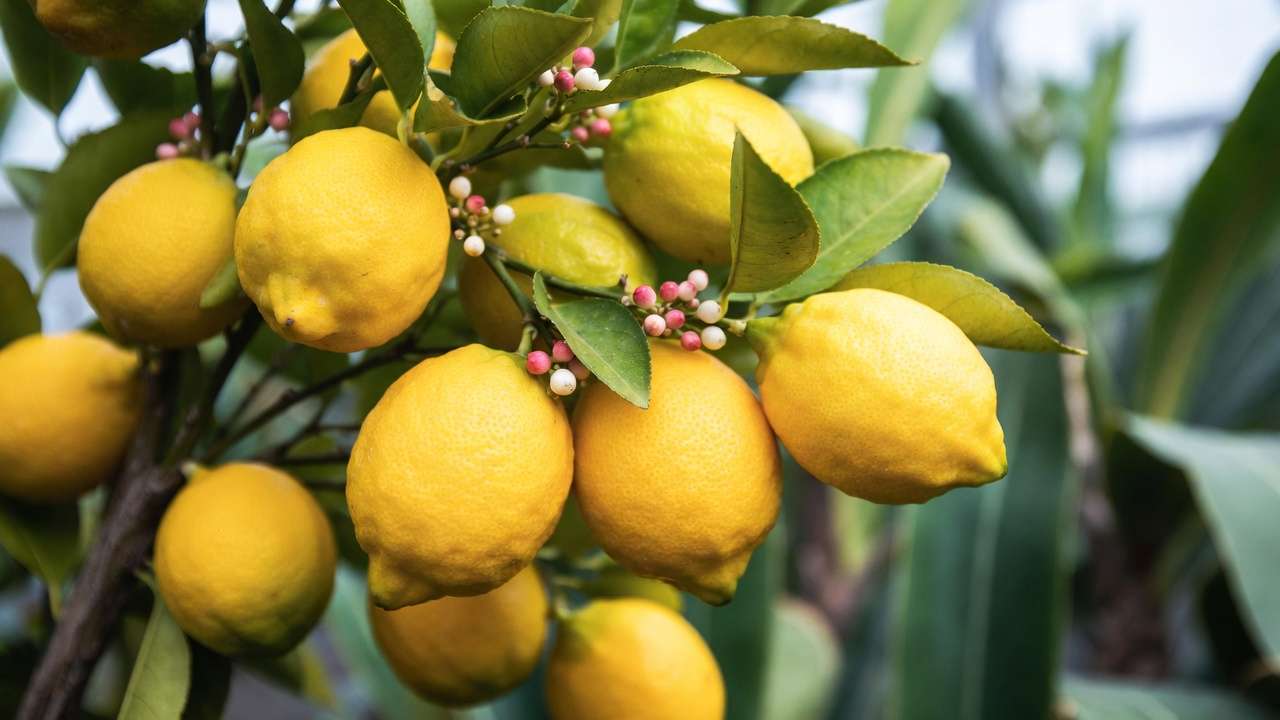
Guava (Pineapple Guava/Feijoa & Tropical Guava) 🍈 Fast-growing, vitamin-C powerhouses with unique flavors (pineapple-like in feijoa).
-
- Best varieties: Pineapple Guava (cold-hardier), Ruby Supreme (pink flesh).
- Mature size: 6–10 ft.
- Fruiting: Multiple flushes; edible petals too!
- Pros: Drought-tolerant once established, great for containers.
- Cons: Needs pruning for shape.
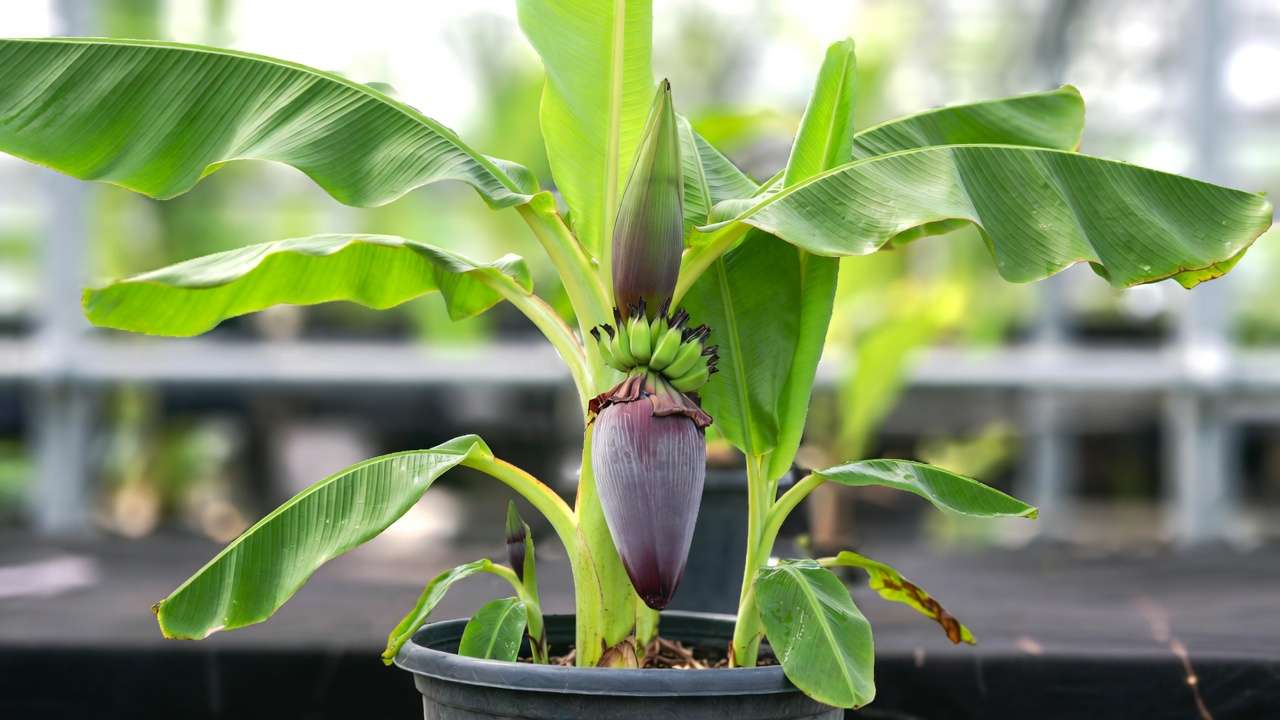
Banana (Dwarf Cavendish, Ice Cream, or Lady Finger) 🍌 Iconic tropical look with surprisingly quick growth.
-
- Best varieties: Dwarf Cavendish (most reliable), Ice Cream (vanilla-flavored).
- Mature size: 6–12 ft.
- Fruiting: 9–18 months from pup; needs high potassium.
- Pros: Lush foliage, fun to watch pups emerge.
- Cons: Heavy feeders; remove suckers regularly.
Avocado (Dwarf varieties like Little Cado, Condo, or Wurtz) 🥑 Challenging but rewarding with hand-pollination.
-
- Best varieties: Wurtz (smallest), Joey (cold-tolerant).
- Mature size: 8–12 ft pruned.
- Fruiting: 3–5 years; shake branches or use fans for pollination.
- Pros: Creamy homegrown avocados!
- Cons: Alternate bearing; sensitive to overwatering.
Fig (Celeste, Brown Turkey — semi-tropical bonus) 🌿 Forgiving and productive; fits “tropical aspirations” perfectly.
-
- Pros: Heavy bearer, beautiful leaves, low chill needs.
Mango (Dwarf varieties like Carrie, Ice Cream, or Pickering) 🥭 Advanced but possible with heat.
-
- Pros: Dream fruit; condo mangos stay compact.
- Cons: Needs 70°F+ nights for flowering.
Papaya (Dwarf Solo or T.R. Hovey) 🍈 Super-fast from seed; fruit in under a year.
-
- Pros: Continuous harvest.
- Cons: Need male/female or hermaphrodite plants.
Passion Fruit Vine (as a climbing tropical bonus) 💜 Quick coverage; edible flowers and tangy fruit.
Starfruit (Carambola) ⭐ Unique star-shaped slices; continuous potential.
Exotic Bonus Picks (Jaboticaba, Longan, or Pomegranate) ✨ Jaboticaba fruits on trunk — wow factor!
(Each profile draws from real grower experiences in cold climates, where citrus and guava often outperform finicky mangoes.)
Essential Care Guide for Greenhouse Tropical Fruit Trees 🌡️💧
- Temperature & humidity: Day 70–85°F, night 55–65°F; 60–80% humidity (misters help).
- Watering: Deep but infrequent; let top 2 inches dry. Use room-temp water.
- Fertilizer: Balanced (e.g., 10-10-10) spring/summer; high-potassium (e.g., tomato formula) for fruiting. Organic options like fish emulsion shine.
- Pruning: Shape for airflow; remove deadwood; train dwarfs.
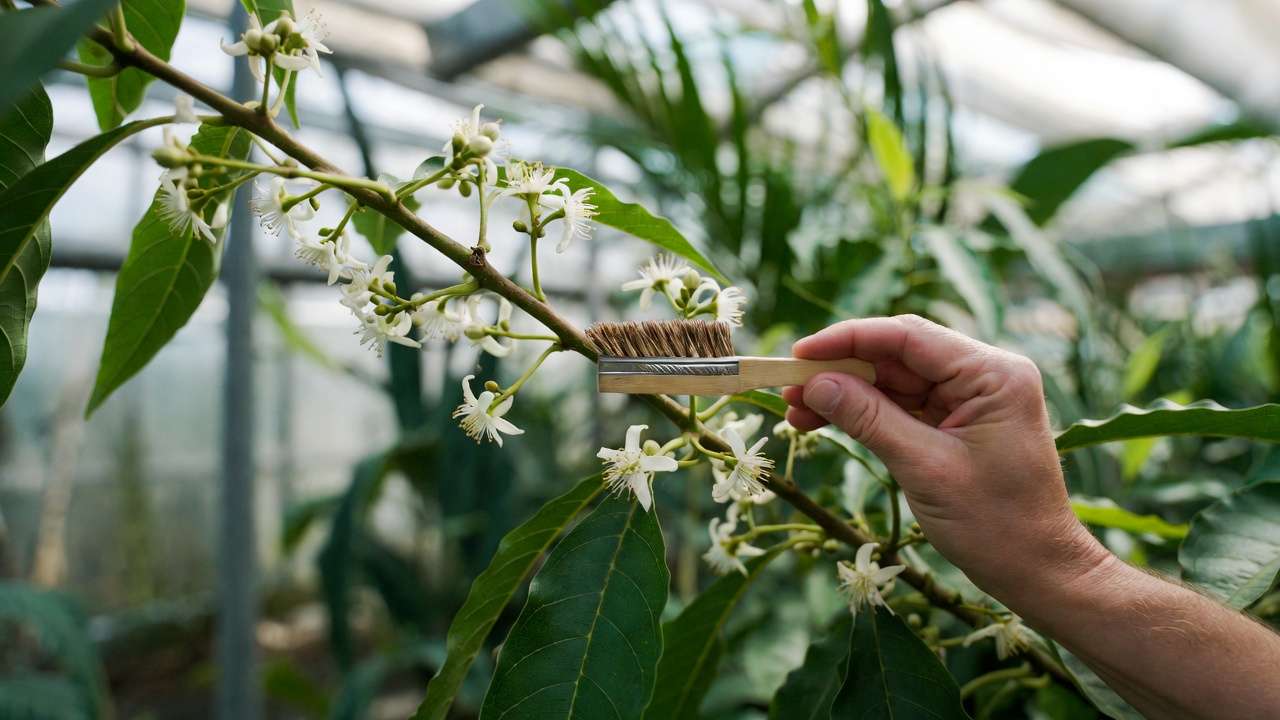
- Pollination: Hand-brush flowers or introduce fans/bumblebees 🐝.
- Pests/diseases: Monitor for aphids, scale, spider mites; use neem oil or insecticidal soap. Prevent citrus greening with quarantined stock.
Common Mistakes & Troubleshooting 🍂
- Yellow leaves? Often nitrogen deficiency or poor drainage — test soil pH (6.0–7.0 ideal).
- No fruit? Check light (12+ hours), pollination, or chill hours for some.
- Overcrowding? Prune aggressively; repot every 2–3 years.
- From my experience: Many first-timers underwater in winter — always check soil moisture!
Year-Round Harvest Strategies & Advanced Tips 📅
- Stagger varieties (early/late citrus) for continuity.
- Companion plants: Marigolds deter pests; herbs add biodiversity.
- LEDs extend short days; overwinter with minimal heat.
- Scale up: Multi-graft trees for variety in one pot.
FAQs About Growing Tropical Fruit Trees in Greenhouses ❓
Can I grow mangoes in zone 6? Yes, with heated greenhouse and dwarf varieties — but expect slower growth than citrus.
How much does heating cost? Depends on size/climate; insulated setups + efficient heaters keep monthly costs $50–200 in winter.
Best beginner tree? Meyer lemon — forgiving and rewarding fast 🍋.
(And more — detailed answers with tips.)
Conclusion: Start Your Tropical Greenhouse Adventure Today! 🌺
With the right tropical fruit trees and care, your greenhouse becomes a year-round source of exotic delights. Start small — perhaps a Meyer lemon or guava — and expand as you gain confidence. The joy of harvesting your own bananas in February is unmatched 🏝️.
Have you tried any of these? Share your experiences below, and subscribe for more expert tree care guides! Happy growing 🌱✨











