
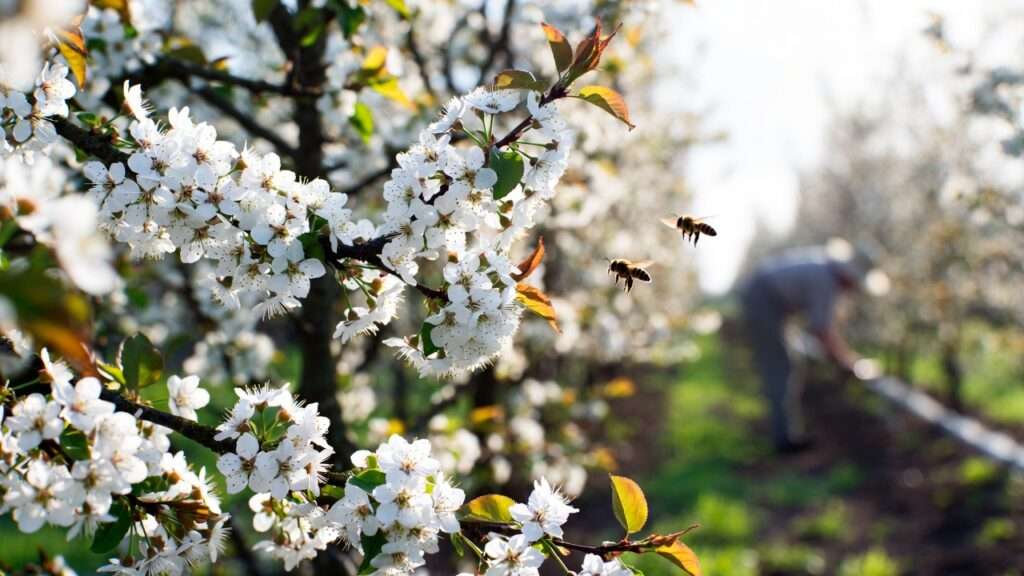
Have you ever waited eagerly for your sweet cherry tree to produce its first juicy harvest, only to be met with beautiful blossoms that drop off without forming a single cherry? 😔 This heartbreaking scenario is incredibly common among home gardeners and small orchard enthusiasts. The culprit? Often, it’s a misunderstanding or oversight in pollinator requirements for sweet cherries.
Sweet cherries (Prunus avium) are among the most pollination-dependent fruit trees. Unlike many self-fertile fruits, most sweet cherry varieties demand precise cross-pollination from compatible trees and reliable insect visitors—primarily bees—to transfer pollen effectively. Without meeting these requirements, fruit set can be zero, even on a healthy, well-cared-for tree.
In this in-depth guide, we’ll explore every aspect of sweet cherry pollination: from variety compatibility and bloom timing to bee management and troubleshooting common failures. Drawing from trusted university extension resources (like WSU Tree Fruit, Oregon State University Extension, and Michigan State University), we’ll provide practical, expert-backed advice to help you achieve consistent, abundant yields. Whether you’re in a temperate climate like many parts of Bangladesh or elsewhere, these strategies will empower you to turn disappointment into delicious success! ✨
Why Pollination Matters So Much for Sweet Cherries 🍒
Sweet cherries rely almost entirely on successful pollination for fruit development. Each flower must receive compatible pollen for the ovary to develop into a cherry—there’s little room for partial success. Poor pollination leads to an “all-or-nothing” outcome: either good fruit set or virtually none.
Several factors make sweet cherry pollination challenging:
- Early blooming period 🌷: Sweet cherries often flower in early spring when weather is unpredictable—cold snaps, rain, or wind reduce bee activity and pollen viability.
- Self-incompatibility 🚫: Most varieties are self-unfruitful (self-incompatible), meaning their own pollen won’t fertilize their flowers.
- Insect dependence 🐝: Pollen transfer is primarily by insects (honey bees being the most efficient), with wind playing a negligible role.
- Compatibility groups 🔄: Even compatible varieties must belong to different S-allele groups to avoid cross-incompatibility.
University experts, including those from Washington State University (WSU) and Oregon State University (OSU), note that the majority of sweet cherry crop failures trace back to inadequate pollination—either missing a suitable pollinizer, mismatched bloom times, or insufficient pollinators.
Understanding these requirements isn’t just academic; it’s the key to transforming your tree from ornamental to productive.
Understanding Sweet Cherry Pollination Basics
Self-Fertile vs. Self-Unfruitful Varieties
The first step in mastering pollinator requirements for sweet cherries is knowing your variety’s type:
- Self-unfruitful (self-incompatible, SI): These cannot set fruit using their own pollen and require a different, compatible variety nearby. Classic examples include Bing, Lambert, Rainier, Van, and Royal Ann (Napoleon). These make up the majority of traditional sweet cherries.
- Self-fertile (self-fruitful, SF): These can produce fruit on their own, thanks to genetic mutations that allow self-pollination. Popular self-fertile varieties include:
- Stella (the original self-fertile sweet cherry)
- Lapins
- Sweetheart
- Skeena
- Black Gold
- White Gold
- Sonata (Sumleta)
- Glacier
- Santina
- Benton
Even self-fertile varieties often yield better with cross-pollination from another tree, so planting a second variety is still recommended for maximum production.
Cross-Pollination Requirements
For self-unfruitful varieties, successful cross-pollination needs three key elements:
- Compatible pollinizer: From a different compatibility (S-allele) group. Varieties in the same group (e.g., Group III: Bing, Lambert, Royal Ann) are cross-unfruitful and won’t pollinate each other.
- Overlapping bloom times: The pollinizer must flower at the same time or with significant overlap (typically within the same 7-10 day bloom window).
- Proximity: Trees should be within 50-100 feet (15-30 meters) for efficient bee transfer. In home gardens, closer is better.
S-allele compatibility is genetically controlled—pollen with matching alleles is rejected by the style. Reliable charts from WSU, OSU, and MSU extensions help match varieties.
The Role of Insect Pollinators
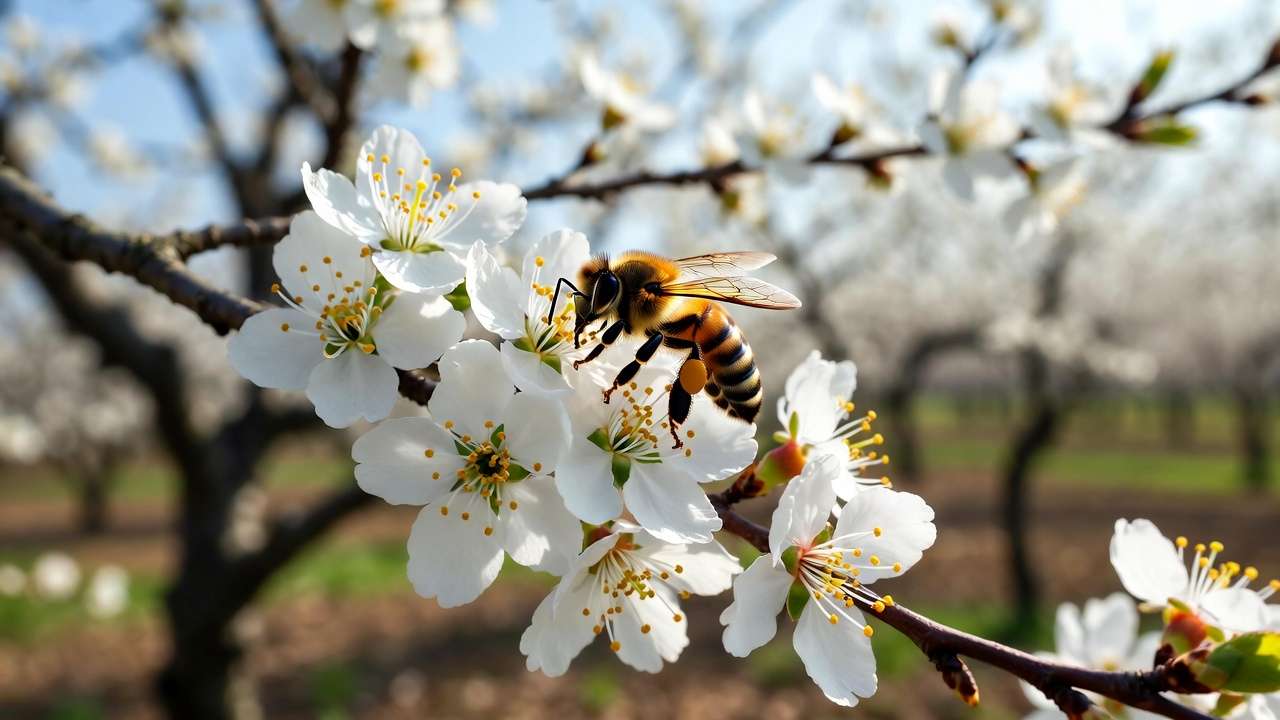
Even with perfect variety pairing, pollination fails without effective pollinators. Honey bees (Apis mellifera) are the workhorses 🐝, visiting thousands of flowers daily and showing flower constancy (sticking to one crop type). Wild pollinators like bumblebees and solitary bees (e.g., blue orchard bees) contribute, especially in cooler conditions.
Wind is ineffective for sweet cherries—pollen is heavy and sticky, requiring insect vectors.
Choosing the Right Pollinizer Varieties 🌳
Selecting a pollinizer is crucial for success. Here’s a practical overview based on extension recommendations:
Popular Sweet Cherry Varieties and Their Pollinizers
From WSU and OSU charts:
- Bing (Group III): Compatible with Van, Sam, Rainier, Stella, Black Gold, Montmorency (sour, sometimes works).
- Rainier (Group IX): Bing, Van, Stella, Lapins, Sweetheart.
- Lambert (Group III): Similar to Bing—Van, Sam, Rainier, Stella.
- Van (Group II): Bing, Rainier, Stella, Lapins.
- Royal Ann/Napoleon (Group III): Avoid same-group varieties like Bing/Lambert; use Van, Stella.
Universal pollinizers (self-fertile, broad compatibility): Stella, Lapins, Sweetheart, Black Gold, White Gold. These are excellent choices for flexibility—plant one as your main tree or dedicated pollinizer.
Bloom Timing Groups
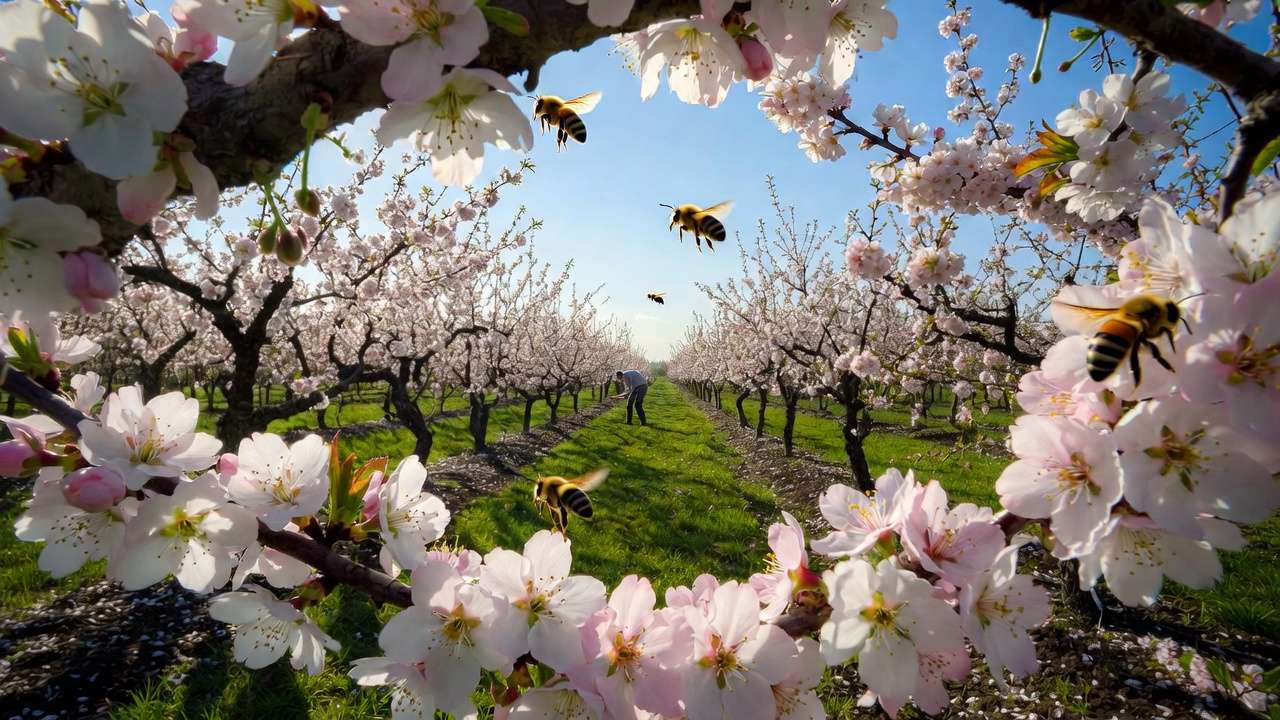
Bloom overlap is essential—categorized as:
- Early bloom: Black Tartarian, Summit, Chelan, Kristin.
- Mid bloom: Bing, Rainier, Van, Lambert, Royal Ann.
- Late bloom: Sweetheart, Skeena, Staccato, Regina.
In many regions, bloom periods align closely in good years, but variable springs can cause mismatches. Choose varieties from the same or adjacent groups for reliability.
Pro tip: In warmer or variable climates (like parts of South Asia), opt for later-blooming self-fertile varieties to avoid frost damage during bloom.
Attracting and Supporting Effective Pollinators 🐝
Even the most perfectly matched varieties won’t set fruit without active pollinators to move pollen from anther to stigma. Sweet cherries bloom early in spring, often when conditions are cool and variable, so supporting a strong pollinator population is essential for reliable yields.
Best Pollinators for Sweet Cherries
- Honey bees (Apis mellifera): These are the gold standard for commercial and home orchards alike. They are efficient, show strong flower constancy (visiting the same crop repeatedly), and can be managed easily. For home gardens, having 1–2 strong hives within 1/4 mile (or ideally closer) provides excellent coverage. Extension services recommend 1–5 hives per acre in larger settings, but even one nearby hive can dramatically improve fruit set in a backyard.
- Bumblebees (Bombus spp.): Excellent for early, cool springs because they fly at lower temperatures (down to about 5°C/41°F) than honey bees. Wild bumblebees are often more effective per visit for cherries, as they buzz-pollinate and move between rows frequently.
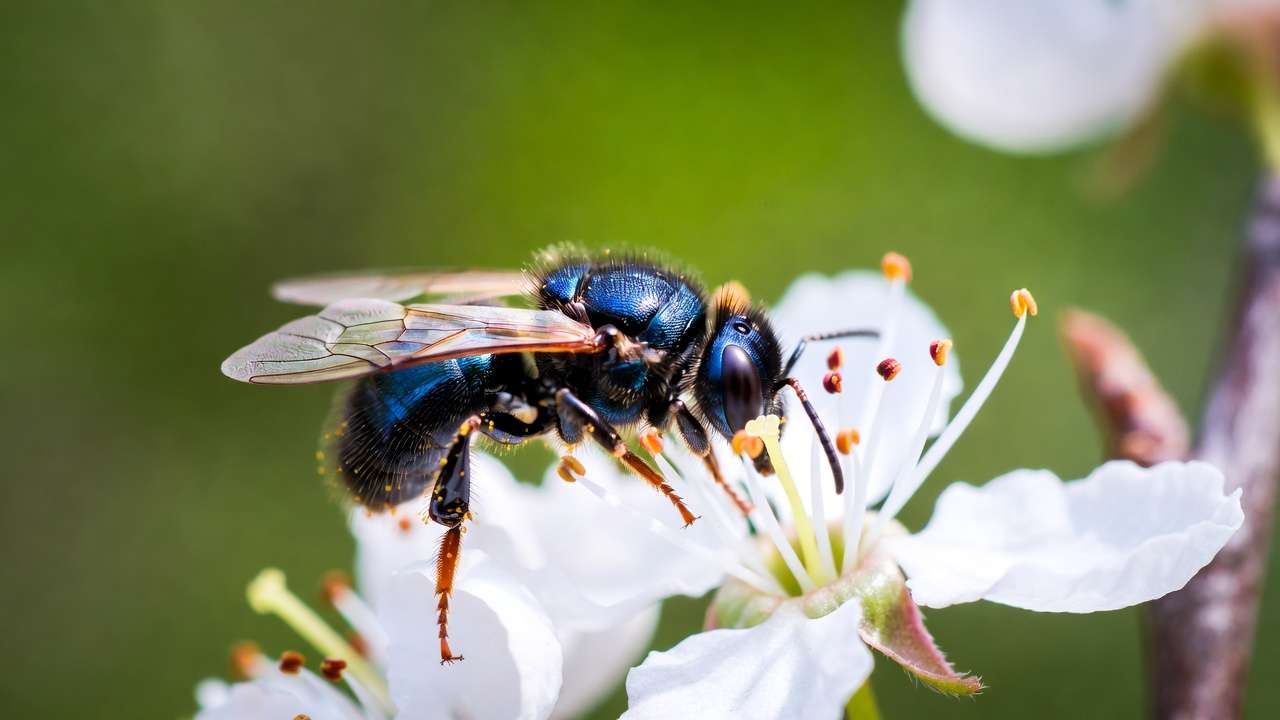
- Solitary bees (e.g., blue orchard bees, Osmia lignaria): These native bees are superstar cherry pollinators. They emerge early, work quickly in cool weather, and are highly efficient—one blue orchard bee can pollinate as many flowers as 100–200 honey bees in the same time. Many gardeners in temperate regions release managed blue orchard bees for superior results.
Wild pollinators (hoverflies, solitary bees, butterflies) contribute too, especially when habitat is enhanced.
Practical Tips to Boost Bee Activity in Your Garden
- Plant bee-friendly companions 🌼: Add early-spring bloomers like crocus, snowdrops, hellebores, or fruit tree understory plants (clover, mustard) that don’t compete heavily during cherry bloom. Avoid strong competitors like dandelions if possible during peak cherry flowering.
- Avoid pesticides during bloom ⚠️: Never spray insecticides when flowers are open—many are toxic to bees. If pest management is needed pre-bloom, use bee-safe options and apply in evening.
- Provide habitat and resources 🏠: Install bee hotels or bundles of hollow stems for solitary bees. Offer shallow water sources with pebbles (bees need water but can drown easily). Mulch with organic matter to support ground-nesting bees.
- Encourage wild areas 🌿: Leave some garden edges unmowed with native wildflowers to build local pollinator populations over time.
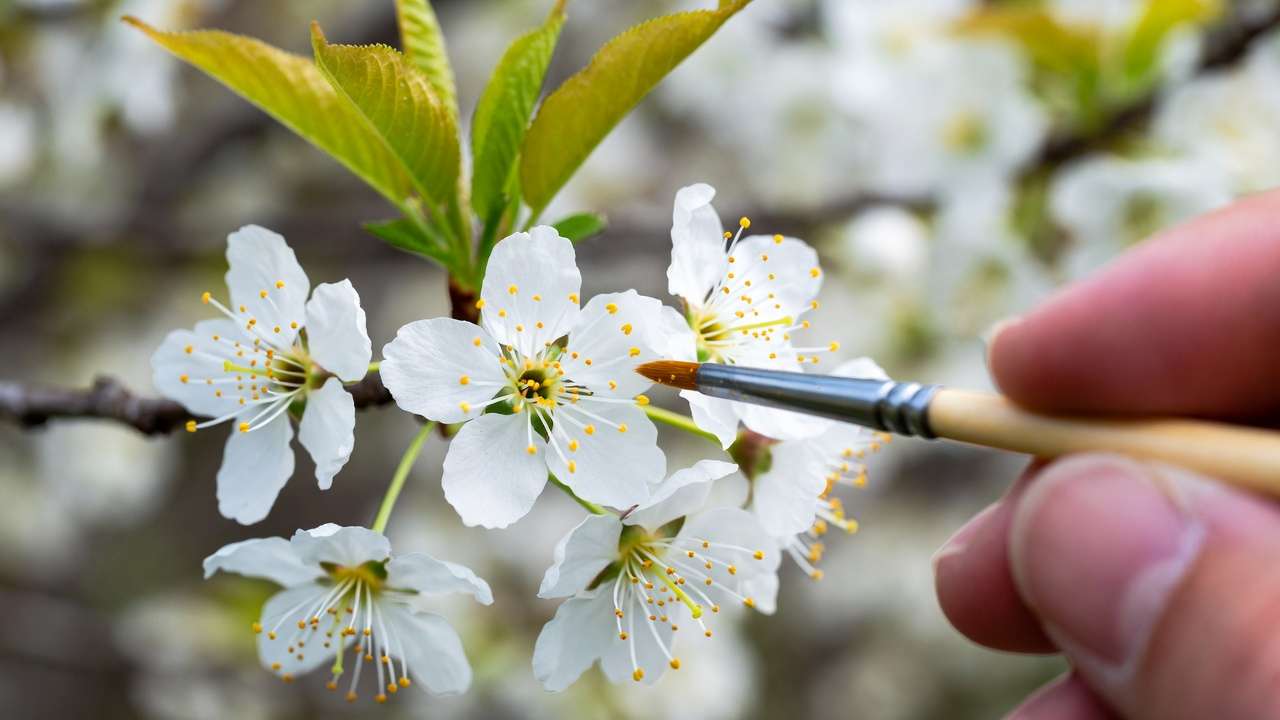
- Hand-pollination as backup ✋: In small gardens or poor bee years, use a soft artist’s brush or cotton swab to transfer pollen between compatible flowers on dry, sunny days. It’s labor-intensive but effective for a few trees—collect pollen in the morning when it’s viable and dab gently onto stigmas.
In regions like Barisal Division with warm, humid springs, focus on heat-tolerant bees and ensure good air circulation to reduce fungal issues that could indirectly affect pollinators.
Common Pollination Problems and How to Fix Them 🔧
Many gardeners face the “lots of flowers, no cherries” issue. Here’s a troubleshooting guide based on common causes reported by university extensions:
- Problem: No fruit at all Likely cause: Self-unfruitful variety with no compatible pollinizer nearby, mismatched bloom times, or zero bee activity. Fix: Confirm your variety’s type (check labels or reliable charts). Plant a universal self-fertile pollinizer like Stella, Lapins, or Sweetheart within 50–100 feet. If space is limited, graft a branch of a compatible variety onto your tree—many succeed with this simple technique!
- Problem: Low or spotty fruit set Likely cause: Insufficient pollinators, partial bloom overlap, bad weather (rain/wind/cold during bloom), or nutrient deficiencies stressing the tree. Fix: Boost bee numbers (see above), choose varieties with strong bloom overlap, protect blooms from frost if possible, and ensure balanced fertilization (avoid excess nitrogen, which promotes leaves over fruit).
- Problem: Incompatibility surprises Example: Planting Bing and Lambert together—they’re in the same S-allele group (Group III) and won’t cross-pollinate. Fix: Use compatibility charts from WSU, OSU, or MSU. Opt for universal self-fertiles as “insurance” pollinizers.
Real-world example: Gardeners often solve zero-fruit issues by adding a Stella branch graft—within 1–2 years, fruit appears thanks to reliable self-fertility and broad compatibility.
Planting and Management Tips for Maximum Pollination Success 🌳
To set your sweet cherries up for pollination success from day one:
- Site selection: Full sun (6+ hours), well-drained soil (cherries hate wet feet), good air flow to reduce disease and aid bee access. In humid areas like Bangladesh, raised beds or mounds help prevent root rot.
- Spacing and layout: Plant trees 15–25 feet apart (dwarf varieties closer). Interplant pollinizers evenly—e.g., every other tree or in alternating rows.
- For small spaces: Choose dwarf or semi-dwarf rootstocks, self-fertile varieties (Lapins, Sweetheart), or multi-variety combo trees that include built-in pollinizers.
- Pruning for bee access ✂️: Maintain an open vase or modified central leader shape so bees can reach inner flowers easily. Prune in late winter to encourage new growth and bloom.
- Climate considerations: In warmer subtropical zones, select heat-tolerant varieties (e.g., self-fertiles like Sweetheart) and monitor for early bloom risks from warm spells. Protect from late frosts with covers if needed.
Advanced Insights: Compatibility Groups and Charts 📊
Sweet cherry compatibility is governed by S-alleles (genetic factors). Pollen with matching alleles is rejected, so varieties in the same group are incompatible.
Key groups from OSU/WSU charts include:
- Group I (S1S2): Black Tartarian, Summit
- Group II (S1S3): Van, Regina, Cristalina
- Group III (S3S4): Bing, Lambert, Royal Ann/Napoleon, Kristin
- Group IX (S1S4): Rainier
Self-fertile varieties often have mutated S-alleles (e.g., Sweetheart is self-fertile but can pollinate others).
Use these simplified examples (based on WSU/OSU data):
- Bing → Good pollinizers: Van, Rainier, Stella, Sweetheart
- Rainier → Bing, Van, Stella, Lapins
- Avoid pairing same-group varieties like Bing + Lambert.
For the most accurate pairings, download charts from trusted extensions (e.g., OSU’s Sweet Cherry Compatibility & Bloom Timing Chart).
FAQs About Pollinator Requirements for Sweet Cherries ❓
Do all sweet cherries need a second tree? No—self-fertile varieties like Stella, Lapins, Sweetheart, Skeena, and Black Gold can set fruit alone. Most traditional ones (Bing, Rainier) do need cross-pollination. Even self-fertiles produce more with a partner! 🍒
Can sour cherries pollinate sweet cherries? Sometimes—Montmorency (sour) works for Bing or Rainier in some cases—but it’s unreliable. Stick to sweet varieties for best results.
How close do pollinizer trees need to be? Ideally 50–100 feet (15–30 m) for efficient bee transfer. Closer is better in home gardens.
What if I only have space for one tree? Go self-fertile! Lapins or Sweetheart are excellent choices for reliable solo production.
Can I hand-pollinate sweet cherries? Yes, on dry days with a brush—transfer pollen from donor to recipient flowers. It’s great for small trees or backup.
Conclusion
Mastering pollinator requirements for sweet cherries turns a frustrating “no-fruit” tree into a reliable producer of sweet, homegrown cherries. By selecting compatible varieties with overlapping bloom times, supporting healthy bee populations, and avoiding common pitfalls, you’ll enjoy bumper harvests year after year. 🍒🐝
Start simple: Plant a self-fertile universal pollinizer like Stella or Lapins, enhance your garden for bees, and watch the magic happen. Your sweet cherry success story starts here!
Have you tried growing sweet cherries? Share your experiences or questions in the comments—we love hearing from fellow gardeners! 🌸











