
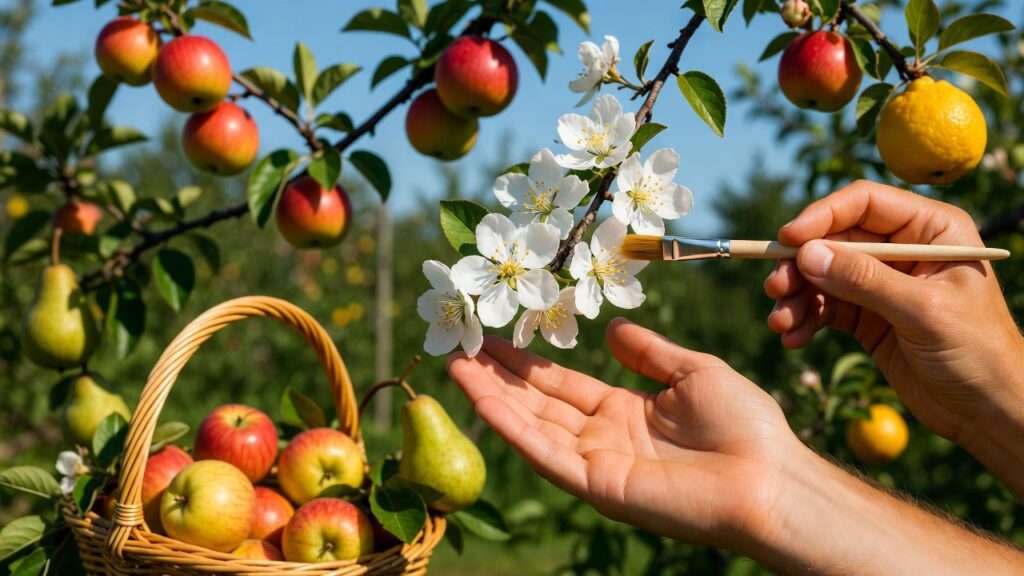
Imagine this: Your fruit tree is covered in stunning blossoms, buzzing with promise… but a few weeks later, the branches remain stubbornly bare of developing fruit. 😔 If you’ve experienced this disappointment, you’re far from alone. Declining bee populations, unpredictable weather, isolated planting, or even growing trees indoors or on patios can severely limit natural pollination. In many regions, including areas like Khulna with its humid tropical climate, these challenges make reliable fruit set tricky.
The good news? Hand pollination for fruit trees is a simple, hands-on technique that puts you in control. By manually transferring pollen, you can dramatically increase fruit set, enjoy bigger and more consistent harvests, and overcome nature’s obstacles—even when bees are scarce. This method has helped home gardeners double or triple yields on apples, pears, citrus, and more, while large-scale orchards in places like China rely on it for entire crops.
In this in-depth guide, I’ll walk you through everything you need to know as an experienced horticulturist specializing in tropical and subtropical fruit tree care. We’ll cover why hand pollination works, which trees benefit most, step-by-step techniques tailored to different species, pro tips for success, and real-world insights to help you achieve abundant, homegrown fruit this season. Let’s turn those beautiful blooms into a bountiful harvest! 🌟🍏
Why Hand Pollination Matters in Today’s Gardening World 🐝📉
Pollinators like honeybees and wild bees are essential for most fruit trees, transferring pollen from anthers to stigmas to enable fertilization and fruit development. However, global bee populations have faced severe declines. Recent surveys (2024-2025) report commercial honeybee colony losses averaging 55-62% in the U.S., with some projections reaching 70% due to factors like pests, pesticides, climate shifts, and habitat loss. These trends impact home gardeners too—fewer bees mean poorer natural pollination, especially during critical bloom windows.
Common challenges for fruit trees include:
- Self-incompatibility — Many varieties (e.g., most apples, pears, sweet cherries) require pollen from a different compatible cultivar.
- Poor bloom overlap or isolated trees — No nearby pollinizer means no cross-pollination.
- Weather issues — Rain, high humidity, or cold snaps during flowering reduce bee activity and pollen viability.
- Urban or indoor growing — Limited insects in cities, greenhouses, or patios.
- Tropical/subtropical conditions — In humid areas like Bangladesh, heavy rains or erratic flowering can hinder natural processes.
The rewards of stepping in with hand pollination are substantial. Natural fruit set on many trees is often just 5-10% of flowers; targeted hand methods can boost this to 30-50% or higher in controlled scenarios. Better pollination leads to:
- Higher yields and more uniform fruit
- Improved size, shape, flavor, and nutritional quality (e.g., better seed development enhances taste)
- Reduced alternate bearing (trees producing heavily one year, sparsely the next)
Studies on apples show cross-pollination improves fruit set, symmetry, and storability. In pears and citrus, hand techniques ensure reliable production when nature falls short. For gardeners facing bee scarcity, this empowers you to grow delicious, homegrown fruit reliably. 📈
Which Fruit Trees Benefit Most from Hand Pollination? 🌳🍋
Not every tree needs help, but many thrive with it. Here’s a breakdown:
Self-fertile (but often benefit from assistance) These have perfect flowers (both male and female parts) and can set fruit from their own pollen, but hand pollination boosts yields—especially indoors or in low-bee areas:
- Citrus (oranges 🍊, lemons 🍋, mandarins, grapefruits) — Great for container growing.
- Peaches and nectarines 🍑
- Apricots
- Most figs
- Persimmons
- Many plums (e.g., European types)
Cross-pollination dependent These require pollen from a compatible variety; hand methods are essential without a nearby partner:
- Apples 🍏 (most varieties need a pollinizer)
- Pears 🍐
- Sweet cherries
- Some plums (Japanese types)
- Certain avocados (Type A and B flowers for dichogamy)
Special cases that excel with hand help
- Avocados — Separate male/female phases; hand transfer counters timing issues.
- Pawpaws and cherimoyas — Large flowers, low natural set.
- Pomegranates — Uneven pollen distribution benefits from manual aid.
Quick-reference table for top candidates:
| Fruit Tree | Pollination Type | Typical Natural Set | Hand Pollination Boost Potential | Best For |
|---|---|---|---|---|
| Apples | Cross-required | 5-15% | High (up to 40%+) | Isolated or poor bee areas |
| Pears | Cross-required | 5-20% | High | Home orchards |
| Citrus | Self-fertile | 10-30% | Medium-High | Indoor/patio |
| Peaches | Self-fertile | 15-40% | Medium | Humid climates |
| Avocados | Self-fertile (dichogamy) | Variable | High | Tropical gardens |
When to skip: Fully wind-pollinated nuts (e.g., walnuts) or already overloaded self-fertile trees don’t usually need it.
Understanding Fruit Tree Flowers & Pollination Basics 🔍🌺
To master hand pollination, you first need to understand what’s happening inside those pretty blossoms. Fruit tree flowers are fascinating little reproductive factories, and knowing their anatomy and timing makes all the difference between patchy results and a tree loaded with fruit.
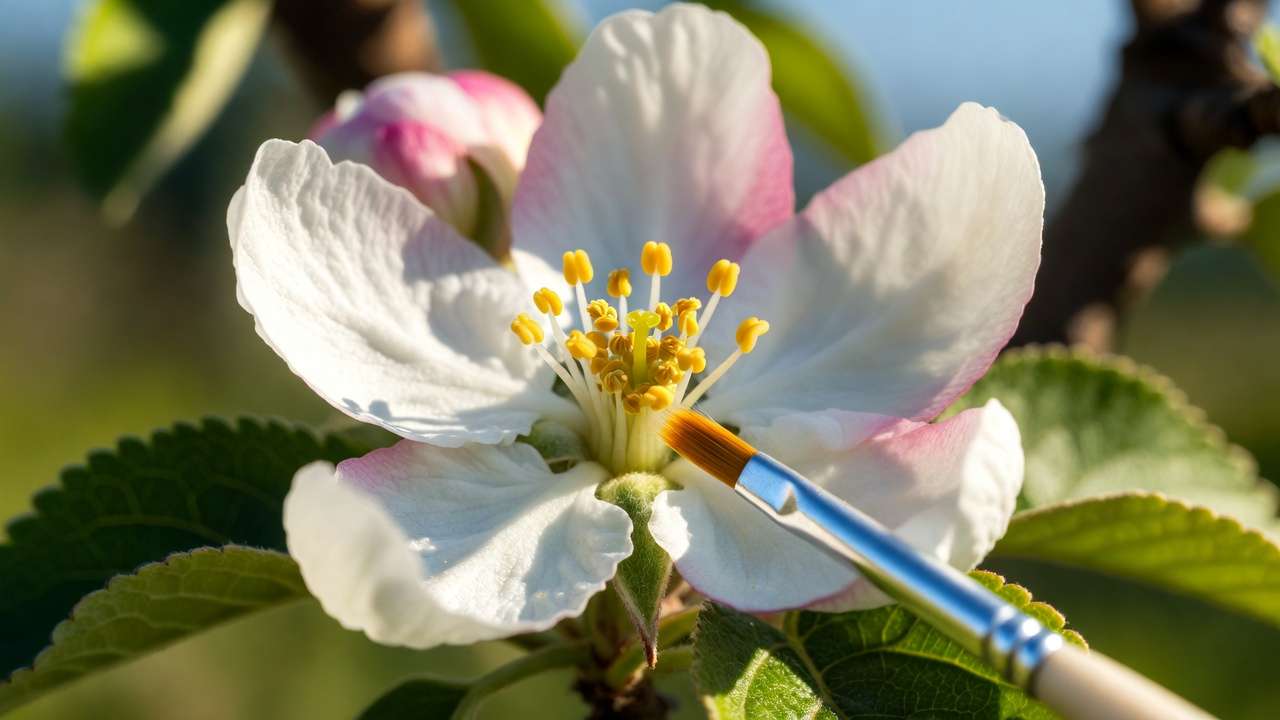
Most fruit trees produce perfect flowers (also called complete or hermaphroditic), meaning each flower contains both male and female parts:
- Anthers — the pollen-producing sacs at the tips of the stamens (male part). When mature, they split open (dehisce) and release powdery yellow pollen.
- Stigma — the sticky, receptive tip of the pistil (female part). This is where pollen must land to begin fertilization.
- Style — the tube connecting stigma to ovary.
- Ovary — contains ovules that become seeds if fertilized; the ovary wall develops into the fruit.
Some trees (e.g., certain avocados, kiwis) have imperfect flowers or dichogamy—male and female phases that don’t overlap perfectly on the same flower or tree, which is why hand pollination is especially valuable there.
Key signs a flower is ready for pollination:
- Anthers have opened and are shedding visible pollen (usually bright yellow or white).
- Stigma is moist, sticky, and often slightly enlarged or creamy in color (not dry and brown).
- Petals are fully open and beginning to reflex backward.
Pollen viability window is short—typically 1–3 days once released, though some citrus pollen lasts longer under cool, dry storage. Stigmas remain receptive for 3–8 days depending on species and weather.
Ideal environmental conditions:
- Temperature: 15–25°C (59–77°F) during application
- Humidity: Low to moderate (high humidity or rain can cause pollen to clump or germinate prematurely on the anther)
- Time of day: Mid-morning to mid-afternoon when flowers are warm and dry
In humid tropical climates like Khulna, Bangladesh, morning hours after dew dries (around 9–11 AM) often work best before afternoon heat and possible showers arrive. Avoid pollinating right after rain or when flowers are wet—pollen grains absorb moisture, swell, and lose viability quickly.
Pro insight: Many gardeners miss the narrow “sweet spot” by pollinating too early (before stigma is sticky) or too late (after it dries). A quick test: gently touch the stigma with a clean fingertip—if it feels tacky, it’s receptive. 🌼
Tools & Materials You’ll Need 🖌️🧰
You don’t need fancy equipment to get excellent results. Most successful home hand pollinators use items already in the house or garden shed.
Basic, low-cost tools (highly effective for beginners):
- Soft makeup brush, artist’s camel-hair brush, or small paintbrush (size 2–6) — Best for collecting and transferring pollen gently
- Cotton swabs / Q-tips — Great for precise application on small flowers
- Clean, soft feather (from craft stores) — Mimics natural bee brushing motion
- Your clean finger (washed, no lotion) — Surprisingly effective for larger flowers like citrus or peaches
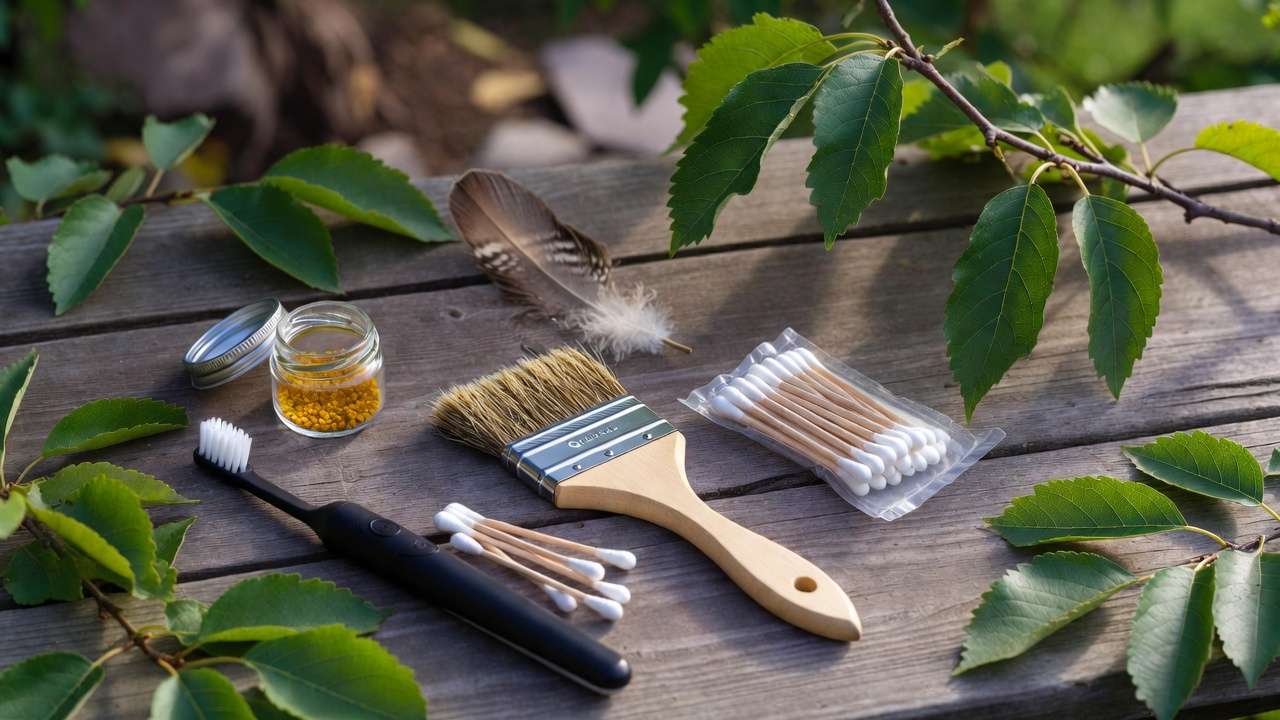
Advanced / higher-volume options:
- Small glass jar or ziplock bag — For collecting and storing pollen from donor trees
- Electric toothbrush (on low speed) — Excellent for vibrating/shaking pollen loose on citrus, peaches, or pawpaws
- Fine mesh sieve or coffee filter — To separate clean pollen from anthers/debris
- Small artist’s palette or white paper — Makes it easy to see and collect yellow pollen grains
Storage tips (if you need to collect pollen in advance):
- Keep pollen dry and cool (refrigerator at 4–8°C / 39–46°F works for 1–5 days for most species)
- Use a small airtight container with a silica gel packet or dry rice to absorb moisture
- Label clearly with tree variety and collection date
Important safety note: Never apply insecticides or fungicides during bloom period. If you must spray earlier, wait at least 7–10 days before hand pollinating to avoid harming developing fruitlets.
Step-by-Step Guide: How to Hand Pollinate Fruit Trees 🚀🍐
This is the heart of the process—the part where you turn theory into action and see real results on your tree. Follow these steps carefully, and even beginners can achieve impressive fruit set increases.
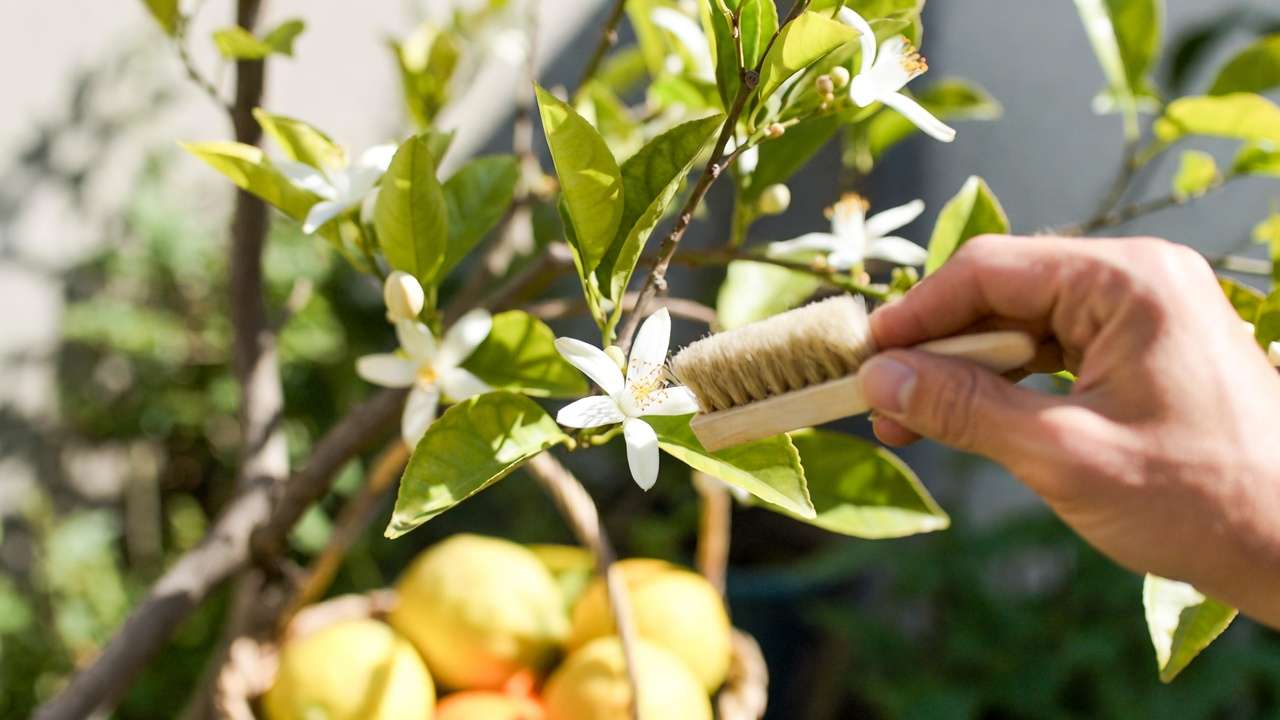
1. Preparation (Do this first for best success)
- Confirm your tree’s pollination type (self-fertile or cross-pollination required—refer back to the table in the earlier section).
- Identify receptive flowers: Look for fully open blooms with dehisced (open) anthers shedding pollen and sticky, moist stigmas.
- Choose your pollen source: – For self-fertile trees → Use flowers on the same tree (or even the same branch). – For cross-pollination varieties → Collect from a compatible pollinizer variety (e.g., ‘Granny Smith’ pollen for ‘Golden Delicious’ apples). If the pollinizer is far away, plan to collect and store pollen ahead.
- Pick a dry, warm, sunny day (ideally 18–24°C / 64–75°F with low wind). Avoid rainy or very humid mornings in places like Khulna.
- Gather your tools: soft brush or Q-tip, small jar/bag if storing pollen, and a marker or tape to label branches if you want to track results.
2. Basic Technique for Self-Fertile Trees (Citrus, Peaches, Apricots, etc.) This is the simplest and most common method—perfect for beginners and container-grown trees.
Step-by-step:
- Wait until mid-morning when dew has dried and flowers are warm.
- Gently dab or swirl the brush/Q-tip into several open anthers on a flower to collect bright yellow pollen. You’ll see it stick to the bristles.
- Immediately transfer by lightly brushing or dabbing the collected pollen directly onto the central stigma of target flowers (same tree). Aim to coat the stigma generously but gently—don’t smash the flower.
- Work your way around the tree, pollinating 20–50% of open flowers (more is better for young/small trees; less for large, mature ones to avoid over-cropping).
- Repeat every 1–3 days during the bloom period (usually 7–14 days total) to catch later-opening flowers.
Pro tip: For citrus 🍊🍋, many growers also gently shake branches or use an electric toothbrush on low speed to dislodge extra pollen, then brush it onto stigmas. This mimics bee vibration and can increase set by 20–30%.
3. Cross-Pollination Technique (Apples, Pears, Sweet Cherries, etc.) When pollen must come from a different variety:
Step-by-step:
- Collect pollen from the donor (pollinizer) tree: – Brush or tap open anthers over a clean white paper, small jar, or ziplock bag. – For best viability, collect fresh each day or store refrigerated (up to 3–5 days for apples/pears).
- Transport pollen to the recipient tree (if distant, carry in a cool, dry container).
- Apply the same way as self-fertile: swirl/brush pollen onto receptive stigmas of the target variety.
- Label pollinated branches (e.g., with colored tape or tags) so you can compare hand-pollinated vs. natural set later.
- Make multiple applications: Research shows 3–5 pollinations per flower (spread over days) can double fruit set in apples and pears compared to a single touch.
4. Tree-Specific Variations & Pro Techniques
- Citrus 🍋: Combine brushing with light branch shaking. Focus on mid-morning. Indoor trees especially respond well.
- Apples & Pears 🍏🍐: Multiple touches are key—stigmas remain receptive 4–7 days. Pollinate when 30–50% of king bloom (central flower in cluster) is open.
- Peaches & Nectarines 🍑: Early morning applications work best; flowers are short-lived (3–5 days receptive).
- Avocados 🥑: Critical due to dichogamy (Type A and B flowers open at different times). Collect pollen in morning from one type and apply to the other in afternoon/evening when receptive.
- Pawpaw & Cherimoya: Use a small brush to transfer between flowers; natural set is often <5% without help.
- Plums & Cherries: Pollinate early in bloom cycle; sweet cherries especially need compatible pollen.
5. How Many Flowers to Pollinate?
- Small/young trees: Pollinate as many as you can comfortably reach (50–100% coverage).
- Mature/large trees: Target 20–40% of open flowers to avoid branch breakage from excessive fruit load.
- Goal: Aim for a final fruit set of 1–2 fruits per cluster (after natural June drop).
Common Mistakes to Avoid ❌
- Pollinating too early (before stigma is sticky) or too late (after it browns).
- Using wet tools or pollinating in rain/high humidity—pollen clumps and fails.
- Over-shaking branches (damages delicate petals/ovaries).
- Mixing incompatible pollen (always verify variety compatibility charts).
- Forgetting to re-apply during extended bloom.
With practice, most gardeners see noticeable improvements after just one season. Track your results by comparing marked branches to unmarked ones—you’ll likely see 2–4× more fruit where you intervened. 🌟
Timing & Frequency: When to Start & How Often ⏰🌞
Timing is everything in hand pollination—get it wrong, and even perfect technique yields poor results. Here’s how to nail the schedule for maximum fruit set.
Seasonal Bloom Timing for Major Fruit Trees Different species flower at different points in spring (or year-round in tropical climates). In temperate zones, blooms cluster in early to late spring; in subtropical/tropical areas like Khulna, Bangladesh, many fruit trees flower erratically or in response to dry spells and temperature shifts.
Quick bloom calendar reference (adjust ±2 weeks for your local microclimate):
- Early spring (Feb–Mar in subtropics; Mar–Apr temperate): Peaches, nectarines, apricots, some plums
- Mid-spring (Mar–Apr subtropics; Apr–May temperate): Apples, pears, sweet cherries, most citrus in cooler zones
- Late spring/early summer (Apr–Jun): Late apples/pears, some plums
- Year-round or multiple flushes (tropical/subtropical): Citrus (especially lemons, limes), avocados, pawpaws, some figs, mangoes (if attempting hand pollination on varieties with low natural set)
Start watching your tree 7–10 days before expected first bloom. Mark the day the first flowers open fully—that’s your Day 1.
Daily Best Hours
- Optimal: 9 AM–4 PM on dry, sunny days when temperatures are 18–28°C (64–82°F).
- Peak pollen release & stigma receptivity: Usually 10 AM–2 PM after morning dew evaporates.
- In humid Khulna conditions: Prioritize early morning (after 8–9 AM once dew dries) to beat afternoon heat/humidity spikes or pre-monsoon showers. Avoid pollinating after 4 PM when flowers may close or pollen viability drops.
Frequency & Duration
- Bloom period length: Most trees hold open receptive flowers for 7–14 days (shorter in hot weather, longer in cool).
- How often to pollinate: Every 1–3 days during peak bloom. – Self-fertile trees: 3–5 total sessions usually sufficient. – Cross-pollination varieties: 4–7 sessions for best results (studies on apples show cumulative applications increase set significantly).
- Daily time investment: 10–30 minutes per small/medium tree; scale up for larger ones.
Weather Watch Skip rainy, foggy, or very windy days—pollen gets washed away or blown off. If a storm hits mid-bloom, resume the day after once flowers dry. In high-humidity regions, pollinate during the driest window of the day.
Pro tip: Keep a simple bloom journal (phone notes or notebook): Record date, weather, number of open flowers, and sessions completed. Over seasons, you’ll spot your tree’s perfect timing window. 📅
Tips for Maximum Success & Higher Yields 🌟🍑
These expert-level tweaks separate good results from exceptional ones:
- Thin strategically after set — Once small fruitlets form (usually 4–6 weeks post-bloom), thin to 1–2 fruits per cluster. This channels energy into fewer, larger, higher-quality fruits and prevents branch breakage.
- Support heavy crops — Use props, slings, or stakes under loaded branches, especially on peaches, apples, and pears.
- Hybrid approach — Plant bee-attracting companions (marigolds, borage, lavender) nearby to boost natural pollination alongside your hand efforts.
- Track & compare — Mark 2–3 branches with tape: one hand-pollinated, one natural. Photograph weekly to see the difference—great for motivation and refining technique.
- Scale for larger trees — Use a telescoping pole with a soft brush attached or recruit family/friends for team pollination sessions.
- Indoor & container bonus — Dwarf or potted trees (common for citrus, figs, dwarf apples) are ideal candidates—easy access, controlled conditions, often zero natural pollinators. Move outdoors during bloom if possible for hybrid benefit.
- Boost pollen viability — Collect extra pollen early in bloom, store refrigerated, and use as backup if weather turns bad.
- Nutrition tie-in — Ensure trees have balanced fertilizer (higher potassium/phosphorus during bloom) and good watering—stressed trees set fewer fruit even with perfect pollination.
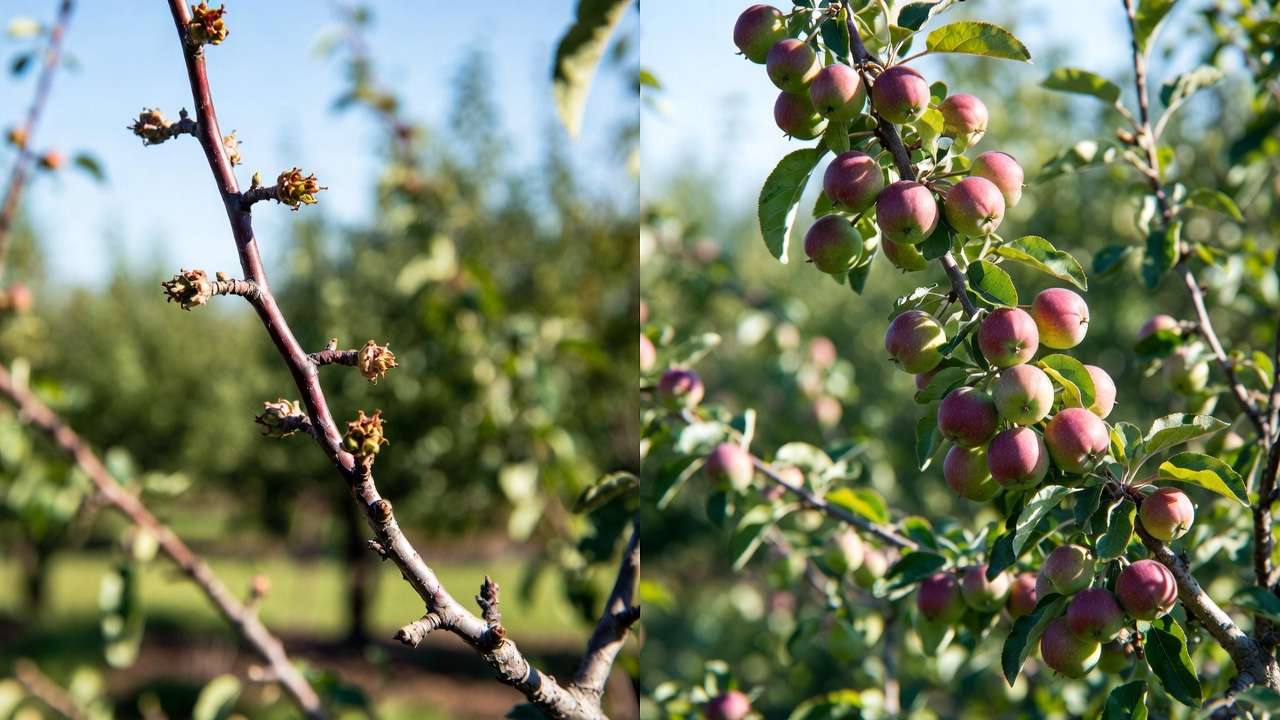
Implement just a few of these, and many gardeners report 2–3× yield increases compared to relying on nature alone.
Potential Challenges & Troubleshooting ⚠️🛠️
Even with care, issues can arise. Here’s how to diagnose and fix:
- Low or no fruit set → Check: Pollen source compatibility? Timing (too early/late)? Weather interference? Test stigma receptivity next time.
- Fruitlets form then drop (June drop) → Normal thinning process—trees self-regulate. Thin remaining fruitlets manually if still too heavy.
- Too many fruits → small size/branch strain → Aggressive thinning needed.
- Uneven results across tree → Focus on sunny, well-ventilated branches first (they set better).
- Pollen seems ineffective → Verify variety charts (some cultivars are poor pollen donors). Collect fresh daily if stored pollen fails.
Long-term note: Hand pollination is a powerful workaround, but supporting pollinator habitats (native plants, no-spray zones, water sources) remains the best sustainable solution.
Real-Life Examples & Case Studies 📖🌍
- A home gardener in a suburban U.S. yard with one isolated ‘Honeycrisp’ apple tree used cross-pollen from a neighbor’s ‘Fuji’ (collected and brushed 5× over 10 days)—result: from ~15 apples to 120+ in one season.
- Indoor potted Meyer lemon growers in apartments routinely achieve 50–100 fruits per small tree using daily Q-tip brushing during winter blooms.
- In large Chinese apple orchards (where bee shortages are acute), teams of workers hand-pollinate millions of flowers annually, achieving consistent high yields.
- Tropical gardeners in humid regions adapt by focusing on morning sessions and using electric toothbrushes for citrus flushes—many report reliable crops despite erratic bee activity.
These stories show the method scales from balcony pots to commercial blocks.
Frequently Asked Questions (FAQ) ❓🍎
Here are the most common questions gardeners ask about hand pollination for fruit trees, answered with practical, expert-backed insights.
Is hand pollination worth the time and effort? Yes, especially if natural pollination fails due to low bee activity, weather, or isolation. Many home growers report 2–4× more fruit in the first season, and the time investment is modest (10–30 minutes per session, a few times per bloom period). For small trees, patios, or valuable varieties, the payoff in homegrown fruit is huge.
Can I hand pollinate tall or large fruit trees? Absolutely. Use a sturdy step ladder for medium trees, or attach a soft brush to a telescoping pole (available at garden stores) for taller ones. In commercial settings like apple orchards in China, workers use long poles or even cherry pickers. For very large trees, focus on the lower, easily reachable branches first—you’ll still get a meaningful yield boost.
What’s the difference between self-fertile and self-incompatible trees? Self-fertile trees can set fruit using their own pollen (e.g., most citrus, peaches). Self-incompatible (or cross-pollination required) trees need pollen from a different but compatible variety (e.g., most apples, pears). Hand pollination helps both types, but it’s essential for cross-pollinators when no compatible tree is nearby.
How do I store pollen for later use? Collect fresh pollen into a small dry jar or ziplock bag. Store in the refrigerator (4–8°C / 39–46°F) with a silica gel packet or dry rice to absorb moisture. Most fruit tree pollen stays viable 1–5 days this way (apples/pears up to 5–7 days; citrus longer). Label with variety and date, and use as fresh as possible for best results.
Will hand pollination work on young or newly planted trees? Yes, often even better—young trees usually have fewer flowers, so you can pollinate a higher percentage easily. Just ensure the tree is healthy and not stressed (good water, no nutrient deficiency). First-year blooms may produce light crops anyway, but hand help maximizes what’s possible.
Are there any risks to the tree from hand pollination? Very low if done gently. Avoid rough handling that damages petals or young ovaries. Don’t over-pollinate massive mature trees without planning to thin fruit later (to prevent branch breakage). Never use dirty tools or apply during pesticide spraying windows.
Does this work in humid tropical climates like Khulna? Yes, with adjustments. Focus on early morning sessions after dew dries but before heat/humidity peaks. Skip rainy days entirely. Citrus, mango flushes, guava, and some figs respond especially well here when natural pollinators are inconsistent due to monsoon patterns.
Conclusion & Call to Action 🌳✨
Hand pollination for fruit trees is one of the most empowering, low-cost techniques any home gardener can master. When bees are scarce, weather turns uncooperative, or your favorite tree stands alone, you no longer have to accept disappointing yields. With a simple brush or Q-tip, careful timing, and a bit of patience, you can take control and enjoy heavier branches loaded with juicy, homegrown fruit—often 2–3 times more than nature provides on its own.
Whether you’re tending a single potted Meyer lemon on a Khulna balcony, a small backyard orchard of apples and pears, or tropical favorites like avocados and pawpaws, this method delivers real results season after season.
This spring (or your next bloom flush), give it a try. Start small—pollinate just one branch and compare it to the rest. You’ll likely be amazed at the difference and hooked on the process.
Have you tried hand pollination before? Which fruit trees are you planning to help this year? Drop a comment below—I’d love to hear your experiences, successes, or any local adaptations that work well in your area. Happy pollinating, and here’s to baskets overflowing with your best harvest yet! 🍏🍊🥑🚀











