
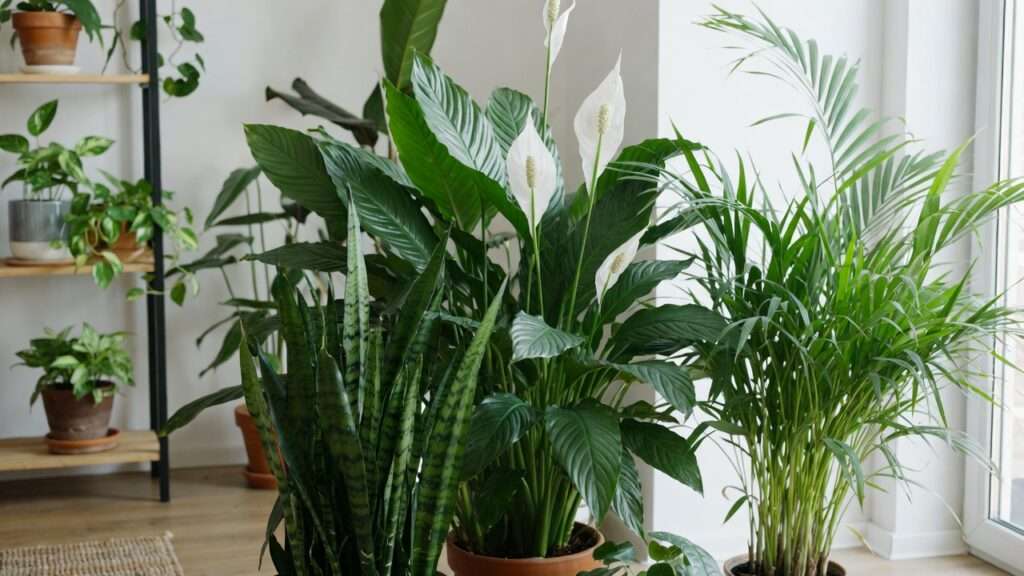
Imagine walking into your home after a long day, closing the door, and immediately feeling that invisible heaviness in the air — stale, slightly chemical, and just… not fresh. 😷
You’re not imagining it.
Modern homes are often more polluted indoors than the air outside. Thanks to energy-efficient windows, synthetic materials, furniture off-gassing, cleaning products, printers, and even our everyday personal care items, indoor air can contain 2–5 times higher levels of volatile organic compounds (VOCs) like formaldehyde, benzene, trichloroethylene, xylene, toluene, and ammonia than outdoor air (EPA, 2023).
The good news? You can fight back — beautifully and naturally — with houseplant combinations to boost indoor air quality. 🌱💨
While a single peace lily or snake plant can help, strategic groupings of houseplants create a powerful synergy. Different species target different pollutants, work together with beneficial soil microbes, balance humidity, release oxygen (some even at night!), and reduce airborne mold spores and allergens. When thoughtfully combined, these living air purifiers become far more effective than any lone plant ever could.
In this in-depth guide, we’ll go beyond the usual “top 10 air-purifying plants” lists.
Instead, you’ll discover expert-curated houseplant combinations proven to deliver maximum purification for real homes — whether you have a small apartment, a pet-filled living room, a low-light bedroom, or a steamy bathroom. These pairings are chosen not only for their science-backed air-cleaning abilities (rooted in the famous NASA Clean Air Study and follow-up research), but also for ease of care, visual harmony, and compatibility with everyday lifestyles.
Ready to turn your space into a cleaner, fresher, greener sanctuary? Let’s dive in. 🌿🏡
Why Houseplant Combinations Work Better Than Single Plants
Most popular articles stop at recommending individual “best air-purifying plants.” But the real magic happens when you combine them strategically. Here’s why groupings outperform solo plants every time:
- Broader Pollutant Coverage 🔬 No single houseplant removes all common indoor toxins. For example:
- Peace lilies excel at removing formaldehyde and ammonia.
- Snake plants are champions at benzene and trichloroethylene.
- Bamboo palms handle xylene and toluene exceptionally well. Pairing plants with complementary abilities creates a wider “net” that captures more VOCs.
- Synergy with Soil Microbes 🦠 NASA researchers emphasized that the most effective filtration happens in the root zone, where beneficial microbes break down pollutants. When you group plants in clusters, they share the same soil environment, increasing microbial diversity and activity — which boosts overall purification power.
- Improved Humidity & Oxygen Balance 💧🌬️ Plants release moisture through transpiration. Combining medium- and high-humidity lovers (like ferns and peace lilies) with drought-tolerant species (snake plants, ZZ plants) creates a natural humidity-regulating system — especially helpful in dry climates or air-conditioned spaces.
- Nighttime Oxygen Bonus 🌙 Certain plants (notably snake plants and aloe vera) perform CAM photosynthesis, releasing oxygen at night instead of during the day. Pairing one with daytime oxygen producers gives your bedroom fresher air around the clock.
- Aesthetic & Psychological Wins 😌 A well-designed grouping looks intentional and luxurious — far more impactful than random single pots scattered around. Biophilic design studies show that thoughtfully placed plants reduce stress, improve focus, and even speed recovery from illness.
Bottom line: One great plant is helpful. A smart combination is transformative. 🌟
Top Pollutants in Homes & How Plants Tackle Them
Before we jump into the combinations, let’s quickly understand the enemies we’re fighting:
- Formaldehyde 😷 — Found in pressed-wood furniture, carpets, insulation, adhesives.
- Benzene 🚬 — Present in paints, varnishes, tobacco smoke, glues, detergents.
- Trichloroethylene 🧼 — Common in dry-cleaning solutions, paints, varnishes, adhesives.
- Xylene & Toluene 🖨️ — Emitted by paints, lacquers, printing inks, adhesives, rubber.
- Ammonia 🧹 — Released by household cleaners, window cleaners, dyes.
- Airborne mold spores & allergens — Thrive in damp, poorly ventilated areas.
Here’s a quick reference of top-removing plants (based on NASA Clean Air Study + extended research by Wolverton, the EPA, and recent university studies):
| Pollutant | Top-Removing Plants |
|---|---|
| Formaldehyde | Peace Lily, Boston Fern, Bamboo Palm, Dracaena |
| Benzene | Snake Plant, Spider Plant, English Ivy, Dracaena |
| Trichloroethylene | Peace Lily, Snake Plant, Gerbera Daisy |
| Xylene/Toluene | Areca Palm, Rubber Plant, ZZ Plant |
| Ammonia | Peace Lily, Spider Plant, Orchids |
| Mold/Allergens | English Ivy, Boston Fern, Snake Plant |
No single plant covers everything — but the right combinations do. 🌈
The Best Houseplant Combinations to Boost Indoor Air
Here are 8 carefully researched, room-specific groupings that deliver maximum air purification while looking beautiful and being realistic to maintain.
Bedroom Serenity Combo 🌙😴
Plants:
- Snake Plant (Sansevieria) — 1–2 medium
- Peace Lily — 1 medium
- Aloe Vera or English Lavender — 1 small
Why it works: Snake plants release oxygen at night (perfect for bedrooms), Peace lilies tackle formaldehyde and ammonia from bedding/laundry products, and Aloe/Lavender add mild antibacterial properties + calming aroma.
Ideal placement: Near the bed or on a nightstand (medium to low indirect light).
Care tips: Water snake plant & aloe sparingly; peace lily likes to stay evenly moist. All are low-maintenance.
Pet note: Peace lily is mildly toxic if chewed — keep out of reach or swap for a spider plant if pets are curious nibblers.
Living Room Power Trio 🛋️🌴
Plants:
- Bamboo Palm (1 medium to large)
- Spider Plant (1–2 hanging or on shelves)
- Dracaena ‘Janet Craig’ (1 tall floor specimen)
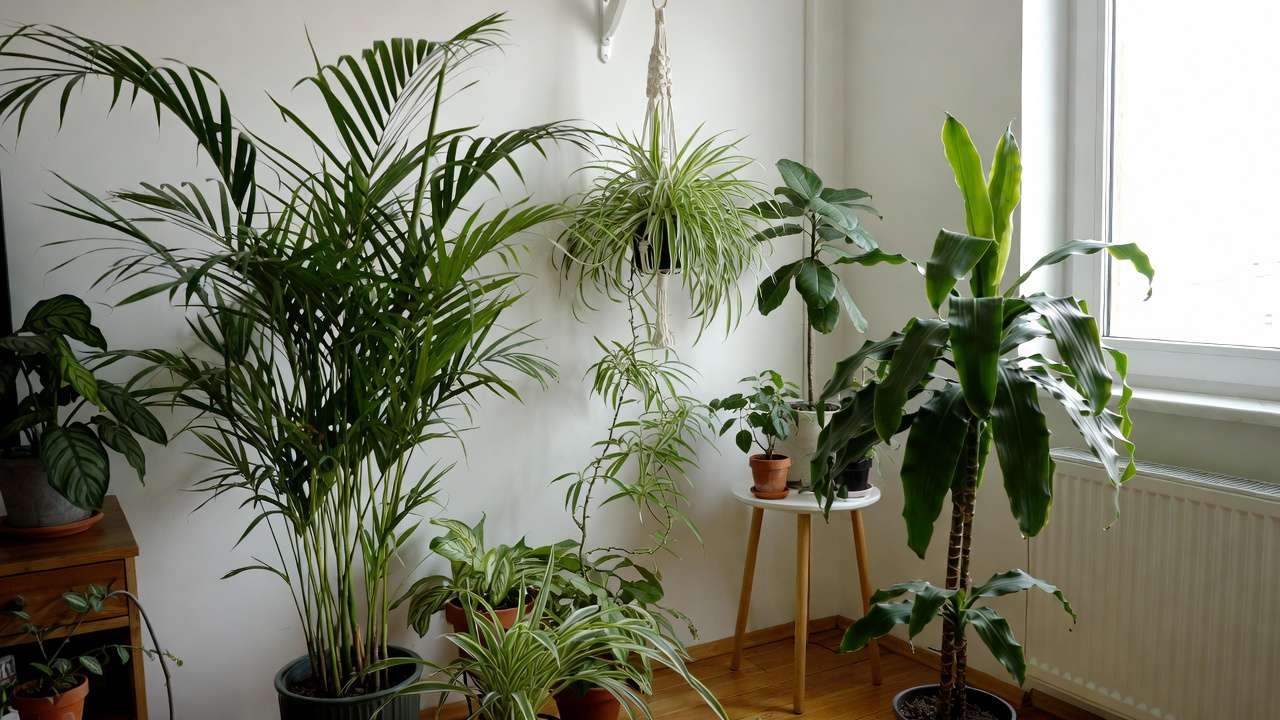
Why it works: This trio is a powerhouse for living/family rooms. Bamboo Palm acts as a natural humidifier while removing xylene, toluene, and formaldehyde. Spider Plants are fast-growing, produce “pups” for easy propagation, and are excellent at filtering carbon monoxide, benzene, and formaldehyde. Dracaena Janet Craig is tall, architectural, and one of the strongest benzene and trichloroethylene removers — perfect for larger, open spaces with furniture off-gassing.
Ideal placement: Group them together in a bright corner near a window (bright indirect light is best). The bamboo palm loves humidity, so mist occasionally or place near a humidifier in winter.
Care tips: Water when the top inch of soil feels dry. Spider plants are nearly indestructible — they thrive on neglect! Rotate the Dracaena every few weeks for even growth.
Aesthetic appeal: The lush, feathery fronds of the bamboo palm contrast beautifully with the arching variegated leaves of the spider plant and the glossy, dark green swords of the Dracaena. It feels like a mini tropical oasis.
Pet note: All three are generally pet-safe (mild stomach upset possible if large quantities are eaten), making this combo ideal for homes with curious cats or dogs. 🐱🐶
Kitchen Freshness Duo 🍳🌱
Plants:
- Golden Pothos (Devil’s Ivy) — 1–2 trailing pots or hanging
- English Ivy — 1 trailing or climbing
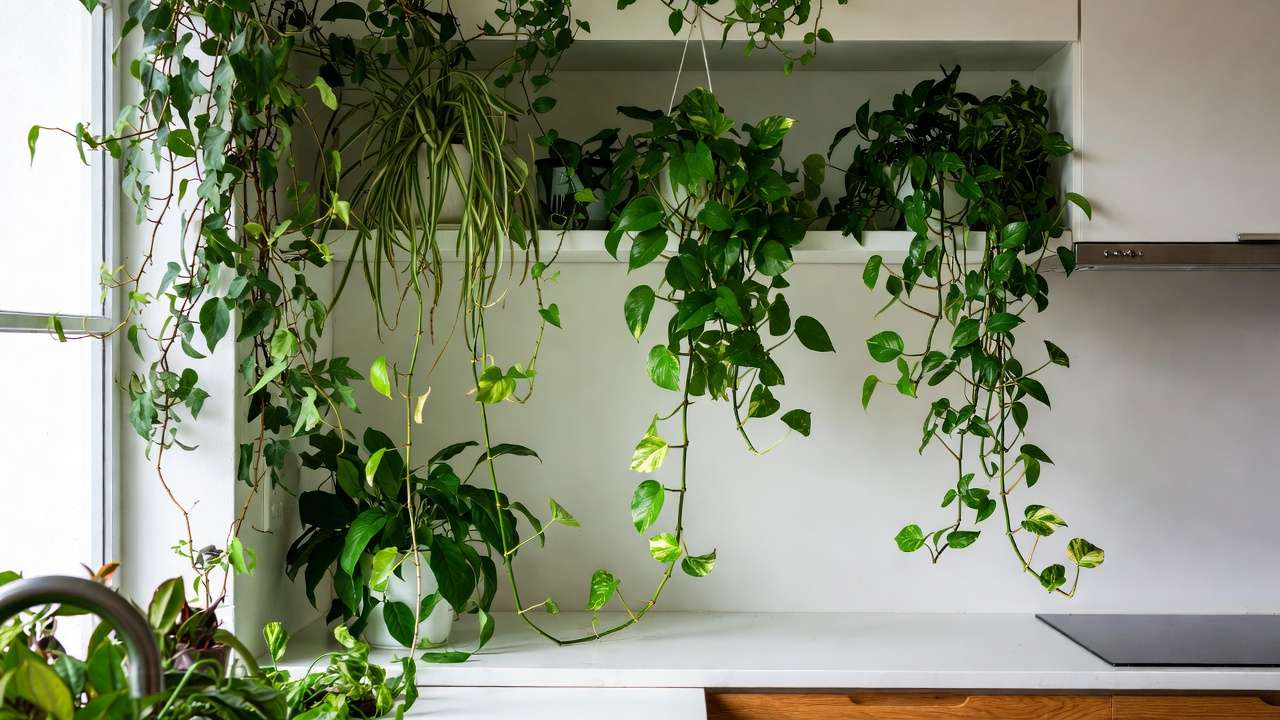
Why it works: Kitchens produce cooking fumes, grease particles, and occasional chemical cleaners. Pothos is one of the easiest and fastest-growing plants, excelling at benzene, formaldehyde, xylene, and toluene. English Ivy is a superstar mold-reducer and also tackles airborne fecal-particle allergens (great near trash cans or pet areas). Together they handle the mix of cooking odors and humidity fluctuations.
Ideal placement: On top of cabinets, hanging from shelves, or trailing from a windowsill. They tolerate lower light but perform best with some morning sun.
Care tips: Pothos forgives underwatering (leaves droop dramatically as a reminder — then perk right back up). English Ivy prefers consistently moist soil. Trim regularly to keep them bushy.
Bonus: Both are excellent at producing oxygen and can help mask minor cooking smells naturally.
Pet note: Both are mildly toxic if ingested — hang high or place out of reach if you have chewers.
Office Productivity Pack 💻🪴
Plants:
- Areca Palm (1 medium)
- Rubber Plant (1 medium)
- ZZ Plant (1 medium)
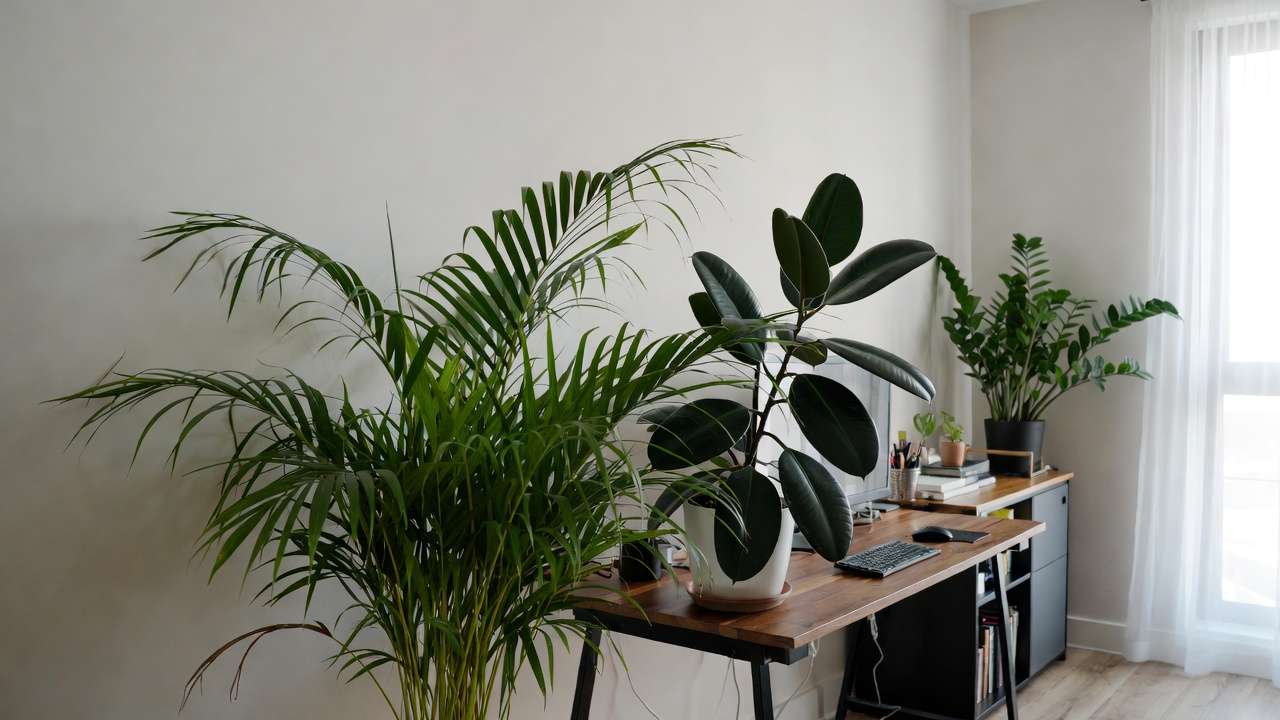
Why it works: Offices (or home workspaces) often have printers, electronics, and poor ventilation. Areca Palm is a champion humidifier and removes xylene and toluene. Rubber Plant is robust, low-maintenance, and excellent for formaldehyde and general VOCs. ZZ Plant thrives in very low light and is a steady, slow remover of toxins — the perfect “set it and forget it” plant for busy professionals.
Ideal placement: Areca near a window, Rubber Plant as a statement floor plant, ZZ in the dimmest corner.
Care tips: All three are drought-tolerant. Water every 2–3 weeks. Wipe dust off broad leaves (especially Rubber Plant) to maximize photosynthesis.
Productivity bonus: Studies show plants in workspaces reduce stress, increase concentration, and lower fatigue. This combo looks modern and professional — perfect for Zoom backgrounds! 😎
Low-Light Apartment Special 🌑🖤
Plants:
- Snake Plant (2–3 various sizes)
- Chinese Evergreen (Aglaonema) — 1 medium
- Cast Iron Plant (Aspidistra) — 1 medium
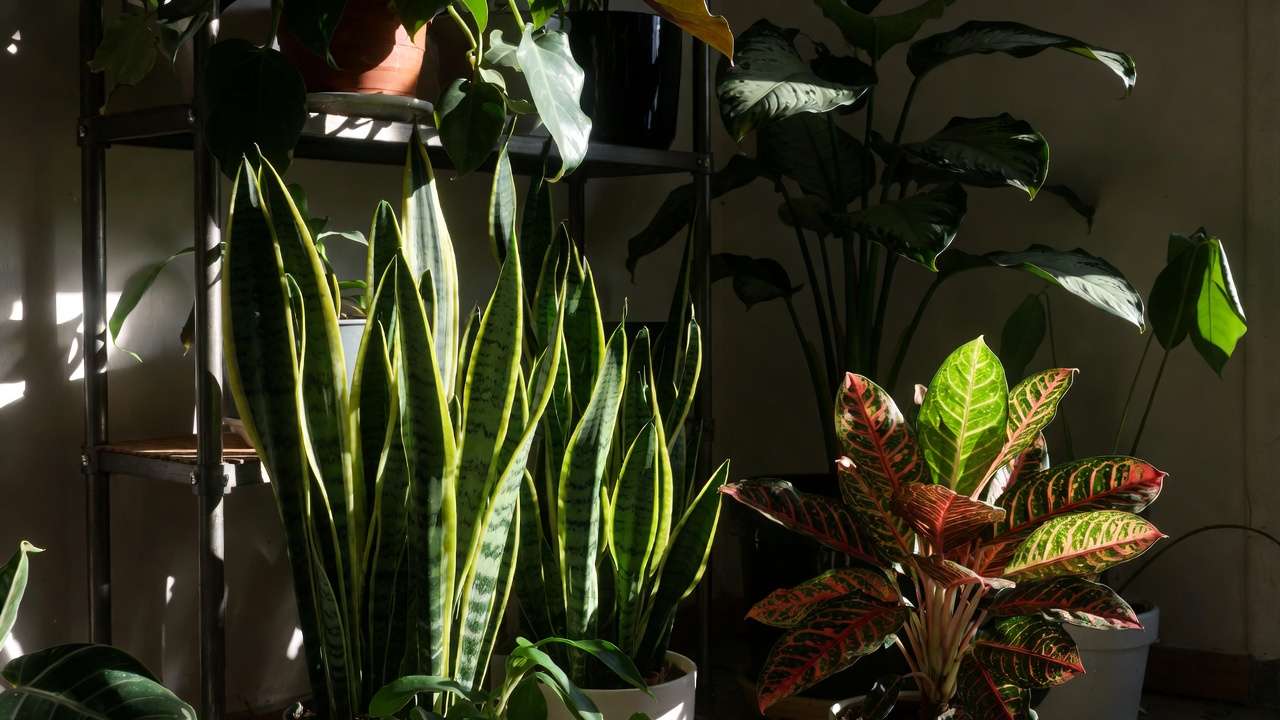
Why it works: Many apartments have limited natural light. This trio is legendary for shade tolerance while still delivering strong air purification: Snake Plants handle benzene and trichloroethylene (plus nighttime oxygen), Chinese Evergreen removes formaldehyde and adds colorful variegation, Cast Iron Plant is nearly bulletproof and helps with general toxins.
Ideal placement: Corners, bookshelves, bathrooms, hallways — anywhere light is scarce.
Care tips: Water very sparingly (every 3–4 weeks). Overwatering is the only real enemy here.
Pet note: All are pet-safe in moderation.
Pet-Friendly Purification Squad 🐾🌿
Plants:
- Spider Plant — 2–3
- Boston Fern — 1 large hanging
- Areca Palm — 1 medium
Why it works: Completely non-toxic options that still pack a punch: Spider Plants filter multiple VOCs and are super easy, Boston Ferns are mold-reducing humidity lovers, Areca Palm handles broad-spectrum toxins and adds height.
Ideal placement: Hanging baskets for fern and spider plants, floor for Areca.
Care tips: Keep soil evenly moist (especially fern). Mist Boston Fern daily in dry climates.
Humidity-Boosting Bathroom Bundle 🚿🛁
Plants:
- Peace Lily — 1 medium
- Boston Fern or Maidenhair Fern — 1 large hanging or floor
- Air Plants (Tillandsia species) — 2–3 mounted or in glass globes
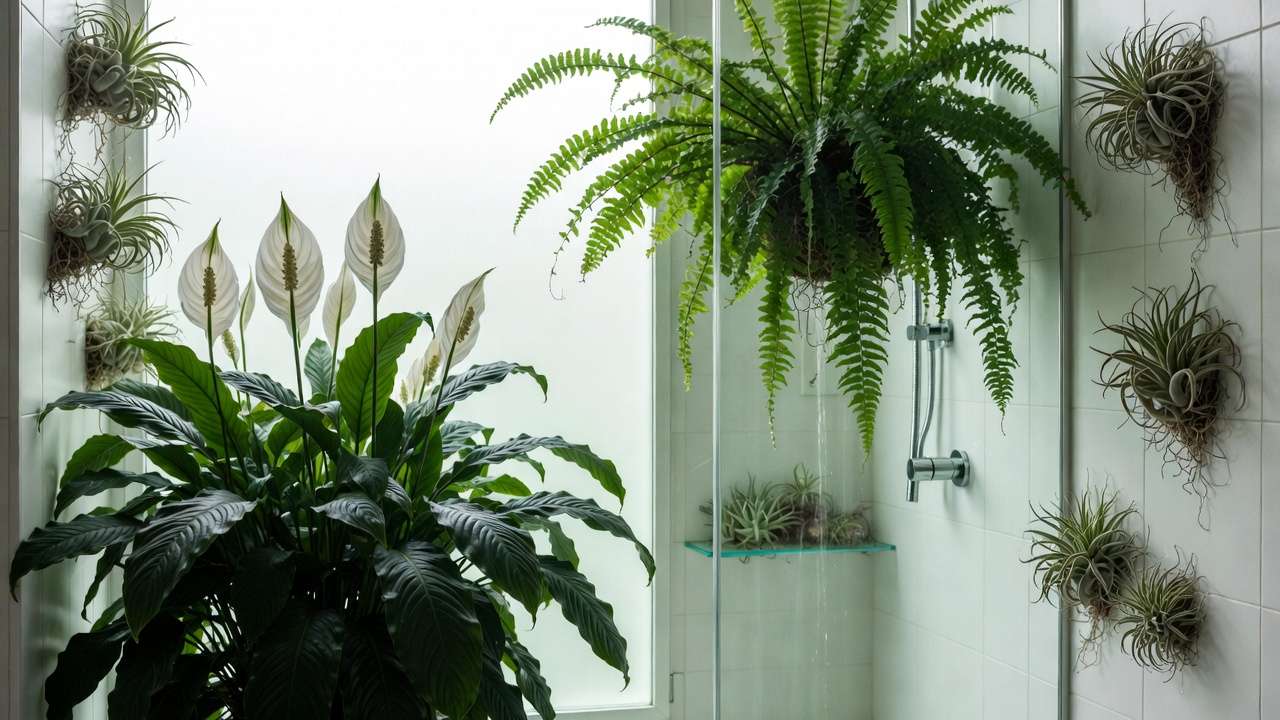
Why it works: Bathrooms are naturally humid, warm, and often poorly ventilated — perfect breeding grounds for mold and mildew. Peace Lily thrives in steamy conditions and aggressively removes formaldehyde, benzene, trichloroethylene, and ammonia (common from cleaning products and toiletries). Ferns are legendary mold-reducers and natural humidifiers. Air plants absorb moisture and pollutants directly from the air through their leaves — no soil required. Together they create a self-regulating, mold-fighting microclimate.
Ideal placement: On the windowsill, hanging from the shower rod, mounted on walls, or perched on shelves. They love the indirect light and frequent humidity spikes from showers.
Care tips: Keep soil consistently moist for Peace Lily and Ferns (they’ll tell you they’re thirsty when leaves droop). Soak air plants in water for 10–30 minutes weekly, then shake off excess and let them dry upside down. No need for pots — they’re low-maintenance showstoppers.
Aesthetic appeal: Lush green fronds + elegant white peace lily blooms + sculptural air plants = spa-like serenity.
Pet note: Peace Lily is mildly toxic — place higher up if pets drink from bathroom surfaces. Ferns and air plants are pet-safe.
Maximalist Air-Cleaning Jungle 🌿🌿🌿 (For Plant Lovers)
Plants (mix 5–7 of these):
- Snake Plant (multiple sizes for height variation)
- Peace Lily
- Golden Pothos (trailing)
- Dracaena varieties (Janet Craig, Marginata, or Massangeana)
- Bamboo Palm
- Spider Plant
- Aloe Vera or ZZ Plant as accents
Why it works: This is the “more is more” approach for dedicated plant parents. You get near-complete coverage of all major VOCs, excellent nighttime oxygen production, strong mold/allergen reduction, and superior humidity regulation. The diversity boosts soil microbial activity even further.
Ideal placement: Create dedicated plant corners, window ledges, plant stands, hanging clusters — turn one wall or corner into a green feature wall.
Care tips: Group plants with similar light and water needs together. Use a moisture meter to avoid overwatering. Rotate every 1–2 months for even growth. Fertilize lightly in spring/summer with balanced houseplant fertilizer.
Design tip: Mix heights, textures, and leaf shapes (broad, strappy, trailing, spiky) for visual drama. Add decorative pots and macramé hangers for that curated jungle look.
How Many Plants Do You Really Need?
NASA’s original Clean Air Study suggested roughly 15–18 medium-sized plants for a 1,800–2,000 sq ft home to achieve measurable air quality improvements. Modern experts (horticulturists and indoor air researchers) adjust this for real-life conditions:
- Small apartment/studio (400–800 sq ft): 4–8 plants (1–2 strong combinations)
- Average home (1,000–1,800 sq ft): 10–15 plants (3–5 groupings)
- Large open-plan space: 18+ plants for noticeable effects
Pro tip: Clusters are more effective than spreading plants evenly. Place 3–5 plants together in one spot — the combined root zone and leaf surface area increases filtration efficiency dramatically. Start with one beautiful combination and add more as you gain confidence. 🌱
Care Tips to Maximize Air-Purifying Power
Healthy plants = maximum toxin removal. Here’s how to keep your green teammates thriving:
Lighting & Positioning ☀️ Most air-purifying plants prefer bright, indirect light. East- or north-facing windows are ideal. Avoid direct harsh afternoon sun (can scorch leaves). Rotate plants weekly for balanced growth.
Watering & Humidity 💧 Overwatering kills more houseplants than anything else. Use the “finger test” — water only when the top 1–2 inches of soil are dry (except for ferns and peace lilies, which like consistently moist soil). Use room-temperature water to avoid shocking roots. Group humidity-loving plants together or use a pebble tray/humidifier in dry seasons.
Soil & Repotting 🪴 Use well-draining potting mix with perlite or orchid bark. Repot every 1–2 years in spring. Adding a layer of activated charcoal or horticultural charcoal at the bottom of pots helps filter water and reduce odors.
Pruning & Propagation ✂️ Trim yellow/brown leaves promptly. Propagate cuttings (especially pothos, spider plants, dracaena) in water or soil — free new plants = more purification power!
- Yellow leaves → usually overwatering or poor drainage
- Brown tips → low humidity or fluoride in tap water (let water sit 24 hours before using)
- Pests (spider mites, mealybugs) → wipe leaves with neem oil solution or insecticidal soap
Healthy, happy plants clean air far more effectively than struggling ones.
Additional Benefits Beyond Air Quality
Beyond VOC removal, these plant combinations deliver:
- Mental health boost 🧘♀️ — Studies show indoor plants reduce cortisol, improve mood, and increase productivity.
- Natural humidification 💦 — Helpful for dry skin, sinuses, and winter heating discomfort.
- Biophilic design — Connecting with nature indoors lowers blood pressure and enhances creativity.
- Allergen & dust reduction — Leaves act as natural filters for airborne particles.
Frequently Asked Questions (FAQs)
Do houseplants really clean air in real homes? Yes — but with realistic expectations. NASA’s sealed chamber tests showed impressive results, and real-world studies (Universities of Technology Sydney, Washington, etc.) confirm reductions in VOCs, CO₂, and particulates when sufficient plants are present. They work best alongside good ventilation, not as a complete replacement for air purifiers in heavily polluted spaces.
Which combo is best for allergies/asthma? The Pet-Friendly Purification Squad (Spider Plant + Boston Fern + Areca Palm) or Low-Light Apartment Special. Ferns and ivy are especially good at trapping dust and mold spores.
Are these plants safe for cats/dogs? Many are (Spider Plant, Areca Palm, Boston Fern, Snake Plant, ZZ Plant, Cast Iron Plant). Avoid Peace Lily, Pothos, and English Ivy around chewers — opt for pet-safe alternatives.
How long until I notice cleaner air? Subtle improvements (less stuffiness, fresher smell) can appear in 2–4 weeks. Measurable VOC reductions typically take 6–12 weeks with adequate plant density.
Can I combine plants with air purifiers? Absolutely — they complement each other beautifully. Plants handle VOCs and biological pollutants; HEPA purifiers tackle fine particles.
Best beginner combo? Start with the Bedroom Serenity Combo (Snake Plant + Peace Lily) or Living Room Power Trio — forgiving, effective, and visually rewarding.
Conclusion
You don’t need expensive gadgets or complicated systems to breathe cleaner, fresher air at home. Strategic houseplant combinations to boost indoor air quality offer a beautiful, living solution that purifies, humidifies, oxygenates, reduces stress, and transforms your space.
Pick one combination that fits your light conditions, room type, and lifestyle — even just 4–6 well-chosen plants can make a real difference. Start small, observe how your space feels and smells, then grow your collection as you fall in love with the results.
Your home isn’t just a shelter — it can be a health-supporting, green sanctuary. 🌿💚











