
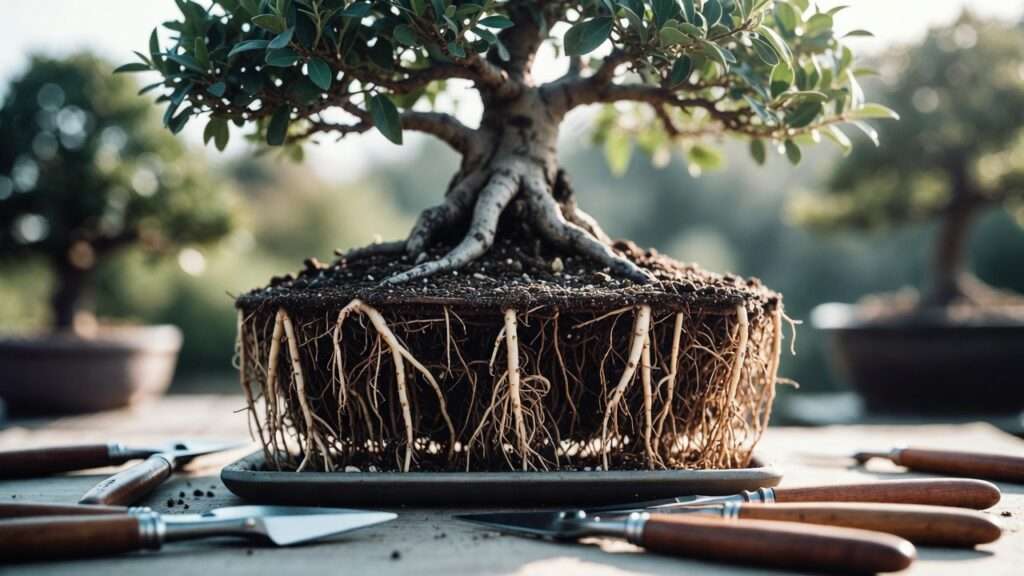
Have you ever noticed your beloved bonsai looking a bit lackluster — leaves turning yellow, growth slowing to a crawl, or the tree seeming generally “off” despite faithful watering and fertilizing? 😔 You’re not alone. Many bonsai lovers face this frustrating issue, only to discover the real problem lies hidden beneath the soil: an overcrowded, root-bound system that’s quietly suffocating the tree.
Root pruning basics for bonsai health are the game-changer every enthusiast needs to master. This foundational technique rejuvenates the root system, stimulates fresh fine feeder roots (the tiny powerhouses that absorb water and nutrients), restores balance between roots and canopy, and prevents long-term decline. When done correctly, root pruning transforms struggling trees into vibrant, long-lived mini-masterpieces that thrive for decades. 🌱✨
In my years of hands-on bonsai cultivation — from nurturing delicate Japanese Maples to robust Ficus and resilient Junipers — I’ve seen root pruning work miracles time and again. What starts as a simple repotting session often reveals a tangled mess of circling roots that explains every symptom above. The good news? With the right timing, tools, and gentle approach, even beginners can perform this essential maintenance safely and effectively.
This in-depth guide covers everything you need: why roots matter so much in containers, precise timing by species and climate, a foolproof step-by-step process, aftercare secrets, common pitfalls to dodge, and pro tips for developing stunning nebari (that beautiful surface root flare). By the end, you’ll feel confident scheduling your next root session — and your trees will thank you with explosive new growth! 🚀
Let’s dig in (pun intended) and unlock the secret to keeping your bonsai truly healthy and thriving.
Why Root Pruning Is Essential for Bonsai Health 🩺
Unlike trees growing freely in the ground, bonsai live in confined pots with limited soil volume. Over time, roots fill the space completely, often circling the pot’s edges or forming a dense mat. This leads to:
- Compaction and poor aeration — Roots struggle for oxygen, slowing metabolism.
- Reduced nutrient uptake — Old, woody roots dominate while fine feeder roots die off.
- Water management issues — Soil becomes hydrophobic; water either runs through too fast or stays soggy.
- Imbalanced root-to-shoot ratio — Top growth outpaces roots, causing stress, smaller leaves, and eventual dieback.
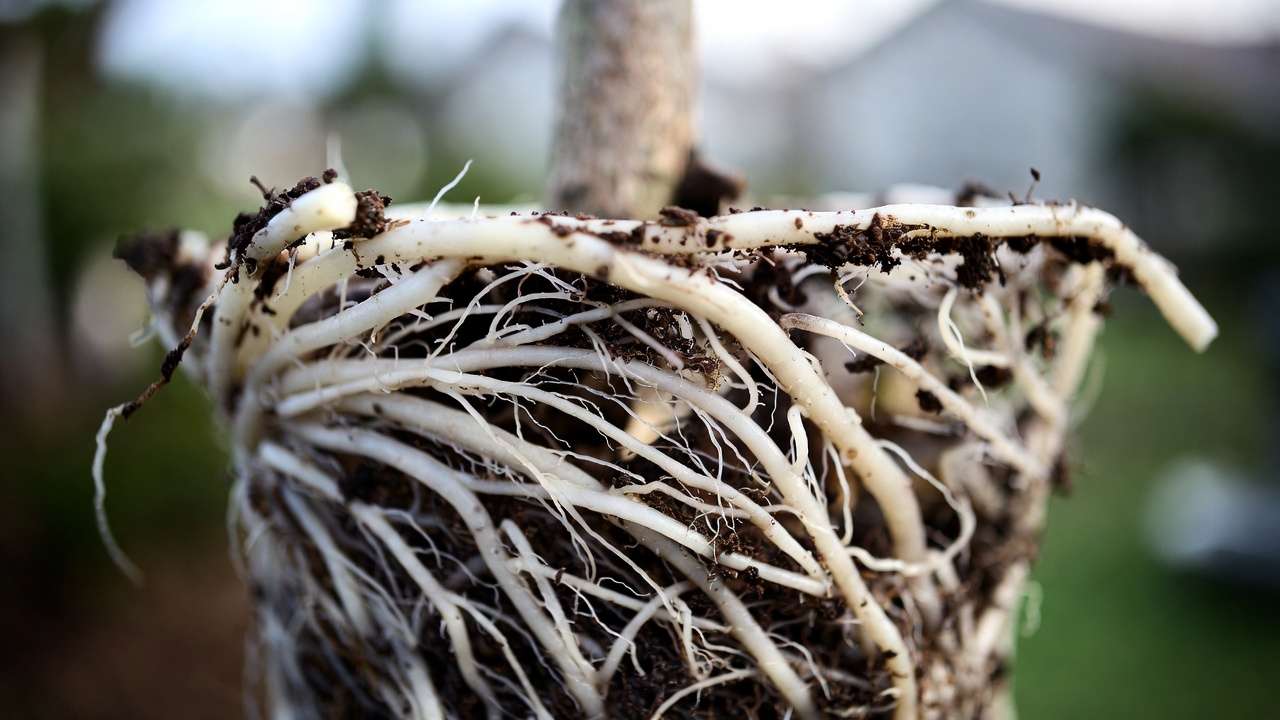
Root pruning mimics natural processes like frost heaving, animal disturbance, or erosion in the wild — it cuts back excess roots to trigger new, efficient feeder root development near the trunk. 🌿
Key benefits include:
- Revitalized vigor and greener foliage
- Prevention of chlorosis, defoliation, and stunted internodes
- Better drought and pest resistance
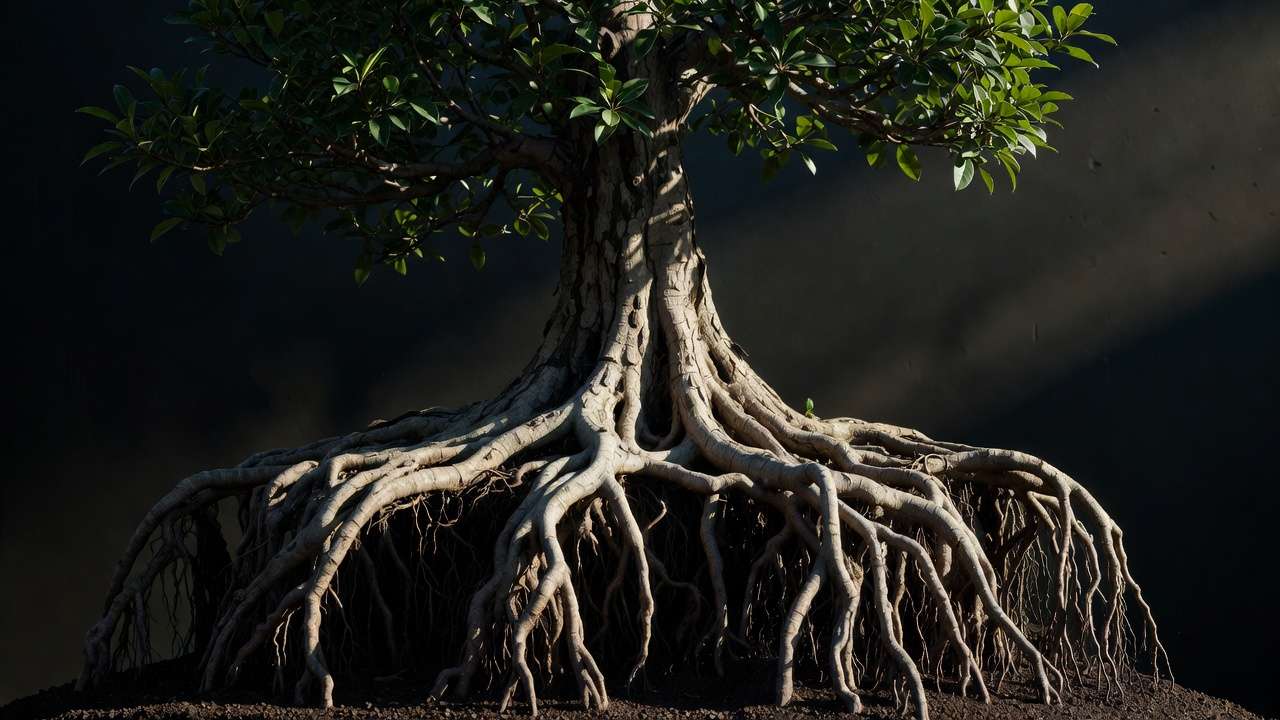
- Improved nebari aesthetics over multiple prunings
- Dramatically extended tree lifespan — many classic bonsai are 50–100+ years old thanks to regular root work!
A common myth: “Root pruning stunts or dwarfs the tree.” Not true! It actually promotes health and density; unchecked roots cause real stunting through starvation.

(Example of dense feeder roots developing after thoughtful root work — notice the fine, healthy network!)

(This root-bound example shows the classic circling mat that chokes trees — exactly what we’re preventing!)
When to Perform Root Pruning: Timing Is Everything ⏰
Timing matters hugely — prune at the wrong moment and recovery slows or fails.
General guideline: Every 1–3 years, based on:
- Species vigor (fast growers like Ficus need more frequent work)
- Pot size (smaller pots fill faster)
- Growth rate and visible signs
Best seasons:
- Deciduous/temperate trees (Maple, Beech, Elm, Hornbeam): Late winter to very early spring, just before buds swell. Roots heal quickly as spring growth kicks in. 🌸
- Conifers (Pine, Juniper, Spruce): Early spring for most, or late summer/early fall for some (e.g., Black Pine tolerate fall better). Avoid heavy cuts during candle extension.
- Tropical/subtropical (Ficus, Serissa, Jade): Almost year-round in warm climates, but spring or after a growth flush is safest. ☀️
Clear signs it’s time NOW:
- Roots pushing the tree upward or visible at drainage holes/surface
- Water pours straight through without soaking (poor absorption)
- Slowed or weak new growth, tiny leaves, pale color despite care
- Tree feels loose in pot (roots no longer anchoring well)
Pro tip: Always check roots during repotting windows — better to prune conservatively early than wait for crisis.
Tools You’ll Need for Safe Root Pruning 🛠️
Before you touch a single root, gather the right equipment. Using proper, sharp, clean tools minimizes stress, prevents tearing, and reduces the risk of disease introduction. Here’s the essential kit every bonsai grower should have on hand:
- Root hook or bonsai chopstick — A wooden or metal chopstick (or dedicated root hook) is your best friend for gently teasing apart compacted soil without damaging fine roots. 🍡
- Concave branch cutters or root shears — Sharp, high-quality concave cutters create clean cuts that heal quickly. Avoid regular household scissors — they crush roots and invite rot.
- Root rake — A small metal rake helps remove old soil and comb out circling roots evenly.
- Bonsai soil scoop or trowel — For adding fresh mix without compacting it.
- Wire cutters — If your tree is anchored with training wire, you’ll need these to release it safely.
- Cut paste or wound sealant — Optional but recommended for larger root cuts (especially on conifers or maples) to prevent drying and infection.
- Spray bottle — Keep roots moist during the process — never let them dry out!
- Alcohol wipes or 70% isopropyl — Sterilize tools between trees or between major cuts. 🧼
- New bonsai soil mix — Pre-moisten your fresh akadama/pumice/lava rock blend so it settles nicely.
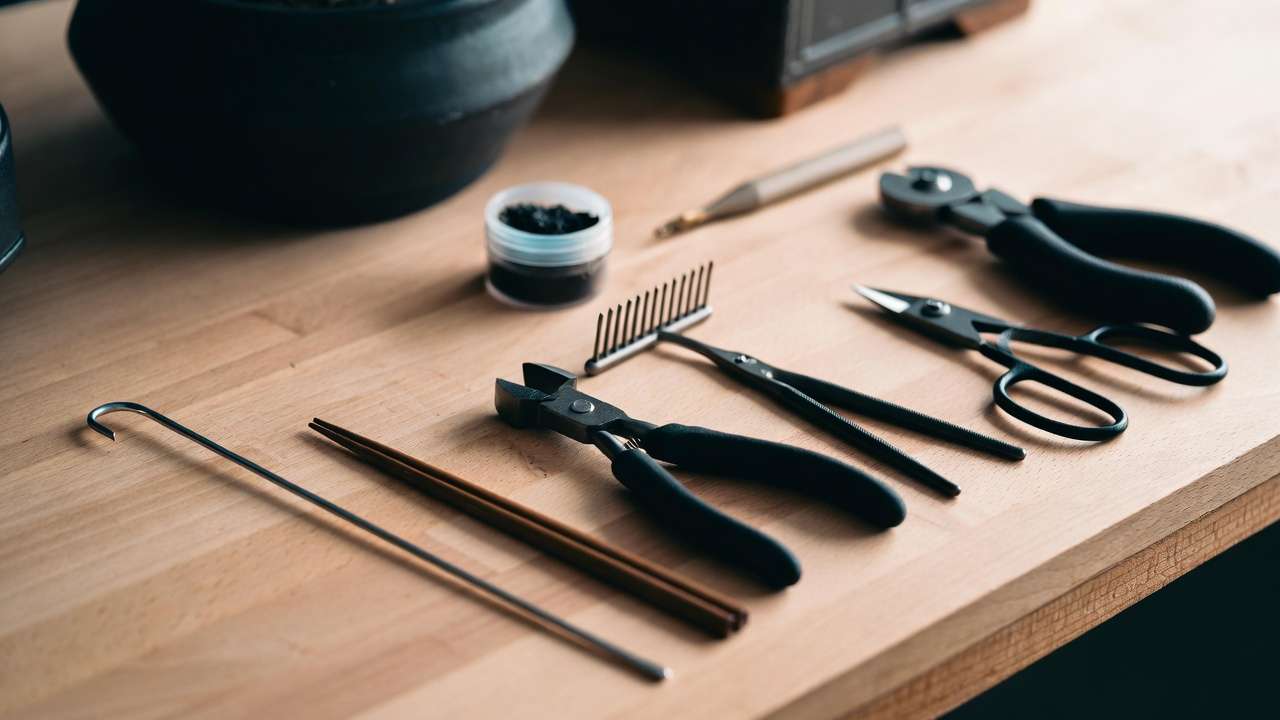
Pro tip from experience: Invest in Japanese-made tools if possible — brands like Masakuni, Kaneshin, or Ryukobo offer unmatched sharpness and durability that make the job easier and safer for both you and the tree.
(Insert visual aid here)
(A well-organized bonsai repotting station with essential root-pruning tools laid out — chopsticks, concave cutters, root rake, and fresh soil ready to go!)
Step-by-Step Guide: How to Root Prune Your Bonsai 📝
This is the heart of the process. Follow these steps carefully, and take your time — rushing leads to mistakes.
Preparing Your Tree (H3)
- Water the bonsai lightly 1–2 days before pruning. Slightly moist roots are more flexible and less prone to breakage.
- Choose a calm, overcast day or work in shade. Direct sun or wind can dry exposed roots in minutes.
- Have your workspace ready: clean surface, all tools sterilized, fresh soil pre-moistened, and a bucket of water nearby for dipping roots if needed.
Removing from the Pot (H3)
- Gently tap the sides and bottom of the pot to loosen the root ball.
- If tied down with wire, carefully cut and remove it.
- Tilt the pot and support the trunk base — slide the tree out slowly. Never yank!
Teasing Out and Assessing Roots (H3)
- Use your root hook or chopstick to carefully comb away old soil from the outer edges and bottom. Aim to remove about 1/3 to 1/2 of the old soil — enough to see the root structure clearly but not so much that the tree loses all anchorage.
- Look for:
- Thick, woody circling roots around the perimeter
- A dense mat at the bottom
- Healthy white/brown fine feeder roots closer to the trunk
- Any black, mushy, or foul-smelling roots (these indicate rot — remove them immediately)
(Before: Classic root-bound bonsai with circling roots and compacted soil — the exact problem root pruning solves.)
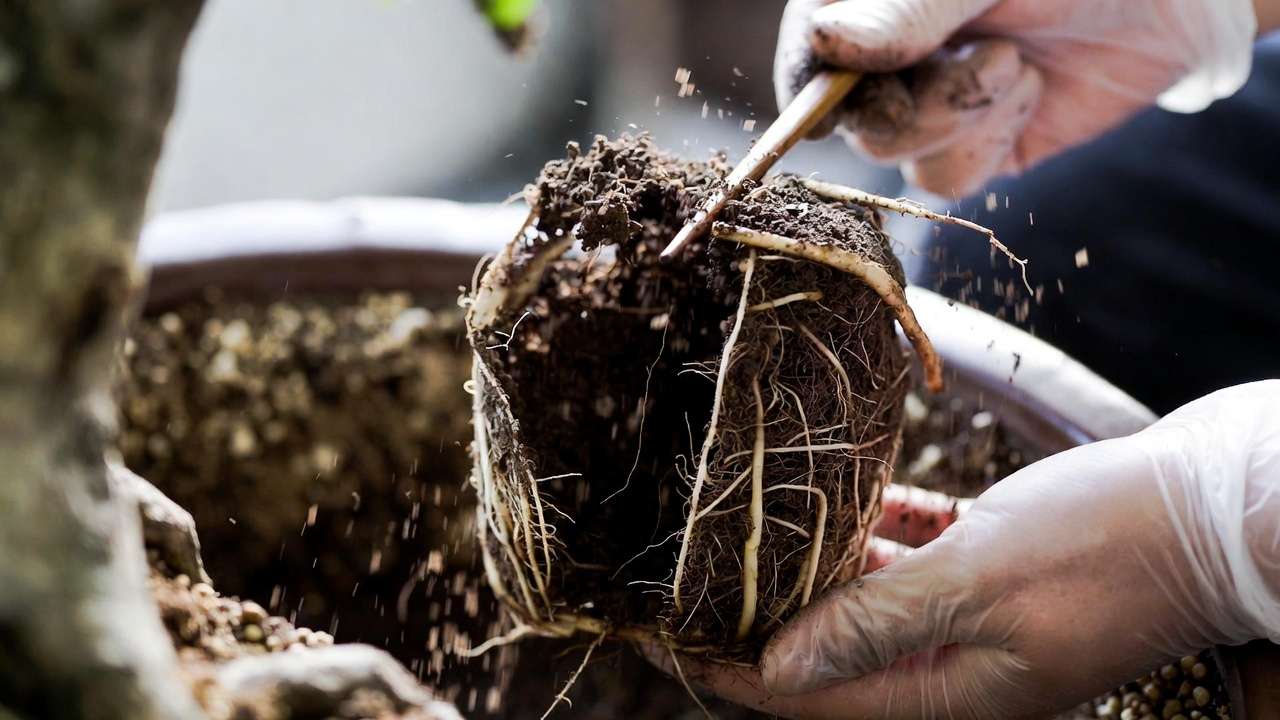
Pruning Techniques (H3) ✂️
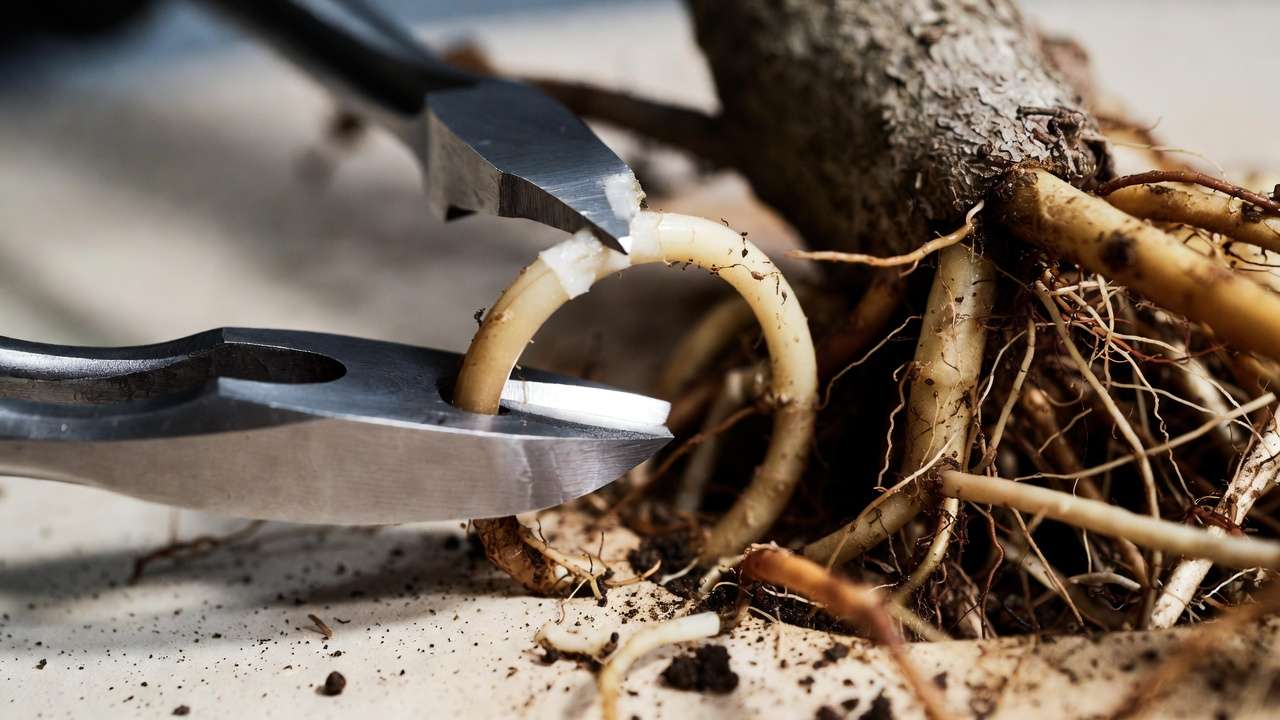
- Start with the perimeter — Cut away any roots that circle the pot edge or grow downward along the sides. Trim them back to just inside the previous root mass.
- Bottom mat — Remove the dense layer at the base. Slice horizontally to create a flat bottom — this encourages radial root growth.
- Thick vertical or crossing roots — Remove any that grow straight down or cross over desirable surface roots. Keep radial (spreading outward) roots for stability and nebari development.
- How much to remove:
- Beginners: 25–40% of the total root mass
- Healthy, vigorous trees in spring: up to 50–60%
- Conifers (especially pines/junipers): stay conservative — never more than 40% in one session
- Nebari focus — Expose and preserve attractive surface roots; gently comb them outward and prune any downward-growing ones beneath them.
Species-specific notes:
- Pines & Junipers — Cut less aggressively; preserve more fine roots.
- Maples & Elms — Tolerate heavier pruning and recover quickly.
- Ficus — Very forgiving; can handle 60–70% removal if done in warm weather.
Repotting After Pruning (H3)
- Place a thin layer of fresh soil at the bottom of the pot.
- Position the tree slightly higher than before (1–2 cm) to gradually expose more nebari over time.
- Fill around the roots with fresh mix, using chopsticks to work soil between roots — eliminate air pockets.
- Secure with repotting wire if the tree is large or top-heavy.
- Water thoroughly until it runs clear from the drainage holes.
(After: The same tree post-root pruning and repotting — fresh soil, balanced roots, and already showing improved nebari potential!)
Aftercare: Helping Your Bonsai Recover Quickly 🌿
Root pruning is a significant stress event for any bonsai — even when done perfectly. The tree has lost a substantial portion of its root system, so thoughtful aftercare is what turns a good pruning into a thriving transformation. Follow these guidelines closely for the fastest, healthiest recovery.
- Placement for the first 4–6 weeks Move the tree to a sheltered, semi-shaded location — bright indirect light is ideal. Avoid full sun, strong wind, heavy rain, or extreme heat/cold. A shaded bench, veranda, or under a 50–70% shade cloth works wonders in Dhaka’s often intense climate. ☁️
- Watering routine
- Keep soil evenly moist but never soggy. Check daily by feeling the top 1–2 cm of soil.
- Mist the foliage lightly in the morning and evening for the first two weeks to reduce transpiration stress (especially important for tropical species like Ficus).
- Use room-temperature rainwater or dechlorinated tap water — avoid cold shocks.
- Humidity and protection In dry or windy periods, consider a temporary humidity tent (clear plastic bag or mini greenhouse) with ventilation holes. Remove it gradually after new growth appears.
- Fertilizing
- Do not fertilize immediately after pruning — wait until you see strong new buds or leaves (usually 4–8 weeks).
- Start with half-strength liquid organic fertilizer (e.g., fish emulsion, seaweed extract, or balanced bonsai fertilizer like Biogold or Green King).
- Resume normal feeding schedule only when the tree is visibly vigorous again.
- Monitoring for stress signs
- Temporary wilting of tips or slight leaf drop is normal — the tree is reallocating energy.
- Serious warning signs: widespread yellowing, blackening branch tips, or no new growth after 6–8 weeks → reassess watering, light, or possible root rot from overwatering post-pruning.
Pro tip from years of trial and error: Many beginners panic and overwater after pruning — this is far more dangerous than underwatering at this stage. Let the tree tell you what it needs.
(Insert visual aid)
(Healthy post-pruning recovery: new white feeder root tips emerging 4–6 weeks after careful root work — the sign of successful healing!)
Common Root Pruning Mistakes and How to Avoid Them ⚠️
Even experienced growers make errors — here are the most frequent pitfalls and how to sidestep them:
- Cutting too much root mass at once Symptom: Severe wilting, leaf drop, or death within weeks. Fix: Beginners should never remove more than 40% in one go. Spread heavy pruning over 2–3 years if needed.
- Pruning during the wrong season Example: Mid-summer root work on a Japanese Maple in hot weather = almost certain failure. Fix: Stick to species-specific timing charts (late winter/early spring for most temperate trees).
- Leaving old compacted soil behind Problem: New roots struggle to penetrate; tree stays weak. Fix: Remove at least 1/3 of old soil — more if it’s heavily compacted.
- Ignoring species differences Example: Treating a Pine like a Ficus and cutting 60% of roots → major setback or death. Fix: Research your exact species (or cultivar) before every major repot/root prune.
- Poor aftercare Symptom: Slow or no recovery. Fix: Follow the aftercare steps religiously — shade, humidity, and patience are non-negotiable.
- Combining heavy root pruning with heavy branch pruning in the same year Double stress often leads to decline. Fix: Space major structural work and root work by at least one growing season.
Advanced Tips for Better Results Over Time 🌟
Once you’ve mastered the basics, these techniques take your bonsai health and aesthetics to the next level:
- Building superior nebari Each root prune is an opportunity to expose and train more radial surface roots. Slightly raise the tree each repotting (1–2 cm) and gently comb desirable roots outward.
- Soil mixes that promote fine roots Use high-quality inorganic-dominant mixes:
- 50–60% akadama + 20–30% pumice + 10–20% lava rock
- Add a small amount of sphagnum moss or fine pine bark for moisture retention in Dhaka’s hot, humid summers.
- Bare-root vs. partial root work Bare-root (removing almost all old soil) is best for young, vigorous trees or when soil is completely compacted. Partial root work (removing only outer circling roots) is safer for older, weaker, or coniferous specimens.
- Combining with seasonal maintenance Pair root pruning with defoliation (on deciduous trees) or needle-plucking (pines) in the following season for balanced energy distribution.
Frequently Asked Questions (FAQs) ❓
Here are the questions I hear most often from beginners (and even some intermediate growers) about root pruning. These cover the real sticking points people face.
How often should beginners root prune their bonsai? For most species in a typical 10–15 cm pot, aim for every 1–2 years if the tree is young and vigorous, or every 2–3 years once it’s more established. Always let the tree’s condition guide you more than the calendar — check roots annually during the appropriate season. In Dhaka’s warm, humid climate, tropical species like Ficus often need checking (and sometimes pruning) every 12–18 months.
Can I do root pruning without a full repotting? Yes — it’s called “slip-potting” or partial root work. You carefully remove the tree, tease away only the outer 1–2 cm of circling roots and compacted soil, then slide it back into the same (or slightly larger) pot with fresh soil added around the edges. This is gentler and ideal for older trees, conifers, or when you want minimal disruption.
What should I do if my bonsai looks sick or wilted after root pruning? First, don’t panic — some temporary wilting is normal. Ensure it’s in bright shade, soil stays evenly moist (not wet), and foliage is misted. If no improvement after 7–10 days, check for overwatering (soggy soil = root rot risk) or underwatering. Severe cases may need emergency bare-root rescue in fresh mix, but prevention through conservative cuts and good aftercare is far better.
Is root pruning different for very small (mame/shohin) bonsai vs. larger ones? Yes — tiny mame (under 10 cm) and shohin (under 25 cm) have very limited root mass, so remove only 20–30% max and do it more frequently (every 1–1.5 years). They recover faster but are less forgiving of heavy cuts. Larger bonsai can usually handle 40–50% removal safely.
Will root pruning make my bonsai smaller or stunt its growth permanently? No — the opposite is true when done correctly. By removing inefficient old roots and stimulating fine feeder roots, the tree becomes healthier, denser, and more vigorous overall. Only severe or repeated over-pruning without recovery time causes true stunting.
Can I root prune right after heavy styling (big branch cuts, wiring, etc.)? Avoid it in the same season if possible. Heavy structural work already stresses the tree; adding major root loss can push it over the edge. Wait at least one full growing season so the tree regains strength first.
Do tropical bonsai in hot climates like Bangladesh need different root pruning rules? They do benefit from slightly more frequent but lighter sessions (every 12–18 months, removing 30–50%). Because growth never fully stops, they recover quickly if kept shaded and humid post-pruning. Avoid heavy bare-root work during peak summer heat (April–June).
Conclusion: Make Root Pruning Your Annual Ritual for Lifelong Bonsai Success 🎉
Root pruning isn’t something to fear — it’s the single most powerful maintenance task you can perform to ensure your bonsai stays vibrant, compact, and full of life for decades (or even generations). Once you experience the transformation — brighter leaves, stronger shoots, better nebari, and that unmistakable “healthy tree energy” — it becomes something you actually look forward to each year. 🌟
Start small: Pick one tree this coming appropriate season, follow the steps carefully, document the before-and-after (photos are incredibly motivating!), and watch the magic happen. Your bonsai will reward you with resilience, beauty, and the quiet satisfaction that comes from truly understanding and caring for these living artworks.
Have you tried root pruning before? Drop a comment below with your experience, species, or any questions — I’d love to hear how it went (or help troubleshoot if you’re planning your first session). Happy pruning, and may your trees thrive! 🌳❤️✂️











