
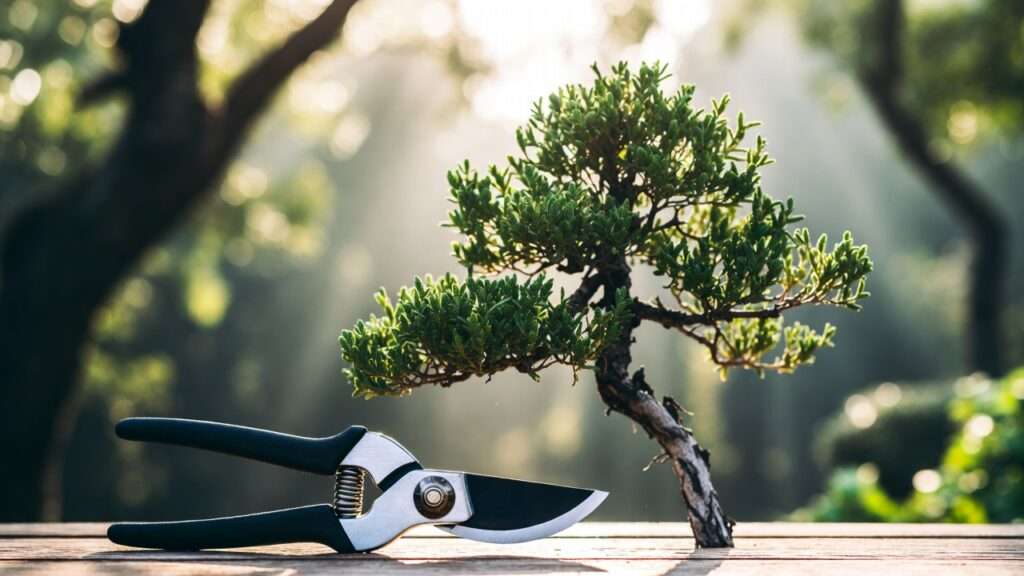
Imagine standing back from your little potted tree, seeing wild, unruly shoots transformed into elegant, balanced pads of foliage that evoke ancient mountains or windswept coastlines. That’s the true magic of bonsai pruning—it doesn’t just trim; it sculpts living art. Many beginners hesitate, worried that one wrong cut could harm or even kill their precious bonsai. The good news? With the right knowledge, timing, and techniques, how to prune bonsai for shape becomes an empowering, rewarding skill that brings out breathtaking results without risking your tree’s health.
In over a decade of working with dozens of bonsai species—from resilient Ficus to delicate Japanese Maples—I’ve seen how proper pruning directs energy, creates taper, refines ramification, and achieves that classic, harmonious silhouette every enthusiast dreams of. This comprehensive guide goes beyond basics, drawing from trusted practices (like those from Bonsai Empire and experienced masters) to give you everything needed for success. Whether you’re maintaining an established tree or building structure in a young one, you’ll learn step-by-step methods, species-specific tips, common pitfalls to dodge, and pro insights for truly stunning bonsai. Let’s dive in and turn your tree into a masterpiece! 🌳🎨
Understanding Bonsai Pruning: Maintenance vs. Structural 🌱
Pruning is the cornerstone of bonsai styling—more impactful long-term than wiring alone. It controls growth direction, encourages dense branching (ramification), and maintains proportion between trunk, branches, and foliage.
- Maintenance Pruning (also called refinement or pinching/shearing): This refines and preserves the existing shape. You trim new shoots regularly to keep pads compact, promote back-budding (new growth from inner branches), and ensure light reaches the tree’s interior. It’s ongoing, gentle work that creates fine twigs and dense canopies.
- Structural Pruning (or formative/heavy pruning): This establishes the basic framework—removing large branches, correcting trunk lines, and setting primary branch positions. It’s more drastic, done less frequently (often once a year), and shapes the tree’s overall design (e.g., informal upright, cascade).
Both types work together: structural sets the foundation, maintenance polishes it. Skipping regular maintenance leads to leggy growth and weak inner branches, while overdoing structural cuts stresses the tree. The key? Observe your bonsai’s energy flow—growth concentrates at tips (apical dominance), so strategic cuts redirect it lower for balanced, natural-looking shape. ✨

(Before-and-after of a famous Juniper bonsai: notice how pruning refined the wild growth into layered, cloud-like pads for stunning silhouette.)
Essential Tools for Precise Pruning ✂️🔧
Quality tools make clean cuts that heal faster and reduce disease risk. Always sanitize with alcohol before and after use!
- Concave Branch Cutters (essential for branches up to pencil-thickness): These create scooped wounds that heal smoothly without ugly bumps.
- Twig Shears / Bonsai Scissors: For fine shoots and leaf pruning—sharp, lightweight for precision.
- Knob Cutters: Great for removing stubs or small knobs close to the trunk.
- Wire Cutters: If combining with wiring post-prune.
Budget tip: Start with a basic set (~$30–50); invest in carbon steel or stainless for longevity. Sharpen regularly and store dry. Pro tools last decades and prevent jagged cuts that invite pests. 🛠️

(Examples of concave cutters—choose ones with comfortable grips for clean, effortless cuts.)
When to Prune Bonsai for Optimal Shape (Timing Guide) ⏰
Timing affects recovery and growth response—prune at the wrong time, and you risk dieback or weak buds.
- General Rule: Maintenance pruning during active growth (spring–fall for outdoors, year-round for indoors). Structural pruning during dormancy or just before/after flush (late winter/early spring for most, or post-flush in summer for some).
Species-specific examples:
- Deciduous (e.g., Japanese Maple, Chinese Elm) 🌿: Structural in late winter/early spring before buds swell. Maintenance in growing season—pinch or shear new shoots to 2–4 leaves for ramification. Summer defoliation possible for finer twigs.
- Conifers (e.g., Juniper, Pine) 🌲: Avoid heavy cuts in winter dormancy if possible. For pines, candle pinching in spring (remove 1/2–2/3 of new candles). Junipers: finger-pinching or cutting back extended shoots in summer; major structural in early fall or late winter.
- Tropicals (e.g., Ficus, Jade, Serissa) ☀️: Year-round maintenance possible in warm climates/indoor setups. Structural best in spring/summer when vigorous—Ficus responds well to hard cuts then.
Watch for signs: prune when new growth extends 4–6 nodes, or when candles elongate on pines. Avoid pruning during extreme heat, deep dormancy, or right after repotting. Patience here prevents scars and promotes vigorous recovery! 🌸
Step-by-Step Guide: How to Prune Bonsai for Shape (Core Section) 📋
Step 1: Assess and Visualize the Desired Shape
Step back 3–6 feet. Rotate the pot to find the best front (good nebari/root flare, balanced branches). Identify style (formal upright, slant, etc.). Look for trunk line, primary branches (first, second order), and negative space. Mentally (or sketch) the triangular silhouette—apex slightly off-center for natural feel. This prevents random cuts!
Step 2: Remove Problem Branches First
Start conservatively—use “P.R.U.N.E.” mindset:
- Problematic (dead, diseased, damaged)
- Reverse-growing (inward toward trunk)
- Unwanted (crossing, rubbing, parallel)
- Negative space disruptors (downward, overly long)
- Energy wasters (weak, thin branches)
Cut these first with concave cutters for large ones (three-cut method: undercut, top cut to remove weight, final close cut).

(Pruning in action: clean cuts just above a bud or leaf node direct future growth outward.)
Step 3: Structural Pruning (For Young/Developing Trees)
Remove large branches to set framework. Cut flush to trunk/branch union (no stubs). Balance left/right, create movement/taper. Never remove >30% foliage at once—tree needs leaves for photosynthesis. Seal large wounds with cut paste if desired (helps in humid climates).
Step 4: Maintenance Pruning (Refining the Canopy)
Pinch or cut new shoots back to 2–3 nodes/leaves. For broadleaves: shear or cut above outward-facing bud. Conifers: pinch candles/shoots by hand to avoid browning tips. Thin dense areas for light penetration—aim for “foliage pads” or clouds with depth and separation. This builds fine ramification over time.
Step 5: Final Cleanup and Aftercare
Remove debris. Water deeply, fertilize lightly after 2–4 weeks (avoid immediately to prevent weak growth). Place in semi-shade if heavy prune. Monitor for new buds (2–6 weeks). Resume normal care.
Species-Specific Pruning Tips for Best Results 🌸🌲
Different bonsai species respond uniquely to pruning—understanding these nuances prevents stress and maximizes shape refinement. Here are detailed tips for popular types:
- Junipers & Other Conifers (e.g., Juniper procumbens, Procumbens nana) 🌲: Never cut into old wood (brown, needle-less areas) as it rarely back-buds. Use finger-pinching or sharp shears to trim extended shoots in summer, leaving some green tips for energy. For shape, focus on creating layered “cloud” pads by selectively removing strong vertical shoots. Major structural work best in early fall or late winter when sap flow is low.
(Before-and-after Juniper: wild, bushy growth refined into classic tiered pads through consistent pinching and selective branch removal.)
- Pines (e.g., Japanese Black Pine, Scots Pine) 🌲: Candle pinching is key in spring—when new candles elongate 2–4 inches, pinch or cut back by 1/3 to 2/3 depending on vigor. This balances energy and promotes dense branching. Avoid late-season cuts; they cause long, weak needles. Single-flush pines need careful decandling in summer for refinement.

(Candle pinching demo on a Scots Pine: pinching new growth by hand directs energy for compact, balanced shape.)
- Maples & Elms (Deciduous broadleaves) 🌿: These love aggressive maintenance—prune new shoots back to 2–4 leaves throughout the growing season for excellent ramification. Summer partial defoliation (removing outer leaves) forces finer twigs and vibrant color. Structural pruning in late winter before buds swell.

(Japanese Maple refinement: precise cuts on new shoots create the fine, delicate branching that defines stunning fall color displays.)
- Tropicals (e.g., Ficus retusa, Portulacaria afra/Jade, Serissa) ☀️: Year-round pruning possible in warm conditions—cut back hard in spring/summer for vigorous response. Ficus back-buds readily even on old wood; use defoliation sparingly for refinement. Always leave some leaves for recovery.
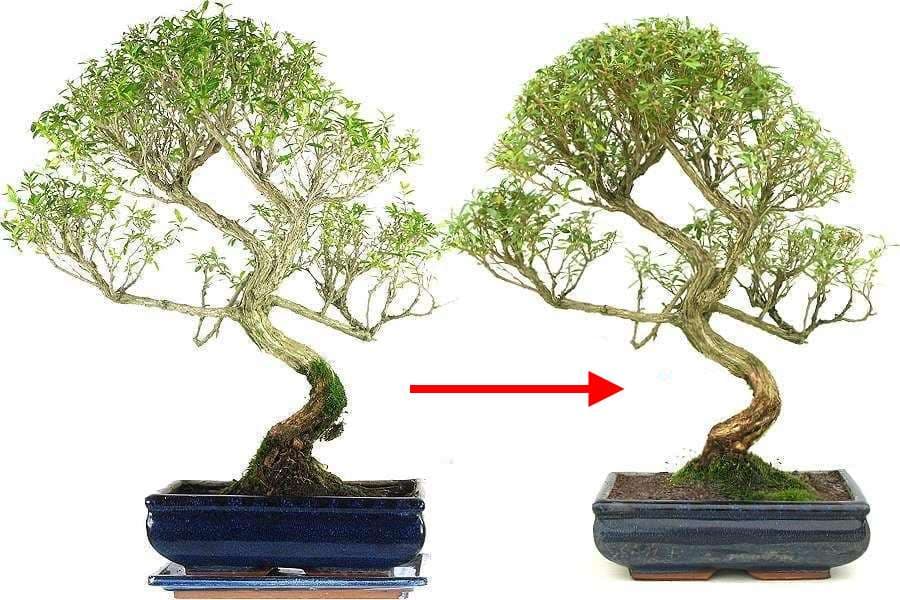
(Serissa before-and-after: overgrown to compact and shaped with regular pinching and branch selection.)
Pro tip: Always prune to an outward-facing bud/leaf node to encourage spreading growth and avoid inward clutter.
Common Pruning Mistakes and How to Avoid Them ⚠️
Even experienced enthusiasts slip up—here are the top pitfalls and fixes:
- Over-pruning (removing >30–40% foliage at once): Shocks the tree, causes dieback, and weakens roots. Fix: Stick to the 1/3 rule max per session; spread heavy work over 2–3 years.
- Cutting too close or too far from buds: Too close = dieback; too far = ugly stubs. Fix: Cut just above a node/bud at 45° angle, angled away from it.
- Ignoring timing: Pruning dormant trees in deep winter or heat-stressed ones leads to poor healing. Fix: Follow species calendars above.
- Neglecting inner/lower branches: Apical dominance kills back-budding. Fix: Thin tips regularly to let light in.

(Example of over-pruned bonsai: sparse foliage from excessive cuts—recovery possible with patience and light feeding.)
Recovery strategy: If you overdo it, reduce sun/fertilizer temporarily, mist daily, and wait for new buds (may take months).
Beyond Pruning: Combining Techniques for Stunning Shape
Pruning alone is powerful, but pairing it elevates results:
- Wiring after pruning: Once branches are thinned, wire to set angles and movement—do this soon after cuts when wood is flexible. Remove before it scars (check every 4–8 weeks).
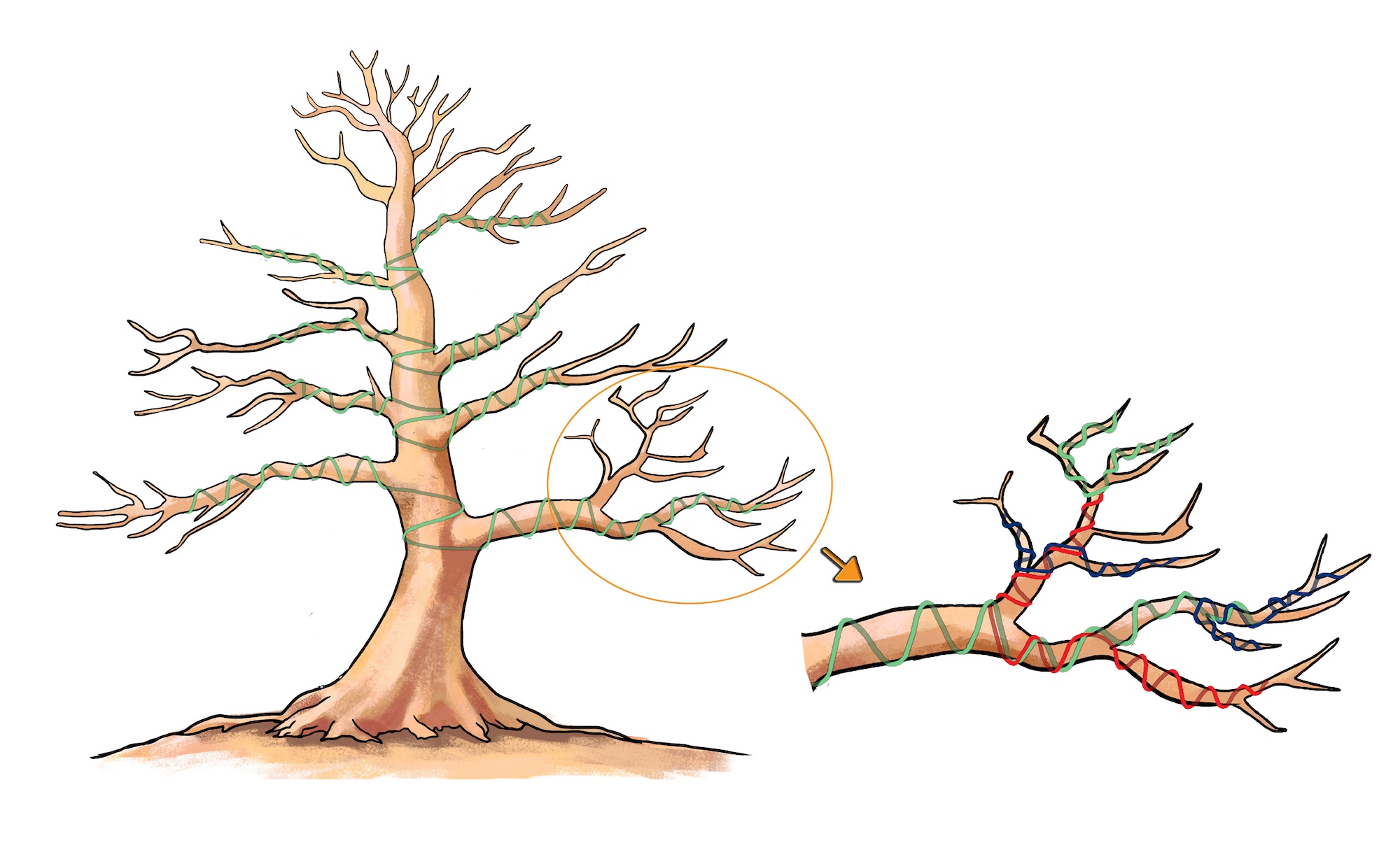
(Wiring illustration: copper/aluminum wire wraps branches post-prune to guide shape—remove once set for clean lines.)
- Defoliation: For deciduous/tropicals—remove all or partial leaves mid-summer to force finer growth and shorter internodes.
- Root pruning synergy: Every 2–3 years during repotting, balance top growth reduction with root mass trim to maintain health.
- Long-term schedule: Monthly light pinching during growth season; annual structural review in dormancy.
Expert Insights & Real-World Examples
From years tending collections and studying masters: “Always prune with intention—every cut asks, ‘Does this serve the design?'” Before-and-afters show dramatic transformations: an overgrown Ficus becomes a refined literati style in 3–5 years with consistent maintenance. Patience is key—stunning shape emerges gradually.
Frequently Asked Questions (FAQs) ❓
How often should I prune my bonsai for shape? Every 4–8 weeks during active growth for maintenance; structural once yearly.
Will pruning make my bonsai grow slower? No—strategic pruning encourages denser, healthier growth by balancing energy.
What if I cut too much—can it recover? Yes, most species rebound if roots are healthy and care resumes. Reduce stress, fertilize lightly after recovery starts.
Do different bonsai styles require different pruning approaches? Yes—formal upright needs symmetry; cascade emphasizes downward flow. Always prioritize the chosen style’s silhouette.
Is it safe to prune flowering bonsai? Yes, but time after flowering to avoid removing buds. Prune lightly to preserve blooms.
Conclusion: Achieve Your Dream Bonsai Shape Today! 🎌
Mastering how to prune bonsai for shape transforms uncertainty into confidence and your tree into a living work of art. Remember: observe closely, cut thoughtfully, recover patiently, and enjoy the process. With these steps, tools, timings, and species insights, stunning results are within reach—no matter your experience level.
Ready to start? Grab your concave cutters, assess your tree this weekend, and make that first intentional cut. Share your progress or ask questions below—I’d love to help guide your bonsai journey! Keep nurturing, and watch your miniature landscape flourish. 🌳❤️











