
Imagine standing in front of your bonsai and seeing not just a miniature tree, but a living sculpture with elegant, tapered branches that flow naturally, dense pads of foliage that suggest centuries of age, and perfect balance from trunk to tips. For many bonsai enthusiasts, this vision feels distant — branches remain too thick at the tips, too straight and leggy, or awkwardly placed, leaving the tree looking immature or unbalanced despite years of care. Refining bonsai branch structure is the transformative process that bridges this gap, turning a promising starter into a refined, show-worthy masterpiece.
In my 15+ years working with bonsai — from yamadori junipers collected in the mountains to delicate Japanese maples nurtured from seed — I’ve seen how focused refinement of branch structure elevates everything else: nebari looks stronger, foliage pads appear more realistic, and the overall design tells a compelling story of nature. This guide compiles proven techniques drawn from classical Japanese bonsai principles, modern refinements by artists like Ryan Neil (Bonsai Mirai), and hands-on experience across dozens of species.
Whether you’re struggling with weak back-budding, uneven energy distribution, long internodes, or simply want denser ramification for that aged look, you’ll find step-by-step solutions here. We’ll cover structural pruning, precise wiring, ramification development, species-specific timing, troubleshooting, and long-term maintenance — all to help you achieve harmonious, professional-level branch structure. Let’s begin the journey to a truly refined bonsai! 🌳💚
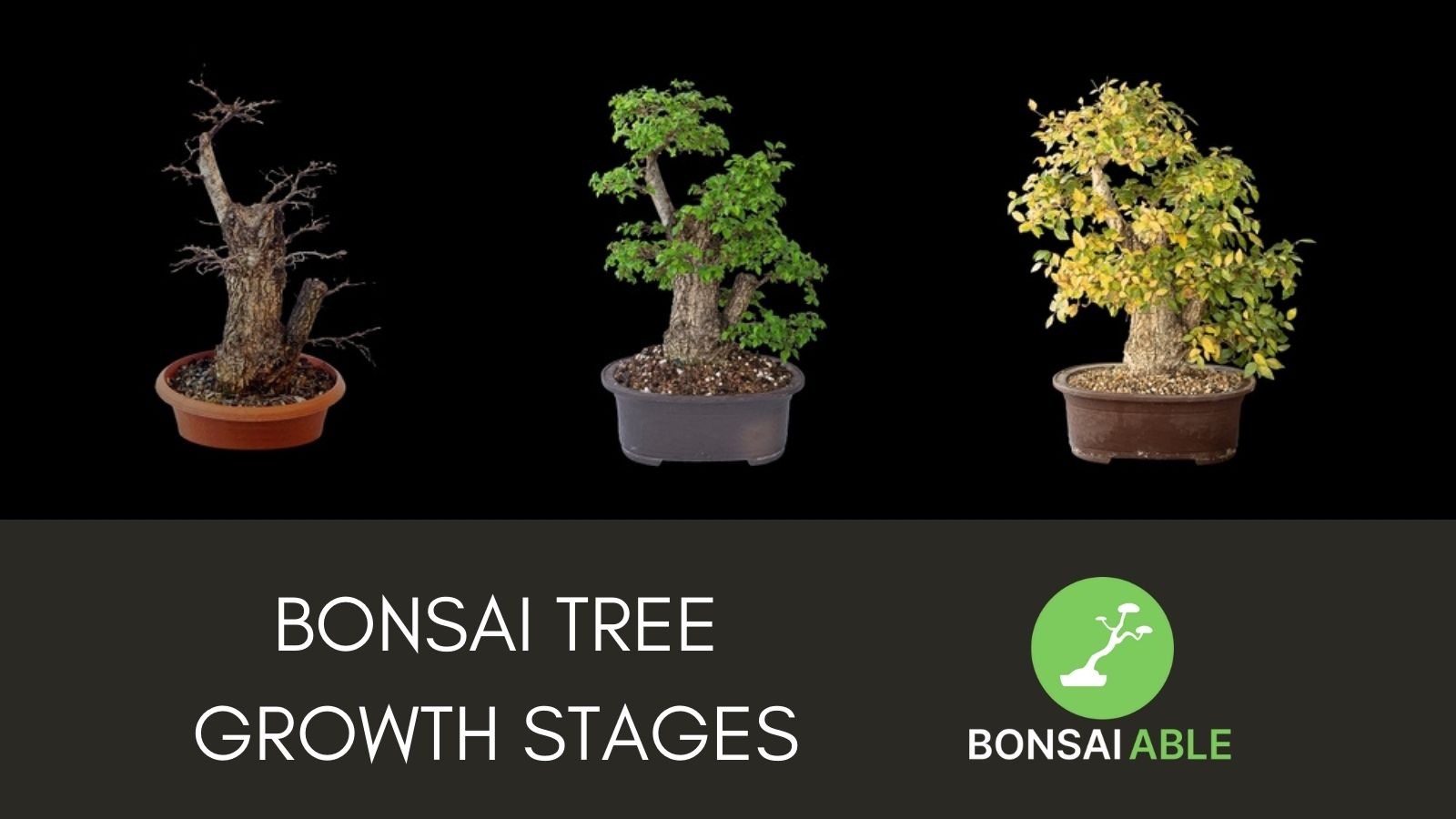
(These images show classic progression examples: notice how branch structure refines dramatically over time with intentional techniques.)
Understanding Bonsai Branch Structure: The Foundation of Refinement 📏
Great branch structure isn’t random — it’s built on timeless aesthetic rules that mimic mature trees in nature while respecting bonsai’s miniature scale.
Key elements include:
- Taper: Branches should thicken toward the trunk and gradually thin outward, creating natural strength and age illusion.
- Movement & Alternation: Branches alternate sides rather than forming “bar branches” (opposite pairs at the same height), with gentle curves adding dynamism.
- 1-2-3 Branching Rule: Primary branches divide into secondary, then tertiary — never ending in single tips.
- Branch Placement: First branch typically at 1/3 tree height, no crossing or inward-growing limbs, foliage pads layered without overlapping heavily.
- Proportions: Branch thickness roughly 1/3 of trunk at attachment point, decreasing appropriately.
Primary branches form the main framework (skeleton), secondary branches add depth and movement, and tertiary/ramification creates fine, twiggy detail for realism.
Energy flow plays a huge role: apical dominance (stronger growth at tips due to auxin hormones) directs vigor upward and outward. Understanding this helps redirect energy to weak areas for balanced development.
Common pitfalls? Over-pruning young trees too aggressively (stunts taper), ignoring species differences (pines vs. maples need opposite timing), or allowing straight, parallel branches that destroy natural feel.
Master these foundations, and every subsequent technique becomes more effective.
Assessing Your Bonsai’s Current Branch Structure 🔍
Before any cuts or wire, honest evaluation prevents mistakes. Use this checklist:
- Stand back 3–6 feet: Does the tree have good overall balance and flow?
- Check trunk-to-branch ratio: Primary branches should taper naturally from thick base to fine tips.
- Branch positioning: First branch at ~1/3 height? Alternating placement? No bar branches or heavy branches directly above each other?
- Pad formation: Are foliage areas forming triangular pads? Any long, leggy shoots or bare inner branches?
- Identify issues: Crossing limbs, inward growth, weak ramification in back/sides, inverse taper (thicker at tips), or uneven vigor.
Take photos from front, sides, and top — defoliate partially if needed to see branch lines clearly. Mark problem areas mentally or with tags.
Essential tools to gather now:
- Sharp bonsai shears ✂️
- Concave branch cutters (for flush cuts)
- Knob cutters (for stubs)
- Aluminum or copper wire (various gauges)
- Wire cutters & pliers 🔧
With assessment complete, you’re ready for action.

(High-quality bonsai tool sets like these make precise work much easier — invest in sharp, ergonomic pieces for clean cuts and minimal scarring.)
Core Techniques for Refining Bonsai Branch Structure
1. Structural Pruning: Building the Primary Framework
Structural pruning sets the long-term skeleton, usually done in early development or on young/strong trees.
Timing: Late winter/early spring for most deciduous (before buds swell); after new candles extend for pines.
Key steps:
- Identify competing leaders or thick branches stealing energy.
- Remove or subordinate (shorten heavily) unwanted primaries.
- Create movement: Cut back to outward-facing buds for outward growth.
- Enhance taper: Sacrifice branches (long, thick shoots) can thicken trunks/branches before removal.
For conifers, avoid heavy cuts on old wood — they back-bud poorly.
Species tip: Junipers tolerate aggressive pruning; maples respond with vigorous shoots.
Patience here pays off — good primary structure makes refinement easier later.
2. Maintenance Pruning & Directional Pruning for Balance ⚖️
Once the primary framework is established, maintenance pruning becomes your daily/seasonal tool for refining balance, encouraging back-budding, and directing energy where it’s needed most. This is where many bonsai owners see the biggest leap in refinement — turning sparse or uneven branches into dense, layered pads.
Pruning vs. Pinching — Know the difference:
- Pruning uses shears to remove entire shoots or branches for major redirection.
- Pinching (or tip pruning) removes soft new growth by hand or with fingertips/shears to slow extension and promote branching.
Clip-and-Grow Method — A powerful, low-stress approach: Allow a branch to grow long and strong to thicken it or add taper, then clip it back hard to a desired fork or bud. This builds ramification iteratively over seasons.
Directional Pruning — Always cut to an outward- or side-facing bud to encourage growth away from the trunk (opening space) or toward weak areas (to strengthen them). Angle cuts parallel to the branch direction for smooth healing — never leave stubs.
Encouraging Back-Budding — Cut back to old wood on strong trees to force dormant buds to activate. Combine with partial defoliation in summer for deciduous species to reduce leaf size and boost inner shoots.
Seasonal Timing Chart (popular species):
- Pines 🌲: Pinch candles in spring when they elongate 1/3–1/2; remove old needles in fall/winter.
- Junipers 🌲: Light pinching year-round; structural cuts in late winter.
- Maples 🍁: Hard prune in late winter; summer pinching of new shoots to 2–4 leaves.
- Ficus (tropicals) 🌴: Clip-and-grow anytime; frequent light pruning.
Pro tip: Always prune stronger areas harder to balance energy — apical dominance means tips grow fastest, so weaken them to feed lower/inner branches.

(These visuals illustrate ideal pruning targets and dramatic before/after transformations from targeted maintenance cuts.)
3. Wiring: Shaping Branches with Precision 🪢
Wiring allows you to set elegant curves, adjust angles, and create natural movement that pruning alone can’t achieve. It’s one of the most artistic — and sometimes intimidating — parts of refinement.
Choosing Wire:
- Aluminum (softer, beginner-friendly, reusable) for most deciduous and young conifers.
- Copper (harder, holds better long-term) for pines/junipers — anneal it first for pliability.
- Gauge rule: Wire ≈1/3 the thickness of the branch being bent.
Step-by-Step Wiring Technique:
- Start from the trunk/base — anchor wire by coiling it around the trunk a few times.
- Coil at 45° angle upward along the branch (clockwise or counterclockwise consistently).
- Space coils evenly (about 1–2 cm apart); too tight bites in, too loose slips.
- For pads: Wire secondary branches first, then tertiary — create gentle S-curves or downward sweeps for realism.
- Use guy wires or weights for heavy branches instead of thick wire.
- Double-wire tricky spots (two parallel wires) for extra strength.
Creating Natural Curves & Avoiding Scars:
- Bend gradually over days/weeks — never force sharply.
- Protect bark with raffia or paper under wire on thin-barked species.
- Check weekly: Remove wire before it bites in (usually 1–6 months depending on species/season).
When to Wire — Best after pruning when growth is strong but not explosive. Young, flexible shoots set easiest.
Pro Tips:
- Wire in cooler months for slower growth and less risk of biting.
- Remove wire by cutting (never unwind — it can scar).
- Re-wire as needed for ongoing refinement.
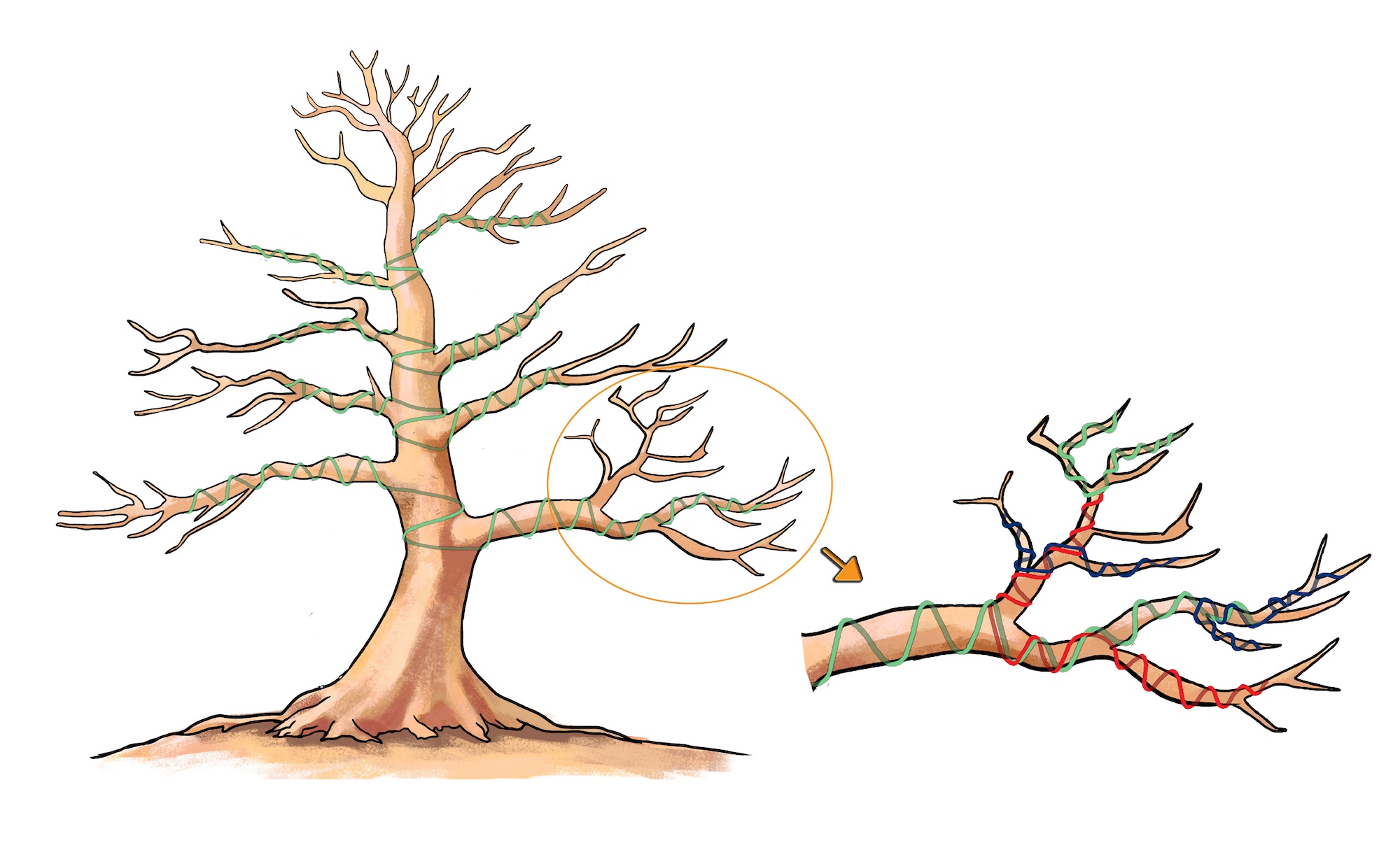
(These step-by-step wiring examples show proper coiling patterns and beautiful results on real trees.)
4. Developing Ramification: The Key to Fine, Aged-Looking Branches 🌿🌿
Ramification — the repeated forking into finer and finer branches — is what separates amateur bonsai from refined show pieces. It creates dense, twiggy pads that look mature and natural.
Why It Matters — High ramification reduces leaf/internode size, increases surface area for photosynthesis, and gives that “centuries-old” illusion.
Encouraging Bifurcation:
- Prune to forks: Always cut above a pair of buds/leaves to split growth into two directions.
- Pinch new shoots repeatedly to force side branching.
- Avoid single-tip pruning (creates leggy extensions).
Pinching Techniques for Dense Pads:
- Pines: Candle pinch — remove 1/3–2/3 of new candles in spring.
- Deciduous: Pinch to 2–4 leaves throughout growing season.
- Junipers: Finger-pinching of new tips year-round.
Defoliation for Finer Ramification:
- Full defoliation (summer for strong deciduous like maples/elm): Remove all leaves to force tiny back-buds and smaller new leaves.
- Partial defoliation: Remove only outer/strong leaves to balance energy.
- Timing: Mid-summer after first flush hardens; never on weak trees.
Building Secondary & Tertiary Branches — Iterative cycle: Grow → Pinch/Prune → Wire → Repeat. Over 2–5 years, weak twigs become strong pads.
Avoiding Leggy Growth — Balance energy: Heavy prune apex, light prune lower branches; fertilize moderately; repot regularly.
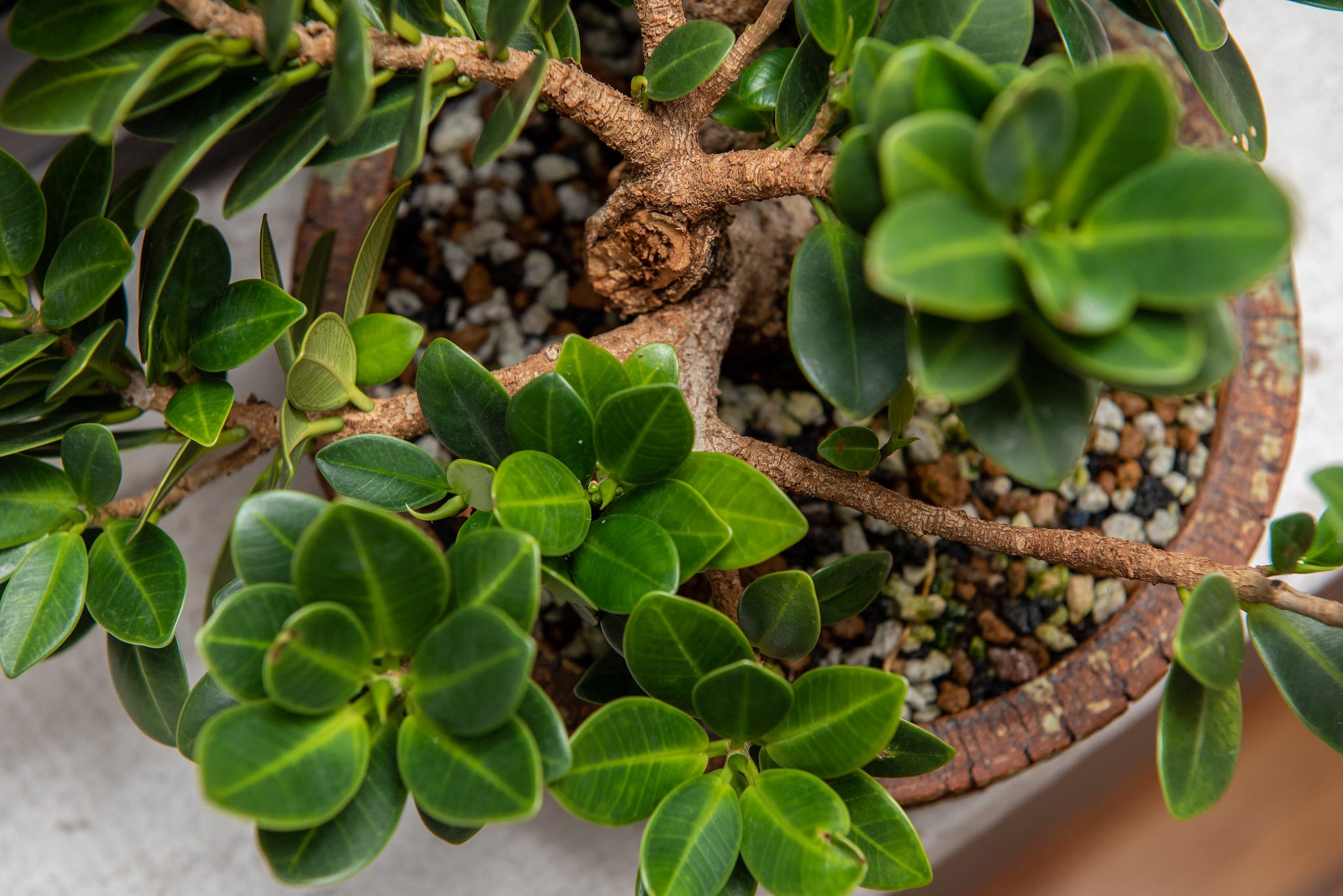
(Close-ups and full views of exceptional ramification — notice the fine twig structure and layered pads that scream refinement!)
Advanced Refinement Strategies for Pro-Level Results 🌟
Once you’ve mastered the core techniques, these advanced methods allow you to push your bonsai toward exhibition quality — tighter ramification, flawless taper, corrected faults, and that elusive “aged in nature” appearance.
Clip-and-Grow Cycles for Long-Term Taper The most reliable way to build dramatic taper is the sacrificial branch method:
- Allow selected strong shoots to grow freely for 1–3 seasons (they thicken dramatically).
- Wire them into position to add movement while they develop girth.
- Then cut them back hard to a side branch or bud, transferring the stored energy downward. Repeat in cycles — each time the remaining portion becomes thicker relative to the tip. Over 5–10 years this creates the classic reverse taper illusion bonsai artists prize.
Selective Defoliation & Needle Plucking
- Full defoliation (deciduous): Forces smaller replacement leaves and denser back-budding. Best mid-summer on vigorous trees.
- Partial/zone defoliation: Remove leaves only from strong/apical areas to weaken them and strengthen lower/inner branches.
- Conifers: Pluck older needles selectively in fall/winter to expose inner buds and improve light penetration → better ramification.
Approach Grafting or Thread Grafting for Missing Branches When a critical branch position is empty (common after heavy structural pruning), grafts can fill gaps:
- Approach grafting: Grow a donor shoot alongside the target spot, fuse it in, then sever the donor.
- Thread grafting: Drill a small hole through trunk/branch, thread a young shoot through, and let it fuse. These are advanced, species-specific (works well on maples, pines, junipers), and require 1–3 years of patience — but they can save otherwise excellent trees.
Refining the Apex & Leader The apex often becomes too dominant. Techniques:
- Cut back hard in late winter, then select the best new shoot as future leader.
- Wire the leader downward slightly to create gentle curve and reduce upward vigor.
- Use “apex sacrifice” — grow a strong side branch higher, then cut the old leader once the new one establishes.
Managing Inverse Taper & Bar Branches in Older Trees
- Inverse taper (thicker at tips): Shave down excess wood carefully with knob cutters over years; thicken lower sections via sacrifice branches.
- Bar branches: Subordinate one heavily or remove entirely if structure allows — heal scars with cut paste.
These strategies separate good hobbyist bonsai from competition-level pieces. They demand observation, timing, and courage — but the results are breathtaking.
(Exhibition-grade examples: notice the perfect taper, ultra-fine ramification, and harmonious apex development achieved through years of advanced refinement.)
Species-Specific Refinement Tips 🌍
Different species respond uniquely — applying generic techniques without adjustment leads to frustration or damage.
Conifers
- Japanese Black/White Pine 🌲: Candle pinching in spring (cut to 1/3–1/2 length), needle plucking fall/winter, structural pruning late winter. Heavy wiring with annealed copper.
- Juniper (Shimpaku, Procumbens, etc.) 🌲: Year-round light pinching, never cut into old wood heavily. Wire young flexible growth for dramatic bends.
- Spruce & Hemlock 🌲: Pinch new growth tips in late spring; avoid defoliation.
Deciduous
- Japanese Maple 🍁: Hard winter prune, summer pinch new shoots to 2 leaves, full/partial defoliation mid-summer for tiny leaves and dense twigs.
- Chinese Elm / Zelkova 🌳: Clip-and-grow year-round (tropical-like vigor), frequent wiring, summer defoliation if strong.
- Beech & Hornbeam 🌳: Late winter structural cuts, pinch new growth to maintain compact pads.
Tropical & Subtropical
- Ficus (retusa, benjamina, etc.) 🌴: Clip-and-grow continuously, wire anytime, heavy pruning tolerated. Rapid ramification possible with frequent pinching.
- Serissa 🌸: Very sensitive — light pruning only, protect from cold, pinch often for density.
Quick-reference table suggestion (in final article you’d format this nicely):
| Species | Best Structural Prune | Pinching/Defoliation Timing | Wiring Preference |
|---|---|---|---|
| Pine | Late winter | Spring candles | Annealed copper |
| Juniper | Late winter | Year-round light | Aluminum or copper |
| Maple | Late winter | Summer pinch + defoliation | Aluminum |
| Ficus | Anytime (strong) | Continuous clip | Aluminum |
Adapt to your local climate — Dhaka’s hot, humid conditions favor tropicals and allow year-round work on ficus/serissa, while temperate species need careful seasonal protection.
Common Problems & Troubleshooting 🛠️
Even experts encounter setbacks. Here are the most frequent branch-structure issues and proven fixes:
- Weak or no ramification → Increase pinching frequency, partial defoliate, fertilize moderately (high phosphorus for roots), ensure good light/airflow.
- Branches dying back after heavy pruning → Tree was too weak — build vigor first next time; use cut paste; avoid summer heat stress.
- Wire scars / biting in → Check more frequently (every 2–4 weeks on fast growers); use larger gauge or softer aluminum; protect thin bark with raffia.
- Uneven pads / lopsided growth → Directional prune stronger side harder; wire weak side downward to slow it; guy-wire heavy branches.
- Long internodes / leggy growth → Pinch earlier and more often; reduce nitrogen fertilizer; increase light intensity.
Most problems trace back to energy imbalance — learn to “read” your tree’s vigor and respond accordingly.
Maintenance Schedule for Ongoing Refinement 📅
Refining branch structure is not a one-time project — it’s a lifelong dialogue with your tree. Consistency and seasonal awareness are what separate stunning show trees from average ones. Here’s a realistic, phased schedule tailored for most temperate + subtropical climates (adjust for Dhaka’s warm, humid conditions where tropicals thrive year-round and temperate species may need winter protection).
Year-Round / Continuous (especially tropicals like Ficus, Serissa)
- Weekly: Pinch new soft growth on strong shoots (keep pads compact).
- Monthly: Check wire for biting in; light clip-and-grow on overly vigorous areas.
- Every 2–3 months: Light fertilization + observe energy distribution.
Spring (March–May in Dhaka / Northern Hemisphere)
- Early spring: Major structural pruning on deciduous (before buds swell); candle pinching on pines as candles extend.
- Mid-spring: First wiring session on new flexible growth; guy-wiring if needed.
- Late spring: Partial defoliation on maples/elm if tree is very strong.
Summer (June–August)
- Peak growing season: Frequent pinching (every 2–4 weeks) on deciduous and tropicals.
- Mid-summer (July): Full or partial defoliation on vigorous deciduous for ramification boost.
- Ongoing: Wire young shoots; remove old wire from previous seasons.
- Protect from intense Dhaka sun/heat — use shade cloth on delicate species.
Fall (September–November)
- Needle plucking on pines/junipers (remove old needles to expose inner buds).
- Light structural touch-ups on conifers.
- Final pinching before cooler weather slows growth.
- Prepare temperate trees for dormancy (reduce water/fertilizer).
Winter (December–February)
- Late winter (February): Heavy structural pruning on most deciduous and some conifers (when dormant).
- Major wiring opportunities on bare deciduous trees (easier to see branch lines).
- Minimal work on tropicals — maintain warmth and light indoors if needed.
Long-Term Refinement Timeline (5+ Years)
- Years 1–2: Focus on primary/secondary structure + initial taper.
- Years 3–5: Build ramification + refine pads; introduce clip-and-grow cycles.
- Years 5+: Maintenance mode — fine-tune apex, correct minor faults, deepen ramification.
- Ongoing: Repot every 2–4 years to refresh roots and support vigorous growth.
Track progress with dated photos — you’ll be amazed at the transformation over time! 📸
Expert Insights & Pro Tips 🌟
From decades of bonsai masters and my own trial-and-error journey:
- “Prune for direction, pinch for density.” — Classic advice that never fails. Structural cuts set the path; pinching builds the fine detail.
- Patience truly is the ultimate technique. Refinement cannot be rushed — forcing a tree too hard leads to dieback or coarse growth.
- Defoliate selectively for evaluation: Remove leaves temporarily to “see” branch structure clearly and plan the next moves.
- Balance is everything. If one side or section is stronger, prune it harder and feed the weaker parts indirectly through energy redirection.
- Photography trick: Shoot your tree bare (winter deciduous or after defoliation) from multiple angles — flaws become obvious and guide refinement decisions.
- In humid climates like Dhaka, airflow is critical — dense ramification + poor ventilation = fungal issues. Space pads, prune for openness.
- Never stop learning: Observe high-quality bonsai (in person or online from masters like Masahiko Kimura, Ryan Neil, or local Bangladeshi collections) and ask “how did they achieve that branch line?”
Small, consistent actions compound into extraordinary results. Enjoy the process — bonsai refinement is as much meditation as it is horticulture. 🧘♂️
Frequently Asked Questions (FAQs) ❓
How long does it take to refine branch structure noticeably? Visible improvement in ramification and pad density can appear in 1–3 growing seasons with consistent pinching/pruning. True professional-level refinement (fine tertiary branching, dramatic taper) usually takes 5–15+ years depending on species, starting material, and care intensity.
Can I refine an older, neglected bonsai? Yes — many great trees start as “rescues.” Build vigor first (good soil, light, fertilizer, repotting), then gradually apply structural pruning and wiring. Older wood back-buds less readily, so progress is slower but very rewarding.
What’s the real difference between pruning and pinching? Pruning removes woody shoots/branches for major redirection and structure. Pinching removes soft tips to slow extension, encourage side shoots, and create density without removing much mass.
Is wiring safe for complete beginners? Yes, if you start with aluminum wire on young, flexible branches and check frequently (every 1–2 weeks on fast growers). Practice on inexpensive nursery stock first. Scars heal over time — don’t fear them.
How do I know when to stop refining a branch or the whole tree? When pads are dense, twiggy, and naturally proportioned; when branch lines flow harmoniously without crossing or awkward angles; and when further work risks coarsening growth or stressing the tree. At that point, shift to pure maintenance.
My tree keeps getting leggy despite pinching — what am I doing wrong? Likely causes: Too much nitrogen fertilizer, insufficient sunlight, over-watering, or pinching too late (after shoots harden). Correct by increasing light, using balanced/low-N fertilizer, and pinching earlier/more frequently.
Conclusion: Your Path to a Masterpiece Bonsai 🌳🏆
Refining bonsai branch structure is the heart of the art — where technique meets vision, and patience meets creativity. From understanding foundational aesthetics, through precise pruning, wiring, and ramification development, to species-specific care and long-term maintenance, you now have a complete roadmap to transform any bonsai from basic to breathtaking.
Start today: Assess your tree honestly, gather your tools, and make one small, intentional cut or wire adjustment. Celebrate every season’s progress. Share your before-and-after photos in the comments — I’d love to see your journey and offer specific feedback!











