
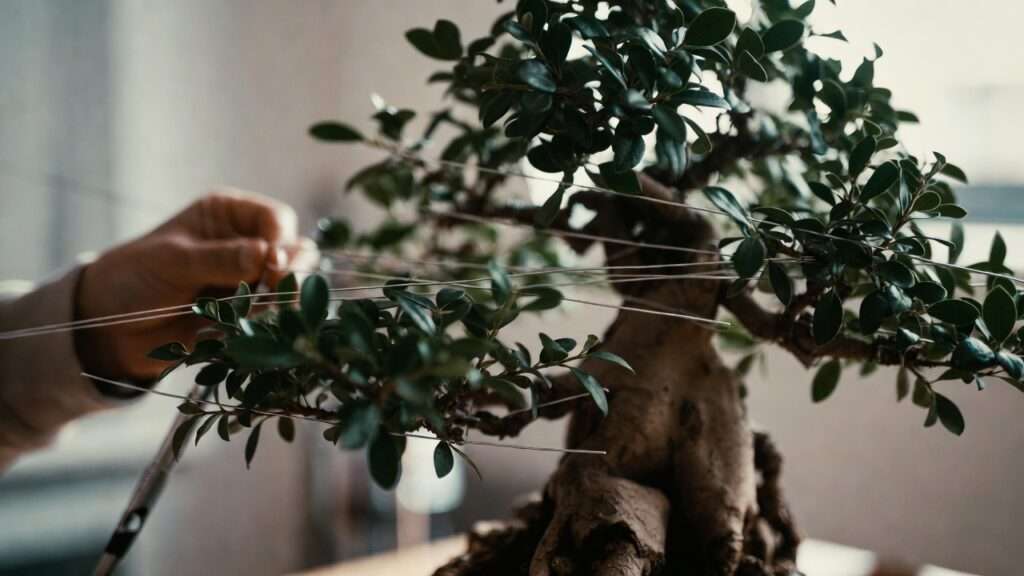
Imagine this: You’ve spent hours meticulously wiring your beautiful Japanese maple or rugged juniper, bending branches into that perfect, flowing pad structure you’ve dreamed about. Weeks pass, and excitement builds as you check your tree daily. Then one day, you notice deep grooves where the wire has bitten into the bark—or worse, branches start springing back to their old positions after you finally remove it. 😱 Heartbreaking, right? These are the two most common nightmares for bonsai enthusiasts: permanent wire scars that mar smooth bark for years, and lost shape from removing training wire too early.
The good news? Unwiring bonsai at the right time is a skill you can master with careful observation rather than guessing calendars. Timing is everything in bonsai care—it preserves your tree’s health, maintains hard-earned styling progress, and prevents avoidable damage. In this comprehensive guide, we’ll cover the science behind branch setting, universal and species-specific signs it’s time to act, safe removal techniques, fixes for common issues, and long-term aftercare. Whether you’re working with fast-growing deciduous trees or stubborn conifers, you’ll gain the confidence to protect your bonsai’s beauty. Let’s dive in and turn potential mistakes into stunning results! 🌟
Why Timing Matters So Much in Bonsai Wiring ⏰
Wiring isn’t just about bending branches—it’s about guiding lignin (the woody tissue that provides rigidity) and cambium layer responses to “set” the new position permanently. As your bonsai grows, branches thicken and wood lignifies, locking in the bend. But growth speed varies wildly:
- Too early removal → The branch hasn’t lignified enough, so elastic rebound occurs. Your carefully placed curve pops back, wasting time and effort. 😩
- Too late removal → The branch swells around the wire, causing “wire bite” or embedding. This leads to scars, weakened tissue, restricted nutrient flow, and in severe cases, branch dieback. ⚠️
Bark type plays a huge role too. Smooth-barked species like Japanese maples show scars prominently and take years to fade, while rough-barked conifers (junipers, pines) heal faster or hide marks under new bark layers. Understanding these factors turns unwiring from guesswork into precise art.

(Close-up of wire starting to bite into a branch—notice the subtle indentation that’s your first warning sign! 📸)
Key Signs It’s Time to Unwire Your Bonsai 🔍
Forget rigid timelines—always prioritize visual and tactile cues over months on a calendar. The golden rule from experienced bonsai artists: Remove wire at the first subtle sign of bite for delicate trees, or when branches feel rigid for tougher ones.
Universal indicators include:
- Wire begins to embed — Look for the first indentation or slight “bite” into the bark (often starts at bends where pressure is highest). This is your main cue! ⚡
- Branch holds position — Gently test by lifting or bending slightly; if it resists returning to the old shape, it’s setting.
- Visible swelling/thickening — The branch bulges around the wire as cambium expands.
- Seasonal acceleration — Spring/summer growth speeds everything up, so check more often then.
Pro tip: Use a flashlight to spot shadows where wire tightens against bark—early detection saves your tree!
Species-Specific Timing Guide: When to Unwire Common Bonsai 🌿
Timing varies dramatically by species, growth rate, age, and vigor. Here’s a practical breakdown based on community consensus and expert practices:
Fast-setting deciduous trees (remove early to avoid visible scars on smooth bark):
- Japanese Maple (Acer palmatum) – Typically 6–12 weeks. Unwire at first sign of bite—scars can last decades! 🌸
- Trident Maple, Hornbeam, Beech, Elm – Similar, 6–12 weeks; check weekly in growth season.
- Azalea, Privet, Spindle – Often just 6–8 weeks for young shoots.
Moderate growers:
- Ficus, Chinese Elm, Boxwood – 2–6 months. They rebound more, so allow slight bite if needed.
Slow-setting conifers (tolerate light bite better):
- Juniper, Pine – 6–18+ months (or longer for mature branches). Rough bark hides scars; many let wire bite to ensure hold. 🌲
- Spruce, Larch, Yew – Similar; pines often need extended time for wood to lignify properly.
Young, vigorous trees set faster than old or weak ones. Always inspect visually!
Here’s a quick-reference summary (imagine this as a handy table in the full article):
- Japanese Maple: 6–12 weeks | First bite | High scarring risk
- Juniper: 6–18+ months | Light bite OK | Low visible scarring
- Ficus: 2–6 months | Moderate hold | Medium rebound risk
 Wiring of a Japanese Maple. Feedback is welcome ! : r/Bonsai
(Beautiful wired Japanese maple—see how aluminum wire allows precise bends on delicate branches! 🍁)
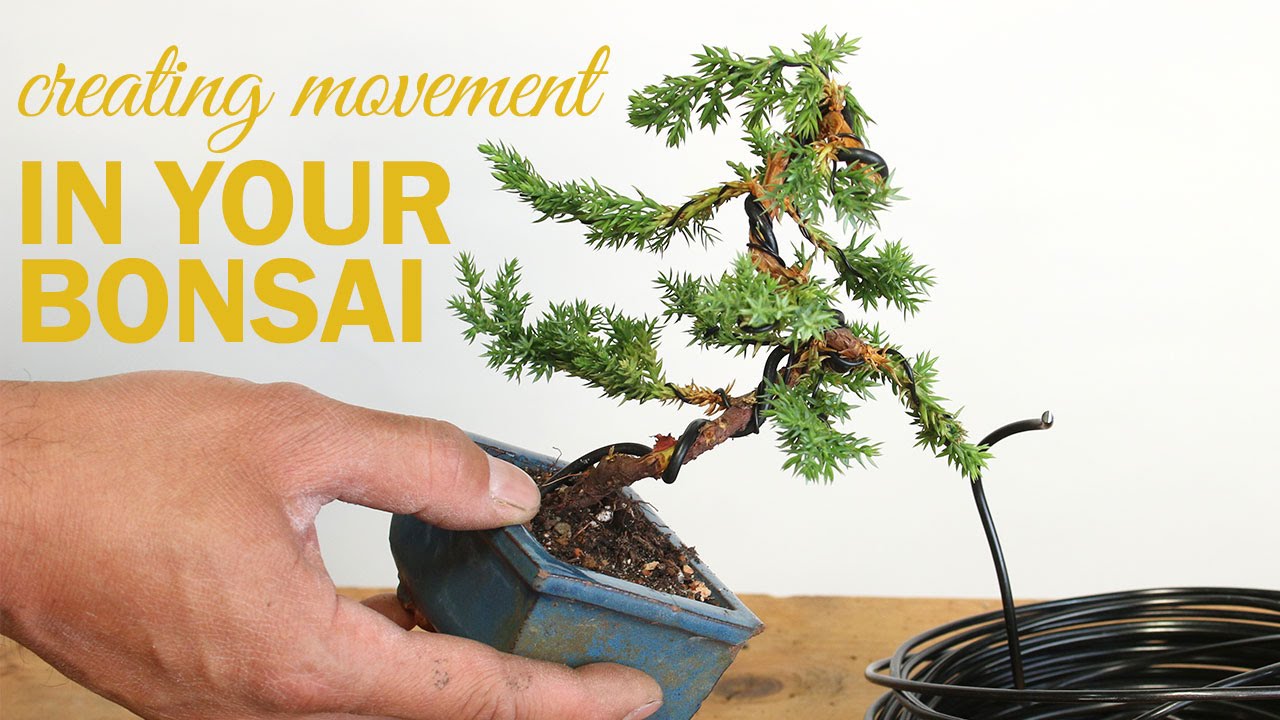
(Juniper with classic training wire—conifers often need longer for stubborn branches to set. 🌲)
How to Check Your Bonsai Regularly (Pro Monitoring Tips) 👀
Prevention beats cure! During the growing season:
- Inspect weekly (more in spring/summer).
- Use gentle finger pressure to test hold; shine a light for hidden bite spots.
- Mark wiring dates in a journal, app, or calendar with reminders.
- Best checks: Morning or evening—avoid midday heat stress.
This routine catches issues early and builds your observational skills over time. 📅
Step-by-Step: How to Safely Unwire Bonsai ✂️
Once you’ve spotted the signs it’s time, follow this careful process to minimize any risk of branch damage or bark tearing:
Essential tools you’ll need:
- High-quality wire cutters (flush or concave style for clean cuts)
- Jin pliers or needle-nose pliers (for stubborn spots)
- Protective gloves (wire can be sharp!)
- Optional: Small concave branch cutters for any minor cleanup
Step-by-step technique:
- Start from the thickest sections — Work outward from trunk to tips. This prevents unnecessary tension on thinner branches.
- Cut the wire at every loop/turn — Never try to unwind it like a spring (this twists and damages bark). Snip each coil precisely where it crosses itself or the branch. 🌟
- Remove pieces gently — Pull cut segments away slowly. If a bit is embedded, rock it side-to-side lightly or use pliers to ease it out without gouging.
- Check the branch position immediately — Gently test if it holds. If it moves slightly, note it for potential re-wiring later.
- Clean up — Remove any small wire fragments stuck in bark crevices.
If wire has bitten in moderately, don’t panic—many scars fade over 1–3 years with good care.

(Expert demonstration: Using wire cutters to snip each loop safely on a juniper—notice the precise cuts to avoid pulling! 📸)
(Another angle showing careful removal on a small deciduous bonsai—perfect technique for beginners to follow! 🍃)
Post-removal care tips:
- Place in partial shade for 1–2 weeks to reduce stress.
- Maintain consistent moisture (don’t let it dry out during healing).
- Avoid heavy fertilizing right away—let the tree recover first.
What If the Branch Springs Back? Fixes & Rewiring Strategies 🔄
Even pros encounter rebound sometimes—especially on vigorous shoots or if removed a tad early. Here’s how to handle it:
- Assess the damage — How much did it move? Minor shifts (10–20°) often correct themselves with new growth; major ones need intervention.
- Immediate fixes — Use temporary guy wires, branch weights, or clips to gently pull it back into position.
- Rewiring safely — Wait 2–4 weeks for recovery, then re-wire using:
- Slightly thicker gauge if needed
- Alternate direction (clockwise to counterclockwise)
- Looser tension to avoid bite
- Aluminum wire for delicate species (easier to bend/remove)
- Prevention next time — Wire younger, more flexible shoots; use double-wiring on thick branches; aim for 45–60° bends initially.
Many hobbyists re-wire 2–3 times over a season on fast-growers like maples—it’s normal and builds better structure long-term! 😊

(Example of severe rebound risk: This branch shows what happens with very late removal—deep embedding and potential constriction. Learn to avoid this! ⚠️)
Dealing with Wire Scars: Healing & Minimizing Damage 🩹
Scars happen—especially on smooth-bark trees. The key is understanding healing timelines and helping your bonsai recover:
- Healing time — Japanese maples: 2–5+ years to fade significantly; junipers/pines: 1–2 years or less (new bark covers quickly).
- Speed healing naturally — Healthy growth is best: Proper light, balanced fertilizer, and humidity help cambium roll over scars.
- Advanced options — Some artists apply cut paste or wound sealant on fresh deep bites (though many prefer letting nature heal). For conifers, scars can become attractive deadwood features.
- Cosmetic acceptance — On older trees, light scars add character and realism—embrace them as part of bonsai’s “aged” aesthetic.
(Close-up of classic wire bite on a conifer—notice how rough bark hides and heals over time. 🌲)
(Another example of early bite on smoother bark—remove before it gets this deep! 📸)
Common Mistakes & Expert Insights from Experienced Bonsai Artists 💡
Even seasoned hobbyists occasionally slip up on timing—here are the most frequent pitfalls and wisdom gathered from decades of community experience (bonsai forums, books, workshops, and master demonstrations):
Top 10 timing mistakes beginners (and sometimes intermediates) make:
- Relying on a fixed calendar instead of tree observation (“It’s been 3 months, so it must be ready”).
- Waiting for “deep bite” on smooth-bark species like maples or azaleas—by then scars are inevitable.
- Removing wire during peak summer heat—branches are still elongating rapidly and rebound is more likely.
- Using copper wire on very young deciduous trees (it bites faster and harder than aluminum).
- Ignoring branch thickness differences—thicker sections set slower than thin tips.
- Forgetting to check hidden areas (inside pads, near trunk junctions).
- Rewiring immediately after partial rebound without giving recovery time.
- Overlooking vigor—weak, slow-growing trees need longer; vigorous ones set faster.
- Not marking wiring dates—leads to “surprise” deep bites months later.
- Assuming all conifers behave the same—Japanese black pine sets slower than some junipers.
Expert insights & myth-busting:
- “The moment you see the wire starting to disappear into the bark on a Japanese maple, it’s already too late for perfect smoothness.” — Common advice echoed by many professionals.
- Myth: “You must remove wire before any bite at all.” Reality: On most conifers and many rough-bark deciduous trees, a light bite ensures better setting without visible long-term harm.
- Advanced tip: Aluminum wire is forgiving and preferred for most beginners and deciduous species; copper is stronger for large conifer branches but bites quicker—choose based on species and branch age.
- Pro observation trick: Compare wired vs. unwired branches of similar age on the same tree—feel the rigidity difference.
These insights come from observing thousands of trees over years—always prioritize what your individual bonsai is telling you. 🌟
Aftercare & Long-Term Maintenance After Unwiring 🌱
Unwiring is not the finish line—it’s a checkpoint in your bonsai’s journey. Proper follow-up care locks in success:
Immediate (first 1–4 weeks):
- Move to dappled shade or morning sun only—reduce stress while new tissue forms.
- Keep soil evenly moist (never soggy)—consistent hydration supports healing.
- Pause heavy nitrogen fertilizer; use balanced or low-N feed to encourage steady (not explosive) growth.
- Mist foliage daily if humidity is low.
Medium-term (1–3 months):
- Monitor for rebound—gently test branches every 7–10 days. Minor shifts often self-correct with new extension growth.
- Resume normal fertilizing schedule once tree looks vigorous.
- Protect from strong winds—newly set branches are still somewhat vulnerable.
Long-term integration:
- Coordinate with seasonal tasks: Many artists unwire just before or after spring pruning to take advantage of strong back-budding.
- Plan future wiring cycles—stronger branches from previous correct wiring need less frequent restyling.
- Keep a simple bonsai journal: Note wiring dates, removal dates, observations, and photos—patterns emerge over years and make you a better artist.
Healthy aftercare turns good unwiring into exceptional long-term structure. Your tree will thank you with tighter pads and smoother trunks! 🍃
Frequently Asked Questions (FAQs) ❓
Q: How long should wire stay on a juniper vs. a Japanese maple? A: Junipers often 6–18+ months (light bite is usually fine); Japanese maples typically 6–12 weeks max—remove at first subtle indentation to prevent visible scars.
Q: Can I unwire during winter/dormancy? A: Possible but not ideal—growth is paused, so branches haven’t set fully. Only do it if wire is already deeply embedded and risking constriction. Spring/early summer is safest.
Q: What if I already see deep scars—what now? A: Let nature heal (1–5+ years depending on species). Keep tree vigorous. On conifers, scars can become jin/shari features. On deciduous, some fade dramatically with time and good care.
Q: Is it okay to let conifer wire bite in on purpose? A: Yes—many professionals allow moderate bite on junipers and pines to guarantee the bend holds for years. Just avoid severe constriction.
Q: Which wire type minimizes scarring? A: Annealed aluminum is gentlest and easiest to remove without damage—ideal for most hobbyists and smooth-bark trees. Copper for heavy-duty conifer work.
Q: My branch moved a lot after unwiring—can I fix it without full rewiring? A: Try guy wires, weights, or tie-downs first. If unsuccessful after 4–6 weeks, re-wire looser and in opposite direction.
Q: How often should I check wired branches? A: Weekly during active growth (spring–early fall); every 2–3 weeks in slower periods.
Q: Does tree age affect unwiring time? A: Yes—young, vigorous trees set much faster than old, slow ones. Always judge by visual/tactile signs.
Conclusion: Master the Art of Timing for Stunning Bonsai 🎯
Unwiring bonsai at the right time boils down to one core principle: Observe your tree, not the calendar. By learning the subtle signs of branch setting, understanding species differences, checking regularly, removing wire safely, and providing thoughtful aftercare, you protect months (or years) of styling work and keep your bonsai healthy and beautiful.
Avoiding wire scars and rebound isn’t just about aesthetics—it’s about respecting the living being you’re shaping. Start today: Grab a flashlight, gently inspect your wired trees, and take notes. With practice, this once-stressful moment becomes one of the most satisfying parts of bonsai.
Have you recently unwired a tree? Share your experience (successes or lessons learned!) in the comments below—I’d love to hear your stories and see photos! 📸 Don’t forget to subscribe for more in-depth bonsai care guides, seasonal checklists, and styling tutorials.
Happy bonsai-ing—may your branches stay perfectly placed and your bark stay smooth! 🌳✨











