
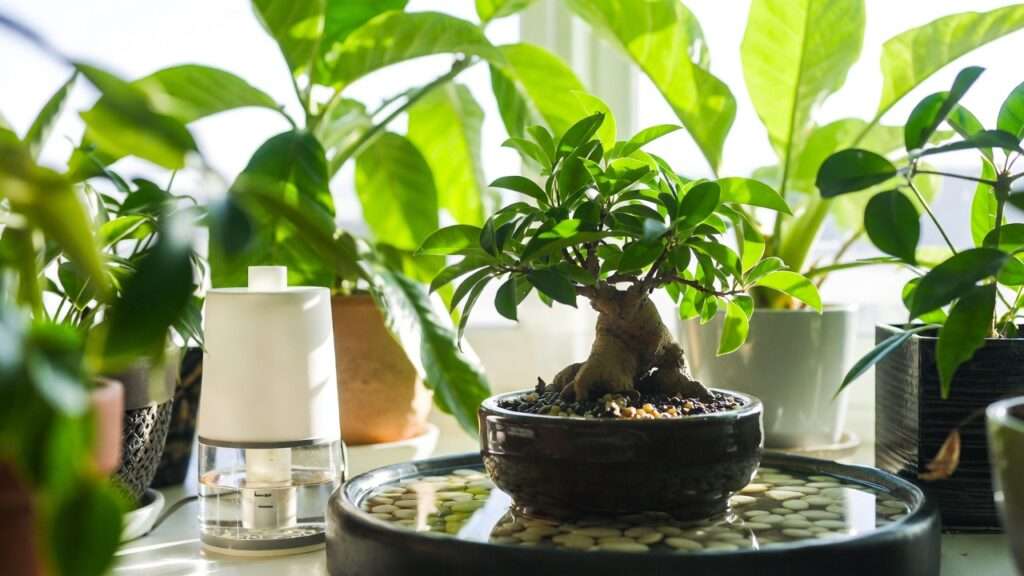
Picture this: Your beautiful indoor bonsai — perhaps a lush Ficus or a resilient Chinese Elm — suddenly shows crispy brown tips on its leaves, or worse, they start curling and dropping like autumn confetti. 😢 It’s heartbreaking, and it happens to even the most dedicated bonsai lovers. The culprit? Low indoor humidity. In most homes, especially during winter with heating systems blasting or summer with air conditioning running, relative humidity (RH) plummets to 20-40%. Yet tropical and subtropical bonsai species crave 50-70% or higher to transpire healthily and stay vibrant.
Maintaining humidity for indoor bonsai isn’t just a nice-to-have — it’s essential for preventing stress, reducing pest issues like spider mites 🕷️, and promoting lush, green foliage year-round. As a bonsai enthusiast with years of hands-on experience caring for dozens of indoor trees, I’ve seen the dramatic difference consistent humidity makes. In this in-depth guide, we’ll cover the science, practical tools, proven methods (beyond the basics), common pitfalls, and seasonal strategies to create a thriving microclimate. Let’s turn those dry, sad leaves into thriving masterpieces! 🌱✨
Why Humidity Is Critical for Indoor Bonsai 🌡️
Bonsai are miniature trees, but their needs mirror their full-sized counterparts in nature. Transpiration — the process where trees release water vapor through leaf stomata — is key to nutrient uptake and cooling. In high-humidity environments (like tropical forests where many indoor species originate), water loss is balanced. Indoors, dry air accelerates evaporation, stressing the tree and leading to:
- Dry, brown leaf tips and edges
- Leaf curl or premature drop
- Stunted new growth
- Increased vulnerability to pests (spider mites love dry conditions!)
- Overall weakened health
Ideal humidity ranges vary by species, based on expert sources like Bonsai Empire and community experiences:
- Tropicals (Ficus retusa/ginseng, Schefflera/Hawaiian umbrella, Serissa): 60-80% optimal, minimum 50%. These thrive in higher moisture for vibrant leaves and aerial roots.
- Succulent types (Dwarf Jade/Portulacaria afra): 40-60% tolerant — they handle drier air better thanks to thick, waxy leaves.
- Subtropicals (Chinese Elm/Ulmus parvifolia, Fukien Tea/Carmona): 50-70% — adaptable but happier with moderate boosts.
Seasonal shifts make it tougher: Winter heating dries air drastically, while summer AC can mimic desert conditions. Monitoring and adjusting prevents these issues before they start.

Here’s a classic example of low humidity damage — notice those crispy, brown edges on the leaves? This is what we’re preventing! 🌳
How to Measure Humidity Accurately (Tools & Monitoring) 📏🔍
You can’t manage what you don’t measure! A reliable hygrometer is your best friend.
- Digital hygrometers (inexpensive models from brands like ThermoPro or Govee): Accurate, often with app connectivity for tracking trends. Place one right at canopy level (not on the pot surface) for true microclimate readings.
- Analog options: Simple and cheap, but less precise — good for backups.
Quick DIY check: Hang a pair of wet blue jeans near your bonsai overnight. If they’re still damp in the morning, humidity is decent; if bone-dry, it’s too low.
Many indoor growers find their room RH at 30-40%, but a good setup creates a localized 10-20% boost around the tree. Track daily — patterns emerge fast!
Top Proven Methods to Boost Humidity (Ranked by Effectiveness) 🚀
Let’s dive into actionable solutions, from beginner-friendly to advanced.
1. Humidity/Pebble Trays (The Classic Starter Method) 🪨💦
This timeless technique creates evaporation for a localized humidity increase.
Step-by-step setup:
- Choose a shallow, waterproof tray wider than your bonsai pot (the larger, the better for evaporation).
- Fill with clean pebbles, gravel, or decorative stones.
- Add water until just below the pebble tops.
- Place your bonsai pot on top — never let it sit in water (root rot risk!).
- Refill as water evaporates; clean weekly to avoid algae or mosquitoes.
Real-world results: Community tests (e.g., Bonsai Nut experiments) show pebble trays can raise local RH by 8-20% — from room 30% to a steady 50% microclimate with larger trays. Combine with a small fan for better circulation.
A simple yet effective pebble tray setup — notice how the pot stays elevated above the waterline? Perfect for everyday indoor use! 🌿
:max_bytes(150000):strip_icc()/SPR-how-to-make-a-pebble-tray-7371481-Hero-C-5d303cbb85744594b59e9839a63d5abd.jpg)
Another beautiful example with colorful pebbles — it adds aesthetic appeal while boosting moisture.
2. Room Humidifiers (The Game-Changer for Serious Growers) 🌫️
For consistent, room-wide results, nothing beats a humidifier.
- Best type: Ultrasonic cool-mist (quiet, no heat to stress trees). Avoid warm-mist near bonsai.
- Placement: 3-6 feet away, aimed indirectly — never blast mist directly on foliage (fungal risk).
- Sizing: Small unit (1-2 gallon) for a few trees; larger for a dedicated space.
- Tips: Use distilled water to prevent mineral buildup; choose models with auto-humidistat for 50-60% target.
Many growers report jumping from 30% room RH to 55-65% — transformative for tropical species!

A cute, compact ultrasonic humidifier adding that gentle mist — ideal near your bonsai collection without being obtrusive! 💕
3. Regular Misting Techniques (When & How to Do It Right) 💨
Misting provides a temporary leaf-level boost but isn’t a long-term fix (evaporates quickly).
- Best practices: Use a fine-spray mister with room-temperature water. Mist in the morning so leaves dry before night.
- Frequency: 2-3 times daily in very dry conditions; reduce if using trays/humidifiers.
- Myth busted: Daily misting alone won’t maintain humidity — pair it with other methods.
4. Grouping & Microclimate Creation (Natural & Low-Cost) 🌿🌿
Plants transpire together — cluster your bonsai with other houseplants to create a humid bubble.
- Bonus: Place in naturally steamy spots like bathrooms or kitchens (post-shower steam!).
- DIY humidity tent: For stressed trees, cover temporarily with clear plastic (ventilate to avoid mold).
5. Advanced Setups for Perfectionists (Grow Tents & Automation) 🏕️
- Mini grow tents with built-in humidity control and gentle fans.
- Smart plugs + hygrometers for automated humidifier activation.
- Oscillating fans on low: Prevents stagnant air, reduces mold, and makes humidity feel more effective.
This advanced approach suits collectors with multiple tropical bonsai or those in very dry climates. A small oscillating fan on low speed prevents fungal issues by promoting gentle air movement while enhancing the perceived humidity effect.
A well-organized tropical bonsai grow tent setup — complete with humidity control, lighting, and ventilation — creates a perfect stable microclimate for indoor trees! 🌿🏕️

Another creative enclosed setup using an aquarium-style tank with misting — ideal for high-humidity lovers like Serissa or Ficus!
Common Mistakes to Avoid (Troubleshooting Section) ⚠️
Even experienced growers slip up sometimes. Here are the biggest humidity-related pitfalls I’ve seen (and occasionally made myself!):
- Over-misting without good airflow → Leads to fungal diseases like black spot or powdery mildew. Always mist in the morning and ensure circulation.
- Letting pots sit in water on humidity trays → This causes root rot faster than low humidity ever could. Keep the pot elevated on pebbles — water should never touch the drainage holes.
- Ignoring airflow entirely → Stagnant humid air invites mold, algae in trays, and pests. A small fan is your friend.
- Placing bonsai near heat vents, radiators, or AC drafts → These create hot/cold spots and drop local RH dramatically.
- One-size-fits-all approach → Treating a drought-tolerant Jade the same as a thirsty Serissa leads to problems. Match methods to species needs.
- Forgetting to clean trays/humidifiers → Algae, bacteria, or mineral scale reduce effectiveness and can harm roots/leaves.

Close-up of spider mite webbing and damage on leaves — a classic sign that low humidity has stressed your bonsai and invited these tiny terrors! 🕷️😠

Another view showing the telltale stippling and fine webs — catch early with proper humidity to prevent outbreaks.
Integrating Humidity with Overall Indoor Bonsai Care (Holistic Tips) 🔄
Humidity doesn’t exist in a vacuum — it interacts with other care factors:
- Light synergy — Bright, indirect light (essential for most indoor bonsai) increases transpiration rates, raising humidity needs. In low-light spots, lower humidity tolerance is common.
- Watering adjustments — With 55-65% RH, soil stays moist longer — check with finger test or moisture meter before watering to avoid overwatering.
- Temperature balance — Ideal range 65-75°F (18-24°C). Higher temps + low RH = rapid drying; cooler temps slow transpiration but can encourage rot if too humid.
- Pest prevention — Consistent humidity is the #1 deterrent against spider mites (they hate moist air). Combine with weekly leaf inspections and neem oil sprays if needed.
A balanced approach yields the best results — think of humidity as one pillar of the “indoor bonsai trifecta”: light, water, and humidity.
Seasonal Humidity Adjustments (Year-Round Calendar) 📅
- Winter (heating season): Combat dry air aggressively — use humidifier + trays + grouping. Aim for 55%+ minimum. Monitor closely as indoor RH can drop below 20%.
- Summer (AC season): AC dries air like winter heat. Keep humidifier running; increase misting during hot spells. Leverage open windows on humid days.
- Spring/Fall transitions → Gradually reduce supplemental humidity as natural outdoor RH rises. Watch for sudden drops during weather changes.
Track your local conditions — in many regions, indoor humidity swings 30-50% seasonally.
Expert Insights & Real-World Examples 🌟
From Bonsai Empire and veteran forums like Bonsai Nut: “Humidity is often the missing link for indoor success — get it right, and 80% of leaf problems vanish.”
In my own collection, moving a struggling Ficus from a dry living room (35% RH) to a grouped shelf with tray + humidifier (steady 58-62%) resulted in new buds within weeks and no more tip burn.
Real example: A grower reported their Chinese Elm went from shedding leaves every winter to holding full foliage year-round after adding a room humidifier.
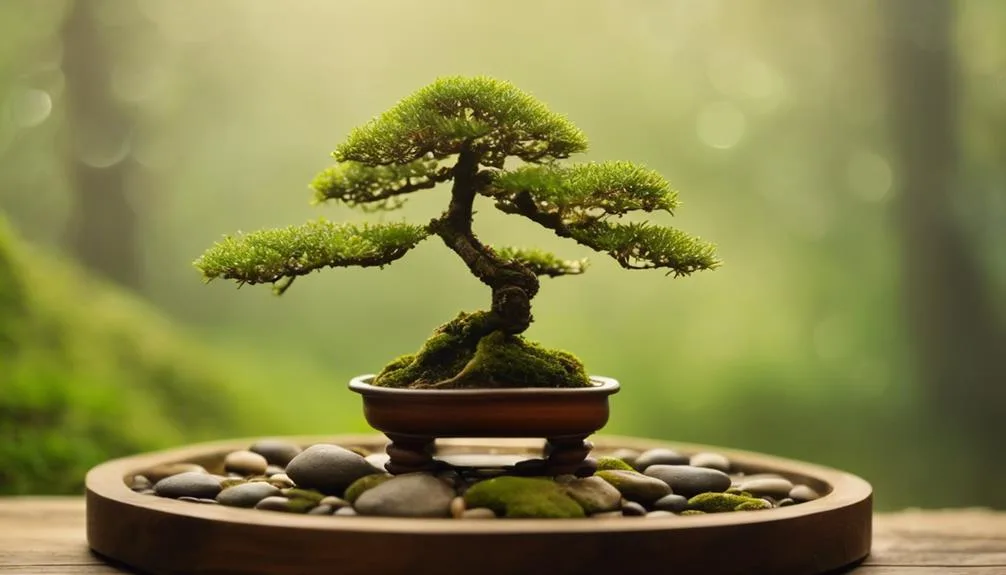
A lush, thriving indoor bonsai on a pebble tray — notice the vibrant green foliage and mossy base? This is what consistent humidity looks like! 🌳💚

Another stunning example of optimal humidity payoff — dense, healthy pads and no dry tips.
FAQs (SEO Boost + User Questions Answered) ❓
Does misting alone maintain humidity for indoor bonsai? No — it gives a short-term leaf boost (10-30 minutes), but evaporates quickly. Combine with trays or humidifiers for lasting results.
How much does a humidity tray actually raise RH? Typically 8-20% locally (e.g., room 30% → 45-50% around the tree). Larger trays + fans maximize this.
Best humidifier for multiple bonsai? A cool-mist ultrasonic with humidistat (e.g., 1-4 gallon capacity) placed nearby. Distilled water prevents white dust.
Can low humidity kill my bonsai? Indirectly yes — chronic dryness weakens the tree, invites pests/disease, and can lead to decline over months/years.
Differences for Ficus vs. Jade vs. Chinese Elm? Ficus: Needs 60%+ for aerial roots/health. Jade: Tolerates 40%+ easily. Chinese Elm: Happy at 50-70%, more forgiving.
Conclusion (Call to Action + Encouragement) 🎉
Mastering maintaining humidity for indoor bonsai transforms your trees from merely surviving to truly thriving — lush leaves, stronger growth, fewer pests, and that satisfying “wow” factor every time you look at them.
Start simple: Get a hygrometer, set up a pebble tray, and add misting. Scale up with a humidifier or grouping as needed. Monitor, adjust, and enjoy the process!
Have you tried any of these methods? Share your humidity setup, successes, or questions in the comments below — I’d love to hear and help! Happy bonsai growing! 🌳💚✨











