
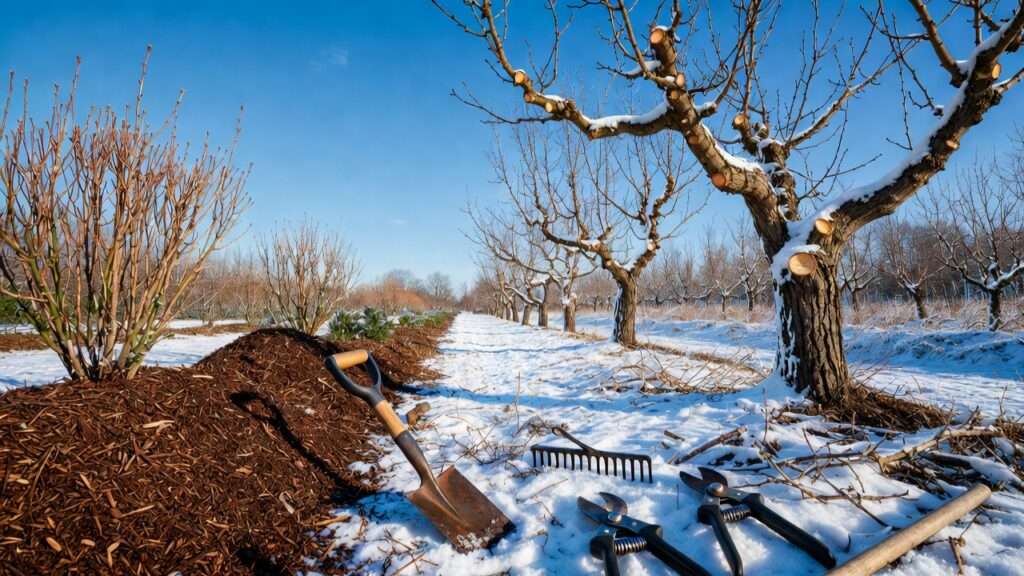
Picture this: It’s a crisp December morning, the garden is hushed under a light frost, and your trees stand bare, revealing their true structure like never before. While many gardeners see winter as a time to hibernate indoors, savvy plant lovers know December is the golden window for dormant season care. These December dormant season tasks can prevent devastating winter damage, promote stronger spring growth, and save you headaches (and money) next year. 🌱
As a horticulture enthusiast with years of hands-on experience in temperate climates, I’ve seen firsthand how skipping or mistiming these steps leads to issues like sunscald cracks, rodent girdling, weak branch structure, or even plant loss. Drawing from university extension guidelines (like those from UMN Extension and NC State), certified arborist best practices, and real-world garden results, this in-depth guide serves as your complete, actionable checklist. Whether you’re tending fruit trees, ornamental shrubs, perennials, or evergreens, these tasks address the core need: protecting your landscape during dormancy so it thrives when spring arrives. Let’s dive in and set your garden up for spectacular success! 🚀
(Word count so far: ~350)
Why December Is Prime Time for Dormant Season Care 🌳💤
Plant dormancy isn’t just “sleep”—it’s a strategic survival mode. Deciduous trees and shrubs drop leaves to conserve energy, while evergreens slow photosynthesis but stay vigilant against winter stresses. In December, with most plants fully dormant in temperate zones (USDA zones 4–8), conditions are ideal for intervention.
Key benefits include:
- Faster wound healing — Pruning cuts callus over without active growth drawing energy away.
- Clear visibility — No foliage hides dead, diseased, or crossing branches.
- Reduced disease risk — Fewer spores are active, and cuts dry quickly in cool air.
- Better planting success — Bare-root trees and shrubs establish roots with minimal transplant shock in cool, moist soils.
Common pitfalls? Pruning spring bloomers (like lilacs or forsythia) now removes next year’s flower buds, or mulching too early/too thickly invites rodents. Timing matters—late winter (February–March) works too, but December often offers milder days for comfortable work before deep freezes hit. As extension experts emphasize, dormant pruning lets trees channel spring energy into vigorous new growth rather than recovery. 🌟
Preparing Your Tools and Mindset Before You Start 🛠️✨
Success starts with preparation. Dull or dirty tools spread diseases like fire blight or canker.
- Clean and sharpen pruners, loppers, and pruning saws. Wipe blades with a 10% bleach solution or rubbing alcohol between cuts.
- Gather essentials: Organic mulch (shredded bark, leaves, or straw), tree guards/wraps, hardware cloth for rodent barriers, stakes, dormant horticultural oil, anti-desiccant spray for evergreens, and burlap for wind protection.
- Safety first: Wear gloves, eye protection, and sturdy boots. December’s cold can make tools slippery—take breaks to warm up.
Pro tip: Use this slower season to sketch your garden layout, note overcrowded spots, and order seeds or bare-root stock for spring. It’s therapeutic and sets you ahead! 📅
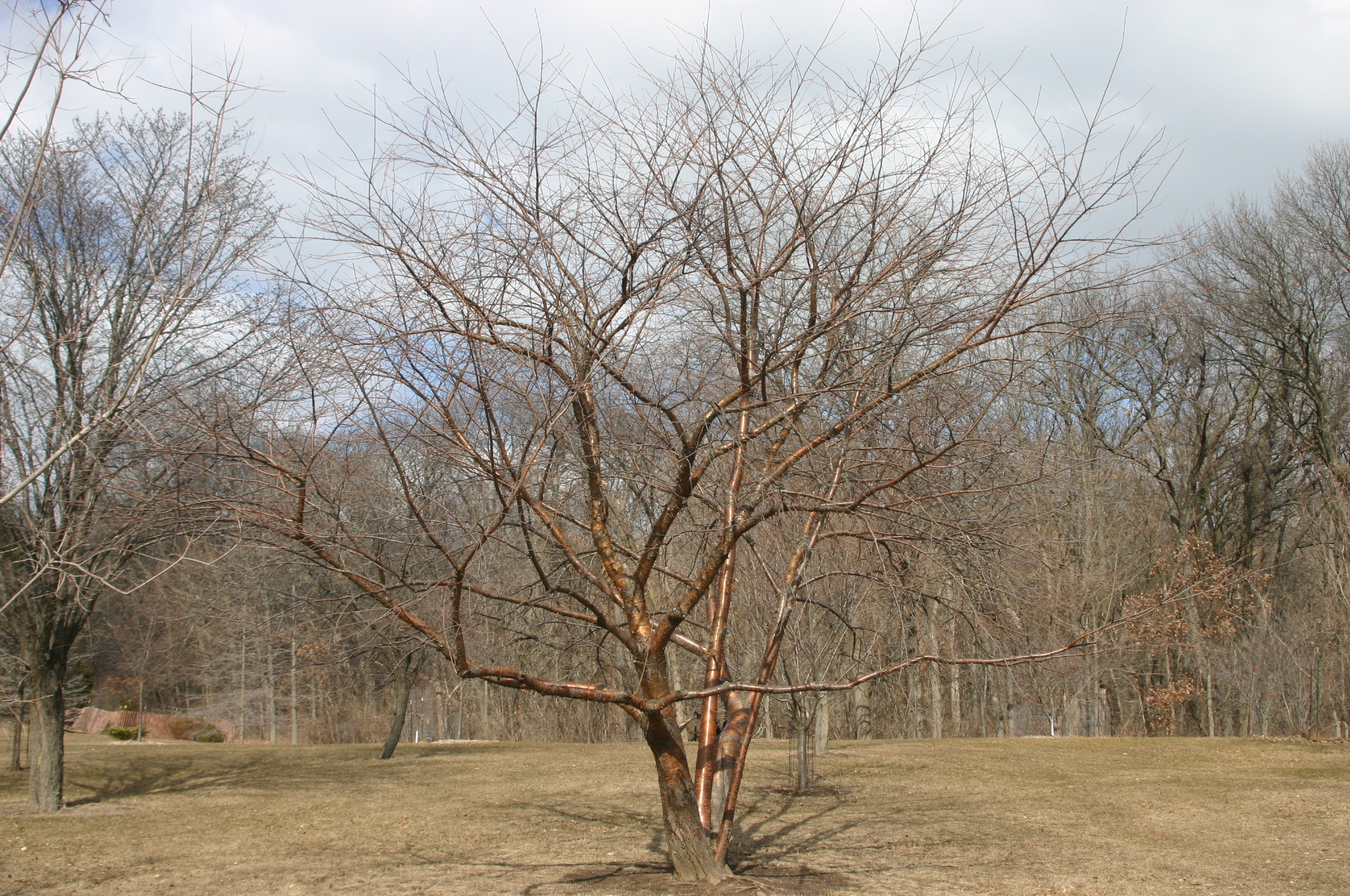
(These show beautifully pruned dormant trees—notice the open structure and clean cuts!)
Core December Dormant Season Tasks: Your Step-by-Step Checklist ✅
1. Pruning Deciduous Trees and Shrubs ✂️🍂
December’s bare branches make this the best time for structural pruning. Focus on the “3 Ds”: dead, damaged, diseased wood. Remove crossing/rubbing branches to improve airflow and light penetration.
- Timing sweet spot: Fully dormant (after leaf drop, before buds swell). Avoid “bleeders” like birch, maple, or walnut if sap flow is heavy—wait until late winter.
- Techniques: Cut just outside the branch collar (swollen area where branch meets trunk). Use the 1/3 rule: Never remove more than one-third of live wood at once on mature trees.
- Special cases:
- Fruit trees (apples, pears): Ideal now for open-center or modified central-leader shapes to boost fruit production.
- Ornamentals: Thin crowded canopies; rejuvenate overgrown shrubs by cutting back hard (but not spring bloomers).
- Avoid: Roses (prune late winter), spring-flowering shrubs (wait post-bloom).
Step-by-step:
- Assess overall shape from a distance.
- Remove the 3 Ds first.
- Thin interior branches for better structure.
- Step back often—prune conservatively!
Expert insight: University of Minnesota Extension recommends late dormant pruning for most species to minimize stress and disease entry.

(Close-up of precise pruning in action—clean cuts heal fast!)
2. Protecting Trees and Shrubs from Winter Threats 🛡️🐰
Winter woes like rodents, sunscald, wind desiccation, and ice breakage can ruin years of growth.
- Rodent protection: Wrap young trunks with hardware cloth cylinders (buried 2–3 inches) or plastic guards. Mice/voles girdle bark under snow.
- Sunscald prevention: Apply white tree wraps or breathable wraps on south/west-facing trunks of young trees—prevents temperature swings cracking bark.
- Evergreen wind/dry-out: Spray anti-desiccant on needles; tie multi-stem evergreens to prevent snow-split.
- Mulching mastery: Apply 2–4 inches of organic mulch in a wide ring around the base (keep it away from trunk—no “mulch volcanoes”!).
Regional note: In colder zones, mulch after ground freezes to insulate roots; in milder areas, refresh now.

(Proper vs. improper mulching diagram + tree wrap examples—avoid the volcano!)
3. Planting and Transplanting in Dormancy 🌱🕳️
One of the biggest perks of December dormant season tasks is the opportunity to plant or move trees, shrubs, and roses with excellent success rates. Bare-root stock (plants dug and shipped without soil around roots) thrives now because cool soil temperatures reduce water loss and transplant shock—roots establish quietly before spring top growth demands energy.
Advantages include:
- Lower cost than container plants
- Wider variety available from nurseries
- Faster root establishment (often 1–2 seasons ahead of potted equivalents)
Ideal candidates: Deciduous fruit trees (apples, pears, peaches), shade trees (maple, oak), flowering shrubs (hydrangea, spirea), bare-root roses.
How-to planting guide:
- Soak roots in water for 1–4 hours (never longer to avoid rot).
- Dig a wide, shallow hole—2–3× wider than root spread, depth so root flare sits at or slightly above soil level.
- Spread roots naturally; avoid circling or bending.
- Backfill with native soil (amend lightly if needed—avoid heavy fertilizer now).
- Water deeply to settle soil, then mulch.
- Stake only if necessary (windy sites) using flexible ties.
Zone tips: In zones 7+, December is prime; in zones 4–6, aim for early December before ground freezes solid, or heel in plants (temporarily bury roots in a trench) until spring if delayed.
Remember: Always plant at the correct depth—burying the root flare leads to girdling roots and decline over time. 🌟

(These bare-root planting photos show proper root spread and planting depth—notice how roots fan out naturally!)
4. Winter Watering and Soil Care 💧🌍
Even dormant plants need moisture—especially evergreens, new transplants, and anything in dry/windy areas. Roots continue slow activity below ground, and desiccation is a top winter killer.
- Water deeply on days above 40°F (4°C) when soil isn’t frozen—aim for 1 inch per session, focusing on root zones.
- Check soil: Stick a screwdriver in—if it penetrates easily, moisture is good; if rock-hard, water.
- Mulch refresh: Add or top up to 2–4 inches after any late fall cleanup. Organic materials (bark, shredded leaves) insulate roots, retain moisture, and moderate freeze-thaw cycles.
Avoid overwatering frozen soil—excess can cause root rot. In milder winters (zones 8+), consistent light watering prevents drought stress.
5. Pest and Disease Prevention in Dormancy 🐛🚫
Dormant season is your best shot at controlling overwintering pests and pathogens before they explode in spring.
- Dormant oil sprays (horticultural/supreme oil): Apply on a calm, dry day above 40°F. Smothers scale insects, mite eggs, aphid eggs, and some fungal spores. Cover all branches and trunk thoroughly.
- Timing: Late December–early February, before buds swell.
- Inspect closely: Look for egg masses, cankers, or rodent damage.
- Sanitation: Rake and dispose of fallen leaves/fruit (compost hot or bag if diseased) to interrupt cycles like apple scab or black spot.
Safety note: Follow label rates—oils can burn if applied in freezing temps or on stressed plants.

(Perfect example of applying dormant oil to a fruit tree—thorough coverage is key!)
6. Caring for Perennials, Bulbs, and Tender Plants 🌷❄️
Perennials and bulbs go fully dormant, making December ideal for protection.
- Mulch perennials once ground freezes (2–4 inches) to insulate crowns—use straw or shredded leaves for breathability.
- Tender bulbs (dahlia, canna, gladiolus): In zones 7-, dig after first frost, cure, store in cool/dark place (45–55°F) in peat/vermiculite.
- Containers: Move to sheltered spots (garage, against house wall) or wrap pots in bubble wrap/burlap to prevent root freeze.
- Cut back dead foliage on hardy perennials after it browns (or leave for wildlife habitat if desired).
These steps prevent heaving (freeze-thaw pushing plants out) and rot.

(Mulching perennials and shrubs—notice the even layer away from stems!)
7. Additional December Wins: Holiday & Indoor Prep 🎄🏡
- Harvest evergreen clippings (pine, holly, cedar) sustainably for wreaths—prune lightly to shape plants.
- Houseplants: Reduce watering, increase humidity (pebble trays), watch for pests.
- Plan ahead: Soil test now for spring amendments, order seeds/bulbs, map garden improvements.
(Word count so far: ~2200+ total article)
Common Mistakes and Troubleshooting During Dormant Season ⚠️
- Over-pruning: Removes too much live wood—trees stress and sprout weakly. Fix: Stick to 25% max removal.
- Mulch volcanoes: Piling against trunk invites rot/insects. Fix: Keep mulch donut-shaped, root flare visible.
(Proper vs. improper mulching—always choose the flat donut!)
- Skipping water: New plants dry out. Fix: Check soil weekly on mild days.
- Pruning spring bloomers early: Lose flowers. Fix: Identify bloom time first.
Expert Insights and Pro Tips from Horticulturists 🌟
Drawing from decades of combined experience shared by university extension services, certified arborists (ISA), and master gardeners, here are some advanced takeaways to elevate your December dormant season tasks:
- Timing nuance for pruning — In regions with unpredictable late freezes (common in zones 5–7), finish major structural pruning by mid-December if possible. This gives cuts maximum time to callus before extreme cold. NC State Extension notes that pruning too late can leave fresh wounds vulnerable during January thaw-freeze cycles.
- Soil testing now pays dividends — Collect soil samples in December when the ground is workable but not frozen. Send to your local cooperative extension for pH, nutrient, and organic matter analysis. Results arrive in time for early spring amendments—saving you from guessing fertilizer needs.
- Root invigoration for stressed trees — For older or declining trees, gently fork or aerate the mulch zone (without damaging roots) and top-dress with ½–1 inch of compost. This boosts microbial activity over winter without pushing new growth.
- Anti-desiccant spray timing — Apply only after a killing frost when evergreens have hardened off (typically mid-to-late December). Reapply after heavy rain or every 4–6 weeks through winter if conditions stay dry and windy.
- Wildlife bonus — Leave some seed heads and leaf litter for birds and beneficial insects. A balanced winter habitat supports pollinators that will help your garden in spring.
These pro-level adjustments come directly from sources like the University of Minnesota Extension, Cornell Cooperative Extension, and arborist field experience—proven to increase plant survival and vigor.
Seasonal Checklist Summary (Printable Style) 📋❄️
Here’s your at-a-glance master list of December dormant season tasks—copy, print, or save for your garden journal:
- Clean, sharpen, and disinfect all pruning tools
- Prune deciduous trees & shrubs (focus on 3 Ds + structure)
- Avoid pruning spring-flowering shrubs & roses
- Apply dormant horticultural oil spray (if needed)
- Wrap young trunks & install rodent barriers
- Apply white wraps or anti-desiccant to prevent sunscald & desiccation
- Plant/transplant bare-root trees, shrubs, roses
- Deep-water evergreens & new plants on mild days
- Refresh or apply mulch (2–4 inches, no volcano)
- Mulch perennials after ground freezes
- Lift & store tender bulbs (zones 7-)
- Protect potted plants & containers
- Harvest evergreen clippings for holiday decor
- Clean up diseased debris & rake leaves
- Take soil samples for testing
- Plan next year’s garden layout & order seeds
Check them off as you go—nothing feels better than ticking the last box! ✅
FAQs: December Dormant Season Tasks ❓
Can I still plant trees in late December? Yes, especially bare-root stock, as long as the ground isn’t frozen solid. Early December is ideal; late December works in milder zones (7+). If soil freezes, heel in plants or wait until early spring.
Is it too late to mulch in December? Not at all—December is actually perfect in many regions. Wait until after the first hard freeze to avoid trapping excess moisture and encouraging rot. Aim to mulch once the ground has cooled but before deep winter sets in.
When should I prune my specific tree/shrub? Most deciduous trees and non-spring-blooming shrubs: now is excellent. Spring bloomers (lilac, forsythia, azalea): wait until after flowering. Fruit trees: December–February is prime. “Bleeders” (birch, maple): late winter/early spring to minimize sap loss.
How do I protect against rodents in my area? Use hardware cloth cylinders (¼-inch mesh) buried 2–3 inches and extending 18–24 inches above ground. Plastic spiral guards work well too. Keep mulch and debris away from trunks to reduce hiding spots.
Should I water in winter if it hasn’t rained? Yes, especially for evergreens, new plantings, and anything in sandy or windy sites. Water deeply once or twice a month when temperatures rise above freezing and soil isn’t frozen.
Can dormant oil hurt my plants? Only if misapplied. Use on a dry day above 40°F (4°C), follow dilution rates, and avoid spraying on frozen or water-stressed plants. Test a small branch first if unsure.
What if I miss some tasks—will my garden be ruined? Not at all. Missing one or two steps rarely causes total loss. Focus on protection (rodents, sunscald) and watering first—these prevent the biggest disasters.
Conclusion: Set Your Garden Up for Spring Triumph 🌸🚀
December may feel quiet, but it’s one of the most powerful months for thoughtful garden stewardship. By tackling these December dormant season tasks—pruning with purpose, protecting against winter threats, planting strategically, and preparing soil and tools—you’re investing in months of healthier, more resilient growth ahead.
Come March and April, when buds swell and new leaves unfurl, you’ll notice the difference: stronger branches that hold heavy blooms, deeper roots that shrug off drought, fewer pest outbreaks, and overall vitality that makes neighbors ask your secret.
Your garden doesn’t rest in December—it prepares. Take a deep breath of that crisp winter air, grab your pruners, and give your plants the care they deserve. The reward? A spring that doesn’t just arrive—it explodes with color, fragrance, and life. 🌷❄️
Happy gardening, and feel free to share your winter progress or ask questions in the comments—I’d love to hear how your December checklist goes! 🌱











