

Have you ever planted a beautiful young sapling or a row of vibrant tomatoes, only to wonder the next season why one thrived while another struggled? 😔 Maybe the soil was too compacted in one spot, or a hidden pest pattern went unnoticed. Without records, these mysteries repeat themselves, leading to frustration, wasted time, and disappointing results.
The good news? Tracking growth in a garden journal transforms these guesswork moments into clear, actionable insights. By consistently documenting measurements, observations, care routines, and environmental factors, you unlock patterns that lead to healthier plants, stronger trees, and a more successful garden overall. 📈
In my years of hands-on experience tending diverse gardens—from urban balconies to sprawling backyard orchards—and drawing from trusted sources like university extension services (Penn State Extension, UF/IFAS, Iowa State, and NC State), I’ve seen firsthand how simple journaling habits turn average gardeners into confident, expert-level stewards of their landscapes. This comprehensive guide goes beyond basic tips to deliver skyscraper-level value: detailed methods, real examples, advanced analysis strategies, and practical tools to help you track progress effectively and achieve noticeably better plant and tree health year after year. 🌳💚
Let’s dive in and turn your garden observations into your greatest advantage!
Why Tracking Growth in a Garden Journal Matters 📈
A garden journal isn’t just a notebook—it’s your garden’s memory bank and scientific logbook. Regular tracking builds sharper observation skills, helping you notice subtle changes like early wilting from nutrient issues or accelerated growth after a soil amendment. 🌿
Here are the core benefits, especially for plant and tree care:
- Early detection of problems — Spot nutrient deficiencies (e.g., yellowing leaves from iron chlorosis), pest cycles, or watering inconsistencies before they become severe.
- Pattern recognition over seasons — Discover how microclimates, last frost dates, or rainfall trends affect specific varieties, allowing smarter planting and care decisions.
- Improved long-term health and establishment — For trees, tracking height, caliper (trunk diameter), and canopy development reveals if staking, mulching, or pruning is truly helping root growth and stability.
- Higher yields and better aesthetics — Gardeners who journal often report doubled vegetable production or rescued ornamentals by adjusting based on past data.
- Reduced costs and waste — Avoid repurchasing failing varieties or over-fertilizing by learning what truly works in your soil and climate.
Real-world example: One gardener I know tracked pH trends in their vegetable beds and discovered consistent acidity stunting tomato growth. After targeted lime applications logged over two seasons, yields jumped dramatically! Another saved a struggling Japanese maple by noting drought stress patterns and improving mulch practices. These aren’t flukes—they’re the direct result of consistent tracking. 🌟
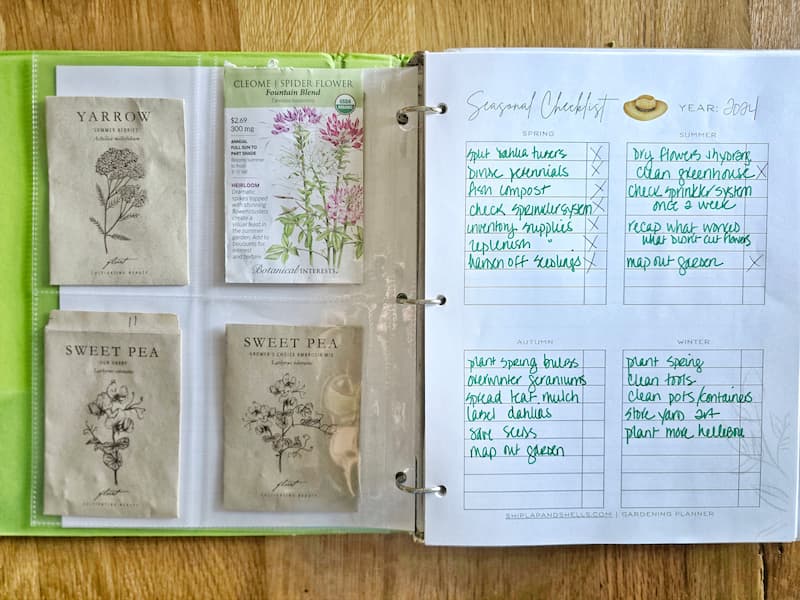
(Example of a well-organized garden journal spread with seed packets, checklists, and handwritten notes—perfect for tracking seasonal progress!)
Choosing the Right Garden Journal Format for Growth Tracking 📓
The best format fits your lifestyle so you’ll actually use it. Here’s a breakdown:
- Analog (traditional notebook or binder) — Great for tactile gardeners. Use weather-resistant notebooks or a three-ring binder for inserting photos, tags, and charts. Pros: No tech needed, easy sketching. Cons: Harder to search old entries.
- Digital apps and spreadsheets — Tools like Garden Journal apps, Google Sheets, or Notion allow searchable logs, photo uploads, and graphs. Ideal for quick mobile entries and year-over-year comparisons.
- Hybrid approach — My favorite! Keep a physical notebook for daily sketches and notes, then photograph pages or upload data to a digital backup. Add timestamps and GPS for location accuracy.
For beginners, start simple: A basic lined notebook with sections for each plant or bed. Advanced users might prefer printable templates from extension services or custom spreadsheets for metrics like DBH (diameter at breast height) for trees.
(A bullet journal-style page with detailed planting notes, timelines, and symbols—super helpful for organizing growth data!)
Essential Elements to Track for Accurate Plant and Tree Growth Monitoring 🔍
To make your journal truly powerful, focus on these key categories:
Basic Plant/Tree Information
Record species/variety (e.g., ‘Honeycrisp’ apple tree), planting date, location (sun exposure, bed number), source, and baseline stats: initial height, spread, trunk caliper (measure 4.5 ft up for trees using DBH tape).
Weekly/Monthly Growth Metrics 📏
- Height and width (use a fixed reference point like a stake).
- New growth flushes, leaf/node count, or branch elongation.
- Phenology: Bud break, flowering, fruit set, leaf drop, dormancy.
- Tree-specific: Canopy density, root flare visibility, vertical vs. lateral growth.
Environmental & Care Records ☀️💧
- Sun hours/microclimate notes.
- Watering (amount, frequency), rainfall totals, soil moisture probe readings.
- Soil tests (pH, NPK levels, amendments with dates and rates).
- Fertilizer, compost, pruning, staking, or mulching logs.
Health & Problem Tracking 🐛
- Pests/diseases with descriptions, photos, and severity scale.
- Symptoms like chlorosis, wilting, or dieback.
- Weather impacts: Frost dates, heat waves, storms.
Include photos consistently—same angle, lighting, and distance—for visual before/after comparisons.

(Before-and-after style growth comparison—imagine applying this to your tomatoes or young trees!)
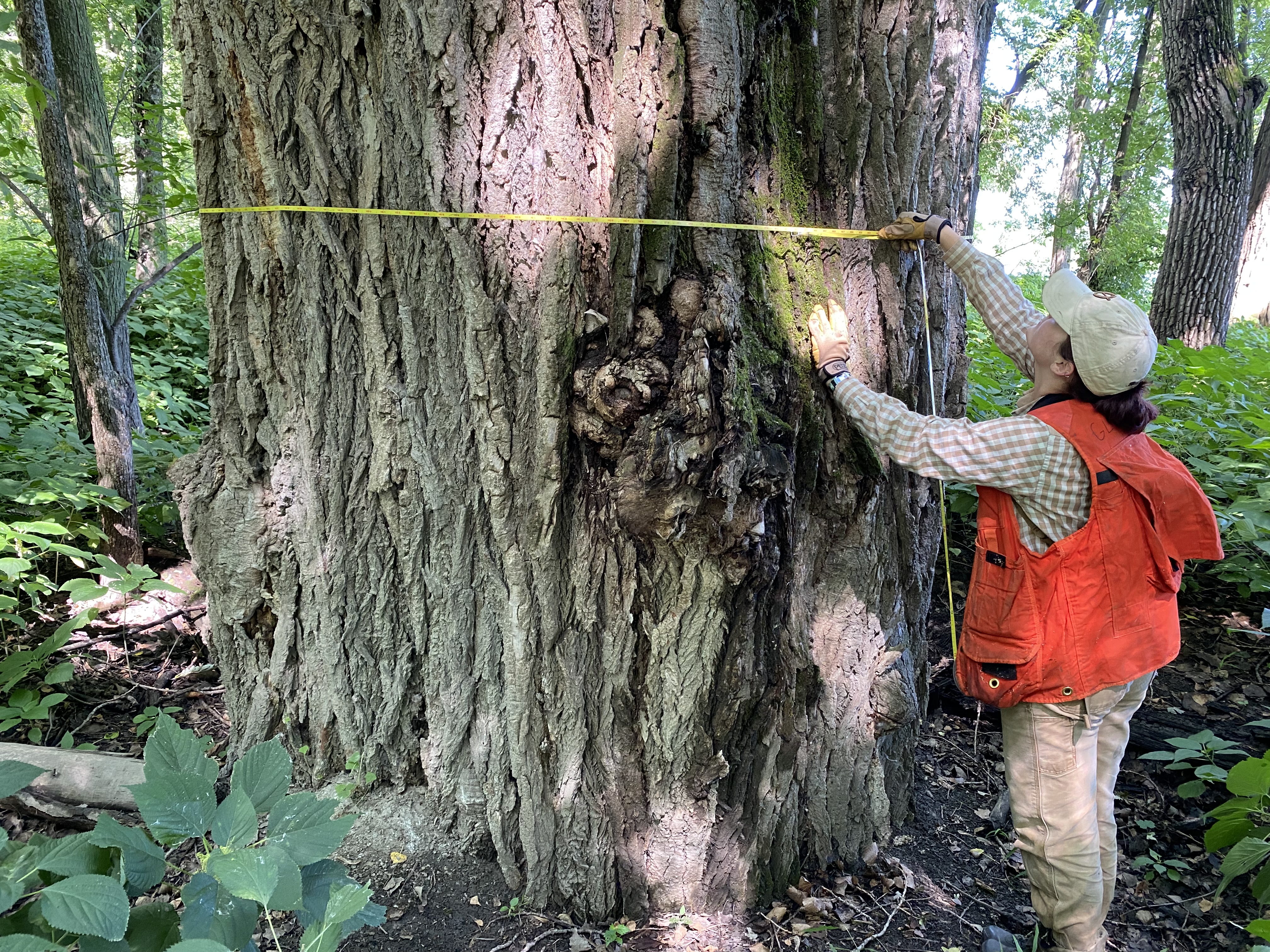
(Professional tree measurement technique—use a tape for accurate trunk diameter tracking over years!)
Step-by-Step Guide: How to Track Growth Effectively in Your Journal 🗓️
Consistency is the secret sauce—here’s a practical, beginner-to-advanced routine that fits real life:
- Set up your baseline (Day 1) Photograph your plant or tree from multiple angles (front, side, close-up of trunk/soil line). Measure and record: height from soil to tallest point (use a stake for reference), width/spread, trunk diameter (DBH for trees—measure at 4.5 feet/1.37m above ground). Note planting date, variety, and initial soil test if possible. 📏

(Adorable illustration of a young gardener measuring plant height—get inspired to involve the whole family!)

(Hands-on measurement in a hydroponic setup—adapt this precision to your soil garden!)
- Establish observation rhythm
- Daily (quick checks): 2–5 minutes for watering notes, pest scouting, weather events.
- Weekly: Full measurements + photos during active growth (spring/summer). Use the same time of day (morning is best—plants are turgid).
- Monthly: Deeper review—soil moisture, leaf health, new flushes.
- Seasonal checkpoints: End-of-spring (post-frost), mid-summer peak, fall prep, winter dormancy summary.
- Measurement techniques & tools
- Height: Stake + tape measure or yardstick; mark reference points.
- DBH for trees: Flexible tape measure around trunk at 4.5 ft (adjust for slopes/multistem as shown in arborist guides).
- Photos: Use phone grid for consistent framing; add ruler for scale.
- Extras: Soil probe, pH meter, magnifying glass for pests.
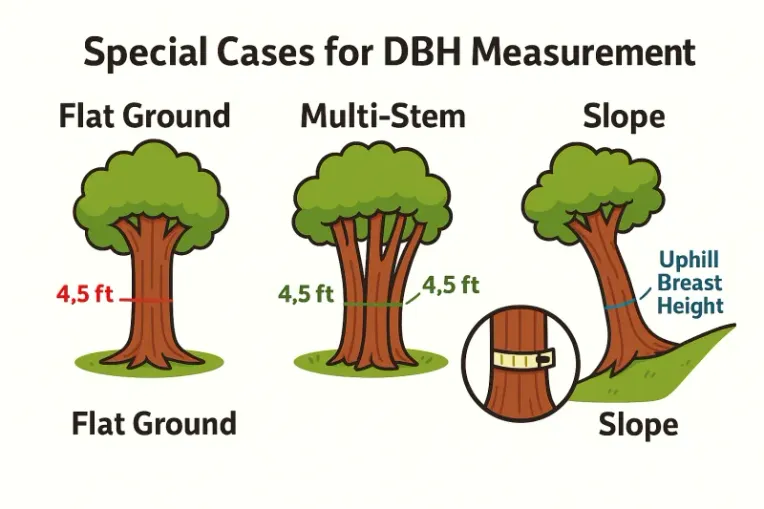
(Visual guide to proper DBH measurement on different tree situations—essential for accurate tree tracking!)
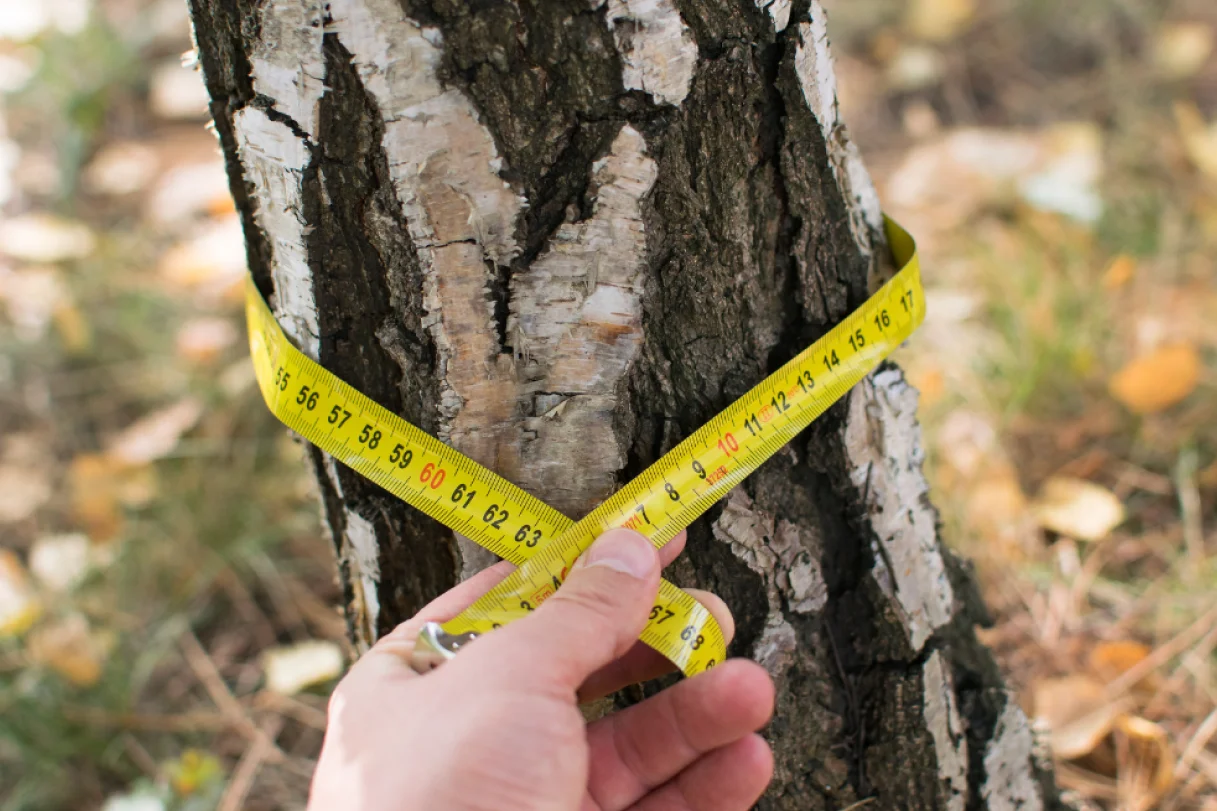
(Real arborist measuring trunk diameter—copy this technique for reliable year-over-year data!)
-
Sample journal entry template Date: April 15, 2025 Plant: Tomato ‘Better Boy’ Height: 18 in (from soil) | Spread: 12 in New growth: 3 new nodes, first flower buds Care: Watered 1 gal, applied balanced fertilizer (10-10-10) 1 tbsp Health: No pests; slight lower leaf yellowing (possible N deficiency?) Weather: 78°F, partly cloudy, 0.2 in rain Photo: Yes (attached)
Use tables for multiple plants—makes comparisons easy!
-
Seasonal workflow
- Spring: Baseline refresh, germination logs.
- Summer: Peak growth tracking, harvest notes.
- Fall: Evaluate overall performance, plan amendments.
- Winter: Review past year, sketch next season’s layout.
This system takes minimal time but delivers maximum insight—many gardeners report spotting issues 2–3 weeks earlier than non-journalers. 🌟
Advanced Tips for Maximizing Insights from Your Growth Data 🚀
Once you have a few seasons of data, level up:
- Year-over-year comparisons — Graph height or yield trends (hand-drawn or in Excel/Google Sheets). Spot climate adaptation (e.g., earlier bud break due to warmer springs).
- Simple visualizations — Draw bar charts for growth rate or pie charts for care inputs vs. results.
- Pattern hunting — Link slow growth to low pH, companion planting success, or pruning timing effects on tree branching.
- Tree-specific hacks — Track leader vs. lateral growth to assess staking removal timing; note root flare exposure for health.
- Integration — Set phone reminders; export photos to folders named by year/plant; use apps like Planta or GardenTags for auto-backup.
Review entries quarterly—your past self becomes your best coach!
(Hand-sketched garden journal page full of growth diagrams and notes—pure inspiration for advanced tracking!)

(Beautiful illustrated monthly journal spread—combine art and data for a joyful habit!)
Common Mistakes to Avoid When Tracking Growth ⚠️
Even dedicated gardeners can fall into traps that reduce the journal’s effectiveness. Here are the most common pitfalls—and how to sidestep them:
- Inconsistent recording — Skipping weeks during busy seasons means missing critical transition points (e.g., the exact week leaves started yellowing). Fix: Set phone reminders or pair journaling with daily watering as a habit stack.
- No baseline measurements — Starting records mid-season leaves you without a true starting point for growth rate calculations. Fix: Always measure and photograph on planting day or at first observation.
- Overcomplicating the system — Too many columns, color codes, or fancy apps can lead to abandonment after a month. Fix: Start with 5–7 core fields (date, height, care notes, health, weather) and add complexity only when needed.
- Ignoring negative data — Only recording successes feels good but hides what’s truly limiting growth. Fix: Celebrate “failure” entries—they often teach the most valuable lessons.
- Never reviewing past entries — The real magic happens during reflection, not just data collection. Fix: Schedule 15-minute reviews at the end of each season (or monthly during active growth).
- Damaging plants during measurement — Rough handling of tender shoots or tight tape on young trunks. Fix: Use soft measuring tools and gentle techniques; for trees, always measure at the same marked height.
Avoiding these keeps your journal useful and sustainable for years. 🌱
Real-Life Examples & Case Studies 🌟
Case Study 1: Vegetable Garden Turnaround A home gardener in a similar humid subtropical climate (much like Dhaka’s conditions) struggled with consistently small eggplants. By tracking soil pH weekly (using affordable test strips) and noting watering amounts, they discovered the beds were staying too acidic (pH 5.2–5.6) after heavy monsoon rains. After documenting lime applications and tracking pH recovery over two seasons, fruit size increased by 40% and plants resisted verticillium wilt better. The journal entries became their personal “soil health timeline.”
Case Study 2: Young Fruit Tree Rescue A mango sapling planted in clay-heavy soil showed almost no vertical growth in year one. The owner began measuring height monthly and photographing new flushes. Patterns emerged: growth stalled during prolonged dry spells despite surface watering. Adjusting to deep, infrequent soaks + thick organic mulch (logged with dates and amounts) led to 2.5× faster height increase in year two—and the tree flowered for the first time in year three. Without the journal, they might have blamed the variety or given up.
Case Study 3: Ornamental Tree Success A crepe myrtle was leggy and sparsely branched. The gardener tracked pruning dates, new shoot lengths, and sunlight hours. They discovered that late-winter pruning (logged precisely) + selective thinning of inner branches dramatically improved canopy density the following summer. Year-over-year photos told the story better than memory ever could.
These stories show the same truth: small, consistent notes compound into big wins. 📈
(Real example of a tree growth progress collage over three years—visual proof of what tracking can achieve!)
Tools & Resources to Enhance Your Garden Journal 🛠️
- Recommended physical journals
- Weatherproof notebooks (Rite in the Rain, Moleskine Watercolor)
- Printable templates from university extensions (search “garden record sheet PDF” from UF/IFAS or Penn State)
- Free/affordable digital tools
- Google Sheets or Excel for tables and auto-calculated growth rates
- Garden-specific apps: GrowIt, Planta, Garden Journal by Tapp
- Photo organization: Dedicated yearly folders in Google Photos
- Measurement must-haves
- Flexible sewing tape or DBH arborist tape
- Soil moisture meter + pH test kit
- Sturdy wooden/metal stakes for height references
- Inspiration sources
- Extension publications: “Keeping a Garden Journal” (Iowa State), “Tree Care & Maintenance Records” (NC State)
- Books: The Garden Journal by Mary McDonald or The Well-Gardened Mind (for the psychological benefits)
Start with whatever tools feel least intimidating—you can always upgrade later. 🌿
Frequently Asked Questions (FAQs) ❓
How often should I update my garden journal? Daily quick notes during active growth; full measurements weekly or bi-weekly. Even 2–3 entries per month beat nothing!
What if I miss days or weeks—can I still catch up? Yes! Backfill approximate notes (e.g., “late June: noticed first flowers”) and mark them as estimates. Consistency matters more than perfection.
Best ways to track tree growth without damaging them? Use soft measuring tapes, avoid tight binding, mark measurement height with non-damaging paint or flagging tape. Measure in calm weather when bark isn’t swollen.
Digital vs. paper—which is better for long-term tracking? Hybrid wins for most people. Paper for daily joy and sketching; digital for searchability, backups, and graphing over decades.
How can journal data help troubleshoot slow growth? Compare entries side-by-side: low growth + yellow leaves + high pH → possible iron deficiency. Low growth + wilting despite watering → compacted soil or root issues. Patterns jump out after 1–2 seasons.
Conclusion: Start Tracking Today for a Thriving Garden Tomorrow 🌿
Tracking growth in a garden journal is one of the simplest, most powerful habits any plant or tree lover can adopt. It turns vague memories into concrete data, guesswork into wisdom, and setbacks into stepping stones.
You don’t need to be perfect. Start small—pick one favorite plant or one young tree, measure it today, jot a quick note, snap a photo. Next week do it again. Before you know it, you’ll have your own personal garden story unfolding page by page, season by season.
Your journal isn’t just records. It’s proof of your growing expertise, a love letter to your plants and trees, and the roadmap to a healthier, more beautiful landscape year after year after year. 🌳💚











