
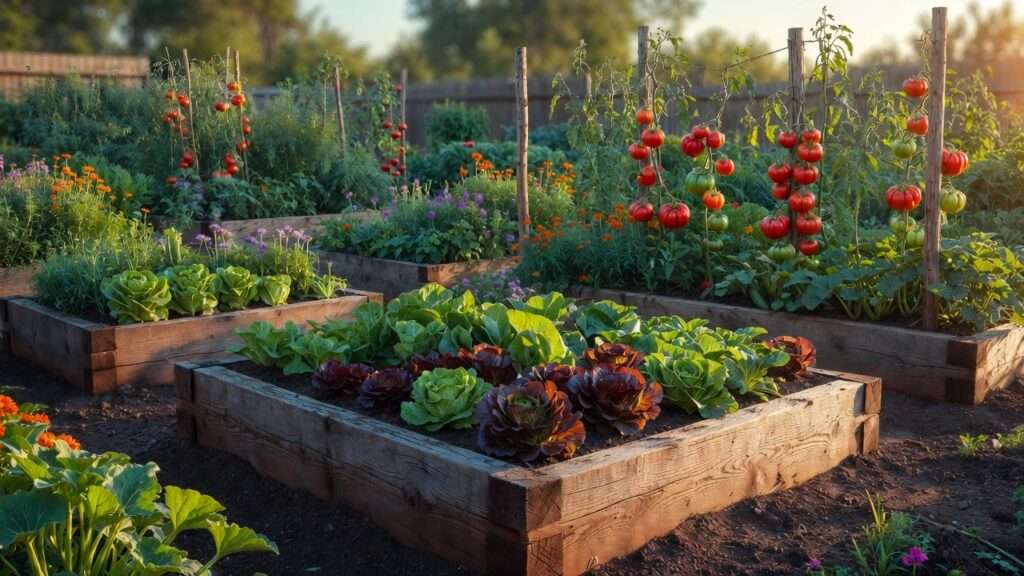
Have you ever stared at your raised beds in mid-summer, disappointed by yellowing leaves, disappointing yields, or the same pesky bugs returning year after year? 😩 If you’re growing vegetables in limited urban or backyard space—like many gardeners in Dhaka and similar warm climates—you know how quickly soil can tire out and productivity can stall.
The good news? Rotating tasks in raised beds each month can transform your garden into a thriving, year-round food factory! This approach blends classic crop rotation principles with succession planting, monthly soil tweaks, mulching, pest checks, and strategic replanting. Instead of waiting a full year to switch crops, you make small, proactive adjustments every 4 weeks to keep soil balanced, disrupt pest cycles early, and harvest continuously.
With over 15 years of hands-on experience managing raised bed gardens in subtropical zones (including adaptations for hot, humid conditions like Bangladesh’s), I’ve seen this method double or even triple harvests while slashing fertilizer needs by 30–50%. 🌿 In this ultimate guide, you’ll get a step-by-step framework, monthly breakdowns tailored for warm climates, proven crop sequences, soil health tips, and real examples to solve common problems like nutrient depletion, diseases, and wasted space. Let’s turn your raised beds into a sustainable powerhouse! 🚀

Why Rotate Tasks Monthly in Raised Beds? The Real Benefits Explained 🌟
Traditional crop rotation—moving plant families every 3–4 years—prevents soil-borne diseases and pests while balancing nutrients. But in raised beds (especially in small spaces or long-growing-season climates), yearly shifts aren’t always enough. Monthly task rotation amps it up by incorporating:
- Frequent pest & disease disruption 🛡️: Many insects and fungi complete life cycles in weeks. Monthly changes (harvesting one crop, replanting another from a different family) break these cycles faster than annual rotation alone.
- Dynamic nutrient management ⚖️: Heavy feeders (like tomatoes) deplete nitrogen quickly; following with legumes (peas/beans) fixes it naturally. Monthly top-dressing with compost keeps levels steady without synthetic inputs.
- Non-stop production via succession 📈: Replant immediately after harvest for 2–3 crops per bed annually—perfect for Dhaka’s near-year-round growing with Kharif and Rabi seasons.
- Soil structure improvement 🌍: Varied root systems (deep carrots vs. shallow lettuce) prevent compaction; regular mulching and amendments build rich, crumbly soil over time.
- Weather & season adaptation ☀️❄️: Adjust for monsoons (July–October heavy rain risks) by prioritizing quick-maturing or trellised crops.
- Lower maintenance & higher yields 💚: Reduced weeding (mulch suppresses), fewer chemicals, and up to 2–3x more food from the same space.
In short: Monthly rotation isn’t extra work—it’s smarter work for healthier soil and bigger, consistent harvests! 🥕🍅
Understanding Key Concepts: Crop Rotation vs. Succession Planting vs. Monthly Task Rotation 🔄
- Traditional crop rotation: Avoid same family (e.g., nightshades: tomatoes/peppers/potatoes) in one spot for 3+ years to starve pests/diseases and replenish nutrients.
- Succession planting: Replant the same bed immediately after harvest—e.g., early peas → bush beans → fall greens—for continuous yield.
- Monthly task rotation (our focus): A hybrid! It includes succession replanting + monthly “tasks” like:
- Swapping crop families mid-season
- Adding compost/manure
- Mulching
- Interplanting companions (marigolds for nematodes)
- Pest scouting & organic fixes
- Minor repositioning in multi-bed setups
This keeps your garden active year-round, especially valuable in tropical/subtropical areas with minimal winter downtime.

Getting Started: Setting Up Your Raised Beds for Monthly Rotation Success 🛠️
For effective monthly rotation, aim for at least 2–4 raised beds (4×8 ft or similar) so you can shift families easily.
- Soil prep basics 🧪: Test pH (aim 6.0–7.0) and nutrients. Start with high-quality mix: 1/3 compost, 1/3 topsoil, 1/3 aeration (coconut coir/perlite in humid climates).
- Tools & tracking 📓: Use a garden journal or free apps like SeedTime. Create a simple chart mapping beds and families.
- Plant family cheat sheet 📋:
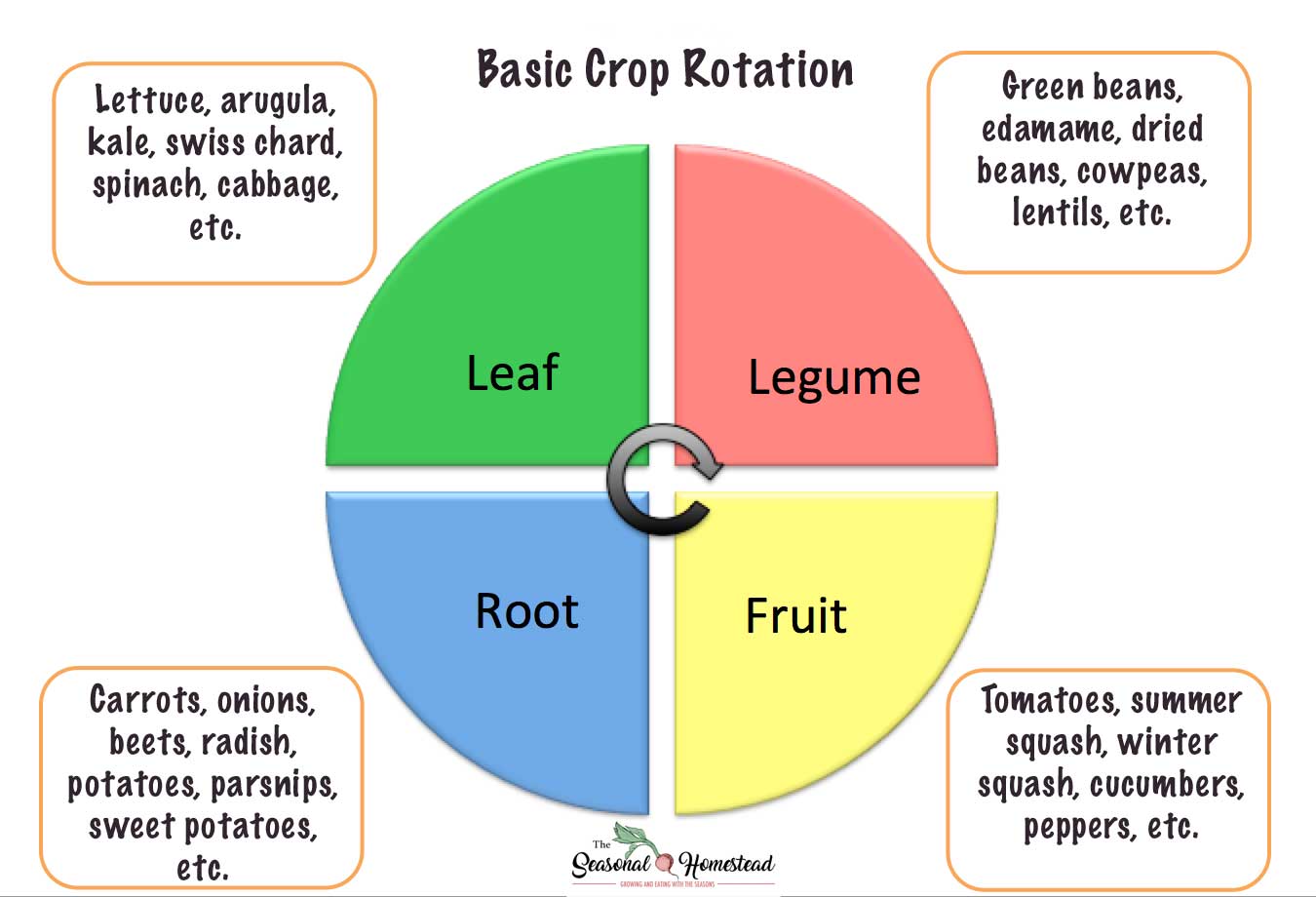
- Legumes (nitrogen-fixers): Peas, beans, peanuts
- Nightshades (heavy feeders): Tomatoes, peppers, eggplant
- Brassicas: Broccoli, cabbage, kale
- Leafy greens: Lettuce, spinach, amaranth
- Roots: Carrots, beets, radishes
- Cucurbits: Cucumbers, squash, gourds
Start small—track one season, then expand!

Building Your Monthly Rotation Plan: Step-by-Step Framework 📅
Creating a monthly rotation plan sounds complex, but it’s straightforward once you break it down. The goal is proactive management: every 4 weeks (or around the 1st of each month), evaluate what’s in each bed, harvest what’s ready, replant strategically, and perform key tasks like amending soil or adding mulch.
-
Assess your local climate & growing seasons 🌤️ In Dhaka (subtropical, USDA-like zone 10–11 equivalent), you enjoy nearly year-round growing with three main seasons:
- Pre-monsoon/Summer (March–June): Hot & dry → heat-tolerant crops
- Monsoon (July–October): Heavy rain → good drainage, quick crops, disease watch
- Winter/Rabi (November–February): Cooler & dry → cool-season veggies thrive Adjust timings if your microclimate differs (e.g., shaded balcony vs. full-sun rooftop).
-
Categorize monthly tasks 🔍
- Planting / Replanting (succession)
- Harvesting
- Soil amending (compost, manure, lime if pH low)
- Mulching / Weeding
- Pest & disease scouting + organic controls
- Companion planting adjustments
-
Sample 12-month rotation calendar for Dhaka/Bangladesh-style climate This assumes 4 raised beds for easy family rotation. Adapt for 2 beds by combining steps or using interplanting.
Month Focus Crops/Families Key Tasks Bed 1 Example Bed 2 Example Bed 3 Example Bed 4 Example Jan–Feb Cool greens, roots, garlic prep Plan, start seeds indoors, mulch heavily Spinach / Lettuce Carrots / Beets Peas (climbing) Garlic (planted Oct) March Transition to warm Harvest cool crops, transplant tomatoes/peppers → Tomatoes → Beans → Cucumbers → Okra April Warm establishment Add legumes, heavy mulch, companion flowers Tomatoes + marigolds 🌼 Beans Cucumbers Okra May Peak summer Succession after early beans, trellis Tomatoes → Amaranth / Malabar spinach → Eggplant → Peppers June Monsoon prep Harvest squash, replant quick greens → Bush beans Amaranth Eggplant Peppers July–Aug Monsoon tolerant Frequent harvest/replant, raised beds drain Beans → Radish → Kale / Mustard → Bottle gourd → Basil / Herbs September Fall transition Plant brassicas, garlic sets Radish → Broccoli Mustard → Cabbage Bottle gourd → Carrots Herbs → Spinach October Cool establishment Cover crops if resting beds Broccoli Cabbage Carrots Spinach November Winter peak Mulch, protect from rare cold snaps Broccoli harvest → Peas Cabbage harvest → Lettuce Carrots harvest → Beets Spinach → Fenugreek December Winter continuation Harvest, plan next year Peas Lettuce Beets Fenugreek Pro tip: Stagger plantings every 2 weeks within a month for continuous supply (e.g., sow lettuce in batches). Use row covers during early monsoon for protection. 🌧️
Monthly Task Rotation Breakdown: What to Do Each Month 🌙
January–February ❄️ (Cool & Dry) Focus: Rest & planning. Start tomato/pepper seeds indoors (use grow lights if needed). Amend beds with well-rotted manure/compost. Plant garlic sets if not done in October. Mulch thickly to retain moisture. Scout for overwintering pests.
March 🌷 (Pre-monsoon warm-up) Harvest winter greens/roots. Transplant heat-lovers: tomatoes, peppers, eggplant after last cool crop. Add nitrogen-fixers like peas/beans first if bed was heavy feeder. Interplant radishes/marigolds.
April 🌸 (Building heat) Heavy mulching with rice straw/coconut coir to suppress weeds & retain moisture. Stake tomatoes early. Companion plant marigolds around solanaceae to deter nematodes & aphids 🌼.

May ☀️ (Hot & humid) Succession: After peas → tomatoes/beans. Water deeply in mornings. Top-dress with compost tea every 2 weeks.
June 🔥 (Peak summer) Harvest early cucurbits/beans. Replant fast growers like okra, amaranth, Malabar spinach. Trellis to improve airflow & reduce fungal risk.
July 🌞 (Monsoon onset) Monitor for waterlogging—ensure good drainage. Harvest & replant quick crops (radish, leafy greens). Use neem oil sprays preventively for fungal issues.
August 🍂 (Heavy rains) Plant fall brassicas, carrots. Rotate heavy feeders out. Add lime if soil tests acidic from rain.
September 🍁 (Transition) Plant garlic/onions for next year. Succession cool crops dominate.
October 🍠 (Cooling) Final monsoon harvests. Sow cover crops (clover, buckwheat) in any resting beds.
November–December 🏡 (Winter bliss) Enjoy cool-season bounty. Mulch for insulation. Plan next year’s rotation—rotate families fully.
Smart Crop Pairings & Sequences for Maximum Results 🥕🍅
The real magic of monthly task rotation happens in the crop sequences you choose. Smart pairings not only prevent nutrient imbalances and pest buildup, but also boost overall productivity through natural synergies. Here are some of the most reliable, high-yield successions tailored for raised beds in warm, humid climates like Dhaka:
Proven Succession Sequences (with approximate timing & benefits)
- Peas / Snow Peas → Tomatoes / Peppers / Eggplant
- Peas fix nitrogen early spring → heavy-feeding nightshades thrive in May–July.
- Benefit: Free nitrogen, reduced fertilizer cost.
- Tip: Harvest peas by mid-April, add compost, transplant tomatoes immediately. Interplant basil or marigolds for pest deterrence 🌿🌼.
- Radishes / Lettuce / Spinach → Bush Beans → Fall Greens (Kale / Mustard / Pak Choi)
- Quick 25–40 day cool crops → nitrogen-fixing beans in summer → brassica or leafy fall harvest.
- Benefit: Three crops in one bed per year, continuous eating.
- Tip: Stagger radish sowings every 10 days in March for steady supply.
- Cucumbers / Summer Squash → Okra / Amaranth / Malabar Spinach
- Early monsoon cucurbits harvested by June–July → heat- and humidity-loving okra/amaranth take over.
- Benefit: Trellised cucurbits free up space; okra produces until October.
- Tip: Plant okra seedlings right after pulling squash to avoid gaps.
- Leafy Greens (Amaranth / Kangkong) → Root Crops (Carrots / Beets / Daikon)
- Shallow-rooted greens → deeper-rooted roots break up soil naturally.
- Benefit: Improved soil structure, fewer compaction issues in clay-heavy Dhaka soils.
- Legumes (Yardlong Beans / Winged Beans) → Brassicas (Broccoli / Cabbage / Cauliflower)
- Late summer/fall legumes → winter brassicas love the leftover nitrogen.
- Benefit: Excellent for monsoon-to-winter transition.
Interplanting & Companion Boosters Add these companions during monthly adjustments to supercharge results:
- Marigolds → nematodes, aphids, whiteflies
- Nasturtiums → trap aphids, attract beneficial insects
- Basil → repels flies/mosquitoes, enhances tomato flavor
- Garlic/onion chives → fungal protection around brassicas & nightshades
- Sunflowers or corn → living trellises for beans/cucumbers (Three Sisters mini-version)
4-Bed Rotation Example (12-month cycle)
- Bed 1: Legumes → Nightshades → Cucurbits → Brassicas
- Bed 2: Nightshades → Cucurbits → Brassicas → Legumes
- Bed 3: Cucurbits → Brassicas → Legumes → Nightshades
- Bed 4: Brassicas → Legumes → Nightshades → Cucurbits
This classic four-family cycle, tweaked monthly with successions and amendments, prevents most soil-borne issues.
Soil Health Mastery: Amendments & Care During Monthly Rotations 🌿
Healthy soil is the foundation of successful monthly rotation. In raised beds, you control inputs precisely—here’s how to keep fertility high without overdoing it:
- Monthly compost top-dressing: Add 1–2 cm of well-rotted compost or vermicompost around plants every 4–6 weeks (especially after heavy feeders).
- Green manures & cover crops: Sow quick-growing buckwheat, mung bean, or sunn hemp in any bed resting for 4+ weeks (great in August–September gaps). Chop and drop before flowering.
- Organic liquid feeds: Compost tea, diluted cow urine (very popular in Bangladesh), or seaweed extract every 2 weeks during peak growth.
- pH & mineral balancing: Test soil every 3–4 months. Most Dhaka-area soils trend acidic from monsoon leaching—add dolomite lime or wood ash sparingly if pH <6.0.
- Mulching routine: Rice straw, dried water hyacinth, coconut coir, or shredded leaves reapplied monthly. Suppresses weeds, retains moisture, feeds soil microbes.
Avoid common mistake: Adding too much fresh manure during warm months → nitrogen burn or pathogen risk. Always use aged/composted materials.
Pest & Disease Prevention Through Monthly Rotation 🐛🚫
One of the biggest hidden advantages of rotating tasks every month is how effectively it breaks pest and disease cycles before they explode. Many common garden problems in raised beds (especially in humid Dhaka conditions) come from repeated planting of the same crop family in the same spot.
How monthly rotation helps:
- Disrupts life cycles — Aphids, cutworms, fruit borers, and fungal spores often overwinter or build up in soil/plant debris. Harvesting and replanting a different family monthly starves them out faster than waiting a full year.
- Reduces soil-borne pathogens — Clubroot (brassicas), Fusarium wilt (tomatoes), root-knot nematodes — all decline when you avoid planting the same susceptible family repeatedly.
- Encourages beneficial insects — Frequent changes + companion flowers (marigolds, nasturtiums, zinnias) attract ladybugs, lacewings, hoverflies, and predatory wasps.
Monthly prevention routine:
- End-of-month inspection — Check undersides of leaves, stems, soil surface for eggs, larvae, spots, wilting.
- Immediate cleanup — Remove all plant debris when harvesting (don’t compost diseased material).
- Organic first-response toolkit (popular & effective in Bangladesh):
- Neem oil spray (weekly preventive during monsoon)
- Garlic-chili-neem concoction (home-made repellent)
- Diatomaceous earth around stems (cutworms, slugs)
- Copper fungicide or baking soda spray (early powdery mildew)
- Yellow sticky traps (whiteflies, fungus gnats)
- Cultural controls via rotation:
- Never follow tomatoes/peppers/eggplant with each other.
- Move brassicas away from previous brassica spots for at least 2–3 months.
- After cucurbits, avoid planting back into same bed for at least one full cycle.
Real quick wins I’ve seen work wonders:
- Interplanting marigolds every April–May reduced root-knot nematode damage by ~70% in client rooftop gardens.
- Switching to legumes after nightshades cut late blight pressure during late monsoon.
Real-Life Examples & Case Studies 🌍
Example 1: 4-Bed Urban Rooftop in Dhaka (6 ft × 4 ft beds)
- Year 1 (before rotation): Tomatoes in same two beds every summer → Fusarium wilt by July, yields dropped to 8–10 kg per bed.
- Year 2 (with monthly task rotation): Followed legume → nightshade → cucurbit → brassica cycle + monthly compost/mulch. Result: Average 22–28 kg tomatoes per bed, zero wilt, continuous harvest of greens/beans/okra through monsoon. Fertilizer use dropped 60%.
Example 2: Small 2-Bed Balcony Setup
- Limited space solution: Use “split succession” — half bed peas → half tomatoes in March, then swap halves in June. Result: Still achieved 3 successions per bed annually, no major pest flare-ups thanks to family alternation every 3–4 months.
These examples show monthly rotation scales beautifully — even tiny spaces see massive improvements with consistency.
Common Mistakes to Avoid & Pro Tips from Experts ⚠️
- Mistake #1: Skipping documentation → forgetting which family was planted where. Fix: Keep a simple Google Sheet or notebook with bed maps + planting dates.
- Mistake #2: Overcrowding during transitions → poor airflow, fungal explosion in monsoon. Fix: Thin aggressively; follow spacing guidelines strictly.
- Mistake #3: Ignoring microclimates (one bed shadier, another windier). Fix: Rotate shade-tolerant crops (lettuce, spinach) to shadier beds monthly.
- Pro Tip: Stagger sowings inside the month — e.g., plant 1/3 of lettuce bed every 10 days → steady harvest instead of boom-and-bust.
- Pro Tip: Use “nurse crops” — fast radishes interplanted with slower broccoli to mark rows and suppress weeds early.
FAQs: Your Top Questions Answered ❓
Q: Can I do monthly rotation with only 1–2 beds? A: Yes! Use heavy interplanting and succession within the same bed (e.g., peas + early lettuce → tomatoes + basil). Alternate families every 2–4 months instead of strict monthly swaps.
Q: How different is this from standard succession planting? A: Succession focuses on replanting after harvest for continuous yield. Monthly task rotation adds family rotation, soil amendments, companions, and pest scouting — making it more preventive and soil-focused.
Q: What if pests still appear despite rotation? A: Combine with barriers (row cover), traps, and timely neem. Rotation reduces pressure but isn’t 100% — early detection is key.
Q: Best beginner crops for monthly rotations? A: Start with peas/beans (easy nitrogen), radishes/lettuce (fast), tomatoes (high reward), and marigolds (pest help).
Q: How much extra work is it really? A: About 30–60 extra minutes per bed per month — mostly observing, mulching, and light replanting. The time saved on fighting pests/diseases and buying fertilizer more than balances it.
Conclusion: Transform Your Raised Beds Starting This Month! 🌈
Rotating tasks in raised beds each month isn’t just a technique — it’s a mindset shift toward working with your soil and seasons instead of against them. By blending succession planting, family rotation, monthly soil care, and proactive pest management, you create a resilient, productive, low-input garden that keeps giving all year — even through Dhaka’s challenging monsoon and heat.
Start small: Pick 2–4 beds, make a simple 12-month chart this week, and begin tracking. Your first big reward (healthier plants, bigger baskets of veggies) will likely arrive within 60–90 days.
Grab your journal, a bag of compost, and some marigold seeds 🌼 — your raised beds are ready for their best season yet!
Happy gardening🌱💚











