
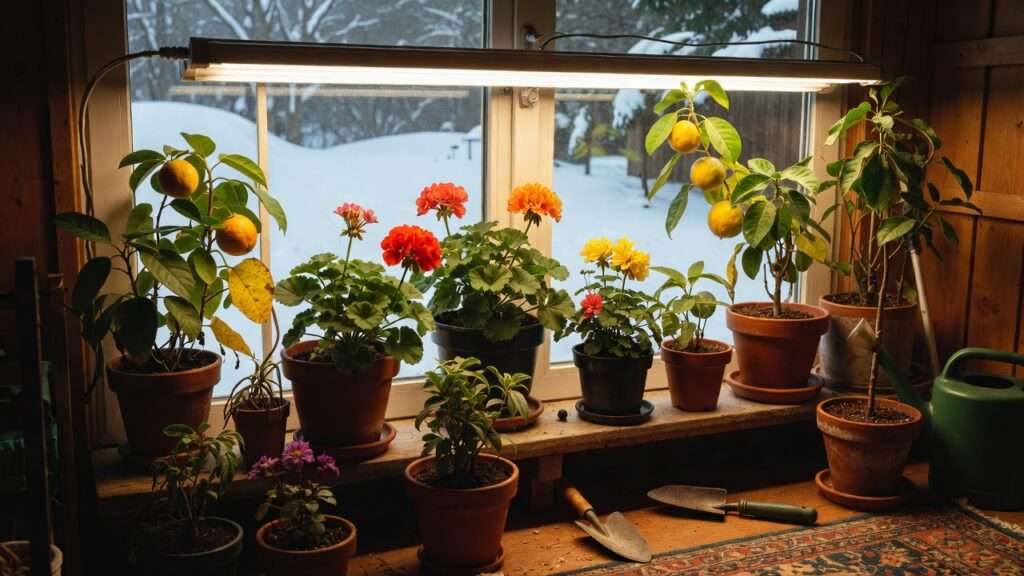
Imagine stepping onto your patio one crisp fall morning, only to realize those vibrant geraniums 🌸, lush ferns, and that special potted citrus tree 🍋 you’ve nurtured all summer are about to face their biggest threat: freezing temperatures. For many gardeners, winter means saying goodbye to beloved container plants—or worse, watching them suffer and die from frost damage. But it doesn’t have to be that way!
Overwintering patio plants indoors is a game-changer. It saves you hundreds of dollars on replacements each spring, preserves your favorite specimens (some feel like old friends!), and lets you enjoy greenery even when snow covers the ground. As a horticulture enthusiast with years of experience helping gardeners in varying climates protect their container collections, I’ve seen firsthand how proper indoor overwintering turns “annual” losses into perennial successes. Backed by insights from university extensions like Penn State, Michigan State, and Proven Winners, this comprehensive guide walks you through every step to ensure your patio plants not only survive winter but come back stronger.
Whether you’re dealing with tender tropicals, popular perennials like geraniums, or edible herbs, you’ll find tailored advice here. Let’s dive in and make this the winter your plants thrive indoors! 🏡🌱
Why Overwinter Patio Plants Indoors? Benefits & When It’s the Best Option ❄️🏠
Container plants face harsher winter conditions than in-ground ones. Roots in pots are exposed to the same freezing air temperatures as above ground, often dropping well below what the plant’s hardiness zone suggests. University extensions (like Penn State Extension) note that potted plants effectively need protection equivalent to two zones colder than their rated hardiness due to poor insulation and freeze-thaw cycles that damage roots.
Indoor overwintering shines for:
- Tender perennials and tropicals that can’t survive frost (e.g., zones below 9–10).
- Marginal hardy plants in colder zones (5–7) where pots freeze solid.
- Plants you want to keep active and blooming indoors rather than dormant.
Compared to alternatives:
- Unheated garage/basement: Great for dormancy (cool 40–55°F), but not for active growth.
- Mulching outdoors or burying pots: Works for hardy perennials but risks rot or animal damage.
- Indoor method: Offers pest control, light monitoring, and year-round enjoyment.
Quick decision checklist ✅:
- Night temps consistently below 50–55°F? → Bring indoors.
- Plant is tender/tropical? → Yes, indoors is ideal.
- You have bright windows or grow lights? → Perfect for success!
This approach reduces waste, supports sustainability ♻️, and turns winter into an extension of your gardening season.
:max_bytes(150000):strip_icc()/bring-outdoor-plants-inside-in-winter-GettyImages-613851418-7a0b2657ec004a0eb2009ce8be9da9d1.jpg)
(Here are examples of thriving indoor setups with patio plants transitioned for winter—notice the bright, grouped placement!)
Which Patio Plants Can (and Should) Be Overwintered Indoors? 🌱
Not every plant needs or wants the same treatment. Here’s a breakdown of categories with real examples, drawing from extension recommendations (e.g., Penn State, Illinois Extension):
Tender tropicals & houseplant-like (H3) ☀️ These love warmth and light indoors: Citrus (lemon, orange 🍋), figs (Ficus carica), mandevilla, brugmansia (angel’s trumpet), elephant ears (Colocasia), hibiscus, bird of paradise. They stay active with bright conditions and may even fruit or bloom!
Popular patio perennials (H3) 🌸 Often sold as annuals but easy to save: Geraniums (Pelargonium), fuchsia, lantana, coleus, impatiens, begonia. Geraniums are a classic—many gardeners overwinter them successfully for years.
Herbs & edibles (H3) 🌿 Rosemary, bay laurel, potted mint/basil (tender varieties). Bonus: Fresh herbs all winter!
Marginal hardy in containers (H3) ❄️ Hostas, some hydrangeas, dwarf evergreens. These prefer cooler dormancy (unheated space) but can go indoors if bright and cool.
Pro tip box: Pots lose heat fast—choose plants hardy to at least one zone colder than yours for outdoor overwintering attempts. For indoors, prioritize healthy, pest-free specimens!

(Lovely geraniums thriving on a sunny indoor windowsill—proof overwintering works beautifully!)
Step-by-Step: How to Prepare & Transition Patio Plants Indoors (Core Guide) ✂️🏡
This is the heart of success—follow these steps carefully to minimize shock.
Step 1: Timing – When to Move Them In (H3) 🍂 Monitor forecasts: Bring plants in before nighttime temps drop below 50–55°F (many extensions say 45–50°F for safety). In cooler climates, start in early fall to avoid stress. Waiting too long risks cold damage to foliage and roots.
Step 2: Inspect, Clean & Treat for Pests (H3) 🐛 Hose plants down thoroughly (undersides of leaves too!). Check soil, stems, and pots for aphids, spider mites, mealybugs, thrips. Quarantine new indoors plants for 1–2 weeks. Use insecticidal soap or neem oil preventatively—Proven Winners stresses this to avoid indoor infestations.
Step 3: Prune & Repot if Necessary (H3) ✂️ Trim dead/diseased growth (up to 1/3 for most). Remove leggy stems. If rootbound, repot into fresh, well-draining soil. Scrape off salty topsoil from outdoor pots.
Step 4: Acclimate Gradually to Prevent Shock (H3) Don’t shock them! Move to shaded porch → lower light area → final spot over 7–14 days. This reduces leaf drop from sudden light/temps changes (common issue per Oklahoma State Extension).
Step 5: Choose the Right Indoor Spot (H3) South-facing windows ideal (6+ hours bright light). Use grow lights for dim homes. Keep 55–70°F; avoid heat vents/drafts. Group plants for humidity boost.
Essential Winter Care Tips for Overwintered Patio Plants Indoors 💧☀️
Once your plants are safely inside, the real maintenance begins. The goal? Mimic their preferred conditions as closely as possible while avoiding the biggest winter killers: overwatering and insufficient light.
Watering Wisely – Avoid the #1 Killer (H3) 💧 Most overwintered patio plants go semi-dormant indoors due to lower light and cooler temps, so they need far less water than in summer. Overwatering is the #1 cause of failure—roots rot in soggy soil, leading to yellow leaves, wilting, and death.
- Check soil moisture: Stick your finger 1–2 inches deep. Water only when it’s dry (like a wrung-out sponge).
- Reduce frequency: Every 2–4 weeks for most (more for succulents/cacti-like, less for tropicals in bright spots).
- Use room-temperature water: Avoid shocking roots with cold tap water.
- Bottom watering tip: Place pots in a saucer of water for 15–30 minutes, then drain excess—great for even moisture without wetting foliage.
Pro insight from extension services (e.g., Michigan State): Err on the dry side—better underwatered than overwatered in low-light winter conditions.
Light & Humidity Needs (H3) ☀️ Winter days are short and sun weak, especially in northern climates. Insufficient light causes leggy growth, leaf drop, and pale foliage.
- Ideal: 6+ hours of bright, indirect light (south- or west-facing window).
- Supplement: Use full-spectrum LED grow lights (12–16 hours/day for low-light plants). Position 6–12 inches above foliage.
- Rotate pots weekly for even growth.
- Boost humidity: Group plants together, use pebble trays with water (keep pots above waterline), or run a humidifier (40–60% ideal for tropicals).
Many gardeners in low-light homes swear by affordable clip-on or shelf grow lights—your citrus 🍋 or hibiscus will reward you with new growth!
:max_bytes(150000):strip_icc()/spr-grow-lights-test-aero-garden-trio-rachel-marek-00039_crop-71805df37cf14d3ead0efecda1025dee.jpeg)
(Modern grow light setups make indoor overwintering easy—even in apartments!)
Temperature & Airflow (H3) Keep daytime 60–75°F, nights 55–65°F for most active growers. Avoid extremes:
- No direct heat vents (dries air, scorches leaves).
- No cold drafts from windows/doors.
- Good airflow prevents fungal issues—use a small fan on low if needed.
For dormancy-loving plants (e.g., some fuchsias, lantana), cooler 45–55°F spots work best.
Fertilizing (or Not) (H3) Pause or minimize: Plants aren’t actively growing much. Use half-strength balanced fertilizer only if you see new growth (every 6–8 weeks max). Resume full feeding in spring.
Pest & Disease Monitoring (H3) 🐛 Indoor conditions can encourage pests that were dormant outdoors. Inspect weekly:
- Common culprits: Spider mites (fine webbing, stippled leaves), aphids (sticky honeydew), mealybugs (white cottony spots), whiteflies.
- Early fix: Wipe leaves with soapy water, use neem oil, or isolate affected plants.
- Prevent spread: Quarantine any new indoor plants.
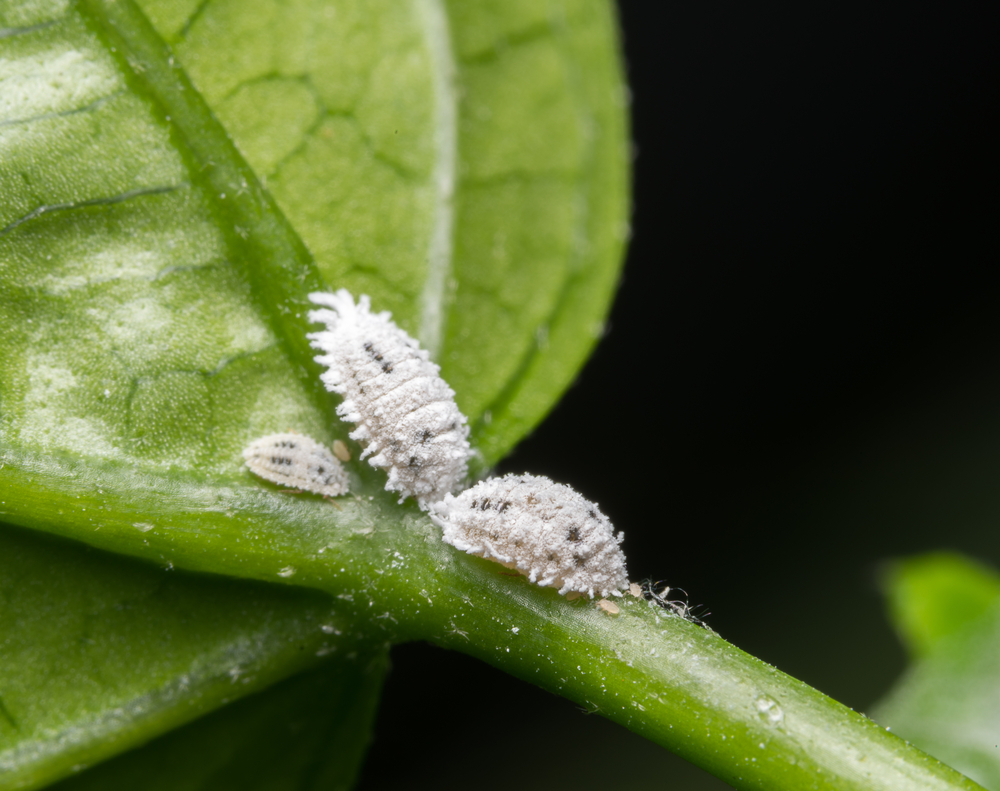
(Close-ups of common pests—catch them early for easy control!)
Common Mistakes to Avoid When Overwintering Patio Plants Indoors 🚫
Even experienced gardeners slip up—here are the top pitfalls and fixes:
- Moving too late → Frost nips tender tips. Solution: Watch 10-day forecasts religiously.
- Skipping pest inspection → One infested plant can doom your whole collection. Always treat preventatively.
- Overwatering extremes → Root rot city. Use the finger test religiously.
- No acclimation → Sudden leaf drop/shock. Gradual transition is key.
- Wrong location → Too dark = etiolation; too hot/dry = crispy edges. Prioritize bright, stable spots.
- Forgetting spring prep → Plants get “stuck” indoors. Plan the reverse move.
Real example: A gardener once lost geraniums to spider mites after skipping quarantine—now they inspect every plant twice!
Spring Transition: Bringing Your Plants Back Outdoors Successfully 🌷
Don’t rush! Reverse the process for happy plants.
- Start hardening off 1–2 weeks before last frost date: Move to protected outdoor spot (shaded porch) for increasing hours daily.
- Gradually increase sun exposure to prevent sunburn.
- Prune leggy growth, repot if needed, fertilize lightly.
- Watch for pests again—outdoor conditions change fast.
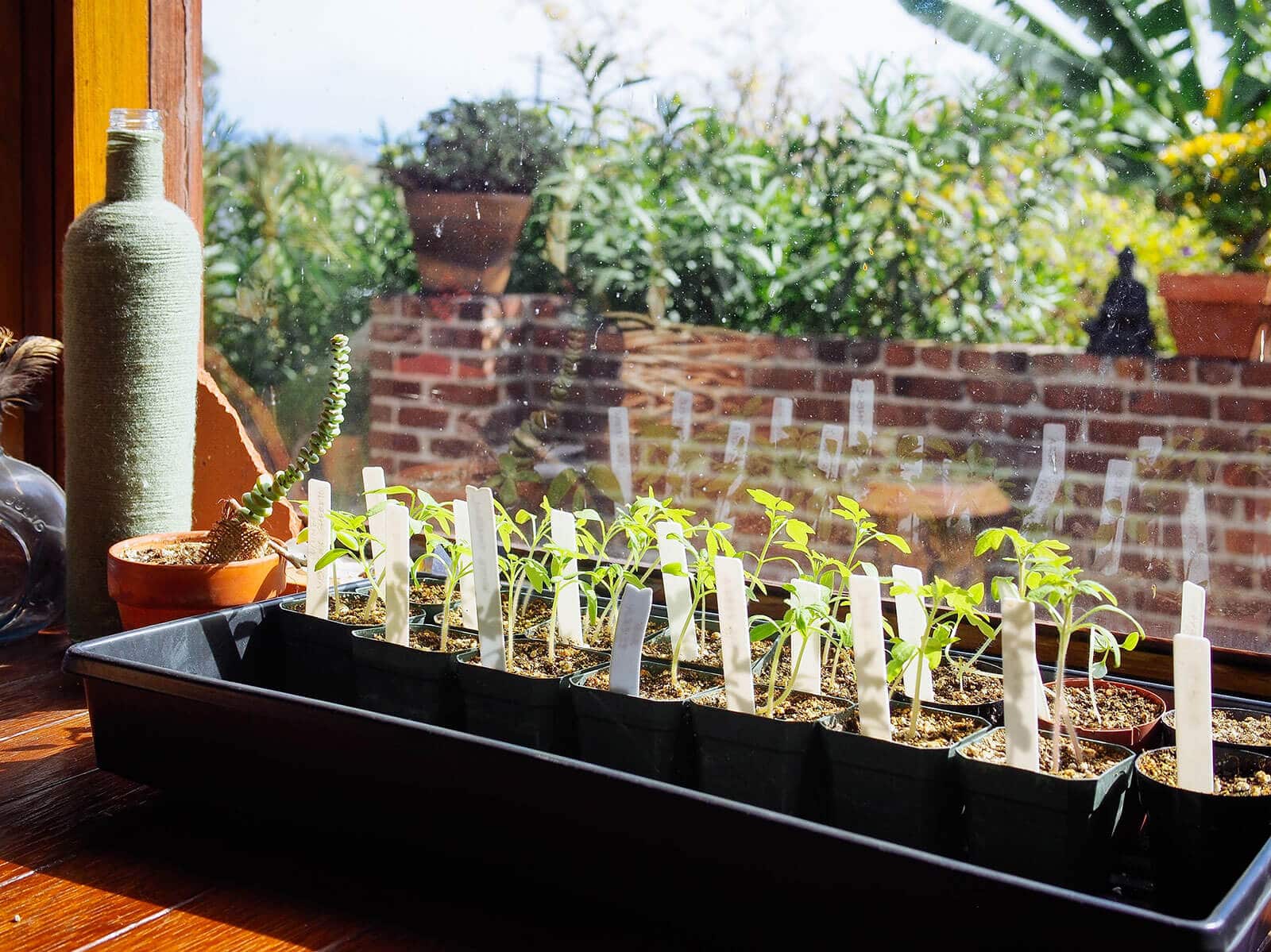
(Hardening off in progress—slow and steady wins!)
Bonus: Expert Insights, Quick-Reference Charts & Plant-Specific Guides 📊
Overwintering at a Glance Table (popular patio plants):
- Geraniums: Bright cool (50–65°F), dryish soil, minimal prune.
- Citrus 🍋: Bright warm (60–75°F), moderate water, watch scale.
- Hibiscus: Bright, 60°F+, higher humidity.
- Lantana: Cooler dormancy possible, sparse water.
- Coleus: Warm bright, keep moist but not soggy.
Expert tip: For citrus, I mist foliage occasionally and use a citrus-specific fertilizer in late winter to encourage blooms next year.
Eco bonus: Overwintering reduces plastic pot waste and supports pollinators longer ♻️🌍.
FAQs About Overwintering Patio Plants Indoors ❓
Can all patio plants go indoors? No—some hardy perennials do better mulched outdoors or in unheated garages. Focus on tender ones.
What if I don’t have bright windows? Grow lights are your friend! Affordable full-spectrum options work wonders.
How do I handle large/heavy pots? Use plant caddies with wheels, or team up for moving. Prune heavily if needed.
Will my plants bloom next year? Yes, many do (especially geraniums, fuchsia, citrus) with good care!
Dormancy vs. active growth? Active (tropicals): Warm/bright. Dormant (some perennials): Cool/dry/darkish.
Conclusion
You’ve got this! By following this step-by-step guide—timing the move right, preventing pests, providing proper light/water, and easing them back out in spring—you’ll save money, reduce waste, and keep your patio favorites thriving year after year. Many gardeners turn this into a rewarding ritual that makes winter feel greener.
Your patio will burst with color next spring because you took action now. Try these tips this season—your plants (and wallet) will thank you! Share your overwintering wins or questions in the comments below. Happy gardening! 🌿❄️🌸











