
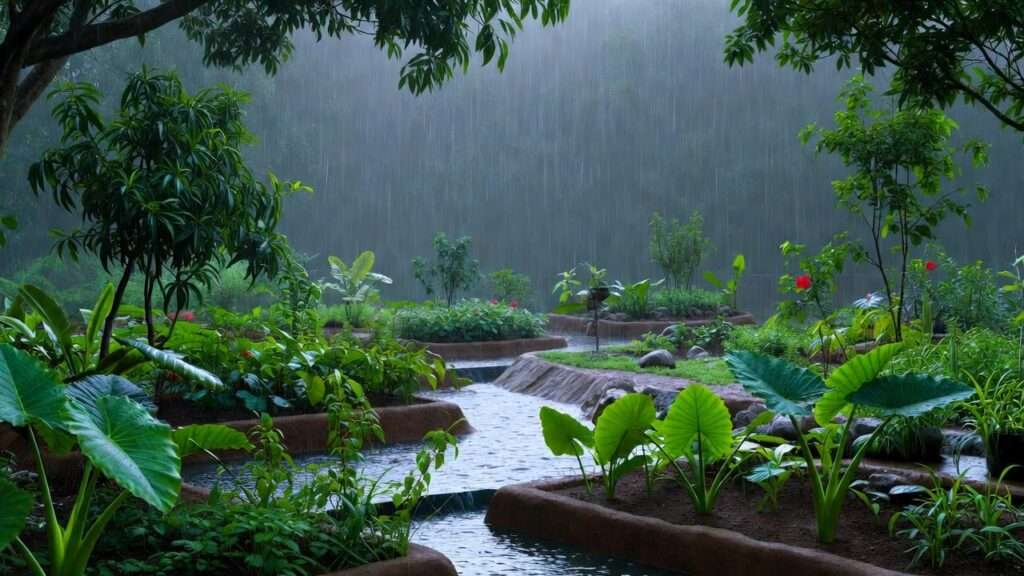
Imagine this: It’s mid-monsoon in Dhaka, and after days of relentless downpour, your once-vibrant garden has turned into a soggy mess. Your favorite mango tree droops with yellowing leaves, roses wilt despite the moisture, and vegetable beds look more like paddy fields than productive plots 😩. If you’ve ever rushed out after heavy rains only to find standing water around your precious plants and trees, you’re not alone. In Dhaka and similar high-rainfall areas, managing waterlogging during heavy rains is a real challenge that can lead to root rot, nutrient deficiencies, fungal diseases, and even plant death if not addressed quickly.
Waterlogging happens when soil becomes saturated, displacing oxygen and suffocating roots. Oxygen diffusion in water is about 10,000 times slower than in air, so roots literally “drown” within hours to days. Many common plants show symptoms like chlorosis (yellow leaves), wilting, stunted growth, and that telltale rotten smell from decaying roots. Trees often suffer delayed damage—canopy thinning or dieback might not appear for months or even a year.
But here’s the good news: with prompt action and smart prevention, you can save most affected plants and build a garden that thrives even during the heaviest monsoon seasons. As a plant care expert with years of experience helping gardeners in tropical, monsoon-prone regions like Bangladesh, I’ll share proven, practical strategies drawn from soil science, RHS (Royal Horticultural Society) guidelines, university extensions, and real-world tropical gardening successes. Let’s turn those heavy rains from a threat into an opportunity for a lush, resilient garden! 💚
Understanding Waterlogging: What Happens to Your Plants and Trees? 🔍
The Science Behind Waterlogging Damage When excess water fills soil pores, air is pushed out, creating anaerobic (low-oxygen) conditions. Roots switch to inefficient fermentation, producing toxic byproducts like ethanol and CO2. This stresses plants, increases reactive oxygen species (ROS), impairs nutrient uptake (especially iron and manganese), and invites pathogens like Pythium and Phytophthora that cause root rot.
Short-term effects include wilting (even in wet soil), leaf yellowing starting from the bottom, and soft, mushy stems. Long-term, plants face reduced growth, fewer flowers/fruits, branch dieback, and heightened disease/insect vulnerability.
Specific Symptoms in Common Plants and Trees
- Herbaceous plants and veggies (tomatoes, okra, brinjal, hibiscus): Lower leaves yellow and drop, stems soften, roots turn brown/black and smell foul.
- Trees and shrubs (mango, jackfruit, neem, roses): Wilting despite moisture, leaf scorch, premature fruit drop, cankers on branches, and eventual canopy thinning. In Dhaka’s clay-heavy soils, mango trees often show delayed dieback after prolonged waterlogging.
- Tropical favorites suffer most because many aren’t naturally adapted to extended saturation.
Which Plants and Trees Are Most Vulnerable? Low-tolerance species include most fruit trees (mango, guava), roses, and many ornamentals. Moderately tolerant ones like river birch or some local figs handle short periods. High-tolerance natives or adapted species (e.g., certain palms, water-tolerant hibiscus varieties) fare better. In Bangladesh, avoid planting sensitive species in low-lying areas.
(Here’s an example of waterlogged soil in a garden – notice the standing water and yellowing leaves on plants.)
(Close-up of root rot symptoms: brown, mushy roots vs. healthy white ones.)
Immediate Rescue: What to Do During & Right After Heavy Rains 🛟
Step-by-Step Emergency Actions to Save Waterlogged Plants
- Assess safely – Don’t walk on wet soil to avoid compaction. Gently probe around plants.
- Remove standing water – Use buckets, squeegees, or shallow trenches to drain puddles away from roots.
- Improve temporary drainage – Dig small furrows or channels to redirect water downhill.
- Aerate carefully – Use a garden fork to poke holes (not too deep) around the drip line to let air in—avoid damaging roots.
- Prune minimally – Remove only dead/yellow leaves; heavy pruning stresses plants further.
- Hold off on fertilizer – Stressed roots can’t handle it; wait until recovery signs appear.
Special Rescue Tips for Trees and Large Shrubs 🌳
- Gently wash sediment off the root flare and trunk base to prevent rot.
- If the tree leans, stake temporarily for support.
- Apply a thin layer of mulch only after soil partially dries—never pile against the trunk.
Reviving Potted Plants vs. In-Ground Plants Potted plants are easier: tip them to drain excess, repot in fresh, well-draining mix if roots are mushy. For in-ground, focus on drainage fixes (more below).
Many gardeners in Dhaka save 70-90% of plants by acting within 24-48 hours. Recovery signs? New growth in 1-3 weeks for veggies, longer for trees.
Long-Term Prevention: Build a Water-Resilient Garden 🏗️
The real key to thriving in Dhaka’s intense monsoon climate isn’t just reacting—it’s redesigning your garden so waterlogging becomes rare. Focus on soil health, smart layout, and plant choices that work with heavy rains rather than fight them.
Improve Soil Structure and Drainage – The Foundation Fix Clay-dominant soils in many Dhaka areas hold water like a sponge. The best long-term solution is adding generous amounts of organic matter: well-rotted compost, aged cow manure, leaf mold, or coconut coir. Aim to incorporate 5–10 cm into the top 30 cm of soil annually. This improves structure, increases pore space for air and water movement, and boosts beneficial microbes that help roots resist anaerobic stress.
Avoid the common myth of adding sand to clay—it often creates concrete-like texture. Instead, test your soil texture (simple jar test) and pH (ideal 6.0–7.0 for most plants). If drainage remains poor after organic amendments, consider gypsum for sodic clays (common in some BD regions), but only after a lab test.
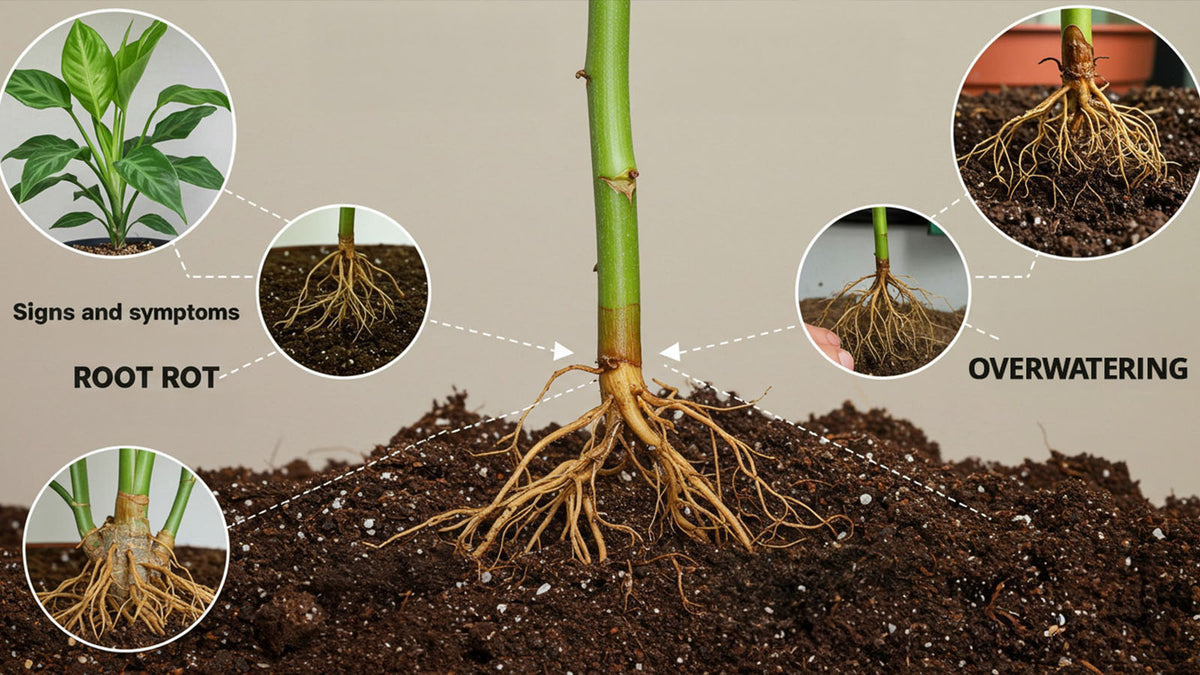
(Healthy white roots vs. brown, mushy root rot from waterlogging – early detection saves plants!)

(Close-up of severe root rot: dark, slimy roots that smell bad – a clear sign to act fast.)
Smart Design Solutions for Heavy Rain Areas
- Raised beds are a game-changer for veggies, flowers, and small shrubs. Build them 20–40 cm high using bricks, wood, or bamboo—fill with a mix of garden soil + 40% compost + 20% perlite/vermiculite for excellent drainage. In monsoons, they prevent saturation and warm soil faster post-rain.
- Mounding for trees: Plant fruit trees like mango or jackfruit on 60–90 cm high mounds to keep the root zone above water table during floods.
- Swales and berms: Create gentle ditches (swales) on contour to capture and slowly infiltrate runoff; build small earth berms to divert water away from low spots.
- French drains / soakaways: For persistently wet areas, install perforated pipes wrapped in geotextile, sloped to a dry well or lower drainage point. DIY versions using gravel trenches work well in home gardens.
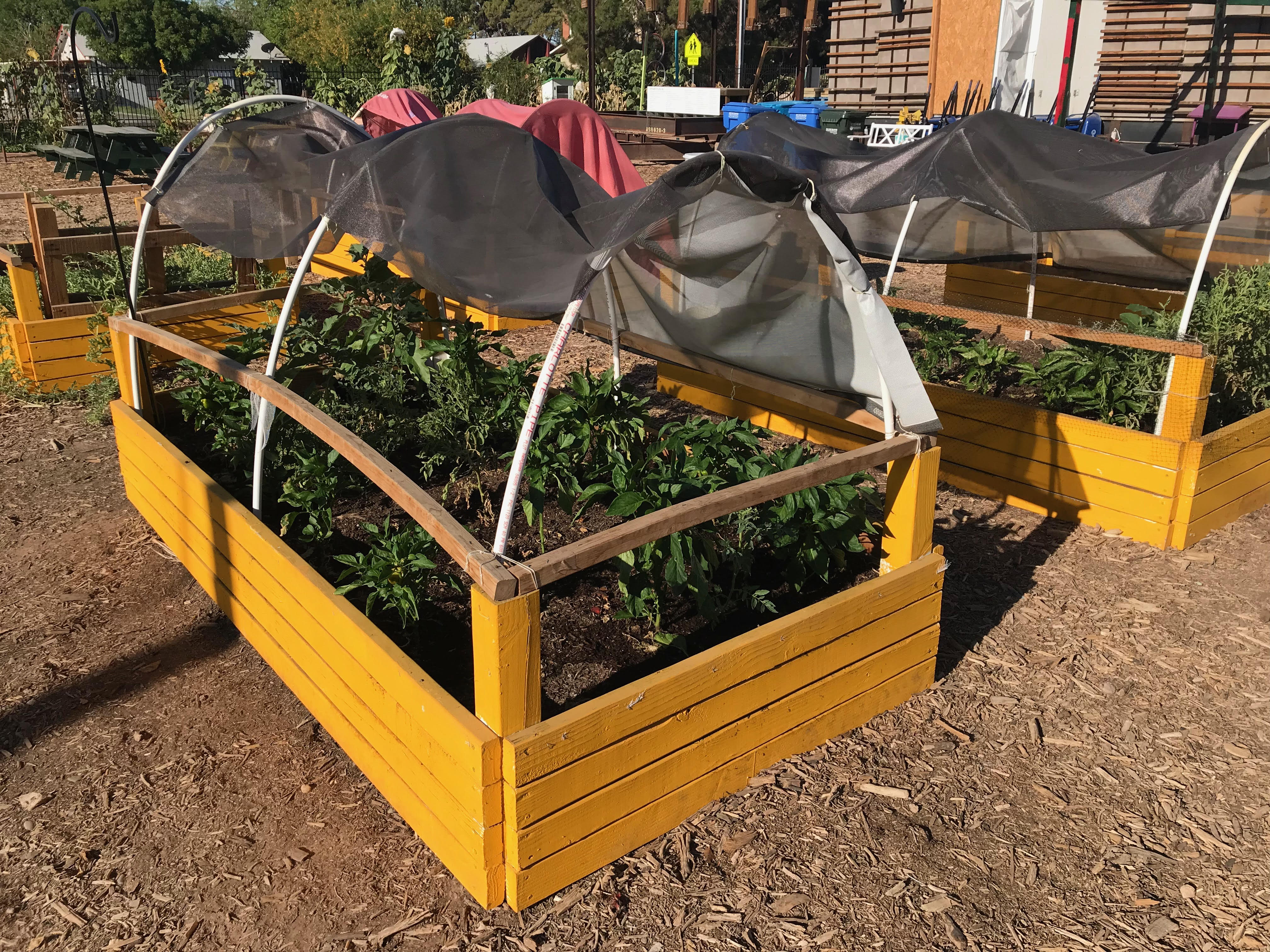
(Raised garden beds with good drainage – notice how water flows away from plant roots even after rain.)

(Thriving vegetable garden with mulch paths – mulching helps prevent compaction and retains balanced moisture.)
Plant Selection – Choose Winners for Wet Conditions 🌺 Select species with moderate to high waterlogging tolerance:
- Trees: River she-oak (Casuarina), certain palms (areca, coconut in well-drained spots), local figs, or jamun (Syzygium cumini).
- Shrubs & perennials: Hibiscus varieties, canna lilies, colocasia (taro), heliconia.
- Veggies: Water spinach (kalmi), taro, okra (tolerates short flooding), amaranth.
Avoid planting sensitive species (roses, most citrus, brinjal) in flood-prone lowlands. Inspired by Bangladesh’s traditional baira (floating beds) made from water hyacinth, consider small-scale floating rafts in ponds or very wet corners for veggies like gourds, spinach, and herbs.
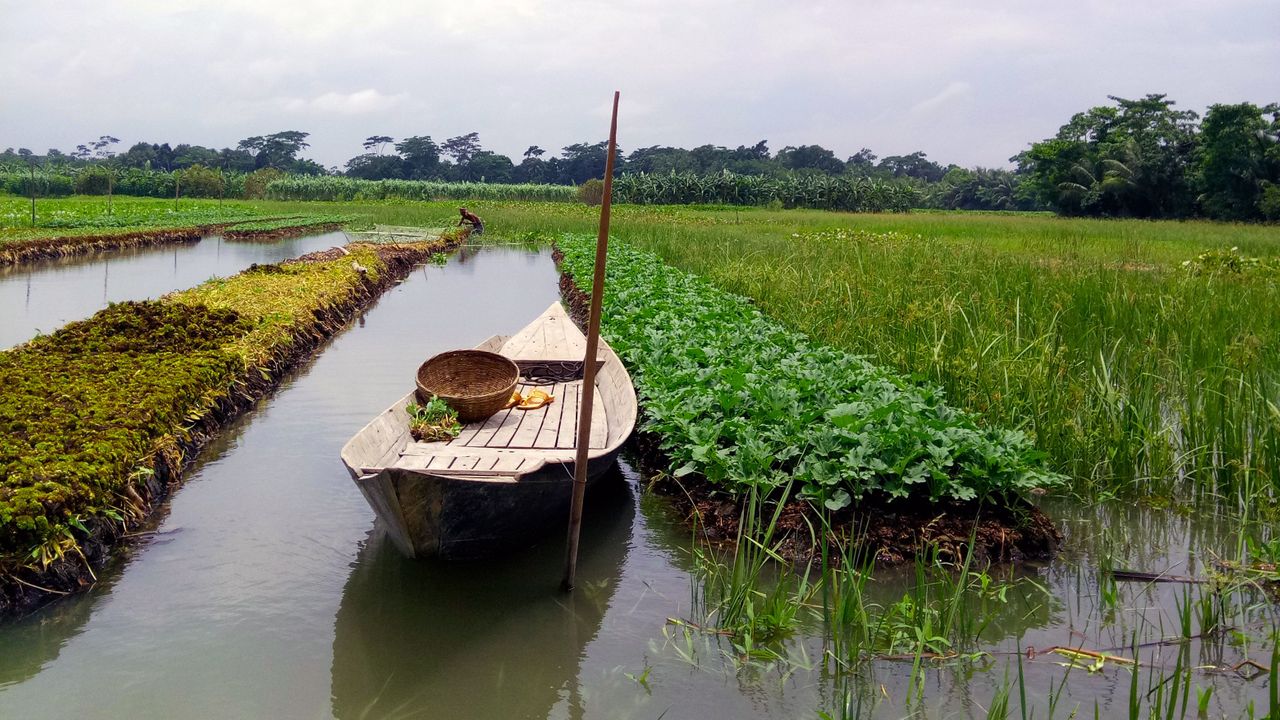
(Traditional floating baira beds in Bangladesh – genius adaptation using water hyacinth rafts for vegetables during floods!)
(Another view of floating gardens – sustainable, low-cost way to grow food even when land is submerged.)
Maintenance Practices That Prevent Future Waterlogging
- Mulching: Apply 5–8 cm of organic mulch (dry leaves, straw, wood chips) after soil dries slightly. It reduces compaction, moderates temperature, and improves infiltration. Keep mulch 5–10 cm away from tree trunks to avoid rot.
- Pruning & airflow: Thin dense canopies to reduce transpiration demand and allow faster drying.
- Traffic control: Avoid walking on wet soil—use stepping stones or boards.
- Cover crops: Plant green manures (cowpea, sunn hemp) in off-season to build soil structure and prevent erosion.
(Proper tree mulching – circle around base, never volcano style against trunk!)

(Well-mulched tree base – keeps roots cool, moist but not waterlogged.)
Advanced & Eco-Friendly Techniques 🌍
Nature-Based Solutions Inspired by Experts The EPA and RHS highlight trees’ role in reducing urban runoff—plant water-tolerant species in buffers along boundaries. Use permeable surfaces (gravel paths, grass pavers) instead of concrete. Integrate rain gardens with tolerant natives to capture excess water and filter it slowly.
In Dhaka context, experiment with small floating platforms using local water hyacinth—proven in low-lying haor regions for resilient vegetable production.
Common Myths & Mistakes to Avoid ❌
- Myth: “Adding sand fixes clay drainage” → Reality: Creates hardpan; use organics instead.
- Over-pruning stressed plants → Weakens recovery; prune only dead tissue.
- Ignoring tree symptoms → Delayed dieback can kill trees years later—monitor root flare yearly.
- Applying fungicides blindly → Treat root rot causes (drainage) first; chemicals rarely save severely affected roots.
Real-World Examples & Expert Insights 📸
Real gardens in Dhaka and other monsoon-heavy regions show that quick action + prevention really works. Here are a few inspiring examples:
Case Study 1: A Dhanmondi Rooftop Garden Rescue A gardener noticed severe waterlogging after 72 hours of continuous rain in 2024. Standing water reached 10–15 cm around potted hibiscus, roses, and a young mango sapling. Immediate steps: tilted pots to drain, moved them to a covered area temporarily, poked aeration holes in soil, and removed yellow leaves. After soil dried (3–4 days), repotted into fresh compost-perlite mix. Result: 85% of plants recovered fully within 6 weeks, mango sapling showed new flush by next month. Key lesson: Act within 48 hours and repot potted plants aggressively.
Case Study 2: Gulshan Low-Lying Fruit Tree Revival A jackfruit and guava tree showed branch dieback 8 months after severe 2023 flooding. Inspection revealed buried root flare and compacted clay soil. Actions taken: excavated around root flare (carefully!), added 20 cm of compost mound, installed a shallow swale to divert future runoff. By 2025 monsoon, both trees produced normal fruit again. Expert note (inspired by BAU – Bangladesh Agricultural University extension advice): Trees can survive surprisingly long if root crown is freed and drainage improved—even after apparent severe damage.
Expert Insights
- RHS (Royal Horticultural Society): “The single most effective preventive measure is improving soil aeration through organic matter addition—chemical rescues rarely work without it.”
- University of Florida IFAS Extension (tropical-relevant): “Tolerant species like certain Syzygium (jamun) and Casuarina can handle 7–14 days of saturation; most fruit trees tolerate only 2–5 days before serious injury.”
- Local BD wisdom: Floating “baira” agriculture in haor regions proves that elevating root zones (even on water hyacinth rafts) turns flooding into an advantage for leafy greens and gourds.
(Before: Waterlogged low spot in a Dhaka garden – yellowed veggies and standing water everywhere.)
(After: Same spot transformed with raised beds, swales, and mulch – lush growth even post-rain.)
Frequently Asked Questions (FAQs) ❓
How long can most plants survive being waterlogged? It depends: shallow-rooted veggies (tomato, brinjal) may show severe stress after 24–48 hours and die in 4–7 days. Trees and deep-rooted shrubs often survive 5–14 days of saturation, but damage accumulates. Act as soon as standing water appears!
Can I save a tree that’s been flooded for several days? Yes, often! Remove sediment from the root flare, improve drainage, aerate gently, and monitor for 1–2 years. Many trees show delayed recovery—new growth can appear next season even if they look rough now.
What’s the best mulch to use during the wet monsoon season? Coarse organic mulches like straw, dry leaves, or wood chips (5–8 cm thick) work best. They allow air and water movement while preventing soil compaction. Avoid fine-textured mulches that can hold too much moisture against stems.
Are chemical treatments or fungicides helpful for waterlogged plants? Rarely as a first step. Root rot pathogens thrive in wet conditions, but fixing drainage and aeration is far more effective. Use fungicides (e.g., copper-based or Trichoderma biofungicide) only as a last resort after improving conditions—and always follow label instructions.
Quick monsoon prep checklist for Dhaka gardeners
- Elevate pots and sensitive plants before forecast heavy rain
- Clear drains/gutters around garden
- Have extra compost/perlite ready for emergency repotting
- Check tree root flares aren’t buried
- Mulch lightly in advance (but keep away from trunks)
- Identify low spots and plan swales/raised beds for next season
Conclusion: Turn Heavy Rains from Enemy to Ally ☔→🌈
Managing waterlogging during heavy rains doesn’t have to mean losing your favorite plants and trees every monsoon. By combining fast rescue techniques (drain, aerate, prune lightly) with long-term prevention (organic-rich soil, raised beds, swales, tolerant species, smart mulching), you can create a garden that not only survives Dhaka’s intense wet season but actually thrives in it.
Start small: pick one waterlogged spot this week, add compost, build a small raised bed, or try a floating planter inspired by traditional baira methods. Every improvement reduces stress on your plants, supports beneficial soil life, helps recharge groundwater, and brings more joy (and mangoes!) year after year.
Your garden can be resilient, beautiful, and productive—no matter how hard it rains. 💚🌱
Have you battled waterlogging in your own garden? Share your wins, struggles, or favorite monsoon-proof plants in the comments—I’d love to hear from fellow Dhaka gardeners and help with specific advice!











