
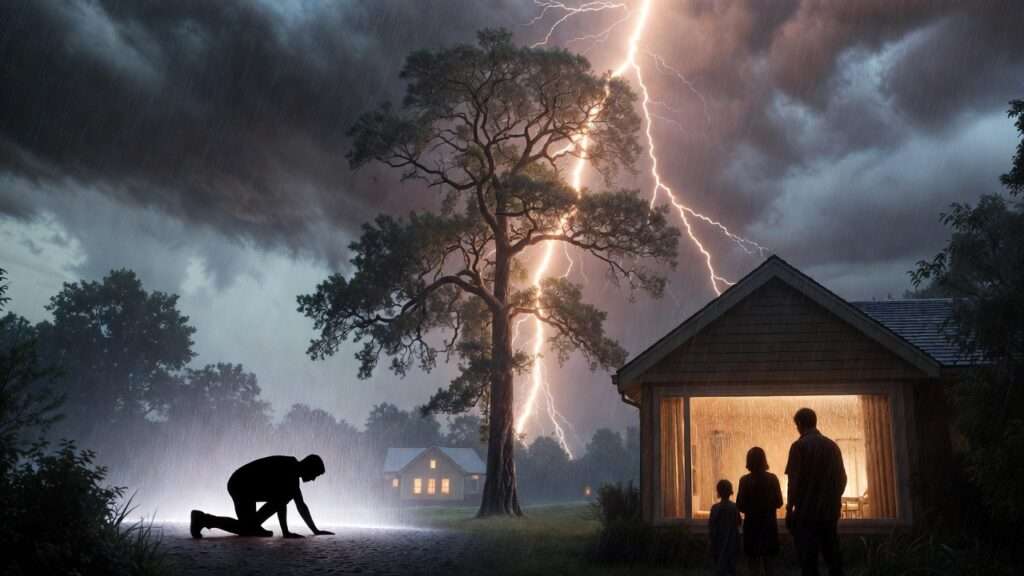
Imagine this: You’re out in your backyard during a sudden summer storm, rain pouring down, thunder rumbling closer. Your tall oak tree — the one you’ve nurtured for years — looks like the perfect spot for quick cover from the downpour. You dash underneath its wide branches, thinking, “Just a minute until the worst passes.” ⚡
But in that moment, you’re standing in one of the most dangerous places during a thunderstorm. Being near or under tall trees is the second leading cause of lightning-related injuries and deaths, according to the National Weather Service (NWS) and Centers for Disease Control and Prevention (CDC). Lightning safety around tall trees isn’t just a suggestion — it’s a life-or-death rule. Every year, people lose their lives or suffer serious injuries because of this common misconception.
In this comprehensive guide, we’ll dive deep into the science of why tall trees attract lightning, debunk dangerous myths, share official safety guidelines from NOAA and CDC, explore what happens to struck trees (and how to care for them), and offer practical tips for tree owners, gardeners, hikers, and anyone who loves the outdoors. Whether you’re protecting your family, your prized landscape trees, or yourself during storm season, this article will equip you with the knowledge to stay safe and preserve your beloved greenery. 💚
Why Tall Trees Are Lightning Magnets: The Science Explained 🔬🌲
Lightning is a massive discharge of electricity seeking the path of least resistance to the ground. Cloud-to-ground strikes often target the tallest, most conductive objects in an area — and tall trees fit that description perfectly.
Trees become prime targets because:
- Height — They stand out above surrounding objects, acting like natural lightning rods. Isolated tall trees in open yards, fields, or parks are especially vulnerable.
- Moisture content — Sap, water in the wood, and wet bark provide excellent conductivity — over 10,000 times better than air in many cases.
- Root system — Deep, widespread roots offer a direct path to the earth, completing the circuit.
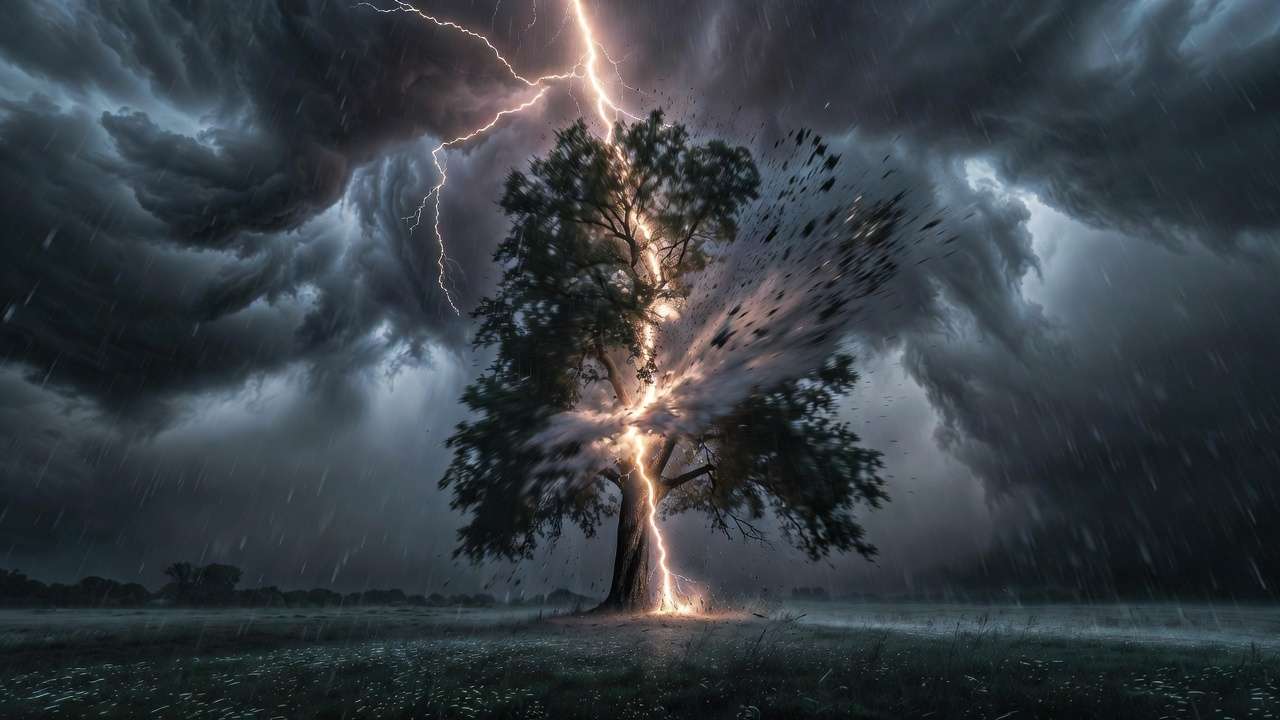
Certain species are more prone to strikes due to their height, structure, or sap/resin content. Oaks, pines, maples, and tulip poplars frequently top the list, while beeches or birches are somewhat less attractive. In tropical forests, some giants like almendro trees even seem to “benefit” from strikes in surprising ways, but for most temperate trees in yards and landscapes, a strike is devastating.
Statistics paint a stark picture: Lightning kills an estimated 320 million trees worldwide each year, releasing massive amounts of carbon and altering forest structures. In the U.S., millions of trees are struck annually, with isolated or prominent ones in residential areas hit hardest. Understanding this science is the first step to respecting lightning’s power and never assuming a tree offers protection. 🌳⚡
(Image: A dramatic photo of a tall tree being struck by lightning during a storm, showing the bright bolt connecting to the canopy.)
The Deadly Dangers of Sheltering Under Tall Trees 🚫🌳
Sheltering under a tall tree doesn’t just expose you to rain — it puts you directly in lightning’s danger zone. Here’s why:
- Direct strike — The tree takes the hit, superheating sap to steam in milliseconds. This causes explosive boiling, splitting trunks, shattering branches, and showering debris (sometimes on fire).
- Ground current (step potential) — Most injuries happen here. Electricity radiates outward along the ground from the strike point. If your feet are apart, current flows up one leg and down the other, potentially stopping your heart.
- Side flash — Lightning jumps from the tree trunk to nearby people or objects, especially if you’re touching the bark.
- Touch potential — Contact with the trunk or roots during a strike channels deadly current through your body.
Data from NOAA and the National Lightning Safety Council shows that being under or near trees ranks as the second most common cause of lightning casualties (behind open fields/water). In the U.S., dozens die or are injured this way annually — often people who thought a tree was “safer” than open space.
Real-world example: In recent years, tragic incidents near parks or yards have claimed lives when victims sought cover under isolated tall trees during sudden storms. No place outdoors is truly safe, but tall trees make it far worse.
Common Lightning Safety Myths Busted ❌⚡
Let’s clear up dangerous misconceptions that still cost lives:
- Myth #1: Trees provide good shelter from rain and lightning.Fact: Being under trees is the #2 cause of lightning deaths/injuries (CDC/NOAA). Avoid them entirely.
- Myth #2: Rubber-soled shoes protect you.Fact: Lightning’s voltage overwhelms ordinary insulation — shoes offer no real protection.
- Myth #3: No rain means no lightning risk.Fact: Bolts can strike 10–15 miles from the storm’s rain core (“bolt from the blue”).
- Myth #4: A car’s rubber tires save you.Fact: Protection comes from the metal frame acting as a Faraday cage — not the tires.
Quick reference table:
| Myth | Reality |
|---|---|
| Trees = safe shelter | Second leading cause of casualties — avoid at all costs |
| Rubber soles block lightning | No — current jumps gaps and overwhelms insulation |
| Dry weather = safe | Lightning travels far from storms |
| Metal attracts lightning | Height/shape/isolation matter more; avoid fences/power lines anyway |
Knowing these facts can literally save lives. Stay informed and spread the word! 📢
Official Lightning Safety Rules: What NOAA, CDC & Experts Recommend 📋🌩️
The mantra from the National Oceanic and Atmospheric Administration (NOAA) and the National Weather Service (NWS) is simple and non-negotiable: When thunder roars, go indoors! ⚡🏠
This rule exists because no place outdoors is truly safe during a thunderstorm. Lightning can strike up to 10–15 miles from the storm’s rain core, and outdoor risks skyrocket when you’re near tall objects like trees.
Safe shelters include:
- A substantial building with electricity and plumbing (home, office, store).
- An enclosed, hard-topped metal vehicle with windows rolled up (the metal frame acts as a Faraday cage, routing current around occupants — not the rubber tires).
Stay inside until at least 30 minutes after the last rumble of thunder.
If you’re caught outside with no safe shelter:
- Avoid isolated tall trees, hilltops, ridges, open fields, beaches, or bodies of water.
- Never lie flat on the ground — this maximizes your contact area and step potential risk.
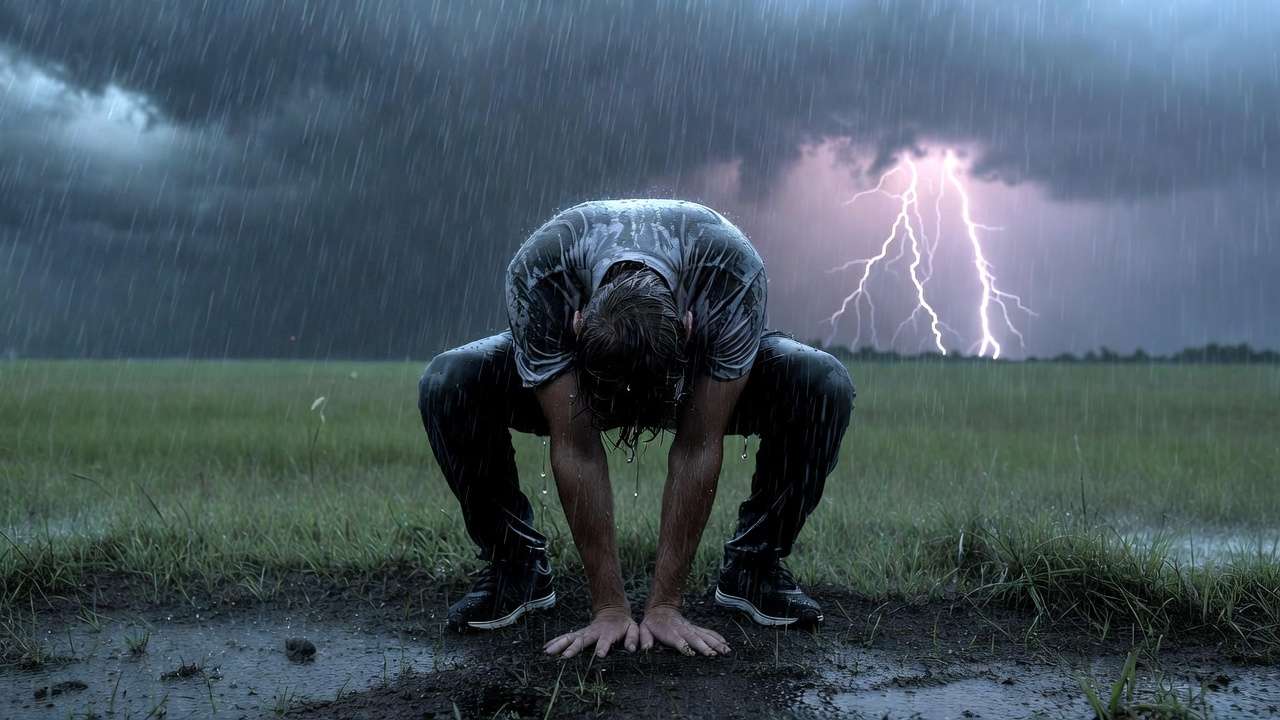
- Adopt the lightning crouch position: Crouch low on the balls of your feet, feet together, head down, hands over ears. Minimize ground contact and avoid touching metal objects.
- Seek low-lying areas like valleys or ditches (but watch for flash flooding).
- Stay away from conductive items: fences, power lines, umbrellas, golf clubs, fishing rods, or bikes.
- Move away from groups — spread out to reduce multiple casualties from one strike.
Special scenarios for tree lovers and outdoor enthusiasts:
- Yard work or gardening near tall trees: Stop immediately at the first sign of thunder and head indoors.
- Hiking or camping in forests: Avoid isolated tall trees or ridges; choose dense clusters of smaller trees or low ground away from the tallest ones.
- Parks or open spaces with prominent trees: These are high-risk zones — many casualties occur here when people seek “cover.”
These guidelines come directly from NOAA, CDC, and the National Lightning Safety Council (updated as recently as 2025). Following them drastically reduces risk — lightning fatalities in the U.S. have declined over decades thanks to better education and adherence to these rules.
(Image: Illustration of the lightning crouch position — a person crouched low with feet together, hands on ears, in an open area away from trees.)
What Happens to a Tree After a Lightning Strike? (Tree Care Perspective) 🌳💥
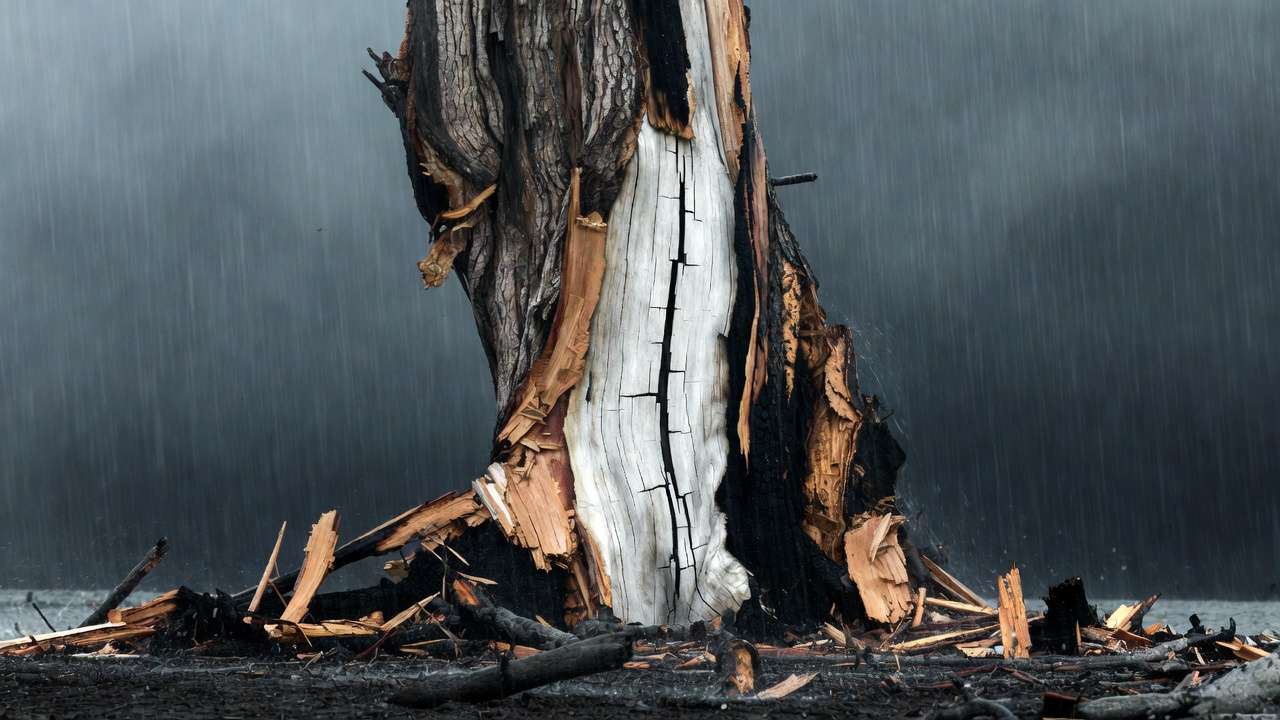
When lightning hits a tree, the effects are dramatic and often destructive. The bolt’s immense energy (up to 300 million volts and 30,000 amps) superheats the sap and moisture inside to steam in a fraction of a second, causing explosive internal pressure.
Common immediate damage:
- Bark explosion — Strips or blows off in long strips, exposing wood.
- Splitting or shattering — Trunks crack deeply, branches snap, or the tree explodes outward.
- Fires — Smoldering or flaming bark/wood, especially in resin-rich species like pines.
- Root and soil damage — Ground currents scorch roots and surrounding soil.
Long-term consequences:
- Internal scorching creates dead tissue pathways, inviting decay fungi and insects.
- Structural weakening leads to future branch drop or total failure — a major hazard near homes, paths, or play areas.
- Sudden wilting, dieback, or oozing sap indicates severe vascular damage.
Signs your tree was struck (even if unseen):
- Charred or stripped bark in vertical lines.
- Sudden leaf scorch or drop.
- Cracks leaking sap or sawdust-like frass from insects.
- Foul odor from decaying wood.
Many trees die within 1–5 years post-strike due to secondary issues like rot or pests, but some survive with prompt care. Oaks, pines, and poplars often suffer the worst, while certain tropical species (like Dipteryx oleifera) show remarkable resilience — though that’s rare in temperate landscapes.
Always consult a certified arborist (ISA-certified preferred) immediately after a suspected strike. They assess hidden damage via visual inspection, sounding, or resistograph testing and guide recovery decisions.
How to Protect Your Tall Trees from Lightning Damage 🛡️🌲
For high-value, prominent, or historic tall trees in yards — especially near homes, power lines, or structures — consider professional lightning protection systems.
These follow standards from the International Society of Arboriculture (ISA) and use:
- Air terminals (lightning rods) placed at the highest points of the canopy.
- Copper conductors running down the trunk to divert current.
- Grounding electrodes buried deep to safely dissipate energy into the soil.
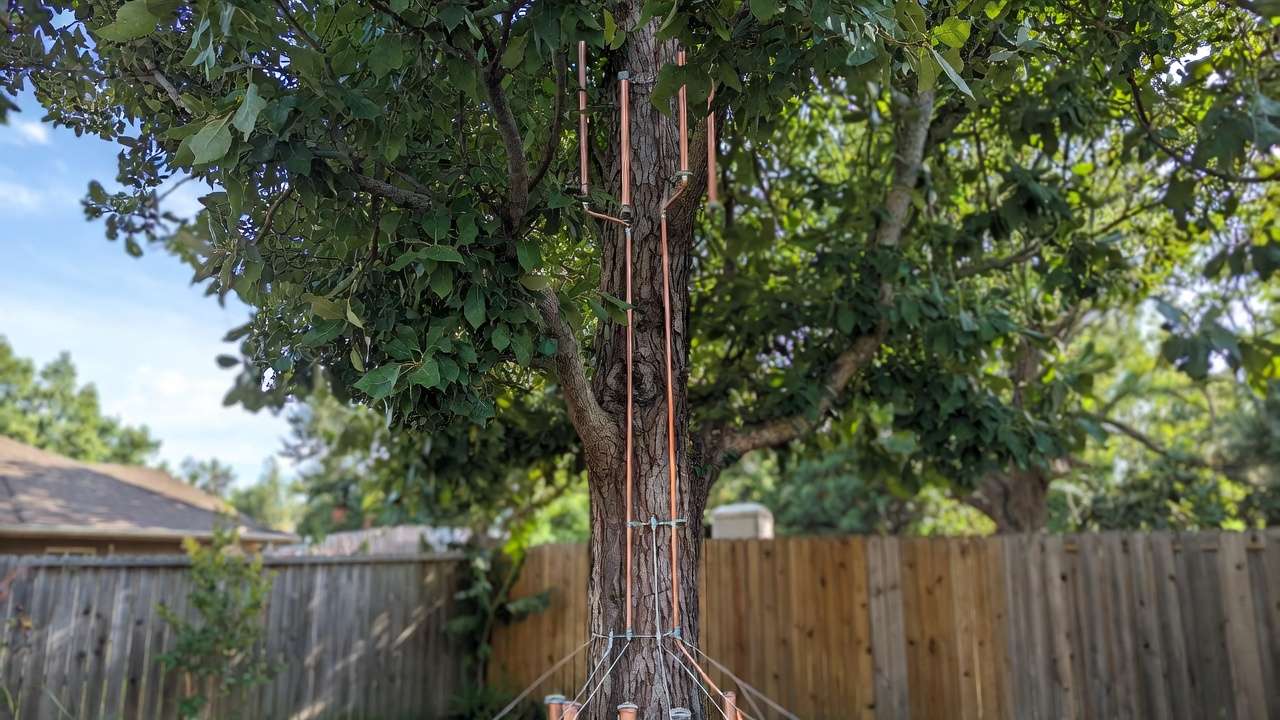
Benefits:
- Channels strikes safely, preventing explosive damage, fires, and long-term decline.
- Preserves tree health, aesthetics, shade, and property value.
- Reduces risk of hazardous failures.
Who needs it?
- Isolated tall trees (oaks, maples, pines) over 50–60 feet.
- Trees near buildings, pools, or high-traffic areas.
- Specimen or heritage trees you want to protect long-term.
Costs vary by tree size/complexity (often $1,000–$5,000+ installed), but it’s a one-time investment compared to emergency removal ($2,000–$10,000+) or repeated storm damage repairs. Only ISA-certified arborists should install — improper systems can worsen risks.
Combine with routine care: regular pruning for structure, mulching, watering during drought, and pest monitoring to keep trees vigorous and less vulnerable overall.
Practical Tips for Tree Owners & Outdoor Enthusiasts During Storm Season ☔🌿
Thunderstorm season can be stressful for anyone who spends time outdoors or cares deeply about their landscape trees. Here are actionable, season-specific strategies to keep both you and your trees safe:
Before the storm arrives:
- Monitor forecasts religiously — Use reliable apps (NOAA Weather Radar, AccuWeather, or local meteorological services) and watch for towering cumulonimbus clouds, sudden wind shifts, or distant rumbling. In many regions, storms build quickly in summer afternoons.
- Finish outdoor tasks early — Avoid pruning, mowing, or working near tall trees when storms are forecast within the next few hours.
- Secure loose items — Bring in garden tools, patio furniture, hanging planters, or anything that could become a projectile or conductor.
- Charge devices — Keep phones, weather radios, and power banks ready so you can stay informed even if power goes out.
During active thunderstorms:
- Immediate action rule — The moment you hear thunder, count the seconds to the next flash of lightning. If it’s under 30 seconds, the storm is within 10 km (6 miles) — seek safe shelter immediately.
- Never finish “just one more task” under or near tall trees — Many injuries occur when people think they have a few extra minutes.
- Pet and family safety — Bring pets indoors at the first sign of thunder. Teach children the “When thunder roars, go indoors” rule and explain why hiding under trees is dangerous.
- If hiking or camping — Choose campsites in low areas surrounded by shorter, denser trees rather than isolated giants. Avoid ridge tops, open meadows with lone tall trees, or shorelines.
After the storm passes:
- Wait the full 30 minutes after the last thunderclap before going back outside.
- Inspect your trees carefully (from a safe distance first) — Look for fresh bark stripping, smoke, fire, large cracks, or leaning. Do not approach or touch a tree that looks recently struck.
- Document damage — Take photos (from afar) for insurance or arborist records.
- Schedule professional assessment — Call a certified arborist within 24–48 hours if you suspect a strike — early intervention can save some trees.
Bonus tip for gardeners in lightning-prone areas (like parts of the southeastern U.S., Florida, or tropical/subtropical regions): Consider creating a dedicated “storm-safe zone” in your yard — a low, open area away from tall trees, equipped with a small bench or seating so family members have a comfortable, low-risk spot to wait out brief showers (while still following full safety rules if thunder is present).
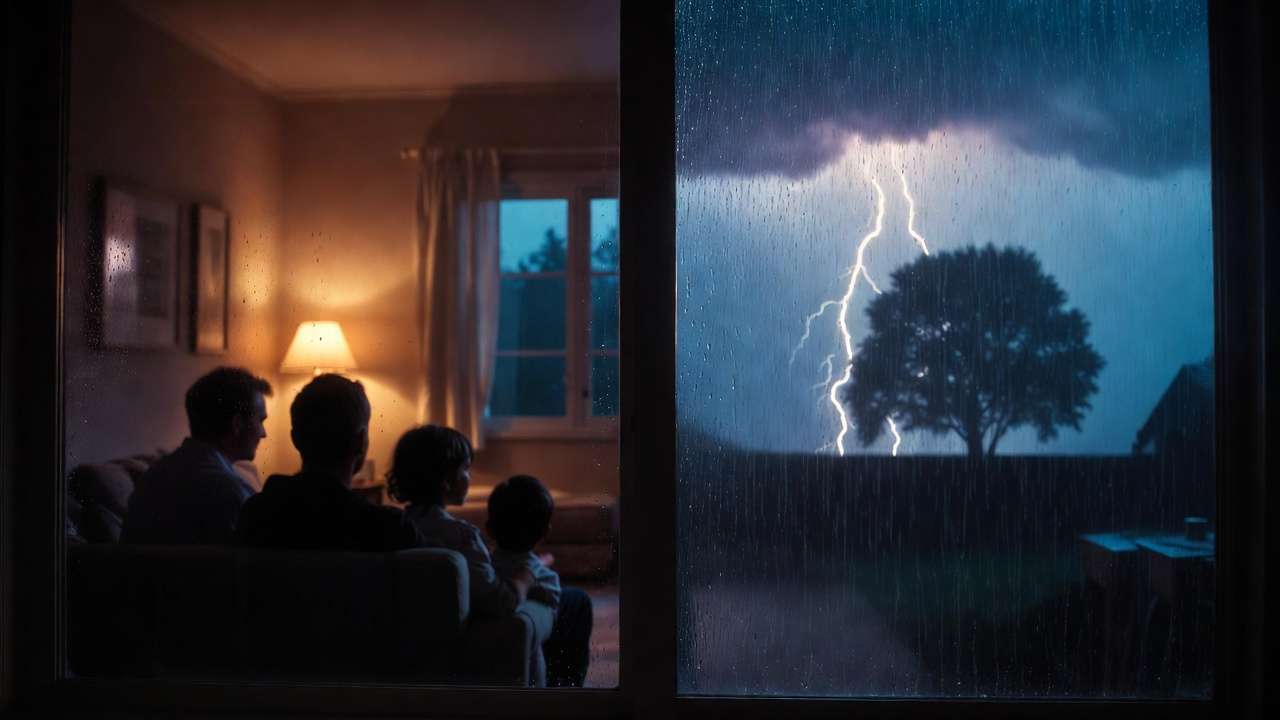
(Image: A peaceful backyard scene showing a family safely indoors watching a storm through a window, with tall trees visible in the distance — emphasizing the contrast between safe indoor shelter and risky outdoor trees.)
Conclusion: Prioritize Safety for You and Your Trees 🌿❤️
Lightning safety around tall trees boils down to one powerful truth: the very trees we love and nurture can become deadly traps during a thunderstorm.
The myth that a tall tree offers shelter has cost far too many lives and injured countless others. By understanding the science — tall trees as natural lightning attractors — respecting official guidelines from NOAA, CDC, and lightning safety experts — and taking proactive steps to protect both people and trees, you can enjoy your landscape safely through every storm season.
Key takeaways to remember and share:
- When thunder roars, go indoors — no exceptions.
- Never shelter under, near, or touch tall trees during thunderstorms.
- Isolated or prominent tall trees are the riskiest.
- If a tree in your care is struck, act quickly — call a certified arborist.
- Lightning protection systems can safeguard irreplaceable specimen trees.
Your trees give you shade, beauty, habitat, and emotional connection to your property. Protect that relationship by protecting yourself first. Stay weather-aware, stay educated, and stay safe. 💚⚡
Feel free to share this guide with fellow gardeners, family members, hiking groups, or anyone who spends time near tall trees — spreading accurate information saves lives.
FAQ Section ❓
Is it ever safe to stand under tall trees during a storm? No — being under or very near tall trees is one of the most dangerous places outdoors during lightning. Avoid entirely.
What if I’m already in a dense forest with many tall trees? Seek the center of a group of smaller, similarly sized trees rather than standing under the tallest one. Still, the safest place is indoors or in a hard-topped metal vehicle.
Does installing lightning rods on my tree make it safe for people to shelter under? No. Protection systems are designed to save the tree from catastrophic damage — they do not make the area around the tree safe for humans.
How far away from a tall tree do I need to be to be safe? A good rule of thumb is at least twice the height of the tree (e.g., 100 ft tree → stay 200 ft away). Even farther is better.
Do all tall trees need lightning protection systems? No — only high-value, high-risk trees (isolated, near structures, historic, or specimen trees) usually justify the investment. Have a certified arborist perform a risk assessment.
Can lightning strike the same tree twice? Yes — some tall trees are struck multiple times over the years because they remain the tallest, most conductive object in the area.
Thank you for reading this in-depth guide. Stay safe out there — and give your trees (and yourself) the protection you both deserve! 🌳✨











