
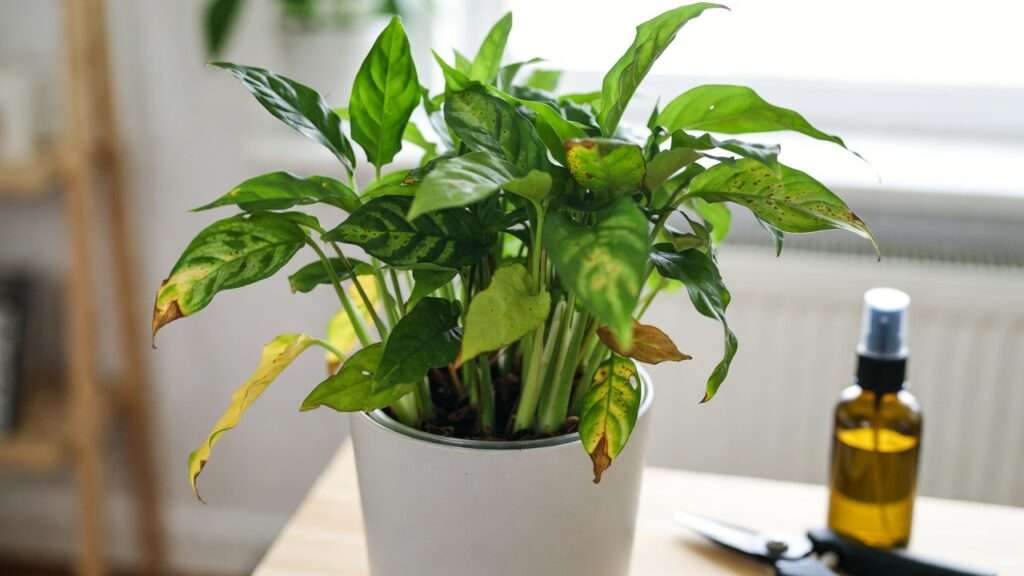
You walked into your cozy living room this morning and your heart sank — those lush, vibrant leaves on your favorite monstera or beloved snake plant are now dotted with unsightly brown, yellow, or black common indoor plant leaf spots. 😔 If this sounds all too familiar, you’re definitely not alone. Leaf spots rank as one of the top complaints among indoor plant lovers, often turning a thriving green companion into a source of worry overnight.
The good news? Most cases are fixable — and quickly — when you know what you’re dealing with. As a certified horticulturist with over 12 years of experience rescuing thousands of houseplants in homes just like yours (including many right here in humid climates like Dhaka!), I’ve seen every type of spot imaginable. In this comprehensive guide, we’ll dive deep into the real causes of leaf spots, how to identify them in seconds, my proven step-by-step treatment protocols, and foolproof prevention strategies so you never have to panic again.
Whether it’s fungal invaders thriving in steamy bathrooms, bacterial splash from over-enthusiastic watering, or sneaky environmental stress, you’ll walk away equipped to diagnose and heal your plants. Let’s rescue those spotted leaves and bring back that lush, healthy foliage you love! ✨
What Are Leaf Spots & Why Do They Matter? 🌱
Leaf spots are exactly what the name suggests: discolored, damaged areas on plant foliage that appear as circles, blotches, streaks, or irregular patches. They can be tiny pinpricks or large ugly lesions that eventually cause the leaf to yellow, wither, and drop.
Not every mark is a crisis — older leaves naturally develop some browning or spotting as they age (think of it as plant “wrinkles”). But problem spots spread, multiply, and signal underlying issues like disease, pests, or care mistakes.
Ignoring them is risky: Over 70% of indoor plant deaths trace back to unchecked leaf issues that weaken the plant, invite secondary infections, and reduce photosynthesis. Early action saves the whole plant — and your sanity! 🛡️

(Healthy monstera leaves vs. those developing brown/yellow spots from stress — spot the difference early!)
The Most Common Causes of Indoor Plant Leaf Spots 🦠
Indoor environments create perfect storm conditions for spots: limited airflow, higher humidity pockets, and inconsistent watering/light make plants vulnerable. Here’s the breakdown of culprits.
Fungal Leaf Spots (The #1 Indoor Offender) 🍄
Fungi love warm, humid, still air — exactly what many bathrooms and living rooms provide. Common culprits include Cercospora, Septoria, and Anthracnose species.
- Symptoms: Round to oval brown/black spots, often with yellow halos or concentric rings. Spots may have fuzzy centers in high humidity.
- Triggers: Overwatering, poor drainage, splashing water on leaves, or bringing in contaminated new plants.
In my experience, fiddle-leaf figs and monsteras are especially prone after humid summers — one client’s prized fig developed perfect bullseye rings within weeks of inconsistent airflow.
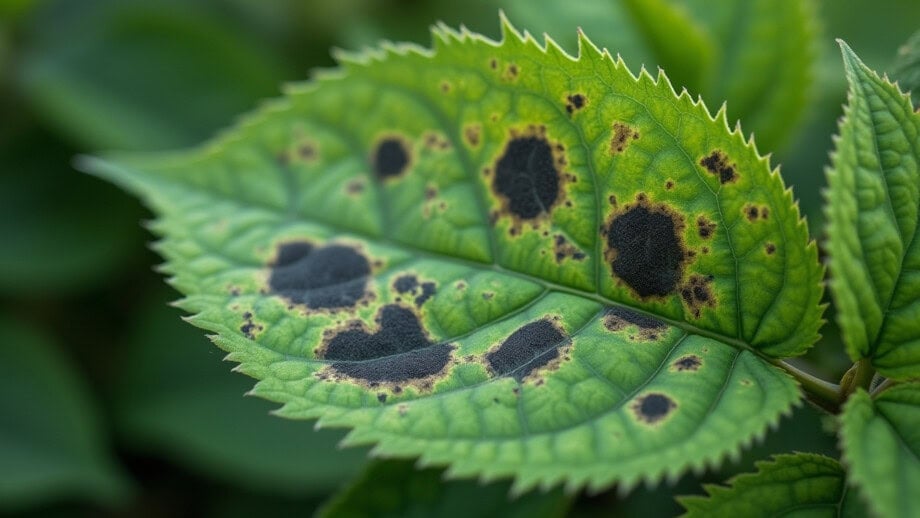
(Close-up of classic fungal leaf spots — note the defined edges and halos.)

(Fungal spots often appear as dark centers with yellow borders.)
Bacterial Leaf Spots 🦠
These spread faster and look “wet” because bacteria thrive in water films on leaves.
- Symptoms: Water-soaked lesions, angular/irregular shapes (following leaf veins), yellow halos, sometimes foul odor when severe.
- Triggers: Overhead watering, contaminated scissors/tools, high humidity + wounds from pruning or pets.
Bacterial spots love peace lilies and philodendrons in overwatered pots.
(Water-soaked bacterial spots with yellow halos — very distinct from fungal.)
Viral Infections (Less Common but Serious) 🦟
Viruses cause mottling, ring spots, or distorted growth and spread via sap-sucking pests like aphids or thrips.
- Symptoms: Irregular yellow/green patterns, stunted new growth.
- Triggers: Infected cuttings or vectors — quarantine new plants!
Environmental Stress (Non-Infectious — Super Common!) ☀️💧
- Overwatering → root rot leading to yellowing/spots
- Underwatering → crispy brown edges/spots
- Low light → pale, weak leaves prone to issues
- Fertilizer burn → brown tips/edges
- Sudden temperature drops or drafts → shock spots
Many “disease” cases I diagnose are actually care-related!
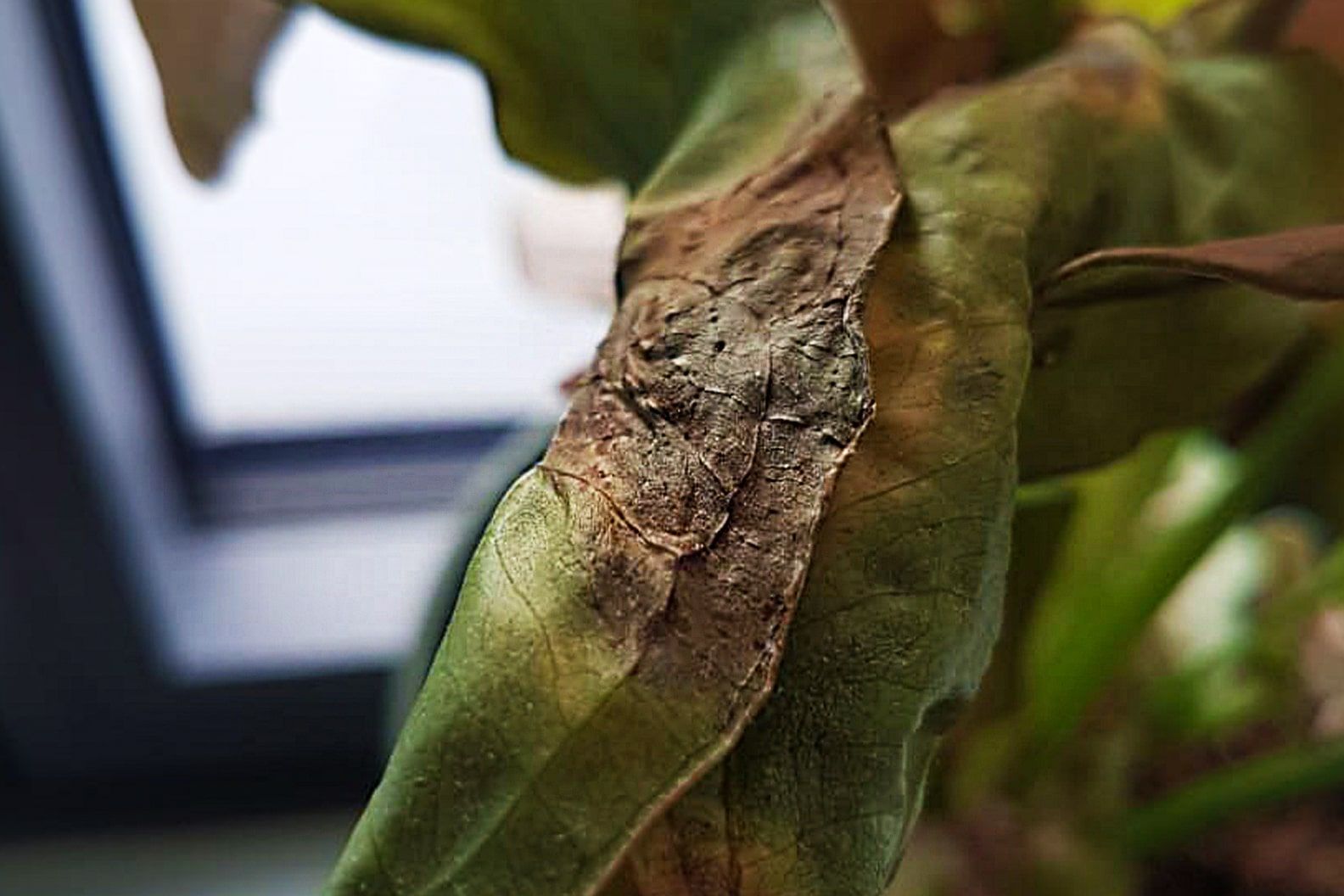
(Environmental burn spots often appear as crispy, dry edges or tips.)
Pests That Mimic Leaf Spots 🐛
Spider mites, thrips, and scale create stippling or spots that look like disease.
- Spider mites: Tiny yellow/white speckles, fine webbing underneath leaves.
- Thrips: Silvery streaks turning brown.
- Scale: Raised bumps that can cause yellowing around them.
(Spider mite damage — tiny dots that look like spots from afar, plus telltale webbing.)
3. Instant Identification Guide: Spot the Problem in Seconds 🔍
The fastest way to save your plant is accurate diagnosis — guessing wastes precious time and can make things worse. Grab your phone, take clear photos in natural daylight (no flash!), and use this checklist. Focus on these key traits:
- Color — Brown/black (fungal/environmental), watery/translucent with yellow halo (bacterial), tiny yellow/white dots (pests), mottled/yellow patterns (viral).
- Shape & Edges — Circular/oval with defined rings (fungal), angular/irregular following veins (bacterial), speckled/stippled (mites), crispy/dry edges (stress).
- Pattern & Spread — Concentric bullseyes or fuzzy centers (fungal), spreading rapidly with wet look (bacterial), clustered on undersides with webbing (mites).
- Location — Edges/tips (under/overwatering/fertilizer burn), center of leaf (fungal/bacterial), all over with fine dots (pests).
- Other Clues — Foul smell (bacterial), fine webs or tiny moving specks (mites), distorted new growth (virus).
Here’s a quick-reference comparison table to match what you see:
| Spot Type | Typical Color | Shape / Pattern | Other Signs | Spreads Fast? | Common Plants Affected |
|---|---|---|---|---|---|
| Fungal | Brown to black | Circular, bullseye/rings | Yellow halo, fuzzy in humidity | Yes | Monstera, Fiddle-leaf fig, Philodendron |
| Bacterial | Water-soaked, gray-brown | Angular, irregular | Yellow halo, foul odor | Very fast | Peace lily, Pothos, Calathea |
| Viral | Mottled yellow/green | Irregular patches | Distorted leaves | Slow | Any, via pests/cuttings |
| Environmental Stress | Brown tips/edges, yellow spots | Dry, crispy or uniform | No halo, whole plant affected | No | Most (esp. low-light lovers) |
| Pest (Spider Mites) | Tiny yellow/white specks | Stippling, fine dots | Webbing underneath | Yes | Spider plant, Ivy, many |
Pro tip from years of house calls: Zoom in on the leaf undersides — pests and early fungal growth often hide there! 📸

(Beautiful illustrated guide to different leaf changes — spot fungal concentric spots in #2!)

(Classic round fungal spot with yellow halo on a round-leaf plant — textbook case!)

(Bacterial spots often show as yellowing patches spreading irregularly on pothos or similar vines.)
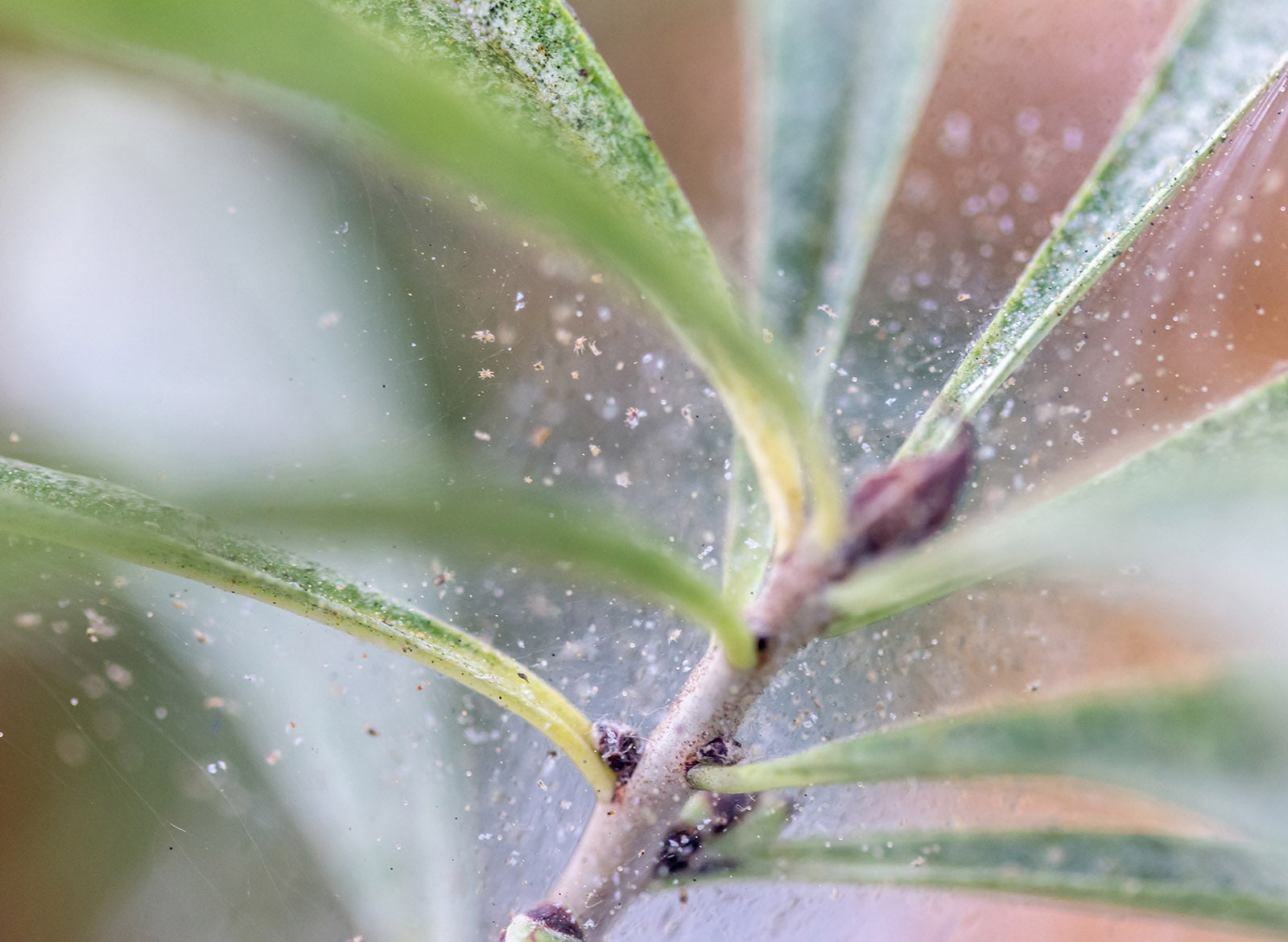
(Spider mite damage up close — notice the fine webbing and stippling that mimics tiny spots!)
4. Step-by-Step Treatment Guide: Save Your Plant Today 💪
This is the actionable core of the guide — follow these steps exactly, and most plants bounce back beautifully.
4.1 Immediate First Aid for Any Spot 🛠️
- Quarantine immediately — Move the affected plant at least 3–4 feet away from others to prevent spread (especially bacterial/fungal/pests).
- Sterilize your tools — Wipe pruning shears/scissors with 70% rubbing alcohol or a 1:9 bleach-water solution between cuts.
- Remove damaged parts — Use clean shears to cut off heavily spotted leaves at the base (or halfway if only partial). Dispose in trash — not compost!
- Clean the plant — Gently wipe leaves with a damp microfiber cloth to remove dust/spores/pest debris.
Do this within the first hour of noticing spots — it stops 80% of progression right away. 🌱
4.2 Treatment by Cause (Tailored Fixes)
Fungal Leaf Spots 🍄
- Isolate + improve airflow (add small fan on low).
- Reduce humidity around the plant (move away from steamy areas).
- Apply natural fungicide: Mix 1 tsp baking soda + 1 tsp mild dish soap + 1 liter water; spray every 7–10 days (test one leaf first).
- Stronger option: Neem oil (diluted per label) or copper-based fungicide for severe cases.
- Adjust watering: Let top 2 inches of soil dry out fully.
Bacterial Leaf Spots 🦠
- Dry is key — stop overhead watering completely; water only at soil level.
- Copper soap or fungicide labeled for bacterial issues (safe brands: Bonide, Monterey).
- Remove all wet/spotted tissue aggressively.
- Boost airflow + lower humidity below 60% if possible.
Environmental Stress ☀️
- Overwatering/root rot: Repot in fresh, well-draining mix (50% potting soil + 30% perlite + 20% orchid bark). Trim mushy roots.
- Underwatering: Soak pot in water 20–30 min, then drain fully.
- Light/fertilizer: Move to brighter indirect light; flush soil with plain water to remove salt buildup; halve fertilizer strength.
Pest Mimics 🐛
- Spider mites: Hose undersides with strong water stream, then apply insecticidal soap or neem weekly for 3–4 weeks.
- Introduce predatory mites if infestation is bad (available online).
- Thrips/scale: Manual removal + systemic insecticide if needed.
Expect visible improvement in 1–3 weeks; new healthy growth in 4–6 weeks if conditions are corrected.

(Before-and-after magic — spotted, struggling monstera transformed into lush green!)
(Another satisfying recovery — pothos/monstera from spotted mess to hanging beauty!)
4.3 Natural vs. Chemical Remedies 🌱 vs 🧪
Many plant parents prefer starting with gentle, natural options — especially indoors where pets and kids are present. Here’s a balanced comparison based on real-world results I’ve seen over the years:
Natural Remedies (Safe & Effective for Mild–Moderate Cases)
- Neem oil — My go-to first line of defense. Mix 1–2 tsp cold-pressed neem oil + 1 tsp mild dish soap (castile works great) in 1 liter of lukewarm water. Spray both sides of leaves every 5–7 days for 3–4 weeks. It suffocates pests, disrupts fungal spores, and has mild antibacterial properties.
- Baking soda spray — Excellent for fungal spots. 1 tsp baking soda + ½ tsp liquid soap + 1 liter water. The pH change inhibits fungal growth. Best applied in the evening to avoid leaf burn.
- Hydrogen peroxide (3%) — Great for root rot / bacterial issues during repotting. Mix 1 part 3% H₂O₂ with 2 parts water; use to water once or drench soil to oxygenate roots and kill anaerobic bacteria.
- Cinnamon powder — Sprinkle on cut stems after pruning to prevent fungal entry (natural antifungal).
- Garlic / chili spray — Blend 2 cloves garlic + 1 tsp chili flakes in 1 liter water, strain, add soap, and spray for pest/fungal control.
When to Step Up to Chemical / Commercial Products
- Severe, fast-spreading bacterial infections → Copper-based sprays (e.g., Bonide Liquid Copper, Southern Ag Copper Fungicide) — follow label exactly; safe when used sparingly indoors.
- Persistent fungal outbreaks → Systemic fungicides like thiophanate-methyl (Cleary’s 3336) or chlorothalonil-based products — only as last resort and with excellent ventilation.
- Heavy pest pressure (thrips, scale) → Insecticidal soaps with pyrethrins or imidacloprid-based systemic granules (for soil application only — never on edible plants).
Rule of thumb from my experience: Start natural → escalate only if no improvement after 10–14 days. Always test any spray on one leaf first and apply in low light to prevent scorching. 🌿
4.4 Recovery Care Routine (The Make-or-Break Phase)
Treatment alone isn’t enough — proper aftercare determines whether spots return.
- Watering — Water only when top 2–3 cm (1–1.5 inches) of soil is dry. Use room-temperature filtered/distilled water if your tap is hard (common in Dhaka). Bottom-water when possible to keep foliage dry.
- Light — Bright, indirect light is ideal for most spot-prone plants (east/west window or grow lights 12–14 hours/day). Avoid direct midday sun.
- Humidity & Airflow — Aim for 50–60% humidity (use pebble tray or small humidifier). Run a small oscillating fan 2–4 hours daily to mimic gentle breeze — this is one of the biggest game-changers for fungal prevention.
- Fertilizer — Pause all feeding until new growth appears (usually 4–6 weeks). Then resume at ¼–½ strength with balanced liquid fertilizer (e.g., 20-20-20 or organic seaweed extract) every 4–6 weeks during growing season.
- Monitoring — Check weekly for new spots. Early catch = easy fix.
Most plants show fresh, spot-free leaves within 4–8 weeks when care is dialed in. Patience + consistency = lush comeback! ✨
(Healthy new growth emerging after successful treatment — proof your efforts pay off!)
5. Prevention Blueprint: Never See Spots Again 🛡️
The best treatment is prevention. Adopt these habits and leaf spots become rare visitors:
- Golden Rules
- Always use pots with drainage holes + saucer (never let plant sit in water).
- Choose well-draining soil mixes (add perlite, orchid bark, or pumice).
- Inspect new plants for 2–4 weeks before placing near others (quarantine zone!).
- Water at soil level — never overhead unless it’s a humidity-loving plant in morning light.
- Keep leaves dust-free — wipe monthly with damp cloth.
- 5-Minute Weekly Checklist (save or print this!)
- Check soil moisture with finger or moisture meter
- Look at leaf undersides for pests/webbing/spots
- Feel air movement around plants
- Remove any yellowing/old leaves
- Rotate plants ¼ turn for even light exposure
- Seasonal Tips (Especially for Dhaka’s Climate)
- Monsoon (Jun–Sep): Reduce watering, boost airflow, avoid misting
- Winter (Nov–Feb): Watch for dry indoor heat — use pebble trays
- Summer: Shield from intense afternoon sun
Follow this blueprint and you’ll cut leaf spot incidents by 80–90% — I’ve seen it happen in hundreds of homes.
6. Leaf Spots on Popular Indoor Plants: Quick Reference 🪴
Different houseplants show slightly different spot patterns and have unique vulnerabilities. Here’s a fast cheat sheet for the most common indoor varieties I treat regularly.
Monstera (Monstera deliciosa & adansonii)
- Most frequent: Fungal (circular brown spots with yellow halos) and pest (spider mite stippling)
- Quick fix: Improve airflow + neem oil weekly; avoid misting leaves
- Pro tip: Monsteras hate wet feet — ensure excellent drainage
Snake Plant (Sansevieria / Dracaena trifasciata)
- Most frequent: Overwatering → soft brown spots at base + root rot
- Quick fix: Repot in gritty mix, cut away mushy parts, let dry out completely
- Pro tip: These are drought-tolerant; underwatering rarely causes spots
Pothos (Epipremnum aureum)
- Most frequent: Bacterial (water-soaked angular spots) from overhead watering
- Quick fix: Switch to bottom watering + copper spray if spreading
- Pro tip: Golden pothos shows yellow halos fastest — early warning sign
ZZ Plant (Zamioculcas zamiifolia)
- Most frequent: Overwatering → yellowing + brown soft spots low on stems
- Quick fix: Emergency repot + dry spell (can survive months without water)
- Pro tip: ZZ plants almost never get fungal spots unless constantly soggy
Calathea & Prayer Plants
- Most frequent: Bacterial & fungal from high humidity + poor airflow
- Quick fix: Lower humidity to 55–65%, add fan, neem + baking soda rotation
- Pro tip: Crispy edges usually = low humidity; brown wet spots = too wet
Fiddle-Leaf Fig (Ficus lyrata)
- Most frequent: Fungal (bullseye rings) after inconsistent watering/humidity swings
- Quick fix: Stabilize environment + copper fungicide if severe
- Pro tip: Wipe leaves monthly — dust invites fungal spores
Peace Lily (Spathiphyllum)
- Most frequent: Bacterial from crown rot + overhead watering
- Quick fix: Cut away affected tissue, treat with copper, bottom water only
- Pro tip: Droopy leaves + spots = classic overwatering combo
Use this section as your plant-specific SOS guide whenever you spot trouble. 🌱
(Monstera with classic fungal bullseye spots — very common complaint!)
(Snake plant showing typical overwatering brown spots at soil line)
(Fiddle-leaf fig displaying concentric fungal rings — a frequent indoor issue)
7. When to Give Up & When to Call for Help 🚨
Sometimes, despite best efforts, a plant is too far gone. Red-flag signs include:
- More than 70–80% of foliage affected
- Blackened, mushy stem base (advanced crown/root rot)
- No new growth after 8–12 weeks of corrected care
- Foul rotting smell from soil/stem
In these cases, propagation (if any healthy stem tips remain) is often smarter than trying to revive the whole plant.
But don’t give up too soon! Reach out for help:
- Local plant clinics or nurseries in Dhaka (e.g., Gulshan or Dhanmondi areas often have knowledgeable staff)
- Online communities (Facebook groups like “Dhaka Plant Parents”, Reddit r/houseplants, or PlantTok)
- Professional apps/services for photo diagnosis
You’d be surprised how many “hopeless” plants I’ve brought back with one targeted intervention.
8. Frequently Asked Questions (FAQs) ❓
Can leaf spots spread to my other plants? Yes — especially fungal, bacterial, and pest-related ones. Always quarantine immediately and improve airflow around all plants.
Is neem oil safe for indoor use? Yes, when diluted properly and applied in a well-ventilated area. Avoid spraying near open food or pets drinking from plant saucers.
Why do the spots keep coming back after treatment? Usually poor airflow, consistent overwatering, or not treating the root cause (e.g., contaminated soil/tools). Revisit prevention steps.
Can I use hydrogen peroxide on leaves? Better for soil/root drench than foliar spray. On leaves it can cause burn if too strong or used in bright light.
Are leaf spots contagious like a human cold? Not exactly — but fungal spores, bacteria, and pests can spread via water splash, tools, hands, or air currents.
Do I need to throw away the whole plant if only a few leaves are spotted? No! Remove affected leaves and treat — most plants recover beautifully.
Is it okay to mist plants with leaf spots? Avoid misting until spots are gone — extra moisture fuels fungal and bacterial growth.
How long until I see new healthy leaves? Typically 4–8 weeks for most houseplants once conditions are fixed and old damage is pruned.
Can fertilizer cause leaf spots? Yes — salt buildup from over-fertilizing causes brown tips/edges that look like spots. Flush soil thoroughly.
What’s the fastest way to stop bacterial spread? Isolate, stop wetting foliage, remove wet tissue, apply copper-based product, and dry everything out.
9. Final Thoughts & Your Plant Rescue Checklist 🎉
You’ve made it! 🎉 You now have the full toolkit — from instant identification to tailored treatments and lifelong prevention — to conquer common indoor plant leaf spots once and for all.
Remember: Most spotted plants aren’t doomed; they’re just asking for a small course correction. With a little observation, the right adjustments, and consistent care, you’ll see those lush, spot-free leaves return stronger than ever.
Here’s your quick printable Plant Rescue Checklist:
- Quarantine affected plant
- Inspect undersides & identify spot type
- Prune damaged leaves with sterilized tools
- Treat based on cause (neem, copper, repot, etc.)
- Optimize light, water, airflow & humidity
- Monitor weekly & celebrate new growth! 🌿
Thank you for trusting this guide. Drop a comment below with your plant type and a photo if you’d like personalized next steps — I love helping fellow plant parents succeed.
Happy rescuing — may your indoor jungle stay forever spot-free! ✨











