
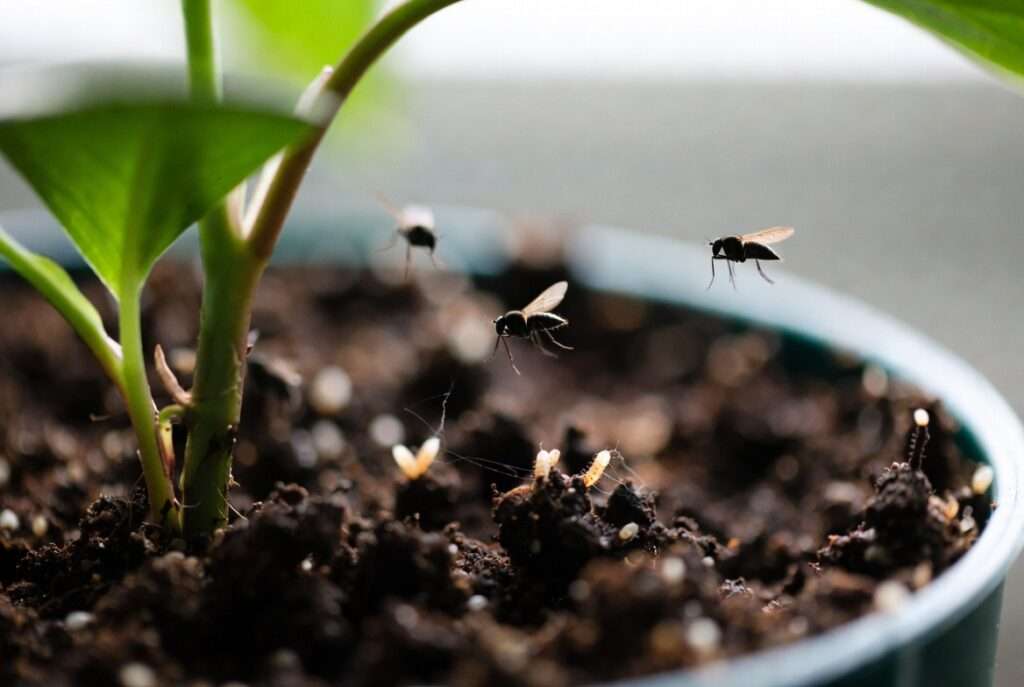
You water your beloved monstera on a humid Dhaka evening, only to see dozens of tiny black flies dancing around the soil like unwelcome houseguests. 😩 If you’re dealing with fungal gnats in houseplant soil right now, you know the frustration — those annoying sciarid flies seem to appear out of nowhere, especially during Bangladesh’s monsoon season or winter humidity spikes.
As a houseplant coach with 15+ years rescuing thousands of plants (from monstera to ferns and orchids) in humid tropical climates just like Dhaka, I’ve seen it all. The good news? You can eliminate fungal gnats in houseplant soil naturally, safely, and permanently — without toxic sprays that harm your family, pets, or precious greenery.
In this complete 2026 guide, I’ll walk you through the exact 7-step system that actually works, a done-for-you 30-day calendar, prevention secrets tailored for our local conditions, and expert tips you won’t find anywhere else. Ready to say goodbye to those tiny pests and hello to thriving plants? Let’s dive in! 🌿✨
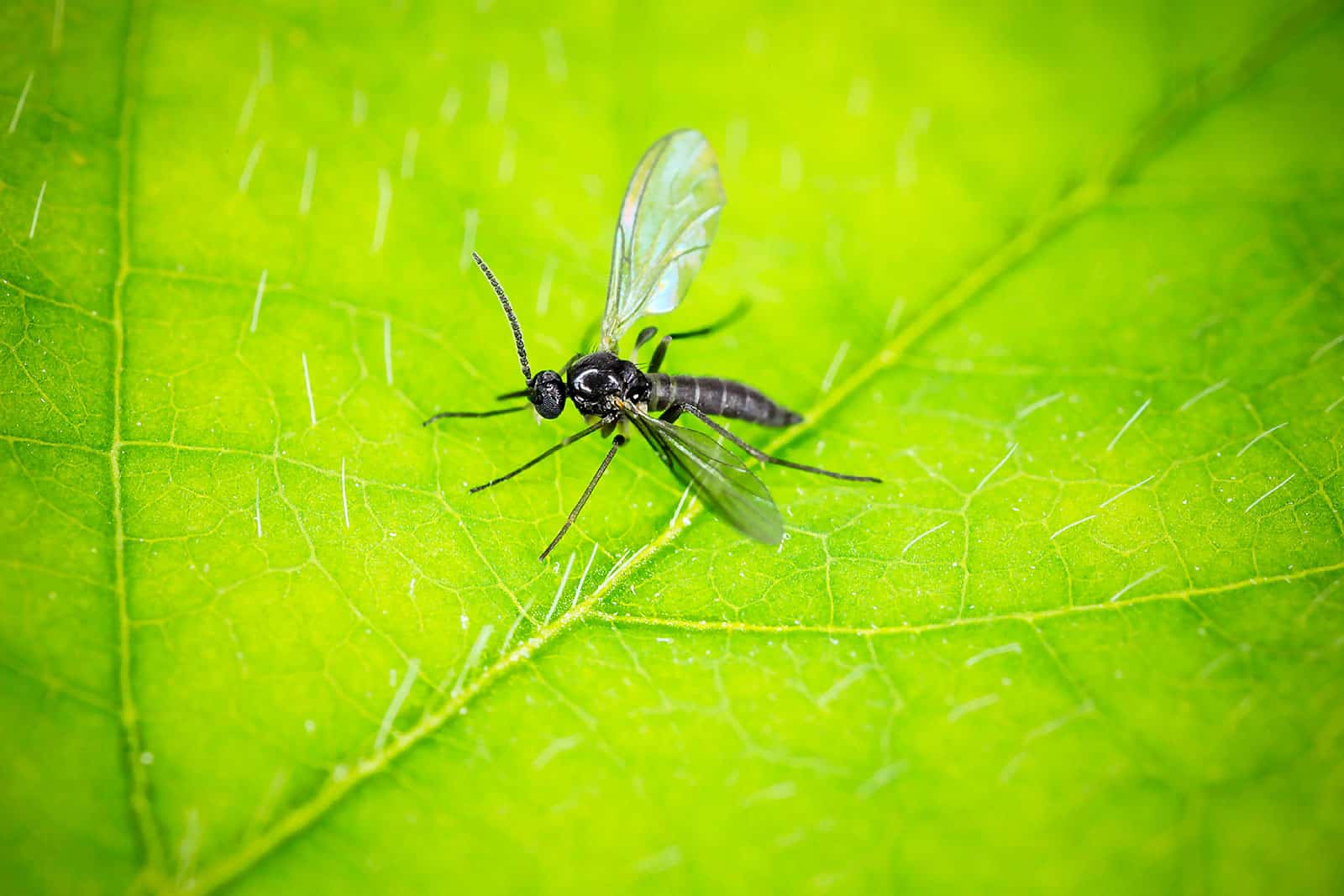
Look at these tiny troublemakers up close — adult fungus gnats are just 2–3 mm long with long legs and clear wings. No wonder they’re so hard to spot until they start swarming!
What Exactly Are Fungus Gnats? (And Why Your Soil Is Their Dream Home) 🪰
Fungus gnats (sciarid flies) are tiny insects that thrive in moist, organic-rich houseplant soil. The adults are harmless flyers, but the real villains are their larvae — white, worm-like creatures with black heads that munch on roots and spread fungal diseases.
The Life Cycle of Fungus Gnats – From Egg to Annoying Adult in Just 7 Days Eggs → Larvae (the root-eaters) → Pupae → Adults. In warm, damp conditions (perfect for Dhaka apartments!), the cycle repeats every 7–10 days. One female can lay 200+ eggs, so an infestation explodes fast if you don’t act quickly.

Fungus Gnats vs. Fruit Flies vs. Drain Flies – Quick Identification Chart
| Pest | Size & Color | Where You See Them | Wings & Legs | Real Clue |
|---|---|---|---|---|
| Fungus Gnats | 2–3 mm, black/gray | Hovering over soil | Long legs, clear wings | Soil-focused, weak fliers |
| Fruit Flies | 3 mm, tan/red eyes | Around ripe fruit | Short, red eyes | Kitchen invaders |
| Drain Flies | 2–5 mm, fuzzy gray | Near sinks/drains | Moth-like, hairy | Drain or sewer smell |
Why Houseplant Soil Is the Perfect Nursery Overly moist potting mix + decaying organic matter = fungus gnat paradise. Peat-based mixes (common in cheap local bags) stay wet too long, especially in our high-humidity climate. The larvae feed on fungi and tender roots, weakening your plants.
How to Confirm You Have Fungus Gnats (Before You Panic) 🕵️♀️
Don’t worry — not every tiny fly means disaster! Here are the 5 tell-tale signs: • Tiny black flies hovering 1–2 inches above the soil • White larvae (¼ inch, black heads) visible when you gently poke the topsoil • Yellowing lower leaves or stunted new growth • Sticky or slimy soil surface • Flies sticking to your fingers when you touch the soil
The “Potato Slice Test” + Yellow Sticky Trap Trick (my go-to detection duo)
- Place a thin slice of raw potato on the soil surface overnight.
- Check in the morning — larvae will swarm to it!
- Stick yellow sticky traps (available at any Dhaka nursery or online) into the soil — adults get caught instantly.
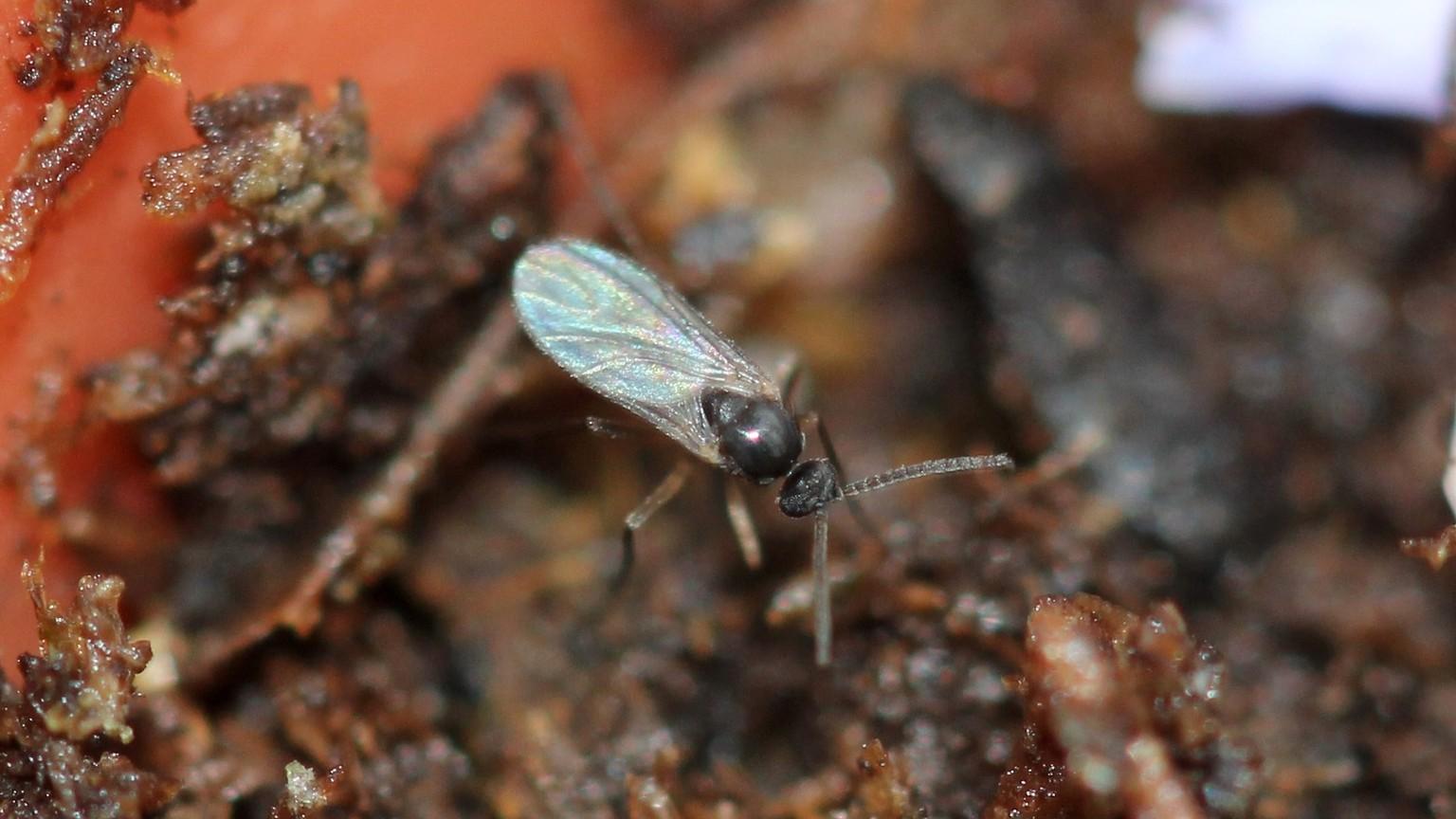
When It’s NOT Fungus Gnats If the flies are bigger, have red eyes, or hang around your kitchen fruit bowl, you’re dealing with fruit flies instead. Quick tip: fungus gnats hate light and stay close to the pot.
Why Fungus Gnats Keep Coming Back – The Root Causes Most People Miss
Overwatering is Public Enemy #1 — especially in Bangladesh’s 80–90% humidity months. Cheap peat-moss mixes hold water like a sponge. New plants from nurseries often arrive infested (the silent invaders!). Seasonal spikes: monsoon moisture + winter indoor heating = double trouble.
The Dangers of Ignoring Fungus Gnats – They’re Not Just “Annoying”
Larvae chew fine root hairs, causing root rot and fungal diseases like Pythium. Plants show yellow leaves, wilting, and stunted growth. In severe cases, your favorite fiddle-leaf fig or calathea can die within weeks.
I once rescued a reader’s monstera that lost 70% of its roots — after following my system, it bounced back beautifully in 30 days. You can too!
7 Proven Natural Ways to Eliminate Fungus Gnats Fast (Ranked by Speed & Effectiveness) ✨
Here’s the skyscraper core — my battle-tested 7 methods. I rank them by how quickly they work in real Dhaka homes.
Method 1 – Dry-Out Technique (The #1 Most Effective First Step) Let the top 2–3 inches of soil dry completely between waterings (use a moisture meter — cheap ones available at New Market). Switch to bottom-watering only. This starves larvae in 7–10 days. Pro tip: In monsoon season, use a fan for extra airflow.
Method 2 – Bacillus thuringiensis israelensis (BTi) – The Magic Bacteria BTi (sold as Mosquito Bits or Dunks) is 100% safe for pets, kids, and beneficial insects. It produces a toxin that kills only gnat larvae on contact.

How to use: Sprinkle 1–2 teaspoons per pot, water in gently. Reapply every 14 days. Available online in Bangladesh (import via Ubuy or local garden shops). Results in 3–5 days!
Method 3 – Beneficial Nematodes (The Tiny Warriors That Hunt Larvae) Steinernema feltiae nematodes are microscopic heroes that invade and eat larvae from inside. Apply in cool, moist soil (evening is best). One treatment lasts 4–6 weeks. Great for heavy infestations.
Method 4 – Hydrogen Peroxide Soil Drench (Instant Kill + Aeration Bonus) Mix 1 part 3% hydrogen peroxide with 4 parts water. Drench soil thoroughly — it kills larvae on contact and adds oxygen. Use once, then follow with drying. (Buy at any pharmacy in Dhaka for pennies.)
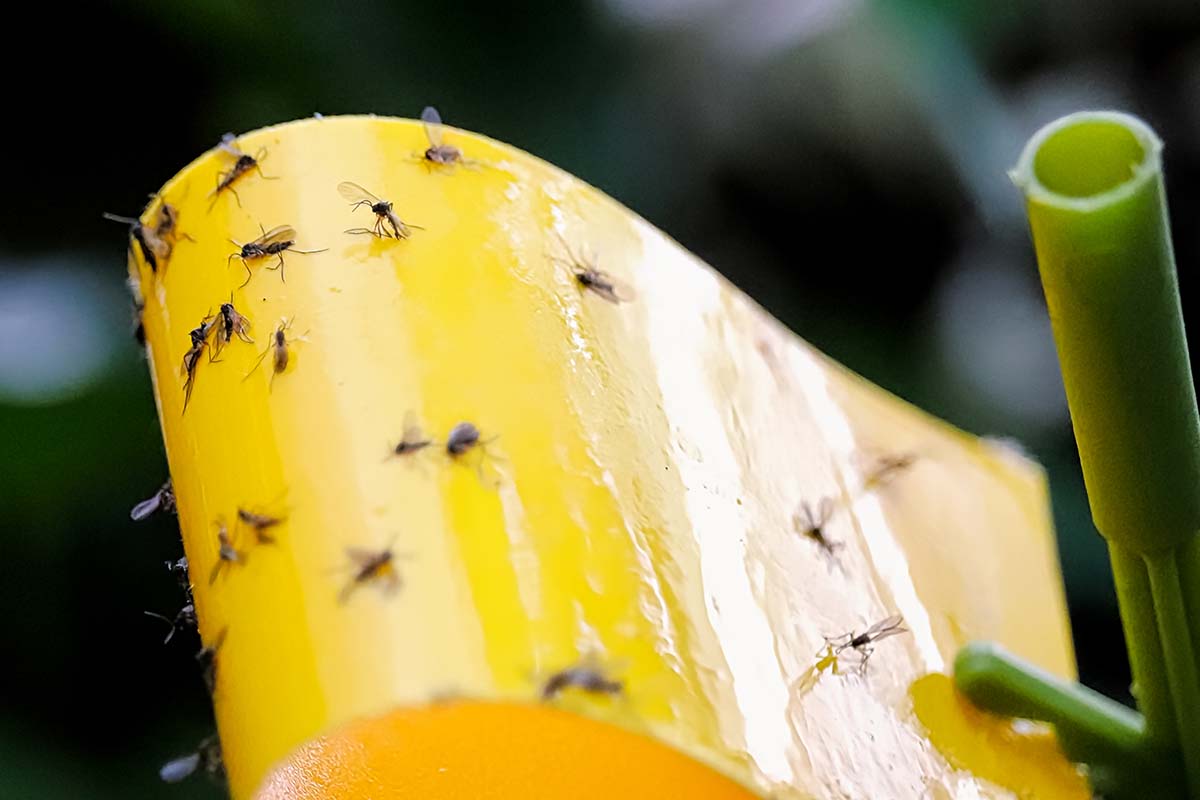
Method 5 – Yellow Sticky Traps + Apple Cider Vinegar Traps (Adult Control Combo) Place 2–3 yellow sticky cards per pot. For extra power, make DIY vinegar traps: small bowl + apple cider vinegar + drop of dish soap. Adults drown happily. 🪰
Method 6 – Repotting with Fresh Sterile Mix (Nuclear Option for Heavy Infestations) Remove old soil completely, rinse roots gently, and repot in a gnat-proof mix: 50% coco coir + 30% perlite + 20% horticultural sand. Sterilize new pots with boiling water.
:max_bytes(150000):strip_icc()/control-gnats-in-plants-4174817_V3-524db8540aaa403a99a313ba1deecff0.png)
Method 7 – Neem Oil & Cinnamon Top-Dressing (Preventive Power Duo) Mix neem oil (GiBoQ brand available on Ubuy BD for ~BDT 4400) with water + a few drops of dish soap. Spray soil and leaves. Sprinkle cinnamon powder on topsoil — it naturally repels adults and inhibits fungal growth larvae love.
Your 30-Day Fungus Gnat Elimination Calendar (Done-For-You Plan) 📅
Week 1 – Immediate Attack Day 1–3: Dry soil + sticky traps + BTi or peroxide drench. Day 4–7: Monitor with potato test.
Week 2–4 – Maintenance & Monitoring Continue bottom-watering, reapply BTi every 14 days, add neem/cinnamon. By day 30, adults should be gone and larvae starved.
Download my free printable checklist (link in comments or site resources) — perfect for busy plant parents!
Prevention Secrets That Actually Work (Never Let Them Return!) 🛡️
The “Goldilocks” Watering Rule Water only when top 2 inches are dry. Use a chopstick or moisture meter — game changer in humid Dhaka weather.
Best Potting Mixes for Bangladesh Climate Ditch heavy peat. My favorite recipe: coco coir + perlite + sand (available at local nurseries in Gulshan or online). It drains fast and stays airy.
Quarantine Protocol for New Plants Keep new arrivals isolated for 2 weeks with sticky traps. Inspect soil before bringing indoors.
Top 5 Houseplants That Naturally Repel Fungus Gnats
- Snake plant
- ZZ plant
- Succulents
- Lavender
- Marigolds (as companion)
Common Mistakes That Make Fungus Gnats Worse (And How to Fix Them)
- Watering on a schedule instead of checking soil.
- Using saucers that hold standing water.
- Reusing infested soil.
- Over-fertilizing with organic teas.
- Ignoring early signs. Fix: Follow the dry-out rule religiously!
Expert Tips from a 15-Year Houseplant Coach
My personal “no-fail” soil recipe: 40% coco coir + 40% perlite + 20% orchid bark + cinnamon sprinkle. Best tools in Dhaka: moisture meters at New Market, neem oil online, BTi via import sites. For 20+ plants: treat in batches and use a dedicated “treatment station” tray.
Frequently Asked Questions (FAQ)
Are fungus gnats harmful to humans or pets? No — they don’t bite or sting. They’re just annoying and can stress plants.
Can I use chemical sprays? I don’t recommend them. They kill beneficial insects and can harm your family. Stick to natural methods above.
How long until they’re completely gone? With consistent treatment, adults disappear in 7–14 days; full elimination in 21–30 days.
Do they bite? Never. They’re too tiny and focused on soil fungi.
Will they kill my succulents? Rarely, but heavy larvae can damage roots. Dry soil works wonders for succulents.
Best natural solution for orchids & carnivorous plants? BTi + neem — safe and effective. Avoid peroxide on sensitive roots.
Can I reuse the old soil after treatment? Only after baking it at 180°F for 30 minutes or solarizing in black bags for 4 weeks in Dhaka sun.
Conclusion & Final Call-to-Action
Fungal gnats in houseplant soil don’t have to ruin your indoor jungle anymore. With these natural, proven steps — dry soil, BTi, nematodes, peroxide, traps, repotting, and neem — you’ll have healthy, happy plants all year round, even in Bangladesh’s tricky climate. 🌱
Pin this guide, download the checklist, and start today. Drop a comment with your plant type and how bad the infestation is — I reply to every single one with personalized tweaks!
You’ve got this, plant parent. Your monstera (and sanity) will thank you. 💚











