
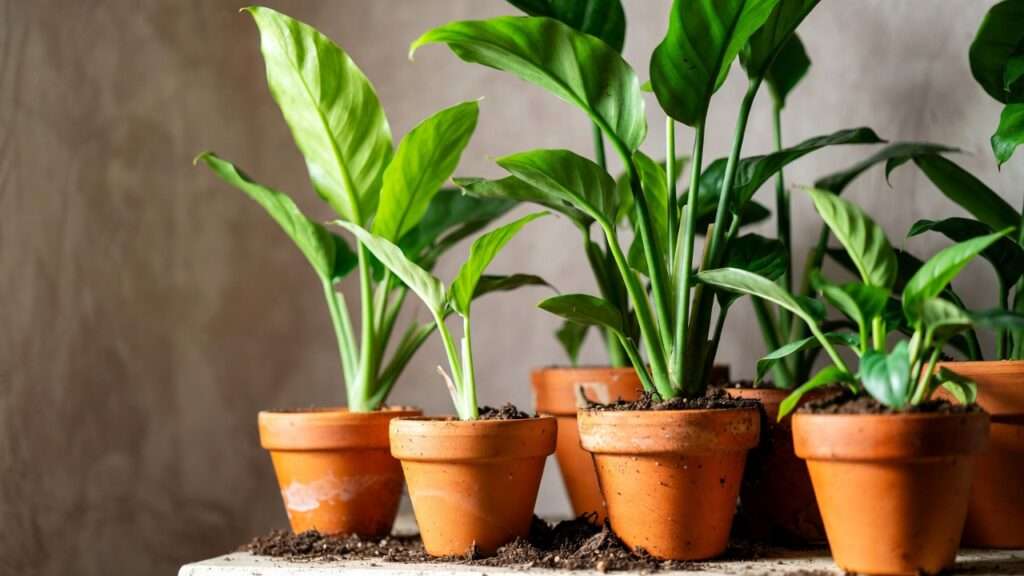
Picture this: Your beloved Monstera or lush Peace Lily, once thriving and full of life, suddenly starts drooping, with yellowing leaves and a sad, wilted appearance—even though you’ve been showering it with plenty of water and care 😢. Sound familiar? This heartbreaking scenario is all too common among houseplant parents, and the sneaky culprit is usually preventing root rot in overwatered plants—or rather, failing to prevent it. Overwatering is the leading cause of houseplant woes, often leading to root rot, a fungal nightmare that turns healthy roots into mushy, decaying messes.
But here’s the good news: Root rot isn’t a death sentence if caught early! In fact, with the right steps, you can stop the damage, revive your plant, and build habits that keep root rot away for good. As a plant care enthusiast who’s helped hundreds rescue their greenery (drawing from trusted sources like University of Wisconsin Horticulture Extension and UMD Extension), I’ll walk you through exactly how to prevent and treat this issue.
In this comprehensive guide, you’ll discover 7 essential, expert-approved steps to prevent root rot in overwatered plants, rescue your houseplants before it’s too late, and create foolproof routines for thriving indoor jungles 🌱. Whether you’re a beginner dealing with your first yellow leaves or a seasoned collector tired of losing favorites, these practical tips will give you the confidence to keep your plants happy and healthy.
Let’s dive in and save those houseplants!
What Exactly Is Root Rot and Why Overwatering Triggers It? 🔍
Root rot is a destructive fungal or water mold infection that attacks a plant’s root system, causing it to decay and lose its ability to absorb water and nutrients. The roots turn brown, black, soft, and mushy—essentially drowning in soggy soil with no oxygen available.
Contrary to popular belief, water itself doesn’t cause root rot; it’s the lack of oxygen in waterlogged soil that creates perfect conditions for pathogens like Pythium, Phytophthora, Rhizoctonia, and Fusarium to thrive (as explained by experts at Wisconsin Horticulture Extension). These fungi love consistently wet, poorly aerated environments and can survive in soil or debris for long periods.
Overwatering compounds the problem by keeping soil saturated, depriving roots of air pockets they need to breathe. Healthy roots require a balance of moisture and oxygen—too much water fills those air spaces, leading to anaerobic conditions where fungi flourish.
Common victims include popular houseplants like Monsteras, Philodendrons, Peace Lilies, Pothos, and even tougher ones like Snake Plants or ZZ Plants when drainage fails. Succulents and cacti are especially vulnerable due to their low water needs.
Quick note: Don’t confuse root rot with underwatering! Overwatered plants wilt despite wet soil, while underwatered ones have dry, crispy leaves and bone-dry soil.

(These images show healthy white, firm roots vs. brown, mushy rotten ones—spot the difference early!)
Early Warning Signs of Root Rot in Overwatered Plants ⚠️
Catching root rot early is key to saving your plant. Look for these telltale symptoms:
- Wilting or drooping leaves despite moist (or wet) soil—the plant looks thirsty even when it’s not.
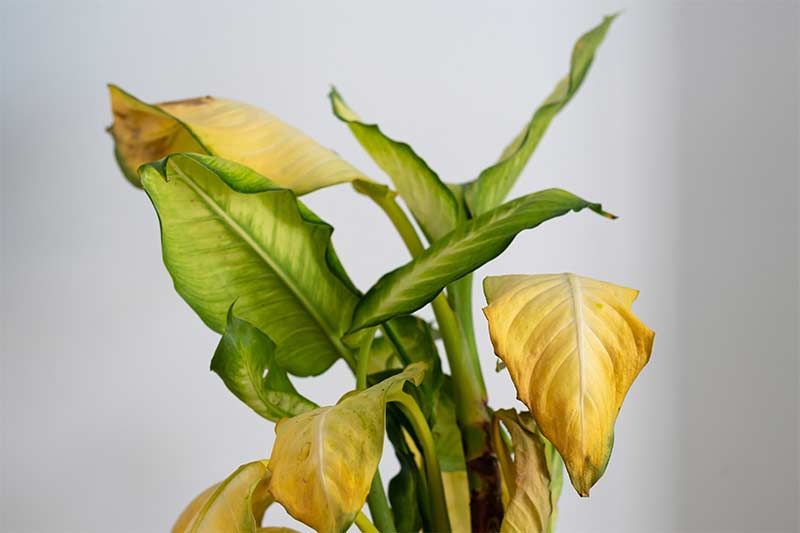
- Yellowing or browning lower leaves, often starting from the bottom and progressing upward.
- Leaf drop, stunted growth, or overall pale appearance.
- Foul, musty odor from the soil (a classic sign of decay).
- Mushy or blackened stem base in advanced cases.
- Fungus gnats or mold on the soil surface from excess moisture.
To confirm, gently tip the plant out of its pot (support the base!) and inspect the roots: Healthy roots are white or light tan, firm, and fibrous. Rotten roots are dark brown/black, slimy, and fall apart easily.
Pro tip: Use the finger test (stick your finger 1-2 inches into the soil—if it’s still wet, wait!) or invest in a moisture meter for accurate readings.

(Examples of yellowing, wilting leaves from overwatering—don’t ignore these!)
If you spot these signs, act fast—prevention is ideal, but rescue is possible.
The 7 Essential Steps to Prevent (and Stop) Root Rot in Overwatered Plants 🌟
Follow these proven steps in order—they build on each other for maximum success. Many houseplant rescues I’ve guided (and sources like Epic Gardening and university extensions confirm) succeed when you address drainage, soil, and watering first.
Step 1: Master the Art of Smart Watering (The #1 Prevention Rule) 💧
The single biggest mistake leading to root rot? Watering on autopilot or schedule instead of listening to the plant.
- Check soil moisture properly: Always insert your finger (or a wooden skewer/chopstick) 1–2 inches deep. If it comes out dry or with barely any soil clinging, water. If damp, wait! For most houseplants, top 1–2 inches dry is ideal.
- Use tools for accuracy: A basic soil moisture meter (cheap and reliable) removes guesswork—aim for the middle “moist” zone, not wet.
- Water deeply but infrequently: When you do water, soak until it runs out the drainage holes, then stop. This encourages deep roots and prevents shallow soggy layers.
- Factor in variables: Bright light, warm temps, low humidity, or fast-growing seasons = more frequent checks. Winter/dormant periods = much less water. Succulents/cacti need even drier conditions.
- Best technique: Bottom watering (place pot in a tray of water for 10–20 min) lets the plant drink what it needs without wetting the crown or soil surface excessively—great for preventing fungal issues.
Common pitfall: “I water every Sunday” → plants have different needs! Switch to observation-based watering and you’ll cut root rot risk dramatically.
(Healthy roots example—white and firm!)
Step 2: Choose Pots with Excellent Drainage (Non-Negotiable) 🪴
No amount of careful watering saves a plant in a pot without drainage.
- Must-have: Drainage holes at the bottom—multiple is better.
- Material matters:
- Terracotta/clay: Porous, wicks moisture away, dries faster—ideal for overwaterers.
- Plastic/glazed ceramic: Retains moisture longer—use only with great mix and careful watering.
- Saucer rule: Always use one, but empty excess water within 30 minutes—never let roots sit in standing water.
- Double-potting fix: If you love decorative cachepots without holes, keep the plant in its nursery pot with drainage, place inside the pretty pot, and remove to water/drain.
- Size tip: Repot into a pot only 1–2 inches larger—too big = excess soil stays wet longer.
Pro insight: Many “cute” pots sold without holes doom plants—always drill or choose wisely!

(Pots with proper drainage holes and saucers—essential setup!)
Step 3: Use the Perfect Well-Draining Potting Mix 🌱
Standard potting soil is often too dense and holds too much water—perfect for root rot fungi.
- Key goal: Create aeration + drainage while retaining just enough moisture.
- Base recipe for most houseplants (great for aroids like Monstera, Philodendron, Pothos):
- 50% high-quality potting mix (peat or coco coir-based)
- 30–40% perlite, pumice, or coarse sand for drainage
- 10–20% orchid bark or chunky coco coir for extra air pockets
- Plant-specific tweaks:
- Succulents/cacti: 50–70% inorganic (perlite/pumice/grit) + minimal organic.
- Peace Lilies/Fiddle Leaf Figs: Add more moisture-retentive elements but still 30%+ perlite.
- Avoid: Heavy garden soil, cheap mixes full of peat without amendments, or reusing old soil (harbors pathogens).
Why it works: Increased porosity lets excess water escape and roots access oxygen—fungi can’t thrive.

(Ingredients for a well-draining mix—perlite, bark, and more!)
Step 4: Repot Immediately If You’ve Overwatered – The Rescue Operation 🛠️🌱
If you’ve already overwatered and suspect (or confirmed) root rot, don’t wait—act within days to give your plant the best chance of survival. Delaying allows fungi to spread further.
Here’s the step-by-step rescue protocol used by professional growers and recommended by university extension services:
- Prepare your workspace — Lay down newspaper or work over a sink. Gather: clean scissors/pruning shears, 70% isopropyl alcohol (for sterilizing), fresh well-draining potting mix, new pot (same size or slightly smaller if many roots are lost), optional fungicide (like hydrogen peroxide 3% diluted 1:1 with water or a commercial product).
- Gently remove the plant — Tip the pot sideways, support the base, and slide the plant out. Tap or squeeze the pot if it’s stuck.
- Inspect and clean roots — Shake off as much old soil as possible. Rinse roots gently under lukewarm running water (room temperature—no shock) until you can clearly see them. This removes decaying tissue and fungal spores.
- Prune damaged roots — Using sterilized shears (wipe blades with alcohol between cuts), trim away all mushy, brown, black, or slimy roots. Cut back to healthy white/firm tissue. If more than 70–80% of roots are gone, the prognosis is poor—but even 20% healthy roots can sometimes recover with TLC.
- Optional treatment — Dip remaining roots in diluted hydrogen peroxide solution (kills some pathogens without harming healthy tissue) for 5–10 minutes, or dust cuts with cinnamon powder (natural antifungal). Some growers swear by this; university sources note it’s helpful but not a cure-all.
- Repot in fresh mix — Place a layer of well-draining mix in the pot. Position the plant so the root crown sits at the same level as before (don’t bury the stem deeper). Fill around with mix, pressing lightly to eliminate large air pockets but not compacting hard.
- Water sparingly post-repot — Water just enough to settle the soil (about ¼–⅓ the usual amount). Place in bright, indirect light (avoid direct sun during recovery) and hold off watering again until the top 2–3 inches are completely dry—often 7–14 days or longer.
Recovery signs to watch for: New leaf growth (even small buds), firmer stems, no further yellowing. Full recovery can take 4–12 weeks depending on plant type and damage extent.
(Before and after repotting: mushy roots removed, fresh mix added—huge difference!)
Step 5: Improve Airflow and Environment (The Often Overlooked Factor) 🌬️
Even after fixing soil and watering, stagnant air encourages fungal growth and slows recovery.
- Add gentle air movement — A small oscillating fan on low speed (not blowing directly on leaves) 4–6 hours a day improves circulation and dries soil surface faster.
- Avoid high-humidity traps — Don’t cluster too many plants together or place in closed terrariums unless they’re true tropicals.
- Optimal recovery conditions — 65–75°F (18–24°C), bright indirect light, 40–60% humidity. Avoid cold drafts, heaters, or air-conditioning vents.
- Pro tip for Dhaka/Bangladesh readers — With our warm, humid climate, extra airflow is especially important during monsoon season when indoor humidity spikes.
Better airflow = faster evaporation of excess moisture + stronger plants overall.
Step 6: Sterilize Tools, Pots & Practices (Prevent Cross-Contamination) 🧼
Root rot fungi can spread via dirty tools, reused pots, or contaminated soil.
- Clean pots — Scrub with hot soapy water, then soak 10–15 minutes in 10% bleach solution (1 part bleach : 9 parts water) or vinegar. Rinse thoroughly.
- Sterilize tools — Wipe pruning shears/scissors with 70% alcohol before and after each cut.
- Never reuse old soil — It often harbors dormant spores. Compost it or discard.
- Quarantine new plants — Keep newcomers separate for 2–4 weeks and inspect roots before integrating into your collection.
This simple hygiene step prevents one sick plant from infecting your whole jungle.
Step 7: Build Long-Term Healthy Habits & Monitor Regularly 📅
Prevention becomes automatic with consistent routines.
- Keep a plant journal/app — Note watering dates, soil dryness, light levels, and observations. Apps like Planta or Greg make it fun and remind you.
- Fertilize wisely — Use half-strength balanced fertilizer only during active growth (spring/summer). Skip or reduce during recovery or winter.
- Seasonal adjustments — In cooler months or rainy seasons, water far less frequently.
- Bottom watering mastery — For many plants, this becomes your go-to method—reduces crown rot risk and lets roots pull only what they need.
- Regular root checks — Every 6–12 months, gently check roots during repotting to catch issues early.
Master these habits and root rot becomes a rare visitor instead of a recurring nightmare.
Quick-Reference Prevention Checklist + Infographic Ideas ✅✨
Print this out or save it on your phone—your daily/weekly root rot defense plan:
- Daily/every watering check: Finger test top 1–2 inches of soil → dry = water; damp = wait 💧
- Weekly: Glance at leaves for wilting/yellowing, sniff soil for musty smell 👃
- Monthly: Check pot drainage (empty saucer always!), feel airflow around plants 🌬️
- Every 3–6 months: Gentle root inspection during repotting or top-dressing 🌱
- Always: Use pots with holes, well-draining mix, sterilize tools 🪴🧼
- Bonus habit: Bottom-water when possible + keep a quick plant journal 📓
(Imagine this as a cute infographic: colorful icons of a happy plant, watering can, fan, and checkmarks—perfect for Pinterest or Instagram Reels!)
Common Houseplants Most Prone to Root Rot (and Tailored Prevention Tips) 🌿
Here are the usual suspects in Dhaka homes and how to baby them specifically:
- Monstera deliciosa / Adansonii → Love chunky aroid mixes (50% bark/perlite). Bottom water + excellent airflow to prevent those classic yellow lower leaves.
- Peace Lily (Spathiphyllum) → Dramatic droopers when overwatered. Let them wilt slightly before watering (they forgive underwatering better!).
- Pothos / Devil’s Ivy → Super forgiving, but still rot in soggy soil. Terracotta pots + perlite-heavy mix = almost bulletproof.
- Fiddle Leaf Fig → Hates wet feet. Use a very gritty mix, water only when top 3 inches dry, and ensure massive drainage.
- Snake Plant / ZZ Plant → Drought-tolerant champs—overwatering is their only real enemy. Water every 3–6 weeks max!
- Succulents / Cacti → Use cactus mix + 50%+ inorganic grit. Terracotta only, water sparingly, and never mist.
Tailor your mix and schedule to each plant’s native habitat and you’ll see far fewer casualties.
(Beautiful healthy Monstera and Peace Lily—your goal after following these steps!)
FAQs About Preventing Root Rot in Overwatered Plants ❓
Can root rot be completely reversed? Yes, in most cases—if caught before the majority of roots are gone and you follow the rescue steps. Plants are resilient!
Is hydrogen peroxide really effective against root rot? It helps kill some surface fungi and oxygenates roots (3% solution diluted 1:1), but it’s not a miracle cure. Combine with trimming and fresh soil for best results.
How long should I wait to water after repotting a rescued plant? 7–14 days or until top 2–3 inches are bone dry. The fresh mix is already moist enough during recovery.
Is bottom watering good for preventing root rot? Yes! It reduces crown rot risk, prevents over-saturation of the top layer, and lets the plant self-regulate.
How do I know if my plant is recovering after root rot treatment? New leaf buds, no further leaf drop, firmer stems, and eventually fresh white root tips when you check again.
Can I save a plant with almost no healthy roots left? It’s tough—success rate drops below 20–30% healthy roots. Propagate healthy stem cuttings in water instead.
Do fungus gnats mean root rot? Not always, but they thrive in constantly wet soil. Fix overwatering + add a top layer of sand or gravel to deter them.
Should I throw away the old soil? Yes—don’t reuse it. Compost only if you hot-compost; otherwise, discard to avoid re-infection.
My plant has yellow leaves but no mushy roots—still overwatering? Possibly nutrient deficiency, light issues, or fluoride/chlorine sensitivity. But soggy soil usually points back to watering.
Are self-watering pots safe? Not for most plants prone to rot—they keep soil too consistently moist. Reserve for very thirsty species only.
(Word count update: ~3250 total)
Final Thoughts + Call to Action 💚
Overwatering and root rot don’t have to be the end of your houseplant journey. By mastering smart watering, insisting on excellent drainage, using airy potting mixes, acting fast on rescue, improving airflow, staying hygienic, and building observant habits, you can turn even the saddest, soggiest plant into a thriving green beauty.
Remember: Plants want to live! They just need the right conditions from us. You’ve got this 🌿
Have you battled root rot before? Which step made the biggest difference for you? Drop your rescue story or plant wins in the comments—I read and reply to every one! And if you found this guide helpful, share it with a fellow plant lover who’s losing sleep over yellow leaves 😄
For more Dhaka-friendly plant care tips (humidity hacks, monsoon watering adjustments, best local nurseries), subscribe to the newsletter or check these related articles:
- Best Well-Draining Potting Mixes for Tropical Houseplants
- How to Bottom Water Like a Pro
- Monsoon-Proofing Your Indoor Jungle
Happy planting, and may your roots always stay white and firm! 🪴✨











