
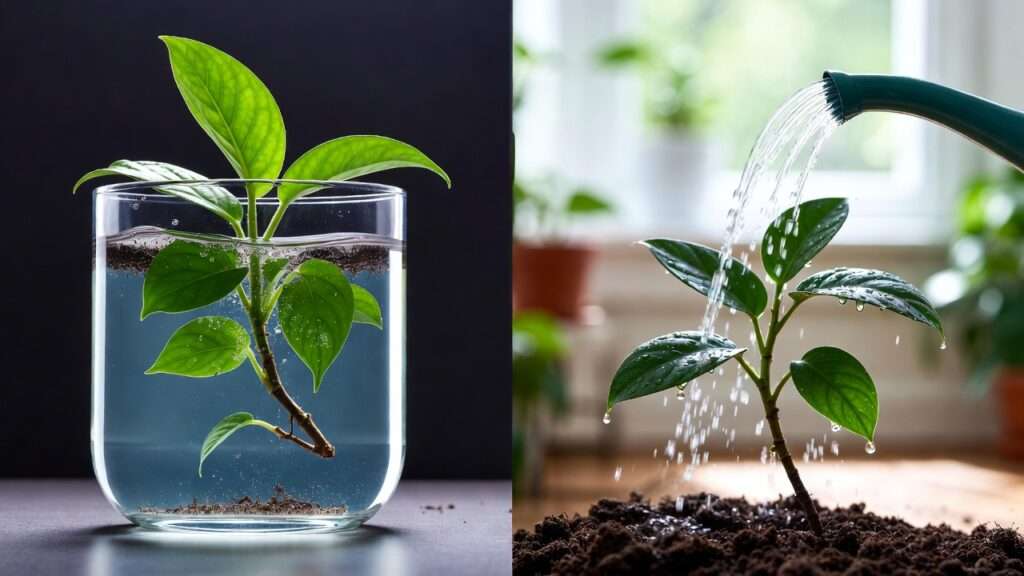
You’ve lovingly watered your favorite Monstera or Peace Lily from the top… only to return days later to yellowing leaves, mushy roots, or a cloud of tiny flying gnats swarming around the pot. 😩 If this sounds all too familiar, you’re not alone — overwatering (and its sneaky side effects like root rot and fungus gnats) remains the number-one killer of indoor plants, even among experienced plant parents.
The good news? The solution often lies in how you deliver that water. Enter the great debate: bottom watering vs. top watering. These two simple techniques can dramatically change your houseplant success rate. Top watering mimics natural rainfall, flushing salts and aerating soil ☔, while bottom watering uses capillary action to draw moisture upward, encouraging deeper roots and keeping foliage dry 🌱.
In this ultimate guide, we’ll break down the pros, cons, science, and real-world recommendations so you can decide which method (or smart hybrid approach) is best for your specific plants, lifestyle, and common problems like uneven moisture, salt buildup, or pest issues. By the end, you’ll have the tools to keep your indoor jungle thriving — no more guesswork!
What Is Top Watering? (And How to Do It Properly) 🌧️
Top watering is the classic, go-to method most of us learned first: pouring water directly onto the soil surface until it drains out the bottom.
Understanding Top Watering – The Classic Method This gravity-driven technique saturates the soil from top to bottom, ensuring even distribution when done right. It’s quick, intuitive, and excellent for flushing out excess mineral salts that accumulate from tap water or fertilizers — a common issue in long-term houseplant care.
- Use room-temperature water (cold water can shock roots ❄️).
- Slowly pour in a circular motion around the plant base to avoid compacting soil.
- Continue until water runs freely from drainage holes — this confirms full saturation.
- Empty the saucer after 15–30 minutes to prevent roots sitting in water.
Tools tip: Invest in a long-spout watering can for precision — it helps target the soil without splashing leaves.
Best Practices for Top Watering Success
- Always water until runoff to leach salts monthly.
- Avoid wetting foliage on plants prone to rot (like African violets).
- Check soil moisture first — stick your finger 1–2 inches down; water only if dry.
Plants That Thrive with Top Watering Most forgiving houseplants love this method: pothos, philodendrons, snake plants, succulents, cacti, and spider plants. They handle occasional top moisture well and benefit from the natural salt flush.
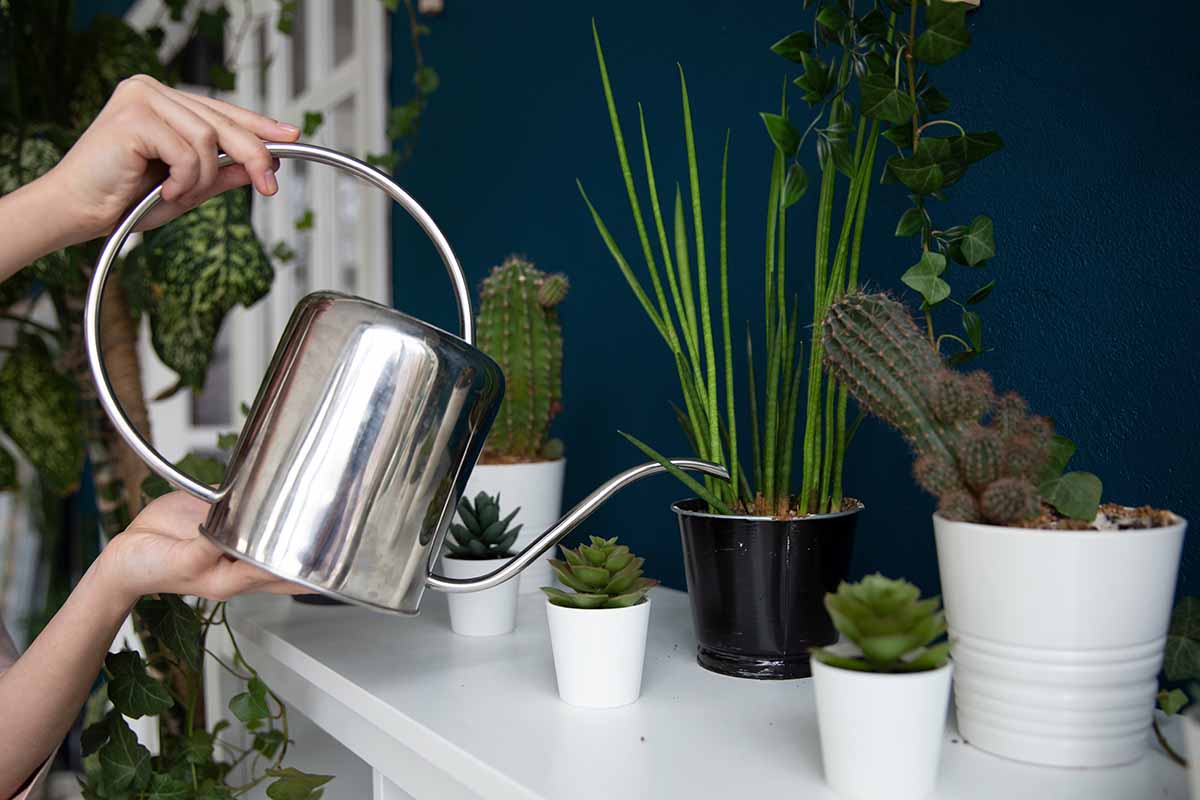
(These show classic top watering in action with stylish watering cans — perfect for your routine! 🪴)
What Is Bottom Watering? (The Root-Encouraging Technique) 🪴
Bottom watering flips the script: you place the pot in a tray or basin of water, letting the soil wick moisture upward via capillary action.
Understanding Bottom Watering – Nature’s Capillary Action This method lets plants self-regulate — they absorb only what they need, reducing overwatering risks. It’s especially helpful for hydrophobic (water-repelling) soil or when the top layer dries out too fast.
Step-by-Step Tutorial
- Fill a sink, tray, or bowl with room-temp water to about 1/3–1/2 the pot’s height.
- Set the pot in (ensure drainage holes contact water).
- Soak 15–60 minutes until the top soil looks damp (check with your finger ⏱️).
- Remove and let excess drain fully — never leave soaking overnight.
Best Practices & Common Mistakes to Avoid
- Don’t exceed 60 minutes to prevent anaerobic conditions leading to rot.
- Works best in well-draining, chunky mixes (avoid dense peat-heavy soils).
- For large pots, use a deeper basin or multiple sessions.
Plants That Love Bottom Watering Fussy moisture-lovers and rot-prone types excel here: calatheas, prayer plants, ferns, African violets, peperomias, and many aroids. It keeps crowns and leaves dry, preventing fungal spots.

(Visuals of bottom watering setups — see how easy it is with a simple bowl or saucer! 💦)
Bottom Watering vs. Top Watering: Head-to-Head Comparison ⚖️
Let’s get practical with a clear breakdown.
Pros and Cons – A Clear Side-by-Side Breakdown
| Aspect | Top Watering | Bottom Watering |
|---|---|---|
| Speed | Fast & simple 🚀 | Slower, more hands-on ⏳ |
| Risk of Overwatering | Higher if not careful | Much lower – plant takes what it needs 🌱 |
| Root Health & Growth | Even if done right | Encourages deeper, stronger roots 📈 |
| Fungus Gnats & Mold | Can attract if top stays wet | Greatly reduces (dry top layer) 🦟🚫 |
| Salt/Mineral Buildup | Flushes out naturally | Can accumulate – needs occasional flush |
| Leaf & Crown Issues | Risk of wet foliage rot | Keeps leaves dry & healthy 🍃 |
| Best For | Most plants, quick routine | Fussy, rot-prone, gnat-magnet plants |
Scientific Insight – Capillary Action vs. Gravity Flow Roots naturally grow toward moisture (hydrotropism). Bottom watering forces roots downward for better anchorage and nutrient uptake, leading to healthier systems. Top watering provides immediate saturation but can compact soil over time without aeration.
Which Method Wins? It Depends – Real-World Recommendations 🏆
No single “best” method exists — it depends on your plants and habits.
When to Choose Top Watering (And When to Skip It) Use it for succulents, cacti, or fast-draining setups needing salt flushes. Skip if you battle gnats or overwater easily.
When Bottom Watering Is Your Plant-Saving Superpower Ideal during vacations (less frequent checks), for humidity-loving plants, or gnat infestations — the dry top layer starves larvae.
The Hybrid Approach – The Expert’s Favorite Strategy Many pros (including my years observing hundreds of indoor collections) alternate: top water 70–80% of the time for flushing, bottom water for sensitive plants or dry spells. Flush salts monthly with a heavy top pour.
Common Problems Solved by the Right Watering Method 🔧
Many houseplant struggles trace back to watering technique. Switching or refining your method can fix them fast.
Fixing Overwatering & Root Rot Once and For All Overwatering symptoms include yellowing lower leaves, wilting despite wet soil, mushy stems, and foul odors. Root rot shows as brown-black, slimy roots when you gently unpot the plant.
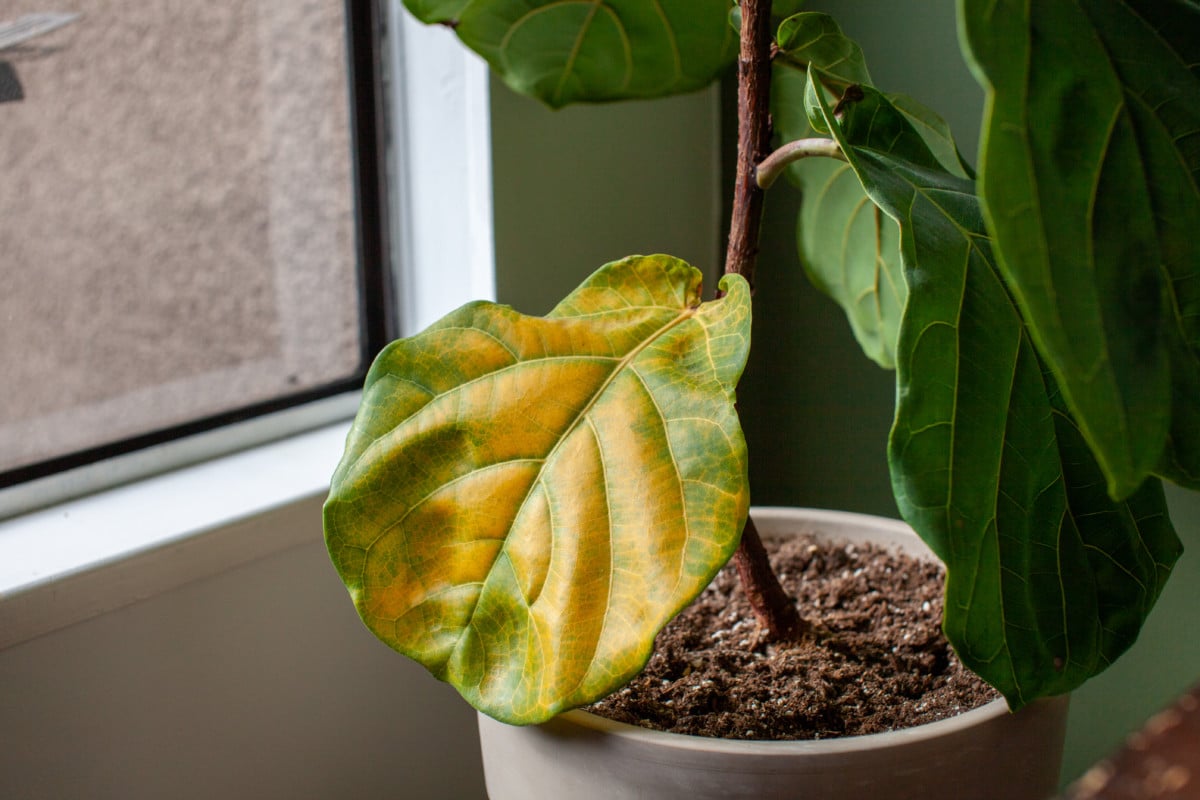
(These images show classic signs: yellowing leaves and dark, decayed roots — catch it early!)
Bottom watering shines here because the plant only takes what it needs, preventing soggy soil. If rot is already present:
- Unpot, trim mushy roots with sterilized scissors.
- Repot in fresh, well-draining mix.
- Water sparingly (bottom method) until recovery. Prevention tip: Always use pots with drainage holes and never let saucers hold water longer than 30 minutes.
Banishing Fungus Gnats for Good These tiny black flies thrive in constantly moist top soil where larvae feed on organic matter.

(Fungus gnats on soil and sticky traps — a common sight in overwatered pots 🦟)
Bottom watering keeps the top inch dry, starving larvae and breaking the cycle. Combine with:
- Yellow sticky traps to catch adults.
- A thin layer of sand or gravel on soil surface.
- Reducing organic fertilizers temporarily. Most infestations clear in 4–6 weeks with consistent dry-top conditions.
Dealing with Uneven Moisture & Dry Spots Top watering can miss dry pockets in chunky mixes, leading to half-dry, half-soggy soil. Bottom watering excels at uniform saturation via capillary action — ideal for aroids, calatheas, and ferns in bark-heavy substrates.
Preventing Leaf Yellowing, Brown Tips & Crown Rot Yellow tips often signal fluoride/chlorine sensitivity or inconsistent moisture; brown tips indicate low humidity or salt buildup. Crown rot hits plants like African violets when water sits in foliage. Bottom watering keeps leaves dry and reduces these issues. For salt-sensitive plants, occasional top watering flushes minerals.
Step-by-Step Guides & Pro Tips from Years of Experience 📝
How to Bottom Water Like a Pro (With Photos in Mind)
- Gather room-temp water (filtered or dechlorinated if possible).
- Place pot in a basin — water level should reach 1/3–1/2 pot height.
- Time it: 15 min for small pots, up to 60 min for larger ones.
- Check top soil dampness; remove and drain fully.
Frequency guide:
- Succulents/cacti: every 2–4 weeks
- Aroids/calatheas: weekly
- Ferns/prayer plants: every 5–7 days
Pro tip: Use self-watering pots or wicks for extended absences — they mimic bottom watering.

(Wick systems and self-watering globes — great hybrid helpers for travel! ✈️)
Top Watering Mistakes Even Experienced Growers Make
- Watering on a strict schedule instead of checking soil.
- Pouring too fast → soil compaction and runoff channeling.
- Using cold water → root shock.
- Forgetting to empty saucers → standing water.
Water Quality Tips (Tap vs. Rain vs. Filtered) 💦 Tap water works for most plants, but let it sit 24 hours to off-gas chlorine. Rainwater is ideal (soft, low minerals). Filtered/reverse osmosis suits sensitive species like carnivorous plants or calatheas prone to tip burn.
How Often to Water – The Finger Test & Moisture Meter Guide Finger test: Insert finger 1–2 inches; water if dry. Moisture meters provide objective readings — aim for “moist” zone for most houseplants.
:max_bytes(150000):strip_icc()/spr-moistenland-store-soil-moisture-meter-after-alyssa-biondo-04c-cac3e99a1aac43f5b8e19ee817497c75.jpeg)
(Moisture meters in action — a game-changer for precision care! 📏)
FAQs: Bottom Watering vs. Top Watering ❓
Is bottom watering better for all houseplants? No — it’s superior for rot-prone, gnat-attracting, or humidity-loving plants, but top watering suits succulents and those needing salt flushes.
Can bottom watering cause root rot? Rarely, if you over-soak (>1 hour) or use poor-draining soil. Follow timing guidelines and ensure good drainage.
How do I flush salts if I only bottom water? Occasionally top water heavily until generous runoff appears — do this monthly or when you notice white crust on soil/pot rim.
Does bottom watering work for large pots? Yes, but use a deep basin or bathtub. Multiple shorter soaks help even saturation.
Which is better for preventing fungus gnats? Bottom watering wins — the consistently dry top layer disrupts the life cycle.
Can I switch methods mid-way? Absolutely! Plants adapt quickly. Monitor for 2–4 weeks after switching and adjust based on response.
Conclusion: Choose What Works for Your Plants & Lifestyle 🌟
There’s no universal winner in the bottom watering vs. top watering debate — the “best” method depends on your plant collection, schedule, and pain points. Many successful plant parents use a hybrid strategy: top watering most of the time for convenience and salt management, with bottom watering as a rescue tool for sensitive plants, gnat control, or vacation-proofing.
Experiment confidently: Pick one method (or combo), track results for 4–6 weeks, and observe leaf color, root growth, and pest levels. Master this foundational skill, and your indoor jungle will reward you with lush growth and far fewer headaches.
Have you tried switching methods? Share your wins, fails, or favorite plants in the comments below — I’d love to hear your experiences! Subscribe for more expert plant care guides, troubleshooting tips, and seasonal advice. Happy growing! 🪴✨











