
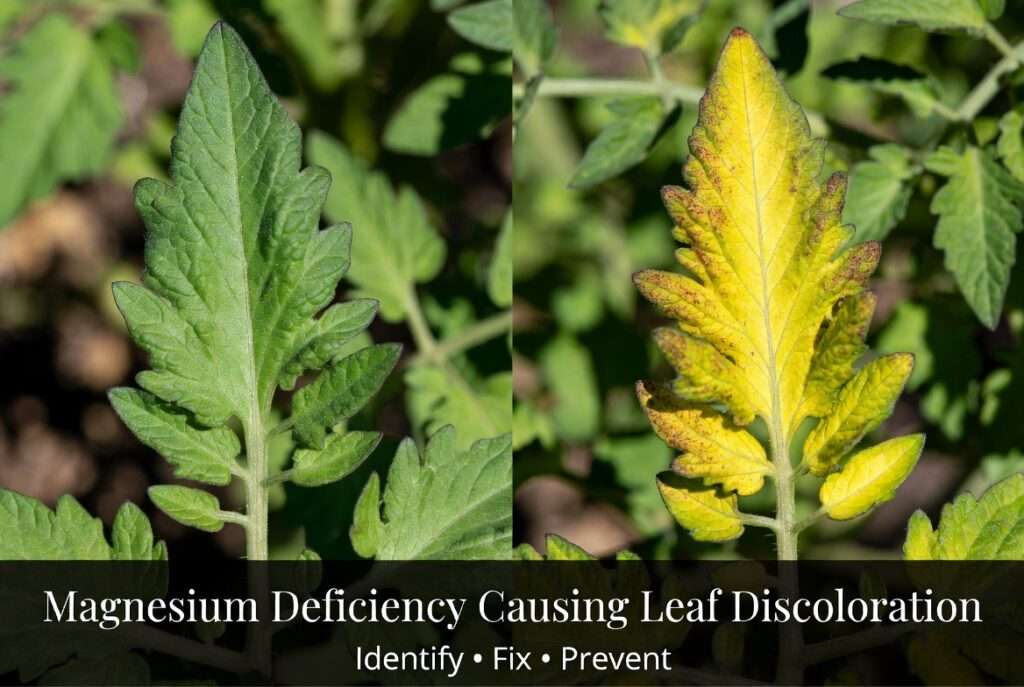
Imagine stepping into your garden on a sunny morning, excited to check on your thriving tomato plants or that beloved citrus tree you’ve nurtured for years—only to find the older leaves turning a sickly yellow between the veins, while the veins stay stubbornly green. The plant looks patchy and stressed, and you’re left wondering: Is it dying? Did I overwater? Or is it something else? 😟 This frustrating sight is all too common, and in many cases, it’s magnesium deficiency causing leaf discoloration—a sneaky issue that quietly robs your plants of their vibrant green color and robust health.
Magnesium deficiency causing leaf discoloration strikes vegetables, fruit trees, ornamentals, and even houseplants when this vital secondary macronutrient runs low. As a horticulturist with years of experience helping gardeners troubleshoot plant problems, I’ve seen how early intervention can turn things around dramatically. In this comprehensive guide, you’ll learn exactly how to spot magnesium deficiency, understand its root causes, apply safe and effective fixes (including proven Epsom salt remedies), and prevent it from returning. By the end, you’ll have the knowledge to keep your plants lush, productive, and beautiful all season long. ✨
Magnesium (Mg) sits at the heart of chlorophyll—the green pigment that powers photosynthesis. Without enough of it, plants can’t efficiently capture sunlight, produce energy, or transport carbohydrates. This leads to the classic interveinal chlorosis (yellowing between veins) that starts on older leaves because magnesium is mobile within the plant—it relocates from older tissues to support new growth.
If left unchecked, symptoms worsen: leaves develop rusty brown spots, curl, necrotize (turn brown and die), and drop prematurely. Growth slows, yields drop, and fruit or flowers may be smaller and less flavorful. But the good news? Magnesium deficiency is highly fixable once identified correctly—and preventable with smart practices. Let’s dive in and save those leaves! 🌱
What Is Magnesium and Why Do Plants Need It? 🔬
Magnesium is a secondary macronutrient, meaning plants require it in moderate amounts (less than nitrogen or potassium, but more than micronutrients like iron). It serves as the central atom in the chlorophyll molecule, giving leaves their green color and enabling them to convert sunlight, water, and CO₂ into sugars and oxygen through photosynthesis.
Beyond chlorophyll, magnesium activates dozens of enzymes involved in energy transfer (ATP production), protein synthesis, carbohydrate metabolism, and stress resistance. It also helps stabilize cell structures like ribosomes and membranes. When magnesium levels drop, photosynthesis efficiency plummets, leading directly to the leaf discoloration you’re seeing.
In short: No magnesium = weak chlorophyll = pale, discolored leaves and struggling plants. Understanding this role helps explain why symptoms appear where they do and why quick correction restores that healthy green glow.
Symptoms of Magnesium Deficiency Causing Leaf Discoloration 🌿
Early Warning Signs You Should Never Ignore
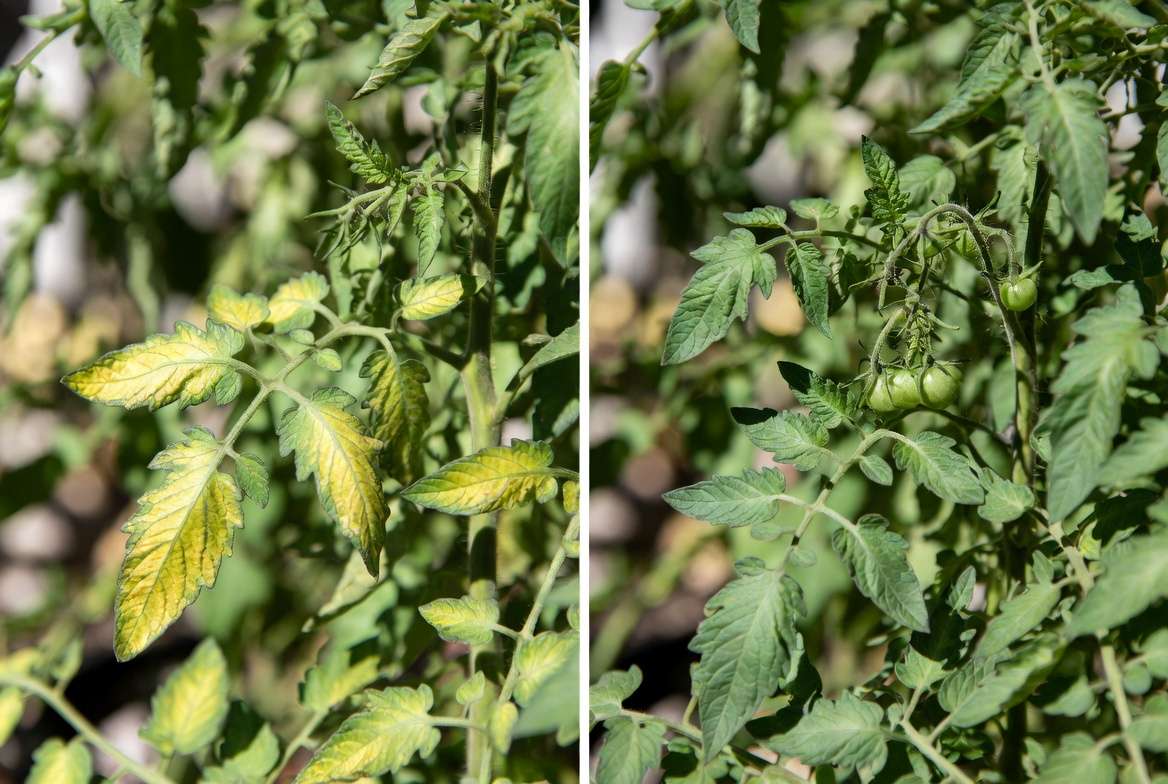
The hallmark of magnesium deficiency causing leaf discoloration is interveinal chlorosis on older leaves first. The tissue between the veins turns bright yellow or pale while the veins themselves remain green, creating a striking “marbled” or “Christmas tree” pattern. This happens because magnesium is phloem-mobile: the plant pulls it from mature leaves to fuel new shoots.
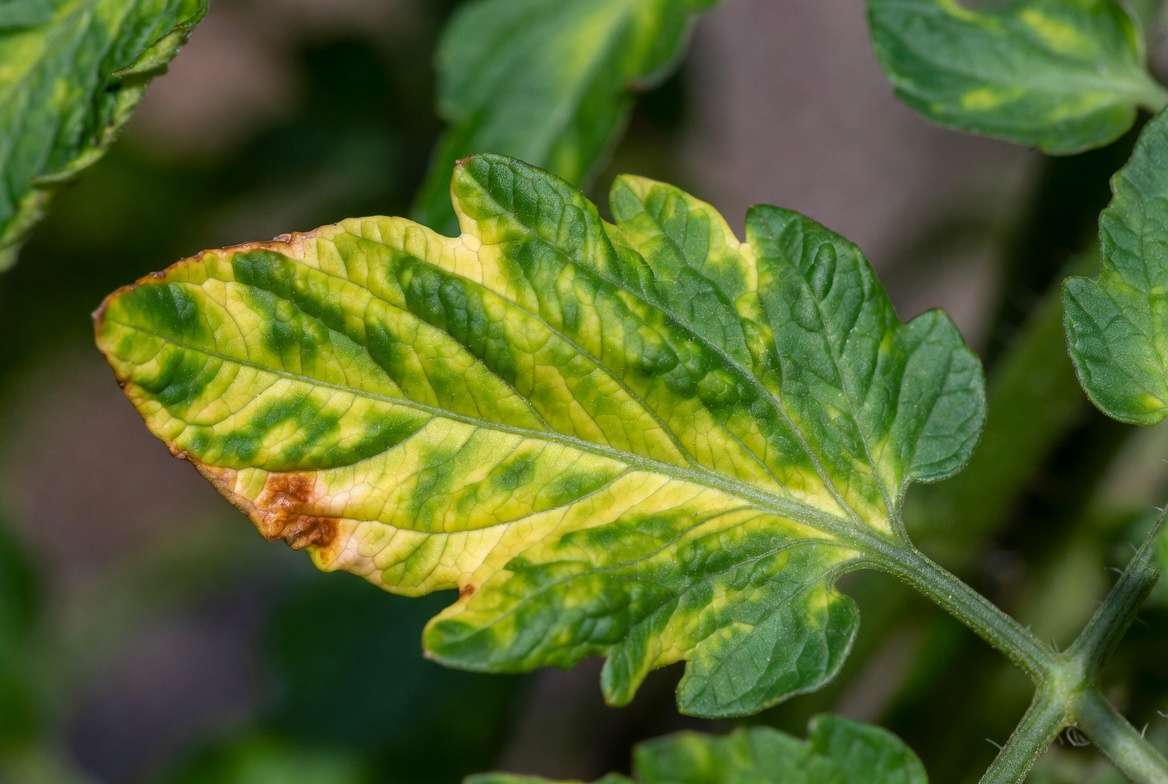
As the deficiency progresses:
- Yellow areas may develop rusty-brown necrotic spots.
- Leaves curl upward at the edges.
- Affected leaves become brittle and drop early.
- Overall growth slows, with smaller leaves, fewer flowers, and reduced fruit set or quality.
- In severe cases, even younger leaves can show symptoms if the shortage is extreme.
Don’t remove discolored leaves too soon! They still contribute to the plant until fully brown—removing them can stress the plant further.
How Magnesium Deficiency Looks on Different Plants
Different species show slightly varied patterns, but the “older leaves first, interveinal yellowing” rule usually holds:
- Vegetables (tomatoes, peppers, cucumbers, eggplants 🍅): Classic yellowing between veins on lower leaves, often appearing mid-season when fruit load is heavy. Tomatoes are especially prone in high tunnels or containers.
- Fruit Trees (citrus, apples, avocados, plums 🍊🌳): Older leaves yellow with possible reddish tints; citrus may show tip and margin intensification. Premature leaf drop can reduce next season’s bloom.
- Ornamentals and Houseplants (roses, rhododendrons, azaleas, palms): Roses and acid-lovers like rhododendrons show yellowing with purple undertones; palms (especially date palms) develop bright yellow tips on older fronds while bases and midribs stay green.
- Other crops: Corn shows striping along the full leaf length; brassicas and cucurbits yellow quickly.
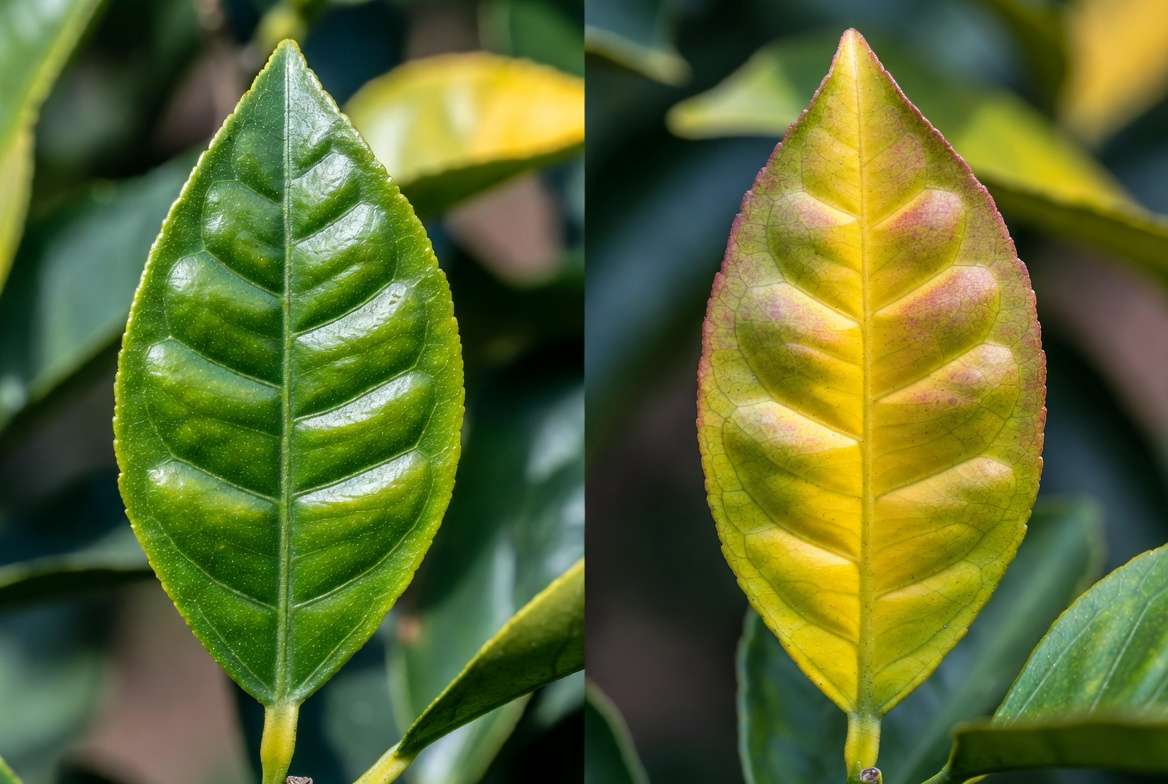
Visual Gallery Idea (Insert high-quality photos here with descriptive alt text: “Tomato leaf showing interveinal chlorosis from magnesium deficiency”, “Citrus leaf magnesium deficiency yellowing”, “Palm frond with magnesium deficiency symptoms”, etc.) These images help confirm your diagnosis visually—search for “magnesium deficiency tomato leaves” or similar for reference.
What Causes Magnesium Deficiency in Plants and Trees? 🏜️
Magnesium deficiency causing leaf discoloration rarely happens in isolation. Common triggers include:
- Soil Factors: Sandy or light soils leach magnesium easily, especially with heavy rainfall or irrigation. Low organic matter reduces the soil’s ability to hold onto nutrients.
- pH Imbalances: Magnesium availability drops sharply in very acidic soils (pH < 5.5) or highly alkaline conditions. Acidic soils are a top culprit in many regions.
- Nutrient Antagonism: Excess potassium (K), calcium (Ca), or ammonium fertilizers compete with magnesium for uptake. Heavy use of high-K tomato fertilizers often triggers Mg issues.
- Environmental & Cultural Stress: Overwatering, poor root health (compaction or disease), cold/wet periods, or high temperatures can limit uptake. Container plants and high-tunnel crops are particularly vulnerable due to limited soil volume.
- Intensive Cropping: Repeated harvesting without replenishing magnesium depletes reserves over time.
Real-world example: A gardener in sandy coastal soil notices yellowing tomatoes after a wet spring and heavy potassium feeding—classic leaching + antagonism at work. 🌧️
How to Accurately Diagnose Magnesium Deficiency (Avoid Costly Mistakes) 🕵️♂️
Magnesium Deficiency vs. Other Nutrient Problems – Clear Comparison
Many deficiencies cause yellowing, so accurate diagnosis prevents wasted effort:
| Nutrient Deficiency | Affected Leaves | Symptom Pattern | Key Differences |
|---|---|---|---|
| Magnesium (Mg) | Older/lower first | Interveinal chlorosis (yellow between green veins); possible brown spots later | Starts on mature leaves; veins stay green |
| Iron (Fe) | Younger/new growth first | Interveinal chlorosis; sharp green veins | New leaves affected; common in alkaline soils |
| Potassium (K) | Older leaves | Marginal scorching/browning; yellowing from edges inward | Edges burn first; no strong interveinal pattern |
| Nitrogen (N) | Older leaves | General uniform yellowing (whole leaf) | No green veins contrast; overall pale plant |
| Manganese (Mn) | Younger leaves | Interveinal chlorosis with small necrotic spots | Often with distorted leaves |
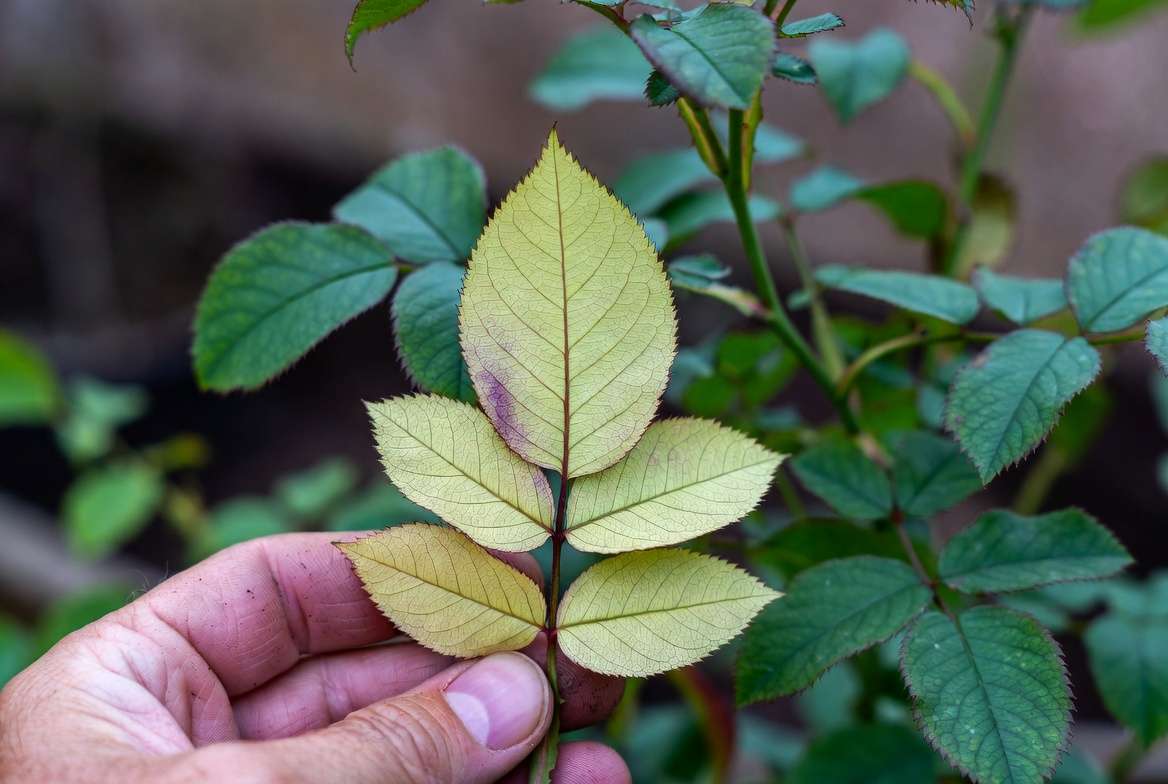
Step-by-Step Diagnosis Checklist
- Note which leaves are affected (older vs. younger).
- Observe the pattern: Is it strictly between veins?
- Check soil history: pH, recent fertilizers, leaching events?
- Rule out pests/disease (check for insects, wilting, spots with halos).
- Test soil and/or leaf tissue for confirmation—university extension labs provide reliable results with target Mg levels (typically 50–250 ppm in soil, depending on crop).
Quick Home Diagnostic Tips: Use a soil pH meter or test kit. Visual comparison charts from extension services (like UC IPM or your local cooperative extension) are gold standards.
When in doubt, soil test first—it’s the most authoritative way to confirm magnesium deficiency causing leaf discoloration.
How to Fix Magnesium Deficiency Causing Leaf Discoloration – Fast & Safe Solutions 🌊
Once you’ve confirmed magnesium deficiency causing leaf discoloration, the good news is that plants usually respond quickly to proper treatment. The goal is to deliver usable magnesium to the roots and leaves while correcting any underlying issues like pH or nutrient imbalance. Here are the most effective, proven methods used by professional growers and experienced home gardeners alike.
Immediate Remedies for Quick Recovery
The fastest way to green up leaves is through foliar spraying with magnesium sulfate (commonly known as Epsom salt). Because magnesium is mobile, the plant can absorb it directly through the leaf surface and redistribute it where needed.
Epsom Salt Foliar Spray Recipe (Safe for Most Plants):
- Dissolve 1–2 tablespoons of pure Epsom salt (magnesium sulfate heptahydrate) in 1 gallon (3.8 liters) of water.
- Add a few drops of mild liquid soap or horticultural surfactant to help the solution stick to leaves.
- Spray thoroughly on both upper and lower leaf surfaces in the early morning or late afternoon when temperatures are below 85°F (29°C) to avoid leaf burn.
- Repeat every 7–10 days for 3–4 applications or until new growth emerges deep green.
Most gardeners see visible improvement within 7–14 days: the yellow areas begin to regain color starting from the veins outward. 🍃
For soil drench (especially useful for trees and larger plants):
- Dissolve 1 tablespoon of Epsom salt per gallon of water and apply directly to the root zone.
- Use 2–3 gallons per mature shrub or small tree; scale up for larger specimens.
Step-by-Step Correction Guide
- Confirm Diagnosis – Double-check symptoms and, if possible, run a soil test.
- Adjust Soil pH if Needed – Magnesium uptake is best at pH 6.0–7.0. If your soil is too acidic, apply dolomitic lime (which supplies both magnesium and calcium). If too alkaline, use elemental sulfur sparingly.
- Apply Corrective Treatment – Start with foliar spray for fast relief + soil application for longer-term supply.
- Monitor Progress – Take weekly photos of affected leaves. New growth should appear healthy within 2–3 weeks. Continue balanced watering and avoid high-potassium feeds during recovery.
- Re-test Soil after 4–6 weeks to ensure levels have stabilized.
Organic & Natural Fixes ♻️
Many gardeners prefer chemical-free options. Excellent choices include:
- Dolomitic lime – Raises pH and supplies slow-release magnesium.
- Composted manure or leaf mold enriched with magnesium-rich materials (banana peels, coffee grounds in moderation).
- Seaweed extracts or kelp meal – Provide magnesium along with trace minerals and growth hormones.
- Rock dust (azomite or basalt) – Supplies a broad spectrum of minerals including magnesium.
- Epsom salt itself is considered organic-approved by many certifying bodies when used judiciously.
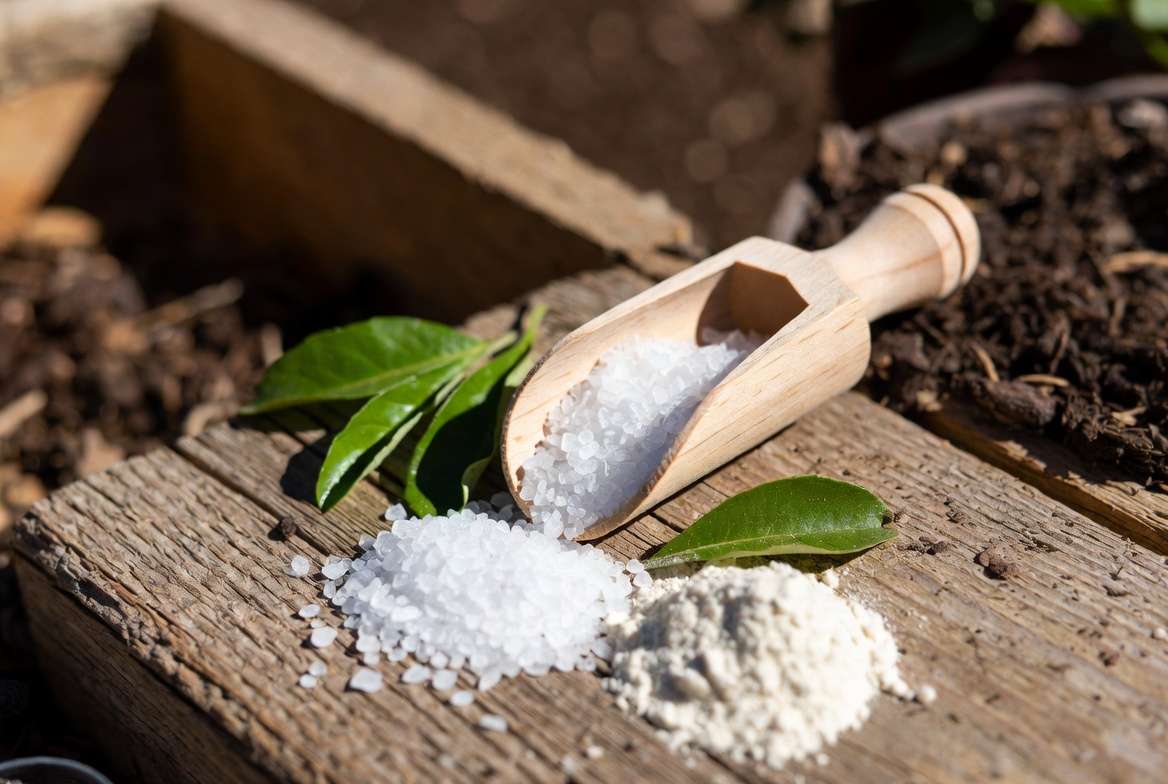
For container plants and houseplants, top-dress with a thin layer of compost mixed with a teaspoon of Epsom salt per pot every 4–6 weeks during the growing season.
Special Considerations for Trees vs. Container Plants vs. Vegetables
- Fruit and Ornamental Trees: Apply treatments to the drip line (outer edge of the canopy) where feeder roots are most active. For large trees, trunk injection by a certified arborist may be needed in severe cases.
- Container Plants & Houseplants: These exhaust soil magnesium quickly. Flush pots with plain water monthly to prevent salt buildup, then follow with diluted Epsom salt drench.
- Vegetable Gardens: Heavy feeders like tomatoes and peppers benefit from weekly foliar sprays once fruiting begins. Rotate crops and incorporate green manures (e.g., buckwheat or clover) to naturally replenish magnesium.
Expert Tip: Never apply Epsom salt together with calcium-rich amendments on the same day—space them 10–14 days apart to avoid antagonism. 🌱
Preventing Magnesium Deficiency – Long-Term Plant Care Strategies 📅
Fixing the problem is only half the battle. True success comes from preventing magnesium deficiency causing leaf discoloration from ever returning.
Keep Leaf Discoloration Away for Good
- Regular Soil Testing – Test your garden soil every 1–2 years (or annually for intensive vegetable beds). Aim for magnesium levels between 50–250 ppm depending on your soil type and crops. Most local agricultural extensions offer affordable testing.
- Balanced Fertilization – Choose fertilizers that include secondary nutrients or use a complete formula with Mg. Avoid “high-potash” (high-K) fertilizers without supplementing magnesium.
- Build Organic Matter – Add compost, aged manure, or cover crops generously. Organic matter improves cation exchange capacity, helping soil hold onto magnesium longer.
- Mulching – A 2–3 inch layer of organic mulch conserves moisture, moderates soil temperature, and slowly releases nutrients as it breaks down.
- Smart Irrigation – Water deeply but infrequently to encourage deep roots. Avoid overwatering, which leaches magnesium from the root zone.
- Choose Resilient Varieties – Some modern hybrids (especially tomatoes and peppers) are bred for better nutrient efficiency.
Seasonal Prevention Calendar
- Spring: Apply dolomitic lime or Epsom salt to soil before planting. Start foliar sprays on early crops.
- Summer: Monitor heavy feeders weekly. Use seaweed sprays as a preventive boost during hot, stressful periods.
- Fall: Incorporate magnesium-rich amendments while preparing beds. Plant cover crops that scavenge and recycle nutrients.
- Winter: In mild climates, top-dress dormant trees and shrubs with compost. Protect roots in cold areas to maintain healthy uptake in spring.
Expert Pro Tips from Horticulturists
- Watch the K:Mg ratio in your soil—ideally keep it below 3:1 to prevent potassium from blocking magnesium.
- In regions with high rainfall (like many tropical or coastal areas), leaching is constant—schedule more frequent light applications of magnesium.
- For acid-loving plants (blueberries, azaleas), use magnesium sulfate instead of dolomitic lime to avoid raising pH too much.
Common Mistakes Gardeners Make When Treating Leaf Discoloration ⚠️
Even experienced gardeners sometimes go wrong:
- Applying too much Epsom salt at once (can cause salt burn or further imbalances).
- Removing all yellow leaves immediately (reduces the plant’s photosynthetic capacity).
- Ignoring soil pH while treating only the symptom.
- Using the same high-potassium fertilizer without balancing magnesium.
- Diagnosing visually without ruling out pests, disease, or other deficiencies.
Avoiding these pitfalls will save you time, money, and precious plants.
Case Studies & Success Stories 🌟
Case 1: Backyard Tomato Rescue A gardener in Dhaka noticed classic interveinal yellowing on lower tomato leaves in mid-summer. Soil test showed low Mg and slightly acidic pH. After two foliar Epsom sprays and one soil application of dolomitic lime, new leaves emerged dark green within 12 days. Yield increased by nearly 40% compared to untreated plants.
Case 2: Citrus Tree Recovery An older lemon tree showed widespread leaf discoloration and poor fruit set. Heavy potassium feeding was the culprit. Switching to a balanced citrus fertilizer plus monthly magnesium drenches restored healthy foliage and produced a bumper crop the following season.
These real results show that with the right knowledge, magnesium deficiency causing leaf discoloration is completely reversible.
The Science Behind Magnesium Deficiency 🔬
Magnesium’s high mobility in the phloem explains why older leaves show symptoms first. When supply is limited, the plant breaks down chlorophyll in mature leaves to recycle Mg for new growth. This causes the characteristic yellowing while veins (which contain more structural tissue) stay green longer.
Under deficiency, carbohydrates accumulate in leaves because they can’t be efficiently transported, leading to feedback inhibition of photosynthesis. This is why severely affected plants become stunted and produce lower-quality fruit.
Understanding these physiological processes helps you appreciate why timely intervention is so effective—restoring magnesium quickly restarts the entire metabolic engine of the plant.
Frequently Asked Questions (FAQs)
Can I use Epsom salt on all plants? Yes, most plants tolerate it well when diluted properly. However, use half-strength on delicate seedlings or sensitive ferns.
How long does it take to fix magnesium deficiency? Foliar sprays usually show results in 7–14 days. Full soil correction may take 3–6 weeks depending on severity and weather.
Is magnesium deficiency harmful to humans or pets? No. Epsom salt is safe around children and pets when used as directed. It’s even used in human baths for muscle relief!
Can overwatering cause magnesium deficiency? Yes—excess water leaches magnesium from the root zone, especially in sandy soils.
What’s the best magnesium source for organic gardening? Dolomitic lime, kelp meal, and well-aged compost are excellent slow-release options.
How do I tell the difference between magnesium and calcium deficiency? Magnesium affects older leaves with interveinal yellowing; calcium problems usually hit new growth, causing distorted leaves or blossom-end rot in tomatoes.
Will adding Epsom salt change my soil pH? Magnesium sulfate is pH-neutral, so it won’t raise or lower pH significantly.
Conclusion ✨
Magnesium deficiency causing leaf discoloration doesn’t have to spell disaster for your garden. By learning to recognize the distinctive interveinal yellowing on older leaves, understanding the underlying causes, applying targeted fixes like Epsom salt sprays, and implementing smart prevention strategies, you can restore your plants to vibrant health and enjoy bountiful harvests season after season.
Take action today: Grab a soil test kit or a bag of Epsom salt, inspect your plants with fresh eyes, and give them the magnesium boost they need. Your tomatoes, citrus trees, roses, and houseplants will thank you with lush green foliage and impressive productivity.
If you’ve successfully treated magnesium deficiency in your own garden, share your before-and-after photos or tips in the comments below—I’d love to hear your success stories!











