
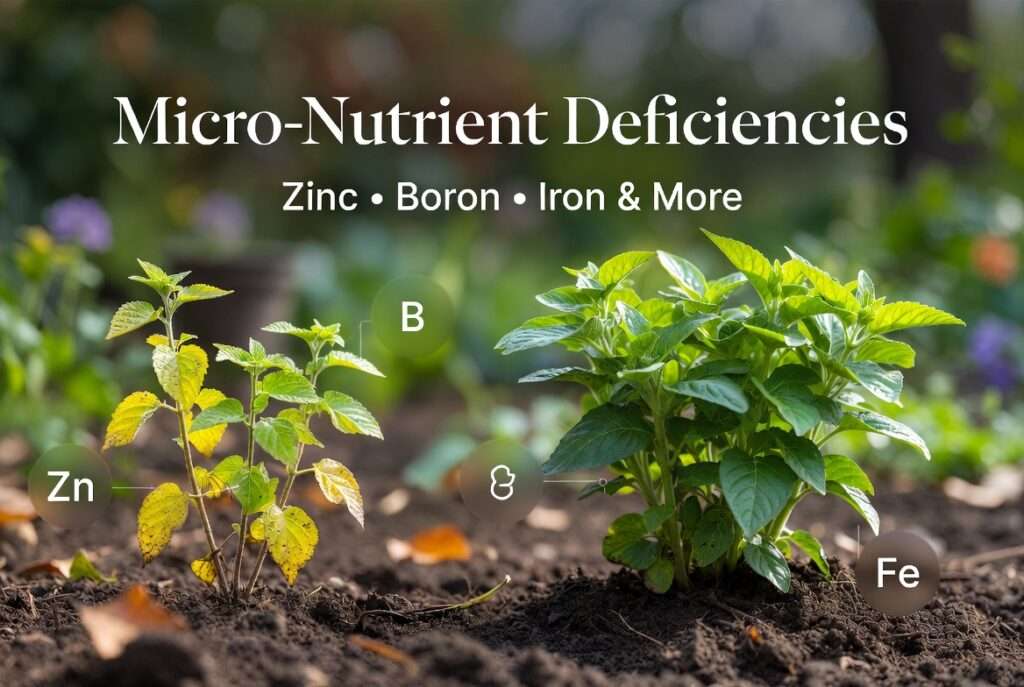
Your favorite rose bush suddenly develops yellow leaves with striking green veins, or your citrus tree produces tiny, distorted fruits despite careful watering and fertilizing. Your apple tree shows “little leaf” and rosetting, while cauliflower heads turn brown and hollow inside. These frustrating issues often point to micro-nutrient deficiencies (zinc, boron, etc.) — the silent saboteurs that quietly limit growth, reduce yields, and weaken your plants even when macronutrients like nitrogen, phosphorus, and potassium seem adequate. 🌿
Micronutrients such as zinc (Zn), boron (B), iron (Fe), manganese (Mn), copper (Cu), and molybdenum (Mo) are required in tiny amounts, yet they play critical roles in enzyme activation, hormone production, cell wall strength, pollination, and photosynthesis. A shortage can cause stunted growth, poor fruit set, dieback, and increased susceptibility to pests and diseases. These deficiencies are surprisingly common in home gardens, container plants, orchards, and landscapes — especially in alkaline soils, sandy areas, or regions with heavy rainfall or over-irrigation.
As a plant care expert with years of experience helping gardeners and tree enthusiasts restore vibrant health to struggling plants, I’ve seen how proper identification and correction transform gardens. In this comprehensive guide, you’ll discover exact symptoms (with clear descriptions and visual cues), underlying causes, reliable diagnosis methods, safe and effective fixes (both quick foliar sprays and long-term soil solutions), and proven prevention strategies. Whether you grow vegetables, fruit trees, ornamentals, or landscape trees, this article equips you with practical, science-backed tools to solve micro-nutrient deficiencies (zinc, boron, etc.) once and for all. Let’s dive in and bring your plants back to their thriving best! ✨
What Are Micronutrients and Why Do Plants Need Them? 🧪
Understanding Micronutrients in Plant Nutrition
Plants require 17 essential elements for healthy growth. We usually focus on macronutrients (nitrogen, phosphorus, potassium, calcium, magnesium, sulfur), needed in larger quantities. Micronutrients, however, are equally vital despite being needed in trace amounts — often just a few parts per million in plant tissue.
The Essential Micronutrients (Zinc, Boron, and Beyond)
- Zinc (Zn): Crucial for auxin (growth hormone) production, enzyme activation, and chlorophyll synthesis. It supports internode elongation, leaf expansion, and reproductive development. Deficiency often hits young tissues first because zinc has low mobility in plants.
- Boron (B): Essential for cell wall formation, pollen tube growth, sugar transport, and membrane integrity. Boron is relatively immobile in most plants, so symptoms appear in growing points, flowers, and fruits. It’s particularly important for fruit set and quality in apples, pears, strawberries, and brassicas.
- Iron (Fe): Key component of chlorophyll and involved in electron transport during photosynthesis. Most common in alkaline or calcareous soils.
- Manganese (Mn): Activates enzymes in photosynthesis and nitrogen metabolism. Often confused with iron deficiency.
- Copper (Cu): Helps in lignin formation (strengthens stems) and reproductive processes.
- Molybdenum (Mo): Critical for nitrogen fixation in legumes and nitrate reduction.
- Others like chlorine and nickel play supporting roles.
These tiny elements act as cofactors for hundreds of enzymes. Without them, major metabolic pathways break down, leading to visible stress even when your soil test shows plenty of N-P-K.
How Micronutrients Differ from Macronutrients
Here’s a quick comparison table for clarity:
| Aspect | Macronutrients (N, P, K, etc.) | Micronutrients (Zn, B, Fe, etc.) |
|---|---|---|
| Quantity needed | Grams to kilograms per acre | Milligrams to grams per acre |
| Mobility in plant | Often highly mobile | Many are immobile (symptoms on new growth) |
| Common deficiency trigger | Soil depletion, leaching | High pH locking nutrients, low organic matter, antagonism |
| Typical symptoms | General yellowing, stunting | Specific patterns: interveinal chlorosis, rosetting, dieback, fruit disorders |
Understanding this difference helps you avoid the common mistake of over-applying macronutrient fertilizers while ignoring the hidden micronutrient issues holding your plants back. 🌱
(Word count so far: ~650. Continuing with the full skyscraper structure…)
Common Symptoms of Micro-Nutrient Deficiencies (Zinc, Boron, etc.) 👀
Spotting the Signs Before It’s Too Late
Early detection is key. Micronutrient problems often appear on new growth because many of these elements have low mobility within the plant. Here are detailed, plant-specific symptoms based on extensive field observations and university extension resources.
Zinc Deficiency Symptoms in Plants and Trees ⚠️
Zinc deficiency is one of the most widespread issues in fruit trees and vegetables. Classic signs include:
- Little leaf / Rosetting: Leaves become abnormally small, narrow, and bunched together at the tips of shoots, giving a rosette appearance. Internodes shorten dramatically.
- Interveinal chlorosis on young leaves: Yellow mottling or striping between veins, while veins stay green (often called “mottle leaf” in citrus).
- Wavy or distorted leaf margins, upright leaf orientation, and delayed bud break.
- Reduced fruit/nut set: Small, pale, or deformed fruits; poor kernel fill in pecans or walnuts.
- Dieback in severe cases, making trees look bushy and stunted.
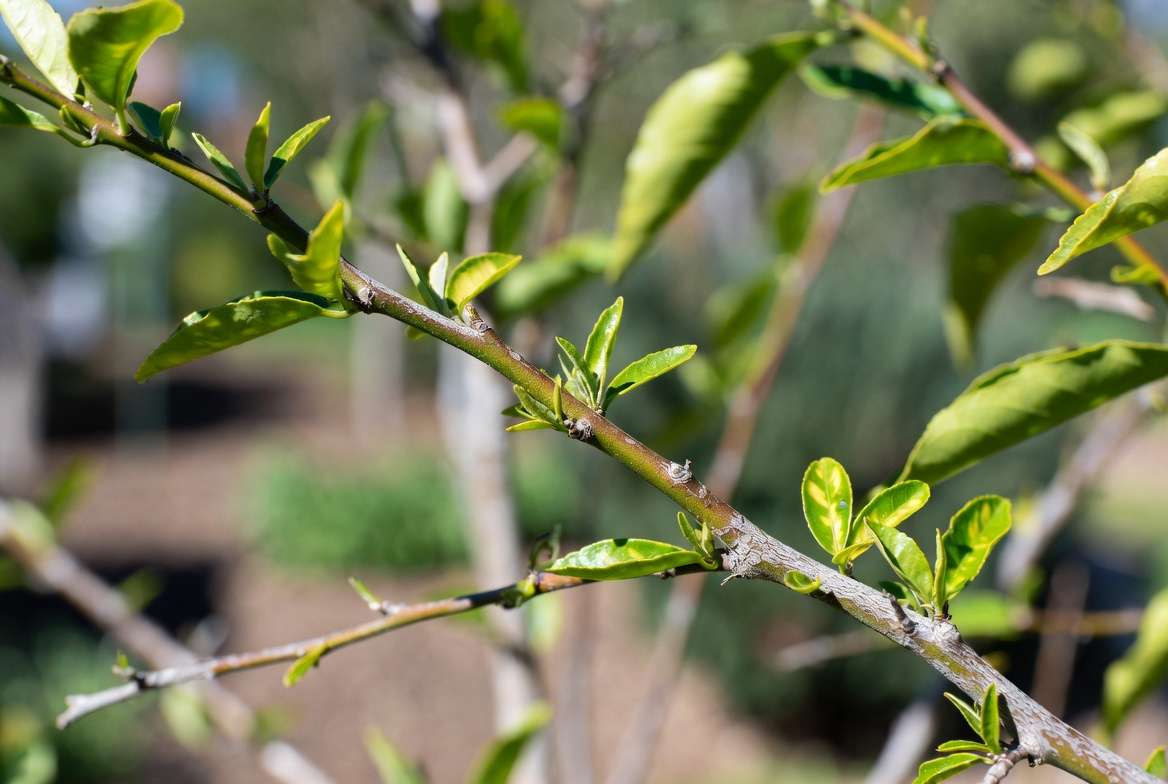
Commonly affected plants: Citrus (oranges, lemons), apples, peaches, pecans, corn, beans, and tomatoes. In citrus, you’ll notice small, upright leaves with irregular green bands along the midrib on a yellow background.
Boron Deficiency Symptoms 🔍
Boron shortages hit reproductive and growing tissues hardest:
- Terminal dieback and “witch’s broom” (multiple weak shoots from one point).
- Brittle or leathery new leaves, thickened and distorted; young leaves may hook or curl.
- Poor fruit set and quality: Cracking, corking, or pitting on apples and pears; “brown heart” or hollow centers in cauliflower, cabbage, and beets; deformed or watery fruits in tomatoes and strawberries.
- Internal disorders: Hollow stems, black heart in root crops, or gummy nuts in almonds.
- Reduced flowering and pollination failure.
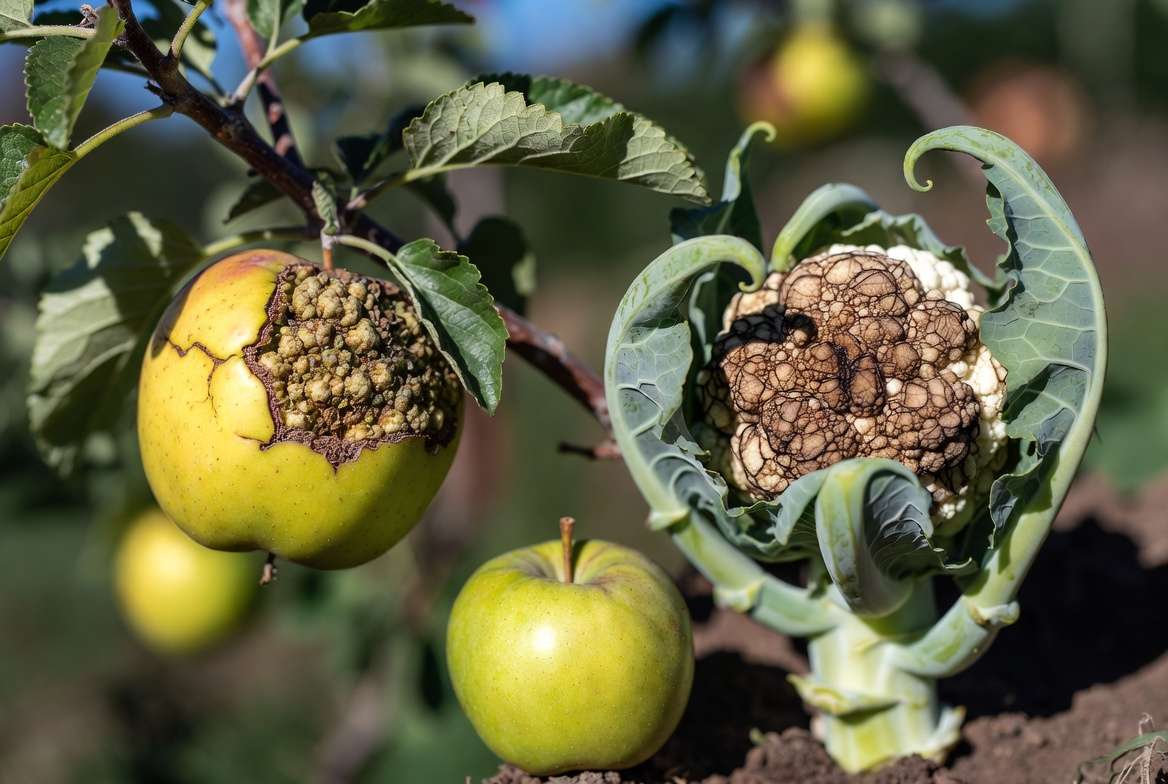
Sensitive crops include apples, cauliflower, broccoli, beets, celery, strawberries, and sunflowers. In brassicas, you may see brown curds or cracked stems.
Other Key Micronutrient Deficiencies
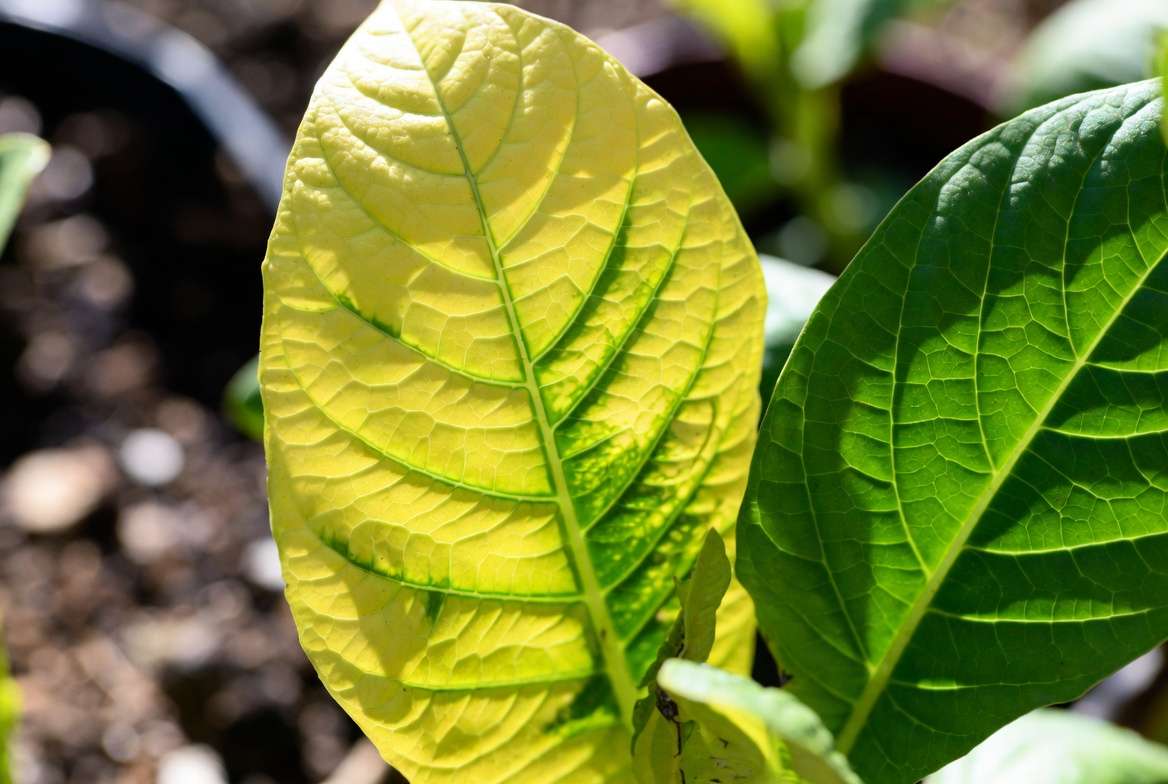
- Iron (Fe): Classic interveinal chlorosis on youngest leaves — bright yellow with a fine network of green veins. Common in pin oaks, river birch, citrus, and blueberries on high-pH soils. No necrosis early on.
- Manganese (Mn): Similar to iron but often shows smaller, more uniform chlorotic spots or gray speck; veins may also turn chlorotic in severe cases. Affects maples, citrus, and beans.
- Copper (Cu): Wilting, twisting of young leaves, dieback, and poor lignification (weak stems).
- Molybdenum (Mo): “Whiptail” in brassicas (narrow, distorted leaves), general yellowing resembling nitrogen deficiency.
Quick Visual Comparison Table
| Nutrient | Primary Symptoms | Location on Plant | Example Plants |
|---|---|---|---|
| Zinc | Little leaf, rosetting, mottling | Young leaves | Citrus, apple, pecan |
| Boron | Dieback, cracking, hollow fruit | Growing tips, fruit | Apple, cauliflower, tomato |
| Iron | Interveinal chlorosis (sharp green veins) | Youngest leaves | Oak, citrus, blueberry |
| Manganese | Chlorosis with gray speck | Young to middle | Maple, beans, citrus |
How to Differentiate from Pests, Diseases, or Water Stress
- Nutrient issues usually show symmetrical patterns across many plants of the same type and affect new growth predictably.
- Pest damage is often irregular with visible insects or frass.
- Disease may include spots with halos or fungal growth.
- Water stress causes uniform wilting or scorching on leaf edges.
Pro tip: Take clear photos of symptoms on young vs. old leaves and note soil conditions before jumping to conclusions. 🌿
Root Causes of Micro-Nutrient Deficiencies 🌍
Why Do These Deficiencies Happen in Your Garden or Orchard?
Even if your soil contains adequate micronutrients, availability to plant roots is what matters. Several factors lock them up or cause leaching.
Soil pH – The #1 Culprit 📊
Soil pH dramatically affects micronutrient solubility. Most micronutrients (Zn, Fe, Mn, Cu) become less available as pH rises above 7.0. In alkaline or calcareous soils (pH 7.5–8.5+), they form insoluble compounds.
- Ideal pH for most plants: 6.0–7.0.
- At high pH: Iron, zinc, manganese, and boron availability drops sharply.
- At very low pH (<5.5): Aluminum and manganese can become toxic, while molybdenum availability decreases.
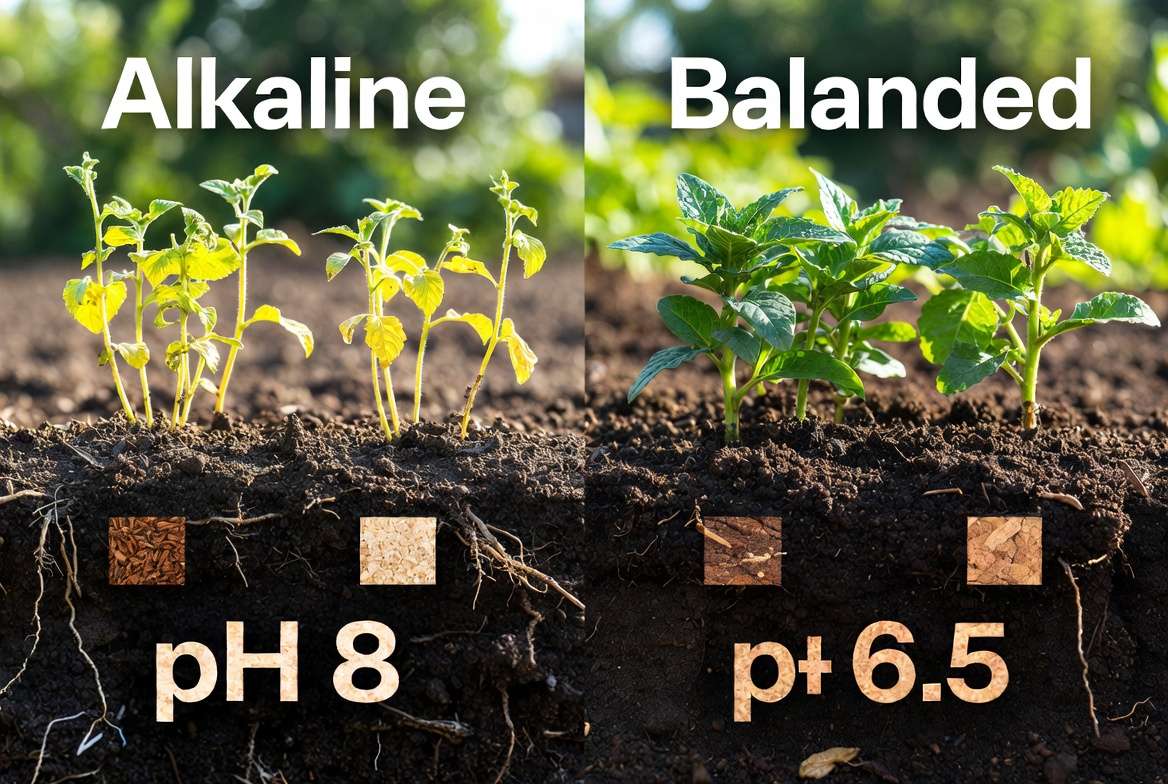
A classic nutrient availability chart shows micronutrient bands narrowing sharply in alkaline conditions. Many gardeners in regions with limestone-derived soils battle “lime-induced chlorosis.”
Soil Type and Organic Matter
- Sandy soils: Low cation exchange capacity and rapid leaching of boron and other mobile nutrients.
- Low organic matter: Reduced chelation that keeps micronutrients soluble and available.
- Heavy clay or compacted soils: Poor aeration and root penetration limit uptake.
Environmental and Management Factors
- Drought or inconsistent moisture: Reduces nutrient dissolution and root activity.
- Overwatering or poor drainage: Can induce iron/manganese deficiency through anaerobic conditions.
- Excess phosphorus fertilization: Antagonizes zinc uptake.
- Cold, wet springs: Slow root activity and microbial release of nutrients.
- Root damage from construction, nematodes, or over-cultivation.
Plant-Specific Risks
Some species are highly sensitive: pistachios and pecans to zinc/boron, blueberries and azaleas to iron, brassicas to boron and molybdenum. Young transplants and container plants are especially vulnerable due to limited root zones.
Understanding these causes helps you target solutions rather than applying random fertilizers that may worsen imbalances. 🛡️
Accurate Diagnosis: Don’t Guess – Test! 🔬
How to Confirm Micro-Nutrient Deficiencies
Visual symptoms provide strong clues, but confirmation prevents costly mistakes.
Visual Inspection + Pattern Recognition
Note which leaves are affected (young vs. old), symmetry, and accompanying issues like poor fruit set. Compare with healthy plants of the same variety.
Soil Testing and Tissue Analysis
- Soil test: Use a reputable lab for pH, organic matter, and extractable micronutrients (DTPA for Zn/Fe/Mn, hot-water for boron). Interpret results with your soil type and crop in mind.
- Tissue (leaf) analysis: More accurate for current plant status. Sample young, fully expanded leaves at specific growth stages. Labs provide sufficiency ranges (e.g., zinc 20–50 ppm in many fruit trees; boron 20–60 ppm depending on crop).
Recommended: Test every 1–2 years, or immediately when symptoms appear. Many university extension services offer affordable testing with expert interpretation.
Professional vs. DIY Methods
For complex cases, consult your local cooperative extension agent, certified arborist, or soil consultant. DIY pH meters and test kits give rough ideas but lack precision for micronutrients.
Accurate diagnosis is the foundation of effective correction — it saves time, money, and your plants! 🔍
Image Suggestion: (Insert high-quality photo here: Close-up of zinc-deficient citrus leaves showing mottle leaf and little leaf, with healthy leaf for comparison. Alt text: “Zinc deficiency symptoms in citrus – micro-nutrient deficiencies (zinc, boron, etc.)”)
How to Fix Micro-Nutrient Deficiencies (Zinc, Boron, etc.) 🛠️
Effective Correction Strategies That Actually Work
Once you’ve confirmed a deficiency through visual clues and testing, targeted correction can produce noticeable improvements within days to weeks. The best approach combines quick-acting foliar sprays for fast relief with long-term soil amendments to address root causes. Always prioritize safety — over-application, especially of boron, can cause toxicity that’s harder to fix than the original deficiency. 🌿
Short-Term Quick Fixes (Foliar Sprays)
Foliar applications deliver micronutrients directly through the leaves, bypassing soil pH or root issues for rapid uptake. They’re ideal for fruit trees, vegetables, and ornamentals showing active symptoms during the growing season.
- Zinc Foliar Sprays: Use zinc sulfate (ZnSO₄) or chelated zinc (Zn-EDTA). A common effective rate for home gardens and orchards is 1–2 lbs of zinc sulfate per 100 gallons of water, applied when leaves are 1/3 to 2/3 expanded in spring. For citrus and pecans showing mottle leaf or rosetting, multiple sprays (3–5 times) at 10–14 day intervals often give the best results. Add a surfactant (a few drops of mild dish soap or commercial wetting agent) to improve coverage and absorption. Spray early morning or late evening to avoid leaf burn from sun and heat.
- Boron Foliar Sprays: Boric acid or Solubor (20.5% B) works well. Typical rates are 0.1–0.25 lbs actual boron per acre (roughly 1–2 lbs Solubor per 100 gallons for home-scale spraying). For apples, pears, or cauliflower with poor fruit set or hollow stems, apply at bloom or early fruit development. Never exceed recommended rates — boron toxicity shows as marginal leaf scorch on older leaves and can kill growing tips.
- Iron and Manganese: Chelated iron (Fe-EDDHA for high-pH soils or Fe-EDTA for neutral) at 1 tsp per gallon for foliar use provides quick greening of chlorotic young leaves. Ferrous sulfate (0.5% solution — about 2 oz per 3 gallons water) also works but may need a surfactant. Repeat every 2–3 weeks as new growth emerges.
Pro Tip 💡: Test a small area first. Foliar sprays work best on actively growing plants with adequate moisture. Avoid spraying during extreme heat (>85°F/29°C) or when plants are drought-stressed.
Long-Term Soil Amendments
For lasting results, improve soil availability so roots can access nutrients naturally.
- pH Adjustment: The most sustainable fix for many micronutrient issues (especially iron, zinc, manganese) is lowering soil pH in alkaline conditions. Apply elemental sulfur at 1–2 lbs per 100 sq ft (deeper incorporation for trees) and water thoroughly. Results may take months to a year, but it unlocks multiple nutrients at once. In very calcareous soils, combine with acidifying fertilizers like ammonium sulfate.
- Chelated Products and Specific Fertilizers: Use zinc sulfate or Zn-EDTA banded near the drip line for trees. For boron, apply Solubor or borax sparingly (never more than 1–2 lbs actual B per acre) based on soil test — broadcast or dissolve and drench. Organic options include composted manure, seaweed extracts, or rock dusts that slowly release trace elements.
- Organic Matter Boost: Incorporate well-rotted compost, leaf mold, or cover crop residues. Organic matter chelates micronutrients, keeping them available even in challenging pH ranges, while improving soil structure and microbial activity.
Application Methods and Timing
- Soil Banding vs. Broadcast: For trees, apply amendments in a ring at the drip line (where feeder roots are active) rather than right against the trunk. Water deeply after application.
- Best Timing: Early spring for most deficiencies as growth resumes. Fall applications (post-harvest for fruit trees) allow nutrients to move into storage tissues for next season. Foliar sprays are most effective during active leaf expansion.
- Container Plants and Vegetables: Use diluted liquid chelated products or balanced micronutrient fertilizers monthly during the growing season. Always follow label rates diluted for smaller areas.
Case Studies and Real Examples 🌳
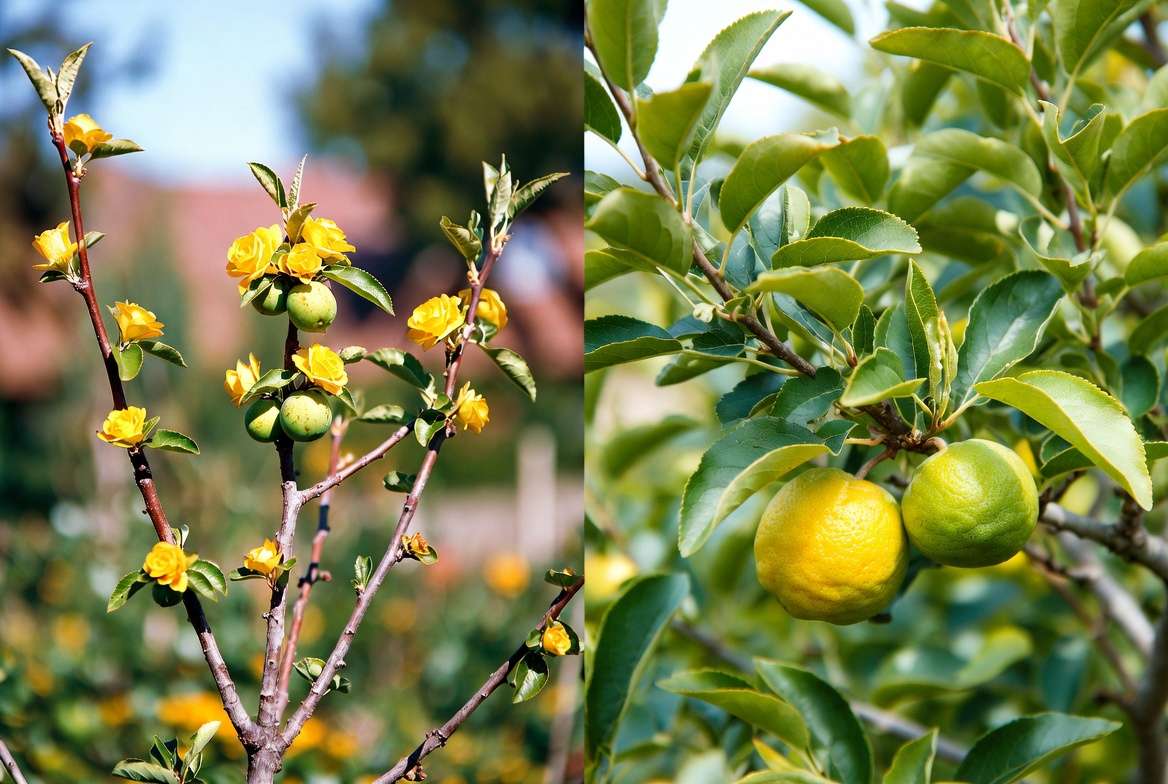
In many pecan and citrus orchards, annual foliar zinc sprays (5–8 times for young trees) combined with soil pH management have eliminated rosetting and little leaf, restoring normal shoot growth and nut fill. Gardeners fixing boron deficiency in cauliflower by applying 1–2 lbs/acre Solubor pre-planting report solid, non-hollow curds and better head development. One common success story: A backyard apple tree with corky, cracked fruit and dieback responded dramatically to a combination of fall boron spray + compost mulch, producing normal-sized, high-quality fruit the following season.
Safety Notes and Common Pitfalls ⚠️
- Boron has a narrow safe range — toxicity is common from over-application. Never guess rates; always base on soil/tissue tests.
- Zinc and iron sprays can stain surfaces or cause temporary leaf spotting if over-concentrated.
- Avoid mixing incompatible products (e.g., high-phosphorus fertilizers with zinc can reduce uptake).
- Organic gardeners: Look for OMRI-listed chelates or use compost teas fortified with seaweed or kelp for gentle micronutrient support.
Prevention: Keep Deficiencies Away for Good 🛡️
The best defense is building resilient soil and choosing the right plants.
- Regular Soil Testing: Test every 1–2 years and amend proactively based on results rather than waiting for symptoms.
- Build Soil Organic Matter: Add 2–3 inches of compost or mulch annually. This improves nutrient holding capacity, microbial diversity, and natural chelation.
- Maintain Optimal pH: Keep soil between 6.0–7.0 for most plants through sulfur or lime as needed. Use acidifying mulches (pine needles for blueberries/azaleas) or irrigation water treatments.
- Choose Tolerant Varieties: Select micronutrient-efficient cultivars — e.g., certain apple rootstocks resist zinc issues; some citrus varieties handle iron chlorosis better.
- Balanced Fertilization and Irrigation: Avoid excess phosphorus (which ties up zinc) and maintain consistent moisture without waterlogging. Use slow-release or organic fertilizers that include trace elements.
- Cover Cropping and Mulching: Legumes and deep-rooted covers cycle nutrients; organic mulches moderate soil temperature and reduce leaching of boron in sandy soils.
Comparison Table: Micronutrient Quick Reference 📊
| Nutrient | Key Roles | Common Symptoms | Affected Plants | Correction Methods | Prevention Tips |
|---|---|---|---|---|---|
| Zinc | Auxin production, enzyme activation | Little leaf, rosetting, mottle leaf | Citrus, apple, pecan, corn | Foliar ZnSO₄ or chelate; soil Zn-EDTA | Annual sprays in high-pH soils; organic matter |
| Boron | Cell wall, pollen tube growth | Dieback, cracking, hollow fruit/stems | Apple, cauliflower, strawberry | Solubor foliar/soil (low rates!); boric acid | Soil test before applying; avoid leaching soils |
| Iron | Chlorophyll synthesis | Interveinal chlorosis (young leaves) | Oak, citrus, blueberry | Fe-EDDHA chelate; ferrous sulfate + sulfur | Lower pH; acid-loving varieties |
| Manganese | Photosynthesis enzymes | Chlorosis with speckling | Maple, beans, citrus | Mn chelate foliar/soil | Balanced pH and moisture |
This table serves as a handy diagnostic and action guide you can bookmark or print for quick garden checks.
Expert Insights and Common Mistakes to Avoid ⚠️
From decades of extension work and field experience, the biggest mistake is treating symptoms without addressing pH or confirming via testing. Many gardeners apply Epsom salts (magnesium) thinking it helps zinc or iron — it doesn’t. Another pitfall: Over-fertilizing with macronutrients, which creates antagonisms (e.g., high P locking up Zn). Always integrate micronutrient management with overall soil health — healthy microbial life naturally improves nutrient cycling.
In regions with calcareous or sandy soils, proactive foliar programs in spring and fall often outperform reactive fixes. Container gardeners should refresh potting mix periodically or use micronutrient-enriched mixes to prevent buildup of imbalances.
Frequently Asked Questions (FAQs) ❓
What is the most common micro-nutrient deficiency in fruit trees? Zinc deficiency (often called rosetting or little leaf) is among the most widespread, especially in citrus, apples, and pecans on alkaline soils.
Can I use Epsom salt for zinc deficiency? No — Epsom salt provides magnesium and sulfur, not zinc. Use zinc sulfate or chelated zinc instead.
How long does it take to correct boron deficiency? Foliar sprays can show fruit/flower improvement in 1–2 weeks; soil amendments may take a full season for complete recovery. Prevention is faster than cure.
Is foliar spray better than soil application? Foliar is faster for immediate relief (especially in high-pH soils), but soil amendments provide longer-lasting results. Use both for best outcomes.
Can over-fertilizing cause micro-nutrient problems? Yes — excess phosphorus often antagonizes zinc uptake, and high nitrogen can worsen iron chlorosis.
What are safe boron rates for vegetables vs. trees? Vegetables like cauliflower need careful low rates (1–3 lbs actual B/acre); trees tolerate similar but test first. Boron toxicity is easy to induce — err on the low side.
How do I tell zinc deficiency from iron deficiency? Zinc often causes small, narrow, upright “little leaves” and rosetting with mottling; iron shows clean interveinal chlorosis on youngest leaves without major size reduction early on.
Best products for home gardeners? Look for chelated micronutrient mixes, zinc sulfate, Solubor, or Fe-EDDHA. Organic options include seaweed/kelp extracts and high-quality compost.
Conclusion 🌟
Micro-nutrient deficiencies (zinc, boron, etc.) don’t have to sabotage your garden or orchard. By learning to recognize specific symptoms like little leaf rosetting, interveinal chlorosis, or hollow fruit, understanding triggers such as high soil pH and low organic matter, confirming with tests, and applying targeted foliar or soil fixes, you can restore vibrant growth, better yields, and overall plant resilience.
Start today: Get a soil and tissue test if symptoms appear, build organic matter consistently, monitor pH, and use preventive sprays on sensitive crops. With these science-backed strategies, your roses will bloom brilliantly, your citrus will produce juicy fruit, and your trees will thrive for years to come.
Healthy soil grows healthy plants — and healthy plants reward you with beauty, food, and joy. Share your own success stories or questions in the comments below. For more expert plant care guides, explore our articles on soil pH management, organic fertilization, and tree pruning.
Happy gardening — may your leaves stay green and your harvests bountiful! 🌳✨











