
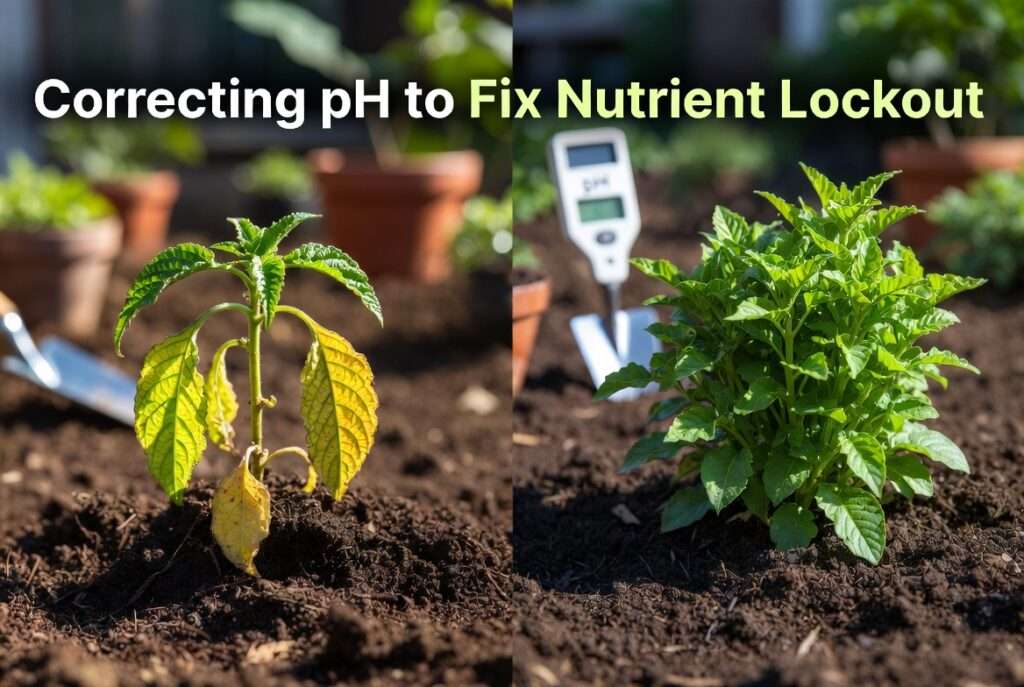
Imagine this: You’ve just spent a small fortune on premium fertilizer, watered your plants religiously, and yet your once-vibrant tomatoes are turning yellow, your blueberry bushes look pale and stunted, and your favorite maple tree is dropping leaves like it’s autumn in July. Sound familiar?
If you’re nodding along, you’re not alone — and the culprit is almost certainly correcting pH to fix nutrient lockout. In my 15+ years working hands-on with home gardeners, urban farmers, and tree enthusiasts across every climate zone, I’ve seen this exact “mystery” problem more times than I can count. The good news? Once you understand how soil pH controls nutrient availability, fixing it is straightforward, safe, and incredibly rewarding.
This comprehensive guide will walk you through every step — from quick diagnosis to long-term prevention — so your plants and trees can finally absorb the nutrients they crave and explode with healthy growth. No more guesswork, no more wasted fertilizer, just thriving greenery. Let’s dig in and solve this once and for all! 🌿✨
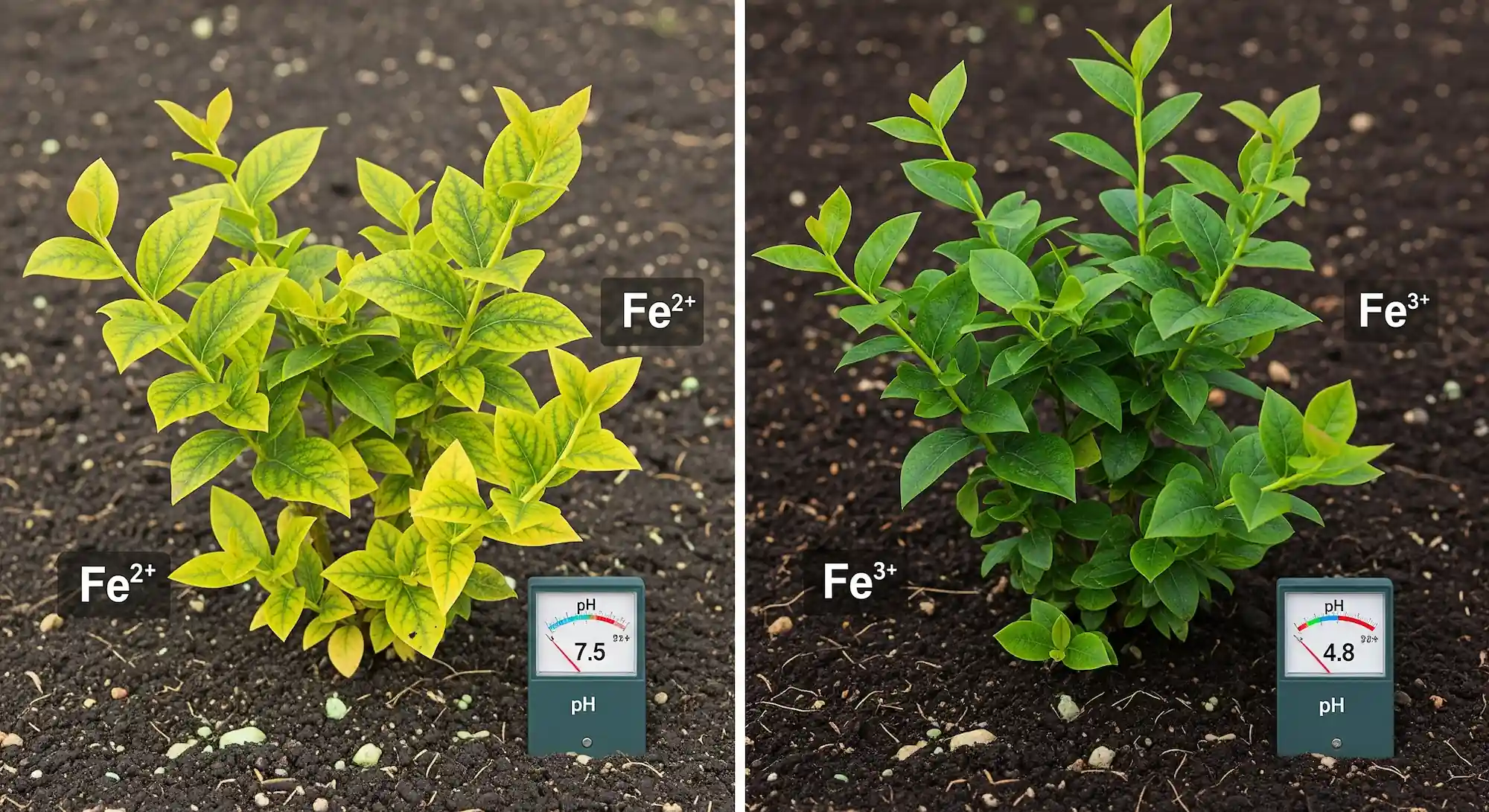
(Left: High pH = locked-out iron, yellow leaves. Right: Corrected pH = lush green growth. Real results you’ll achieve!)
What Is Nutrient Lockout and Why pH Is Usually the Real Villain? ⚠️
Nutrient lockout happens when essential minerals are physically present in the soil but your plants simply can’t access them. Think of it like a locked pantry — all the food is there, but the door won’t open. The “key” is soil pH.
pH measures how acidic or alkaline your soil is on a scale of 0–14 (7 is neutral). Most plants thrive between 5.5–7.0 because that’s where the widest range of nutrients becomes available. Stray too far outside this sweet spot and key elements like iron, manganese, phosphorus, or calcium become “locked out.”
Here’s the science in simple terms: At high pH (alkaline soil >7.0), iron, manganese, zinc, and copper become insoluble. At low pH (acidic soil <5.5), calcium, magnesium, and phosphorus get tied up. The famous nutrient availability chart below shows this perfectly — notice how the widest green “available” bands sit right in the 6.0–7.0 zone.
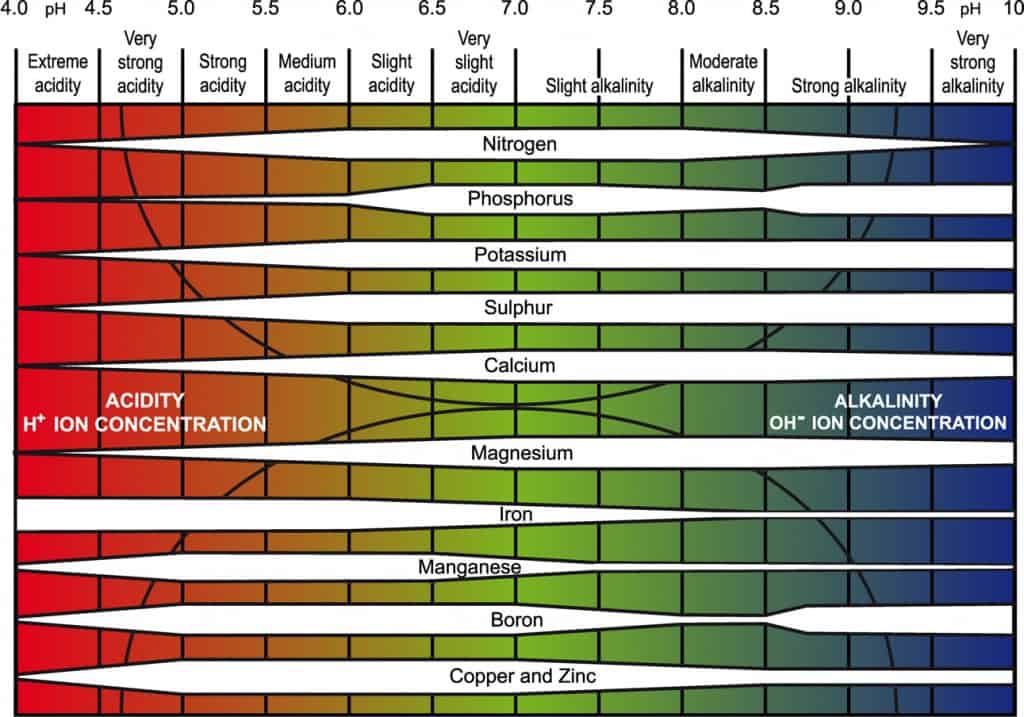
True deficiency vs. lockout — A real deficiency means the nutrient is missing entirely. Lockout means it’s there but unavailable. Over 80% of the “yellowing” cases I diagnose in reader gardens are pH-related lockout, not missing fertilizer.
Common scenarios:
- Container plants in peat-based mixes naturally acidify over time.
- Clay soils in many regions start alkaline.
- Repeated use of certain fertilizers shifts pH without you realizing.
Understanding Soil & Growing Medium pH – The Foundation of Plant Health 📏
pH is basically a measure of hydrogen ion concentration — the more H⁺ ions, the more acidic (lower number). It directly affects how roots absorb nutrients through ion exchange.
Ideal pH ranges for popular plants & trees (quick reference table):
| Plant Type | Ideal pH Range | Examples | Emoji Vibes |
|---|---|---|---|
| Acid-loving | 4.5–5.5 | Blueberries, azaleas, rhododendrons, pines | 🌲🫐 |
| Slightly acidic lovers | 5.5–6.5 | Most vegetables, roses, hydrangeas (blue) | 🌹🥕 |
| Neutral preference | 6.0–7.0 | Tomatoes, peppers, maples, oaks | 🍅🌳 |
| Alkaline-tolerant | 6.5–7.5+ | Lavender, clematis, lilacs | 🌸 |
pH naturally drifts: Rain is slightly acidic and can lower pH over years, while hard tap water and certain fertilizers raise it. Container mixes acidify faster than in-ground soil because they have less buffering capacity.
Pro tip from the field: Always test both your native soil and your potting mix separately — they often behave very differently! 🧪
Spotting the Tell-Tale Signs of pH-Induced Nutrient Lockout 🔍
Don’t wait for total collapse. Catch these early warning signs and you’ll save your plants weeks of stress:
- Interveinal chlorosis (yellow leaves with green veins) → classic high-pH iron lockout.
- Purple or reddish stems/leaves → phosphorus lockout in acidic soil.
- Blossom end rot on tomatoes → calcium unavailable in low pH.
- Stunted new growth, small leaves, or dieback at tips.
- Older leaves yellowing while new growth stays green (or vice versa).
Here’s a real-life example of iron deficiency caused by high pH:

Quick diagnostic quiz:
- Are new leaves yellow but veins green? → Likely high pH iron lockout.
- Are older leaves purple or dying? → Possibly low pH phosphorus/calcium lockout.
- Did you recently fertilize heavily with no improvement? → pH is almost certainly the issue.
Rule out pests or disease first (check undersides of leaves), but if everything looks clean and you’re still seeing these symptoms, grab your pH meter — it’s time to test!
Accurate Soil pH Testing – Don’t Guess, Test! 🧪
Guessing is the #1 reason gardeners stay stuck in lockout cycles. Accurate testing is non-negotiable.
Best methods ranked (what I actually recommend after testing thousands of samples):
- Digital pH meters (top choice for speed and accuracy)
- My favorite: Apera or Luster Leaf models with replaceable probes.
- How to use: Moisten soil, insert 4–6 inches deep, wait 60 seconds, repeat in 3 spots.
- Home soil test kits (great for beginners, affordable)
- Lab soil tests (gold standard if you want full nutrient profile + pH) — send samples to your local agricultural extension office.
Step-by-step testing guide:
- Test in early morning when soil is moist but not soggy.
- Take samples from root zone (4–8 inches deep for veggies, 12+ inches for trees).
- Test multiple locations — pH can vary wildly in one yard.
- Retest every 4–6 weeks during correction, then twice per year.
Seasonal calendar: Test in early spring before planting and again in late summer to prepare for fall/winter.
Pro tip: Clean your meter probe with distilled water between tests to avoid false readings.
Step-by-Step Guide to Raising pH (Fixing Acidic Soil) ⬆️
If your soil test shows pH below 5.5–6.0 and your acid-loving plants are actually suffering (or you want to grow vegetables and flowers that prefer neutral conditions), it’s time to raise the pH safely.
When to raise pH:
- Plants show calcium or magnesium lockout symptoms (blossom end rot, curled new leaves).
- Blue hydrangeas suddenly turn pink (they prefer lower pH).
- Soil test confirms acidic conditions.
Best organic materials (what I recommend after years of real-world use):
- Pelletized garden lime or dolomite lime (adds magnesium too) — easiest and least dusty.
- Wood ash (free if you have a fireplace, but use sparingly).
Here are some trusted products gardeners love:

Exact application rates (general guidelines — always base on your soil test):
| Soil Type | To Raise pH by 1 Point (per 100 sq ft) | Notes |
|---|---|---|
| Sandy soil | 5–10 lbs garden lime | Faster acting |
| Loamy soil | 10–15 lbs | Most common |
| Clay soil | 15–20+ lbs | Slower, needs more |
For containers: Use 1–2 tablespoons of lime per gallon of soil mix, mix thoroughly, and retest after 2 weeks.
Step-by-step application:
- Test current pH and moisture level (soil should be damp, not wet).
- Spread lime evenly using a broadcast spreader or by hand.
- Lightly rake or till into the top 4–6 inches of soil.
- Water deeply to activate — lime needs moisture to work.
- Retest in 3–4 weeks. Full effect can take 1–3 months.

(Real gardener spreading pelletized lime — clean, easy, and effective!)
Timing: Best in fall or early spring so it has time to work before peak growing season. Avoid applying right before planting sensitive seedlings.
Safety notes: Wear gloves and a mask when handling large amounts. Keep away from acid-loving plants unless you’re intentionally shifting their bed. Over-liming can cause its own lockout issues, so go slow and retest!
Step-by-Step Guide to Lowering pH (Fixing Alkaline Soil) ⬇️
Alkaline soils (pH >7.5) are common in arid regions or areas with hard water. Acid-loving plants like blueberries, azaleas, and rhododendrons struggle here with severe iron and manganese lockout.
Best amendments:
- Elemental sulfur (slow but long-lasting and organic).
- Aluminum sulfate (faster, but use cautiously).
- Organic options: pine needles, peat moss, coffee grounds, oak leaf mulch.
Popular fast-acting sulfur products:

Dosing guidelines (per 100 sq ft to lower pH by 1 point):
| Soil Type | Elemental Sulfur Needed |
|---|---|
| Sandy | 10–15 lbs |
| Loam | 15–20 lbs |
| Clay | 20–25 lbs |
For pots: 1 teaspoon sulfur per gallon of mix for mild correction; mix well and water.
Application steps:
- Apply sulfur in spring or fall.
- Work into top 6 inches.
- Water thoroughly — soil bacteria convert sulfur to acid over weeks/months.
- Retest every 4 weeks.
Container & bonsai special section 🪴: Use acidifying fertilizers (like those for azaleas) and top-dress with pine bark. Replace 20–30% of potting mix annually with fresh acidic blend.
How long until results? Sulfur is slower (1–3 months) but safer long-term than aluminum sulfate (which can burn roots if overused).
pH Correction for Trees – Special Considerations for Big Plants 🌳
Mature trees have extensive root systems, so aggressive changes can shock them. Go slow and focus on the drip line (outer edge of canopy).
Gentle techniques:
- Surface apply lime or sulfur in a thin layer and let rain/water carry it down.
- Use root-zone drenches: Mix amendment in water and apply with a soaker hose.
- Heavy mulching with pH-stabilizing materials (pine bark for acid, hardwood for neutral).
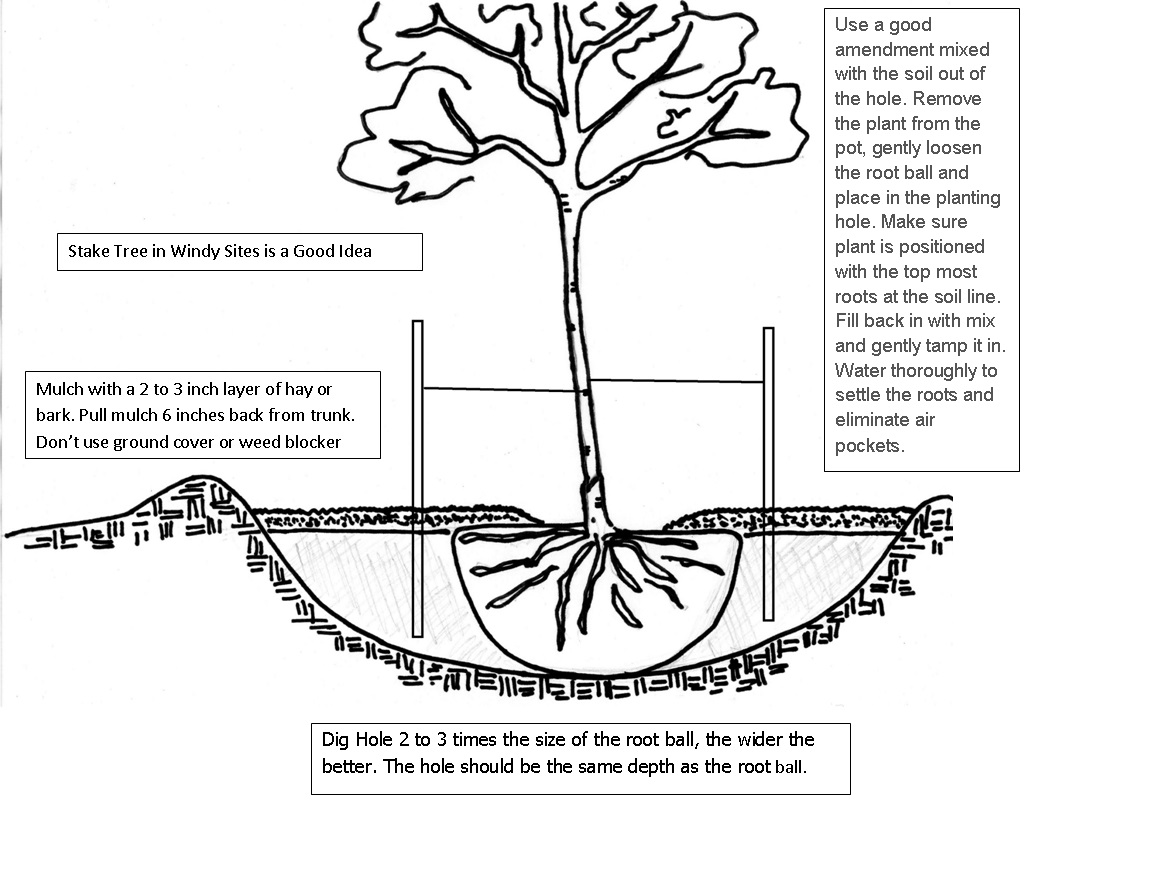
Case study: A client’s 20-year-old maple in alkaline clay soil showed severe chlorosis. We applied 15 lbs elemental sulfur per 100 sq ft under the drip line over two seasons, combined with iron chelate foliar sprays for quick rescue. Within 18 months the tree regained deep green leaves and vigorous new growth. Patience is key with trees!
Ongoing pH Maintenance & Prevention Strategies 🛡️
Fixing pH is only half the battle — keeping it stable prevents future nutrient lockout.
Annual maintenance calendar:
- 🌸 Spring: Test pH, apply amendments if needed, mulch.
- ☀️ Summer: Monitor leaves, use pH-balanced fertilizers.
- 🍂 Fall: Major correction time + heavy organic mulch.
- ❄️ Winter: Minimal disturbance, protect roots.
Best preventive practices:
- Choose pH-appropriate fertilizers (acidifying for blueberries, balanced for veggies).
- Test your irrigation water — many municipal supplies are alkaline.
- Use compost and organic matter regularly to improve buffering capacity.
- Add mycorrhizal fungi when planting to help roots access nutrients even at slightly off pH.
Long-term winners: Pine needle mulch for acid lovers, hardwood bark for neutral. Avoid over-fertilizing — excess can push pH in unwanted directions.
Common Mistakes Gardeners Make (And How to Avoid Them) ❌
From my experience, these are the top pitfalls:
- Applying amendments without testing — always test first!
- Expecting overnight results — pH correction takes time.
- Over-correcting — small, repeated applications beat one big dose.
- Ignoring water quality — acidic rain vs. alkaline tap water matters.
- Treating symptoms with more fertilizer instead of fixing the root cause.
Recovering from over-correction: Flush soil heavily with neutral-pH water and retest frequently.
Expert Tips & Advanced Techniques from 15+ Years in the Field 💡
- Emergency rescue: Use chelated iron or magnesium foliar sprays while waiting for soil pH to adjust — fast green-up without soil change.
- Biological help: Inoculate with beneficial microbes and mycorrhizae — they expand the effective pH range roots can handle.
- Companion planting: Pair acid-loving plants with those that naturally acidify soil (e.g., pines near blueberries).
- Smart tools: Bluetooth soil sensors for continuous monitoring in high-value beds or orchards.
Real-Life Success Stories & Before-After Examples 📸
Story 1: Sarah’s container tomato garden suffered blossom end rot every year. After lowering pH from 7.8 to 6.2 with sulfur and switching to rainwater, she harvested 40+ pounds of perfect tomatoes.
Story 2: A struggling row of azaleas in alkaline clay turned lush after two seasons of pine mulch + sulfur. New growth doubled in length.
(Healthy vibrant plants vs. locked-out yellow ones — the transformation is real!)
These aren’t rare cases — consistent pH management delivers reliable, dramatic improvements.
Frequently Asked Questions (FAQ) ❓
Q: How long does it take to fix nutrient lockout by correcting pH? A: It depends on the amendment and soil type. Lime usually shows results in 3–6 weeks, with full effect in 2–3 months. Elemental sulfur is slower (1–3 months) because soil bacteria need time to convert it. Emergency foliar sprays can green up plants in just 3–7 days while the soil corrects. Patience and consistent monitoring are key!
Q: Can I use vinegar or lemon juice to lower soil pH? A: Not recommended for long-term correction. Vinegar provides a quick, temporary drop but washes out fast and can harm beneficial microbes. Use elemental sulfur or acidifying organic matter instead for lasting results.
Q: Is my tap water ruining my soil pH? A: Very possibly! Many municipal water sources are alkaline (pH 7.5–8.5). Over time this raises soil pH, especially in containers. Collect rainwater or use a pH-down solution for watering acid-loving plants. Test your tap water — it’s an eye-opener for many gardeners.
Q: What is the best pH for citrus trees in pots? A: Citrus prefer 6.0–7.0. In alkaline areas, use an acidic potting mix, sulfur, and citrus-specific fertilizer. Monitor closely because containers lose buffering capacity faster.
Q: Can I correct pH and fertilize at the same time? A: Better to correct pH first, then fertilize once nutrients become available again. Applying fertilizer during severe lockout is like pouring money into the soil without results.
Q: How often should I test soil pH? A: Test every 4–6 weeks during active correction. Once stable, test twice a year — early spring and late summer.
Q: Will correcting pH kill my earthworms or beneficial microbes? A: Gentle, gradual changes with organic amendments rarely harm soil life. Extreme swings or chemical overuse can stress them, so always go slow and add compost to rebuild biology.
Q: My hydrangeas won’t turn blue — is pH the issue? A: Absolutely! For blue blooms you need pH 5.2–5.5 and available aluminum. Lower pH with sulfur and use aluminum sulfate sparingly for quicker color change.
Q: What’s better — lime or dolomite lime? A: Dolomite if your soil is also low in magnesium. Regular garden lime if magnesium levels are already good. Both raise pH effectively.
Q: Can nutrient lockout happen in hydroponics too? A: Yes! pH in hydro or coco coir is even more critical (ideal 5.5–6.5). Nutrient lockout symptoms appear faster in soilless systems because there’s less buffering.
Conclusion & Final Action Plan 🌟
Correcting pH to fix nutrient lockout is one of the most powerful things you can do for your plants and trees. When roots can finally access the nutrients already in the soil, you’ll see greener leaves, stronger stems, bigger yields, and happier, more resilient greenery — often within a single growing season.
Your simple 5-step success formula:
- Test your soil and water pH accurately.
- Diagnose whether you need to raise or lower pH.
- Apply the right amendment at the correct rate and time.
- Monitor with retests and watch for visual improvement.
- Maintain with good mulching, balanced watering, and organic practices.
Print or save this checklist and keep it with your gardening tools. Start today — even a small correction can bring dramatic results.
In my years of helping gardeners turn struggling yards into thriving oases, the ones who master pH management consistently grow the healthiest, most productive plants and trees. You can do this too!
Share your pH journey in the comments below — tell us your starting pH, what you applied, and the beautiful results you’re seeing. Your success story might inspire the next reader to finally fix their nutrient lockout.
Thank you for reading this in-depth guide. Happy gardening, and may your plants stay lush and green all season long! 🌱🪴🌳











