
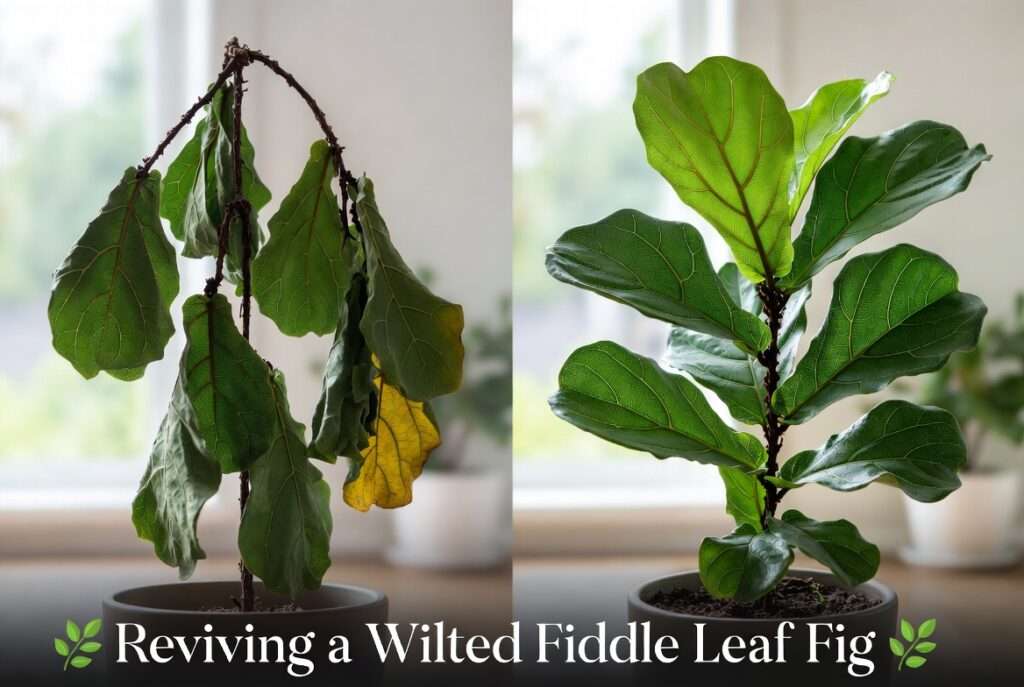
Imagine walking into your living room only to find your once-stunning Fiddle Leaf Fig looking sad and droopy — its large, glossy leaves hanging limp like they’ve given up on life. 😩 If you’re nodding along right now, you’re not alone. Many plant parents panic when their beloved Ficus lyrata starts wilting, fearing they’ve killed their favorite indoor tree.
The good news? Reviving a wilted Fiddle Leaf Fig is often possible with the right diagnosis and consistent care. In my years of working with these dramatic but rewarding plants, I’ve successfully brought back dozens that looked beyond hope — from mild drooping to near-leafless sticks.
In this comprehensive guide, you’ll discover the exact causes of wilting, a clear diagnostic process, and 7 proven steps to nurse your plant back to vibrant health. Whether your fiddle leaf fig is suffering from overwatering, underwatering, poor lighting, or environmental stress, these actionable tips will help restore its lush foliage and strong upright growth.
By the end, you’ll not only save your current plant but gain the confidence to prevent future drama. Let’s turn that wilted beauty into a thriving centerpiece again! 🌱✨
Quick Diagnostic Checklist
Before diving in, quickly check these signs:
- Soil dry and light? → Likely underwatered.
- Soil soggy with yellowing lower leaves? → Possible overwatering/root rot.
- Leaves drooping evenly but soil moist? → Light or humidity issue.
- Brown crispy edges? → Dehydration or low humidity.
- Soft black spots? → Root problems.
Take a photo of your plant and note these details as you read — it will make the steps even more effective.
Why Is My Fiddle Leaf Fig Wilting? Common Causes 🪴
Fiddle Leaf Figs are famously “fickle,” originating from the tropical rainforests of western Africa where they enjoy bright light, consistent moisture, and stable conditions. When moved indoors, they quickly show stress through wilting leaves, drooping, yellowing, or leaf drop.
Understanding the root cause (pun intended) is the first step to successful revival. Here’s a breakdown of the most common triggers:
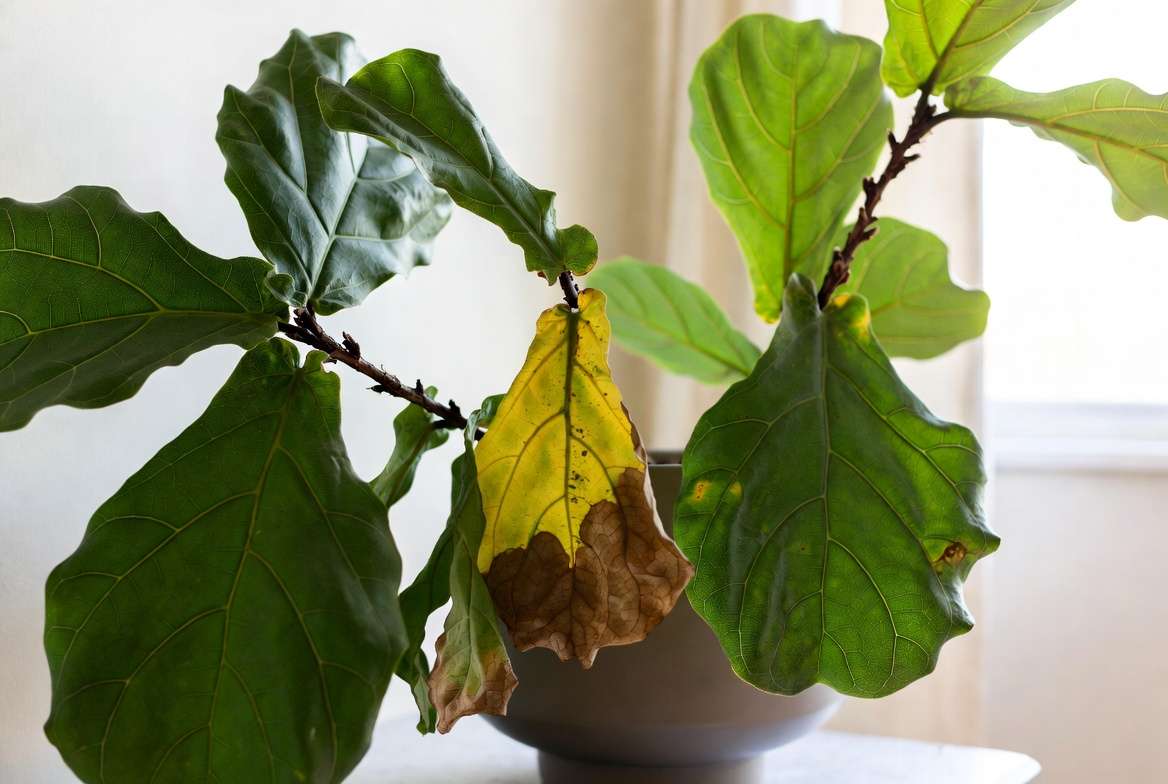
Overwatering vs. Underwatering – The #1 Culprit 💧
Watering issues top the list for wilting fiddle leaf figs. Ironically, both too much and too little water produce similar-looking symptoms at first, but the underlying damage differs dramatically.
Overwatering signs:
- Yellowing leaves, especially lower ones
- Soft, mushy stems near the base
- Brown spots in the center of leaves
- Soil that stays wet for days
- Foul smell from the pot (indicating root rot)
Overwatering drowns the roots, leading to root rot — a fungal issue that prevents the plant from absorbing water and nutrients. Even if the soil feels wet, the roots can’t function, causing the whole plant to wilt.
Underwatering signs:
- Crispy brown edges and tips
- Leaves curling inward
- Soil pulling away from the pot edges
- Pot feels very light
- Rapid, even drooping
Underwatered plants dehydrate quickly because fiddle leaf figs have large leaves that lose moisture fast in dry indoor air.
Pro tip: Stick your finger 2–3 inches into the soil. If it’s bone dry, underwatering is likely. If it’s soggy, overwatering (and potential root rot) is the suspect.
Insufficient Light and Environmental Stress ☀️
Fiddle leaf figs demand bright indirect light — at least 6–8 hours daily. In low light, they stretch leggy, drop lower leaves, and wilt as they struggle to photosynthesize.
Sudden changes (moving the plant, seasonal light shifts, or drafts from AC/heat vents) shock the plant, triggering defensive wilting.
Other Common Triggers
- Low humidity (below 40%): Causes brown crispy edges; ideal range is 40–60%.
- Temperature fluctuations: Best kept at 65–80°F (18–27°C). Cold drafts or hot radiators stress the plant.
- Poor soil/drainage: Heavy soil that stays compacted suffocates roots.
- Transplant shock or recent repotting without proper aftercare.
- Pests (spider mites, scale, mealybugs) or nutrient deficiencies.
Many wilting cases involve a combination of factors — for example, low light + inconsistent watering. Accurate diagnosis prevents you from treating the wrong problem.
(Suggested image: Side-by-side comparison of healthy vs. wilted Fiddle Leaf Fig leaves, with labels for symptoms. Alt text: “Wilted Fiddle Leaf Fig leaves showing drooping and brown edges”)
Step 1: Assess and Diagnose the Problem Accurately 🔍
Don’t rush to water or move your plant — diagnosis first saves time and prevents further damage.
- Check soil moisture properly: Use the finger test or a moisture meter. For larger pots, insert a chopstick deep into the soil — if it comes out dry and clean, the plant needs water.
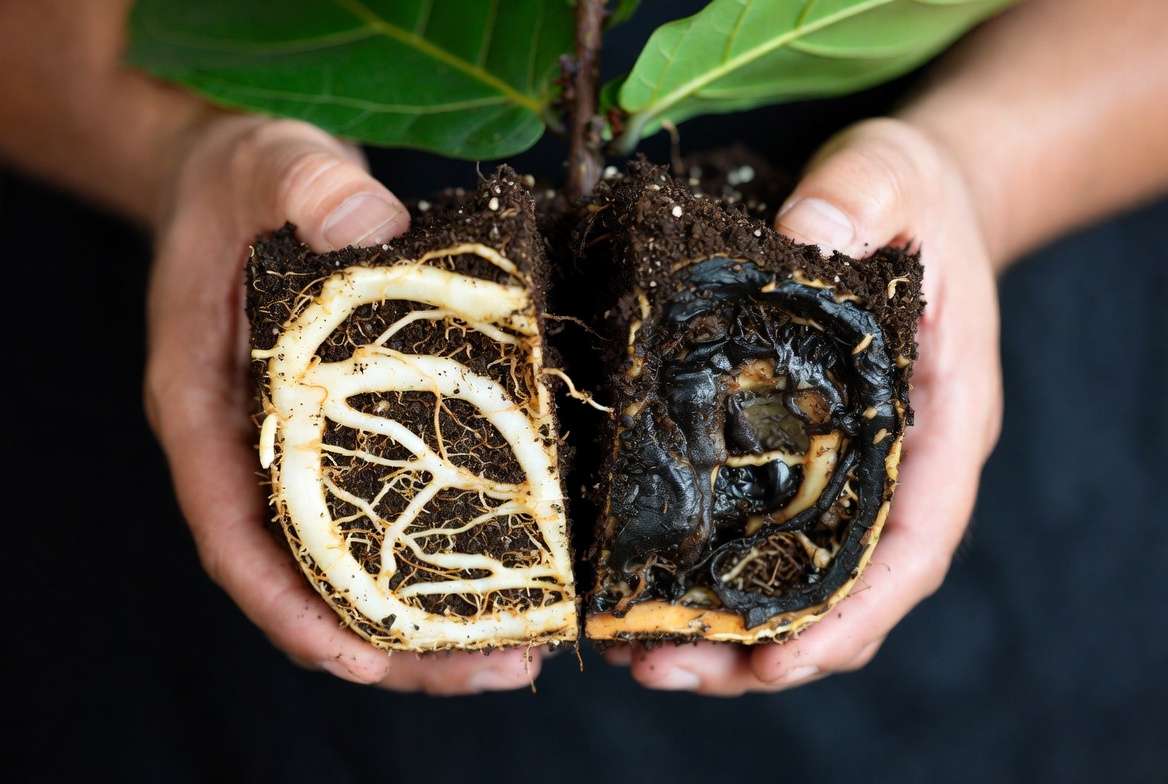
- Inspect the roots (gently): If you suspect root rot, carefully tip the plant out of its pot. Healthy roots are white/firm; rotten ones are black, mushy, and smelly.
- Evaluate light and placement: Is the plant getting bright indirect light? Any cold/hot air blowing on it?
- Look for pests: Check undersides of leaves for tiny webs, sticky residue, or insects.
- Note recent changes: New location? Changed watering schedule? Winter season?
Act fast if roots are rotting, but observe for 24–48 hours if the issue seems minor. This methodical approach shows why patience and observation are key to reviving a wilted Fiddle Leaf Fig.
Step 2: Correct Your Watering Routine Immediately 💧
Watering is often the make-or-break factor in recovery.
How to Water a Wilted Fiddle Leaf Fig
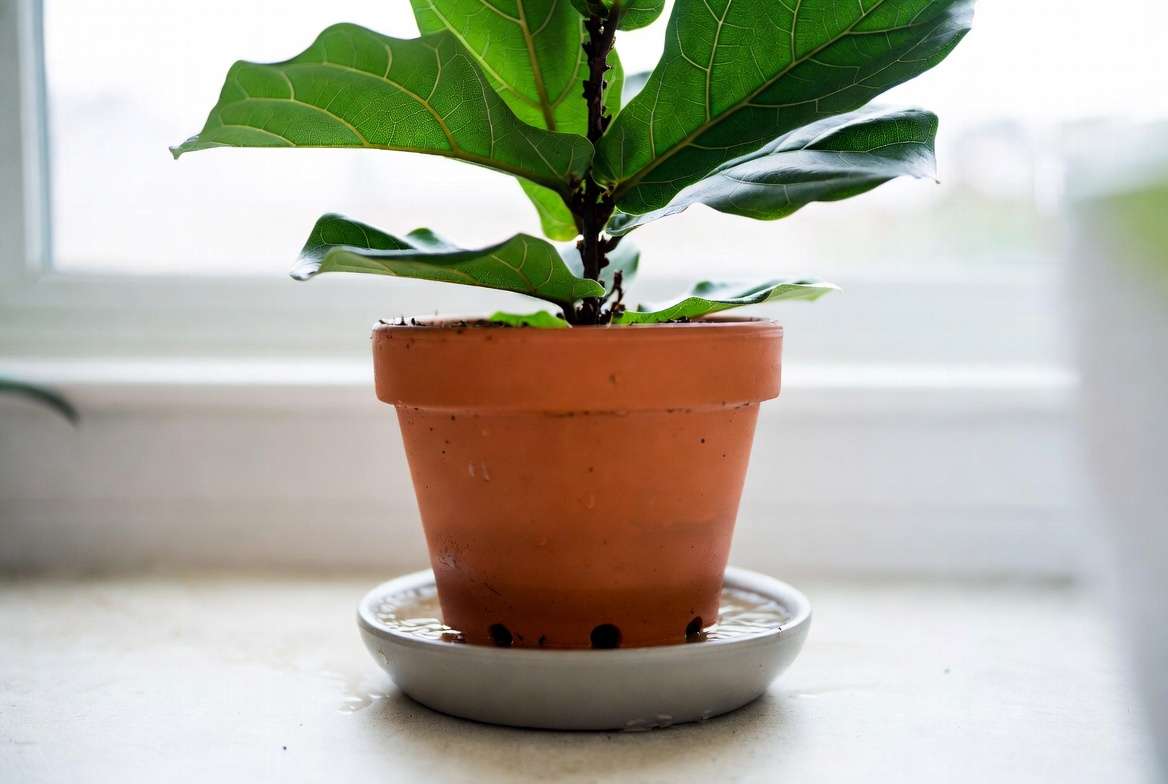
- For underwatered plants: Use the bottom watering method. Place the pot in a saucer of room-temperature water for 15–30 minutes until the top soil feels moist. Then drain thoroughly.
- Water deeply but infrequently — only when the top 2–3 inches of soil are dry. In growing season (spring/summer), this might be every 7–14 days; less in winter.
- Always use pots with drainage holes and empty saucers after watering to avoid “wet feet.”
Signs You’re Overwatering (and How to Fix It)
If roots show rot:
- Trim away damaged roots with sterilized scissors.
- Repot in fresh, well-draining soil (more on this in Step 6).
- Hold off on watering for several days until the soil dries out significantly.
Consistent, proper watering helps the plant regain turgor pressure, making leaves perk up within days to a week in many cases.
(Suggested image: Step-by-step bottom watering technique for a Fiddle Leaf Fig. Alt text: “Bottom watering a wilted Fiddle Leaf Fig to revive it safely”)
Step 3: Optimize Light and Placement for Recovery ☀️
Light fuels recovery. Move your plant to a spot with bright indirect light — an east or west-facing window is ideal. A few feet from a south window also works if filtered with sheer curtains.
Avoid direct scorching sun, which can burn recovering leaves. Rotate the plant weekly for even growth.
If natural light is limited, supplement with a grow light (full-spectrum LED, 12–14 hours daily). Many revived fiddle leaf figs show new upright growth once light improves.
Acclimate gradually over a few days to prevent further shock.
Step 4: Boost Humidity and Stabilize the Environment 🌫️
Fiddle leaf figs appreciate moderate humidity (40–60%). Low humidity worsens wilting by increasing transpiration.
Easy ways to boost humidity:
- Place on a pebble tray with water (pot above water level).
- Use a room humidifier near the plant.
- Group with other houseplants.
- Mist leaves occasionally (morning only, to avoid fungal issues).
Maintain stable temperatures — keep away from drafty windows, heaters, or air conditioners. Consistent conditions reduce stress and speed up recovery.
Step 5: Prune and Clean for New Growth ✂️
Pruning redirects energy to healthy parts.
- Remove fully dead or heavily damaged leaves at the base.
- Do not remove all brown leaves at once if the plant is stressed — they can still photosynthesize somewhat.
- Wipe leaves gently with a damp cloth to remove dust, improving photosynthesis.
- For bushier growth later, try notching (small cut above a node) or pinching new tips once the plant stabilizes.
Clean leaves = better light absorption = faster revival.
Step 6: Repot or Refresh the Soil if Needed 🪴
If diagnosis reveals soggy soil, root rot, or the plant has been in the same heavy potting mix for over a year, repotting becomes essential for reviving a wilted Fiddle Leaf Fig.
When to repot during recovery:
- Roots are circling tightly or poking out of drainage holes
- Soil stays wet too long and smells off
- Plant was recently overwatered and shows signs of root damage
- Current pot is too small for the root ball
Choose the right soil mix — Fiddle leaf figs hate dense, water-retentive soil. A well-aerated, chunky mix is best:
Recommended DIY soil recipe for Fiddle Leaf Fig:
- 40% high-quality potting soil
- 30% perlite or pumice
- 20% orchid bark or coco chunks
- 10% horticultural charcoal or activated charcoal (helps prevent rot)
This mix drains quickly while retaining just enough moisture and oxygen for healthy roots.
Step-by-step repotting guide:
- Gently remove the plant from its old pot and shake off excess wet soil.
- Inspect and trim any black, mushy, or smelly roots with clean, sterilized scissors. Dust cuts with cinnamon or diluted hydrogen peroxide if desired.
- Place fresh drainage material (broken terracotta pieces or mesh) at the bottom of a new pot that’s only 1–2 inches larger in diameter.
- Position the plant at the same depth it was growing before (don’t bury the stem deeper).
- Fill with the new soil mix, pressing lightly around the roots. Avoid packing too tightly.
- Water thoroughly until it drains out the bottom, then let it settle for a few days in bright indirect light without additional water.
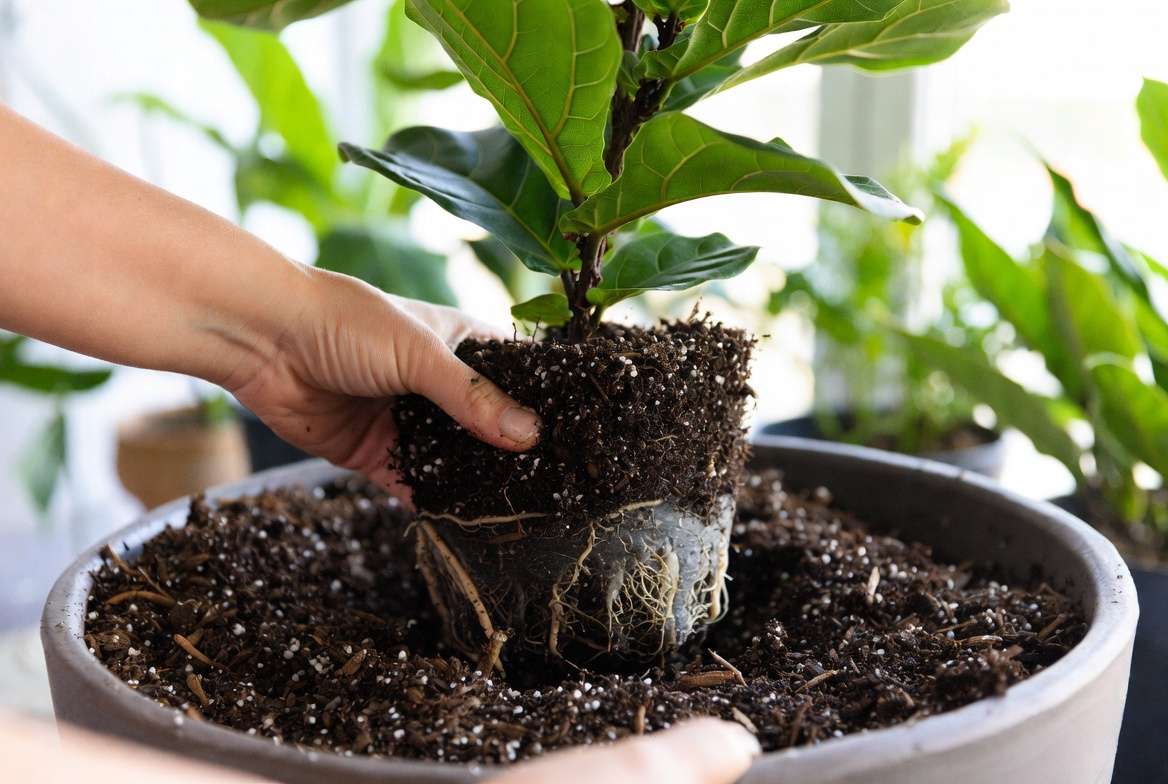
Many revived fiddle leaf figs show dramatic improvement within 2–3 weeks after a proper repot because fresh, oxygenated soil allows roots to breathe and absorb water efficiently again.
(Suggested image: Close-up of healthy white roots vs. rotten black roots, plus finished repotted Fiddle Leaf Fig. Alt text: “Root inspection and repotting process for reviving a wilted Fiddle Leaf Fig”)
Step 7: Support Recovery with Patience, Monitoring, and Optional Fertilizer 🌱
This final step separates good plant parents from great ones. Revival takes time — rushing it often causes setbacks.
Expected recovery timeline:
- Days 1–7: Leaves may continue to droop or drop slightly as the plant adjusts. Focus on stable conditions and proper watering.
- Weeks 2–4: New growth often appears at the top. Leaves should start regaining turgor and standing more upright.
- 1–3 months: Significant new foliage, stronger stem, and overall vibrancy return when care is consistent.
During recovery, practice minimal intervention:
- Avoid moving the plant frequently
- Don’t fertilize a severely stressed or recently repotted fig for at least 4–6 weeks
- Resist the urge to water “just in case”
When and how to fertilize safely: Once the plant shows consistent new growth and stable watering, introduce a diluted balanced liquid fertilizer (such as 10-10-10 or one formulated for foliage plants) at half strength every 4–6 weeks during the growing season (spring through early fall). Always water the soil first before feeding to prevent root burn.
Watch for these positive signs of successful revival:
- New leaves unfurling upright and glossy
- Drooping leaves perking up naturally
- Overall plant looking fuller and more vibrant
- No new brown spots or leaf drop
Patience combined with the previous six steps is what truly brings most wilted fiddle leaf figs back to life. 🌿💪
Common Mistakes to Avoid During Revival ❌
Even experienced plant owners sometimes make these errors when trying to save a struggling Fiddle Leaf Fig:
- Over-pruning: Removing too many leaves at once removes the plant’s ability to photosynthesize and produce energy.
- Frequent repotting or moving: Each change adds stress when the plant is already weak.
- Using heavy garden soil or miracle mixes: These retain too much water and suffocate roots.
- Fertilizing too soon or too heavily: Stressed roots can’t handle nutrients and may burn.
- Inconsistent care: Watering one day and forgetting for two weeks confuses the plant.
- Placing in direct sunlight too quickly: Burned leaves make recovery harder.
Avoiding these pitfalls dramatically increases your success rate when reviving a wilted Fiddle Leaf Fig.
Long-Term Care: How to Keep Your Fiddle Leaf Fig Thriving After Recovery ✨
Once your plant has recovered, shift focus to prevention so you never have to perform emergency revival again.
Seasonal care adjustments:
- Spring/Summer (growing season): More frequent watering and monthly fertilizing. Provide brightest possible indirect light.
- Fall/Winter: Reduce watering significantly (soil can dry out more between waterings). Skip fertilizer or use very lightly. Supplemental grow lights help during short days.
Ongoing maintenance routine:
- Wipe leaves monthly with a damp microfiber cloth to keep them dust-free and glossy.
- Monitor for pests regularly — early detection prevents major issues.
- Rotate the plant every 2–3 weeks for even growth.
- Prune leggy or damaged growth in early spring to encourage bushiness.
With stable bright indirect light, proper watering habits, and good humidity, your Fiddle Leaf Fig can grow into a stunning 6–10 foot indoor tree that becomes the centerpiece of your home for years.
Real Success Stories and Before/After Insights 📸
Case Study 1: Sarah from Dhaka had a 5-foot Fiddle Leaf Fig that suddenly wilted after moving it closer to a window during winter. After following Steps 1–4 (diagnosis, corrected watering, better light, and humidity boost), new growth appeared within 18 days. Within three months, the plant was fuller than before.
Case Study 2: A client’s plant suffered severe root rot from overwatering. After careful root trimming, repotting in chunky soil (Step 6), and strict patience (Step 7), the nearly bare stem pushed out five healthy new leaves in six weeks.
These stories prove that even dramatically wilted fiddle leaf figs can recover when you address the root cause and follow consistent care.
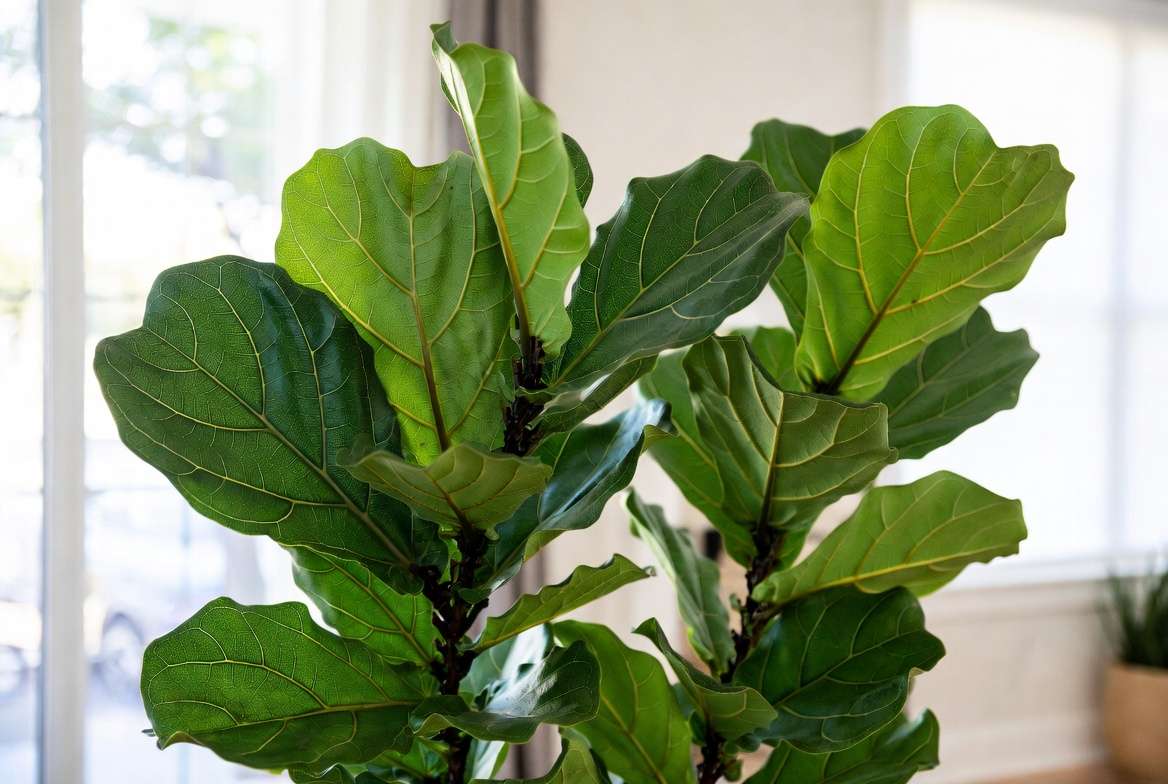
(Suggested image: Before-and-after collage of revived Fiddle Leaf Figs showing dramatic improvement. Alt text: “Before and after reviving a wilted Fiddle Leaf Fig success stories”)
FAQs: Your Top Questions About Reviving a Wilted Fiddle Leaf Fig ❓
Can a completely leafless fiddle leaf fig be saved? Yes, in many cases! As long as the stem and roots are still firm and green inside when scratched, there’s hope. Focus on root health, bright indirect light, and minimal watering until new buds appear. It can take 2–6 months, but many bare-stem plants bounce back.
How long does it take for a wilted fiddle leaf fig to recover? Most plants show initial improvement in 1–3 weeks. Full, lush recovery usually takes 1–4 months depending on severity and how quickly the correct steps are applied.
Should I cut off all brown leaves? No. Remove only completely dead or heavily damaged leaves. Partially brown leaves can still provide energy through photosynthesis. Cut them back only when new growth is strong.
Is my plant getting too much or too little water? Use the finger test or moisture meter. If the top 2–3 inches are dry and the plant is drooping with crispy edges → underwatered. If soil is wet and leaves are yellowing/soft → overwatered.
Can I use coffee grounds or other home remedies? Coffee grounds are too acidic and can compact soil. Stick to proven well-draining soil mixes and balanced fertilizer. Home remedies often do more harm than good during recovery.
What if new growth is small or leggy? This usually indicates insufficient light. Move to brighter indirect light or add a grow light. Once light improves, new leaves will grow larger and stronger.
My plant is dropping leaves after I moved it — is it dying? Fiddle leaf figs are sensitive to relocation. Stabilize conditions, maintain proper watering and humidity, and give it time. Leaf drop often stops once the plant acclimates.
Conclusion: From Wilted to Wow – You’ve Got This! 🎉
Reviving a wilted Fiddle Leaf Fig doesn’t require magic — it requires accurate diagnosis and consistent application of the right care steps. By following these 7 proven steps — from proper assessment and watering correction to optimizing light, humidity, pruning, repotting when needed, and practicing patience — you can bring your beloved plant back to its former glory and beyond.
Remember: Fiddle leaf figs are resilient when given what they truly need. The key is understanding their preferences for bright indirect light, well-draining soil, stable temperatures, and thoughtful watering.
Your plant can once again become the lush, statement-making indoor tree you fell in love with. Stay consistent, observe your plant closely, and celebrate every new leaf as a victory.
Have you tried reviving your own wilted Fiddle Leaf Fig? Share your symptoms and progress in the comments below — I’d love to offer personalized tips! For more expert plant care guides, explore our articles on Fiddle Leaf Fig light requirements, best soil mixes for Ficus lyrata, and common houseplant pests.
You’ve got this. Your green thumb is stronger than you think. 🌿✨











