
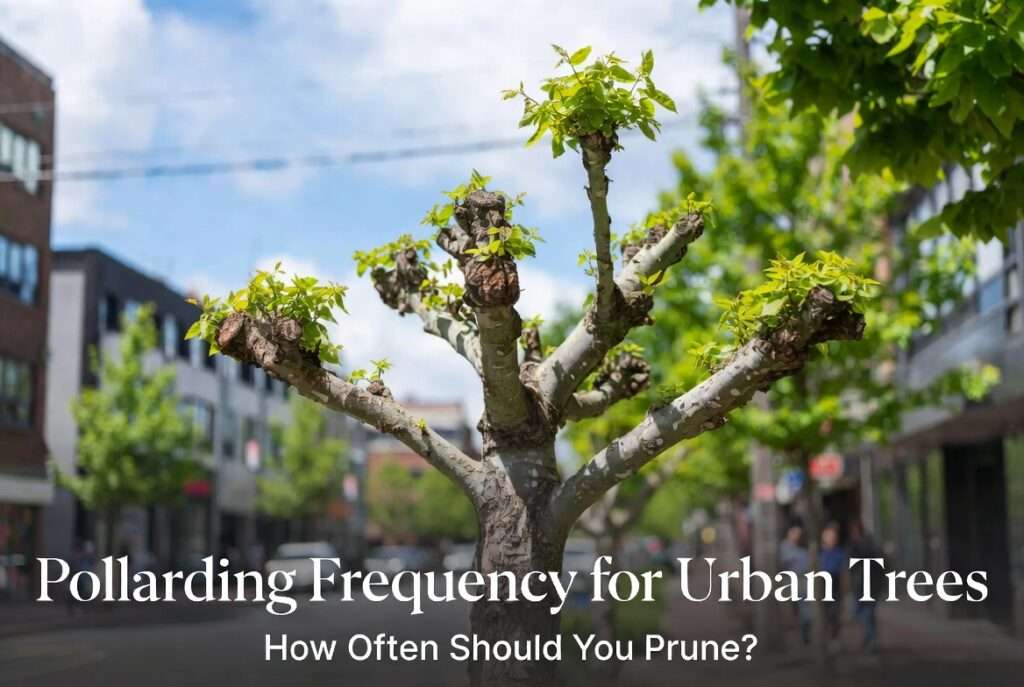
Imagine strolling down a bustling city street lined with perfectly shaped trees that never tangle with power lines, drop dangerous branches during storms, or overwhelm sidewalks—yet stay lush, vibrant, and full of life year after year. 🌟 That’s the quiet magic of pollarding frequency for urban trees done right! If you’ve ever wondered, “How often should I pollard my street trees?” you’re not alone. Get the timing wrong, and you risk weak regrowth, disease entry, or even tree decline. But nail the schedule, and you’ll enjoy compact, resilient canopies that thrive in tight urban spaces.
As a certified arborist with over 15 years managing urban forests in major cities (and drawing directly from International Society of Arboriculture (ISA) Best Management Practices, Royal Horticultural Society (RHS) guidelines, and real-world case studies), I’ve helped municipalities and homeowners transform “problem” trees into city superstars. In this comprehensive guide, we’ll dive deep into pollarding frequency for urban trees—from species-specific schedules to step-by-step techniques—so you can create healthy, safe, and manageable city landscapes without guesswork. Let’s grow smarter together! ✨

What Is Pollarding and How Does It Differ from Other Pruning Techniques? 🌲🔬
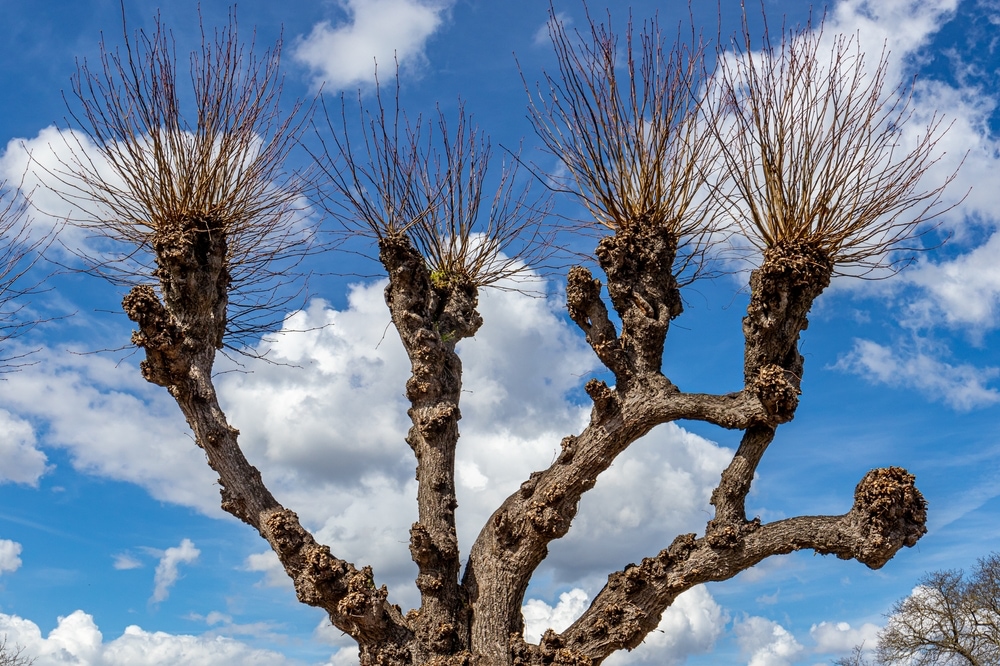
Pollarding is a specialized pruning method where the upper branches of a young tree are cut back to a predetermined height, creating a “pollard head” (those distinctive knobby knuckles). Every season, new shoots sprout from these heads and are then removed at the same point, keeping the tree’s size in check while encouraging vigorous, compact growth.
Unlike topping—which hacks away large branches indiscriminately, leaving ugly stubs and inviting decay—pollarding is precise, sustainable, and performed only on suitable species from a young age. It’s also different from coppicing (cutting the entire tree back to a stump at ground level) and standard crown reduction (thinning the canopy without repeating cuts at fixed points).
Quick comparison table for clarity:
| Technique | Method | Best For | Long-Term Effect |
|---|---|---|---|
| Pollarding | Repeated cuts to fixed heads | Urban size control | Healthy knuckles, vigorous regrowth |
| Topping | Indiscriminate large cuts | Never recommended | Decay, weak structure, decline |
| Coppicing | Cut to ground stump | Wood production | Multi-stem regrowth |
| Crown Reduction | Selective branch shortening | Natural shape | One-time size control |
Backed by ISA standards and PlantAmnesty resources, proper pollarding actually helps trees compartmentalize wounds faster and stay vigorous in polluted, compacted urban soils.
Why Pollarding Is a Game-Changer for Urban Trees 🏙️🌿
In crowded cities, space is everything! Pollarding delivers 8+ powerful benefits that directly solve common urban tree headaches:
- Perfect size control under power lines and near buildings—no more emergency removals.
- Storm resilience with compact canopies that catch less wind.
- Enhanced air quality as healthy pollarded trees filter more pollutants.
- Aesthetic beauty with those sculptural winter skeletons that pop in cityscapes.
- Longer lifespan when started young—properly pollarded trees often outlive their unpruned cousins.
- Safer pedestrian zones with no low-hanging hazards.
- Lower maintenance costs long-term for municipalities and homeowners.
- Eco-friendly biomass—prunings can be chipped for mulch or compost! 🌱
Real data from arborist studies shows pollarded London planes and limes in European cities maintain vigor for decades because annual sprout removal keeps roots and tops in balance.
Pro Tip 💡: Pollarding turns “problem” trees into city superstars! ✨
Key Factors That Determine Pollarding Frequency 📅🔍
Pollarding frequency isn’t one-size-fits-all. Here’s what influences your schedule:
- Tree species and growth rate – Fast growers like willows need more frequent cuts.
- Local climate and urban micro-conditions – Hot, dry cities may require adjustments.
- Tree age, health, and site constraints – Young, vigorous trees in high-traffic spots pollard best.
- Your goals – Ornamental shape? Biomass harvest? Minimal maintenance?
Pro arborists always assess these before setting a calendar.
Recommended Pollarding Frequencies for Popular Urban Tree Species 🌳📊
This is the heart of pollarding frequency for urban trees—your go-to reference! (Backed by RHS, ISA, and municipal arborist data.)
| Tree Species | Growth Rate | Ideal Frequency | Notes & Sources |
|---|---|---|---|
| London Plane (Platanus × acerifolia) | Fast | Every 2–3 years | Classic urban favorite; RHS recommends late winter. |
| Lime/Linden (Tilia spp.) | Moderate | Every 2–4 years | Excellent for streets; keep heads clean. |
| Willow & Poplar | Very Fast | Annually or every 1–2 years | Vigorous regrowth; great for biomass. |
| Oak & Elm (select spp.) | Moderate | Every 3–5 years | Slower; longer cycles prevent stress. |
| Mulberry & Maple (select) | Moderate | Every 1–3 years | Avoid heavy sap-flow species in spring. |
Caution: Not every tree tolerates pollarding—avoid on conifers or weak-wooded species. Start only when the tree reaches 2–3 inches diameter at the future head height.

The Best Time of Year to Pollard Urban Trees ⏰🍂
Timing is everything for wound healing and strong regrowth! The sweet spot is late winter to early spring (dormant season) before buds swell—typically February to early April in most temperate zones. This minimizes sap loss and disease risk.
Species exceptions:
- Maples: Avoid early spring sap flow.
- Willows: Flexible but still prefer dormancy.
Summer pollarding is possible but risks scorch; never in autumn (fungi love those cuts!).
Step-by-Step Guide: How to Pollard Urban Trees Like a Pro 🛠️🌱
Ready to roll up your sleeves? Here’s the exact process (best started on young trees):
- Prepare the tree – Choose healthy specimens 2–4 m tall.
- Create the framework – Cut main branches back to 1–2 m stubs in the first year.
- Form the pollard head – Allow 1–2 strong sprouts per head initially; remove the rest.
- Maintain annually – Cut new growth back to the knuckle, leaving a small snag for protection.
Safety first: Wear PPE and use sharp, clean tools!
Essential Tools, Safety Tips, and When to Call a Professional ⚠️🧰
Pollarding urban trees safely requires the right gear and knowledge. Here’s your complete checklist:
Recommended Tools 🌿
- Sharp bypass secateurs or loppers for small sprouts
- Folding pruning saw or pole saw for higher branches
- Chainsaw (for professionals only) with proper maintenance
- Ladder or cherry picker for elevated work
- Wound sealant (optional, but clean cuts heal best naturally)
Safety First – Always! 🛡️ Wear a hard hat, safety goggles, gloves, steel-toed boots, and chainsaw-resistant trousers if using power tools. In urban settings, watch for traffic, power lines, and pedestrians. Never work alone on large trees.
Legal & Practical Considerations 📜 Many cities require permits for pruning near utilities or public streets. Always check with local utility companies—London Plane trees near power lines are classic candidates but need coordinated work.
When to Hire an ISA-Certified Arborist
- Trees taller than 15 feet or near hazards
- Mature trees needing initial pollarding
- Signs of disease, decay, or structural weakness
- You lack experience or proper equipment
A qualified pro ensures cuts follow ANSI A300 standards, protecting tree health and your liability.
Pro Tip 💡: Investing in professional help for the first few sessions pays off with healthier trees and fewer future problems! ✨
Post-Pollarding Care: Keeping Your Trees Thriving Year-Round 💧🌟
After pruning, your urban trees need extra TLC to heal and push strong regrowth:
- Watering: Deep soak weekly during the first growing season, especially in compacted city soils. Aim for 1–2 inches per week.
- Mulching: Apply 2–4 inches of organic mulch in a wide ring (keep away from the trunk) to retain moisture and suppress weeds.
- Fertilizing: Use a balanced, slow-release fertilizer only if soil tests show deficiencies—over-fertilizing can encourage weak, leggy growth.
- Monitoring: Check pollard heads monthly for pests (aphids love fresh sprouts) or fungal issues. Remove weak or crossing sprouts promptly.
Consistent sprout removal in the first 1–2 years trains the tree to form neat, compact heads. Healthy pollarded trees often show faster wound compartmentalization thanks to balanced root-to-shoot ratios.
Common Pollarding Mistakes and How to Avoid Them ❌➡️✅
Even experienced gardeners slip up. Here are the top 7 mistakes I see in urban settings—and easy fixes:
- Starting too late — Pollarding works best on young trees (under 10–15 years). Older trees struggle to form proper heads. Solution: Choose saplings or consult an arborist for restoration pruning.
- Wrong frequency — Cutting too often stresses the tree; too rarely lets branches get heavy and unsafe. Solution: Follow species-specific schedules (every 2–4 years for most London Planes and Limes).
- Pollarding the wrong species — Conifers and some weak-wooded trees don’t respond well. Solution: Stick to proven performers like Plane, Lime, Willow, and select Oaks.
- Topping instead of true pollarding — Leaving long stubs invites decay. Solution: Always cut back to the developing knuckle, leaving a small protective snag.
- Pruning at the wrong time — Autumn cuts invite fungi; summer can cause scorch. Solution: Late winter/early spring dormant season is safest for most species.
- Ignoring urban constraints — Forgetting power lines or root compaction. Solution: Assess site fully before scheduling.
- Neglecting aftercare — No watering or monitoring leads to decline. Solution: Follow the post-pollard care routine religiously.
Oops-Proof Tip 😊: Take before-and-after photos each session. They help track progress and spot issues early!
Real-World Success Stories: Pollarding in City Landscapes 📍🌍
Pollarding shines in real urban environments:
- London Planes in European Cities: Famous avenues in Paris, London, and Madrid use 2–4 year cycles. These trees stay compact under power lines while providing excellent shade and pollution filtration. Municipal schedules often rotate one-quarter of the street trees annually for consistent maintenance.
- Lime Trees in UK Streetscapes: Every 3–5 years keeps canopies manageable and reduces storm damage. Homeowners report fewer insurance claims for falling branches.
- Willows & Poplars in North American Parks: Annual or biennial pollarding produces biomass for mulch while controlling aggressive growth near waterways.
- Municipal Cost Savings: Cities practicing regular pollarding report lower emergency pruning budgets and longer tree lifespans—sometimes decades longer than neglected counterparts.
These examples prove that consistent pollarding frequency for urban trees creates safer, greener, and more beautiful cityscapes.
Expert Tips & Advanced Strategies for Urban Tree Stewards 💡🌳
10 pro hacks to elevate your practice:
- Combine pollarding with soil aeration in compacted urban sites.
- Use pollard prunings for eco-mulch or habitat piles.
- Monitor growth rates yearly—adjust frequency if climate shifts accelerate sprouting.
- Train young trees gradually over 2–3 seasons for stronger heads.
- Integrate with companion planting for biodiversity.
- Prepare for climate resilience by selecting heat- and drought-tolerant varieties.
- Document everything—logs help with insurance and future planning.
- Explore “retrospective pollarding” cautiously on older trees with expert guidance.
- Encourage epicormic growth strategically for denser canopies.
- Stay updated with ISA and local arborist workshops.
Sustainable pollarding supports urban biodiversity while managing practical city needs.
Frequently Asked Questions (FAQs) ❓
Q: How often should I pollard a London Plane tree in the city? A: Every 2–3 years is ideal for most urban settings, though some municipalities use 4-year cycles. Always assess growth vigor.
Q: Is pollarding bad for trees? A: No—when done correctly on suitable species from a young age, pollarding is sustainable and often extends tree life by balancing growth. Improper topping is what harms trees.
Q: Can I pollard a mature tree? A: It’s riskier and best left to professionals. Young trees respond far better.
Q: What’s the best time of year for pollarding? A: Late winter to early spring (dormant season) before buds swell. Avoid maples during heavy sap flow.
Q: Do I need a permit to pollard street trees? A: Often yes—check local regulations and utility rules.
Q: How do I maintain the pollard head? A: Cut new growth back to the knuckle each cycle, removing all but the strongest sprouts initially.
Q: What tools do beginners need? A: Quality secateurs, loppers, and a pruning saw—plus safety gear.
Q: Will pollarding reduce storm damage? A: Yes—smaller, compact canopies catch less wind and drop fewer heavy branches.
Q: Can pollarded trees still provide shade and beauty? A: Absolutely! Many develop attractive, sculptural forms that enhance city aesthetics year-round.
Q: How soon after planting can I start pollarding? A: Once the tree reaches the desired head height—usually 2–4 meters.
Conclusion: Master Pollarding Frequency for Healthier, Safer Urban Trees 🌈🏆
Getting pollarding frequency for urban trees right transforms challenging city landscapes into vibrant, safe, and low-maintenance green spaces. By following species-specific schedules (typically every 1–5 years), pruning in the dormant season, and providing attentive aftercare, you’ll enjoy resilient trees that thrive despite urban stresses.
Remember: start young, cut cleanly, maintain consistently, and don’t hesitate to call a certified arborist when needed. Your efforts support cleaner air, cooler streets, and beautiful neighborhoods for generations.
Ready to put this into practice? Share your pollarding experiences or before-and-after photos in the comments below—I’d love to hear your success stories!











