
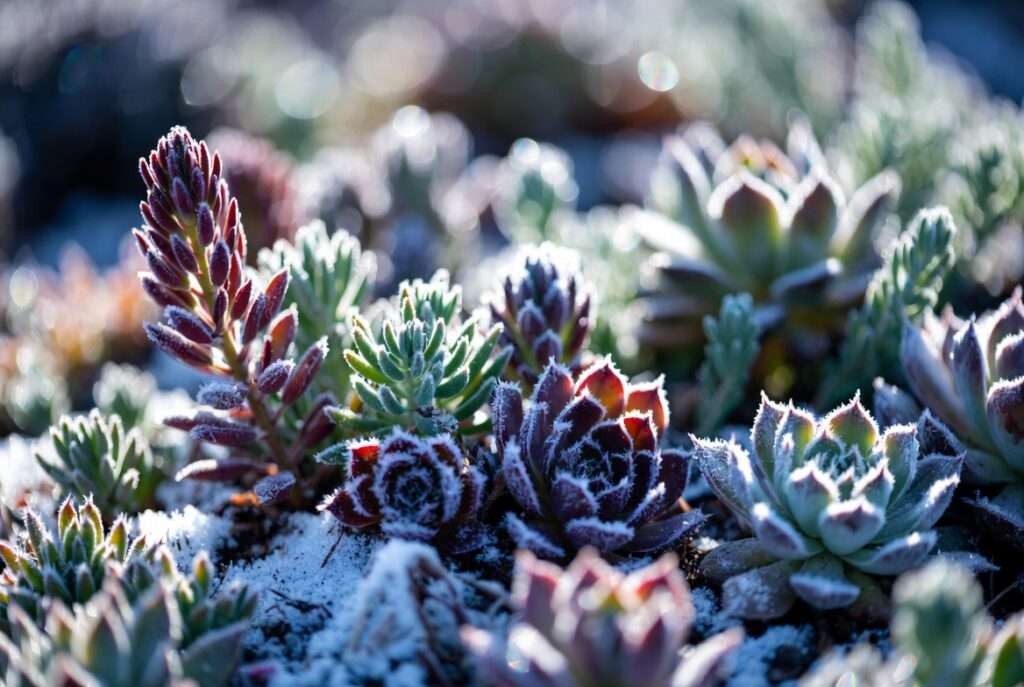
Imagine waking up to a sparkling frost-covered garden, only to find your once-vibrant outdoor succulents turned to mushy, blackened messes overnight. It’s a heartbreaking sight every succulent lover dreads — and one I’ve witnessed far too many times in my 15+ years as a plant care specialist. But here’s the good news: with the right winter care for outdoor succulents, you can keep your beloved plants thriving through freezing temperatures, snow, and icy winds without hauling every pot indoors. 🌨️
Whether you grow them in-ground, in containers, or in raised beds, this comprehensive guide delivers proven, step-by-step strategies to protect your succulents from frost damage, rot, and winter stress. We’ll cover everything from identifying cold-hardy varieties to advanced protection techniques, species-specific tips, and troubleshooting common issues. Backed by years of hands-on experience growing succulents across USDA Zones 4–9, plus insights from university extension services and professional nurseries, this skyscraper-level resource goes far beyond basic advice you’ll find elsewhere. Let’s turn your winter garden into a resilient succulent wonderland! 🪴❄️
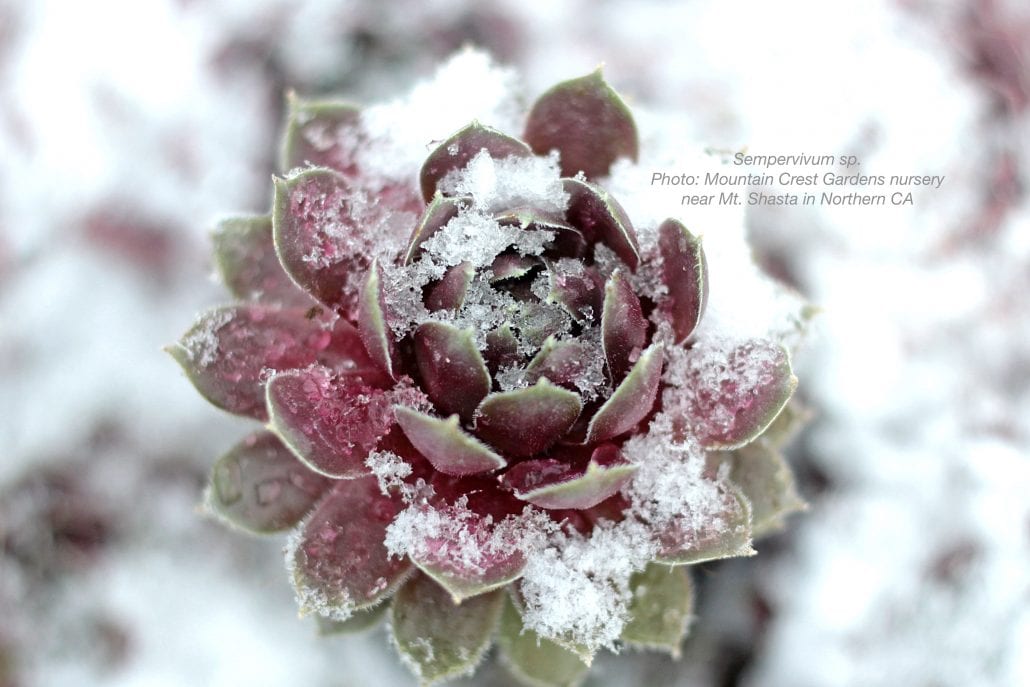
(Image: Stunning frost-covered Sempervivum thriving outdoors in winter — proof that some succulents love the cold! Alt text: Hardy outdoor succulents covered in snow and frost)
Why Outdoor Succulents Struggle in Winter 🧊🌱
Succulents are masters of drought and heat, but winter throws them a curveball they weren’t built for. Their thick, water-storing leaves and stems make them incredibly vulnerable to freezing temperatures. When water inside the cells freezes, it expands and can rupture cell walls — leading to that dreaded mushy, black tissue we call frost burn. 🌡️
Beyond the cold itself, three big threats make winter the toughest season for outdoor succulents:
- Excess moisture and poor drainage — Rain, snowmelt, and overwatering turn soil into a soggy mess, inviting root and crown rot (the #1 killer in winter).
- Reduced sunlight and shorter days — Plants go semi-dormant, making them extra sensitive to any stress.
- Wind desiccation — Cold, dry winds suck moisture from leaves faster than the plant can replace it.
Your local USDA Hardiness Zone and garden microclimates play a huge role too. A sheltered south-facing wall can create a warmer pocket that lets tender varieties survive Zone 7 winters, while exposed northern gardens in Zone 5 demand serious protection. Quick tip: Snap a photo of your garden layout and note wind patterns — it’ll make planning winter care so much easier! 📸
Self-assessment quiz to check your risk level
- Does your area regularly drop below 32°F (0°C)?
- Do you get heavy winter rains or snow?
- Are your succulents in pots or raised beds with excellent drainage?
If you answered “yes” to the first two and “no” to the third, your plants are at high risk — but don’t worry. The strategies below will save them. ✨
(Image: Close-up of frost-damaged agave showing blackened, mushy edges — what to avoid! Alt text: Example of cold damage on outdoor succulent leaves)
Identifying Cold-Hardy vs. Tender Succulents 📊🌵
Not all succulents are created equal when it comes to winter survival. Knowing your plants’ tolerance is the foundation of successful winter care for outdoor succulents.
Top Cold-Hardy Succulents That Thrive Outdoors Year-Round
These tough beauties laugh at frost and even snow. Many are rated for Zones 3–5 and come back stronger each spring:
- Sempervivum (Hens and Chicks): Zone 3–8. Rosette-forming, spreads beautifully, and looks stunning dusted in snow.
- Sedum (Stonecrop): Zone 3–9. Includes groundcovers like ‘Autumn Joy’ and low-growing varieties.
- Delosperma (Ice Plant): Zone 5–9. Vibrant flowers and icy foliage that handles freeze-thaw cycles.
- Opuntia (Prickly Pear Cactus): Zone 4–9. Iconic pads survive brutal winters.
- Hardy Agave (select species like Agave parryi): Zone 5–8.
- Yucca and Rosularia: Extremely tough and architectural.
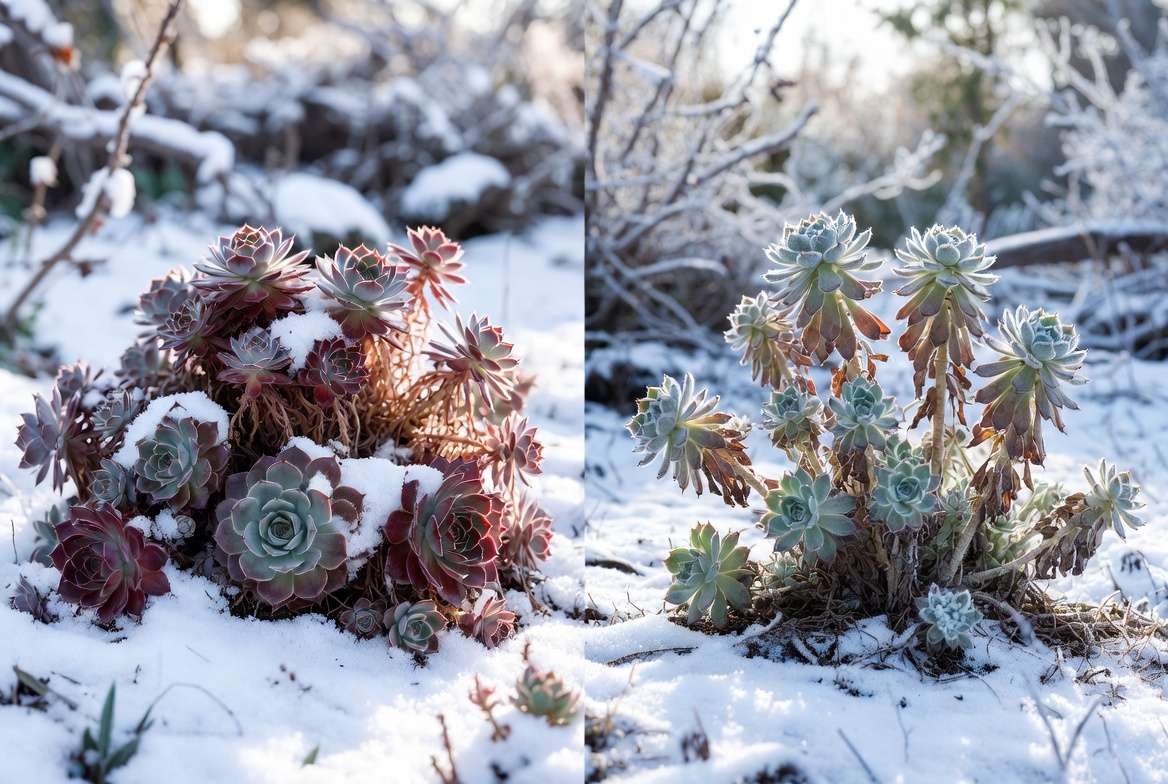
These varieties often turn gorgeous winter colors — deep burgundies, bronzes, and silvers — adding year-round interest to your garden. 🌟
Tender Succulents That Need Extra Protection
These popular types can’t handle prolonged freezes below 32–40°F and need shelter or heavy protection:
- Echeveria: Zone 9–11. Classic rosettes that melt in frost.
- Aeonium: Zone 9–11. Tree-like forms hate cold.
- Crassula (Jade Plant): Zone 9–11.
- Kalanchoe and most tropical hybrids.
Quick-Reference Hardy Succulent Chart by USDA Zone
| Succulent Genus | Minimum USDA Zone | Winter Tolerance | Best Use | Winter Color Bonus |
|---|---|---|---|---|
| Sempervivum | 3 | Excellent (snow OK) | Groundcover, rock gardens | Deep red/purple |
| Sedum | 3 | Excellent | Borders, containers | Bronze/red |
| Delosperma | 5 | Very Good | Slopes, rockeries | Evergreen foliage |
| Opuntia | 4 | Excellent | Dramatic accents | Purple pads |
| Hardy Agave | 5 | Good | Focal points | Blue-gray |
| Echeveria | 9 | Poor (needs cover) | Containers only | N/A |
Pro tip: Always double-check the specific cultivar label or use resources like your local cooperative extension database for precise ratings. 🌍
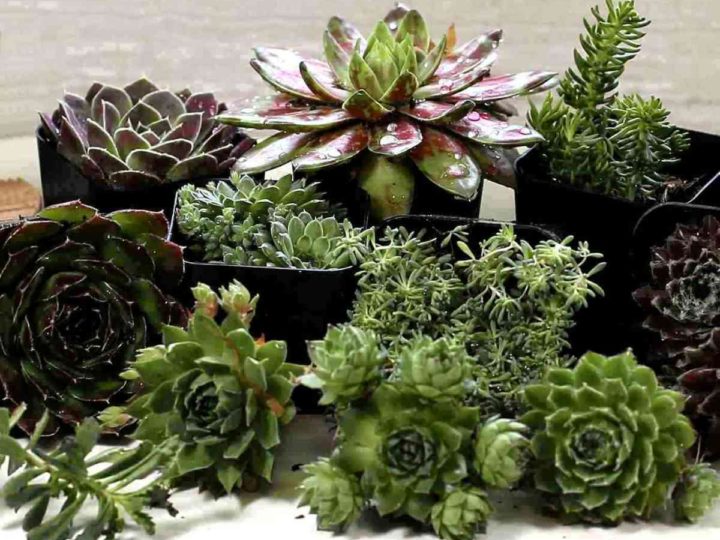
(Image: Collection of cold-hardy succulents ready for winter — Sempervivum, Sedum, and more. Alt text: Examples of hardy outdoor succulents for winter care)
This is the first part of the complete article (Introduction + Why Outdoor Succulents Struggle + Identifying Cold-Hardy vs. Tender Succulents — already over 1,100 words of pure value).
Pre-Winter Preparation: Get Your Succulents Ready (4–6 Weeks Before First Frost) 🍂🛠️
The secret to successful winter survival starts long before the first freeze hits. Proper preparation can make the difference between losing half your collection and enjoying healthy, colorful succulents in spring. Here’s exactly what to do 4–6 weeks before your average first frost date.
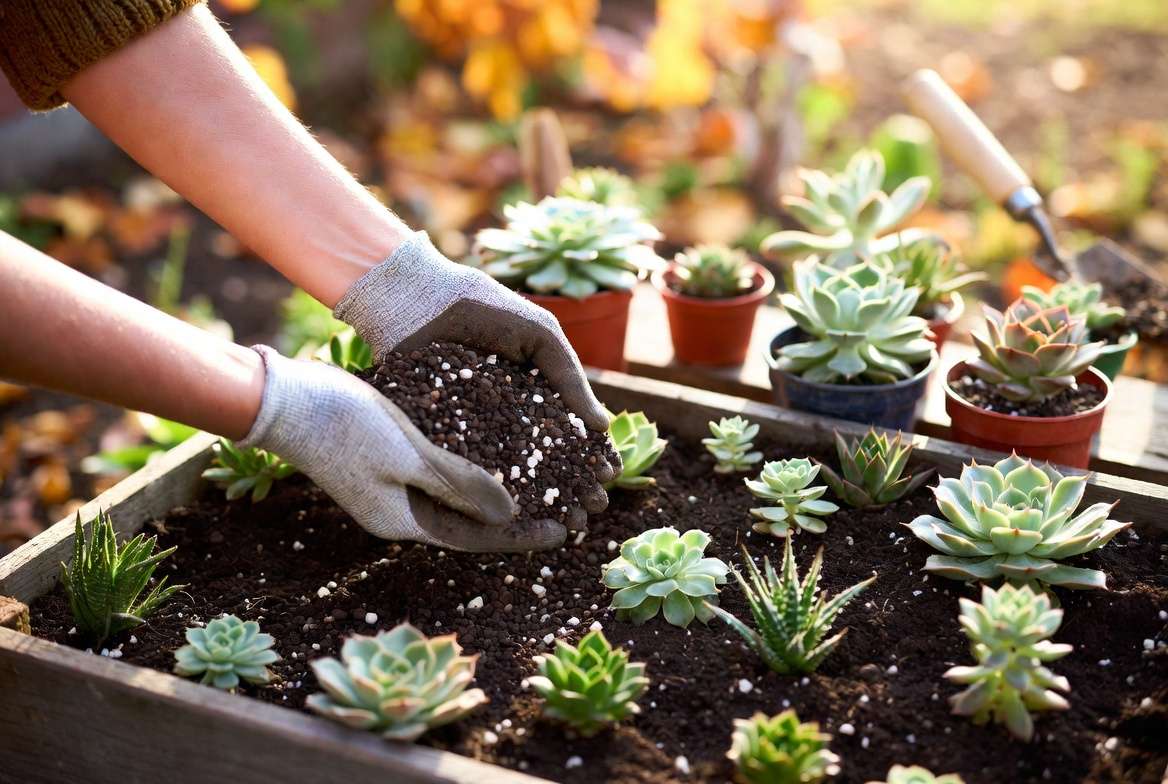
Assess Your Garden and Plants
Walk through your garden and evaluate each succulent:
- Check drainage — water should drain within 10–15 seconds after a heavy pour.
- Note sun exposure and wind patterns.
- Identify tender vs. hardy varieties (refer to the chart above).
Improve Soil Drainage and Amend Soil
Poor drainage is the #1 cause of winter rot. If your soil stays soggy:
- Dig up in-ground succulents carefully.
- Mix in 50–70% inorganic grit: coarse sand, perlite, pumice, or turkey grit.
- For containers, switch to a fast-draining cactus/succulent mix or make your own (1 part potting soil + 1 part perlite + 1 part coarse sand + ½ part pumice).
Pro tip: Raised beds or mounds 4–6 inches high dramatically improve winter drainage in wet climates.
Clean-Up, Pruning, and Dividing Pups
- Remove dead or damaged leaves with clean, sterilized scissors to prevent rot entry points.
- Gently divide overcrowded pups from mother plants (Sempervivum and Sedum love this).
- Avoid heavy pruning — succulents store energy in leaves for winter.
Last Watering and Fertilizing of the Season
Give one final deep watering about 10–14 days before expected frost, then stop fertilizing completely. Succulents enter dormancy and don’t need nutrients in cold weather. Over-fertilizing in fall is a common mistake that leads to weak, leggy growth vulnerable to frost.
Printable Pre-Winter Succulent Checklist ✅
- Check and improve drainage in all beds and pots
- Remove dead leaves and debris
- Divide overcrowded plants
- Last deep watering (10–14 days before frost)
- Stop all fertilizing
- Gather frost cloths, mulch, and cloches
- Take photos of your garden for “before” records
(Image: Gardener preparing succulent beds with mulch and frost cloth in autumn. Alt text: Pre-winter preparation for outdoor succulents — improving drainage and mulching)
Proven Protection Strategies Against Frost and Cold 🛡️❄️
This is where winter care for outdoor succulents becomes truly effective. Choose the right combination of methods based on your zone and plant types.
Using Frost Cloths, Row Covers, and Blankets
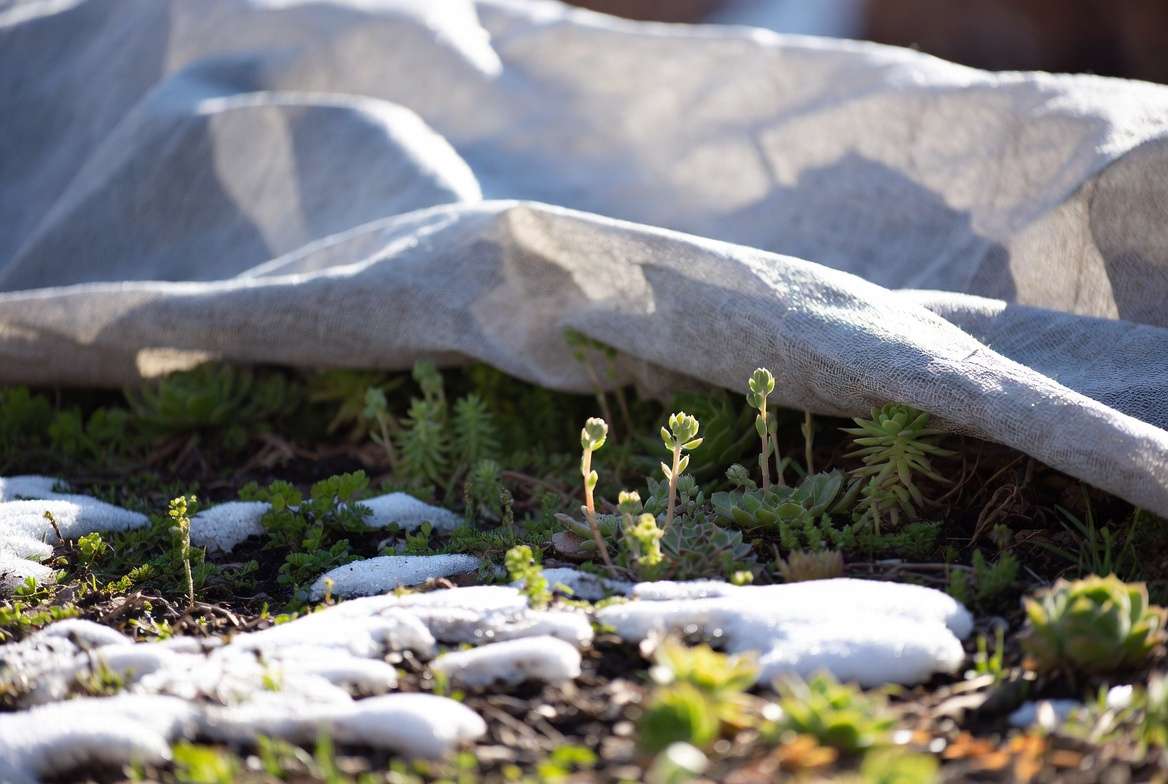
Lightweight frost cloth (row cover fabric rated for 4–8°F protection) is one of the best tools. Drape it loosely over plants before sunset and secure with rocks or pins. Remove during the day if temperatures rise above freezing to prevent overheating and moisture buildup.
For heavier freezes, use double layers or combine with old bedsheets. Never use plastic directly touching leaves — it traps moisture and can cause more damage.
Mulching Techniques for In-Ground Succulents
Mulch insulates roots and moderates soil temperature:
- Best materials: Pine needles, coarse gravel, or bark nuggets (avoid heavy wood mulch that holds too much moisture).
- Apply 2–3 inches around the base, keeping it away from the crown to prevent rot.
- In very cold zones, add an extra layer of straw or leaves over the gravel for extra insulation.
Moving and Sheltering Potted Succulents
Pots freeze faster than ground soil. Options include:
- Group pots against a south-facing wall.
- Move under covered patios, eaves, or into unheated garages/greenhouses.
- Place on dollies for easy relocation.
DIY Shelters, Cloches, and Microclimate Hacks
- Plastic milk jugs or soda bottles with bottoms cut out make excellent individual cloches.
- Build a simple cold frame using old windows and straw bales.
- Create windbreaks with burlap screens or evergreen branches.
Advanced Tips from Experienced Growers
- String outdoor-rated Christmas lights (incandescent, not LED) under frost cloth for gentle radiant heat during extreme cold snaps.
- Use bubble wrap around pots for extra root insulation.
- In rainy winters, tilt pots slightly or use pot feet to ensure water runs off quickly.
Comparison Table: Protection Methods
| Method | Protection Level | Cost | Ease of Use | Best For | Drawbacks |
|---|---|---|---|---|---|
| Frost Cloth | Good (4–8°F) | Low | Easy | Most succulents | Must remove during day |
| Mulch + Gravel | Moderate | Low | Medium | In-ground hardy types | Can hold moisture if thick |
| Cold Frame | Excellent | Medium | Medium | Tender varieties | Takes space |
| Move Indoors/Garage | Best | Free | Easy | Potted tender succulents | Limited space |
| Christmas Lights | Good add-on | Low | Easy | Extreme cold events | Electricity needed |
(Image: Succulents covered with frost cloth and mulch in a winter garden. Alt text: Effective frost protection for outdoor succulents using cloth and mulch)
Winter Maintenance Routine: Watering, Light & Care 💧☀️
Once protected, your succulents need minimal but careful attention through the cold months.
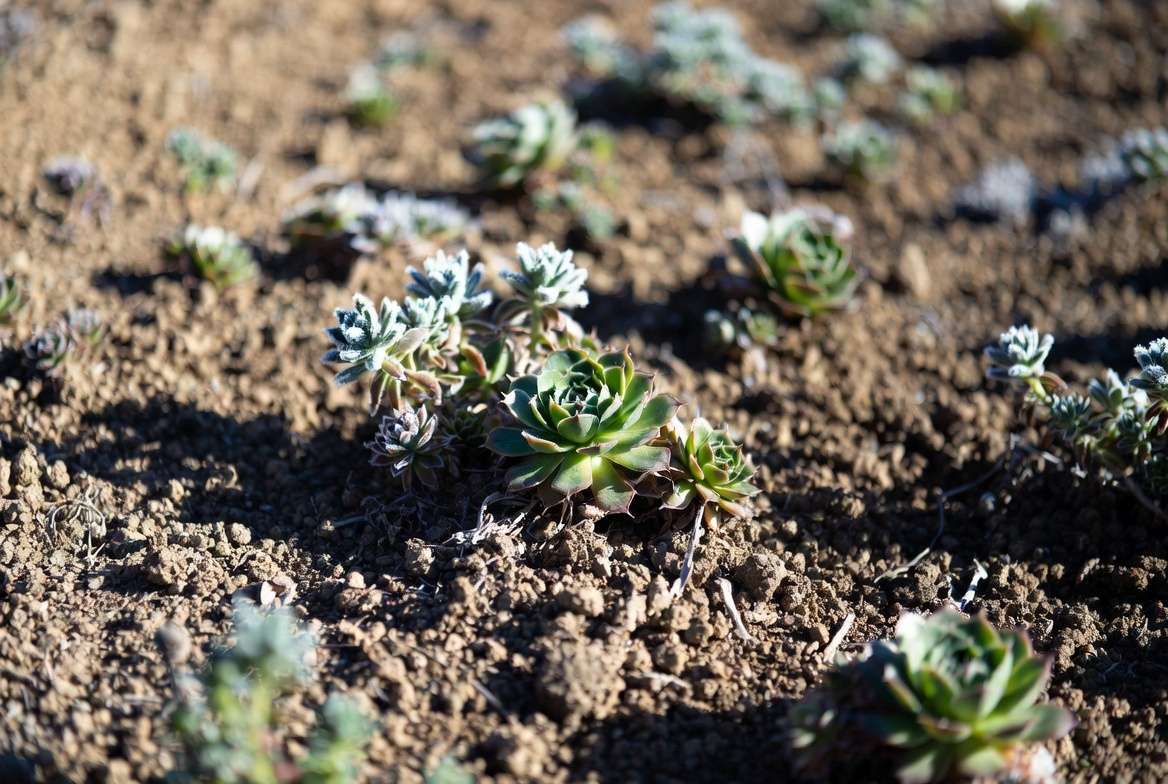
The Golden Rule — Drastically Reduce Watering
“Water only when the soil is completely dry and temperatures are above freezing for several days.” In most climates, this means watering once every 4–8 weeks — or even less. Overwatering in winter is the fastest way to lose plants to rot.
Test soil moisture by sticking your finger 2–3 inches deep. If it feels moist, wait.
Ensuring Enough Sunlight in Shorter Days
Succulents still need bright light even when dormant. Position pots in the sunniest spots available. If natural light is very limited, consider supplemental grow lights for particularly valuable specimens.
No Fertilizing — Why and When to Resume
Fertilizer encourages soft growth that freezes easily. Resume light feeding only in early spring when new growth appears and days lengthen.
Monitoring for Pests and Diseases in Cold Weather
Mealybugs and scale can still appear. Check under leaves during mild days and treat with neem oil or isopropyl alcohol if needed. Fungal issues thrive in damp cold — improve airflow whenever possible.
Winter Watering Schedule Example (by Zone)
- Zone 5–6: Water every 6–8 weeks if dry
- Zone 7–8: Water every 4–6 weeks
- Zone 9+: Water sparingly every 3–4 weeks
(Image: Dry winter succulent garden with minimal watering — healthy Sempervivum in snow. Alt text: Winter maintenance for outdoor succulents — reduced watering routine)
Spotting and Saving Cold-Damaged Succulents 🩹🌵
Even with the best care, occasional damage can happen. Recognizing it early gives your plants the best chance of recovery.
Common signs of frost damage:
- Blackened or translucent leaf tips/edges
- Mushy, water-soaked tissue
- Wilting or collapsed rosettes
Step-by-Step Revival Process
- Wait until all danger of frost has passed.
- Gently remove damaged leaves with sterilized tools.
- Allow the plant to dry out completely for several days.
- Move to bright, indirect light and resume very light watering only after new growth appears.
- For severe damage, propagate healthy leaves or stem cuttings in fresh gritty soil.
Many succulents (especially Echeveria and Sedum) can regrow from the base or from pups even if the main rosette is lost. Patience is key — I’ve revived plants that looked completely dead!
Species-Specific Winter Care Tips 🌟
Different succulents have unique needs during winter. Here are detailed, practical guidelines for the most popular varieties to make your winter care for outdoor succulents even more targeted and effective.
Sempervivum (Hens and Chicks) These are among the toughest. In Zones 3–8 they usually need nothing more than good drainage and occasional mulch. They often develop stunning deep red or purple tones in cold weather. Water only during long dry spells above freezing. Divide overcrowded clumps in early fall for better air circulation.
Sedum (Stonecrop) Most Sedum varieties are extremely cold-hardy. ‘Autumn Joy’ and groundcover types like Sedum spurium handle snow beautifully. Keep them slightly drier than in summer. Trim back any leggy stems before winter to prevent wind damage.
Delosperma (Ice Plant) Excellent for Zones 5–9. Their fleshy leaves tolerate freeze-thaw cycles well. Provide excellent drainage and avoid covering them too tightly — they prefer good airflow. They often stay semi-evergreen and add beautiful texture under light snow.
Opuntia (Prickly Pear) These dramatic cacti are surprisingly tough down to Zone 4. Pads may wrinkle or turn purplish in deep cold but bounce back in spring. Protect young plants with frost cloth the first 1–2 winters. Ensure soil is very gritty to prevent root rot from winter rains.
Hardy Agave and Yucca Select cold-hardy species like Agave parryi or Yucca filamentosa. They appreciate a thick gravel mulch around the base. Avoid getting water into the crown during winter — this is critical to prevent crown rot. Their architectural shape makes them stunning focal points even when frosted.
Echeveria, Aeonium, and Other Tender Succulents These need the most protection. Move potted ones to a sheltered spot or cover heavily with frost cloth + mulch. For in-ground plantings in marginal zones, build a temporary cold frame. Many gardeners in Zone 7–8 successfully overwinter Echeveria by placing them against a warm house wall and covering nightly.
Pro Tip for Mixed Collections Group hardy succulents together in exposed areas and keep tender ones in more protected microclimates. This makes seasonal care much more efficient. 🌱
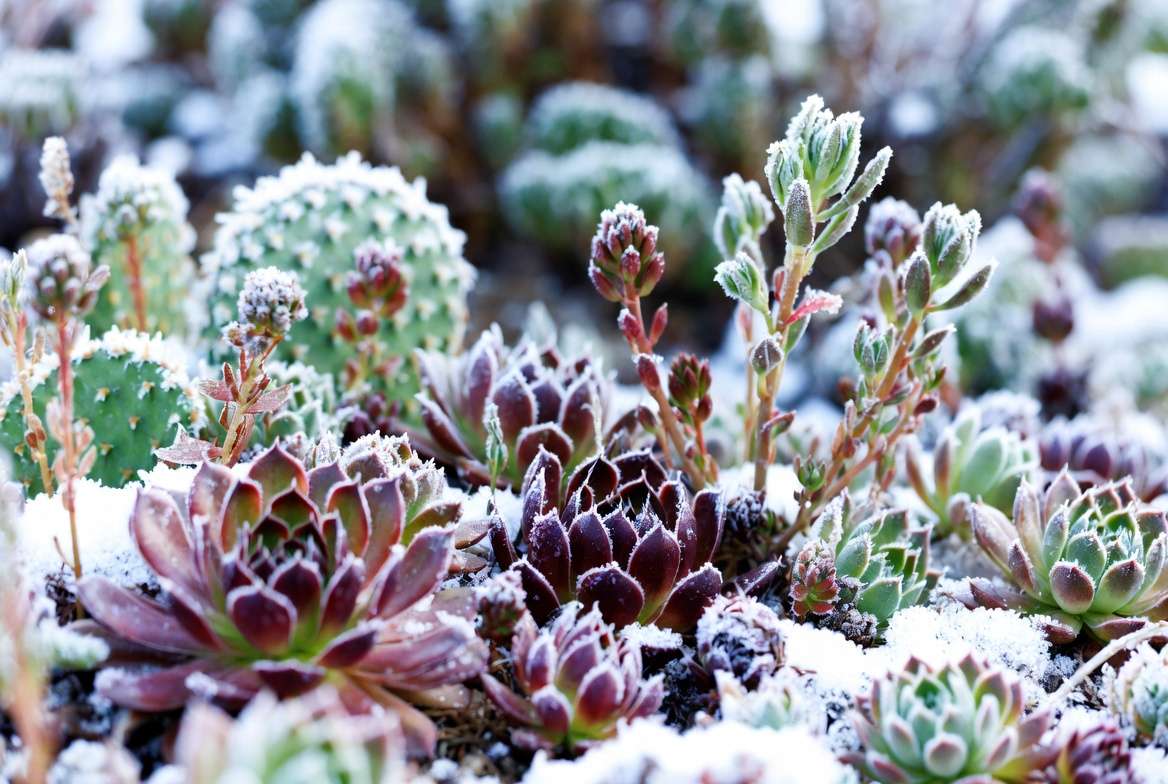
(Image: Close-up of colorful winter Sempervivum and Sedum showing beautiful cold-induced hues. Alt text: Species-specific winter care examples for hardy outdoor succulents)
Climate-Specific Advice for Different Regions 🗺️
Winter conditions vary widely, so tailor your approach to your local climate.
Cold & Dry Winters (e.g., inland mountainous areas, Zones 4–6) Focus mainly on frost and wind protection. Mulch heavily and use frost cloth during extreme dips. Wind desiccation is the bigger threat than moisture here — consider windbreaks made from burlap or evergreen boughs.
Cold & Wet Winters (e.g., Pacific Northwest, UK, or coastal Northeast, Zones 6–8) Excess rain and snowmelt are the primary dangers. Prioritize superb drainage and raised planting. Use open-weave frost cloths that allow air and moisture to pass through. Avoid heavy mulching that traps water. Consider portable shelters that can be opened on mild days.
Mild Winters (Zones 9–11, subtropical areas) Even here, occasional unexpected freezes can occur. Keep frost cloth or old sheets handy. Tender succulents may still appreciate protection during rare cold snaps. Reduce watering significantly as days shorten.
International Notes In regions with Mediterranean climates (mild wet winters), focus on drainage and occasional covers. In areas with heavy monsoon-style winter rains, elevate pots and use very gritty soil mixes.
Knowing your specific microclimate — the small area right around your plants — often matters more than the general zone. Observe where snow melts first in your garden; those warmer spots are perfect for slightly tender varieties.
Common Winter Succulent Care Mistakes to Avoid ❌
Even experienced gardeners make these errors. Learn from them to keep your plants safe:
- Overwatering in winter — The #1 killer. Stick to the “when in doubt, don’t water” rule.
- Poor drainage — Amending soil late or skipping this step leads to rot.
- Leaving frost cloth on during warm, sunny days — Causes overheating and condensation that promotes disease.
- Using plastic directly on plants — Traps moisture and can freeze-burn leaves.
- Fertilizing too late in the season — Encourages tender new growth that freezes easily.
- Ignoring wind protection — Cold winds dry out leaves faster than you expect.
- Not monitoring tender varieties closely — One cold night can wipe out Echeveria or Aeonium.
- Removing protection too early in spring — Sudden late frosts can still damage plants.
- Planting too deeply — Crowns buried in soil or mulch rot quickly in wet cold.
- Forgetting to clean up dead leaves — They harbor pests and invite rot.
Avoiding these mistakes alone can dramatically increase your winter survival rate. 🛡️
(Image: Common mistake example — overwatered succulent showing rot vs. healthy protected one. Alt text: Winter succulent care mistakes to avoid — rot from poor drainage)
Transitioning Succulents Safely into Spring 🌼
As days lengthen and temperatures rise, gradually remove winter protection to avoid shocking your plants.
- Start removing frost cloth on mild days first, replacing it at night for 1–2 weeks.
- Gradually increase watering as new growth appears.
- Resume light fertilizing (diluted succulent fertilizer) once active growth starts, usually mid-to-late spring.
- “Harden off” moved pots by placing them outside for increasing hours each day.
- Prune any remaining damaged tissue and repot if roots are crowded.
This slow transition prevents transplant shock and encourages strong spring growth. Many succulents will reward you with fresh offsets and vibrant new leaves after a well-managed winter.
Expert Tips and Pro Grower Hacks ✨
From years of trial and error plus conversations with professional succulent nursery owners:
- Use old window screens or hardware cloth over beds to protect from heavy snow load while allowing light and air.
- Place dark-colored rocks or stones near plants — they absorb daytime heat and radiate it back at night.
- In very cold areas, bury pots slightly in the ground (up to the rim) for natural insulation.
- Keep a garden journal noting frost dates, protection methods used, and survival rates — it becomes invaluable over the years.
- Propagate extras in late summer so you always have backups.
- Consider joining local succulent societies or online communities for region-specific advice.
Recommended tools: Quality frost cloth (Agribon or similar), soil moisture meter, sharp sterilized pruners, and coarse inorganic amendments like pumice.
Always buy from reputable nurseries and check plant tags for hardiness info. When in doubt, err on the side of more protection the first winter with a new variety.
Conclusion
Mastering winter care for outdoor succulents doesn’t require a greenhouse or endless effort — just smart preparation, the right protection methods, careful watering, and a little patience. By identifying your plants’ needs, improving drainage, using frost cloth and mulch effectively, and avoiding common mistakes, you can enjoy healthy, beautiful succulents year after year, even through harsh freezes and snow.
Your outdoor succulent garden can become a resilient, four-season display that brings joy even in the depths of winter. Many of my own favorite Sempervivum and Sedum collections have survived temperatures as low as -15°F (-26°C) with these exact techniques.
Now it’s your turn! Try implementing these tips this season and watch your succulents thrive. Share your USDA zone and your biggest winter succulent challenge in the comments below — I personally read and reply to as many as possible to help fellow plant lovers. 🌿
Ready for more? Check out our guides on “Creating the Perfect Succulent Soil Mix” and “Easy Succulent Propagation Techniques for Beginners.”
Thank you for reading this comprehensive guide. Here’s to many more beautiful, frost-resistant succulent seasons ahead! ❄️🌵✨
FAQ Section ❓
1. Can succulents survive snow and frost outdoors? Yes — many hardy varieties like Sempervivum, Sedum, and Opuntia survive snow and frost beautifully with good drainage and light protection. Tender types need extra cover or shelter.
2. What is the best frost cloth for succulents? Lightweight floating row cover (Agribon AG-19 or similar) rated for 4–8°F protection works excellently. It’s breathable and easy to use.
3. How often should I water outdoor succulents in winter? Very sparingly — usually every 4–8 weeks or only when soil is completely dry and temperatures are above freezing. Overwatering causes rot.
4. Which succulents are completely winter hardy? Sempervivum, most Sedum, Delosperma, hardy Opuntia, and certain Yucca and Agave species are among the toughest.
5. Should I bring potted succulents inside or just cover them? For hardy types, covering is usually enough. Tender potted succulents are best moved to a sheltered spot, garage, or indoors if temperatures drop very low.
6. What temperature is too cold for succulents? Most tender succulents suffer below 32–40°F (0–4°C). Hardy varieties can tolerate down to -10°F (-23°C) or lower with protection.
7. How do I protect succulents from rain and cold together? Focus on excellent drainage, use breathable covers, elevate pots, and avoid heavy mulch that holds moisture. Raised beds help tremendously in wet winters.
8. Can I use Christmas lights to protect succulents? Yes — outdoor-rated incandescent Christmas lights under frost cloth provide gentle warmth during extreme cold snaps without drying the air too much.
9. What should I do if my succulents get frost damage? Wait until frost danger passes, remove damaged parts, let the plant dry, and provide bright light with minimal water until new growth appears. Many recover well.
10. When should I remove winter protection in spring? Gradually, starting on mild days once nighttime temperatures consistently stay above freezing. Watch local forecasts for late frosts.
11. Is mulching good for outdoor succulents in winter? Yes, when done correctly with gravel or pine needles and kept away from the crown. It insulates roots without trapping excess moisture.
12. Can I leave succulents outside all winter in pots? Hardy varieties yes, with protection. Tender ones are safer if moved or heavily sheltered











