
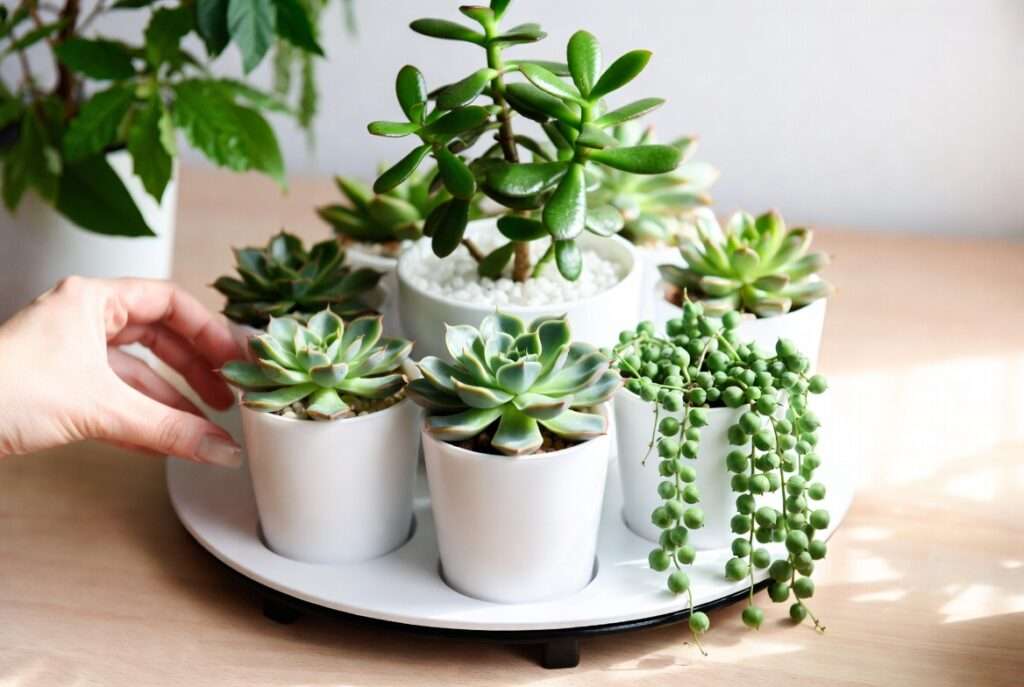
Imagine stepping into your home and spotting your favorite Echeveria or Jade plant leaning dramatically toward the window, its once-perfect rosette now lopsided and stretched on one side. It’s a common frustration for succulent lovers — beautiful plants that suddenly look uneven, leggy, and far from the compact, symmetrical beauties you envisioned.
The simple fix? Rotating potted succulents for even growth — a free, science-backed technique that delivers balanced, thriving plants in just a few weeks. By gently turning your pots on a consistent schedule, you can prevent phototropism from taking over and create the Instagram-worthy collection of your dreams.
With over 15 years as a horticulturist specializing in succulent and indoor plant care, I’ve helped thousands of growers transform lopsided succulents into strong, symmetrical showstoppers. This comprehensive guide goes deeper than basic tips, covering the biology behind uneven growth, exact rotation methods, variety-specific strategies, troubleshooting, and how to weave rotation into your full care routine. Whether you’re a beginner or seasoned collector, you’ll walk away with everything needed to solve uneven growth for good. 🪴
Let’s start by understanding exactly why this happens — and why rotation is the game-changer your succulents need.
Why Succulents Grow Unevenly: The Science of Phototropism 🌞
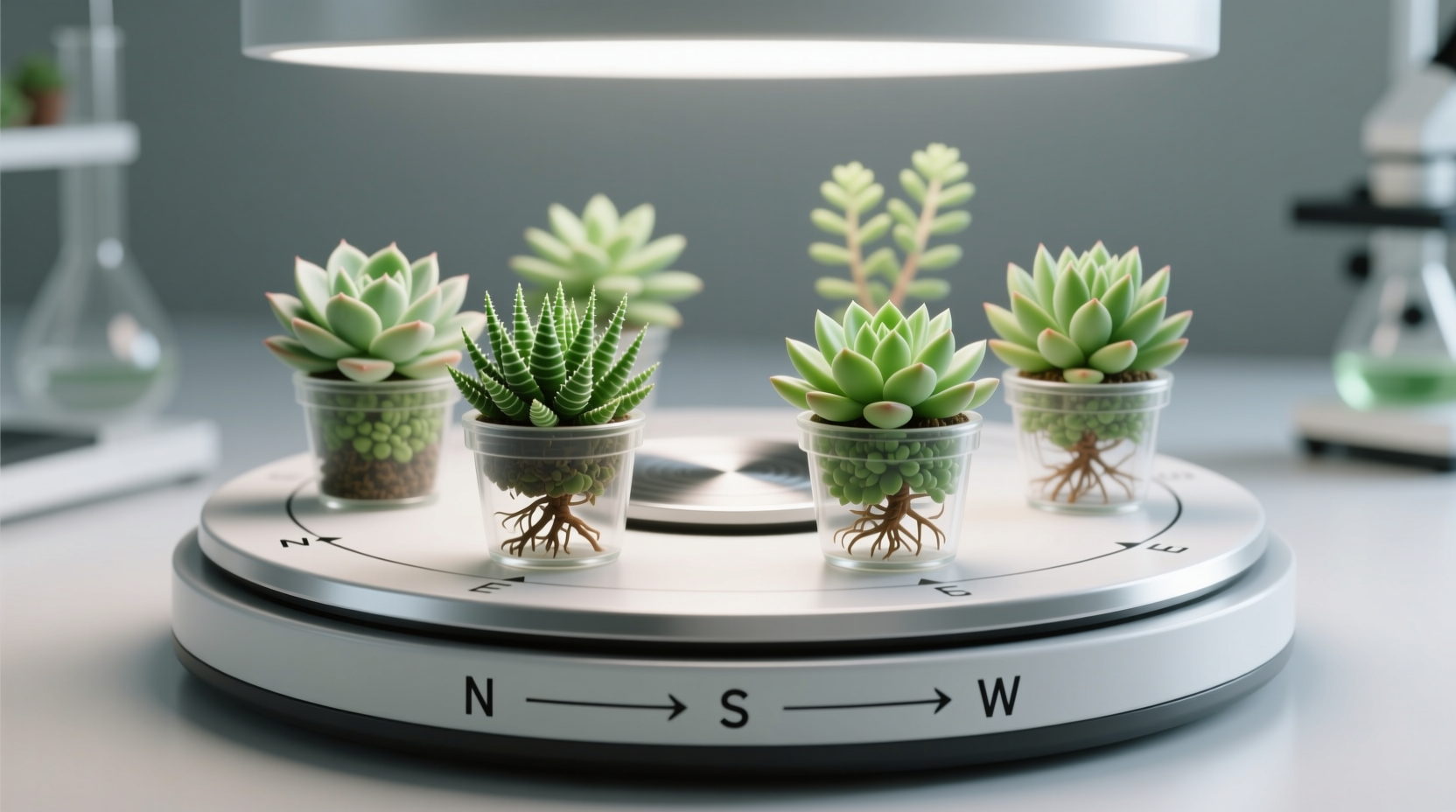
Succulents may be tough and drought-tolerant, but they’re also highly sensitive to light direction. The primary culprit behind lopsided growth is phototropism — the natural tendency of plants to grow toward the strongest light source.
What Is Phototropism and Why It Matters for Succulents
Phototropism occurs when the plant hormone auxin concentrates on the shaded side of the stem or leaves. This causes cells on that darker side to stretch and elongate faster, literally bending the plant toward the light. In bright indoor settings, a single sunny window or grow light creates uneven exposure, leading to classic symptoms you’ve probably noticed:
- Dramatic leaning or tilting of the entire plant
- One-sided leaf development (fuller on the light side, sparse on the shady side)
- Elongated “leggy” stems (a condition called etiolation)
- Faded coloration or less vibrant foliage on the darker side
These issues aren’t just cosmetic — they can weaken stems, make plants top-heavy and prone to falling, and reduce overall vigor. Common indoor triggers include south-facing windows with strong directional light, inconsistent artificial lighting, or seasonal shifts in sunlight angle.

Don’t worry — your succulent isn’t being dramatic; it’s simply following biology to maximize photosynthesis! 🌿 Understanding phototropism is the foundation for mastering rotating potted succulents for even growth and keeping your plants perfectly balanced year-round.
The Surprising Benefits of Regular Rotation 🏆
Once you start rotating, the transformation is almost magical. Regular rotation isn’t just a quick fix — it’s a powerful habit that delivers multiple long-term rewards for both plant health and your home décor.
Here’s what consistent rotation actually does for your succulents:
- Creates perfectly symmetrical rosettes and shapes — Every side gets equal light, resulting in compact, rounded growth that looks professionally cultivated.
- Promotes stronger, more compact structure — Prevents weak, stretched stems and encourages tight leaf arrangement.
- Boosts overall plant health — Even light exposure improves photosynthesis efficiency, strengthens cell walls, and builds resilience against pests, disease, and environmental stress.
- Increases stability — Symmetrical plants are far less likely to become top-heavy and tip over as they grow.
- Enhances aesthetic appeal — Your succulents become stunning centerpieces, shelf displays, and conversation starters that you’ll love showing off.
In my experience working with indoor and patio succulent collections, growers who commit to a simple rotation schedule see noticeable improvements in just 4–6 weeks — and dramatically healthier plants within 2–3 months. The best part? It costs zero dollars and takes mere seconds per plant.
:strip_icc()/BHG-How-to-Grow-and-Care-for-String-of-Pearls-Plant-101013958-ec44a47102af4e52ab067f21cc26efc2.jpg)
Step-by-Step Guide: How to Rotate Potted Succulents the Right Way 🛠️
Rotating is straightforward, but doing it correctly makes all the difference. Follow this proven method to avoid stress and maximize results.
Preparing Your Succulent for Rotation
Choose a calm moment — early morning or evening is ideal when the plant is less stressed. Gently lift the pot (support the base to avoid damaging roots or leaves) and check for any pests, debris, or overly dry soil. If the plant has just been watered, wait until the soil surface is dry to the touch to prevent accidental root disturbance.
Pro tip: Wear soft gardening gloves if your succulent has sharp edges (like some Aloes or Agaves) to protect both you and the plant’s delicate fleshy leaves. 🧤
The Perfect Rotation Technique
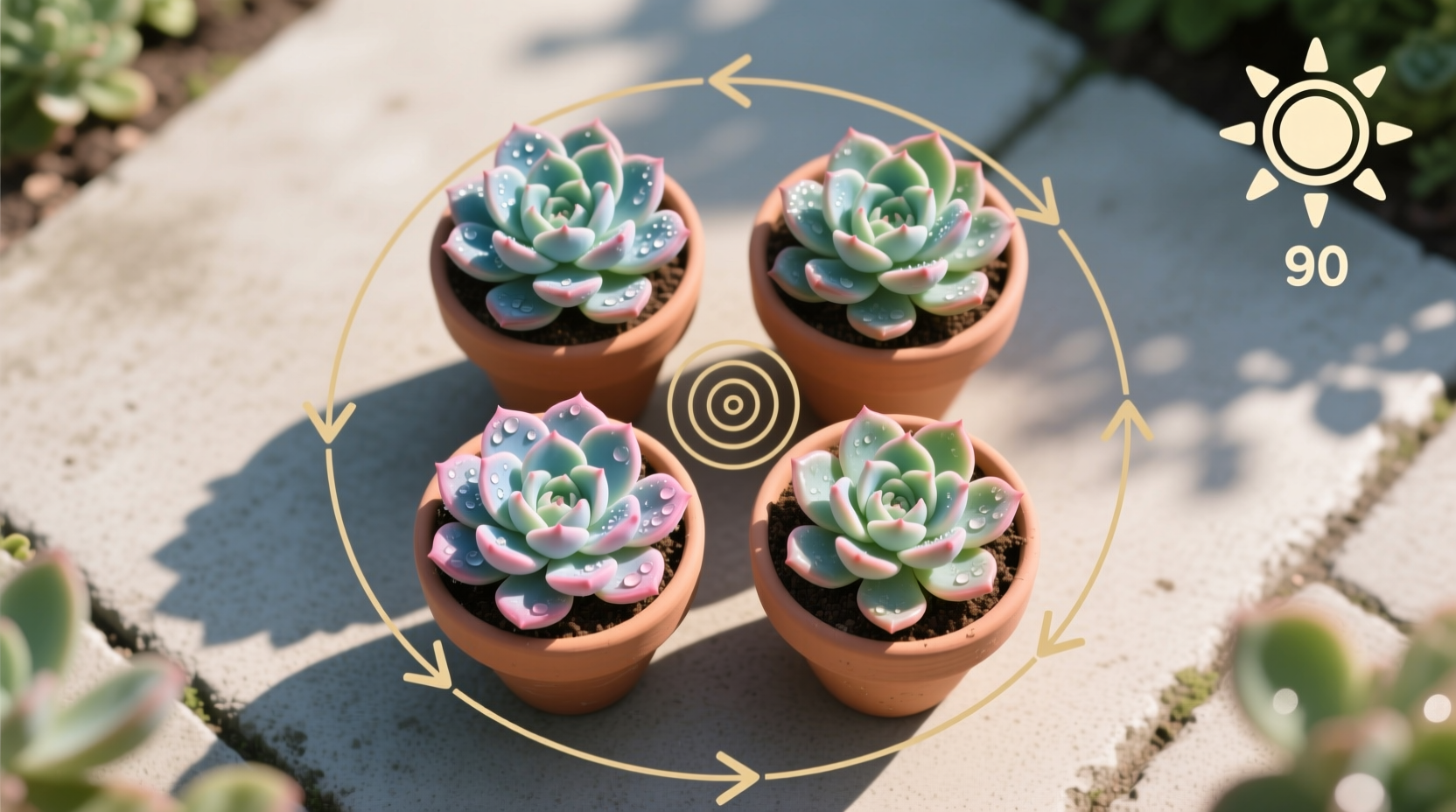
The most effective approach is the quarter-turn method:
- Turn the pot exactly 90° (a quarter turn) clockwise or counterclockwise.
- Be consistent with direction so the plant adjusts gradually.
- Place it back in the exact same spot with the same light exposure.
Some experts recommend a full 180° turn every two weeks, but I prefer 90° turns every 7–14 days for gentler adjustment and more even results. Avoid spinning the plant rapidly — slow, deliberate turns prevent shocking the plant.
Tools You Actually Need (and What You Can Skip)
You don’t need fancy equipment, but a few simple tools make the process effortless:
- A rotating plant stand or lazy Susan (great for heavy pots or multiple plants).
- A small dot of nail polish or a sticker on the pot rim as a rotation reminder marker.
- Optional: A phone app or printable calendar to track your schedule.
Skip expensive automated turntables unless you have dozens of plants — manual rotation works beautifully for most home collections.
How Often Should You Rotate Succulents? Expert Frequency Guide ⏰
One of the most common questions I receive is: “How often should I actually turn my succulents?” The answer depends on several factors, but consistency is more important than perfection.
General Rule for Most Indoor Succulents
For the majority of popular indoor succulents during the active growing season (spring through early fall), rotate every 7 to 14 days. A weekly quarter-turn works wonderfully for fast-growing varieties, while every two weeks is sufficient for slower ones. This schedule ensures all sides receive equal sunlight without overwhelming the plant.
In winter, when light levels drop and growth slows, reduce rotation to every 3–4 weeks or as needed. Always observe your plants — they’ll tell you when they need attention.
Signs It’s Time to Rotate Again
Look for these visual cues before your scheduled turn:
- New leaves or stems beginning to lean toward the light source
- One side of the rosette appearing fuller or more vibrant than the other
- Slight color fading or dullness on the shadier side
- Overall growth starting to look asymmetrical again
Early intervention prevents major lopsidedness and makes correction much easier.
Outdoor vs. Indoor Rotation Schedules
Outdoor succulents on patios or balconies often need less frequent rotation because natural sunlight moves throughout the day. However, if your outdoor spot has a dominant light direction (e.g., against a wall or under partial shade), stick to a bi-weekly schedule.
Greenhouse or bright conservatory setups may require more frequent turns due to intense, directional light. Always prioritize observation over rigid calendars.
Quick Reference Table: Recommended Rotation Frequency
| Succulent Type | Growing Season | Winter | Notes |
|---|---|---|---|
| Rosette-forming (Echeveria) | Every 7–10 days | Every 3 weeks | Very sensitive to light |
| Jade & Upright types | Every 10–14 days | Every 4 weeks | Slower adjustment |
| Trailing (String of Pearls) | Every 10 days | Every 3–4 weeks | Focus on even trailing |
| Outdoor Patio Collection | Every 14–21 days | As needed | Natural light helps |
Rotating Different Succulent Varieties: Tailored Tips 🌵✨
Not all succulents respond the same way to rotation. Understanding the growth habit of each variety helps you fine-tune your technique for the best results.
Rosette-Forming Succulents (Echeveria, Aeonium, Sempervivum)
These popular rosette types are the most dramatic when it comes to uneven growth. Their tight, circular leaf patterns make lopsidedness very noticeable. Rotate gently every 7–10 days using 90° turns. Support the base carefully — the fleshy leaves bruise easily. With consistent rotation, you’ll enjoy perfectly round, symmetrical rosettes that look like living flowers.

Trailing & Cascading Types (String of Pearls, Burro’s Tail, String of Hearts)
Trailing succulents need special attention because rotation affects both the top growth and the hanging strands. Turn the pot slowly and ensure the trailing stems get light from all angles. For hanging baskets, rotate the entire hanger or use a swivel hook. Aim for even bead or leaf development along every strand. These varieties can become beautifully full and lush when rotated properly.
Tall & Upright Succulents (Jade Plant, Paddle Plant, Aloes)
Taller succulents are prone to leaning that can become dangerous as they gain height and weight. Use slightly larger rotation increments (up to 180° every two weeks) if the plant is stable. For very tall specimens, combine rotation with occasional gentle staking for support during the adjustment period. Jade plants, in particular, develop thick, woody stems that benefit greatly from balanced light exposure.

Each succulent truly has its own personality — observing how yours responds will help you perfect your personal rotation rhythm over time. 🪴
Troubleshooting Uneven Growth Even After Rotating 🔧
Sometimes rotation alone doesn’t fully solve the problem. Here’s how to address stubborn cases:
- Insufficient overall light: If your plant continues stretching despite rotation, add a full-spectrum grow light positioned directly above for 12–14 hours daily.
- Reflective surfaces: Place a white card or mirror opposite the light source to bounce light evenly.
- Already etiolated plants: Combine rotation with strategic pruning. Cut back leggy stems and allow the plant to regrow under balanced conditions. The cuttings can be propagated for even more plants!
- Heavy pots: For large ceramic or concrete pots, use a sturdy plant caddy with wheels to make rotation effortless.
Common mistakes to avoid:
- Rotating too aggressively or too frequently (can stress the plant)
- Placing the plant in a completely new spot after rotation
- Ignoring soil health or watering issues that compound light problems
With patience and these adjustments, even severely lopsided succulents can recover beautifully.

Integrating Rotation Into Your Complete Succulent Care Routine 📅
Rotating potted succulents for even growth works best when it becomes part of your overall care schedule rather than an isolated task.
Pair rotation with:
- Watering days (check soil moisture while turning)
- Monthly fertilizing during growing season
- Seasonal repotting and soil refresh
Create a simple monthly succulent care calendar:
- Week 1: Water + Rotate
- Week 2: Check for pests + Rotate
- Week 3: Light assessment + Rotate
- Week 4: Fertilize (spring/summer) + Rotate
This integrated approach ensures your succulents receive consistent, balanced care that promotes not just even growth, but vibrant color, compact form, and strong root systems.
Bonus symmetry hacks:
- Choose appropriately sized pots (too large encourages uneven root growth)
- Maintain optimal distance from light sources (too close causes burning, too far causes stretching)
- Use well-draining succulent soil mix to support healthy overall development
Expert Insights & Real-World Success Stories 🌟
In my 15+ years working with succulent enthusiasts, I’ve seen incredible transformations. One client had a collection of 20+ Echeverias that were all leaning heavily after a long winter indoors. After implementing a consistent 10-day rotation schedule plus supplemental lighting, every plant became symmetrical within two months. Many even produced beautiful offsets and flowers for the first time.
Another success story involved a Burro’s Tail that had become sparse on one side. Gentle rotation combined with pruning the longer strands resulted in a full, cascading beauty that now hangs elegantly in her living room.
These real results come from understanding that small, consistent actions like rotation create big changes over time.
Frequently Asked Questions (FAQs) ❓
Can I rotate succulents every day? Daily rotation is unnecessary and can stress the plant. Stick to every 7–14 days for best results.
Does rotating damage the roots? When done gently, rotation causes no root damage. Always support the pot base and avoid pulling on the stems.
What if my succulent is in a heavy ceramic pot? Use a plant caddy with wheels or a lazy Susan. This makes rotation safe and easy even for larger pots.
Will rotation fix already etiolated (stretched) growth? Rotation prevents further stretching and helps new growth become compact and even. For existing leggy parts, combine with pruning and better lighting.
Are rotating plant stands worth buying? They’re excellent for multiple plants or heavy pots, but not essential. A simple nail polish marker on the pot works just as well for small collections.
Should I rotate outdoor succulents the same way? Outdoor plants usually need less frequent rotation due to moving sunlight, but consistent turning still helps in fixed positions.
Can rotation help prevent pests? Indirectly yes — healthier, stronger plants from even light are more resistant to pests and diseases.
Conclusion: Grow Symmetrical Succulents You’ll Love to Show Off 🎉
Mastering rotating potted succulents for even growth is one of the simplest yet most effective ways to elevate your plant collection. By understanding phototropism, following a consistent schedule, and tailoring your approach to each variety, you’ll enjoy compact, symmetrical, and thriving succulents that bring joy every day.
Your perfectly balanced collection is just a few gentle quarter-turns away. Start today — pick one plant, mark your calendar, and watch the transformation begin. 🌱
Share your before-and-after photos in the comments below. I’d love to see your progress! For more expert plant care advice, explore my guides on choosing the best grow lights for succulents, proper watering techniques, and easy propagation methods.
Thank you for growing with me. Happy planting! 🪴💚











