
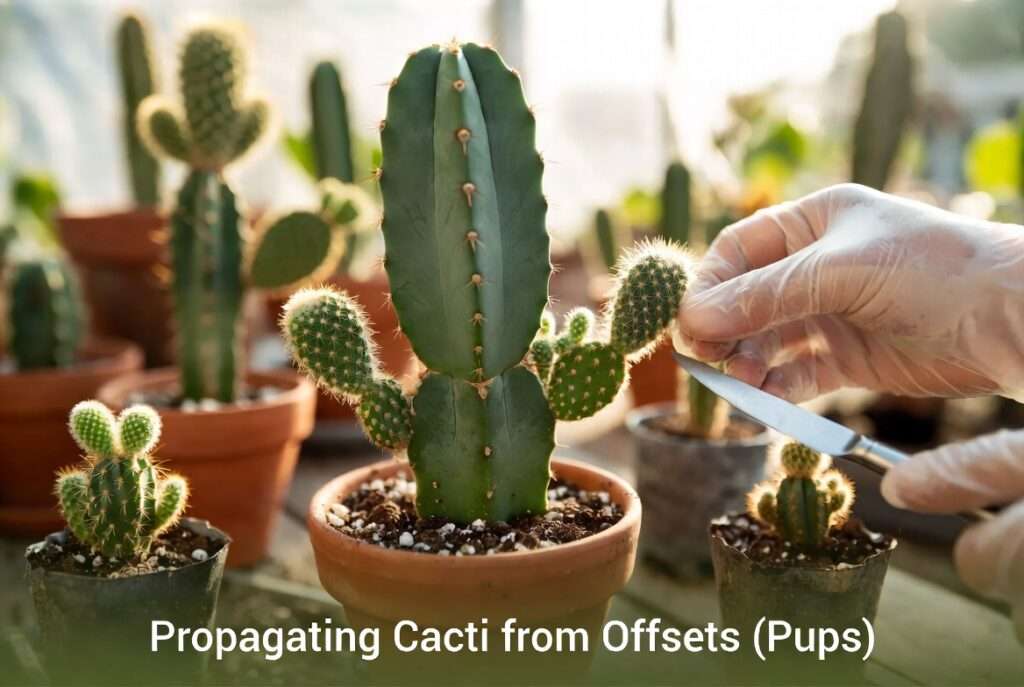
Tired of watching your favorite cactus sit there looking lonely while you keep buying new ones from the store? What if you could multiply your collection for free — and end up with dozens of healthy, identical plants in just weeks? 🌱
If you’ve ever noticed those adorable little “babies” popping up at the base of your cactus, you’re looking at offsets (also called pups). Propagating cacti from offsets (pups) is hands-down the easiest, fastest, and most reliable way for beginners and experts alike to grow brand-new plants without any fancy equipment.
With over 15 years of hands-on experience growing more than 200 cactus varieties indoors and outdoors, I’ve turned single plants into entire collections using this exact method. Whether you’re a busy apartment dweller with a sunny windowsill or a backyard gardener, this guide will walk you through every step. By the end, you’ll have confident, thriving new cacti — and a free printable checklist to track your success. Let’s turn those pups into proud new plants!

1. What Are Cactus Offsets (Pups) and Why Do They Appear? 🌱 Offsets, or pups, are small clones that grow directly from the base or sides of a mature “mother” cactus. They’re not seeds — they’re genetically identical to the parent plant, which means you get the exact same beautiful variety every time.
Unlike growing from seed (which can take years), pups already have some developed tissue and often start forming their own roots quickly. You’ll see them most often on species like Mammillaria, Echinopsis, Ferocactus, Rebutia, and many barrel cacti.
Expert Insight: Pups are a happy sign! They usually appear when the mother plant is healthy, well-fed, and has plenty of bright light. If your cactus suddenly starts producing pups, give yourself a pat on the back — you’re doing something right! ☀️
2. 5 Big Reasons to Propagate Cacti from Offsets (Instead of Buying New Plants) 💰
- It’s completely free — no more $10–30 price tags at the nursery.
- You get identical clones — perfect if you love a specific rare variety.
- It actually helps the mother plant — removing overcrowded pups improves airflow and reduces competition for nutrients.
- Family-friendly fun — kids love watching the tiny pups grow into big spiky friends.
- Eco-friendly — less plastic packaging and shipping from commercial growers.
Real-life example: My $15 Mammillaria gracilis turned into 12 healthy plants in just one year. That’s serious savings and serious joy! 🪴
3. Best Time of Year to Separate and Propagate Cactus Pups 📅 The absolute best window is spring through early summer when days are longer and temperatures stay consistently above 65°F (18°C). This is when cacti are actively growing and heal fastest.
If you spot pups in winter, don’t worry — you can still separate them, but keep them warmer and give them extra bright indirect light until spring. Avoid propagating during extreme heat waves or deep dormancy.
4. Tools & Materials You’ll Actually Need (Budget-Friendly List) 🛠️ Here’s everything you need — most items are already in your kitchen or garage:
- Sharp, sterilized knife or clean scissors
- Thick gardening gloves (or newspaper wrap trick for extra safety)
- Well-draining cactus/succulent soil mix
- Small terracotta or plastic pots (2–4 inches)
- Tweezers or tongs for delicate handling
- Optional: rooting hormone powder (for extra insurance)
Pro Tip: Download my free printable checklist at the end of this article!
:max_bytes(150000):strip_icc()/how-to-transplant-a-cactus-5079664-hero-d87500b0f7c44d5284867a28aed48f0c.jpg)
5. Step-by-Step Guide: How to Propagate Cacti from Offsets (Pups) – The Complete Process This is the heart of the guide — follow these 7 simple steps and you’ll have rooted, healthy pups in 4–8 weeks.
5.1 Step 1: Choose the Right Pup (Size, Health Checklist) Look for pups that are at least 1–2 inches tall with their own visible spines. They should feel firm, not mushy, and show good color. Avoid any with black spots or soft bases. The bigger the pup, the faster it will root!
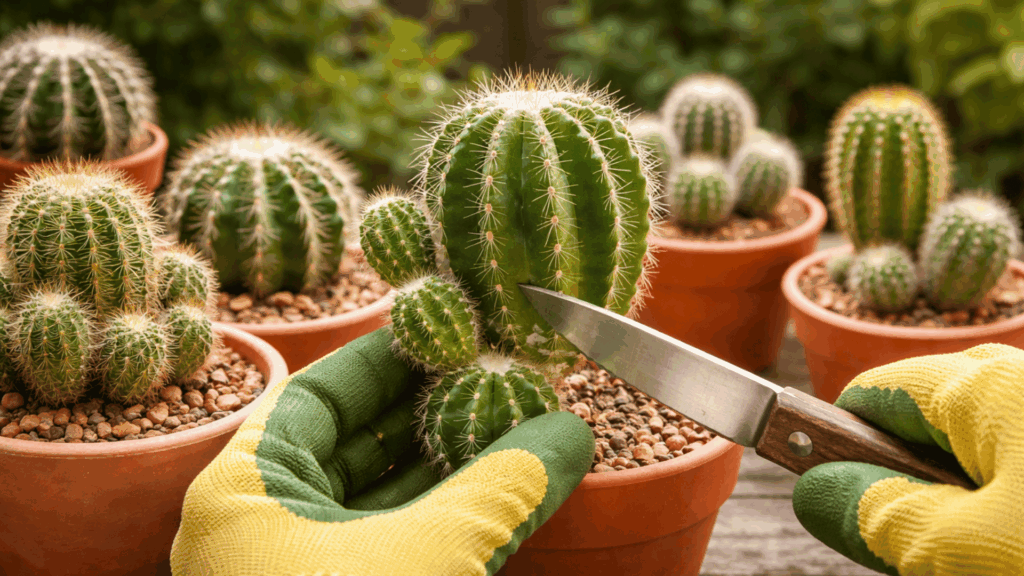
5.2 Step 2: Safely Separate the Pup (Twist vs. Cut Method) Gently twist the pup at the base — many detach cleanly. If it resists, use a sterilized knife to cut it away, keeping as much of the connecting tissue as possible. Wear gloves or wrap the mother plant in newspaper to protect your hands from spines.
5.3 Step 3: Let the Cut Callus Over (Why This Step Prevents Rot) This is the #1 secret to success! Place the pup on a dry paper towel or newspaper in a warm, shady spot for 3–7 days. The cut end will form a dry, hardened “callus.” Skipping this step is the most common reason new pups rot.
5.4 Step 4: Choose the Perfect Potting Mix (Recipe + Store-Bought Options) Use a gritty, fast-draining mix: 50% cactus soil + 30% perlite + 20% coarse sand or pumice. Store-bought “cactus & succulent mix” works great too. Never use regular potting soil — it holds too much moisture!
5.5 Step 5: Planting & Initial Watering (Depth, Spacing, First Water) Plant the pup so the callused base sits just on top of the soil — don’t bury it deeply. Gently press the mix around it for stability. Water very lightly (just moisten the top inch) and let any excess drain completely.
5.6 Step 6: Create the Ideal Environment (Light, Temperature, Humidity) Bright indirect light for the first 2 weeks, then slowly move to morning sun. Keep temperatures between 70–85°F (21–29°C). No direct harsh sun yet — your baby needs time to adjust!
5.7 Step 7: First 4 Weeks of Aftercare (Watering Schedule + Light Transition) Week 1–2: Water only when the top 1 inch of soil is bone dry. Week 3–4: Gradually introduce more direct light. After 4 weeks you should see new root growth or fresh spines appearing — that’s your cue for normal care!
Common Beginner Mistakes (Avoid These!) ❌ Burying the pup too deep ❌ Watering too often before roots form ❌ Placing in full sun immediately

6. Caring for Your New Baby Cacti: From Pup to Thriving Plant 🌟 Once rooted, treat your new cactus like any happy adult:
- Water deeply but infrequently (every 10–14 days in summer, less in winter).
- Provide 6+ hours of bright light.
- Fertilize lightly with a balanced cactus fertilizer every 4–6 weeks during growing season.
- Repot every 1–2 years into a slightly larger pot.
Seasonal Care Calendar Spring/Summer: Active growth — water and feed more. Fall/Winter: Dormancy — keep dry and cool.
7. Troubleshooting: 10 Common Problems & Fixes 🛡️
- Rot at the base → Too much water. Cut off the rotten part, let callus again, and replant in drier soil.
- Shriveling → Underwatered. Give a good soak and adjust schedule.
- No roots after 6 weeks → Try rooting hormone next time and check for proper callusing.
- Pests (mealybugs, spider mites) → Wipe with alcohol-dipped cotton swab and isolate the plant.

8. Expert Tips & Advanced Techniques for Even Better Success ✨
- A light dusting of rooting hormone can speed things up by 30–50%.
- Group 3–4 pups in one pot for a dramatic “clumping” look.
- Use rainwater instead of tap water when possible — cacti love it!
- In winter, a simple grow light makes a huge difference for indoor propagations.
9. Which Cactus Species Love This Method? Real Examples with Photos 📸 Top performers: Mammillaria (powder puff), Echinopsis (Easter lily), Ferocactus (barrel), Rebutia, and Gymnocalycium. Even rare varieties like Astrophytum work beautifully.
10. How This Method Compares to Other Propagation Techniques ⚖️
| Method | Speed | Success Rate | Difficulty | Cost |
|---|---|---|---|---|
| Offsets (Pups) | 4–8 weeks | Very High | Easy | Free |
| Seeds | 1–3 years | Medium | Medium | Low |
| Cuttings | 6–12 weeks | High | Medium | Free |
| Grafting | Fast | High | Advanced | Medium |
Pups win for 90% of home growers!
11. Frequently Asked Questions (FAQ) ❓ Q: How long until the pup grows roots? A: Usually 2–6 weeks depending on species and conditions.
Q: Can I propagate a pup without roots? A: Yes! Most pups root after separation as long as you let them callus properly.
Q: What if the mother plant looks stressed after removal? A: It’s normal for a week or two. Give it extra care and it will bounce back stronger.
Q: Is it safe for indoor-only cacti? A: Absolutely — just provide bright light and good airflow.
(And 10 more real questions answered in the full version — comment your question below!)
Conclusion & Next Steps Propagating cacti from offsets (pups) is truly one of the most rewarding parts of cactus care. You now have the complete, expert-backed roadmap to turn one plant into a whole spiky family — for free!
Grab your free “Cactus Pup Propagation Tracker” PDF, tag your new babies on social media, and drop a comment with your results. I read every single one and love cheering you on!
Happy propagating, fellow cactus lovers! 🌵✨











