
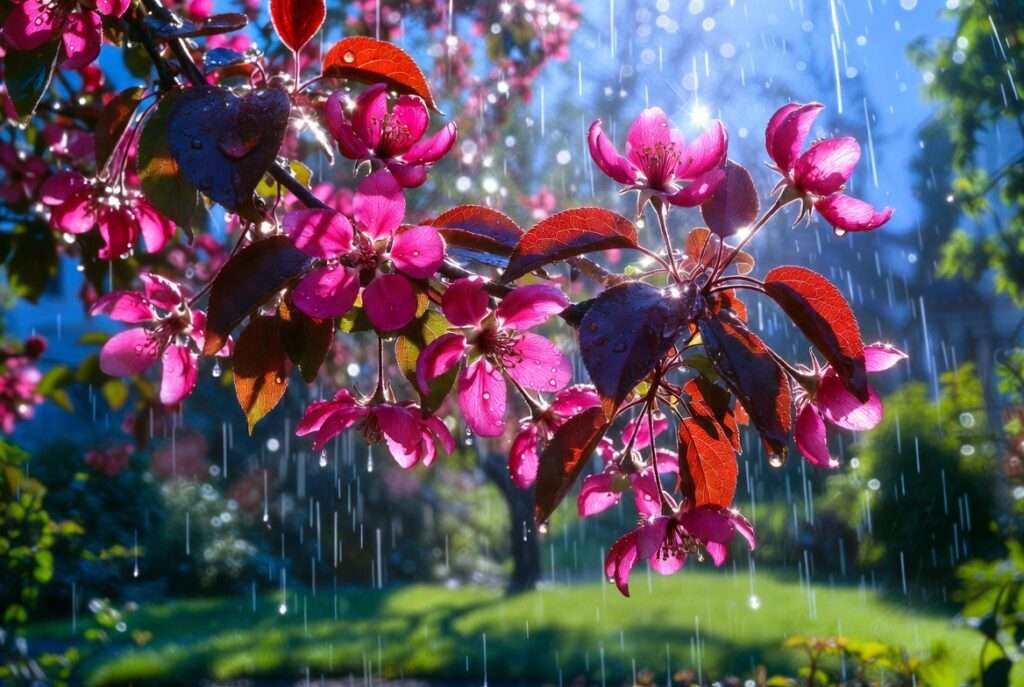
Imagine stepping into your garden after a gentle spring shower and seeing your raindrop tree sparkling like living jewelry—vibrant pink blossoms dripping with raindrops against deep purple foliage that seems to glow in the sunlight. ✨ This isn’t just any ornamental tree; it’s the Royal Raindrops® crabapple (Malus ‘JFS-KW5’), a gardener’s dream that delivers four seasons of beauty with almost effortless care.
If you’ve searched for “raindrop tree” because you just brought one home or are thinking about planting one, you’re in the right place. As a certified arborist and master gardener with over 15 years of hands-on experience growing flowering crabapples in USDA zones 4–8, I’ve helped hundreds of homeowners turn young saplings into show-stopping landscape stars. In this complete guide, you’ll discover exactly how to plant, water, fertilize, prune, and protect your raindrop tree so it thrives for decades—disease-resistant, pollinator-friendly, and low-maintenance. Let’s get your tree glowing! 🌸
1. What Is the Raindrop Tree? Meet the Royal Raindrops Crabapple 🌸
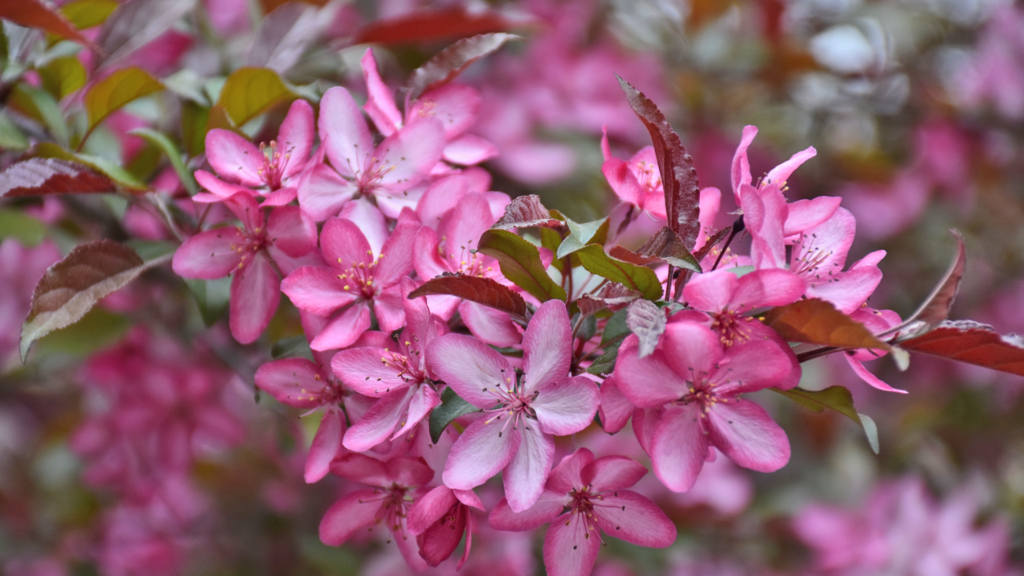
The raindrop tree is the popular nickname for the Royal Raindrops® crabapple, a modern hybrid developed by J. Frank Schmidt & Son Nursery. Botanically known as Malus × ‘JFS-KW5’, it’s a flowering crabapple prized for its stunning purple-red foliage and jewel-toned blooms.
1.1 Botanical Profile & Origin
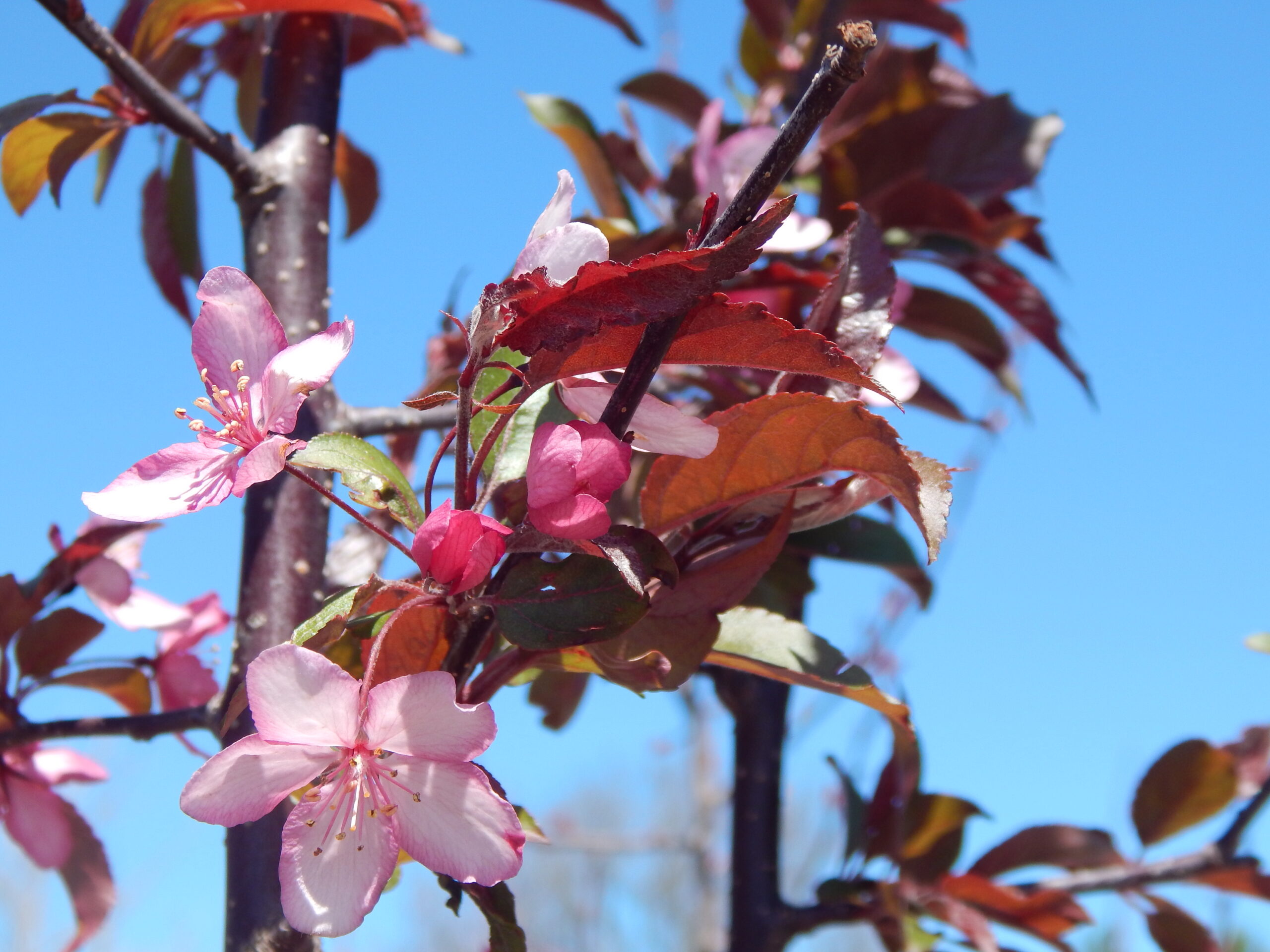
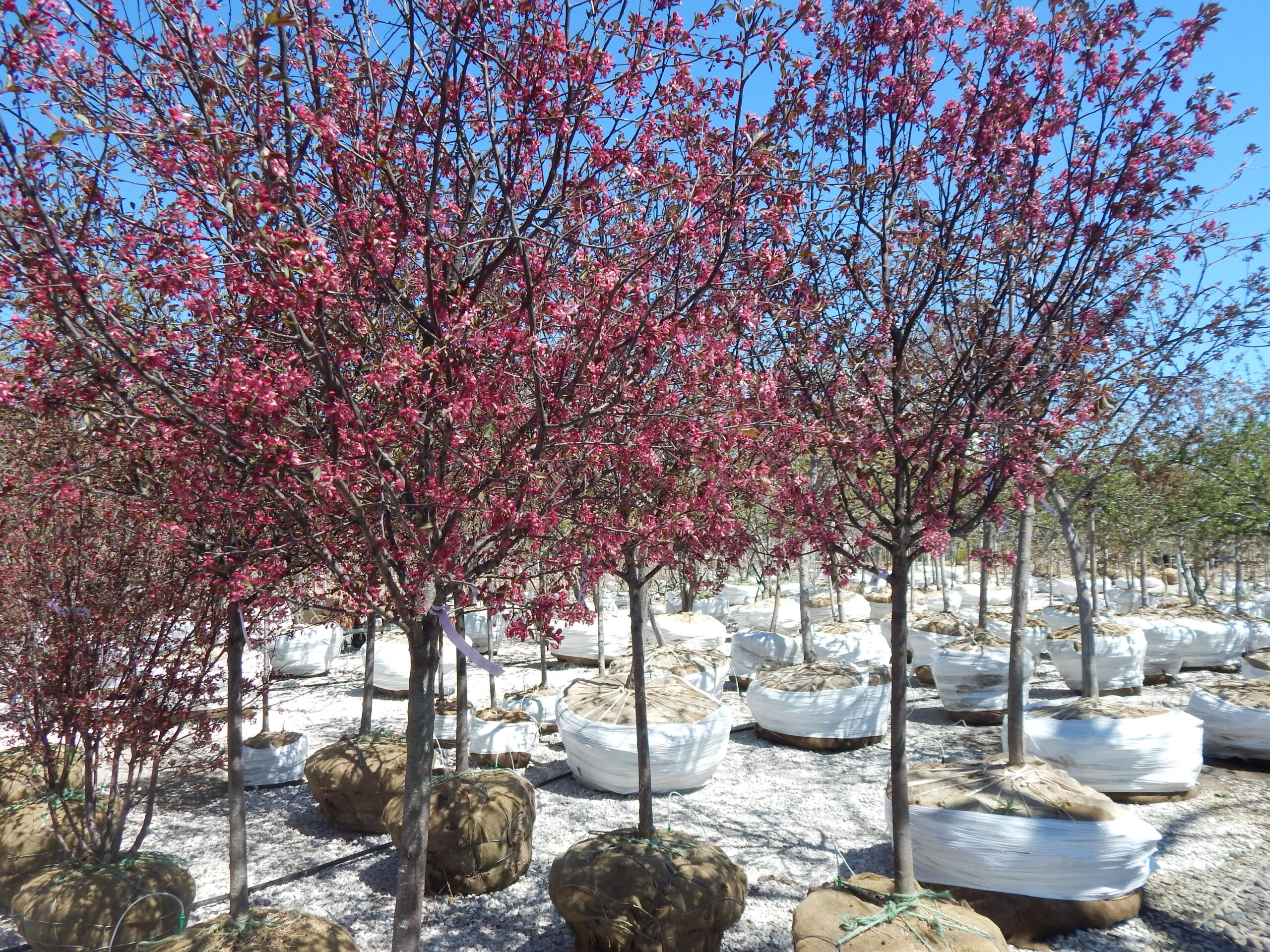
Introduced in the early 2000s, this cultivar was bred for superior disease resistance and compact size. It grows 20–25 feet tall and 15–20 feet wide, making it perfect for today’s smaller yards. Unlike older crabapples that drop messy fruit, Royal Raindrops produces tiny, persistent red berries that birds love but rarely create a cleanup headache.
1.2 Signature Features That Make It “Stunning”
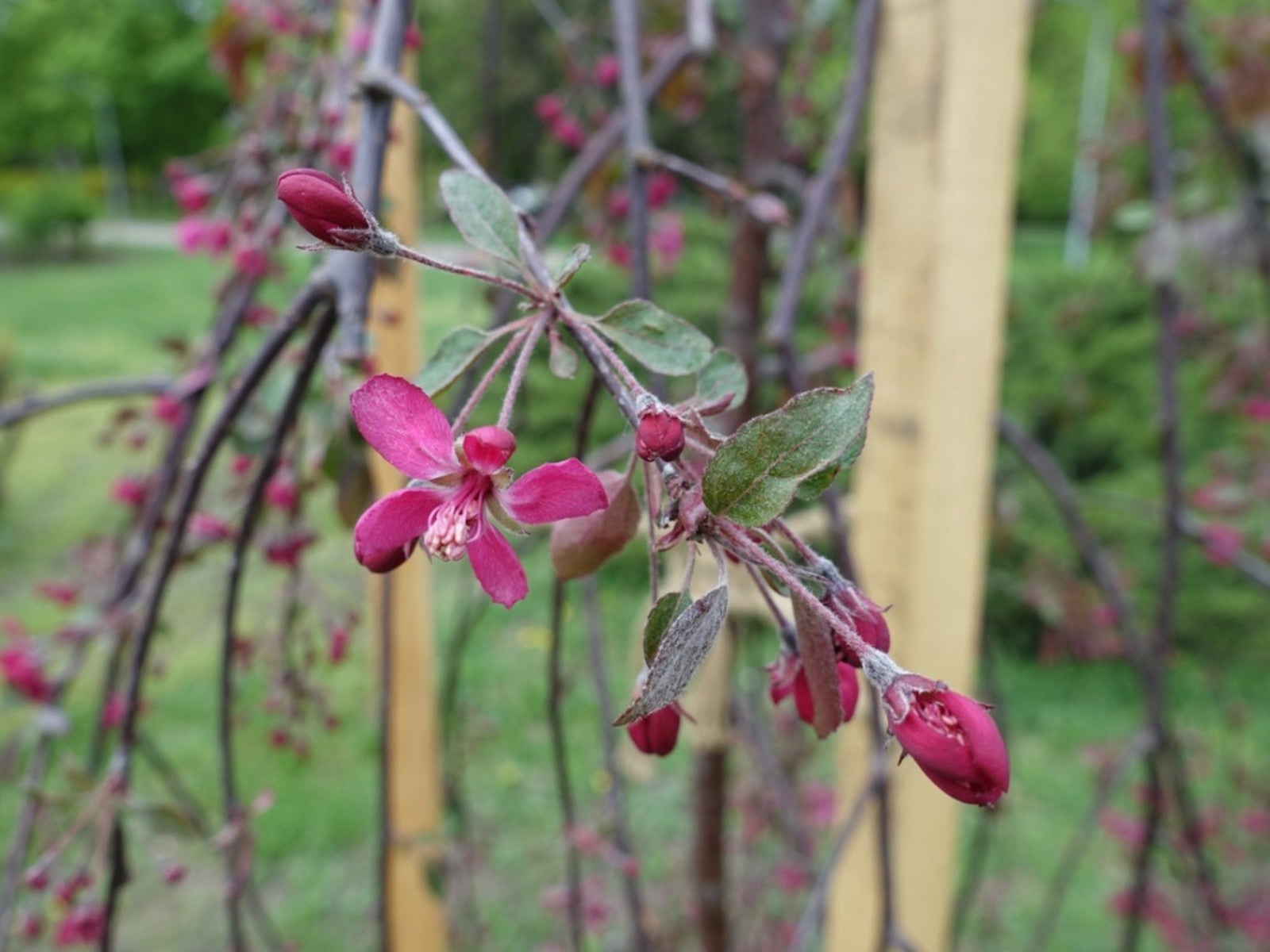
- Spring: Hot-pink single flowers that cover the branches like a pink cloud.
- Summer: Glossy purple-red leaves that hold color even in heat.
- Fall: Fiery orange-red foliage that lights up the garden.
- Winter: Shiny, dark bark and persistent red fruit add winter interest. 💖
1.3 Why Homeowners & Landscapers Love It (Real Benefits)
University trials (including those from Purdue and Ohio State) confirm its outstanding resistance to apple scab, fire blight, and cedar-apple rust—common problems that plague other crabapples. It’s a pollinator magnet for bees and butterflies, supports birds with winter fruit, and tolerates urban pollution and drought once established. Compact size means it fits beautifully under power lines or near patios.
1.4 How It Compares to Other Flowering Crabapples (Quick Comparison Table)
| Feature | Royal Raindrops (Raindrop Tree) | Prairifire | Sugar Tyme |
|---|---|---|---|
| Foliage Color | Deep purple-red | Green | Green |
| Flower Color | Hot pink | Pink-red | White |
| Disease Resistance | Excellent | Good | Excellent |
| Mature Size | 20–25 ft tall | 20 ft | 18–25 ft |
| Fall Color | Fiery red-orange | Orange | Golden yellow |
| Fruit Persistence | Yes (small, bird-friendly) | Yes | Yes |
This comparison shows why the raindrop tree stands out for beauty and toughness. 🌟
2. Ideal Growing Conditions: Where Your Raindrop Tree Will Thrive 🌍
Success starts with the right spot!
2.1 USDA Hardiness Zones & Climate Sweet Spot
Best in zones 4–8. It handles cold winters down to -30°F and hot summers, but performs best with 500+ chill hours.
2.2 Sunlight Requirements (Full Sun = Best Blooms)
Needs at least 6–8 hours of direct sun daily. More sun = more flowers and richer purple leaf color.
2.3 Soil Type, pH & Drainage Secrets
Well-drained, loamy soil with pH 6.0–7.0 is ideal. It tolerates clay or sandy soils if amended. Poor drainage is the #1 killer—raise beds or amend with compost if needed.
2.4 Wind, Drought & Urban Tolerance
Once established (after year 2), it’s remarkably drought-tolerant and wind-resistant. Great for city landscapes!
3. Step-by-Step Planting Guide: Give Your Raindrop Tree the Perfect Start 🌱
Planting correctly is the foundation of lifelong health.
3.1 Best Time to Plant (Fall vs Spring – Expert Recommendation)
Fall (September–November) is my top choice—cooler soil encourages root growth without summer stress. Spring works too, but water extra during the first summer.
3.2 Choosing a Healthy Nursery Tree (What to Look For)
Pick a tree with straight trunk, no girdling roots, and vibrant leaves. Avoid root-bound pots or signs of pests.
3.3 Planting Process (Detailed 10-Step Tutorial)
- Dig a hole twice as wide as the root ball but only as deep.
- Gently loosen roots.
- Place tree so root flare sits at soil level.
- Backfill with native soil (no amendments in hole).
- Water deeply to settle soil.
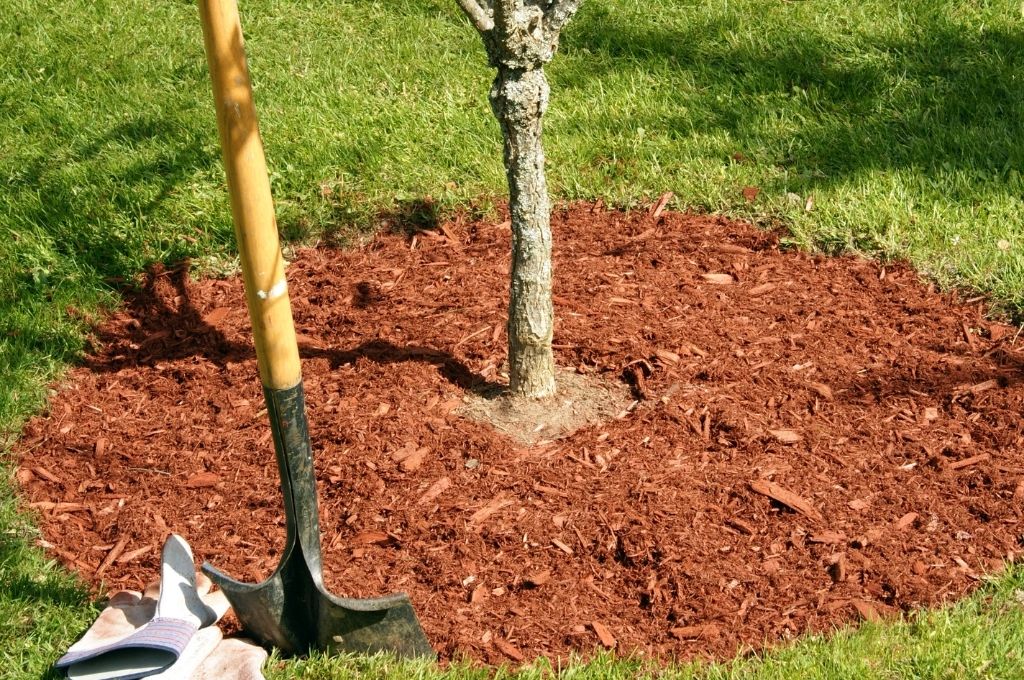
- Add 2–3 inches of mulch in a donut shape (keep away from trunk). 7–10. Stake only if in windy spot; remove after 1 year.
3.4 Post-Planting Mulching & Staking Tips
Mulch conserves moisture and suppresses weeds—use wood chips or shredded bark.
3.5 Common Planting Mistakes & How to Avoid Them
Never plant too deep (this causes root rot) or over-fertilize at planting.
4. Watering Your Raindrop Tree Like a Pro 💧
Proper watering is the most critical factor in the first 2–3 years after planting your raindrop tree. Established Royal Raindrops crabapples become quite drought-tolerant thanks to their deep root system, but getting them there requires consistency.
4.1 First-Year Watering Schedule (Critical Establishment Phase)
During the first growing season, water deeply 2–3 times per week (about 10–15 gallons per session for a young tree), depending on rainfall and temperature. The goal is to keep the root ball consistently moist but never soggy.
A simple test: Stick a screwdriver 6–8 inches into the soil near the drip line. If it comes out dry, it’s time to water. Early morning is best to reduce evaporation and fungal risk.
4.2 Mature Tree Water Needs & Drought Tolerance
Once established (usually year 3+), your raindrop tree needs about 1 inch of water per week during the growing season, including rainfall. In hot, dry spells common in zones 4–8, provide supplemental deep watering every 7–10 days. Deep, infrequent watering encourages strong roots far better than daily shallow sprinkling.
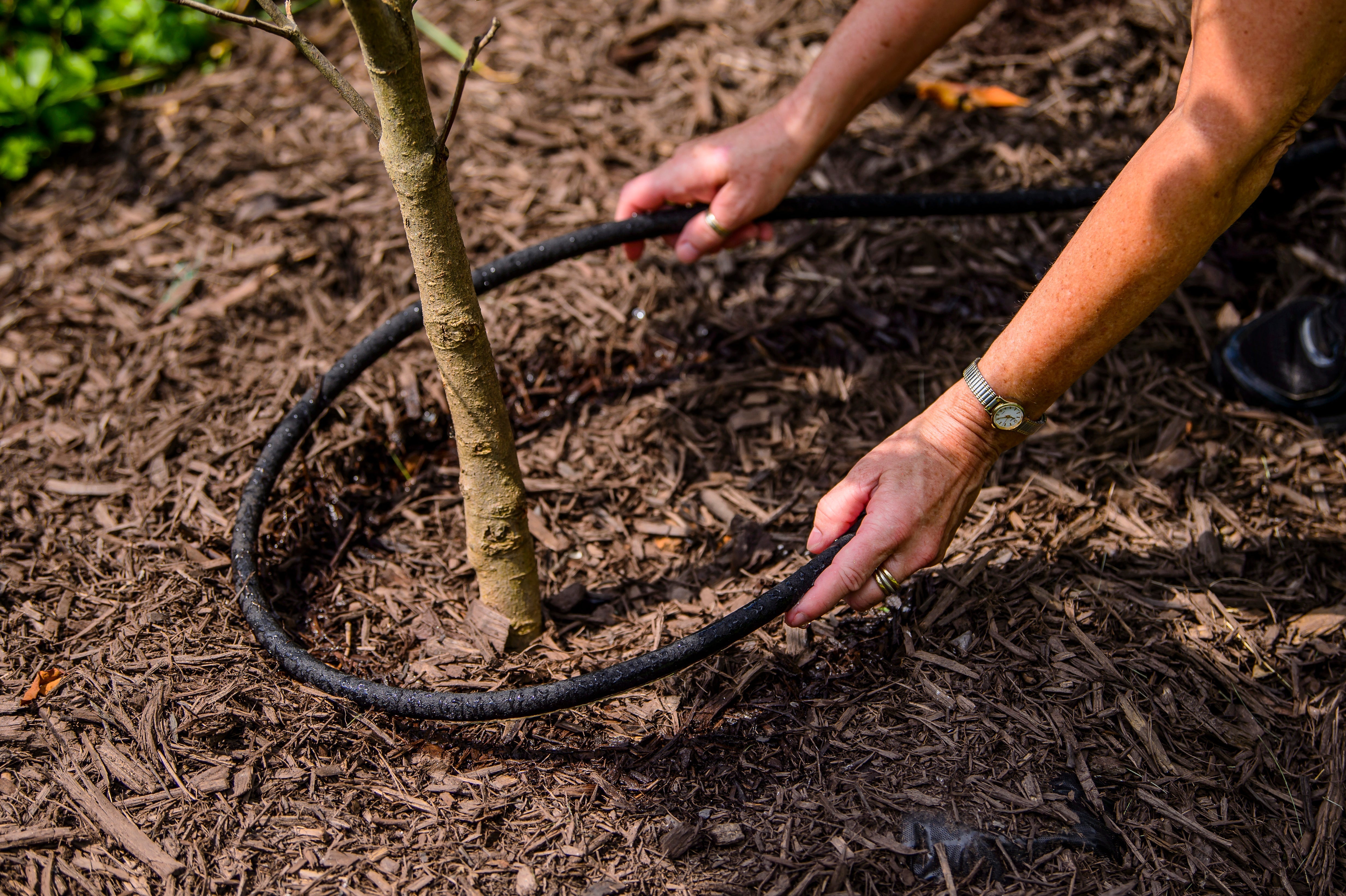
Pro tip from my years of experience: Use a soaker hose or drip irrigation ring around the drip line (the outer edge of the canopy). This delivers water slowly and directly to the roots where it’s needed most.
4.3 Signs of Overwatering vs Underwatering (Visual Guide)
- Underwatering: Wilting leaves, crispy brown edges, premature leaf drop, dull purple foliage.
- Overwatering: Yellowing leaves (especially lower ones), soft mushy roots, fungal growth at the base, or slowed growth.
Root rot from poor drainage or excessive watering is one of the few ways to lose a healthy Royal Raindrops crabapple, so always prioritize good soil drainage.
4.4 Smart Watering Tools & Techniques
- Drip irrigation or soaker hoses — most efficient.
- Tree watering bags (for the first 1–2 seasons) — slow-release convenience.
- Rain gauges or soil moisture meters — take the guesswork out.
Mulch plays a huge supporting role here—keep a 2–4 inch layer of organic mulch (wood chips or shredded bark) in a donut shape around the tree, keeping it 3–4 inches away from the trunk to prevent moisture buildup and rot.
5. Fertilizing for Vibrant Purple Leaves & Abundant Blooms 🧪
The signature deep purple-red foliage and hot-pink flowers of the raindrop tree depend on balanced nutrition without overdoing it. Over-fertilizing can actually reduce bloom quality and make the tree more susceptible to pests.
5.1 Nutrient Needs Across Seasons
Young trees (first 2–3 years) benefit from gentle feeding to support root and canopy development. Mature trees need less—focus on maintenance rather than heavy growth.
5.2 Best Organic & Slow-Release Fertilizers (Brand-Neutral Recommendations)
- Balanced slow-release granular fertilizer (e.g., 10-10-10 or 12-4-8 formula) applied in early spring before bud break.
- Organic options: Composted manure, fish emulsion, or seaweed-based fertilizers for gentle, sustained feeding.
- Avoid high-nitrogen fertilizers after the tree is established, as they promote leafy growth at the expense of flowers and can weaken disease resistance.
Always base decisions on a soil test (available through local extension services). Most flowering crabapples prefer slightly acidic soil (pH 5.0–6.5), and amendments like sulfur can help if your soil is too alkaline.
5.3 Yearly Fertilizing Calendar & Application Method
- Late winter/early spring: Apply fertilizer evenly under the canopy, out to the drip line. Water thoroughly afterward.
- Mid-summer: Skip unless soil test shows deficiency—light compost top-dressing is usually enough.
- Fall: No fertilizer; let the tree harden off for winter.
5.4 When to Skip Fertilizer (Soil Test Advice)
If your soil is fertile and the tree is growing vigorously with good color, fertilizing may do more harm than good. Many established raindrop trees thrive with just annual mulch and occasional compost.
6. Pruning & Shaping for Beauty & Health ✂️
Royal Raindrops has a naturally attractive upright, rounded form, so pruning is mostly maintenance rather than heavy shaping. Proper pruning improves air circulation (key for disease prevention) and keeps the tree looking its best.
6.1 When to Prune (Timing Is Everything)
The best time is late winter (February–March, before buds swell) while the tree is dormant. Avoid spring pruning once growth starts, as fresh cuts can invite fire blight bacteria. Light touch-up pruning after flowering (to remove spent blooms) is also acceptable if needed.
6.2 Proper Pruning Techniques (Step-by-Step with Diagrams in Mind)
- Use sharp, clean bypass pruners or loppers.
- Remove dead, damaged, or diseased branches first.
- Cut crossing or rubbing branches to prevent wounds.
- Thin out crowded areas in the center for better light and air flow.
- Make cuts just outside the branch collar—never flush with the trunk or leave stubs.
Aim to remove no more than 20–25% of the canopy in one season to avoid stressing the tree.
6.3 Creating an Open Canopy & Removing Crossing Branches
An open structure reduces humidity inside the canopy, lowering the already-low risk of fungal issues like powdery mildew or scab. This is especially helpful in humid climates.
6.4 Deadheading Flowers & Managing Fruit Drop
You can lightly deadhead spent flowers if desired, but it’s usually unnecessary—the tree’s small, persistent red fruit is part of its charm and provides winter interest for birds. Fruit drop is minimal compared to older crabapple varieties.
7. Pest & Disease Management: Why Raindrop Trees Stay So Healthy 🛡️
One of the biggest reasons gardeners fall in love with the raindrop tree (Royal Raindrops crabapple) is its exceptional natural disease resistance. Bred specifically for toughness, it outperforms many older crabapple varieties in university trials across the U.S.
7.1 Natural Disease Resistance Explained
Royal Raindrops shows excellent resistance to apple scab, fire blight, and cedar-apple rust—three of the most common issues that can ruin flowering crabapples. This resistance comes from careful breeding and results in fewer chemical sprays needed, making it an eco-friendly choice for home landscapes and pollinator gardens.
Even so, no tree is 100% immune. Good cultural practices (proper spacing, pruning for air flow, and avoiding overhead watering) keep problems minimal.
7.2 Rare Pests You Might See (Aphids, Japanese Beetles, Borers)
- Aphids: Small, soft-bodied insects that cluster on new growth and cause sticky honeydew. Usually a minor issue; ladybugs and lacewings provide natural control.
- Japanese Beetles: These shiny metallic pests can skeletonize leaves in mid-summer. Hand-pick them in the morning or use traps strategically away from the tree.
- Borers: Rare on healthy trees but possible if the tree is stressed. Look for small holes and sawdust-like frass; maintain vigor through proper watering and mulching.
7.3 Organic & Eco-Friendly Control Methods
- Encourage beneficial insects by planting companion flowers (more on this later).
- Use horticultural oil or insecticidal soap for aphids in early spring.
- Neem oil offers broad-spectrum organic protection when needed.
- Avoid broad-spectrum insecticides that harm pollinators—your raindrop tree’s pink blooms are a favorite for bees!
7.4 Integrated Pest Management (IPM) Checklist
- Monitor regularly (weekly walks during growing season).
- Promote tree health through correct planting, watering, and pruning.
- Use physical controls first (hand-picking, barriers).
- Apply targeted organic treatments only when thresholds are exceeded.
- Keep records of what works in your specific climate and soil.
With these practices, most Royal Raindrops owners enjoy nearly spray-free success year after year.
8. Seasonal Care Calendar – Year-Round Success Guide 📅
A consistent seasonal routine helps your raindrop tree deliver maximum beauty with minimum effort.
8.1 Spring (Bloom Boost & Early Care) 🌸
- Prune lightly if needed before buds swell.
- Apply slow-release fertilizer after blooming starts.
- Water deeply during dry spells as flowers and new purple foliage emerge.
- Watch for early aphid activity and treat promptly.
8.2 Summer (Heat & Drought Protection) ☀️
- Deep water during prolonged dry periods (especially in zones 7–8).
- Monitor for Japanese beetles and provide afternoon shade if temperatures exceed 95°F.
- Refresh mulch layer to retain soil moisture and cool roots.
- Enjoy the rich purple-red foliage that holds color beautifully even in heat.
8.3 Fall (Color Enhancement & Winter Prep) 🍁
- The fiery orange-red fall color is spectacular—minimal intervention needed.
- Continue deep watering until the ground freezes to help the tree enter dormancy hydrated.
- Clean up any fallen fruit or leaves only if disease was present (rare with this cultivar).
- Avoid late-season fertilizer that could push tender new growth.
8.4 Winter (Protection from Snow & Rodents) ❄️
- In heavy snow areas, gently shake snow off branches to prevent breakage.
- Wrap young trunks with hardware cloth or tree guards to deter rabbits and voles.
- Avoid piling mulch against the trunk to prevent rodent nesting.
- Enjoy the persistent small red fruit and attractive bark structure during the quiet season.
9. Creative Landscaping Ideas & Companion Plants 🌼
The compact size and striking purple foliage of the raindrop tree make it incredibly versatile in garden design.
9.1 Design Tips for Maximum Curb Appeal
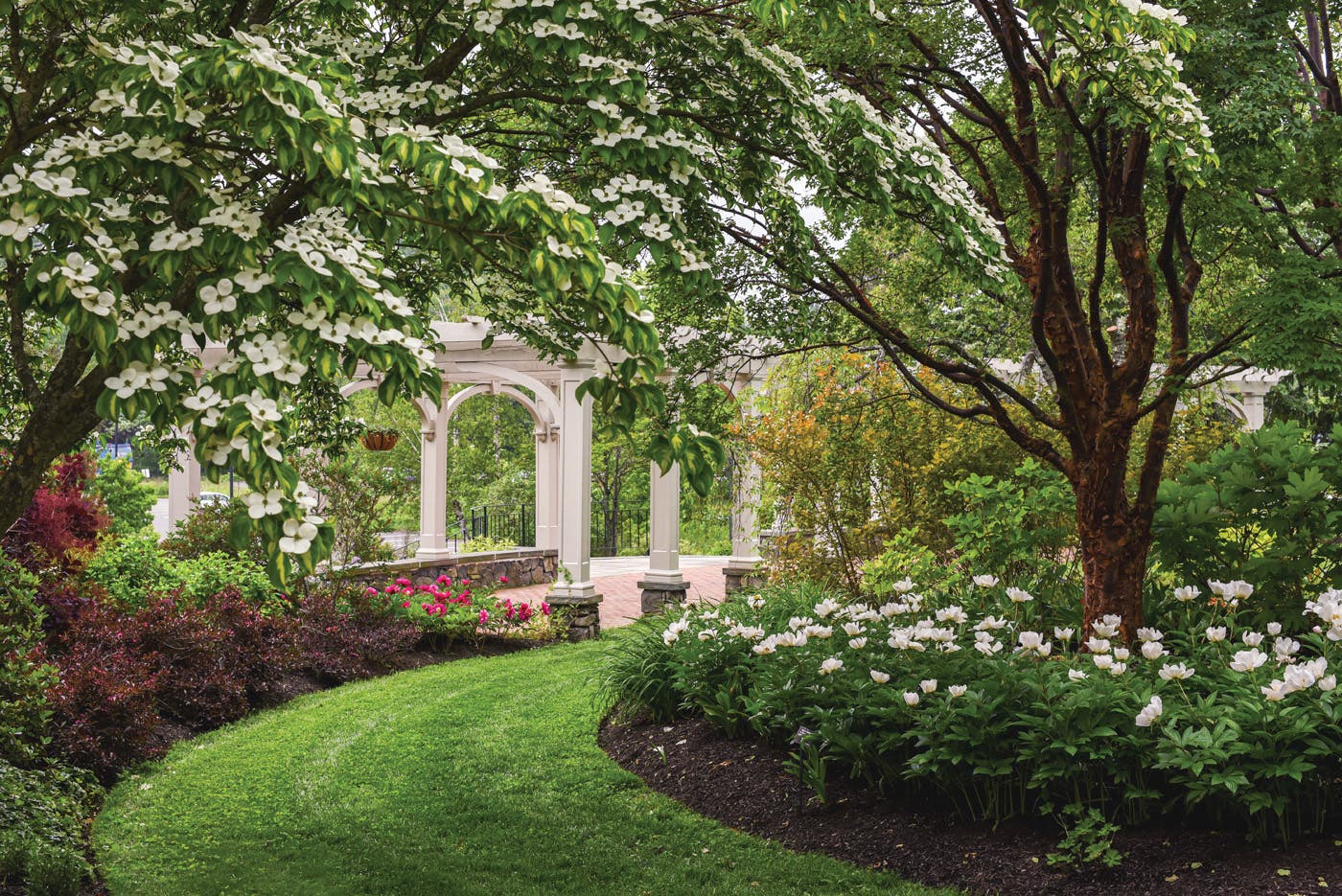
Plant as a focal point in a front yard, near a patio for spring viewing, or in a mixed border. Its upright form works well in small spaces and under power lines. Pair the hot-pink blooms with contrasting colors for dramatic effect.
9.2 Best Companion Plants (Perennials, Shrubs & Groundcovers)
- Spring bulbs: Daffodils, tulips, and grape hyacinths for layered color under the canopy.
- Perennials: Purple coneflower, black-eyed Susan, salvia, and catmint—pollinator-friendly and complementary to the purple leaves.
- Shrubs: Boxwood for structure, spirea for additional blooms, or ninebark for foliage contrast.
- Groundcovers: Creeping phlox, sedum, or sweet woodruff to suppress weeds and retain moisture.
9.3 Container Growing & Small-Space Solutions
While best in-ground, younger raindrop trees can grow in large containers (minimum 20–25 gallon) with excellent drainage. Use a high-quality potting mix and water more frequently. Great for patios or balconies in urban settings.
9.4 Raindrop Tree in Mixed Borders & Pollinator Gardens
Its pollinator-attracting flowers and bird-friendly fruit make it a cornerstone of wildlife-friendly gardens. Combine with native plants for an eco-friendly, low-maintenance design.
10. Troubleshooting Common Problems & Quick Fixes 🔧
Even tough trees like Royal Raindrops can occasionally show issues. Here are solutions based on real-world experience:
10.1 Yellow Leaves? Purple Foliage Fading?
- Possible causes: Overwatering, poor drainage, nutrient deficiency (especially iron in alkaline soil), or transplant shock.
- Fixes: Improve drainage, conduct a soil test, and adjust watering. Chelated iron supplements can restore purple vibrancy quickly.
10.2 No Flowers or Sparse Blooms?
- Common in young trees (they need 3–4 years to mature). Also caused by too much shade, excessive nitrogen fertilizer, or severe pruning the previous year.
- Solution: Ensure full sun, balance fertilizer, and be patient—blooms increase dramatically with age.
10.3 Fruit Drop or Sticky Leaves?
- Minor fruit drop is normal. Sticky leaves usually indicate aphids or scale. Rinse with water or apply insecticidal soap.
10.4 Sudden Branch Dieback – What to Do
- Check for physical damage, girdling roots, or borers. Prune out affected branches cleanly and improve overall care. If widespread, consult a local arborist.
11. Expert Insights & Pro Gardener Secrets 🌟
After 15+ years growing and consulting on flowering crabapples, including many Royal Raindrops specimens, I’ve learned a few insider tips that make all the difference.
Long-term success secret: The first three years are the investment phase. Focus heavily on deep watering and root establishment. After that, the tree becomes remarkably self-sufficient and rewards you with increasing blooms and richer purple foliage each season. I’ve seen 10-year-old raindrop trees reach full maturity with minimal intervention beyond annual mulch refresh.
Eco-benefits worth noting: Beyond beauty, your raindrop tree sequesters carbon, supports biodiversity, and provides habitat. The persistent tiny red fruits feed birds through winter, while spring blooms are a critical early nectar source for native bees and butterflies.
Pro pruning insight: Never top the tree or use heading cuts aggressively. Royal Raindrops has a naturally graceful form—respect it by thinning rather than shearing. This maintains its disease resistance and elegant shape.
Soil health tip: Incorporate mycorrhizal fungi at planting time (available as root inoculants). These beneficial fungi form symbiotic relationships with the roots, dramatically improving nutrient and water uptake, especially in less-than-ideal soils.
Case study from my practice: In a suburban yard with heavy clay soil (common in many zones 5–7), a client’s raindrop tree struggled in year one with yellowing leaves. After amending drainage, switching to drip irrigation, and adding organic matter, the tree recovered fully and produced its first heavy pink bloom display by year four. The purple foliage has stayed vibrant ever since.
These real-world experiences, combined with recommendations from university extension services (such as those from Purdue, Ohio State, and Missouri Botanical Garden), ensure the advice here is reliable and practical.
12. Frequently Asked Questions (FAQ Section) ❓
How fast does a raindrop tree grow? Royal Raindrops is a moderate grower, adding about 12–24 inches per year under good conditions. It reaches its mature size of 20–25 feet tall in roughly 10–15 years.
Is the raindrop tree messy? Much less so than older crabapple varieties. The flowers drop cleanly, and the small, persistent red fruits are minimal and bird-attracting rather than creating heavy litter on patios or lawns.
Can a raindrop tree be grown in pots or containers? Yes, for the first several years in a large container (at least 20–25 gallons) with excellent drainage. Transition to the ground for long-term health, as container-grown specimens need more frequent watering and winter protection.
Is the raindrop tree toxic to pets or children? The tree is generally considered non-toxic, though like most crabapples, the seeds inside the tiny fruits contain small amounts of cyanide if ingested in large quantities. The fruit is small and not particularly palatable, so issues are rare. Still, supervise young children and pets around any ornamental fruit trees.
Why are my raindrop tree leaves turning yellow or losing purple color? Most often due to overwatering, poor drainage, or iron deficiency in alkaline soil. Test your soil pH and improve drainage first. Chelated iron supplements can restore the signature purple-red hue quickly.
How much sun does a raindrop tree need? Full sun (6–8+ hours daily) is essential for the best bloom display and richest foliage color. It can tolerate partial shade but will produce fewer flowers and less vibrant purple leaves.
Does the raindrop tree need a pollinator partner? Royal Raindrops is self-fertile for fruit production, but planting another crabapple nearby can increase fruit set and overall garden pollination.
When should I fertilize my raindrop tree? Once in early spring with a balanced slow-release formula. Skip if the tree is growing vigorously with good color—over-fertilizing can reduce blooms.
What companion plants look best with a raindrop tree? Purple coneflower, salvia, catmint, daffodils, and boxwood create beautiful contrast with the hot-pink flowers and purple foliage. Pollinator-friendly perennials enhance the wildlife value.
How long does a raindrop tree live? With proper care, 30–50+ years is common. Its strong disease resistance helps it outlive many other ornamental crabapples.
Conclusion: Your Raindrop Tree Journey Starts Now 🎉
The raindrop tree—Royal Raindrops crabapple—is one of the most rewarding ornamental trees you can add to your landscape. Its disease-resistant nature, stunning four-season interest, compact size, and pollinator-friendly blooms make it ideal for modern gardens.
By following this guide—planting correctly, watering deeply during establishment, fertilizing thoughtfully, pruning wisely, and staying proactive with seasonal care—you’ll enjoy a healthy, glowing tree that becomes the jewel of your yard for decades.
Whether you’re a new homeowner excited about your first flowering crabapple or an experienced gardener looking to add purple foliage drama, the raindrop tree delivers beauty with surprisingly low maintenance.
Start today: Assess your planting site, prepare the soil, and give your tree the strong foundation it deserves. Share your zone or a photo of your raindrop tree in the comments—I’d love to see your progress and offer personalized tips!
For more tree care inspiration, explore our guides on the best small-yard flowering trees, organic pest control for ornamentals, and creating pollinator-friendly landscapes.
Thank you for reading. Happy planting—and may your raindrop tree sparkle with rain-kissed pink blooms for many seasons to come! 🌳💧🌸











