
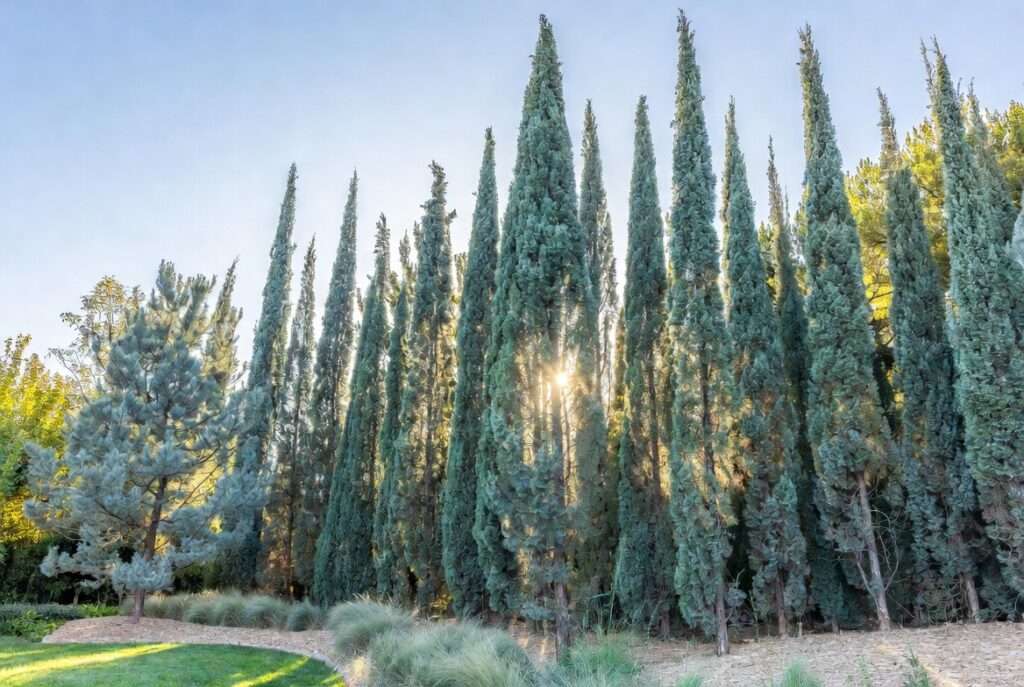
Have you ever stared at a tiny backyard and dreamed of towering evergreens that deliver privacy, wind protection, and that classic forest charm—without swallowing every inch of space? If so, tall thin pine trees are about to become your new landscaping heroes. These slender, upright conifers combine impressive height with a narrow footprint, making them perfect for modern small gardens, urban lots, and tight property lines. Whether you’re battling nosy neighbors or simply craving vertical drama in your outdoor space, these trees solve the age-old problem of “I want height but zero sprawl.”
As a plant-care specialist with over 15 years helping homeowners turn cramped yards into lush retreats, I’ve seen firsthand how tall thin pine trees transform landscapes. They’re not just pretty—they’re hardworking evergreens that thrive in full sun, tolerate cold winters, and require surprisingly little maintenance once established. In this comprehensive guide, you’ll discover the absolute best varieties, foolproof planting techniques, expert care secrets, and creative ways to use them. By the end, you’ll know exactly how to grow thriving tall thin pine trees that will make your neighbors stop and stare (in the best way). Let’s dig in! 🪴
Why Tall Thin Pine Trees Are a Game-Changer for Small Spaces 🌲
In today’s world of shrinking lot sizes, traditional wide-spreading pines just don’t cut it. That’s where tall thin pine trees—often called columnar or fastigiate pines—shine. These cultivars feature branches that grow almost straight upward instead of outward, resulting in a sleek, pencil-like silhouette that can reach 30–50 feet tall while staying just 6–12 feet wide at maturity.
Key benefits you’ll love:
- Space-saving privacy screens — Plant them 6–8 feet apart for a living green wall in record time.
- Year-round interest — Soft, needle-like foliage stays lush and green (or blue-green) through every season.
- Wildlife friendly — Birds and squirrels adore them for nesting and food.
- Low-maintenance beauty — Once settled, they handle drought better than many broadleaf trees and resist heavy winds thanks to their narrow profile.
- Versatile landscaping — Use as focal points, borders, or even container specimens on patios.
Unlike bulky spruces or spreading oaks, these pines deliver maximum impact in minimum space—exactly what busy homeowners in small yards need. And the best part? They’re surprisingly adaptable once you pick the right variety for your climate and soil.
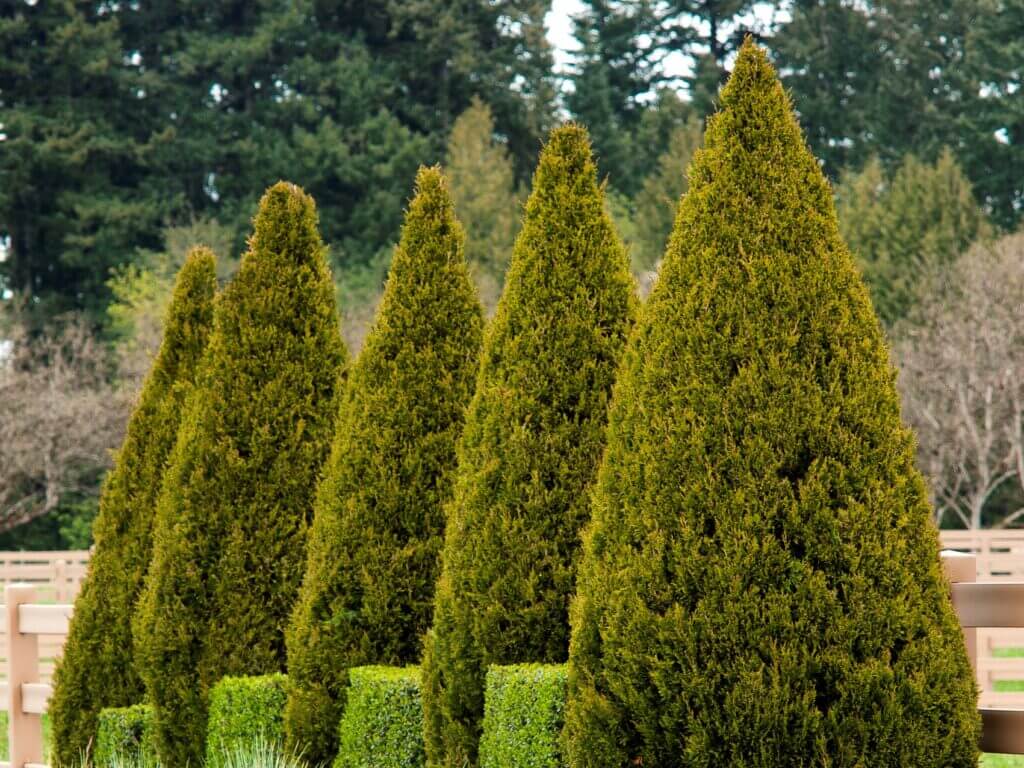
Top 7 Best Varieties of Tall Thin Pine Trees for Every Garden
Not all pines are created equal when it comes to that perfect tall-and-slim shape. Here’s my curated list of standout cultivars, chosen for proven performance in small spaces. I’ve included mature size, growth rate, hardiness zones, and pro tips so you can match them to your yard like a pro. 🌍
1. Columnar Eastern White Pine (Pinus strobus ‘Fastigiata’) This is the gold standard for tall thin pine trees. It grows rapidly (2–3 feet per year) into a graceful, narrow column reaching 30–40 feet tall but only 8–10 feet wide. Soft, blue-green needles give it a silky, fuzzy look from a distance. Hardy in zones 3–8, it loves full sun and well-drained soil. Pro tip: Perfect for northern climates; avoid exposed windy spots to prevent needle burn. It’s one of the fastest ways to create a tall privacy screen in small backyards.
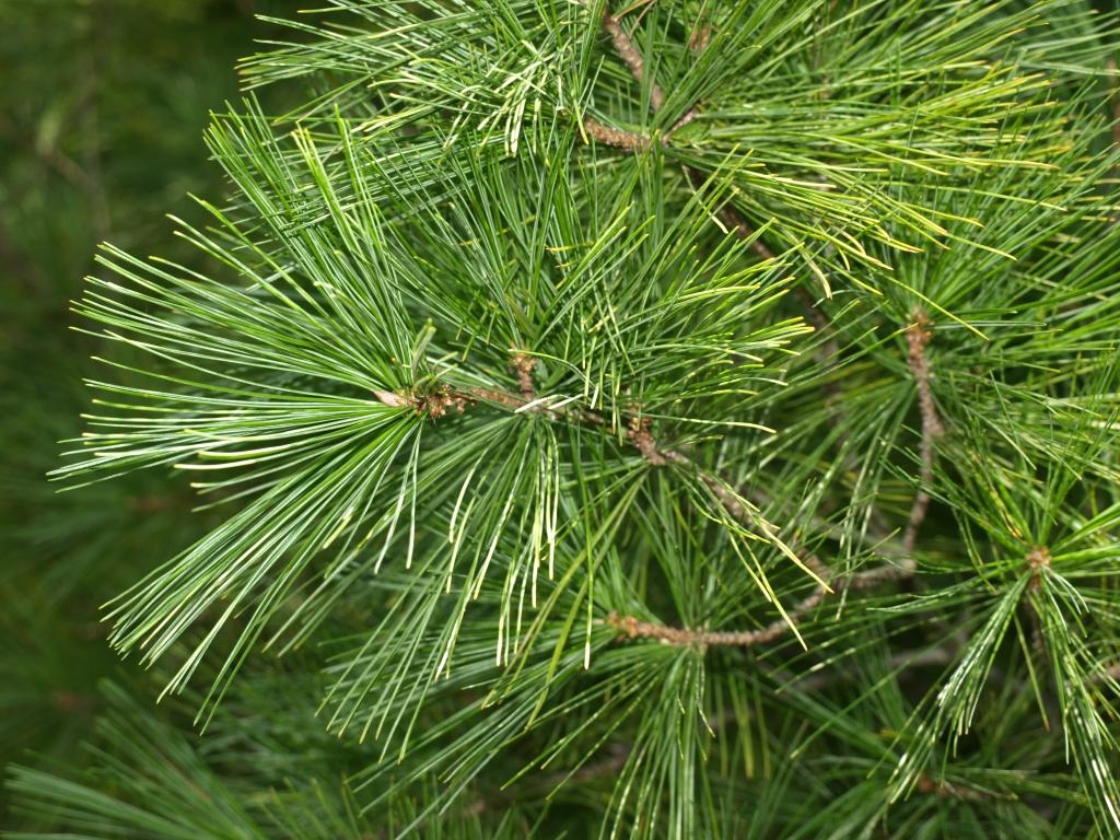
2. Stowe Pillar Pine (Pinus strobus ‘Stowe Pillar’) A newer superstar with an even tighter habit—up to 40 feet tall and just 6–8 feet wide. Dense branching and rich green needles make it ideal for tight spaces. Same zone range as its cousin ‘Fastigiata’ but with superior wind resistance. Why gardeners rave: It maintains its narrow shape naturally with almost zero pruning.
3. Austrian Pine ‘Green Tower’ (Pinus nigra ‘Green Tower’) Dark green, stiff needles and a super-slim profile (35 feet tall × 6–8 feet wide). Zones 4–7. This one thrives in poorer soils and urban pollution, making it a tough choice for city gardeners. Bonus: Excellent drought tolerance once established—great for water-wise landscapes.
4. Columnar Austrian Pine ‘Komet’ (Pinus nigra ‘Komet’) Even narrower than ‘Green Tower,’ this cultivar shoots up like a rocket while staying under 10 feet wide. It offers dense foliage and strong winter hardiness.
5. Japanese Columnar White Pine A lesser-known gem that reaches about 30 feet tall with an ultra-slim 6–8 foot spread. Soft needles and elegant form give it a refined, almost bonsai-like charm in larger containers or small gardens.
6. Columbo Columnar Mugo Pine (Pinus mugo ‘Columnaris’) For those wanting a more compact tall thin pine, this reaches 15–20 feet tall and just 4–6 feet wide. Zones 2–7. It’s slower-growing but incredibly hardy and perfect for foundation plantings or narrow borders.
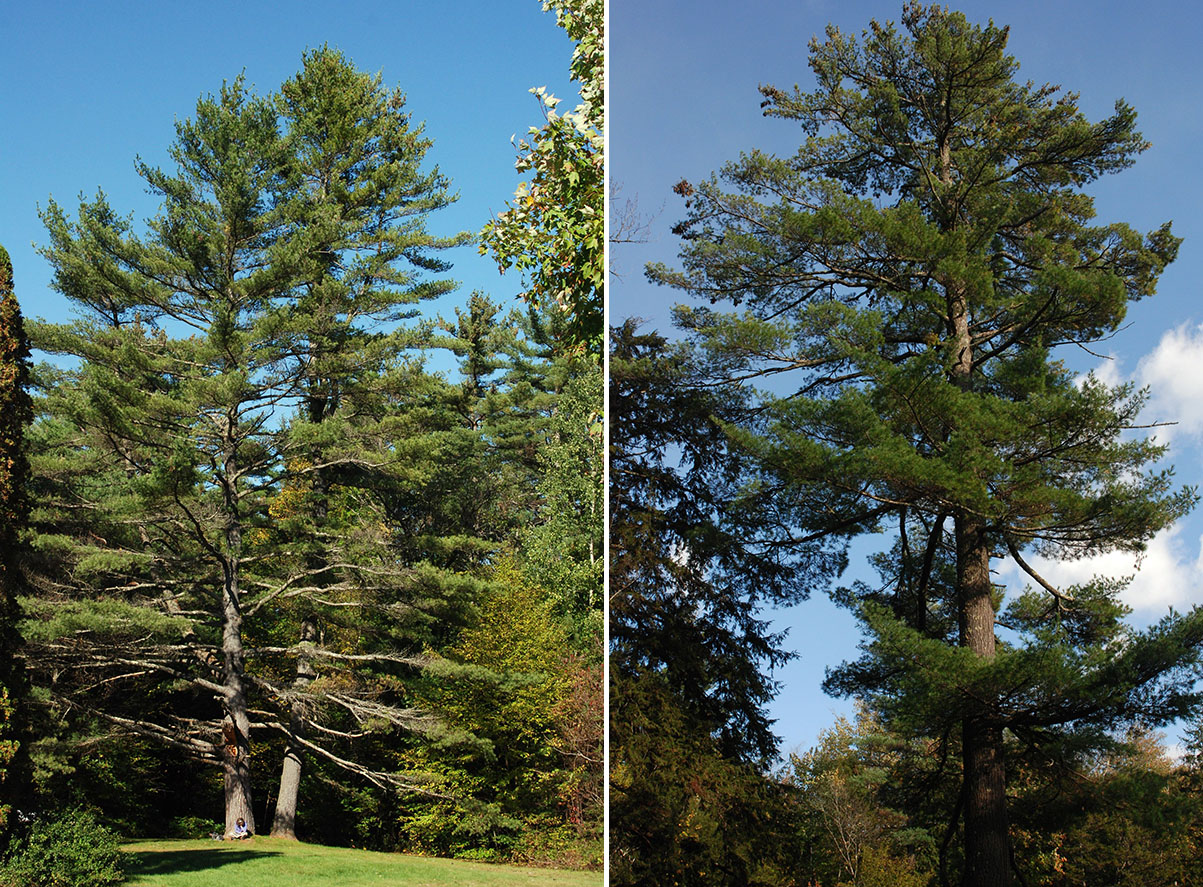
7. Longleaf Pine (Pinus palustris) – Natural Tall & Thin Form In the wild, longleaf pines grow tall and slender with open crowns—ideal if you have warmer zones (7–10) and sandy soil. Not as tightly columnar as cultivars, but they deliver that classic “tall thin pine trees” look in larger small-space designs.
Quick variety comparison table (for easy reference):
| Variety | Height | Width | Growth Rate | Best Zones | Best For |
|---|---|---|---|---|---|
| ‘Fastigiata’ White Pine | 30-40 ft | 8-10 ft | Fast | 3-8 | Privacy screens |
| ‘Stowe Pillar’ | 40 ft | 6-8 ft | Medium-Fast | 3-8 | Tightest spaces |
| ‘Green Tower’ Austrian | 35 ft | 6-8 ft | Medium | 4-7 | Urban/polluted areas |
| Columbo Mugo | 15-20 ft | 4-6 ft | Slow | 2-7 | Foundations & borders |
How to Choose the Right Tall Thin Pine Tree for Your Yard 🏡
Selecting the perfect tall thin pine trees starts with honest assessment of your site—because even the best columnar varieties will struggle if mismatched with your climate, soil, or light conditions. As an expert who has helped hundreds of homeowners in small urban and suburban spaces, I always recommend this simple three-step evaluation:
- Check Your USDA Hardiness Zone — Most columnar white pines (like ‘Fastigiata’ and ‘Stowe Pillar’) thrive in zones 3–8, while Austrian pine cultivars handle zones 4–7 beautifully. If you’re in warmer zones 7–10, consider naturally slender longleaf pine forms that love sandy, well-drained soil.
- Test Your Soil — Pines prefer slightly acidic to neutral soil (pH 5.5–7.0) that drains quickly. Heavy clay or compacted urban soil is a common killer. Grab a simple home soil test kit or send a sample to your local extension office. If drainage is poor, amend with plenty of organic matter or plant in raised beds/mounds.
- Measure Sunlight and Space — These trees demand full sun (at least 6–8 hours daily) for dense, healthy growth. Measure your available width: allow at least 6–10 feet between trees for privacy screens and 8–12 feet from buildings or power lines to prevent future issues.
Pro Expert Tip: In small spaces, prioritize slower-growing or naturally narrow cultivars like ‘Green Tower’ Austrian Pine or Columbo Columnar Mugo if you want less future pruning. Fast growers like Eastern White Pine ‘Fastigiata’ give quicker height but may need occasional shaping in the first few years.

Step-by-Step Planting Guide for Tall Thin Pine Trees 🌱
Proper planting is 80% of long-term success with tall thin pine trees. Follow these expert steps and your trees will establish strong roots and shoot upward with minimal stress:
- Timing is everything — Plant in early spring or early fall when temperatures are cool and rainfall is more reliable. Avoid summer heat or frozen ground.
- Dig the right hole — Make it 2–3 times wider than the root ball but only as deep as the root ball (or slightly shallower). The goal is to encourage outward root spread, not deep burial. Rough up the sides of the hole so roots can penetrate easily.
- Position correctly — Place the tree so the top of the root ball sits level with or slightly above the surrounding soil. Never bury the trunk flare (where roots meet the trunk)—this leads to rot and decline.
- Backfill wisely — Use native soil mixed with 20–30% compost or pine bark. Avoid heavy fertilizers at planting; they can burn tender roots. Water deeply as you fill to eliminate air pockets.
- Mulch generously but smartly — Apply 2–4 inches of organic mulch (pine needles, shredded bark, or wood chips) in a wide donut shape around the base, keeping it 3–4 inches away from the trunk to prevent moisture buildup and pests. Mulch conserves water, moderates soil temperature, and suppresses weeds.
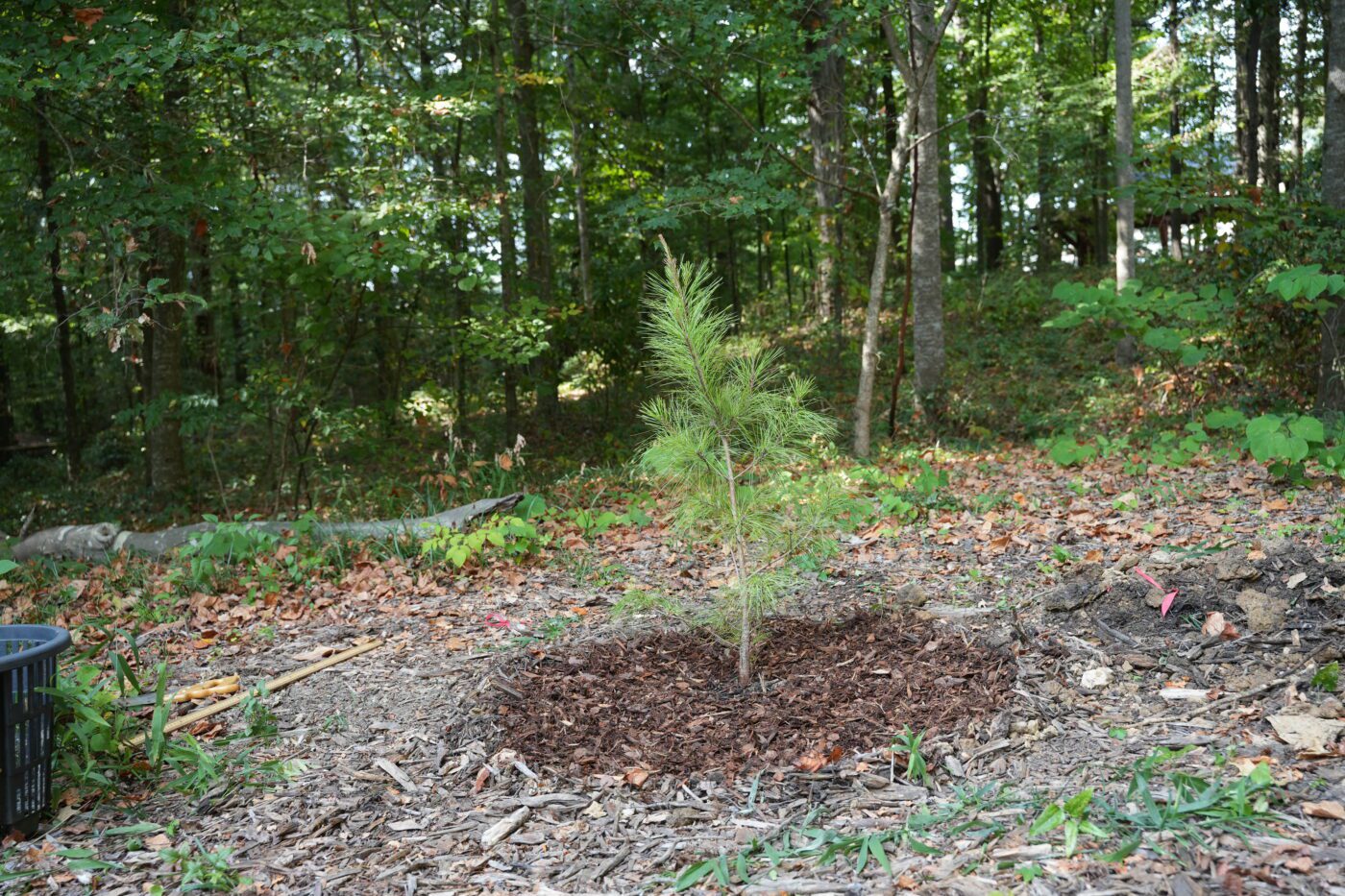
Watering After Planting: Give your new tall thin pine trees a deep soak (about 10–15 gallons) immediately after planting, then water deeply 2–3 times per week for the first growing season. Use the “pale trick”—place a 5-gallon bucket with a small hole near the base and let it drip slowly for even moisture.
Once established (usually after 1–2 years), these slender pines become quite drought-tolerant thanks to their deep taproots, making them excellent for water-wise small-space gardens.
Expert Care Guide: Keeping Your Tall Thin Pines Thriving Year-Round 🌲💧
Watering — Deep, infrequent watering is key. Aim for 1 inch of water per week during dry spells, delivered slowly at the drip line. Overwatering is a bigger threat than underwatering for most pines.
Fertilizing — Pines are light feeders. Apply a slow-release, acid-loving evergreen fertilizer in early spring only if growth is pale or slow. Too much nitrogen encourages weak, leggy growth that ruins the narrow columnar shape.
Pruning for Shape and Health — The beauty of true columnar tall thin pine trees is that they often need very little pruning. Remove dead, damaged, or crossing branches in late winter or early spring before new growth. For white pines, you can “candle prune” (pinch new spring candles by half) to control height and encourage bushier density without losing the slim profile.
Winter Protection — In colder zones, wrap young trees with burlap or use anti-desiccant spray on needles to prevent winter burn from harsh winds and sun. Their narrow form actually helps them shed snow and ice better than wide-spreading trees.
Common Problems with Tall Thin Pine Trees & Expert Solutions 🛠️
Even hardy columnar pines can face issues. Here’s how to spot and fix the most common ones (drawn from real-world experience and university extension research):
- Needle Cast & Browning Needles — Fungal diseases like Dothistroma or Lophodermium cause older needles to turn brown and drop prematurely. Improve air circulation by proper spacing, avoid overhead watering, and apply fungicide in early spring if needed. Healthy trees usually outgrow minor infections.
- Pine Wilt or Tip Blight — Caused by nematodes or Diplodia fungus. Symptoms include sudden wilting and browning of new growth. Remove and destroy affected branches promptly; severely infected trees may need removal to protect neighbors.
- Pests (Sawflies, Borers, Scale) — Look for chewed needles or sticky honeydew. Use horticultural oil or insecticidal soap as first-line organic controls. Beneficial insects and birds often keep populations in check in well-balanced gardens.
- Root Rot — Usually from poor drainage or overwatering. Prevention is best: always plant in well-drained spots and never let mulch touch the trunk.
Quick Diagnostic Checklist: Yellowing lower needles? Check watering and drainage. Sparse top growth? Could be insufficient sun or nutrient deficiency. Sudden branch dieback? Inspect for pests or fungal fruiting bodies.
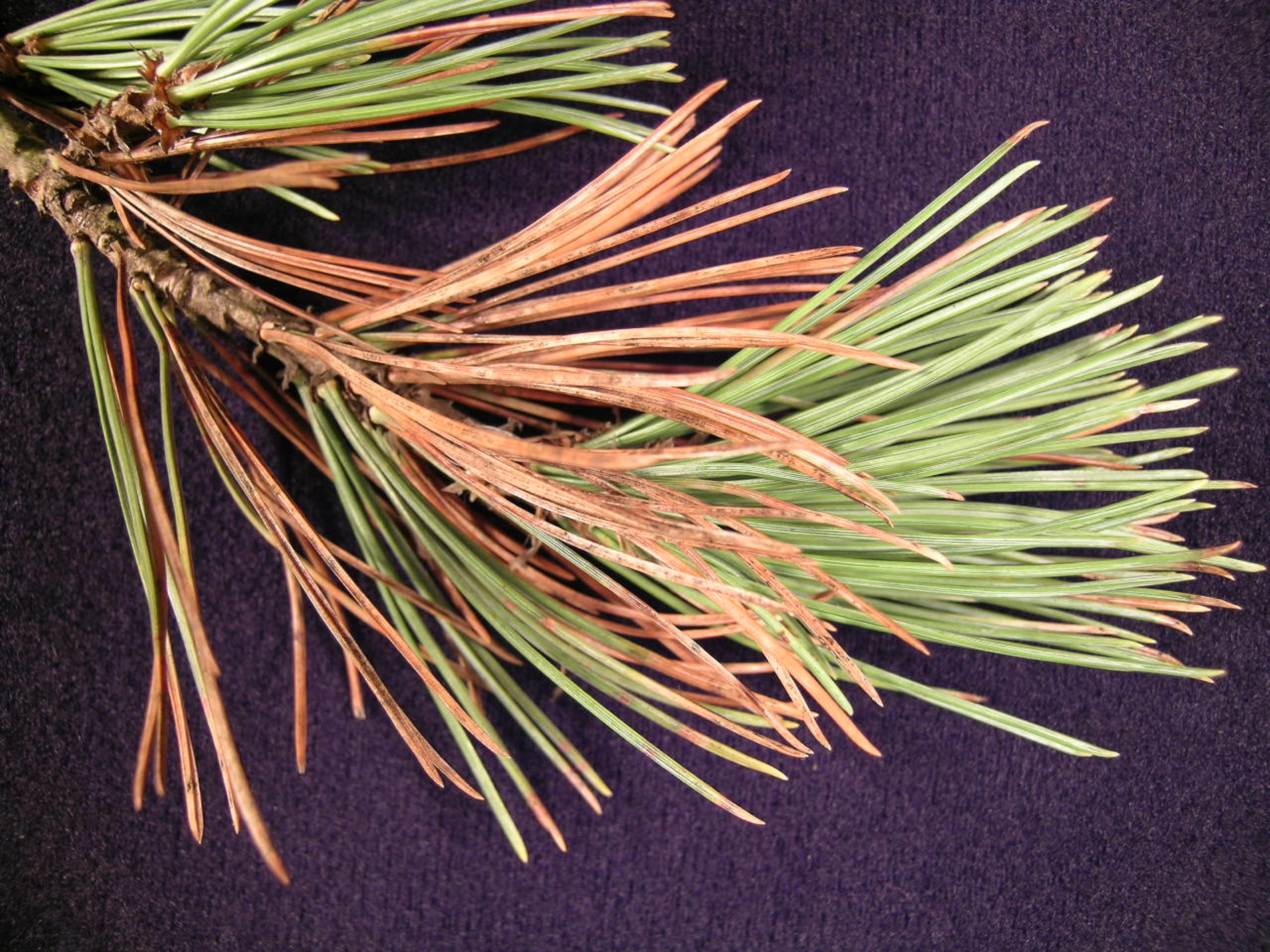
Early intervention saves most trees. When in doubt, consult a certified arborist for a professional diagnosis—especially for valuable mature specimens.
Creative Landscaping Ideas Using Tall Thin Pine Trees 🌳🏡
These space-saving evergreens open up endless design possibilities in small yards:
- Privacy Walls — Plant a row 6–8 feet apart for a fast, narrow evergreen screen that blocks views while allowing some air flow.
- Focal Points & Accents — Use a single ‘Stowe Pillar’ as a dramatic upright element near a patio or entryway.
- Mixed Borders — Pair with low-growing perennials, ornamental grasses, or flowering shrubs for year-round interest and pollinator support.
- Container Gardening — Younger columnar pines grow well in large pots on balconies or rooftops (ensure excellent drainage).
- Windbreaks & Snow Fences — Their flexible narrow profile handles wind better than wide trees in exposed small lots.
Combine different varieties (e.g., blue-toned with green) for subtle color contrast that looks stunning against modern architecture.
Sustainable Benefits & Long-Term Value
Beyond beauty, tall thin pine trees improve air quality, provide habitat for birds and beneficial insects, reduce noise, and increase property value. Their evergreen nature means consistent carbon sequestration and winter shelter for wildlife. Many cultivars are deer-resistant once mature, a huge plus in suburban areas.
With proper care, these trees can live 50+ years, rewarding you with decades of graceful height in limited space.
Advanced Propagation and Growing from Seed or Cuttings 🌱
While most homeowners buy nursery-grown tall thin pine trees for faster results, understanding propagation adds depth to your expertise and can save money for larger plantings.
- From Seed: Collect fresh cones in late summer/fall. Dry them indoors until scales open, then shake out the winged seeds. Stratify (cold-moisten) seeds in the refrigerator for 60–90 days to mimic winter. Sow in well-draining seed mix in spring. Germination can take 2–4 weeks under bright indirect light. Note: Seedlings from columnar cultivars may not stay perfectly narrow—many revert toward the species habit—so this method works best for experimentation or native slender forms like longleaf pine.
- Cuttings: Semi-hardwood cuttings (6–8 inches) taken in late summer from current-year growth have moderate success with columnar varieties. Dip in rooting hormone, plant in a 50/50 perlite-sand mix, and maintain high humidity under mist or a dome. Rooting can take 3–6 months. Success rates improve with bottom heat (around 70°F/21°C).
For most small-space gardeners, purchasing 3–5 gallon container-grown specimens from reputable nurseries ensures the exact narrow habit you want. Look for trees with straight central leaders and dense, healthy green needles.
Seasonal Maintenance Calendar for Tall Thin Pine Trees 📅
A structured yearly plan keeps your narrow evergreen trees looking their best with minimal effort:
- Spring (March–May): Prune lightly if needed before new candles emerge. Apply slow-release fertilizer if soil test shows deficiencies. Monitor for new pest activity as temperatures rise. Water deeply during dry spells.
- Summer (June–August): Deep water during droughts (every 7–14 days). Watch for spider mites or sawfly larvae on needles. Mulch refresh if needed. Avoid heavy pruning in heat.
- Fall (September–November): Plant new trees or transplant if necessary. Reduce watering as growth slows. Clean up fallen needles to reduce fungal risk. This is an excellent time to test soil pH again.
- Winter (December–February): Inspect for winter burn or snow damage. In very cold zones, protect young trunks with guards against rodents. Plan future additions while the trees’ slim silhouettes stand out against the snow.

Following this calendar prevents most issues and promotes strong, upright growth that defines the best tall thin pine trees.
Frequently Asked Questions About Tall Thin Pine Trees ❓
How fast do tall thin pine trees grow? Most columnar cultivars like Eastern White Pine ‘Fastigiata’ add 1–3 feet per year once established. Slower types (e.g., columnar mugo) grow 6–12 inches annually. Expect visible height and density improvements within 3–5 years in good conditions.
Can I plant tall thin pine trees near my house? Yes, but maintain proper distance: at least 10–15 feet from foundations to allow root spread and prevent moisture issues. Their narrow profile makes them safer near structures than wide-spreading pines. Always check local building codes and utility lines.

Do tall thin pine trees drop a lot of needles? All pines shed older needles annually (usually in fall), creating a natural mulch layer. Columnar varieties tend to drop less visibly because foliage is concentrated upward. Regular raking or leaving needles as mulch helps.
Are they deer resistant? Mature upright pine cultivars are often avoided by deer due to resinous needles, though young tender growth may get nibbled. Use repellents or fencing on new plantings in deer-heavy areas.
What’s the best soil for columnar pines? Well-drained, slightly acidic loam. Heavy clay requires raised beds or significant amendment with pine bark and sand.
How do I make my pine tree fuller and denser? Candling (pinching half of new spring growth) on white pine varieties encourages branching while preserving the slim shape. Ensure full sun and proper spacing for air flow.
Resources and Expert Recommendations
To source quality plants:
- Local independent nurseries or university extension plant sales for regionally adapted stock.
- Reputable online suppliers specializing in conifers (check reviews for healthy, true-to-type columnar forms).
Further reading: University extension guides on pine diseases, Arbor Day Foundation resources for proper planting, and conifer society publications for rare upright cultivars.
Join local gardening groups or online forums focused on small-space landscaping and narrow evergreen trees—you’ll find shared experiences from fellow enthusiasts growing these space-saving beauties.
By choosing, planting, and caring for tall thin pine trees with the techniques in this guide, you’ll create a vertical, evergreen sanctuary that maximizes every square foot of your yard. These slender giants deliver privacy, beauty, wildlife support, and low-maintenance elegance for decades.
Your small garden can feel like a peaceful pine forest—tall, slim, and perfectly proportioned. Start with one or two well-chosen varieties this season, and watch your landscape transform. If you have specific climate or soil questions, feel free to share in the comments—I’m here to help fellow plant lovers succeed! 🌲🏡











