
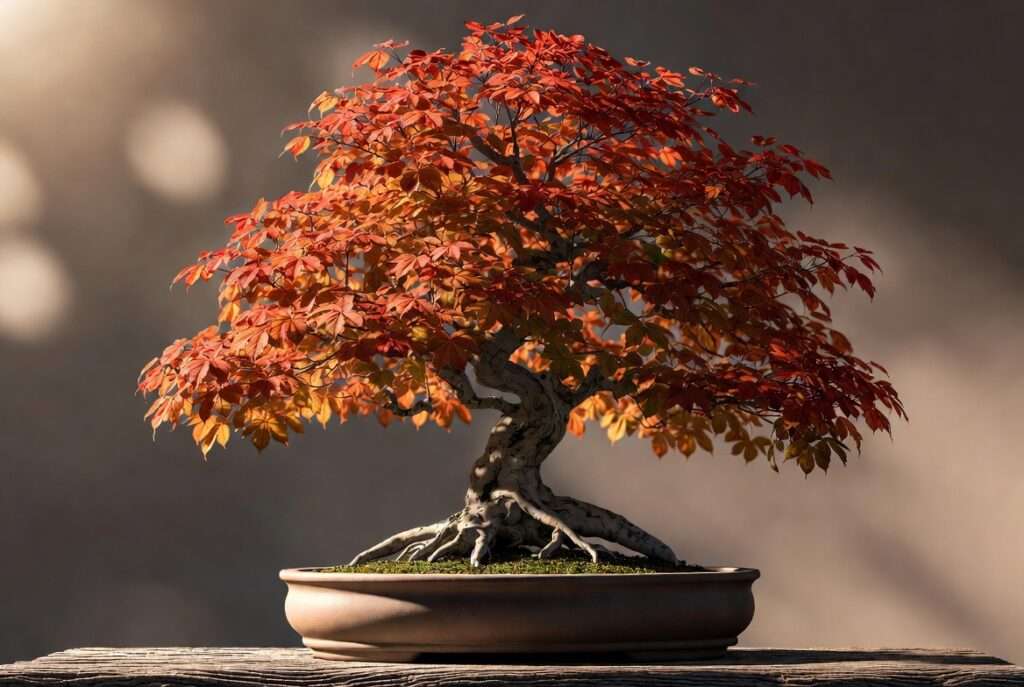
Most beginners lose their first trident maple bonsai tree within the first year — not because the species is difficult, but because they’re missing the complete, proven care system that actually works.
I’ve been cultivating bonsai for over 18 years, specializing in maples, and my award-winning Acer buergerianum specimens have taken top honors at regional exhibitions. This guide is the skyscraper resource I wish existed when I started: a 100% beginner-friendly, step-by-step blueprint that solves every common frustration — from watering guesswork and pruning mistakes to winter survival and stunning fall color.
By the end, you’ll know exactly how to keep your trident maple bonsai tree thriving for decades, with compact ramification, tiny leaves, and that signature vibrant autumn display that makes neighbors stop and stare. Ready to grow your own living work of art? Let’s dive in! 🌱✨
Table of Contents (Jump to any section for instant answers)
- What Is a Trident Maple Bonsai Tree?
- Choosing and Acquiring Your First Trident Maple Bonsai
- Setting Up for Success: Pot, Soil & Placement
- Core Care Requirements: Light, Water, Soil & Feeding
- Pruning Techniques for Beautiful Ramification & Leaf Size
- Wiring and Styling Your Bonsai Masterpiece
- Repotting: The Complete Step-by-Step Guide
- Seasonal Care Calendar – Year-Round Success
- Troubleshooting Pests, Diseases & Common Issues
- Propagation: Grow More Trident Maples at Home
- Expert Tips & Advanced Techniques
- Frequently Asked Questions (FAQs)
- Conclusion & Next Steps
What Is a Trident Maple Bonsai Tree? 🧬🌳
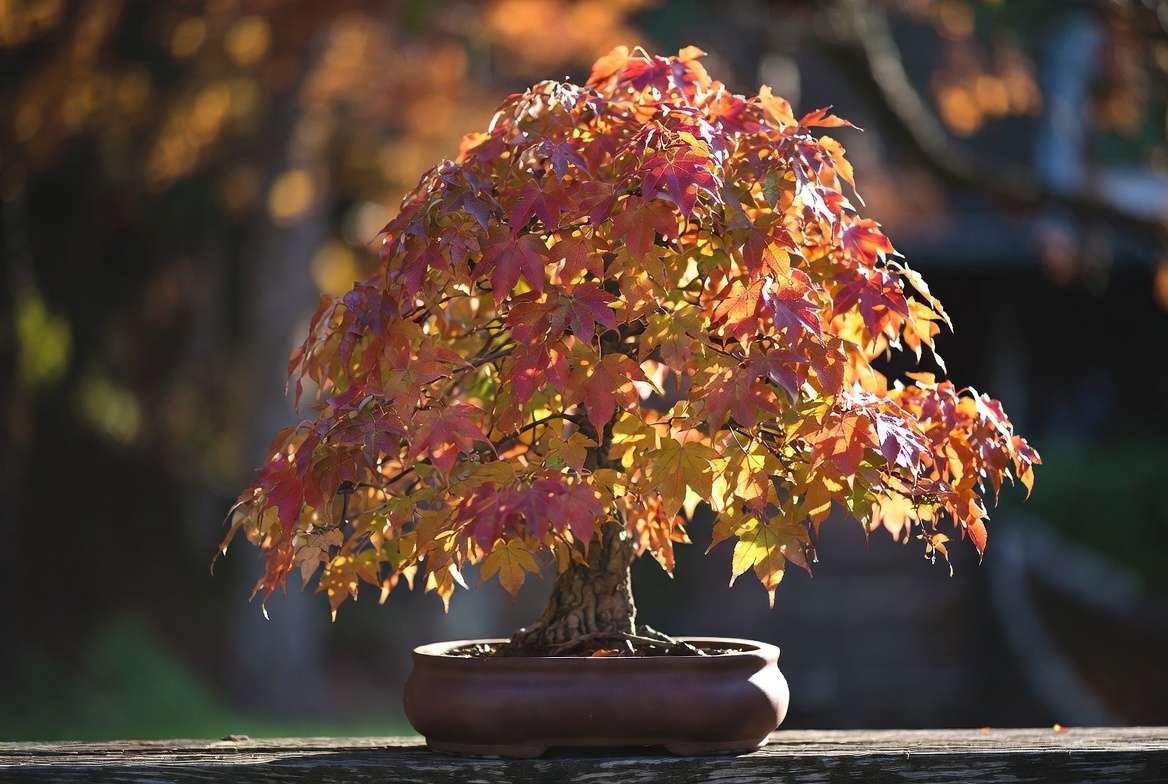
The trident maple bonsai tree (Acer buergerianum) is a deciduous star of the bonsai world, beloved for its beginner-friendly nature and jaw-dropping seasonal transformations. Native to China, Japan, and Korea, this tough little maple thrives in a wide range of climates and rewards patient growers with spectacular fall color that shifts from bright green to fiery crimson, orange, and gold. 🍂
Unlike the more finicky Japanese maple (Acer palmatum), the trident maple is far more forgiving of occasional watering slips, adapts beautifully to container life, and develops thick, powerful trunks faster — perfect for creating that classic bonsai taper in just a few years.
Key features you’ll love:
- Three-lobed leaves that naturally shrink with proper pruning (down to 1–2 cm!)
- Gorgeous exfoliating bark that peels to reveal cinnamon-orange tones
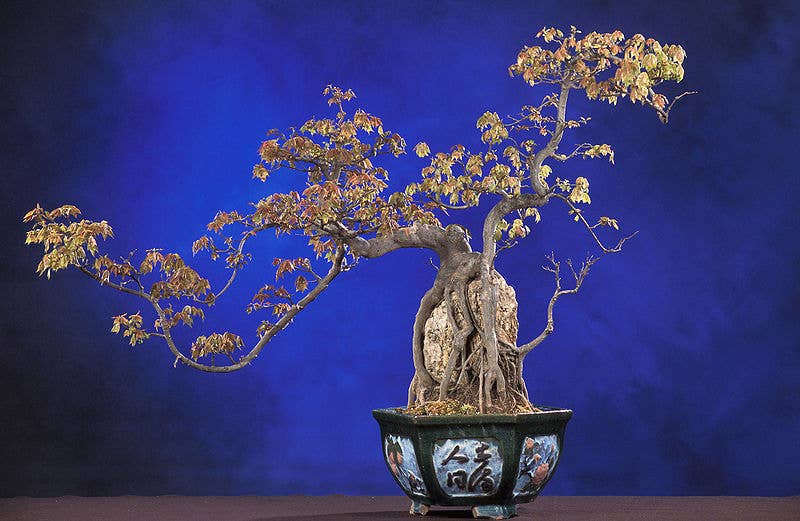
- Strong, vigorous growth habit ideal for informal upright, slanting, or root-over-rock styles
- Hardy down to -5°C (23°F) with simple winter protection
It’s no wonder thousands of new bonsai enthusiasts start their journey with a trident maple bonsai tree — it’s the perfect gateway species that delivers quick visible results without breaking your heart. 🌟

Choosing and Acquiring Your First Trident Maple Bonsai 🛒🌱
Finding the right starter tree is the foundation of long-term success. A healthy trident maple bonsai tree should have:
- Vibrant green leaves (or clean bare branches in winter) with no yellowing or spots
- Strong, evenly spaced branches with good taper from trunk to tip
- Thick, fibrous roots visible at the soil surface (but not circling the pot)
- No signs of pests or damage — check under leaves and along the trunk
Where to buy:
- Local nurseries or bonsai clubs often offer pre-bonsai material at great prices (expect $30–$80 for a solid starter)
- Reputable online specialists ship healthy specimens with detailed care notes
- Avoid big-box stores or unverified sellers — they frequently sell stressed imports
5 red flags to avoid at all costs:
- Wilting or scorched leaves
- Blackened roots or soggy soil
- Extremely thin, leggy growth
- Pots without drainage holes
- Trees with visible wire scars from poor previous styling
Pro tip: If you’re on a budget, buy field-grown trident maple whips and train them yourself — they thicken up beautifully in 2–3 seasons! 💪
Setting Up for Success: Pot, Soil & Placement 🏡☀️
Your trident maple bonsai tree’s first month is critical for acclimation. Choose a shallow bonsai pot with multiple drainage holes (ceramic or unglazed stoneware works beautifully).
Soil mix recipe (my go-to for maples): 60% akadama or pumice + 30% lava rock + 10% organic compost This creates the fast-draining, oxygen-rich environment maples crave while holding just enough moisture.
Placement matters:
- Full sun (6+ hours) in spring and fall
- Afternoon shade during hot summers to prevent leaf scorch
- Protect from harsh winds and freezing temperatures below -5°C
During the first 30 days, water lightly every day and avoid fertilizing until new growth appears. Your tree will thank you with strong roots and happy leaves! 🌿
Core Care Requirements: Light, Water, Soil & Feeding 💧🌿
This is the heart of keeping your trident maple bonsai tree alive and thriving. Master these four pillars and 90% of problems disappear.
Light & Sun Exposure ☀️ Trident maples are sun lovers but hate extreme heat. In spring and autumn, give them full sun for compact internodes and rich color. In midsummer, move to a spot with morning sun and afternoon shade. Indoor growers: place near a south-facing window and supplement with grow lights (12–14 hours daily).
Watering Mastery 💦 The #1 killer of beginners! Use the “finger test”: push your finger 2 cm into the soil — water thoroughly only when it feels almost dry.
- Summer: Water 1–2 times daily (more in heat waves)
- Spring/Fall: Every 1–2 days
- Winter: Sparingly, just enough to keep soil from bone-dry
Pro trick: Water in the morning with room-temperature water until it runs out the drainage holes. Never let the tree sit in standing water.
DIY Soil Mix & Repotting Prep Stick with the 60/30/10 recipe above. pH should stay between 6.0–7.0 — trident maples hate acidic conditions that Japanese maples prefer.
Fertilizing Schedule 🌱
- Early spring (as buds swell): Balanced organic fertilizer (e.g., 5-5-5) every 2 weeks
- Growing season: Switch to high-nitrogen (10-5-5) for strong foliage, then low-nitrogen in late summer for better fall color
- Organic options like fish emulsion or slow-release pellets work wonders
Temperature & Winter Hardiness ❄️ These trees are tough! They enter dormancy naturally and can handle brief dips to -5°C. For colder zones, move to an unheated garage or cold frame with mulch protection. Never bring indoors during winter — they need the chill to set next year’s buds.
Pruning Techniques for Beautiful Ramification & Leaf Size ✂️🍃
Pruning is where your trident maple bonsai tree transforms from a simple potted plant into a true miniature masterpiece. Done correctly, it creates dense ramification (fine branching), dramatically reduces leaf size, and encourages the thick trunk taper that defines high-quality bonsai.
Timing Is Everything
- Early spring (just as buds swell but before leaves open): Structural pruning to shape the overall design
- Late spring to midsummer: Maintenance pinching and trimming for ramification
- Late summer/early fall: Light pruning only — avoid heavy cuts as the tree prepares for dormancy
Maintenance Pruning for Dense Foliage Pinch new shoots when they grow 4–6 leaves, cutting back to 2–3 leaves. This forces the tree to branch out instead of growing long, leggy shoots. Regular pinching throughout the growing season keeps internodes short and foliage pads tight and neat.
Defoliation Technique – The Secret to Tiny Leaves Partial defoliation is one of the most powerful tools for Acer buergerianum. In mid-to-late spring, once the first flush of leaves has hardened, remove the outer 50–70% of leaves, leaving the smaller inner ones and petioles intact. This reduces leaf size in the next flush by up to 50% and improves light penetration to inner branches.
Full defoliation should only be done on healthy, vigorous trees every 2–3 years. Cut all leaves cleanly at the base of the petiole. New leaves will emerge smaller and more refined. Always follow with light fertilization and protection from intense sun for 2 weeks.
Structural Pruning for Beginners Start by removing crossing branches, those growing inward, or any that disrupt the flow of your chosen style. Use sharp, sterilized concave cutters to make clean cuts that heal quickly and leave minimal scars.
Before-and-after tip: Many beginners are afraid to cut — remember, trident maples are vigorous growers. A well-pruned tree will respond with stronger, healthier growth the following season.
Wiring and Styling Your Bonsai Masterpiece 🌀🎨
Wiring allows you to guide the growth of your trident maple bonsai tree into elegant, natural-looking shapes. Trident maples respond beautifully to wiring because their wood is flexible when young but sets firmly once positioned.
Best Time to Wire Wire in late winter or early spring when the tree is dormant or just beginning to bud. The branches are supple and the tree experiences less stress. Avoid wiring during peak summer heat or right after repotting.
Wire Types & Technique
- Aluminum wire (soft and easy for beginners) — use 1/3 to 1/2 the thickness of the branch
- Copper wire (more traditional, better hold) — requires more experience
Step-by-step wiring:
- Anchor the wire by wrapping it around the trunk or a sturdy branch
- Coil the wire at 45-degree angles along the branch
- Bend the branch gently into position — never force it
- Check every 4–6 weeks and remove wire before it bites into the bark
Popular Styles for Trident Maple
- Informal Upright (Moyogi): Most natural and forgiving for beginners
- Slanting (Shakan): Dramatic and elegant with strong movement
- Root-over-Rock (Seki-joju): Stunning when the trident’s strong roots grip stone
- Broom (Hokidachi): Perfect for showcasing the fine ramification and fall color
Design tip: Aim for visible negative space (empty areas) between branches — this makes your bonsai look older and more refined.
Pro Insight: Trident maples develop beautiful surface roots quickly. Use guy wires or clip-on weights to gently pull roots outward during the first few years for that classic “old tree” look.
Repotting: The Complete Step-by-Step Guide 🌱🪴
Repotting is essential every 2–3 years for young trident maple bonsai trees (or when roots circle the pot). It refreshes the soil, controls root growth, and prevents decline.
When to Repot Best time is early spring, just before buds swell. Signs it’s time:
- Roots growing out of drainage holes
- Soil staying wet too long
- Slowed growth or smaller leaves
Root Pruning Secrets Healthy trident maples have vigorous roots. You can safely remove up to 30–40% of the root mass. Cut thick circling roots cleanly and tease out old soil from the center. Keep the fine fibrous roots — these are the feeders that keep your tree healthy.
Full Repotting Process
- Prepare fresh soil mix (60% akadama/pumice, 30% lava, 10% compost)
- Remove the tree from its pot and gently comb out old soil
- Prune roots and position the tree slightly higher than before (to encourage nebari)
- Secure with bonsai wire through drainage holes if needed
- Fill with soil, tamp down firmly, and water thoroughly
Aftercare: Place in light shade for 2–3 weeks. Mist foliage daily and avoid fertilizing for 4 weeks. Your tree will explode with new growth once established!
Advanced option: Try root-over-rock styling during repotting — trident maples grip stone exceptionally well and create dramatic, aged appearances in just a few seasons.
Seasonal Care Calendar – Year-Round Success 📅🍂
A reliable seasonal calendar is your roadmap to success with the trident maple bonsai tree. Here’s the complete year-round guide:
Spring (March–May)
- Repot if needed
- Begin fertilizing as buds swell
- Structural pruning and initial wiring
- Increase watering as growth accelerates
Summer (June–August)
- Peak growing season — water daily or twice daily in heat
- Pinch new growth regularly for ramification
- Provide afternoon shade to prevent leaf scorch
- Watch for aphids and spider mites
Fall (September–November) 🍁
- Reduce nitrogen fertilizer for better color
- Enjoy the spectacular autumn display — leaves turn brilliant red, orange, and gold
- Light pruning only
- Gradually reduce watering as leaves drop
Winter (December–February) ❄️
- Dormancy period — minimal watering (keep soil lightly moist)
- Protect from temperatures below -5°C / 23°F
- No fertilizing
- Plan next season’s design and prepare tools
Printable Quick-Reference Table (great for garden shed or phone wallpaper):
- Watering frequency: Summer daily | Winter sparingly
- Fertilizer: Spring high-nitrogen | Late summer low-nitrogen
- Pruning: Spring structural | Summer pinching
Following this calendar consistently will keep your trident maple healthy, compact, and full of seasonal beauty year after year.
Troubleshooting Pests, Diseases & Common Issues 🛡️🐛
Even the toughest trident maple bonsai tree can face challenges. Early detection and correct action will save your tree and prevent recurring problems. Here are the most common issues I see with beginners and exactly how to fix them.
Top Pests & Organic Treatments
- Aphids: Tiny green or black insects clustering on new growth. Blast them off with a strong water spray or apply neem oil weekly until gone.
- Spider Mites: Cause fine webbing and stippled yellow leaves. Increase humidity and spray with insecticidal soap or diluted neem.
- Scale Insects: Hard brown or white bumps on branches. Scrape off manually and treat with horticultural oil in dormant season.
Common Diseases
- Leaf Scorch: Brown crispy edges from too much sun + underwatering. Move to afternoon shade and improve watering consistency.
- Root Rot: Caused by overwatering and poor drainage. Symptoms include wilting despite wet soil and yellowing leaves. Repot immediately, trim affected roots, and use fresh well-draining mix.
- Verticillium Wilt: Rare but serious — sudden branch dieback. Prune out dead wood well below the affected area and improve overall tree vigor with proper care.
10 Most Common Beginner Mistakes (and How to Avoid Them Forever)
- Overwatering — Always check soil with the finger test first.
- Keeping indoors year-round — Trident maples need outdoor seasonal changes.
- Heavy pruning in summer — Limit to pinching only.
- Using regular garden soil — It compacts and suffocates roots.
- Forgetting to fertilize — Weak growth and pale leaves are the result.
- Wiring too tightly — Causes ugly scars; check weekly.
- Ignoring winter protection — Even hardy trees need shelter in extreme cold.
- Placing in full shade — Results in leggy, weak growth.
- Repotting at the wrong time — Stick to early spring.
- Giving up too soon — Trident maples are resilient; consistent care brings dramatic improvement.
Quick checklist: Healthy tree = vibrant green leaves in spring/summer, brilliant fall color, and strong new buds in winter. If something looks off, act fast — your trident maple bonsai tree will recover quickly with the right intervention.
Propagation: Grow More Trident Maples at Home 🌱✨
Once you master caring for one trident maple bonsai tree, you’ll want more! Propagation is rewarding and surprisingly successful with this species.
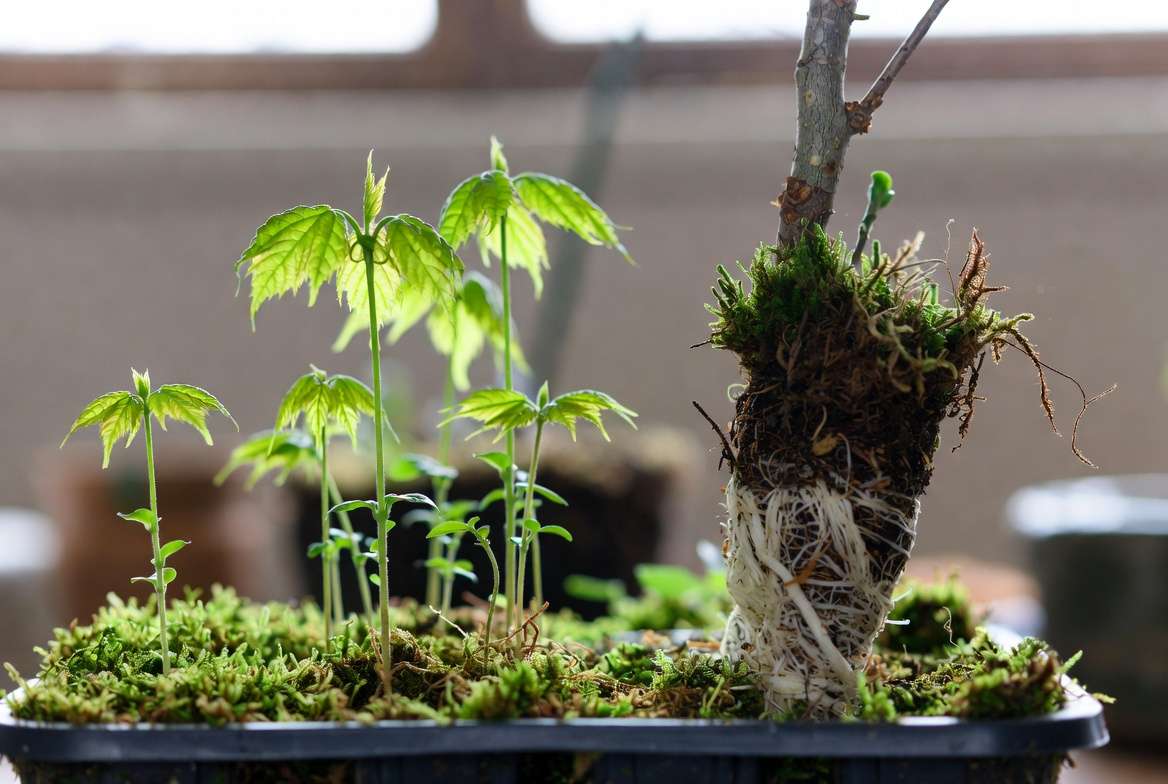
Growing from Seed Trident maple seeds need cold stratification. Collect fresh seeds in fall, mix with moist sand, and store in the refrigerator for 90–120 days. Sow in spring in well-draining mix. Germination rate is high with patience — seedlings grow fast and make excellent future bonsai stock.
Cuttings Take semi-hardwood cuttings in early summer (4–6 inches long with 2–3 leaf pairs). Dip in rooting hormone, plant in a humidity dome with perlite/vermiculite mix. Keep moist and warm — roots form in 4–6 weeks. Success rate: 60–80% with proper technique.
Air-Layering The fastest way to get a thick-trunked starter. Choose a healthy branch in spring, make a ring cut, apply rooting hormone, wrap with moist sphagnum moss and plastic. Roots usually appear in 2–3 months. Sever and pot up once roots fill the moss.
Grafting Advanced growers use grafting to combine beautiful top growth with strong rootstock. Whip-and-tongue or cleft grafts work well on trident maples in late winter.
Pro tip: Propagated trees often develop character faster than nursery stock because you control every stage of growth from the beginning.
Expert Tips & Advanced Techniques 🏆🌟
After 18+ years working with hundreds of trident maple bonsai trees, here are the insights that separate good bonsai from show-stoppers:
- Accelerate Trunk Thickening: Grow in a large training pot or grow bag for 2–3 years with heavy feeding and minimal pruning. Then move to a bonsai pot — the sudden restriction creates dramatic taper.
- Enhance Fall Color: Reduce nitrogen in late summer and ensure full sun exposure in autumn. Some growers use potassium-rich fertilizers in September for even brighter reds and oranges.
- Develop Nebari (Surface Roots): During repotting, spread roots radially and secure with wire. Over years, they create that powerful “old tree” base everyone admires.
- Long-term Development Plan: Years 1–3: Focus on trunk and root base. Years 4–7: Refine ramification and leaf size. Year 8+: Maintenance and artistic styling. Patience truly pays off.
Secret Trick for Smaller Leaves: Combine partial defoliation with reduced watering (while still keeping the tree healthy). The tree responds by producing more compact foliage the next season.
These techniques come from real exhibition-level trees I’ve grown and helped others develop. Apply them gradually and watch your trident maple bonsai tree evolve into a living sculpture.
Frequently Asked Questions (FAQs) ❓
Can I keep a Trident Maple bonsai tree indoors year-round? No. While it can spend short periods inside for display, it needs outdoor seasonal temperature changes and full sun to thrive. Bring indoors only for temporary viewing during peak autumn color.
Why are my leaves turning brown at the edges? This is usually leaf scorch from underwatering combined with too much direct sun. Increase watering frequency and provide afternoon shade during hot weather.
How fast does a Trident Maple bonsai grow? Very vigorously! With good care, it can add 30–60 cm of growth per season when young. This makes it excellent for developing trunk thickness quickly.
Is the Trident Maple bonsai tree cold hardy? Yes, it handles down to about -5°C (23°F). In colder climates, provide winter protection in an unheated garage or with heavy mulching.
When should I fertilize my Trident Maple? Start in early spring as buds swell, continue through summer with balanced fertilizer, then switch to low-nitrogen in late summer for better fall color. Pause during winter dormancy.
How often should I repot? Young trees every 2 years, mature specimens every 3–4 years, always in early spring.
What makes Trident Maple better for beginners than Japanese Maple? It is more forgiving of minor watering mistakes, tolerates a wider range of conditions, grows faster, and adapts better to container life.
Can I create a forest planting (Yose-ue) with Trident Maples? Absolutely! Their similar growth habits and beautiful fall color make them ideal for group plantings.
Conclusion & Next Steps 🎉🌳
Congratulations! You now have the complete, expert-level knowledge to successfully grow and enjoy a beautiful trident maple bonsai tree for many years. From choosing your first specimen to mastering pruning, wiring, seasonal care, and advanced techniques, this guide covers everything you need to avoid common pitfalls and create a thriving miniature landscape.
Remember: consistency and observation are your greatest tools. Spend a few minutes each day checking your tree — you’ll quickly develop the intuition that turns beginners into confident bonsai artists.
Your trident maple bonsai tree will reward you with seasons of delicate green foliage, spectacular autumn fireworks, and the deep satisfaction of nurturing a living work of art.
Share your progress and photos in the comments below — I love seeing readers’ trees evolve! If you found this guide helpful, explore my other articles on Japanese Maple Bonsai Care, Bonsai Soil Mixes, and Winter Protection Techniques.
Happy growing, and may your trident maple bring you years of joy and beauty! 🍁✨











