
Your plants look healthy… but something feels off. Leaves are pale, growth is slow, and pests seem to show up out of nowhere. You water them, fertilize them, even give them sunlight—so what’s missing? 🤔
The answer might surprise you: ultraviolet light.
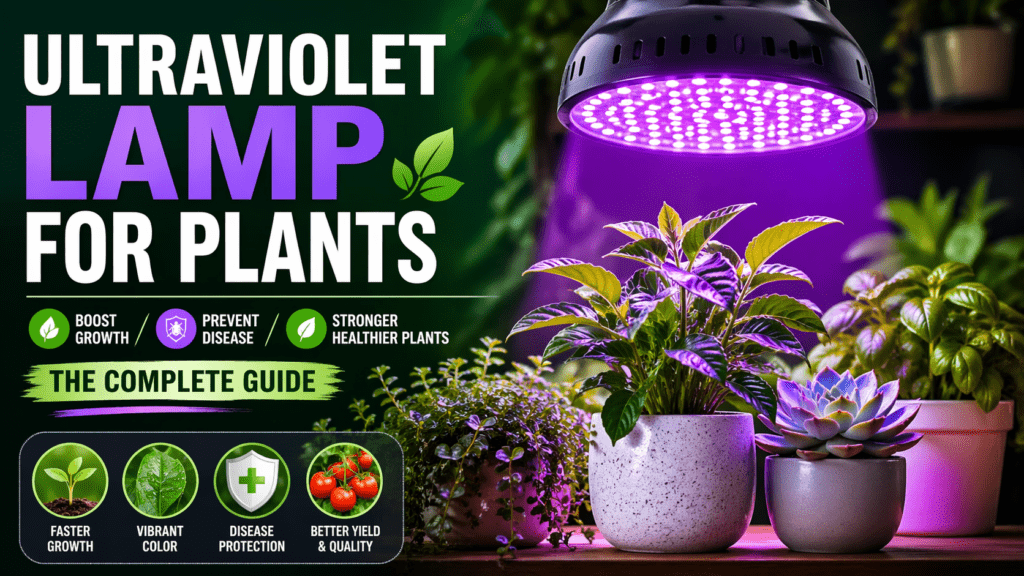
An ultraviolet lamp for plants is one of the most overlooked tools in indoor gardening. While most plant owners focus on visible light (like LED grow lights), they often ignore UV light—the same invisible spectrum plants receive in nature. And that missing piece can make a significant difference in plant health, resilience, and productivity. 🌱✨
In this expert guide, you’ll learn exactly how UV light works, why it matters, how to choose the right lamp, and how to use it safely for thriving indoor plants. Whether you’re growing houseplants, herbs, or vegetables, this guide will help you unlock stronger, healthier growth.
🌞 What Is an Ultraviolet Lamp for Plants?
An ultraviolet (UV) lamp for plants is a specialized light source that emits UV radiation—part of the electromagnetic spectrum just beyond visible light. In nature, sunlight contains UV rays, which play a subtle but powerful role in plant development. 🌤️
Indoor environments often lack this component, especially when relying on standard grow lights or filtered window light.
🌱 Understanding UV Light Spectrum (UVA, UVB, UVC)

UV light is divided into three main types:
- UVA (315–400 nm) 🌿
- Safest and most commonly used for plants
- Enhances growth, color, and plant structure
- UVB (280–315 nm) 🌱
- More intense but beneficial in controlled doses
- Stimulates plant defense mechanisms
- UVC (100–280 nm) ⚠️
- Harmful to both plants and humans
- Mainly used for sterilization—not plant growth
👉 Expert Insight: Most plant-safe UV lamps focus on UVA with small amounts of UVB for optimal results.
🌿 How UV Lamps Differ from Regular Grow Lights
Many gardeners assume grow lights are enough—but here’s the truth:
- LED grow lights provide visible light (red & blue spectrum)
- UV lamps provide invisible wavelengths that trigger plant defenses and biochemical processes
💡 Think of UV light as a supplement, not a replacement. The best indoor setups combine both.
🌼 Benefits of Using an Ultraviolet Lamp for Plants
🌟 Boosts Plant Growth and Development

UV light enhances plant metabolism and can improve overall growth patterns. While it doesn’t directly drive photosynthesis like visible light, it plays a supportive role in strengthening plant systems.
Plants exposed to proper UV levels often show:
- Thicker leaves
- Stronger stems
- Improved structural integrity
🍃 Improves Plant Color, Flavor, and Aroma
UV exposure stimulates plants to produce secondary metabolites, including:
- Flavonoids
- Essential oils
- Pigments
🌿 This is especially beneficial for:
- Herbs (like basil and mint)
- Fruits (like tomatoes and strawberries)
- Flowering plants
👉 Result: richer color, stronger fragrance, and better taste.
🛡️ Helps Prevent Mold, Pests, and Diseases

One of the biggest advantages of UV light is its natural disinfecting ability.
- Reduces fungal growth
- Discourages pests like aphids and mites
- Strengthens plant immune responses
This makes UV lamps a valuable tool for organic and chemical-free plant care 🌿
🌸 Encourages Stronger, More Compact Growth
If your plants are:
- Stretching toward light (leggy growth)
- Weak and floppy
UV light can help regulate growth patterns, encouraging:
- Shorter internodes
- Bushier plants
Perfect for indoor gardeners who want compact, aesthetically pleasing plants 🪴✨
⚠️ Are UV Lamps Safe for Plants and Humans?
🚨 Risks of Overexposure to UV Light
Like anything powerful, UV light must be used correctly.
Too much UV can cause:
- Leaf burn 🔥
- Discoloration
- Stunted growth
👉 Balance is key.
🧑🌾 Safety Tips for Indoor Gardeners
- Start with low exposure (1–2 hours per day)
- Gradually increase based on plant response
- Keep proper distance (more on this later)
🕶️ Protective Measures for Humans

UV light can harm your skin and eyes with prolonged exposure.
Stay safe by:
- Avoiding direct exposure
- Using protective glasses if needed
- Turning off UV lamps when working closely
🔍 How to Choose the Best Ultraviolet Lamp for Plants
Choosing the right UV lamp can feel overwhelming—but focusing on a few key factors makes it simple. ✅
🛒 Key Factors to Consider Before Buying
- Spectrum Type 🌈
- Look for UVA-dominant lamps with controlled UVB
- Wattage & Intensity ⚡
- Higher wattage = stronger output (not always better!)
- Coverage Area 🏡
- Match lamp size to your plant setup
- Build Quality & Safety Features 🔒
- Heat management
- Timer functions
💡 UV Lamp vs Full-Spectrum Grow Light: What You Really Need
Here’s the truth:
- Grow lights = essential
- UV lamps = enhancement
👉 Best setup:
- Use full-spectrum LED grow light as primary
- Add UV lamp as a supplemental boost
🏡 Best UV Lamps for Different Plant Types
- 🪴 Houseplants → Low-intensity UVA
- 🌵 Succulents → Moderate UV exposure
- 🌺 Flowering plants → UVA + slight UVB
- 🍅 Vegetables → Balanced UV for yield improvement
⏱️ How to Use an Ultraviolet Lamp for Plants Properly
📏 Ideal Distance from Plants

General guideline:
- Small lamps → 12–24 inches away
- High-intensity lamps → 24–36 inches
👉 Always check manufacturer recommendations.
⏳ Recommended Exposure Time
- Beginners: 1–2 hours/day
- Intermediate: 3–5 hours/day
- Advanced setups: up to 8 hours (with caution)
💡 Tip: Use a timer for consistency
🔄 Integrating UV Light into Your Existing Setup
- Combine with natural sunlight ☀️
- Use alongside LED grow lights
- Schedule UV during peak growth phases
🌿 Common Mistakes to Avoid When Using UV Lamps
Avoid these common pitfalls:
- ❌ Using UV light as the only light source
- ❌ Placing lamps too close
- ❌ Ignoring plant-specific needs
- ❌ Sudden high exposure
👉 Smart usage = healthy plants 🌱
🧠 Expert Tips for Maximizing Results with UV Lamps
- 🌿 Introduce UV gradually
- 👀 Observe leaf response weekly
- 🌦️ Adjust seasonally
- 💧 Combine with proper watering & nutrients
📊 Do All Plants Need UV Light? (Clarifying the Myth)
One of the most common misconceptions in indoor gardening is that every plant needs UV light to thrive. The truth is more nuanced. 🌿
While UV light can enhance plant health, not all species depend on it equally.
🌱 Plants That Benefit Most from UV

Certain plants evolved in environments with strong sunlight and naturally benefit from UV exposure:
- 🌿 Herbs (basil, thyme, mint)
- 🌺 Flowering plants (roses, orchids)
- 🍅 Fruiting crops (tomatoes, peppers, strawberries)
👉 These plants often show:
- Improved flavor and aroma
- Better flowering and fruit production
- Increased resistance to pests
🌿 Plants That Don’t Require UV Supplementation

Some indoor plants are adapted to shaded environments and don’t rely heavily on UV light:
- 🪴 Snake plant
- 🍃 Pothos
- 🌱 ZZ plant
- 🌿 Ferns
👉 For these plants:
- Standard grow lights or indirect sunlight are usually sufficient
- UV exposure should be minimal or optional
💡 Expert Tip: Adding UV to low-light plants won’t necessarily harm them (if done carefully), but it may not provide noticeable benefits either.
🔬 Scientific Insights: How UV Light Affects Plant Biology
To truly understand the value of an ultraviolet lamp for plants, it helps to look at what’s happening at the cellular level. 🧬
🌞 UV as a Stress Signal (In a Good Way!)
Plants interpret UV light as a mild environmental stressor. In response, they activate defense systems that make them stronger.
This leads to:
- Increased production of protective compounds
- Enhanced resilience to environmental stress
- Improved structural development
🌿 Production of Secondary Metabolites
UV exposure triggers the creation of compounds such as:
- Flavonoids
- Anthocyanins
- Essential oils
👉 These compounds:
- Protect plants from damage
- Improve taste and aroma
- Enhance color (especially in flowers and fruits) 🌸🍓
🛡️ Strengthening Natural Defense Systems
Plants exposed to controlled UV levels develop:
- Thicker cuticles (outer leaf layer)
- Better resistance to fungi and pests
- Increased tolerance to environmental fluctuations
📌 This is why UV is often used in advanced horticulture and greenhouse farming.
💬 Frequently Asked Questions (FAQs)
❓ Can I use a UV lamp every day for my plants?
Yes—but in moderation.
Start with 1–2 hours daily and adjust based on plant response. Overexposure can cause damage.
❓ Is UV light better than sunlight?
No. Natural sunlight is still the best light source. ☀️
UV lamps are meant to supplement, not replace sunlight or full-spectrum grow lights.
❓ How do I know if my plant is getting too much UV?
Watch for warning signs:
- Leaf burn or browning edges 🔥
- Faded or bleached spots
- Curling leaves
👉 If you notice these, reduce exposure immediately.
❓ Can UV lamps replace grow lights completely?
No.
Plants need visible light (especially red and blue wavelengths) for photosynthesis. UV alone is not sufficient.
❓ What wattage UV lamp is best for indoor plants?
It depends on your setup, but generally:
- Small setups: 10–30 watts
- Medium setups: 30–60 watts
- Large setups: 60+ watts
💡 Focus more on proper usage than just wattage.
🧾 Bonus: UV Lamp Setup Checklist (Beginner-Friendly) ✅
Before turning on your UV lamp, run through this quick checklist:
- ✔️ Using a full-spectrum grow light as the main source
- ✔️ UV lamp positioned at a safe distance
- ✔️ Timer set for controlled exposure
- ✔️ Monitoring plant response weekly
- ✔️ Adjusting based on plant type
👉 This simple system can prevent 90% of common mistakes.
📌 Quick Comparison: UV Lamp vs Grow Light vs Sunlight
| Feature | UV Lamp 🌿 | Grow Light 💡 | Sunlight ☀️ |
|---|---|---|---|
| Purpose | Enhance growth & defense | Photosynthesis | Complete natural spectrum |
| Essential? | ❌ No (supplement) | ✅ Yes | ✅ Best option |
| Risk Level | Medium (if misused) | Low | Low |
| Best Use | Boosting plant quality | Indoor growth | Overall plant health |
📝 Final Thoughts: Is an Ultraviolet Lamp Worth It for Your Plants?
If you’re serious about indoor gardening, adding an ultraviolet lamp for plants can be a game-changer. 🌱✨
It’s not a magic fix—but when used correctly, it can:
- Strengthen plant structure
- Improve flavor and flowering
- Reduce pests and diseases
- Enhance overall plant vitality
👉 Who should invest in a UV lamp?
- Indoor gardeners with limited sunlight
- Herb and vegetable growers
- Plant enthusiasts looking for premium results
👉 Who might skip it?
- Casual plant owners with low-light plants
- Those already getting strong natural sunlight
🌿 Closing Insight from an Expert
In professional horticulture, UV light is often the missing link between average and exceptional plant growth.
The key is not just using it—but using it wisely.
Start small, observe carefully, and adjust as you go. Your plants will tell you what they need. 🌸











