
If you’ve ever added an aquatic banana plant to your aquarium or pond, you probably expected lush green leaves and a vibrant underwater display 🌿✨. But instead, many hobbyists face frustrating issues—melting leaves, rotting tubers, or plants that simply refuse to grow.
Here’s the truth: the aquatic banana plant (Nymphoides aquatica) is actually one of the easiest and most beginner-friendly aquatic plants—when you understand its unique needs.
In this expert guide, you’ll learn exactly how to grow a healthy, thriving aquatic banana plant, avoid the most common mistakes, and turn your tank or pond into a beautiful, balanced ecosystem 🐠🌊.
🍌 What Is an Aquatic Banana Plant?
🌿 Overview and Botanical Background
The aquatic banana plant, scientifically known as Nymphoides aquatica, is a fascinating freshwater plant native to the southeastern United States 🌎. It belongs to the same family as floating plants like water lilies and is loved for its unusual appearance.
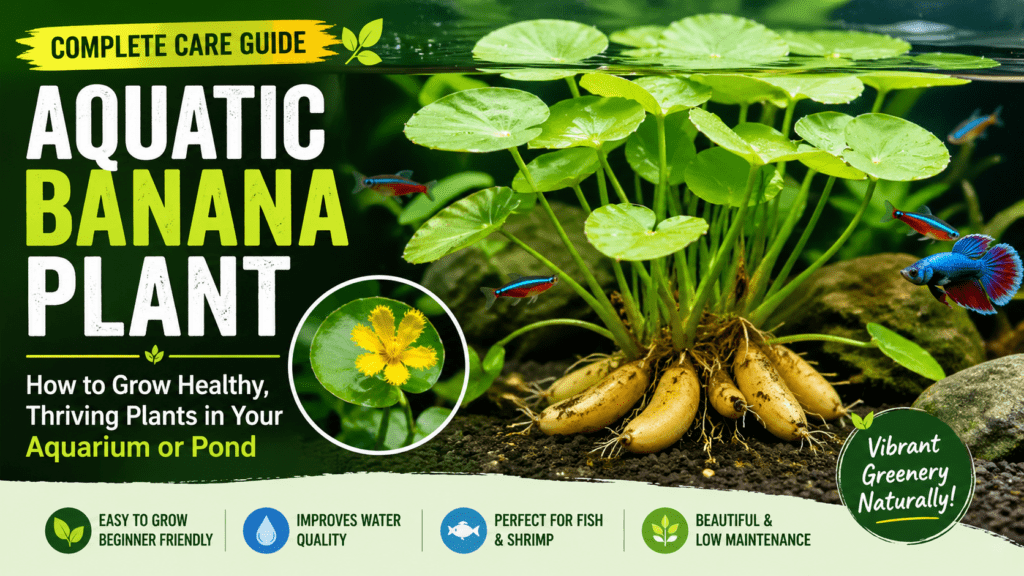
Its nickname comes from the banana-shaped tubers at its base 🍌—these structures store nutrients and help the plant survive in varying conditions.
🐠 Unique Features and Benefits
- 🍌 Banana-shaped roots (tubers) store energy for growth
- 🌱 Produces both submerged leaves and floating lily-like pads
- 🐟 Provides shelter for fish, shrimp, and fry
- 🌊 Helps improve water quality by absorbing excess nutrients
- 🎨 Adds a natural, aesthetic focal point to aquariums and ponds
💡 Expert Insight: In my experience working with aquatic plants, banana plants are especially useful in low-tech aquariums because they don’t demand CO₂ injection or intense lighting.
🏡 Ideal Conditions for Growing Aquatic Banana Plants
Creating the right environment is the difference between a dying plant and a thriving one 🌿💚
💧 Water Parameters (Critical for Success)
- 🌡️ Temperature: 68–82°F (20–28°C)
- ⚖️ pH Level: 6.0–7.5
- 💎 Water Hardness: Soft to moderately hard
👉 Stability is more important than perfection. Sudden changes can cause leaf melt.
💡 Pro Tip: Perform regular 25% water changes weekly to maintain nutrient balance and prevent algae buildup.
💡 Lighting Requirements

Lighting plays a crucial role in how your plant grows:
- 🌤️ Low to Medium Light: Ideal for steady growth
- ⏱️ Duration: 8–10 hours daily
⚠️ Signs of Lighting Problems:
- ❌ Too little light → slow growth, small leaves
- ❌ Too much light → algae overgrowth
💡 Expert Tip: Moderate lighting encourages the plant to produce beautiful floating leaves without stressing it.
🌱 Substrate vs Floating Growth
One of the most unique aspects of the aquatic banana plant is its flexibility:
🪨 Planted in Substrate
- Encourages root development
- Promotes stronger growth
🌊 Floating Freely
- Mimics natural conditions
- Ideal for beginners
👉 Both methods work—but planting often leads to more stable, long-term growth.
🌿 How to Plant an Aquatic Banana Plant (Step-by-Step)
🪴 Proper Planting Technique

Follow these steps carefully to avoid the most common mistake 👇
- Place the plant gently on the substrate
- Do NOT bury the entire tuber ⚠️
- Keep the “banana” tubers partially exposed
- Allow roots to anchor naturally
💡 Critical Tip: Fully burying the tubers can cause rotting, which is one of the main reasons plants die.
🌊 Floating Method (Alternative Approach)
If you prefer a simpler setup:
- Let the plant float freely
- Ensure adequate light reaches it
- Wait for roots to develop naturally
👉 Once established, you can transition it into substrate if desired.
🌞 Lighting, Fertilization, and Nutrient Needs
💡 Lighting Optimization Tips
- Use LED aquarium lights for consistent intensity
- Avoid placing the tank in direct sunlight ☀️
- Adjust lighting if algae becomes a problem
🧪 Fertilization Guide

Although hardy, the aquatic banana plant benefits from nutrients:
🌱 Best Options:
- Root tabs (for planted setups)
- Liquid fertilizers (for floating plants)
⏱️ Frequency:
- Root tabs: Every 1–2 months
- Liquid fertilizer: Weekly (small doses)
⚠️ Signs of Nutrient Deficiency:
- Yellowing leaves 🍂
- Slow or stunted growth
- Transparent leaf spots
💡 Expert Insight: Avoid over-fertilizing—this can quickly lead to algae outbreaks.
✂️ Maintenance and Care Routine
🍃 Pruning and Leaf Management
Regular maintenance keeps your plant healthy:
- Remove dead or decaying leaves
- Trim excessive floating leaves
- Encourage new growth
👉 This also improves water circulation and light penetration.
🧼 Tank Maintenance Tips
- 💧 Perform weekly water changes
- 🧽 Clean algae from glass and decor
- ⚖️ Maintain nutrient balance
💡 A clean tank = a thriving plant 🌿✨
🌱 Propagation: How to Multiply Your Aquatic Banana Plant

One of the most rewarding aspects of this plant is how easily it propagates 🌱
🌼 Natural Propagation Process
- Small plantlets form on mature leaves
- These develop roots over time
🪴 Step-by-Step Propagation
- Wait until the plantlet has visible roots
- Gently detach it from the parent plant
- Plant or float it in your tank
💡 Pro Tip: Avoid removing plantlets too early—they need time to establish.
⚠️ Common Problems and How to Fix Them
🍂 Leaves Melting or Turning Yellow
Causes:
- Sudden environmental changes
- Poor lighting
- Nutrient deficiency
Solutions:
- Stabilize water conditions
- Adjust lighting
- Add fertilizers
🪨 Tubers Rotting
Cause:
- Fully buried tubers
Fix:
- Lift the plant and expose the tubers immediately
🦠 Algae Overgrowth
Causes:
- Excess light
- Over-fertilization
Solutions:
- Reduce light duration
- Maintain proper nutrient balance
🐟 Best Tank Mates and Compatibility
The aquatic banana plant works beautifully in community tanks 🐠💚
✅ Ideal Tank Mates
- Guppies
- Tetras
- Bettas
- Shrimp 🦐
❌ Fish to Avoid
- Goldfish
- Cichlids (plant eaters)
💡 Expert Tip: Shrimp love grazing on the plant’s surface, helping keep it clean.
🌍 Aquatic Banana Plant in Ponds vs Aquariums
🏞️ Pond Care
- Requires partial sunlight ☀️
- Seasonal growth patterns
- May go dormant in colder months
🐠 Aquarium Care
- Controlled conditions
- Faster growth potential
- Ideal for aquascaping
💡 Expert Tips for Thriving Aquatic Banana Plants
- 🌟 Never bury the entire tuber
- 🌟 Provide moderate lighting
- 🌟 Use fertilizers wisely
- 🌟 Be patient—growth takes time
- 🌟 Keep water conditions stable
❓ Frequently Asked Questions (FAQs)
⏳ How fast does an aquatic banana plant grow?
Moderate growth rate—expect visible changes within a few weeks.
🌊 Can it survive without substrate?
Yes! It can grow floating, making it beginner-friendly.
🍃 Why are my leaves floating?
This is natural—it’s transitioning to surface growth.
🧪 Does it need CO₂?
No, it thrives in low-tech setups without CO₂.
🌱 Is it suitable for beginners?
Absolutely—one of the easiest aquatic plants to grow.
📊 Quick Care Summary (At-a-Glance)
- 💡 Light: Low to medium
- 🌡️ Temperature: 68–82°F
- ⚖️ pH: 6.0–7.5
- 🌱 Growth: Moderate
- ⭐ Difficulty: Beginner-friendly
🧠 Conclusion: Grow with Confidence 🌿✨
The aquatic banana plant is more than just a quirky addition to your tank—it’s a resilient, beautiful, and rewarding plant when cared for correctly 🌊🍃.
By following this expert guide—avoiding common mistakes, maintaining proper conditions, and practicing patience—you can enjoy a thriving aquatic environment that benefits both your plants and your fish 🐠💚.











