
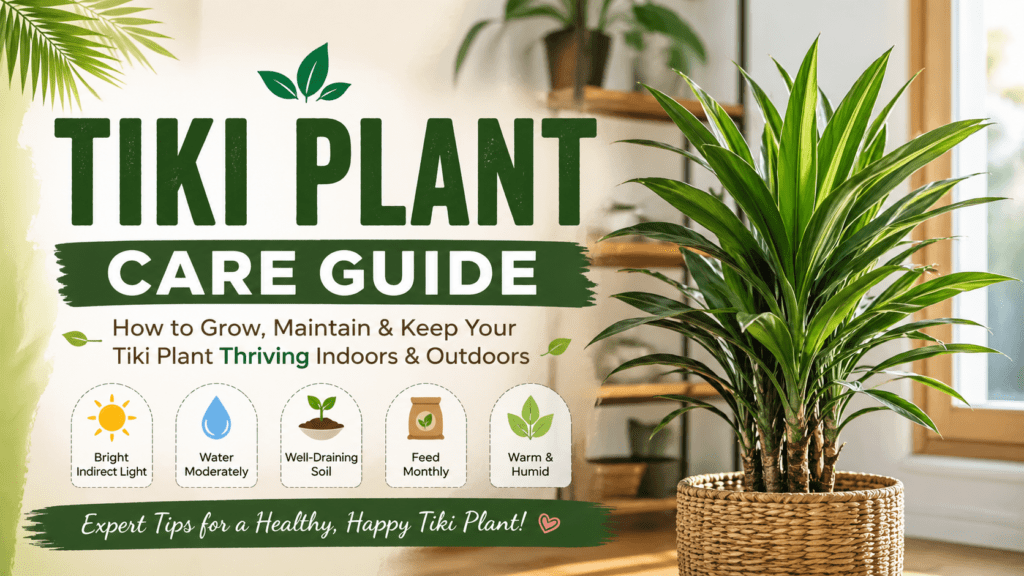
Imagine bringing a slice of the tropics into your home — lush green leaves, vibrant energy, and a plant that instantly elevates your space 🌴✨. That’s exactly what a tiki plant offers. But here’s the catch: while it looks effortlessly beautiful, many plant owners struggle to keep their tiki plant healthy due to improper watering, lighting mistakes, or lack of understanding of its tropical nature.
If you’ve ever wondered why your plant’s leaves are turning yellow 🍂 or why it’s not growing as expected, you’re not alone. This guide is designed to solve those exact problems.
In this expert-backed tiki plant care guide, you’ll learn everything from ideal growing conditions to troubleshooting common issues — whether you’re a beginner or a seasoned plant enthusiast. By the end, you’ll have the confidence and knowledge to keep your tiki plant thriving all year round 🌱💚.
🌴 What Is a Tiki Plant? (Understanding the Basics)

🌿 Botanical Overview & Common Names
The term “tiki plant” is often used as a general name for tropical-looking ornamental plants, commonly referring to varieties like Dracaena, Cordyline, or similar foliage plants. These plants are prized for their long, arching leaves and vibrant colors.
- 🌱 Family: Asparagaceae (commonly for Dracaena types)
- 🌿 Popular varieties: Dracaena marginata, Cordyline fruticosa
- 🪴 Growth type: Upright, slow to moderate growth
🌱 Natural Habitat & Growth Characteristics
Tiki plants originate from tropical and subtropical regions, where they thrive in warm, humid environments. In nature, they grow under filtered sunlight beneath taller trees.
- 🌡️ Thrive in warm climates
- 🌿 Adaptable to indoor environments
- 📏 Can grow from 2 to 10 feet depending on care
🌞 Why Choose a Tiki Plant for Your Home or Garden?
- 🌬️ Helps improve indoor air quality
- 🪴 Adds a tropical, aesthetic vibe
- 😌 Generally low-maintenance and beginner-friendly
☀️ Ideal Growing Conditions for Tiki Plant Success
🌞 Light Requirements (Indoor vs Outdoor)
Tiki plants love bright, indirect light — think of sunlight filtered through curtains.
- 🏡 Indoors: Place near east or north-facing windows
- 🌳 Outdoors: Partial shade works best
⚠️ Warning Signs:
- Yellow leaves = Too much sunlight ☀️
- Slow growth = Not enough light 🌑
🌡️ Temperature & Humidity Needs
Being tropical plants, tiki plants prefer warmth and moisture.
- 🌡️ Ideal temperature: 18°C – 30°C (65°F – 86°F)
- 💧 Humidity: Moderate to high
Pro Tip 💡:
If your home is dry, use a humidifier or mist the leaves occasionally to mimic tropical conditions.
🌍 Best Soil Type & Potting Mix
The right soil is critical for preventing root rot.
- 🌱 Use well-draining soil
- 🪴 Mix suggestion:
- 50% potting soil
- 25% perlite
- 25% coco coir or sand
Why it matters: Good aeration allows roots to breathe and prevents waterlogging.
💧 Watering Your Tiki Plant the Right Way

🚿 How Often Should You Water?
There’s no fixed schedule — it depends on your environment.
- 🌞 Summer: Water every 5–7 days
- ❄️ Winter: Water every 10–14 days
Golden Rule 🌟:
Always check the top 1–2 inches of soil — if dry, it’s time to water.
⚠️ Signs of Overwatering vs Underwatering
Overwatering 🚫:
- Yellowing leaves
- Mushy stems
- Root rot smell
Underwatering 💧:
- Dry, crispy leaf edges
- Drooping plant
💡 Expert Watering Tips
- 🚰 Use filtered or room-temperature water
- 🪴 Ensure pots have drainage holes
- ❌ Never let the plant sit in standing water
🌿 Fertilizing & Nutrient Needs
🧪 Best Fertilizers for Tiki Plants
- 🌱 Balanced liquid fertilizer (10-10-10)
- 🌿 Organic options like compost tea
📅 Feeding Schedule for Healthy Growth
- 🌸 Spring & Summer: Feed every 4 weeks
- 🍂 Fall & Winter: Reduce or stop feeding
⚠️ Common Fertilizing Mistakes to Avoid
- ❌ Over-fertilizing leads to salt buildup
- ⚠️ Yellow tips may indicate nutrient burn
✂️ Pruning, Cleaning & Maintenance
✂️ How and When to Prune
- Remove dead or yellow leaves regularly
- Trim leggy growth to encourage fullness
🧼 Leaf Cleaning for Better Photosynthesis
Dust blocks sunlight absorption!
- 🧽 Wipe leaves with a damp cloth
- 🌬️ Improves plant breathing and health
🔄 Repotting Guide
- 🪴 Repot every 2–3 years
- 📈 Signs: Roots coming out of drainage holes
Steps:
- Choose a slightly larger pot
- Refresh soil mix
- Water after repotting
🪴 Growing Tiki Plant Indoors vs Outdoors
🏡 Indoor Care Tips
- Place near natural light
- Avoid AC or heater drafts
🌳 Outdoor Care Tips
- Keep in shaded or semi-shaded areas
- Protect from heavy rain and strong sun
⚖️ Key Differences in Care
| Factor | Indoor 🌿 | Outdoor 🌳 |
|---|---|---|
| Light | Indirect | Partial sun |
| Watering | Less frequent | More frequent |
| Growth Rate | Slower | Faster |
🐛 Common Problems & How to Fix Them
🐜 Pests (Spider Mites, Mealybugs, etc.)
- 🐛 Use neem oil spray
- 🧼 Clean leaves regularly
🍂 Yellow Leaves, Brown Tips & Drooping
- Adjust watering habits
- Check light exposure
🦠 Diseases & Root Rot Prevention
- Avoid soggy soil
- Use well-draining pots
🌱 How to Propagate a Tiki Plant (Step-by-Step)
✂️ Propagation Methods
- Stem cuttings (most effective)
🧫 Step-by-Step Guide
- Cut a healthy stem
- Place in water or soil
- Wait for roots (2–4 weeks)
🌿 Aftercare for New Plants
- Keep in indirect light
- Maintain moisture
🌟 Expert Tips to Keep Your Tiki Plant Thriving
- 🔄 Rotate your plant weekly
- 💧 Maintain consistent watering
- 🌡️ Avoid sudden temperature changes
- 🪴 Don’t overcrowd roots
🧠 Tiki Plant Care Quick Checklist
- ✅ Bright indirect light
- ✅ Moderate watering
- ✅ Well-draining soil
- ✅ Monthly feeding
- ✅ Warm, humid environment
❓ Frequently Asked Questions (FAQ)
🤔 Is the tiki plant easy to care for?
Yes! It’s beginner-friendly if you follow proper watering and lighting.
🐶 Is tiki plant safe for pets?
Some varieties (like Dracaena) can be toxic — keep away from pets.
🌿 Why is my tiki plant not growing?
Likely due to low light or lack of nutrients.
☀️ Can tiki plant tolerate direct sunlight?
Limited exposure is fine, but prolonged direct sun can damage leaves.
💧 How do I revive a dying tiki plant?
Adjust watering, improve light, and check for root rot.
🏁 Conclusion
Caring for a tiki plant doesn’t have to be complicated 🌿. With the right balance of light, water, and attention, this tropical beauty can thrive both indoors and outdoors — transforming your space into a lush paradise.
Whether you’re just starting your plant journey or looking to improve your skills, following this guide will set you up for long-term success 🌱✨.











