
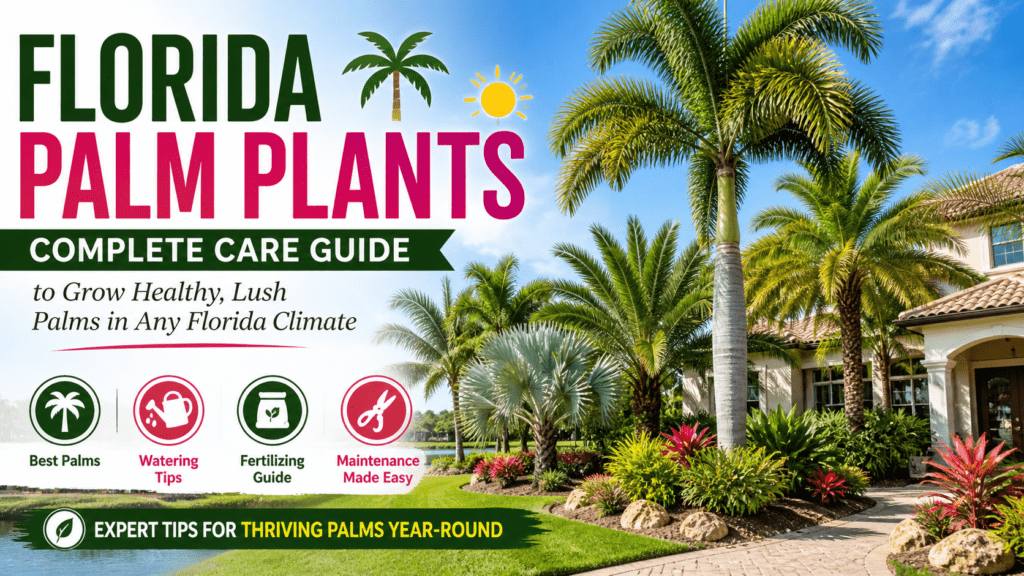
Here’s the truth: while florida palm plants are naturally suited to the state’s climate, growing them successfully isn’t as effortless as it seems. Many homeowners struggle because they choose the wrong species, misunderstand soil conditions, or follow generic care advice that simply doesn’t apply to Florida’s unique environment.
In this expert guide, you’ll learn exactly how to grow strong, healthy, and vibrant palm plants—whether you’re in North, Central, or South Florida. 🌞 From choosing the right species to mastering watering, fertilizing, and storm protection, this is your complete roadmap to palm success.
🌴 Understanding Florida Palm Plants (Why They Thrive Here)
🌎 What Makes Florida Ideal for Palm Growth?
Florida offers one of the most palm-friendly climates in the United States—and for good reason:
- 🌡️ Warm temperatures year-round (especially in South Florida)
- 💧 High humidity levels that palms love
- 🌧️ Seasonal rainfall supporting natural hydration
- 🏝️ Sandy, well-draining soils ideal for palm roots
However, these same conditions can also create challenges like nutrient deficiencies and fungal diseases—something many beginner gardeners overlook.
🌿 Native vs. Non-Native Palm Plants
🌱 Native Florida Palm Plants (Best for Beginners)
Native palms are naturally adapted to Florida’s conditions, making them:
- More drought-tolerant 🌞
- Resistant to local pests 🐛
- Lower maintenance overall
Top native options include:
- Sabal Palm (state tree 🌴)
- Saw Palmetto
- Royal Palm
🌴 Non-Native Palm Plants
While stunning, these require more attention:
- Higher nutrient needs
- Greater sensitivity to cold or disease
- Specific soil and watering conditions
💡 Expert Insight: If you want low-maintenance success, always start with native species.
📍 Florida Plant Hardiness Zones Explained
Florida spans multiple USDA zones, and choosing the wrong palm for your zone is one of the biggest mistakes homeowners make.
- North Florida (Zone 8–9): Cooler winters ❄️
- Central Florida (Zone 9–10): Moderate climate 🌤️
- South Florida (Zone 10–11): Tropical conditions 🌴
👉 Your palm choice should always match your zone—not just your aesthetic preference.
🌴 Best Florida Palm Plants for Your Landscape 🌿
🌟 Low-Maintenance Palm Varieties

If you want beauty without constant maintenance, these are top picks:
- 🌿 Areca Palm – Great for privacy hedges
- 🌴 Queen Palm – Fast-growing and elegant
- 🌱 Pygmy Date Palm – Perfect for small spaces
🌴 Native Florida Palm Plants (Highly Recommended)

Native palms are the backbone of sustainable landscaping:
- 🌴 Sabal Palm – Extremely hardy and hurricane-resistant
- 🌿 Saw Palmetto – Ideal for ground cover and natural landscapes
- 🌴 Royal Palm – Iconic and visually striking
🏡 Best Palms for Small Yards or Containers
Not everyone has space for towering palms—and that’s okay!
- 🪴 Dwarf palmettos
- 🌿 Parlor palms (great indoors too)
- 🌱 Container-friendly pygmy palms
💡 These are perfect for patios, balconies, and compact landscapes.
🌊 Salt-Tolerant Palms for Coastal Areas
Living near the coast? You need palms that can handle salt spray:
- 🥥 Coconut Palm
- 🌴 Buccaneer Palm
- 🌊 Silver Date Palm
👉 These varieties thrive where others struggle.
🌱 How to Plant Florida Palm Plants Successfully
🕳️ Choosing the Right Location
Your palm’s long-term health starts here:
- ☀️ Full sun for most species
- 🌬️ Protection from strong winds (especially when young)
- 🌴 Enough space for mature growth
🌾 Soil Preparation & Drainage Tips
Florida soil can be tricky—it drains quickly but lacks nutrients.
Improve your soil by:
- Mixing in organic compost 🌱
- Ensuring proper drainage (avoid standing water)
- Testing pH levels if growth issues occur
💡 Poor soil = weak palms, no matter how well you care for them.
🌿 Step-by-Step Planting Guide
- Dig a hole twice as wide as the root ball
- Place the palm at ground level (not too deep!)
- Backfill with native soil + compost
- Water thoroughly 💧
- Add mulch—but keep it away from the trunk
👉 This simple process prevents root rot and promotes strong establishment.
💧 Watering Florida Palm Plants the Right Way
🚿 Watering Schedule by Growth Stage
- 🌱 New palms: Water 2–3 times per week
- 🌴 Established palms: Water weekly (adjust for rainfall)
⚠️ Signs of Overwatering and Underwatering
- Yellow leaves = possible overwatering 💛
- Brown tips = underwatering 🌵
- Drooping fronds = stress signal 🚨
🌧️ Adjusting for Florida’s Rainy Season
Florida’s summer rains can be intense:
- Reduce manual watering
- Improve drainage if soil stays soggy
- Watch for fungal issues
💡 Overwatering is one of the #1 killers of palm plants in Florida.
🌿 Fertilizing for Healthy Growth 🌱
🧪 Essential Nutrients for Palm Plants
Palm trees have unique nutritional needs:
- Nitrogen (growth) 🌿
- Potassium (strength) 💪
- Magnesium (leaf health) 🍃
📅 Best Fertilizer Schedule in Florida
- Apply 3–4 times per year
- Use slow-release palm fertilizer
- Focus on spring and summer feeding
⚠️ Common Nutrient Deficiencies (and Fixes)
- Yellow bands on leaves → Magnesium deficiency
- Frizzled new growth → Manganese deficiency
- Weak structure → Potassium deficiency
💡 Always use fertilizers specifically designed for palms.
✂️ Pruning and Maintenance Tips 🌴
✂️ When and How to Prune Properly

Pruning is one of the most misunderstood aspects of palm care—and doing it wrong can permanently damage your tree. 🌴⚠️
✅ Best Practices:
- Remove only dead or completely brown fronds
- Use clean, sharp pruning tools ✂️
- Cut close to the trunk, but don’t damage it
❌ Avoid:
- Over-pruning (also called “hurricane cutting”)
- Removing green fronds (they provide nutrients!)
- Pruning too frequently
💡 Expert Tip: Healthy palms should have a full, rounded canopy—not a sparse or feathered look.
🧹 Cleaning and General Maintenance
Maintaining your palm goes beyond pruning:
- 🍂 Remove fallen debris to prevent pests
- 🌱 Refresh mulch regularly (but keep it 2–3 inches away from the trunk)
- 🔍 Inspect monthly for early signs of disease or stress
👉 Consistent, light maintenance prevents major problems later.
🐛 Common Problems with Florida Palm Plants (And Solutions)
🐞 Pests to Watch For
Even thriving florida palm plants can fall victim to pests if not monitored.
🚨 Common Palm Pests:
- Palm Weevils – Bore into trunks and cause structural damage
- Scale Insects – Appear as small bumps on leaves
- Spider Mites – Cause yellow speckling and webbing
🛠️ Solutions:
- Use horticultural oils or insecticidal soap
- Remove heavily infested fronds
- Encourage beneficial insects 🐞
🦠 Diseases Affecting Palm Trees

Palm diseases can be devastating—especially if not caught early.
⚠️ Common Diseases:
- Ganoderma Butt Rot – Fatal fungal disease affecting the trunk
- Lethal Bronzing – Causes rapid yellowing and death
🩺 Prevention Tips:
- Avoid injuring the trunk
- Sanitize tools between cuts
- Remove infected trees immediately
💡 Important: There is no cure for some palm diseases—prevention is your best defense.
🚑 How to Diagnose and Treat Issues Early
Early detection is key 🔍
Look for:
- Discoloration patterns
- Unusual leaf shapes
- Slow or stunted growth
👉 If symptoms spread quickly, consult a certified arborist.
🌪️ Protecting Palm Plants from Florida Weather Extremes
🌬️ Hurricane and Storm Preparation

Florida storms can be intense—but palms are naturally resilient when cared for properly.
🛡️ Preparation Tips:
- Stake young palms securely
- Avoid over-pruning before storms
- Ensure proper hydration before extreme weather
💡 Healthy palms withstand storms far better than weak ones.
🌡️ Cold Snap Protection (North Florida)
Even in Florida, cold damage can occur ❄️
🌿 Protection Methods:
- Use frost cloths or blankets
- Water soil before cold nights (retains heat)
- Move container palms indoors
🏡 Landscaping Ideas Using Florida Palm Plants 🌴✨
🌺 Tropical Garden Designs

Create a resort-style landscape right at home:
- Layer palms with flowering plants 🌺
- Combine textures and heights
- Add mulch and stone pathways
🏖️ Coastal Landscape Styling

For coastal homes:
- Use salt-tolerant palms 🌊
- Pair with dune grasses and native shrubs
- Keep design simple and wind-resistant
🪴 Container Palm Arrangements

Perfect for small spaces:
- Use decorative pots 🪴
- Ensure good drainage
- Rotate plants for even sunlight
💡 Expert Tips for Long-Term Palm Health
- 🌴 Choose the right palm for your zone (this matters most!)
- 🚫 Avoid using regular lawn fertilizer near palms
- 🌱 Apply mulch properly—never against the trunk
- 🔍 Inspect your palms regularly for early issues
- 💧 Water deeply but not too frequently
💡 Pro Insight: Most palm problems are caused by improper care—not the environment.
❓ Frequently Asked Questions (FAQs)
❓ What are the easiest florida palm plants to grow?
Native palms like Sabal Palm and Saw Palmetto are the easiest because they naturally adapt to Florida’s climate.
❓ How often should I water palm plants in Florida?
- Newly planted: 2–3 times per week
- Established: Once weekly (adjust for rainfall)
❓ Why are my palm leaves turning yellow?
This could be due to:
- Overwatering 💧
- Nutrient deficiency 🌱
- Poor drainage
❓ Can I grow palm plants indoors in Florida?
Yes! Smaller varieties like parlor palms thrive indoors with bright, indirect light ☀️
❓ What is the best fertilizer for palm trees?
Use a slow-release, palm-specific fertilizer with essential micronutrients.
📌 Final Thoughts: Growing Thriving Florida Palm Plants 🌴
Growing beautiful, healthy florida palm plants isn’t about luck—it’s about understanding what these tropical icons truly need. 🌞
By choosing the right species, planting correctly, and following proper care techniques, you can transform your landscape into a lush, vibrant paradise that thrives year-round.











