
Have you ever planted a succulent that looked gorgeous at the garden center, only to watch it become leggy, mushy, or flowerless a few months later? You’re not alone. Many gardeners struggle to keep succulents healthy — especially flowering varieties that need the perfect balance of sunlight, drainage, and watering.
That’s exactly why ice plants succulent varieties have become so popular among beginner and experienced gardeners alike. These colorful, drought-tolerant plants produce vibrant daisy-like blooms, spread beautifully as ground cover, and thrive in hot, sunny conditions where many other plants fail. 🌸
But here’s the truth: although ice plants are considered low-maintenance, they still need proper care to stay healthy and bloom consistently throughout the year. The good news? Once you understand their growing habits, they become one of the easiest and most rewarding succulents to grow.
In this expert guide, you’ll learn:
- How to grow thriving ice plants 🌿
- The biggest mistakes gardeners make 🚫
- Proven watering and sunlight tips ☀️
- How to encourage nonstop blooming 🌺
- Solutions for common ice plant problems 🪴
Whether you’re creating a drought-tolerant landscape, filling a rock garden, or growing succulents in containers, this complete guide will help you grow healthy, vibrant ice plants successfully year-round.
🌸 What Is an Ice Plants Succulent?
🌿 Understanding Ice Plants and Their Unique Features
Ice plants are flowering succulents known for their vivid blooms, fast-spreading growth, and exceptional drought tolerance. Most belong to the Delosperma genus, although several related succulent species are also commonly called ice plants.
These plants are native to dry regions of South Africa and thrive in harsh environments with poor soil and intense sunlight. Their fleshy leaves store water, helping them survive long periods without rain.
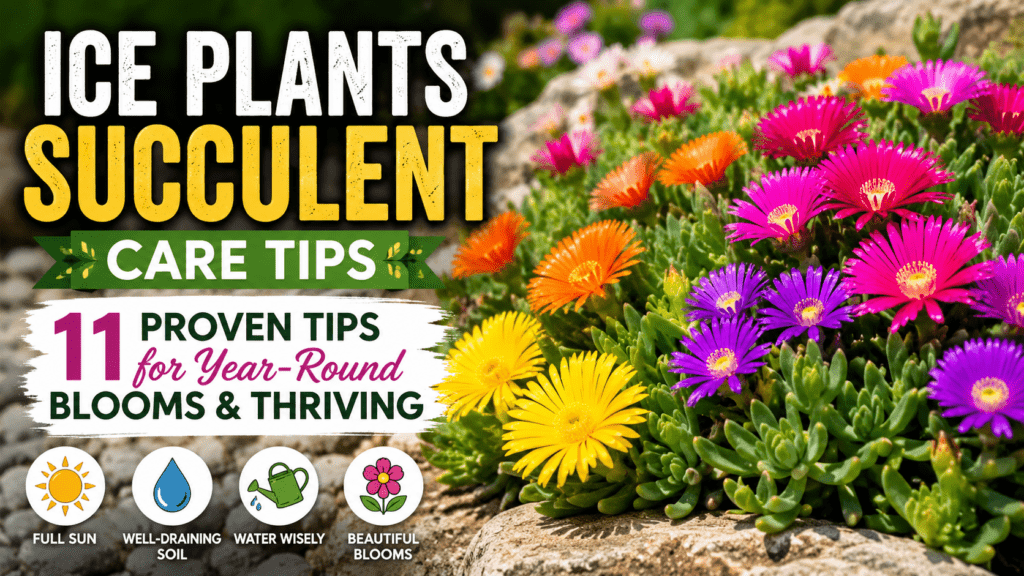
One of the most eye-catching features of ice plants is their dazzling flowers, which resemble miniature daisies and come in stunning shades of:
- Purple 💜
- Pink 🌸
- Yellow 🌼
- Orange 🧡
- Red ❤️
- White 🤍
Their blooms often open fully in bright sunlight and close at night or during cloudy weather.
Why Are They Called “Ice Plants”? ❄️
The name comes from the tiny, reflective cells on the leaves and stems that shimmer in sunlight like frozen ice crystals. This sparkling appearance gives the plant its unique ornamental appeal.
🌵 Are Ice Plants True Succulents?
Yes — ice plants are true succulents because they store water in their leaves and stems. Like many drought-resistant plants, they evolved to survive arid climates with minimal rainfall.
However, unlike cacti:
- Ice plants usually lack spines
- They produce more abundant flowers
- Many varieties spread horizontally as ground cover
This makes them ideal for landscaping and decorative gardens.
🌈 Popular Ice Plants Succulent Varieties
🌸 Delosperma cooperi
The most popular hardy ice plant variety with vibrant purple-pink blooms.
🌼 Yellow Ice Plant
Features cheerful golden flowers and excellent heat tolerance.
💜 Purple Ice Plant
Known for intense violet blooms and fast-spreading growth.
🌿 Trailing Ice Plant
Perfect for hanging baskets and retaining walls.
❄️ Hardy Ice Plant
Cold-tolerant varieties suitable for cooler climates and USDA zones 5–6.
🌿 Benefits of Growing Ice Plants Succulent
💧 Exceptional Drought Tolerance
Ice plants are among the best drought-tolerant succulents available today. Once established, they require very little watering, making them perfect for:
- Xeriscaping
- Water-wise gardening
- Hot climates
- Busy homeowners
🌺 Long Blooming Season
Unlike many succulents that bloom briefly, ice plants can flower continuously from late spring through fall under ideal conditions.
Their vivid blooms create a carpet of color for months. 🌈
🐝 Pollinator-Friendly Plants
Ice plants attract:
- Bees 🐝
- Butterflies 🦋
- Beneficial pollinators
This makes them valuable additions to eco-friendly gardens.
🪨 Excellent Ground Cover
Because of their spreading habit, ice plants:
- Suppress weeds
- Reduce soil erosion
- Fill empty garden spaces quickly
They’re especially useful on slopes and rocky areas where traditional plants struggle.
☀️ Ideal Growing Conditions for Ice Plants Succulent

☀️ Sunlight Requirements
Ice plants absolutely love sunlight.
For maximum flowering and compact growth, they need:
- At least 6–8 hours of direct sunlight daily
- Full sun exposure whenever possible
Signs Your Ice Plant Needs More Sunlight
- Fewer flowers
- Stretching or leggy growth
- Pale leaves
- Weak stems
If grown indoors, place them near a bright south-facing window.
🪨 Best Soil for Healthy Growth
The biggest killer of ice plants isn’t drought — it’s wet soil.
Ideal Soil Conditions
Ice plants require:
- Fast-draining soil
- Sandy or gravelly texture
- Low organic matter
DIY Soil Mix Recipe 🪴
Mix:
- 2 parts cactus soil
- 1 part coarse sand
- 1 part perlite or pumice
This prevents soggy roots and improves airflow.
Avoid Heavy Clay Soil 🚫
Clay retains excess moisture and often leads to root rot.
If your garden has clay soil:
- Add coarse sand
- Use raised beds
- Plant on slopes for drainage
🌡️ Temperature and Hardiness Zones
Most ice plants thrive in USDA zones 5–10 depending on the variety.
They Prefer:
- Warm temperatures
- Dry conditions
- Low humidity
Winter Concerns ❄️
Cold temperatures are usually less damaging than winter moisture. Wet roots during freezing weather often kill the plant faster than frost itself.
🏡 Indoor vs Outdoor Growing
Ice plants grow best outdoors, but containers can also thrive indoors with enough light.
Indoor Growing Tips
- Use terra cotta pots
- Place near sunny windows
- Avoid overwatering
- Ensure strong airflow
Indoor plants generally bloom less than outdoor ones because sunlight intensity is lower.
💦 How to Water Ice Plants Succulent Properly
🚫 The Biggest Watering Mistakes to Avoid
Overwatering is the number one reason ice plants die.
Because they store water in their leaves, they prefer drying out between waterings.
Signs of Overwatering
- Mushy stems
- Yellow leaves
- Black spots
- Root rot smell
Signs of Underwatering
- Wrinkled leaves
- Dry stems
- Slower growth
Interestingly, underwatering is usually easier to fix than overwatering.
📅 Seasonal Watering Schedule
🌱 Spring & Summer
Water deeply when soil becomes completely dry.
Usually:
- Once every 7–14 days outdoors
- More frequently during heat waves
🍂 Fall
Reduce watering as temperatures cool.
❄️ Winter
Water sparingly during dormancy.
In rainy climates, outdoor plants may not need supplemental watering at all.
👀 How to Tell When Your Ice Plant Needs Water
Simple Soil Test
Insert your finger 2 inches into the soil.
If completely dry → water deeply.
If moist → wait several more days.
Leaf Clues 🌿
Healthy leaves feel:
- Firm
- Plump
- Smooth
Wrinkled or deflated leaves usually indicate thirst.
🌺 11 Proven Tips to Keep Ice Plants Blooming and Thriving Year-Round

☀️ 1. Plant in Full Sun for Maximum Blooms
More sunlight equals more flowers.
Ice plants grown in shade often become leggy and bloom poorly.
For best performance:
- Choose south-facing locations
- Avoid areas shaded by trees or fences
🪨 2. Use Sandy, Well-Draining Soil
Drainage is everything.
Even healthy plants can decline quickly in soggy soil.
Raised beds and gravelly areas are ideal.
🚫💧 3. Avoid Overwatering at All Costs
Remember:
Ice plants prefer neglect over excessive care.
Deep but infrequent watering encourages stronger root systems.
🌬️ 4. Improve Air Circulation Around Plants
Good airflow reduces:
- Fungal diseases
- Rot issues
- Humidity buildup
Avoid overcrowding plants.
✂️ 5. Deadhead Spent Flowers Regularly
Removing faded blooms encourages continuous flowering.
It also keeps plants tidy and attractive.
🌱 6. Fertilize Sparingly for Better Blooms
Too much fertilizer causes:
- Excess leafy growth
- Fewer flowers
- Weak stems
Use diluted succulent fertilizer once or twice during the growing season.
❄️ 7. Protect Plants From Winter Moisture
Winter rain is more dangerous than snow.
Helpful strategies:
- Use gravel mulch
- Improve drainage
- Cover plants during prolonged wet weather
🌿 8. Divide Overcrowded Plants Every Few Years
Overgrown plants may:
- Flower less
- Develop dead centers
- Compete for nutrients
Divide mature clumps every 2–3 years.
🐛 9. Watch for Pests and Fungal Problems
Although relatively pest-resistant, ice plants occasionally attract:
- Aphids
- Mealybugs
- Spider mites
Inspect plants regularly.
Neem oil can help control minor infestations naturally. 🌱
🪨 10. Mulch With Gravel Instead of Organic Mulch
Wood mulch traps moisture around stems.
Instead, use:
- Gravel
- Pebbles
- Crushed stone
This mimics their natural environment beautifully.
🌎 11. Choose the Right Variety for Your Climate
Some varieties tolerate freezing winters better than others.
Research cold-hardy types if you live in cooler regions.
🚑 Common Ice Plants Succulent Problems and Solutions
🤎 Why Is My Ice Plant Turning Brown?
Brown patches may result from:
- Root rot
- Sunburn after sudden heat exposure
- Fungal infections
Solution
- Improve drainage
- Remove damaged growth
- Adjust watering habits
🌸 Why Won’t My Ice Plant Bloom?
Lack of flowers usually means:
- Not enough sunlight
- Excess nitrogen fertilizer
- Overcrowding
Move plants to sunnier locations whenever possible.
🌿 Leggy or Sparse Growth Issues
Leggy growth occurs when plants stretch toward light.
Fixes:
- Increase sun exposure
- Trim elongated stems
- Rotate container plants regularly
🪴 Root Rot and How to Save an Affected Plant
Early Warning Signs
- Soft stems
- Blackened roots
- Mushy leaves
Rescue Steps 🚑
- Remove the plant from wet soil
- Trim damaged roots
- Allow roots to dry
- Repot in dry succulent mix
🌱 How to Propagate Ice Plants Succulent
✂️ Propagating From Cuttings
Ice plants are incredibly easy to propagate.
Step-by-Step Method
- Cut a healthy stem
- Let it dry for several hours
- Plant in dry sandy soil
- Mist lightly until roots develop
Most cuttings root within a few weeks.
🌱 Growing From Seeds
Seed propagation takes longer but allows you to grow many plants affordably.
Best Practices
- Start indoors in spring
- Use shallow trays
- Keep soil lightly moist until germination
🌿 Division Method for Mature Plants
Large clumps can be divided during spring.
This refreshes older plants and improves blooming.
🌼 Best Companion Plants for Ice Plants Succulent

Choosing the right companion plants can dramatically improve the beauty, health, and functionality of your garden. Since ice plants thrive in sunny, dry environments, they pair best with plants that enjoy similar growing conditions.
The goal is to create a visually balanced, low-maintenance landscape with contrasting textures and continuous color throughout the seasons. 🌿
🌿 Drought-Tolerant Plants That Pair Well
🌱 Sedum
Sedum varieties are natural companions for ice plants because they:
- Require little water
- Thrive in poor soil
- Spread beautifully as ground cover
Their contrasting leaf shapes create excellent texture variation in rock gardens.
Popular choices include:
- Autumn Joy Sedum
- Creeping Sedum
- Dragon’s Blood Sedum
💜 Lavender
Lavender and ice plants are a stunning Mediterranean-style combination.
Both plants enjoy:
- Full sun ☀️
- Dry soil
- Excellent drainage
Lavender also attracts pollinators while adding fragrance to your garden. 🐝
🌵 Echeveria
Echeverias bring sculptural beauty and rosette-shaped foliage that contrasts wonderfully with spreading ice plants.
These combinations work especially well in:
- Container gardens
- Patio arrangements
- Decorative succulent beds
🌿 Agave
Agave creates dramatic focal points while ice plants soften the surrounding space with colorful blooms.
This pairing is perfect for:
- Desert-inspired landscapes
- Modern xeriscape gardens
- Gravel gardens
🪨 Designing a Stunning Xeriscape Garden
Ice plants are among the best plants for xeriscaping — landscaping designed to minimize water use.
Expert Xeriscape Tips 🌎
🌈 Use Color Layers
Combine:
- Purple ice plants
- Yellow sedums
- Blue agave
- Silver lavender
This creates year-round visual interest.
🪴 Add Texture Contrast
Mix:
- Spiky plants
- Soft ground covers
- Rounded succulents
Texture diversity makes gardens look professionally designed.
🪨 Incorporate Decorative Gravel
Gravel:
- Improves drainage
- Prevents weeds
- Enhances the desert aesthetic
It also reflects heat and helps keep roots dry.
📅 Seasonal Care Guide for Ice Plants Succulent
Even low-maintenance plants benefit from seasonal care adjustments. Following a yearly maintenance routine helps keep ice plants healthy and flowering continuously. 🌸
🌱 Spring Care Checklist
Spring is the active growth season for most ice plants.
What To Do:
- Remove winter-damaged stems
- Clean debris around plants
- Divide overcrowded clumps
- Apply light fertilizer if needed
- Begin regular watering schedule
Spring Tip 🌼
Inspect plants early for rot caused by winter moisture.
Catching problems early prevents major damage later.
☀️ Summer Maintenance Tips
Summer is peak blooming season.
Focus On:
- Deep but infrequent watering
- Deadheading faded blooms
- Monitoring for pests
- Maintaining airflow
Heatwave Advice 🔥
During extreme heat:
- Water early in the morning
- Avoid watering late evening
- Check container plants more frequently
Potted ice plants dry out faster than garden-grown plants.
🍂 Fall Preparation
As temperatures cool, ice plants begin slowing growth.
Fall Tasks:
- Reduce watering gradually
- Stop fertilizing
- Remove weak growth
- Check drainage before rainy season
Important Tip 🍁
Avoid encouraging new soft growth before winter arrives.
Tender growth is more vulnerable to cold damage.
❄️ Winter Protection Strategies
Winter survival depends more on dryness than warmth.
Protecting Outdoor Ice Plants
- Improve drainage before winter
- Use gravel mulch
- Avoid wet organic mulch
- Cover plants during excessive rain
Cold Climate Advice 🧤
In very cold regions:
- Grow hardy varieties only
- Use raised beds
- Consider container growing for mobility
🪴 Expert Tips for Growing Ice Plants in Containers

Ice plants perform exceptionally well in containers when given proper drainage and sunlight.
Container gardening also allows you to:
- Move plants seasonally
- Protect them from winter rain
- Decorate patios and balconies beautifully 🌸
🪴 Choosing the Right Pot
The container itself plays a major role in plant health.
Best Pot Types:
- Terracotta pots
- Clay containers
- Concrete planters
These materials allow excess moisture to evaporate naturally.
Avoid Pots Without Drainage 🚫
Standing water quickly causes root rot.
Always ensure drainage holes are present.
🌱 Best Potting Mix Recipe
DIY Succulent Soil Blend
Mix together:
- 2 parts cactus mix
- 1 part coarse sand
- 1 part pumice or perlite
This blend provides:
- Fast drainage
- Root aeration
- Reduced fungal risk
🌞 Container Placement Tips
Place containers where they receive:
- Full sun
- Good airflow
- Protection from heavy rainfall
South-facing patios work especially well.
🔄 Repotting Schedule
Repot ice plants every 2–3 years or when:
- Soil becomes compacted
- Plants outgrow containers
- Drainage declines
Signs Repotting Is Needed
- Slower growth
- Reduced flowering
- Soil drying too quickly
🐶 Are Ice Plants Succulent Safe for Pets and Children?
Safety matters when choosing garden plants for homes with pets or young children.
🐾 Toxicity Information
Many commonly grown ice plant varieties are considered low toxicity, but some species may cause mild stomach upset if consumed in large amounts.
Possible Symptoms:
- Mild nausea
- Vomiting
- Digestive discomfort
This applies mainly to pets like:
- Dogs 🐶
- Cats 🐱
Important Reminder ⚠️
Plant identification matters.
Different species sold under the name “ice plant” may vary in toxicity.
If ingestion occurs, contact:
- A veterinarian
- Poison control
- Medical professional
👶 Safe Placement Recommendations
For extra safety:
- Keep containers out of reach
- Avoid planting near play areas
- Supervise curious pets around new plants
Fortunately, ice plants are not highly dangerous like some ornamental plants.
❓ Frequently Asked Questions About Ice Plants Succulent
🌿 How fast do ice plants spread?
Ice plants spread relatively quickly under ideal conditions. Many varieties can spread several feet within a single growing season.
Their fast growth makes them excellent ground-cover plants.
🌸 Do ice plants come back every year?
Yes — most ice plants are perennial in suitable climates.
Hardy varieties return year after year when protected from excessive winter moisture.
❄️ Can ice plants survive frost?
Some hardy ice plant species tolerate freezing temperatures, especially Delosperma cooperi.
However:
- Wet winter soil increases frost damage risk
- Young plants are less cold-hardy
💧 Why are my ice plant leaves shriveling?
Shriveled leaves usually indicate:
- Underwatering
- Heat stress
- Root damage
Check soil moisture before watering.
Overwatering can sometimes mimic underwatering symptoms.
🌺 How long do ice plants bloom?
Most varieties bloom from late spring through early fall.
With ideal care and deadheading, flowering can continue for several months. 🌸
🌱 Can I grow ice plants from cuttings in water?
Although possible, soil propagation works better.
Water propagation sometimes causes:
- Rot
- Weak roots
- Delayed transplant adaptation
Direct soil rooting is generally more successful.
🌟 Final Thoughts
Ice plants are proof that low-maintenance gardens can still be incredibly colorful, vibrant, and rewarding. 🌿🌸
With their dazzling flowers, drought tolerance, and easy-care nature, these succulents have become favorites among homeowners, landscapers, and container gardeners alike.
The key to success is surprisingly simple:
- Give them plenty of sunlight ☀️
- Use fast-draining soil 🪨
- Avoid overwatering 💧
- Protect them from excessive winter moisture ❄️
Once established, ice plants reward gardeners with months of brilliant blooms while requiring far less maintenance than many traditional flowering plants.
Whether you’re designing a rock garden, upgrading your patio containers, or building a water-wise landscape, ice plants succulent varieties offer beauty, resilience, and versatility that few plants can match.
Start with the right variety for your climate, follow the proven care tips in this guide, and you’ll enjoy thriving, colorful ice plants year after year. 🌺✨











