
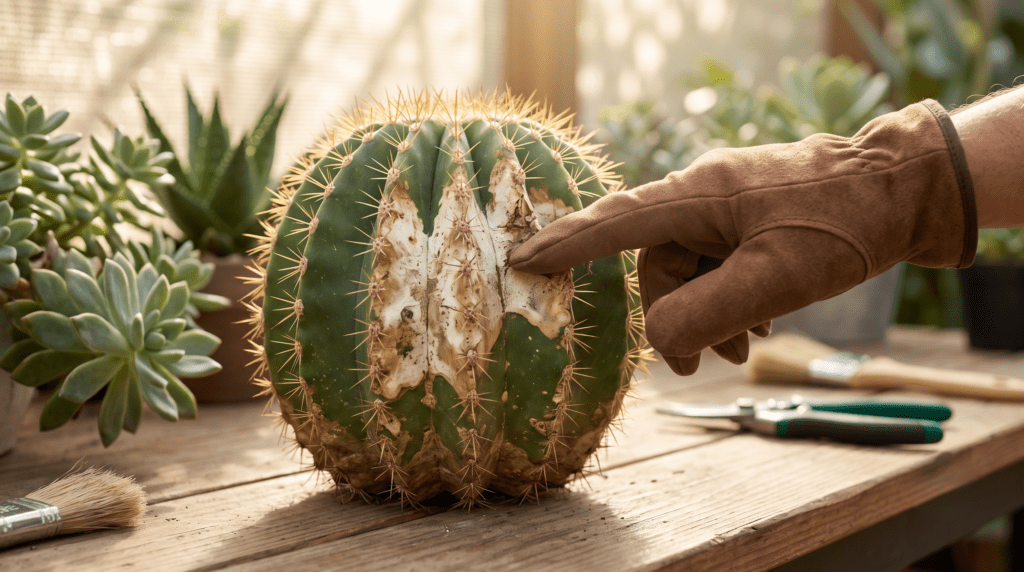
Let’s address the elephant in the greenhouse right away: aren’t cacti supposed to love the sun? We have all been conditioned to believe that these resilient desert dwellers can soak up relentless, baking rays indefinitely without breaking a sweat. So, when you walk out to your patio or check your indoor windowsill one bright afternoon and notice your prized specimen turning an alarming shade of yellow, white, or brown, panic naturally sets in.
If you are currently handling cactus sunburn and scorching, take a deep breath. You are far from alone, and your plant is not necessarily destined for the compost bin.
Just like human skin exposed to a blistering summer afternoon without SPF, cacti can suffer immensely from sudden, intense ultraviolet (UV) radiation or extreme heat loads. Throughout my years of hands-on plant care, succulent rehabilitation, and tree management, I have seen even seasoned horticulturists get caught off guard by a sudden heat wave or an ill-timed plant relocation.
The good news? While severe tissue damage leaves permanent scars, a sun-damaged cactus can be successfully stabilized, rescued, and coaxed back into healthy growth. In this comprehensive guide, we will break down everything you need to know about diagnosing, treating, and preventing heat-related damage so your prickly friend can thrive once more.
Understanding the Damage: Sunburn vs. Scorching 🔍
To effectively treat a heat-stressed plant, you first need to understand the physiological difference between mild sunburn and severe scorching. Not all sun damage is created equal, and knowing the exact severity dictates your next moves.
What is Cactus Sunburn? 🟡
Cactus sunburn is the early, superficial stage of UV radiation damage. When a cactus is exposed to a sudden spike in light intensity—such as moving an indoor-grown plant straight into full, unfiltered midday sun—its delicate chlorophyll pigments begin to break down rapidly.
-
Appearance: The affected areas typically turn a pale yellow, light pinkish-grey, or slightly bleached white.
-
Physiology: The underlying epidermis (skin) is stressed and losing its photosynthetic capability, but the deeper internal cellular structure remains intact.
-
Prognosis: At this stage, the damage is frequently reversible. Over time, as the plant slowly acclimates or is moved to safer lighting, the color may partially normalize, though a faint discoloration might linger.
What is Cactus Scorching? 🟤
Cactus scorching is the advanced, destructive phase of solar injury. This occurs when UV intensity is so high—often compounded by reflected heat from glass, concrete, or white walls—that it literally cooks the plant tissue.
-
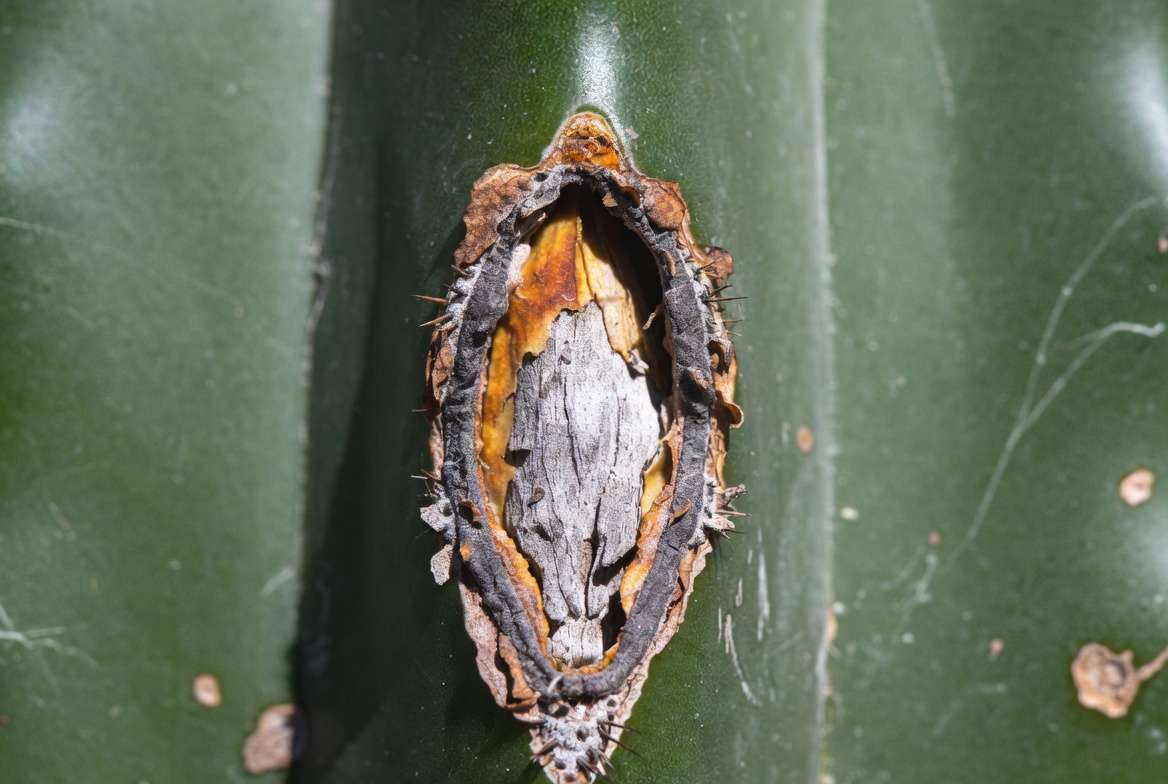
Appearance: Scorched patches turn a hard, woody brown, deep rust, or stark, papery white. These areas often feel dry, corky, crispy, or indented compared to the rest of the stem.
-
Physiology: This represents localized cellular death, known scientifically as necrosis. The cells within that specific zone have burst and dried out completely.
-
Prognosis: Permanent. Scorched areas will never turn green again. Instead, the plant will eventually “cork” (seal off the dead tissue) to protect its internal water reserves from bacterial and fungal pathogens.
Diagnosing the Problem: Is it Sunburn, Rot, or Pests? 🩺
One of the most common pitfalls plant parents make is misdiagnosing light damage as a watering issue or a pest infestation, leading to incorrect and often fatal treatments. Use the detailed diagnostic matrix below to pinpoint the exact culprit behind your plant’s distress.
| Symptom / Appearance | Sunburn & Scorching ☀️ | Root/Stem Rot 💧 | Pest Damage (e.g., Spider Mites) 🕷️ |
| Location on Plant | Restricted strictly to the side facing the sun, light source, or window pane. | Usually originates at the soil line, root system, or base of the plant. | Manifests as irregular speckling, fine webbing, or clustering around new growth. |
| Texture | Dry, rough, papery, hard, leathery, or corky. | Mushy, soft, water-soaked, oozing, or foul-smelling. | Pitted, scarred, rough, or dusty-looking surface. |
| Color | Yellow, bleached white, or rusty brown/black patches. | Dark brown, black, or translucent yellow. | Rusty brown, silvery-bronze, or speckled yellow. |
| Speed of Onset | Rapid—often developing within a few hours to a couple of days after exposure. | Gradual—progressing slowly over weeks due to chronic overwatering. | Gradual—spreading incrementally as the mite or scale population grows. |
Step-by-Step Guide: Handling Cactus Sunburn and Scorching 🚑
When you discover your plant has been cooked by the sun, immediate triage is vital. Follow this step-by-step framework to halt further degradation and set your cactus up for a smooth recovery.
Step 1: Move to the Shade Immediately 🪴
The very first thing you must do is remove the plant from the source of the injury.
-
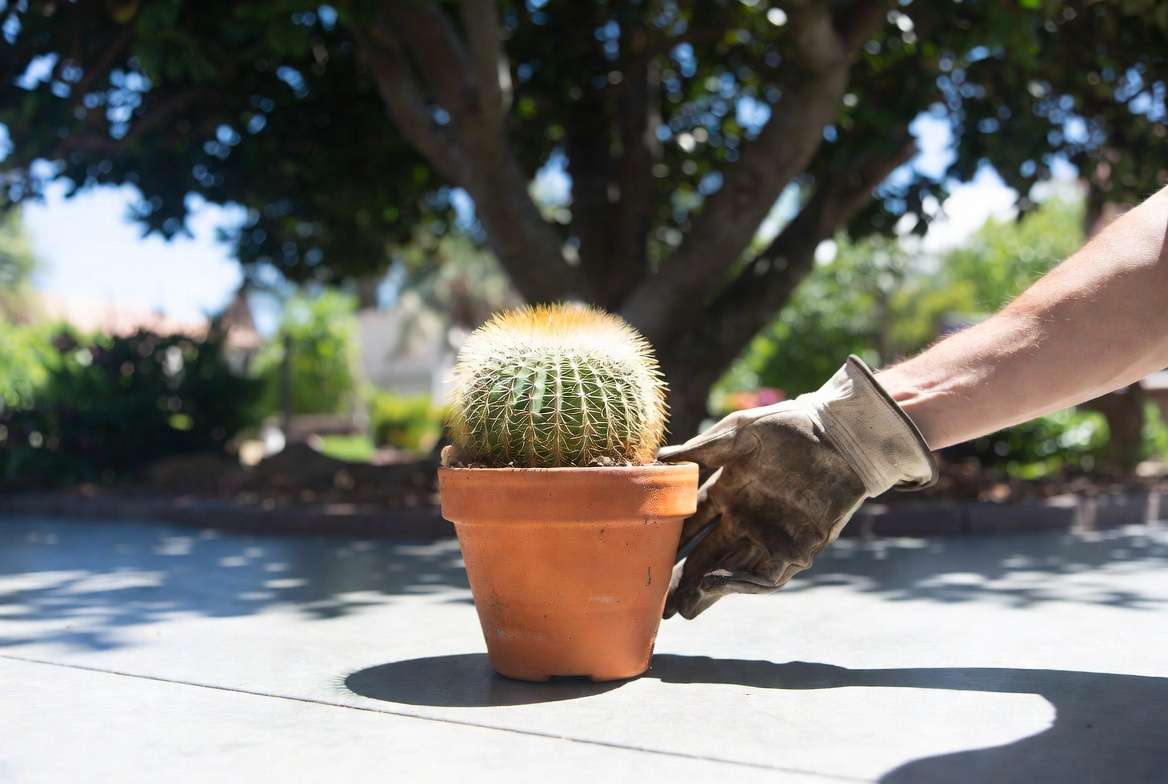
Relocate your cactus to a spot with bright, indirect light or filtered shade.
-
Critical Warning: Do not banish a sun-stressed cactus to a dark, windowless room or a deep, sunless corner. Sudden total darkness introduces an entirely new form of environmental shock (etiolation and light starvation), which will weaken the plant further. Find a happy medium where it gets ambient brightness without direct solar rays.
Step 2: Evaluate the Severity of the Burn 📏
Once the plant is safely out of harm’s way, gently inspect the damage.
-
Run a clean finger across the discolored patch.
-
If the area is firm, leathery, or just slightly discolored (yellow/white), the plant is experiencing mild sunburn and has a high chance of partial recovery.
-
If the area is deeply indented, papery, dark brown, or oozing fluid, you are dealing with a severe scorch mark. Note these locations; they will require long-term monitoring.
Step 3: Adjust Your Watering Routine 💧
It is entirely natural to want to drench a stressed plant in water, assuming it is thirsty from the heat. However, panic-watering a sunburned cactus is a major trap.
-
Sun-damaged plants have compromised cellular walls and reduced transpiration efficiency.
-
Check the soil depth completely. Only water if the potting mix is bone dry all the way to the bottom of the container.
-
When you do water, do so deeply, allowing excess moisture to drain away freely. Avoid getting water directly onto the sunburned scars, as damp, damaged tissue is an open invitation for opportunistic fungal spores.
Step 4: What NOT to Do (Crucial Mistakes to Avoid) 🚫
To give your cactus the best fighting chance, steer clear of these common over-intervention mistakes:
-
Do not fertilize: Pushing a recovering plant to grow with high-nitrogen fertilizers is like forcing someone with a severe burn to run a marathon. It forces rapid cellular division that the damaged tissue cannot support.
-
Do not repot immediately: Transplant shock combined with UV shock is a recipe for disaster. Let the plant rest in its current container for at least 4 to 6 weeks.
-
Do not carve out the burns: Resist the urge to slice away the sunburned patches with a knife unless secondary rot sets in. Open wounds on a cactus create massive entry points for pathogens.
The Healing Process: Managing Scars and Recovery ❤️🩹
Patience is your greatest asset during the recovery phase. It is essential to manage your expectations regarding how your cactus will look moving forward.
Will the Scars Go Away? 🩹
To put it bluntly: severe scorching acts much like a permanent scar on human skin. Once plant tissue undergoes severe localized necrosis (cellular death), it will never turn green again.
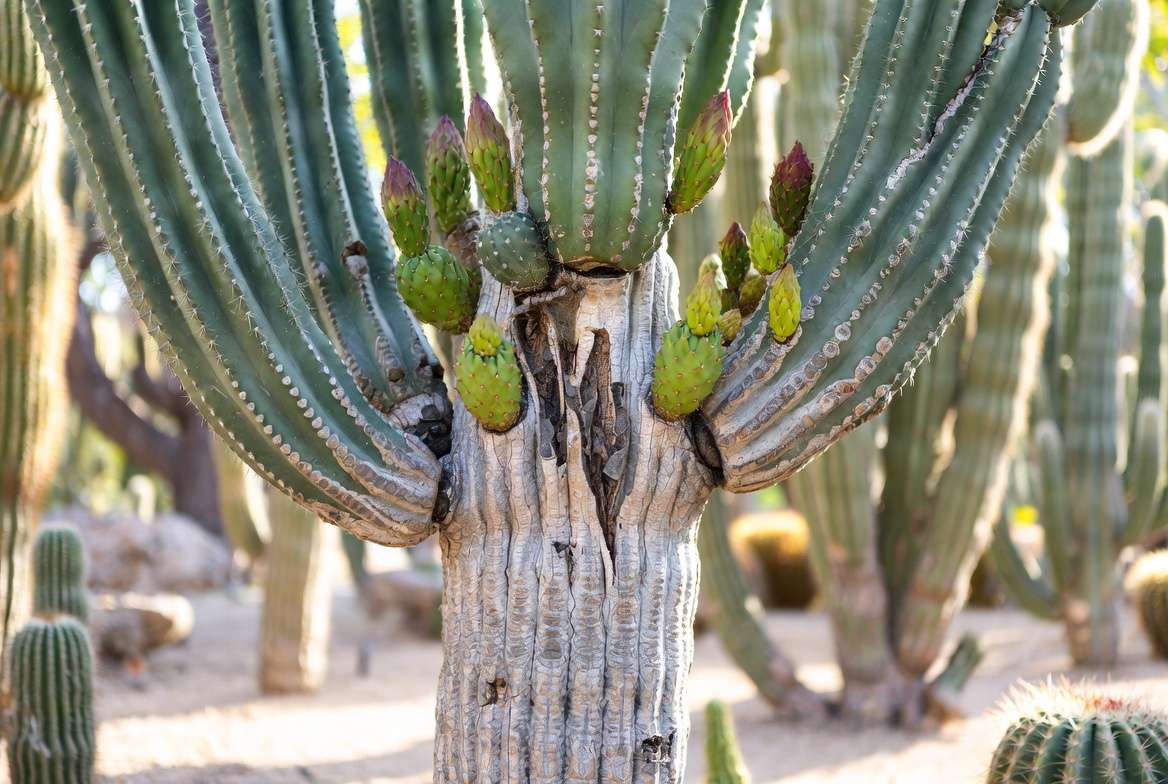
However, nature has a remarkable coping mechanism called corking. Over the coming months, your cactus will naturally isolate the damaged, dead cells by sealing them off with a layer of suberin—a waxy, waterproof substance. This turns the burned patch into a hard, woody, protective shield that safeguards the healthy green tissue underneath from drying out or rotting. Over time, as the cactus grows taller or wider, these scars will gradually become less visually dominant.
Should You Prune a Sunburned Cactus? ✂️
Whether or not you should prune depends entirely on the growth habit of your specific cactus species:
-
Columnar and Barrel Cacti (e.g., Echinocactus, Cereus): Never chop off the burned face of a single-stemmed columnar or barrel cactus unless rot has invaded the core. Doing so decapitates the plant, often killing it or forcing awkward, unwanted pup formations. Let it cork and heal naturally.
-
Branching and Pad Cacti (e.g., Opuntia / Prickly Pear): If an individual pad or branch is entirely scorched, limp, or structurally compromised, you can use a pair of sterilized, sharp pruning shears to cleanly remove that specific segment at the joint. Dust the resulting cut with sulfur powder or cinnamon to accelerate callus formation.
Vulnerable Varieties: Which Cacti Burn the Easiest? 🌸
Not all cacti possess equal tolerance to blazing solar radiation. Understanding your specific plant’s natural habitat will help you protect it proactively.
-
Jungle Cacti (Epiphytic Cacti): Varieties like Christmas Cacti (Schlumbergera), Orchid Cacti (Epiphyllum), and Mistletoe Cacti (Rhipsalis) naturally evolve under dense tropical rainforest canopies. They are accustomed to dappled, filtered light. Exposing them to direct afternoon sun will scorch them within hours.
-
Spineless and Hairless Cacti: Spines, dense white hairs, and farina (the chalky, powdery wax coating found on many succulents and cacti) act as nature’s built-in sunscreen, scattering harsh UV rays and shading the epidermis. Cacti lacking these features—such as smooth, bare green species (Astrophytum asterias or smooth mutations)—are exceptionally vulnerable to scorching.
Prevention: How to Sun-Train Your Cactus 🛡️
The absolute best way to handle cactus sunburn and scorching is to prevent it from happening in the first place through proper environmental management.
The Art of Acclimation (Hardening Off) 🌤️
If you are moving a plant from an indoor environment, a greenhouse, or a shady porch out into a bright, sun-drenched outdoor garden for the summer, you must harden it off gradually.
-
Days 1–3: Place the cactus in bright shade or morning-only sun (1 to 2 hours of gentle early light) for three days.
-
Days 4–7: Increase exposure to include direct morning sun up until noon.
-
Days 8–10: Gradually introduce it to an extra hour of afternoon sun every couple of days until it reaches its permanent, intended location.
Using Shade Cloths for Outdoor Gardens ⛺
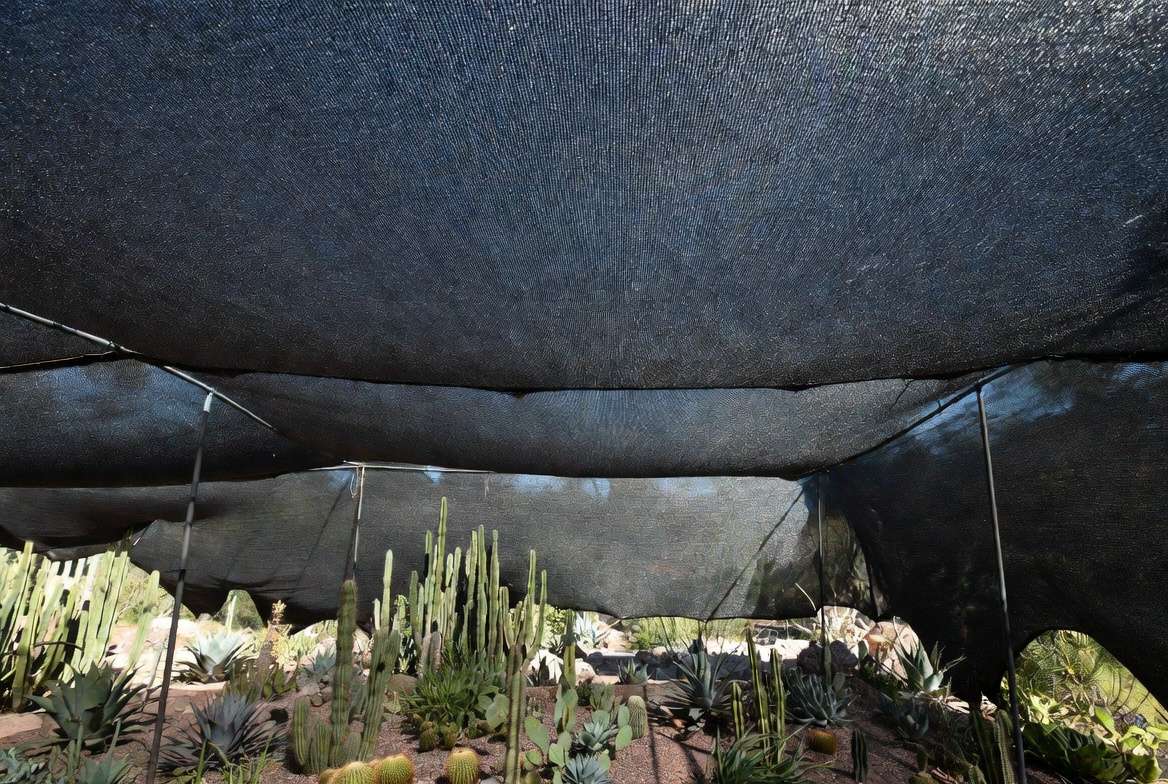
If you cultivate a large collection of cacti outdoors in regions with extreme summer heatwaves (such as desert climates or intense southern latitudes), investing in a commercial shade cloth is a game-changer.
-
Opt for a knitted shade cloth offering a 30% to 50% UV block. This filters out the most destructive peak-hour radiation while still providing ample light for healthy photosynthesis and compact growth.
Mastering Indoor Window Placement 🪟
Indoor growers often assume window glass protects plants from sunburn. In reality, modern energy-efficient window glass can sometimes act as a thermal trap, and south- or west-facing windows can concentrate intense afternoon light rays.
-
If your indoor cactus is sitting directly against a scorching southern window, consider applying a sheer, light-diffusing curtain during peak afternoon hours, or shift the plant back a foot or two from the glass pane.
Expert Insights & Pro Tips 💡
Debunking the Aloe Vera Myth: A common piece of bad advice floating around the internet suggests slathering pure aloe vera gel or kitchen oils onto a sunburned cactus to soothe it. Do not do this. Organic gels trap moisture and block air exchange on the plant’s skin, creating a breeding ground for destructive bacteria and fungal rot. Keep the plant dry and let nature handle the healing process.
Frequently Asked Questions (FAQs) ❓
Can a sunburned cactus turn green again?
No. Once the chlorophyll is completely destroyed and cellular necrosis occurs, that specific patch will remain discolored or turn into a woody, corked scar. However, new growth emerging from the top or sides will be healthy and green.
Why did my cactus turn white in the sun?
When a cactus turns stark white suddenly, it has experienced severe sunburn or bleaching. The intense UV rays have completely degraded the chlorophyll pigments in the outer skin layers, exposing the pale tissue underneath.
How long does it take for a cactus to recover from heat stress?
While physical scars are permanent, the plant will generally stabilize within 2 to 4 weeks after being moved to a safe, shaded location, provided its watering and environmental conditions are properly optimized.
Is my cactus sunburned or just corking?
Natural corking is a healthy aging process that typically starts strictly at the very base of the plant near the soil line, turning a smooth, brown, woody color. Sunburn and scorching appear abruptly on whichever side of the plant faced the light source or window.
Conclusion 🌟
Handling cactus sunburn and scorching can feel disheartening for any dedicated plant parent, but it is ultimately a common rite of passage in the hobby. By acting swiftly to correct light levels, resisting the urge to over-intervene with radical pruning or heavy watering, and respecting the natural healing process of corking, you can successfully nurse your sun-damaged plant back to robust health. With a little patience and careful environmental management, your prickly collection will continue to flourish for years to come!











