You’ve watched your beloved Monstera or trailing Pothos put out gorgeous new leaves, but there’s a problem: it’s growing wild, leggy, and completely unmanageable. It is incredibly frustrating to watch a beautiful plant droop and sprawl simply because it lacks the proper vertical support to climb. However, grabbing the cheapest stake you can find isn’t the answer. If you are searching for a permanent, healthy solution, exploring the best 10 material for house plant trellis systems is essential to your plant’s survival.
Not all indoor plants have the same structural or moisture needs. Choosing the wrong material can lead to disaster—untreated woods can alter your potting mix’s microbiome and harbor root rot, thin plastics can snap under the weight of mature vines, and abrasive wires can slice right through delicate stems. Furthermore, if you happen to be documenting your indoor jungle for a Pinterest board or a YouTube thumbnail, you want a support system that enhances your plant’s beauty on camera rather than detracting from it.
To help you make an informed buying decision, we have analyzed current market data and thousands of Amazon reviews to break down the top materials available today. Whether you need a moisture-retaining climbing pole for a tropical aroid or a sleek, decorative arch for a minimalist space, this guide will help you choose the perfect support to match both your specific plant type and your home’s aesthetic.
II. How to Choose the Best Material for Your House Plant Trellis
Before diving into the products, it is crucial to understand what makes a trellis material “good” for a specific plant. When making your choice, keep these three foundational pillars in mind:
-
Plant Type & Watering Habits: Tropical clingers with aerial roots (like Monsteras and Philodendrons) have evolved to climb damp, mossy trees. They thrive with humidity-retaining materials that mimic this natural environment. Conversely, drought-tolerant plants (like Hoyas) need dry soil and do much better with rust-resistant metal or acrylic that won’t hold excess moisture.
-
Soil Health Integration: Anything you insert into your plant’s soil becomes part of its ecosystem. Natural, untreated materials eventually break down. While biodegradable options are eco-friendly, you must monitor them to ensure they aren’t introducing harmful rot into healthy soil. Non-porous materials preserve soil health perfectly by remaining inert.
-
Sturdiness & Weight Capacity: Vines can get incredibly heavy as they mature. A delicate bamboo hoop is perfect for a young jasmine, but a massive Monstera Deliciosa requires heavy-duty galvanized steel or thick structural PVC to prevent the entire pot from tipping over.
III. At a Glance: Top 10 House Plant Trellis Materials Compared
For optimal mobile viewing, this table has been streamlined to the three most critical data points to help you quickly identify what you need.
IV. In-Depth Reviews: The Best 10 Material for House Plant Trellis Options
1. Sphagnum Moss
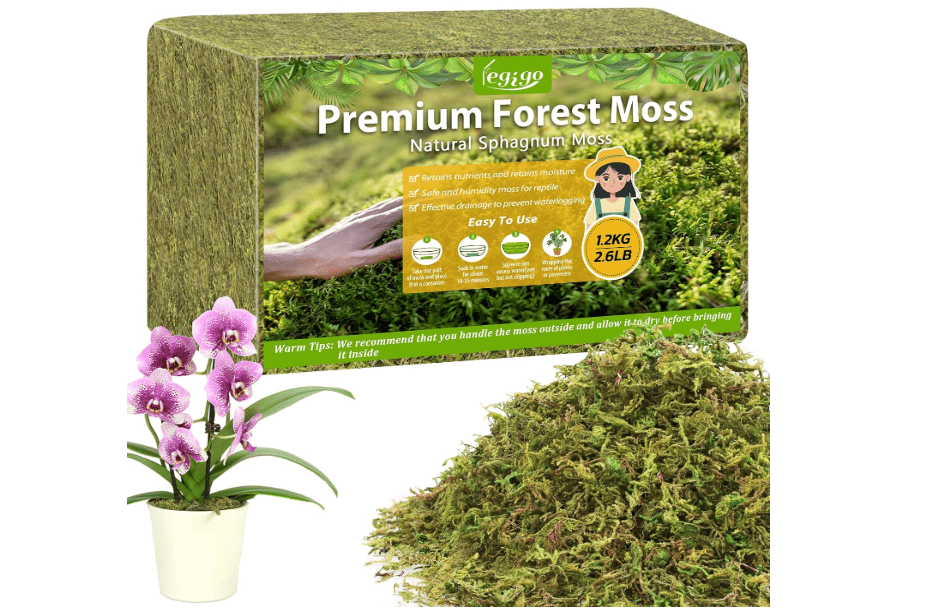
Top Pick: Premium Bendable Sphagnum Moss Pole
Product Description: Sphagnum moss is the undisputed king of houseplant support for tropicals. This premium bendable pole is constructed with a flexible, rust-resistant aluminum core wrapped tightly in highly absorbent natural sphagnum moss. Unlike rigid poles, this design allows you to bend the trellis into spirals, arches, or S-curves to create a stunning visual silhouette.
-
Price: $18.99
-
Key Features & Benefits: Holds up to 20x its weight in water to create a localized micro-climate of humidity. The bendable core allows for infinite styling variations, and the moss texture strongly encourages aerial roots to latch on and mature.
-
Pros & Cons:
-
Pros: Promotes significantly larger, mature leaves; highly customizable shape; completely natural look.
-
Cons: Requires consistent misting to keep the moss damp; can occasionally shed debris when dry.
-
-
Amazon Ratings & Reviews: Averaging 4.6 out of 5 stars. Users frequently praise how quickly their plants root into the pole, with many reviews noting the “ease of molding” and “rapid root growth.”
-
Why it’s a Good Choice: It perfectly mimics the humid, textured tree bark that tropical climbers scale in the rainforest.
-
Ideal Use Case: Monsteras, Philodendrons, and Syngoniums.
2. Coco Coir
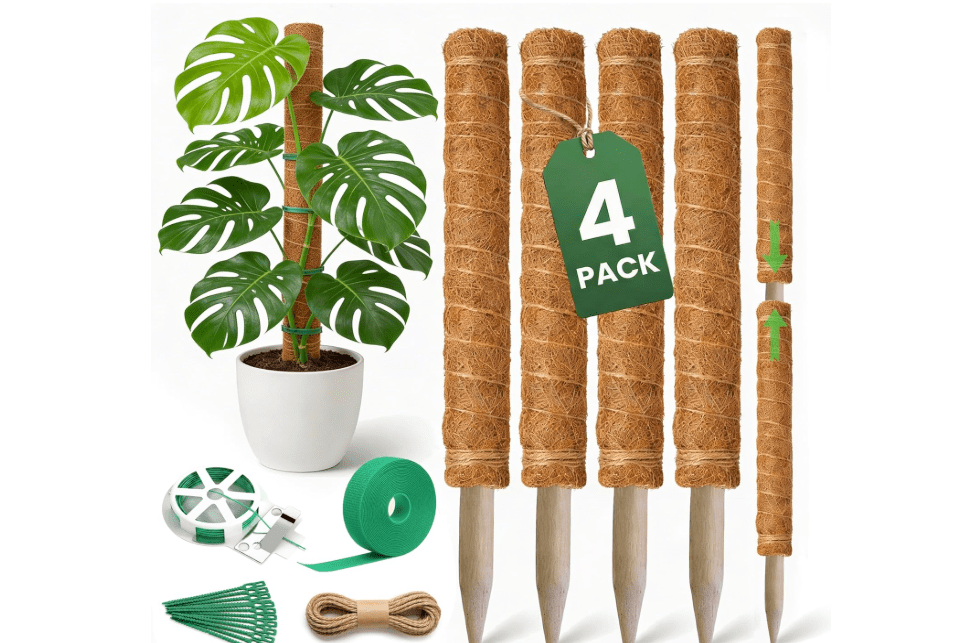
Top Pick: Stackable Coco Coir Plant Poles
Product Description: For those who love the look of natural fibers but want less maintenance than sphagnum, coco coir is a fantastic alternative. These poles consist of a sturdy, hollow PVC core wrapped securely in extracted coconut shell fibers. The brilliant modular design means that as your plant outgrows its current height, you simply insert a new pole into the top of the existing one.
-
Price:
-
Key Features & Benefits: Modular and stackable for continuous growth. The PVC core guarantees that the portion resting in the damp soil will never rot or compromise soil health.
-
Pros & Cons:
-
Pros: Extremely durable, neat and tidy appearance, easy to extend without repotting.
-
Cons: Does not retain moisture nearly as well as moss, meaning aerial roots may require manual tying to stay attached.
-
-
Amazon Ratings & Reviews: Holding strong at 4.7 stars. Amazon customers rave about the structural integrity, consistently highlighting the “sturdiness” and how “easy it is to extend.”
-
Why it’s a Good Choice: It provides exceptional structural support with a clean, natural aesthetic, all without the constant maintenance of keeping it wet.
-
Ideal Use Case: Pothos, climbing Aroids, and fast-growing vines that need instant vertical lift.
3. Powder-Coated Steel
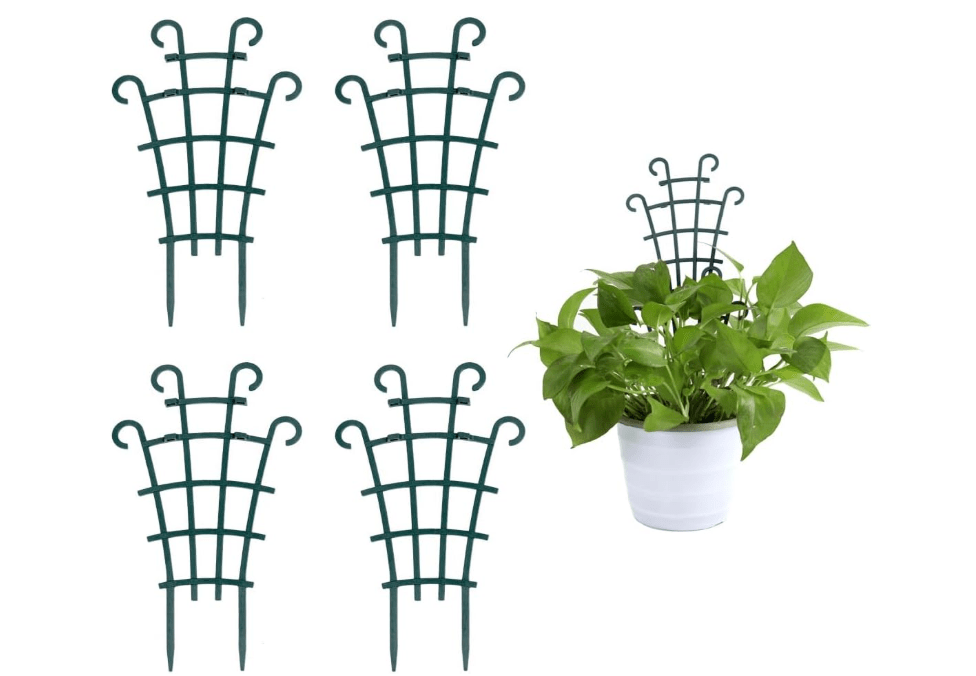
Top Pick: Geometric Mini Metal Trellis Set
Product Description: If you want something that feels modern, architectural, and completely indestructible, powder-coated steel is the ultimate choice. These sleek, minimalist metal grids and arches are dipped in a protective powder coating to prevent rust, offering a striking contrast against lush green foliage.
-
Price: $7.99
-
Key Features & Benefits: Incredible strength-to-weight ratio. The rust-resistant coating ensures longevity, and the smooth surface requires absolutely zero maintenance.
-
Pros & Cons:
-
Pros: Heavy-duty durability, striking minimalist aesthetic, preserves soil health (completely inert).
-
Cons: Offers no moisture retention for aerial roots; metal can get hot if left in direct, intense summer sun.
-
-
Amazon Ratings & Reviews: A highly rated category (4.8 stars) with buyers loving the visual appeal. Top reviews showcase feedback on the “minimalist aesthetic,” “heavy-duty support,” and how elegantly they frame a plant.
-
Why it’s a Good Choice: It offers the best long-term financial value. You buy it once, and it will outlast the plant without ever rotting or degrading in moist soil.
-
Ideal Use Case: Hoyas, Jasmine, Ivy, and any dense plant that needs serious structural framing.
4. Natural Bamboo
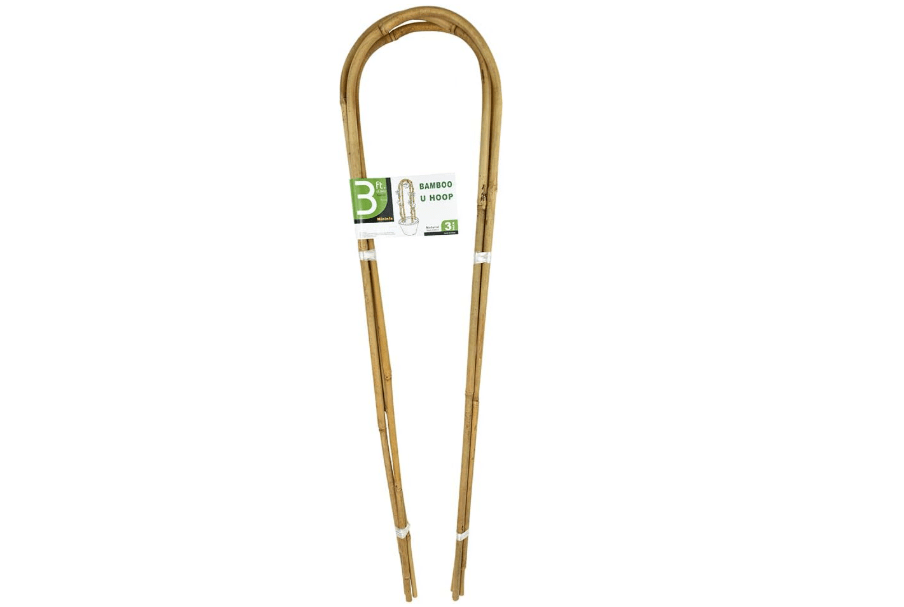
Top Pick: U-Hoop Bamboo Trellis Stakes
Product Description: Sometimes, the classic solutions are still the best. These U-shaped bamboo hoops are crafted by heat-bending natural bamboo into a continuous arch. They provide a beautifully organic, eco-friendly frame that blends seamlessly with your plant’s foliage.
-
Price: $17.99
-
Key Features & Benefits: 100% biodegradable, incredibly lightweight, and visually subtle so the plant remains the star of the show.
-
Pros & Cons:
-
Pros: Highly affordable, environmentally friendly, and flexible.
-
Cons: Because it is untreated natural wood, it will eventually degrade and rot at the soil line over a few years, requiring replacement.
-
-
Amazon Ratings & Reviews: A solid 4.5-star average. Buyers repeatedly mention the “unbeatable value for money” and the “natural, unobtrusive look” that doesn’t distract from the plant.
-
Why it’s a Good Choice: It is a tried-and-true, inexpensive material for basic vertical support that looks at home in any terracotta or ceramic pot.
-
Ideal Use Case: Morning glories, lightweight vining houseplants, and fast-growing annuals.
5. Laser-Cut Wood
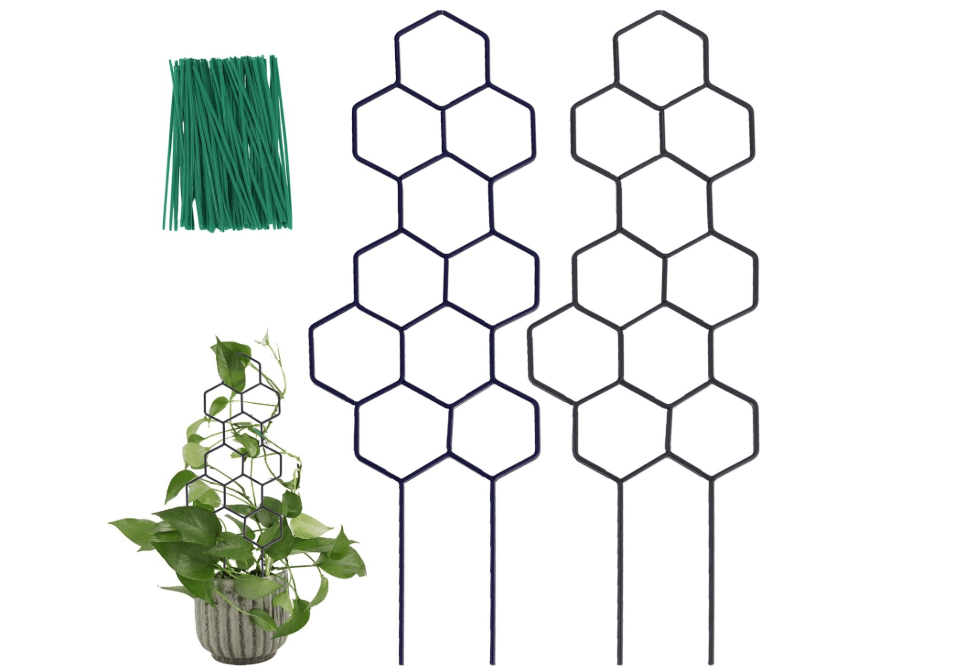
Top Pick: Honeycomb Wooden Houseplant Trellis
Product Description: For the interior design enthusiast, laser-cut wood bridges the gap between gardening tool and functional art. These trellises are precision-cut into intricate geometric (like honeycombs) or botanical designs. They instantly elevate the look of any standard houseplant, making them incredibly photogenic.
-
Price: $9.99
-
Key Features & Benefits: Uniquely artistic designs. The flat wood surfaces provide great resting spots for broad leaves. They can also be custom-painted or stained to match your home decor.
-
Pros & Cons:
-
Pros: Serves as a beautiful decorative element; highly giftable; sturdy structure.
-
Cons: Untreated wood can warp or develop mildew if kept in constantly damp soil or high-humidity terrariums.
-
-
Amazon Ratings & Reviews: Averaging 4.7 stars. Reviewers are obsessed with the aesthetics, frequently praising it as the “perfect gift for plant lovers” and noting the “beautiful craftsmanship.”
-
Why it’s a Good Choice: It turns a basic potted plant into a statement piece. If you want your plant to look professionally styled for your living room (or your next social media post), this is the material to choose.
-
Ideal Use Case: Small to medium trailing plants like String of Hearts, small Pothos, or Peperomias.
6. Clear Acrylic
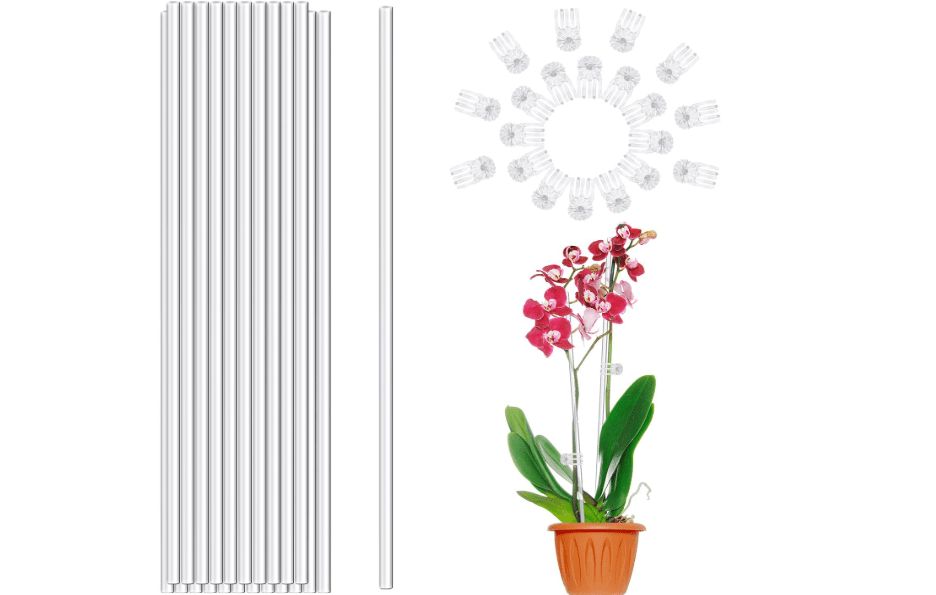
Top Pick: Invisible Acrylic Plant Support Stakes
Product Description: For the ultimate minimalist, clear acrylic offers support without the visual clutter. These transparent, shatter-resistant stakes and mini-trellises are designed to disappear into the foliage, creating the illusion of a free-standing, floating plant.
-
Price: $8.99
-
Key Features & Benefits: Completely clear and non-intrusive. Acrylic is 100% waterproof and rot-proof, ensuring a completely sterile environment for the soil.
-
Pros & Cons:
-
Pros: Does not detract from the plant’s natural beauty; completely immune to water damage; easy to wipe clean.
-
Cons: Can scratch easily if rubbed against abrasive pots; generally limited to smaller sizes and not suited for massive, heavy vines.
-
-
Amazon Ratings & Reviews: Holding a 4.6-star average. Buyers love the clean look, highlighting comments on the “invisible look” and how it provides a “sleek, modern aesthetic.”
-
Why it’s a Good Choice: Perfect for those who want the foliage and blooms to be the absolute sole focus, without any structural hardware stealing the spotlight.
-
Ideal Use Case: Orchids, small Hoyas, delicate vines, and any setup where visual cleanliness is paramount.
7. Bendable Wire / Copper
Top Pick: DIY Shaping Copper Wire Trellis
Product Description: Bring an industrial-chic vibe to your indoor garden with thick but pliable copper or galvanized wire. This material can be hand-bent into completely custom shapes—from simple circles and spirals to hearts and abstract squiggles—giving you total creative control.

-
Price: $89.99
-
Key Features & Benefits: Unmatched customizability. Copper is naturally anti-microbial, which can actually help deter certain soil-borne fungi. The metallic finish adds a unique textural contrast to green leaves.
-
Pros & Cons:
-
Pros: Highly customizable shape; unique metallic aesthetic; strong but flexible.
-
Cons: Copper will develop a natural patina (a green/brown tint) over time when exposed to water and oxygen, which some may view as messy rather than rustic.
-
-
Amazon Ratings & Reviews: Averaging 4.7 stars. Reviewers focus on the fun of personalization, with praise for “creative shapes” and how it provides a surprisingly “sturdy hold” despite being bendable.
-
Why it’s a Good Choice: It allows you to mold the support exactly to your plant’s unique growth pattern, rather than forcing the plant to conform to a rigid structure.
-
Ideal Use Case: String of Turtles, Ivy, customized desk plants, and any vine that looks best wrapped in a specific shape.
8. Plastic / PVC
Top Pick: Modular PVC Plant Lattice
Product Description: When you need pure, unadulterated utility, plastic and PVC deliver. These weather-resistant, snap-together lattice systems are the workhorses of the plant world. While they might lack the romance of natural materials, they make up for it in sheer durability and functionality.

-
Price:
-
Key Features & Benefits: Extremely durable and entirely immune to rot or decay. Many systems are highly versatile, allowing you to snap pieces together to build wide grids or tall towers.
-
Pros & Cons:
-
Pros: Exceptionally long-lasting; budget-friendly; easily washable and sterilizable.
-
Cons: Can look synthetic, bulky, or slightly cheap compared to natural woods or metals.
-
-
Amazon Ratings & Reviews: A practical 4.5 stars. Buyers prioritize function over form here, mentioning high ratings for “easy assembly,” “durability,” and “excellent value.”
-
Why it’s a Good Choice: It is the most practical, low-maintenance option for heavy, consistently wet soil environments where other materials would quickly break down.
-
Ideal Use Case: Heavy utility use, propagation stations, or supporting dense foliage where the trellis is completely hidden by leaves.
9. Macrame / Cotton Rope
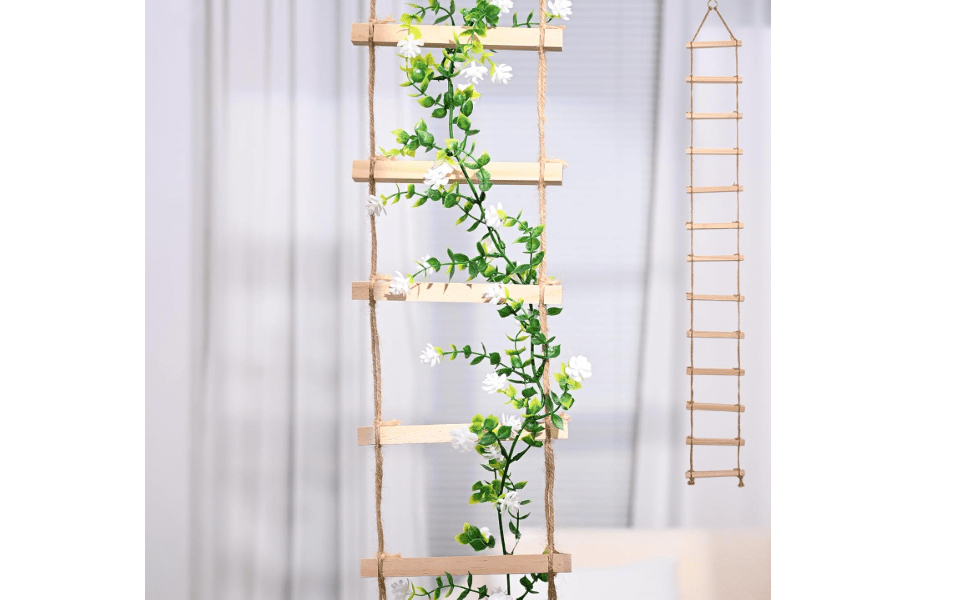
Top Pick: Woven Cotton Wall Trellis
Product Description: Turn your plant into a piece of woven wall art. This trellis features thick, hand-woven cotton cord strung intricately over a wooden dowel, creating a soft, flexible climbing net that hangs flush against a wall or window.
-
Price: $14.99
-
Key Features & Benefits: Brings an undeniable bohemian aesthetic to any room. The soft cotton is incredibly gentle on delicate, easily bruised stems, and it brilliantly utilizes empty vertical wall space.
-
Pros & Cons:
-
Pros: Beautiful boho vibe; excellent for covering large, blank wall areas; very gentle on plants.
-
Cons: Not freestanding (must be hung); it can be incredibly difficult to untangle established plants when it comes time for repotting.
-
-
Amazon Ratings & Reviews: Highly rated at 4.8 stars for decor impact. Customers frequently showcase photos in their reviews, with feedback focusing on “room-transforming decor” and the “softness” of the material.
-
Why it’s a Good Choice: It successfully merges large-scale wall art with functional plant support, turning a trailing plant into a living tapestry.
-
Ideal Use Case: Training large vining plants (like mature Scindapsus or long Pothos) across a living room wall or large window.
10. Jute Twine / Netting
Top Pick: Natural Jute Twine Climbing Net
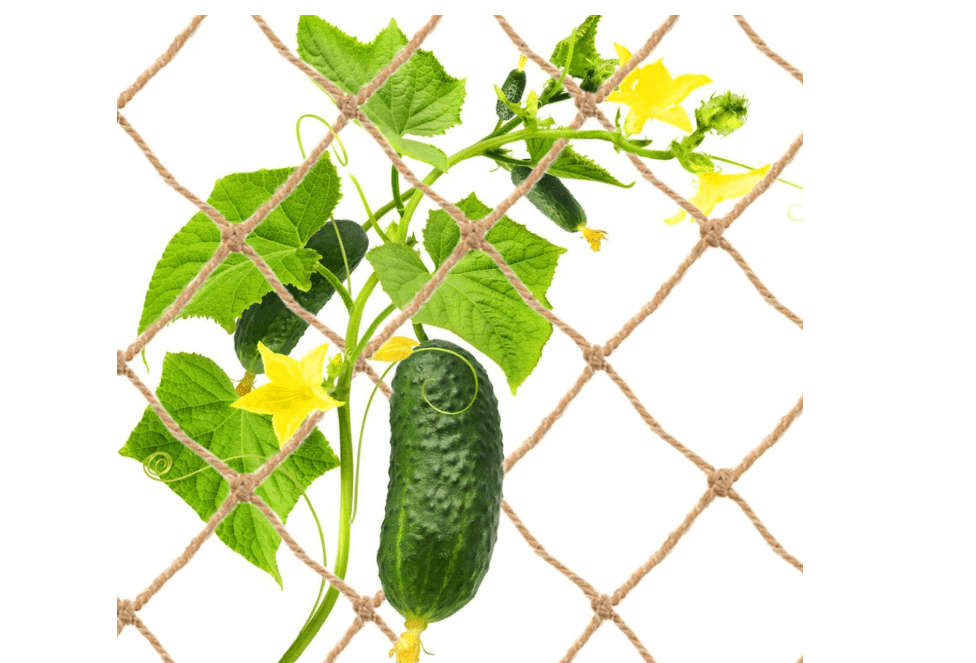
Product Description: For the aspiring indoor jungle creator, woven natural jute fibers offer massive scale on a tiny budget. Designed to hang from the ceiling, a curtain rod, or a large frame, this netting provides a sprawling, multi-directional grid for aggressive climbers.
-
Price:
-
Key Features & Benefits: Provides a raw, natural feel that fits perfectly with bohemian or rustic decor. It is incredibly flexible and covers a wider horizontal area than any rigid stake.
-
Pros & Cons:
-
Pros: Very inexpensive for the amount of coverage; fantastic for wide, horizontal, and vertical growth.
-
Cons: Jute can fray and weaken over time; it lacks rigid structural support, relying entirely on tension from where it’s hung.
-
-
Amazon Ratings & Reviews: A solid 4.4 stars. Buyers highlight the “rustic charm” and frequently note it as being “great for indoor jungles” and sunrooms.
-
Why it’s a Good Choice: It is the absolute best budget material for creating a massive, sprawling indoor plant wall without spending a fortune on heavy hardware.
-
Ideal Use Case: Fast-growing, lightweight climbers wrapping around windows, indoor balconies, or separating a room with a “living curtain.”
V. Expert Tips for Installing Your House Plant Trellis
Choosing the right material is only half the battle; proper installation ensures your plant actually benefits from the support.
-
Install Early to Protect Roots: Always try to install your trellis during repotting. Shoving a thick wooden stake or metal prong into an established, soil-filled pot can sever vital root systems. Place the trellis in the empty pot first, then pack the soil and plant roots around it for maximum stability.
-
Use the Right Ties: Never force a plant to attach. Gently guide the vines using soft plant velcro, floral tape, or natural twine. Avoid using harsh metal wire (like twist ties), which can cut into expanding stems as the plant grows.
-
Mind Your Maintenance: Keep your trellis clean. Wipe down acrylic or metal supports periodically to remove dust and prevent pest buildup. If using wood, occasionally check the soil line for soft spots to catch rot before it spreads to the plant.
VI. Conclusion
Upgrading your plant support is one of the fastest ways to encourage larger leaves, healthier growth, and a more stunning visual display. Remember that the right material is a balance of your plant’s specific health needs (like moisture and weight capacity) and your own aesthetic preferences.
Our Top Recommendations:
-
Best Overall: Sphagnum Moss (unbeatable for tropical plant health and aerial root growth).
-
Most Durable: Powder-Coated Steel (a buy-it-for-life solution).
-
Best Aesthetic: Laser-Cut Wood or Clear Acrylic (perfect for design-conscious minimalists).
Don’t let your beautiful vines struggle on the floor. Assess your plant’s needs, click through to Amazon to check current prices on these top-rated materials, and start building the lush, vertical indoor jungle of your dreams today!