
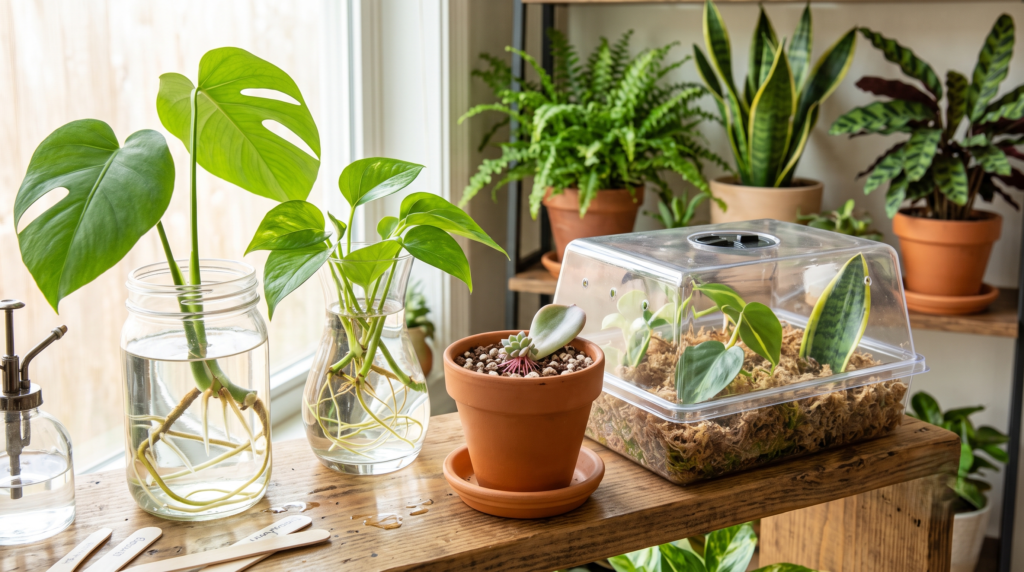
Have you ever carefully snipped the perfect node from a rare Monstera, placed it lovingly on your windowsill, only to find it crispy, yellowed, and severely wilted just two days later? 🥺 It is a heartbreaking scenario that nearly every plant parent faces at least once on their propagation journey.
Getting the lighting right is the most critical—yet frequently misunderstood—step in plant multiplication. When you master the precise sunlight requirements for newly propagated plants, you unlock the secret to rapid root growth without the devastating risk of scorching your delicate cuttings.
In my years of propagating hundreds of tropical houseplants, succulents, and woody shrubs, I’ve learned that light is a double-edged sword for a fresh cutting. Cuttings absolutely need energy from light to grow roots, but because they have no roots yet, they lack the tools to hydrate themselves if that light becomes too intense.
In this comprehensive guide, we are going to dive deep into exactly how much light your cuttings really need. From understanding the delicate biology of a rootless stem to setting up the ultimate foolproof grow light station, you will learn how to create the perfect microclimate for explosive root growth. Let’s turn those vulnerable cuttings into thriving new plants! 🧑🌾
🪴 Understanding the Vulnerability of Cuttings
To understand how much light a cutting needs, you first have to understand what is happening inside the plant at a cellular level the moment you snip it from the mother plant. A fresh cutting is essentially on life support, fighting a ticking clock to produce roots before it starves or dehydrates.
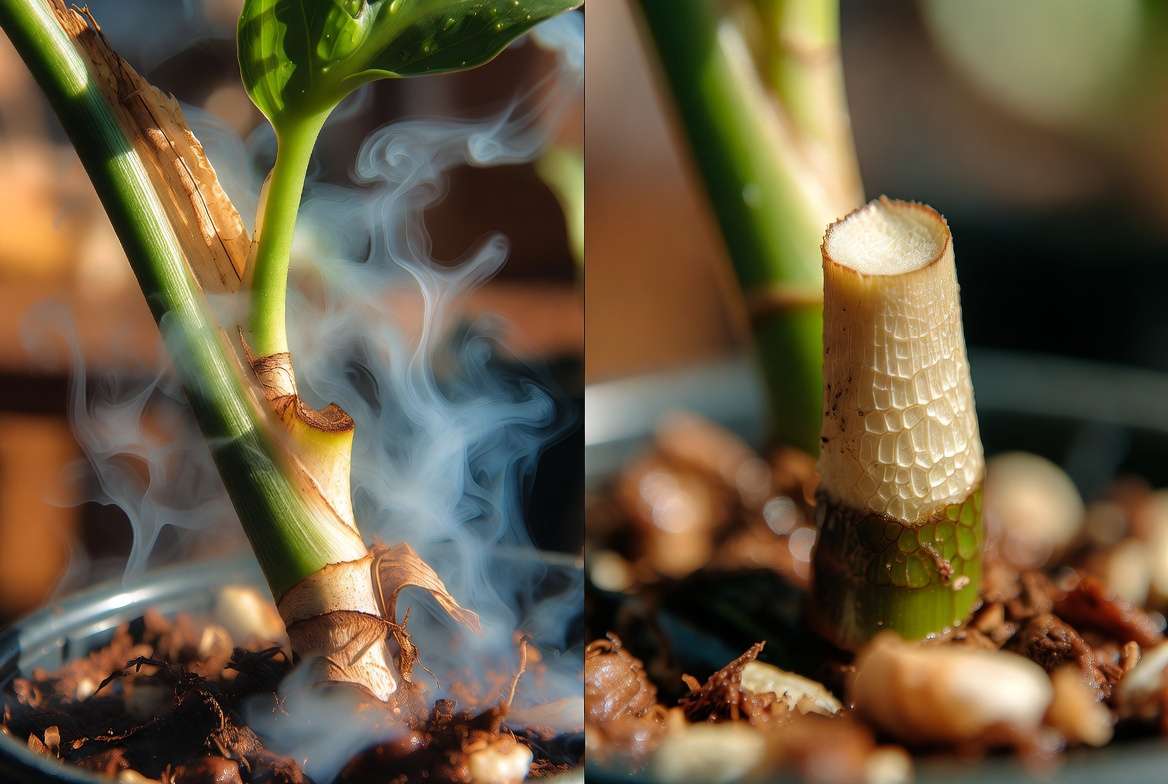
The Photosynthesis Paradox 🧬
Plants produce their own food through photosynthesis, a process powered directly by sunlight. When a plant needs to push out new roots, it requires a massive amount of cellular energy. Furthermore, light triggers the production of auxins, the essential plant hormones responsible for root development.
Herein lies the paradox: your cutting desperately needs sunlight to generate the energy and hormones required to grow roots. However, sunlight also creates heat and triggers a process called transpiration.
Transpiration vs. Hydration 💧
Transpiration is the plant equivalent of sweating. When light hits the leaves, the tiny pores on the undersides (called stomata) open up to take in carbon dioxide for photosynthesis. As they open, moisture evaporates from the leaves into the surrounding air.
A fully rooted, mature plant simply pulls more water up from the soil to replace what was lost. A fresh cutting, however, has no root system. If you place a newly propagated plant in direct sunlight, it will transpire (sweat) water much faster than its bare stem can absorb it. The result? The cells collapse, the leaves turn crispy, and the cutting dies of dehydration before a single root can form. 🥀
💡 Pro Tip: This is exactly why propagation boxes and humidity domes are so popular among experts! By placing a clear cover over your cuttings, you trap the evaporated moisture, keeping the ambient humidity near 100%. This drastically slows down transpiration, allowing the cutting to safely process ambient light without drying out. 🌡️
☀️ The Golden Rule: Ideal Sunlight Requirements for Newly Propagated Plants
If direct sun cooks a cutting, and total darkness starves it of energy, where is the sweet spot? The golden rule of propagation is to provide bright, indirect light. But what does that actually mean in practice?
What is “Bright, Indirect Light” Anyway? 🌤️
“Bright indirect light” is a term thrown around in almost every plant care article, but it can be notoriously difficult to measure. For cuttings, bright indirect light means the plant has a wide, unobstructed view of the sky, but the actual rays of the sun never directly touch the foliage.
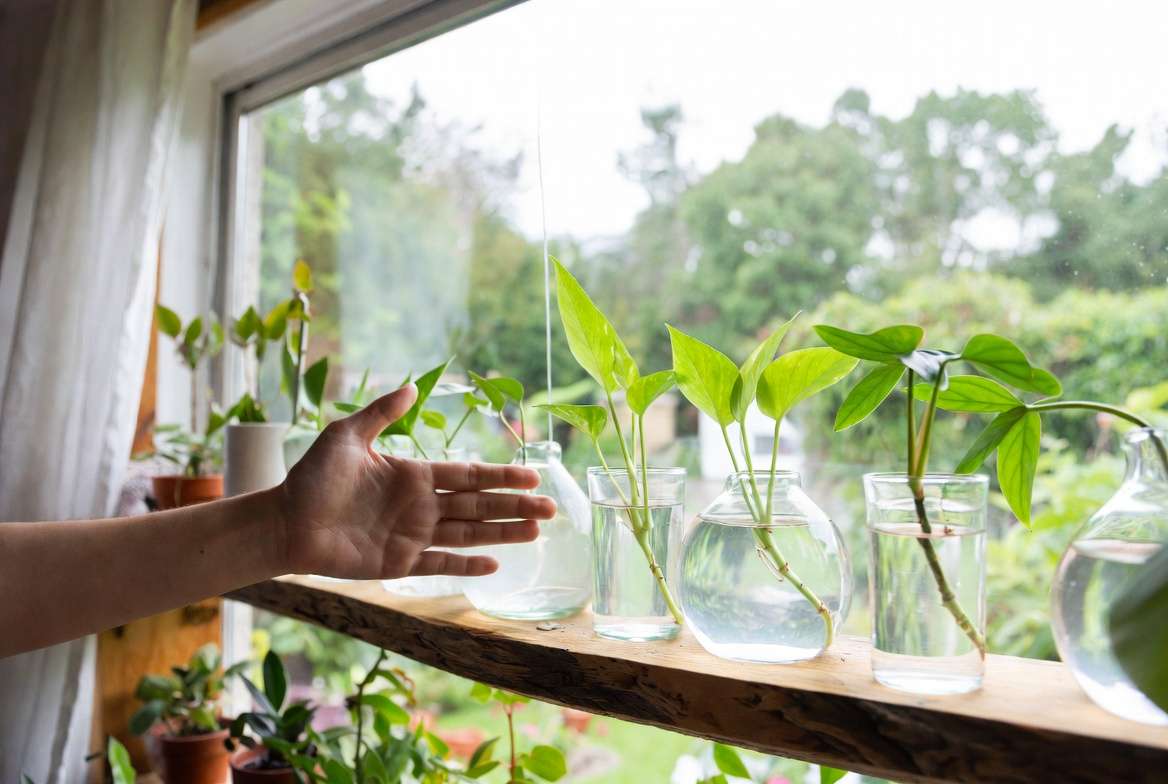
The Shadow Test: If you aren’t sure if your propagation station is too bright, hold your hand about 12 inches above the cuttings during the brightest part of the day.
-
If your hand casts a sharp, dark, highly defined shadow, the light is too direct and harsh. Your cuttings will likely scorch.
-
If your hand casts a soft, fuzzy, barely-there shadow, the light is perfectly indirect. This is the ultimate sweet spot for rooting.
-
If you cast no shadow at all, the area is too dim, and root growth will stagnate.
Morning Sun vs. Afternoon Sun 🌅
Not all windows are created equal when it comes to propagation. The direction your window faces dictates both the intensity and the heat of the sunlight.
-
East-Facing Windows (The Holy Grail): East windows provide gentle, cool morning sunlight. Because the morning sun lacks the intense heat of the afternoon, an East-facing windowsill is often the absolute best natural spot for propagating houseplants.
-
North-Facing Windows (Safe but Slow): North windows never receive direct sun rays. While they are incredibly safe from scorching, the light might be slightly too weak, resulting in a much slower rooting process.
-
South & West-Facing Windows (Handle with Care): These windows receive intense, hot, direct afternoon sunlight. If you place a glass jar of water cuttings directly on a South windowsill, the water will literally heat up, cooking the stems. If you must use these windows, you must filter the light using sheer white curtains, or pull the cuttings several feet back into the room. 🪟
Distance Matters: The Foot-Candle Formula 📏
Light intensity drops significantly the further you move away from a window (a principle known as the inverse-square law). If you are propagating in a room with a bright South or West-facing window, do not place the cuttings on the sill. Instead, place them on a table or shelf 3 to 5 feet away from the glass. At this distance, the harsh UV rays have scattered, providing the high-energy ambient light your cuttings need to produce auxins, without the thermal heat that causes scorching.
💡 Grow Lights: The Foolproof, Scorching-Free Alternative
If you want to completely remove the guesswork from your sunlight requirements, the secret weapon of professional botanists and seasoned hobbyists is artificial lighting.
Why Experts Love LED Grow Lights for Cuttings 🔌
Relying on the sun means dealing with cloudy days, changing seasons, and shifting shadows. LED grow lights provide a 100% controlled environment. Because modern LED lights emit specific spectrums of light (usually full-spectrum white or a red/blue mix) with almost zero heat output, you completely eliminate the risk of thermal scorching. Your cuttings get all the photosynthetic energy they need to push out roots, while staying perfectly cool and hydrated.
Recommended Settings for Propagations ⏱️
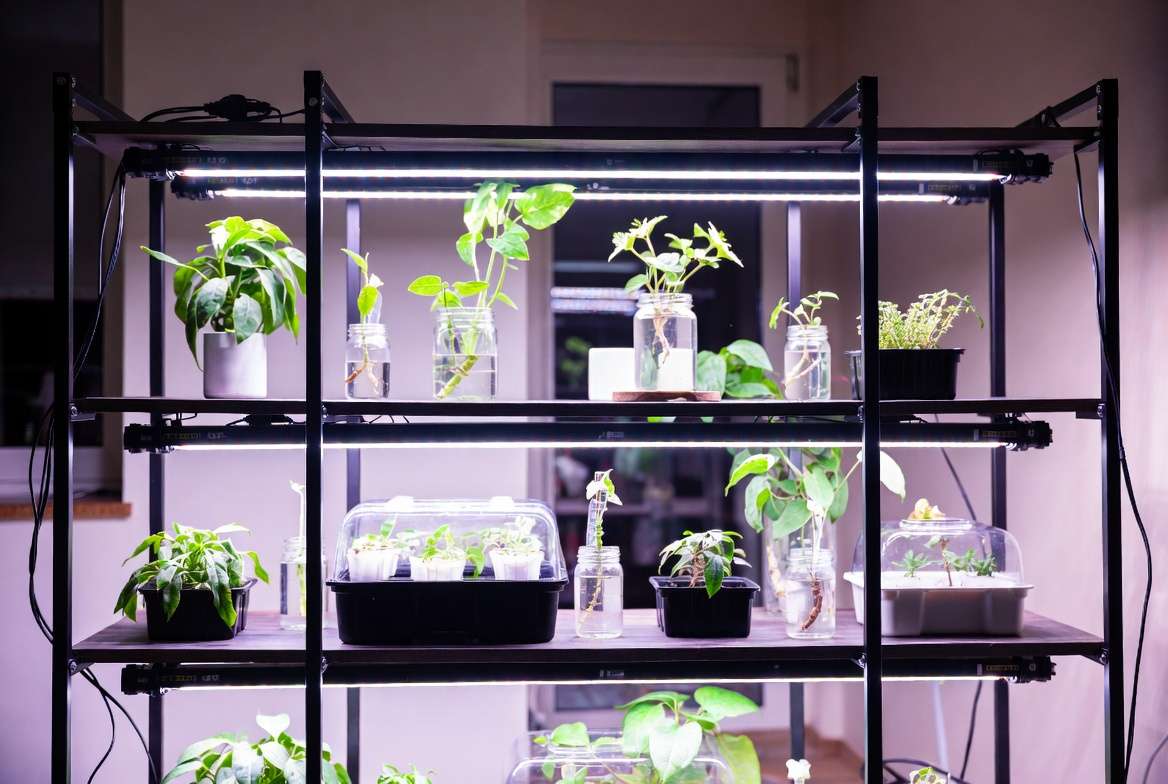
If you are setting up a propagation shelf with grow lights, you cannot treat your cuttings the same way you treat mature, fruiting plants. They need a gentler touch:
-
Duration (The Photoperiod): Run your grow lights for 12 to 14 hours a day. Cuttings need a period of absolute darkness (respiration) to process the energy they gathered during the day and physically push out new root cells. Never leave lights on 24/7.
-
Intensity: You want a moderate intensity. If you are using a light meter, aim for roughly 1,000 to 1,500 foot-candles (FC) or a PPFD of about 100 to 150 µmol/m²/s.
-
Distance: Keep standard LED strip lights or bulbs about 12 to 18 inches above the highest leaf of your cuttings. If the leaves start curling downward or turning slightly red/purple, the light is too close. 📏
📉 Troubleshooting: Is Your Propagation Getting the Wrong Light?
Even with the best intentions, plant environments fluctuate. Being able to read your cutting’s body language is a crucial skill for any plant enthusiast. If your sunlight requirements for newly propagated plants are slightly off, the cutting will tell you.
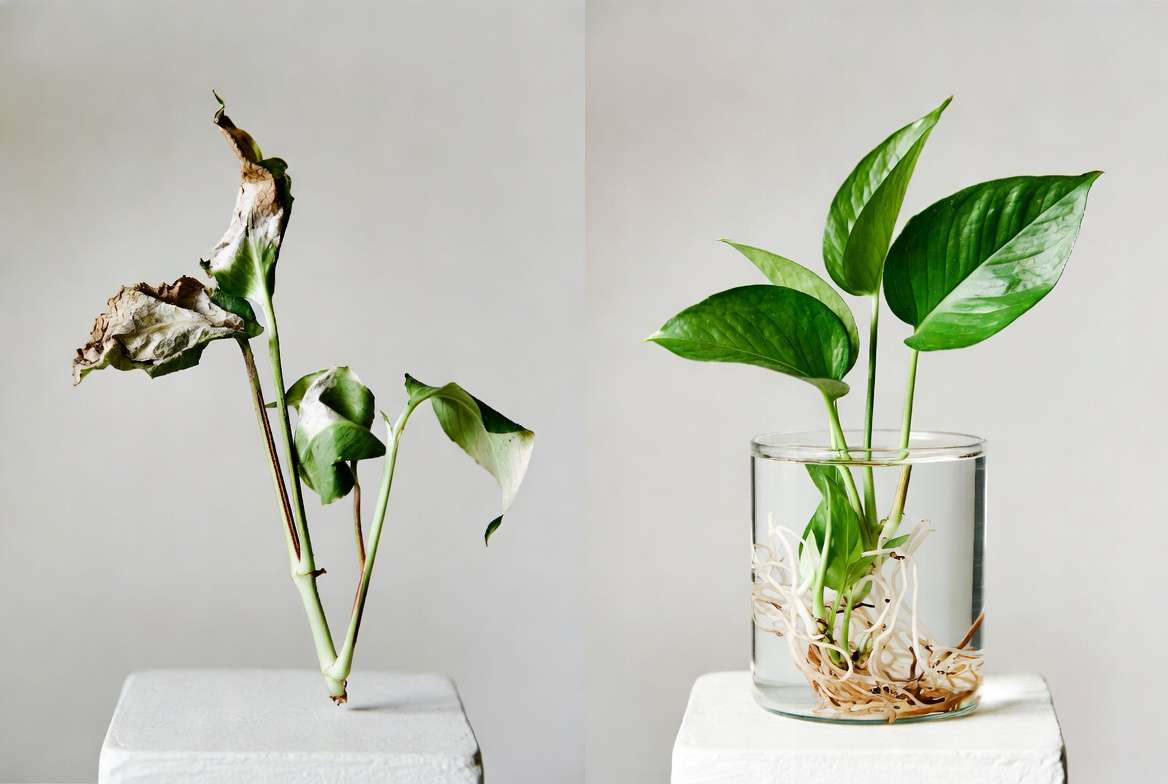
🥵 Signs of Too Much Sun (Scorching)
When a cutting receives too much direct sunlight, the damage happens rapidly—often within a single afternoon. Look out for these critical warning signs:
-
Crispy, Brown Edges: The leaf margins are the first to lose moisture. If the edges are turning brown and brittle, the plant is transpiring faster than it can hydrate.
-
Bleached or Washed-Out Colors: Sunburn breaks down chlorophyll. If your vibrant green Pothos cutting suddenly looks pale, yellowed, or silvery-white in the center of the leaf, it is getting cooked by UV rays.
-
Severe Daytime Wilting: A little limpness right after cutting is normal (transplant shock). However, if the cutting perks up at night but completely collapses and wilts dramatically during the brightest part of the day, the light is far too intense.
🥀 Signs of Too Little Light (Stagnation)
Because plant parents are often terrified of scorching their cuttings, they overcompensate by hiding them in dark corners. This leads to an entirely different set of problems:
-
Zero Root Growth: If it has been 4 to 6 weeks and your Monstera node hasn’t produced a single white root bump, a lack of photosynthetic energy is the most likely culprit.
-
Etiolation (Leggy Growth): If the cutting pushes out new leaves before roots, and those leaves are incredibly tiny, pale, and spaced far apart on a thin, stretching stem, the plant is desperately reaching for a light source.
-
Stem Rot and Mold: Low light environments usually equal cool, stagnant air. Without sunlight to drive the plant’s metabolism and help evaporate excess moisture, opportunistic bacteria and fungi thrive. Mushy, black stems are a classic symptom of a dark, excessively damp environment.
🚑 Expert Insight Box: The 24-Hour Intervention If you spot sunburn, immediately move the cutting 3 feet further back from the window and mist the foliage lightly to increase local humidity. If you spot rot from low light, remove the cutting, sterilize your pruners, snip off the rotting black tissue back to healthy green stem, dip it in a weak hydrogen peroxide solution, and move it to a brighter, warmer location!
🧪 Does the Propagation Medium Change Light Needs?
The short answer? Yes, absolutely. The substrate you choose for your cuttings heavily influences how light affects the root zone.
Water Propagation 🚰
Water propagation in clear glass jars is aesthetically pleasing and allows you to watch root development in real-time. However, clear glass acts like a magnifying lens. If direct sunlight hits a water propagation vessel, the water temperature will spike rapidly, essentially poaching your cutting’s stem. Furthermore, bright light hitting standing water is a recipe for algae blooms. While a little green algae won’t instantly kill a cutting, it competes for oxygen in the water. Keep water propagations in bright, but strictly indirect light to keep the water cool and clear. 🦠
Soil, Perlite, and LECA 🪨
When you propagate directly in an opaque pot filled with potting soil, perlite, or LECA (Lightweight Expanded Clay Aggregate), the root zone is completely shielded from the sun. This is highly beneficial because roots naturally prefer darkness (phototropism). Without light hitting the subterranean zone, you drastically reduce the risk of algae, and the opaque walls insulate the developing roots from rapid temperature swings.
Sphagnum Moss and Perlite Prop Boxes 🌿
Clear plastic storage bins filled with damp sphagnum moss or perlite are the gold standard for propagating rare aroids. These boxes create a perfect high-humidity microclimate. However, they are essentially miniature greenhouses. Warning: The greenhouse effect inside a sealed prop box magnifies sunlight and traps thermal heat. Even 30 minutes of direct afternoon sun hitting a sealed propagation box can cause the internal temperatures to soar past 100°F (38°C), literally cooking your expensive plant nodes into a mushy soup. 🍳 Keep prop boxes exclusively under LED grow lights or deep in the ambient shade of a bright room.
🌵 Adapting Light for Different Plant Categories
Different plant families evolved in vastly different environments, and their newly propagated cuttings still hold onto those genetic preferences.
Tropical Houseplants (Monstera, Pothos, Philodendrons) 🌴
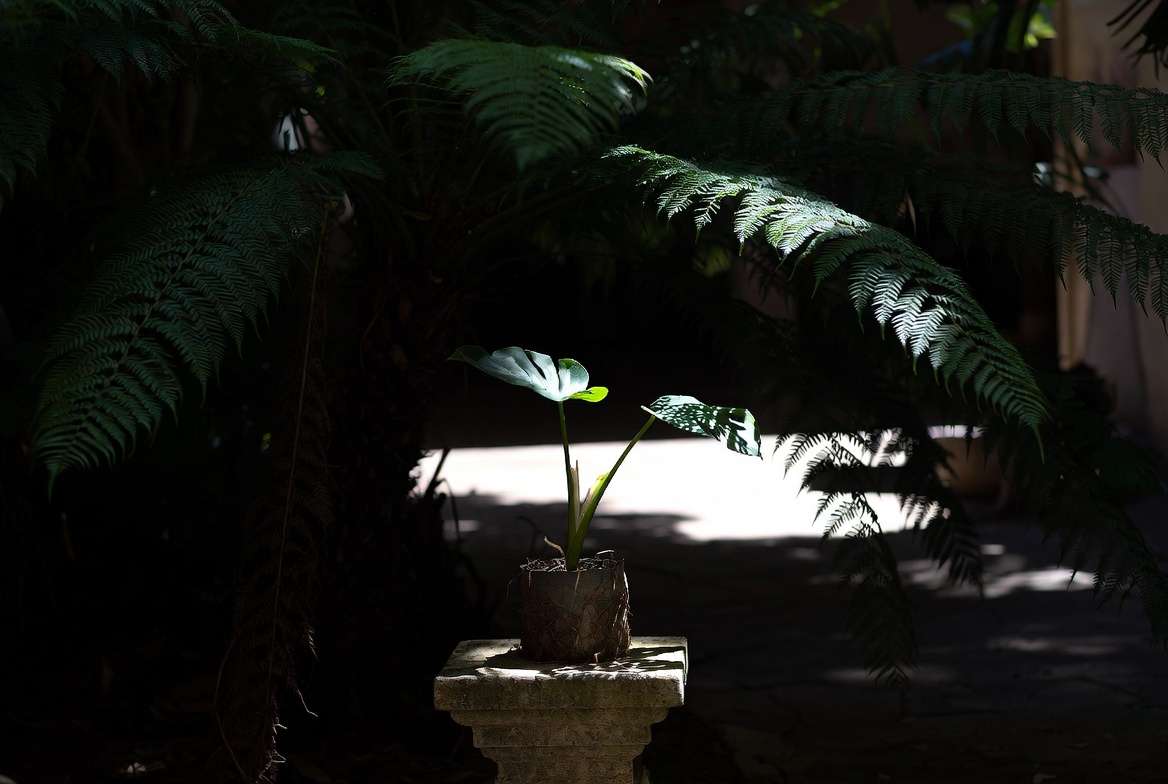
Most of our beloved houseplants naturally grow on the jungle floor, sheltered by the dense canopy above. Their cuttings thrive in heavily dappled light. They need the bright ambient glow of a room but should never feel the direct warmth of the sun on their leaves.
Succulents and Cacti 🏜️
There is a massive misconception that because mature succulents thrive in the blazing desert sun, their leaf propagations should be thrown onto a scorching windowsill. This is completely false! While a succulent leaf contains a lot of stored water, it will still burn and shrivel without a root system to replenish it. Succulent cuttings require bright shade—a spot that is extremely bright but entirely protected from direct sunrays until a robust, pink root system forms.
Woody Shrubs and Outdoor Perennials 🌳
When taking hardwood or softwood cuttings from outdoor plants like Hydrangeas, Roses, or Lavender, outdoor propagation beds are often used. The best location for an outdoor nursery bed is beneath the canopy of a mature, leafy tree. The dappled shade provides the perfect balance of light for photosynthesis while protecting the bare stems from the harsh midday summer sun.
🔄 The “Hardening Off” Phase: Transitioning to Normal Light
Congratulations! Your cutting has successfully pushed out 2 to 3 inches of healthy, robust roots. But your job isn’t quite done. You cannot simply take a plant that has been coddled in soft, indirect light and immediately place it in its permanent, sunny home. You must harden it off.
What is Hardening Off? 🛡️
Hardening off is the process of slowly acclimating your newly rooted plant to its mature environmental conditions (harsher light, lower humidity, and temperature fluctuations). Moving too fast causes severe transplant shock and sudden leaf drop.
The Step-by-Step Acclimation Schedule 📅
Follow this gradual schedule to transition your rooted cuttings safely:
-
Days 1-3: Move the plant slightly closer to its permanent light source, or if it was in a high-humidity propagation box, crack the lid just an inch to let drier air in.
-
Days 4-7: Remove the humidity dome completely. If the plant species requires direct sun (like a succulent or outdoor shrub), introduce just 1 hour of gentle morning sun, keeping it shaded for the rest of the day.
-
Week 2: Gradually increase the light exposure by an hour every couple of days. Watch the leaves closely; if they start to droop heavily, pull the plant back a step for a few more days before trying again.
🤔 Frequently Asked Questions (FAQs)
Can newly propagated plants survive in low light? 🌑 Survive? Sometimes. Thrive? No. While cuttings might stay green in low light for months, they will lack the energy required to divide cells and push out new roots. Eventually, low light leads to a slow death via stem rot.
Will a regular desk lamp work for plant cuttings? 🛋️ A standard incandescent or warm-white reading lamp will not provide the correct light spectrum (blue and red wavelengths) for photosynthesis. You must use a dedicated LED grow light bulb or rely on natural window light.
Should I cover my cuttings to protect them from the sun? 🛍️ If your cuttings are accidentally in a spot with direct afternoon sun, yes, you should filter the light. However, do not use opaque covers. Use a sheer white curtain to diffuse the light, ensuring they still receive the bright ambient glow they need.
Why did my water propagation turn green in the sun? 🤢 Direct or overly bright sunlight hitting standing water causes naturally occurring algae spores to bloom. To fix this, change the water, scrub the glass jar, and move the vessel to a location with slightly softer, indirect light.
✨ Conclusion
Mastering the sunlight requirements for newly propagated plants is the ultimate key to transforming your home into a thriving indoor jungle. Remember the fundamental rule: your cuttings are in a delicate race against time, needing the powerful energy of bright, indirect light to grow roots, without the intense heat of direct sun that causes scorching and dehydration. 📝
Whether you are utilizing an East-facing windowsill, perfectly positioning an LED grow light, or carefully managing a humid propagation box, finding that sweet spot is incredibly rewarding. It takes a little practice to read the signs of your specific microclimate, but once you do, you unlock a lifetime of healthy, free plants. 🪴💚











