
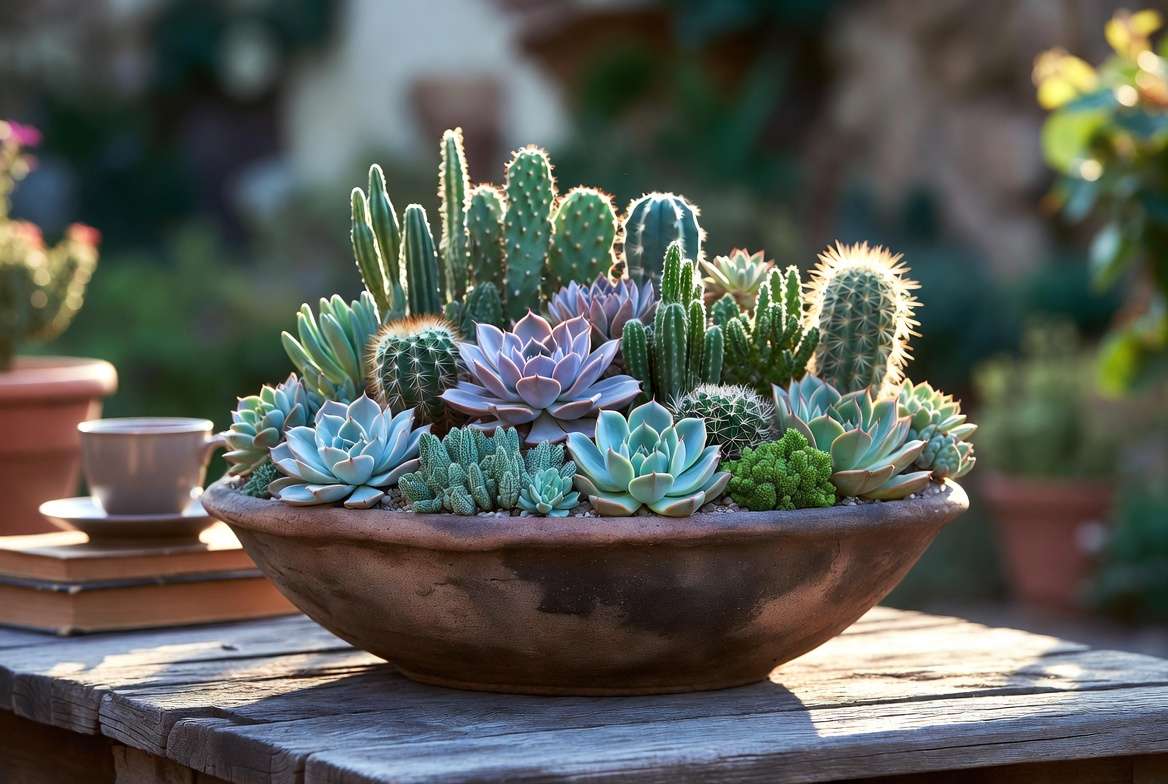
We have all been there. You walk through your local garden center or scroll through Pinterest, and you see it: a breathtaking, perfectly styled bowl overflowing with plump, colorful succulents and striking, spiky cacti. You buy a few of your favorites, bring them home, and pot them up together to create your own desert masterpiece. It looks incredible on day one! But a month later? The cactus is turning to mush, the succulents are shriveling, and your beautiful arrangement is slowly dying. 🥺
If this sounds familiar, take a deep breath. You are not a bad plant parent! The truth is, combining cacti and succulents in arrangements is notoriously tricky because these plants, despite their similar appearances, often have wildly different survival needs.
However, as a plant care specialist who has rescued countless overwatered cacti and dehydrated Echeverias over the years, I can assure you that building a mixed planter that actually thrives is 100% possible. You just need to know a few essential horticultural secrets. In this comprehensive guide, I am going to walk you through exactly how to pair, plant, and care for mixed desert arrangements so they stay lush, vibrant, and perfectly healthy for years to come. ✨
2. 🏜️ The Big Question: Can Cacti and Succulents Really Live Together?
Before you start filling up a pot with dirt, we need to address the elephant in the room. Botanically speaking, can these plants actually co-exist?
To understand this, we need a quick botanical breakdown: All cacti are succulents, but not all succulents are cacti. Succulents are a broad category of plants characterized by their fleshy leaves, stems, or roots, which they use to store water. Cacti are a specific family within that group (Cactaceae) distinguished by unique fuzzy bumps called “areoles,” from which their spines grow.
The Clash of Environments 🌍
The problem with throwing them all in one pot is that they originate from drastically different environments.
-
Desert Cacti: These spiky survivors are native to harsh, bone-dry deserts. They are built to withstand intense, direct sunlight and long periods of drought, followed by a sudden, heavy downpour.
-
Fleshy Succulents: Many popular succulents (like Echeveria or Haworthia) actually hail from semi-arid, mountainous, or tropical regions. They enjoy more frequent drinks of water and often prefer bright, indirect light rather than scorching full sun.
The Verdict: Yes, they can share a pot! But it requires strategic plant pairing, specific soil composition, and clever watering techniques to ensure nobody gets overwatered or sunburnt.
3. 👯♀️ Choosing the Right Companions: Plant Pairing 101
The absolute foundation of a successful mixed arrangement is picking roommates that actually get along. If you put a water-loving tropical succulent next to a desert cactus, one of them will inevitably die.
The Rule of Similar Care Requirements 📏
When shopping for your arrangement, group plants strictly by their light tolerances and watering schedules. You want to match drought-tolerant plants with other drought-tolerant plants.
Best Succulents to Pair with Cacti ✅
If you want to plant a cactus alongside a leafy succulent in the same soil, you need to choose succulents that are incredibly tough and can handle long dry spells. Great companions include:
-
Haworthia (Zebra Plant): Extremely resilient and can tolerate longer periods between watering, though they prefer slightly less intense sun than a true cactus.
-
Aloe Vera & Mini Aloes: Drought-tolerant and sturdy, they share similar watering needs with many desert cacti.
-
Agave: These architectural beauties are tough as nails and love the same harsh conditions as cacti.
-
Lithops (Living Stones): These fascinating succulents require almost no water, making them perfect companions for your driest cacti. 🪨
Succulents to KEEP AWAY from Cacti ❌
Never put these moisture-loving or shade-preferring plants in a shared pot with a desert cactus:
-
String of Pearls (or any “String of” trailing succulents): They have shallow root systems and require frequent, light waterings to keep their pearls plump.
-
Holiday Cacti (Christmas/Thanksgiving Cactus): Despite the name, these are tropical epiphytes from the rainforest. They need high humidity and damp soil!
-
Fern-leaf Cactus: Another jungle native that will fry in desert conditions.
💡 Expert Pro-Tip: Pay attention to plant dormancy! Plants have growing seasons and sleeping seasons. Grouping summer-dormant plants together (like Aeoniums) and winter-dormant plants together (like most Cacti) makes long-term care infinitely easier. You can withhold water from the whole pot while they sleep! 😴
4. 🏺 Setting the Stage: Pots, Drainage, and The Ultimate Soil Recipe
The environment below the soil line is just as important as the one above it. If you get the pot and soil wrong, no amount of careful watering will save your arrangement from root rot.
Why the Container Matters (Don’t Skip the Hole!) 🕳️
Let’s state a golden rule of plant care: Your pot absolutely must have a drainage hole. Mixed planters without drainage are essentially waiting rooms for plant death. When excess water has nowhere to go, it pools at the bottom, suffocating the roots and breeding rot.
-
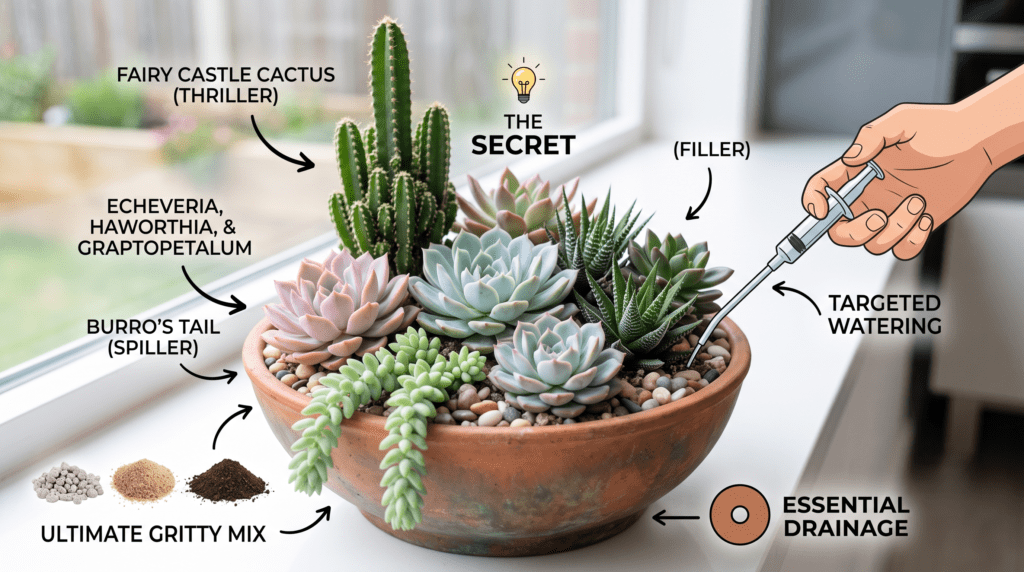
Terracotta Pots: These are the holy grail for combining cacti and succulents. Terracotta is porous and breathable, meaning it wicks moisture away from the soil, allowing it to dry out faster.
-
Glazed Ceramic & Plastic: These materials hold onto moisture. While they are beautiful, they are much riskier for mixed arrangements because they slow down the evaporation process. If you use them, you must adjust your soil mix to be even grittier.
The “Gritty Mix” Soil Recipe 🪨
Standard potting soil—even the bags labeled “Cactus & Succulent Soil” at the big box stores—is often far too dense and peat-heavy for a mixed arrangement. It holds too much water. You need an incredibly well-draining, airy mix so the roots can breathe.
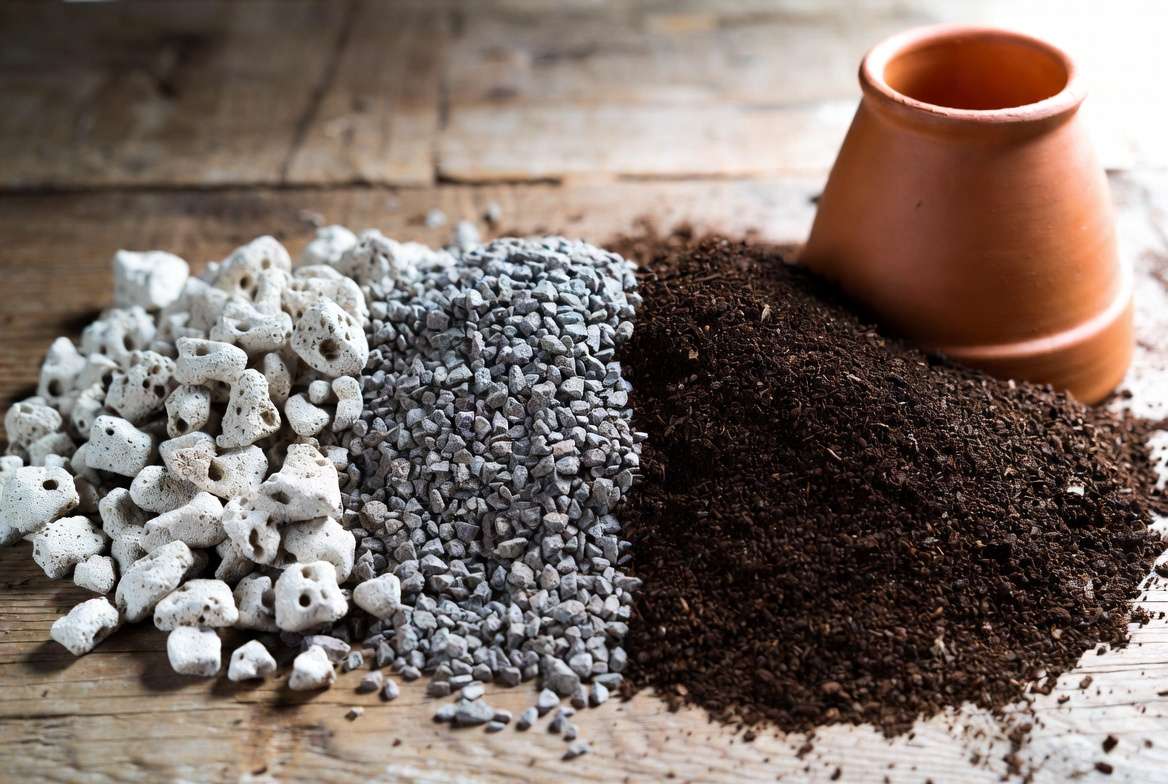
Here is my go-to DIY Gritty Mix recipe for mixed planters:
-
1 Part Organic Potting Soil: (Provides necessary nutrients).
-
1 Part Pumice or Perlite: (Creates air pockets and prevents compaction).
-
1 Part Coarse Sand or Poultry Grit: (Enhances drainage and mimics their natural rocky environment).
Mix this together until it feels coarse and crumbly. When you water this soil, the liquid should pour right through to the bottom almost instantly. 💧
5. 🎨 Design 101: Arranging for Maximum Visual Impact
Now for the fun part: making it look like a professional horticulturist designed it! A well-designed mixed planter plays with height, color, and texture.
The Thriller, Filler, Spiller Method ✨
This is a classic container gardening design principle that works beautifully for succulents and cacti:
-
The Thriller: Choose a tall, eye-catching focal point to anchor the pot. A columnar cactus (like a Fairy Castle Cactus) or a large, striking Agave works perfectly. Place this slightly off-center for a modern look.
-
The Filler: These are mid-sized, colorful plants that mound and cover the soil surface. Rosette-shaped succulents like Echeveria or Graptopetalum are excellent fillers. Pack them in a way that contrasts their colors.
-
The Spiller: These are trailing plants that soften the hard edges of the container by cascading over the side. If you are pairing with true cacti, be careful here—use drought-tolerant spillers like a hardy Burro’s Tail (watered strategically).
Playing with Color and Texture 🎨
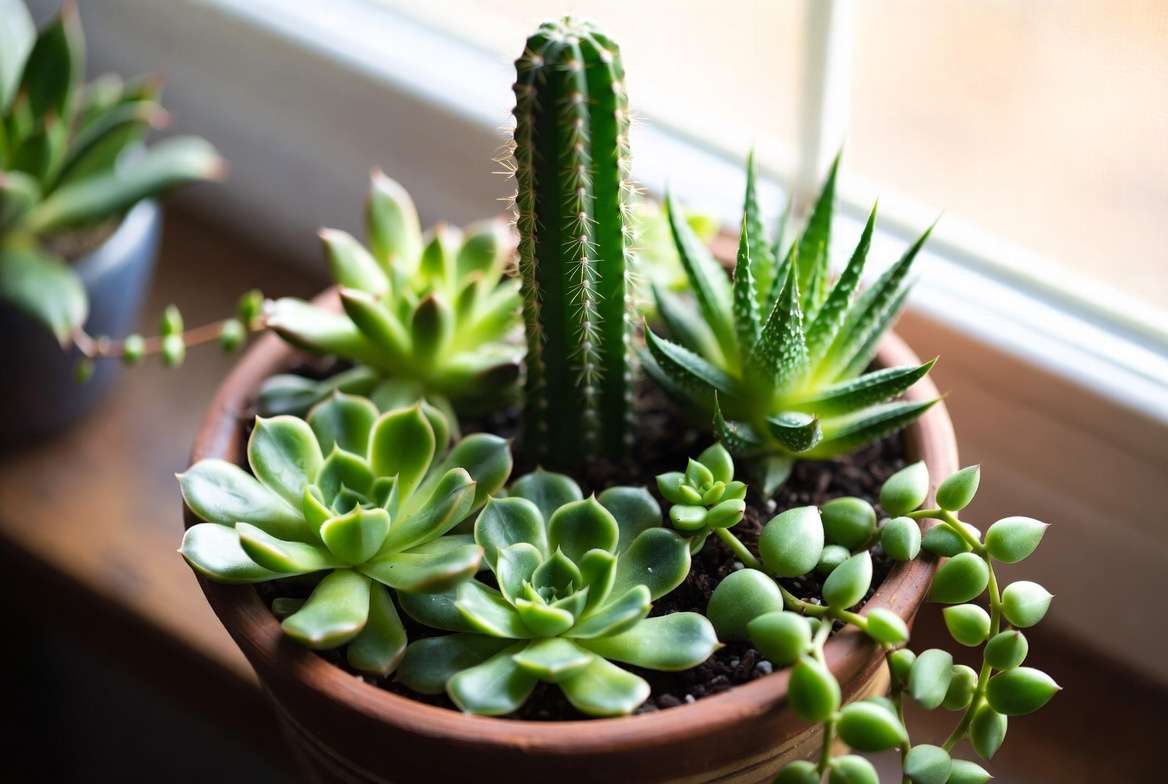
The magic of combining cacti and succulents lies in the contrast. Pair the rigid, spiky geometry of a golden barrel cactus with the soft, powdery, pastel-pink curves of an Echeveria ‘Lola’. Mixing deep greens with frosty blues and vibrant purples makes the arrangement pop.
Top Dressing: The Finishing Touch 💎
Once your plants are potted, add a layer of decorative gravel, aquarium stones, or polished pebbles over the exposed soil. This isn’t just for aesthetics! Top dressing keeps the delicate base of your plants (the crown) elevated above wet soil, dramatically reducing the risk of stem rot. Plus, it gives your planter that sleek, finished look you see in high-end boutiques.
6. 🤫 The Ultimate Secret: The “Pot-in-Pot” Cheat Code
What if you really want to combine a thirsty, moisture-loving trailing succulent with a desert cactus that hates water? If you plant them in the exact same soil, one of them will not survive. But there is a brilliant workaround that professional landscapers and clever plant parents use.
This is the ultimate skyscraper value-add for your plant care journey: The “Pot-in-Pot” Method. 🤯
How the Cheat Code Works
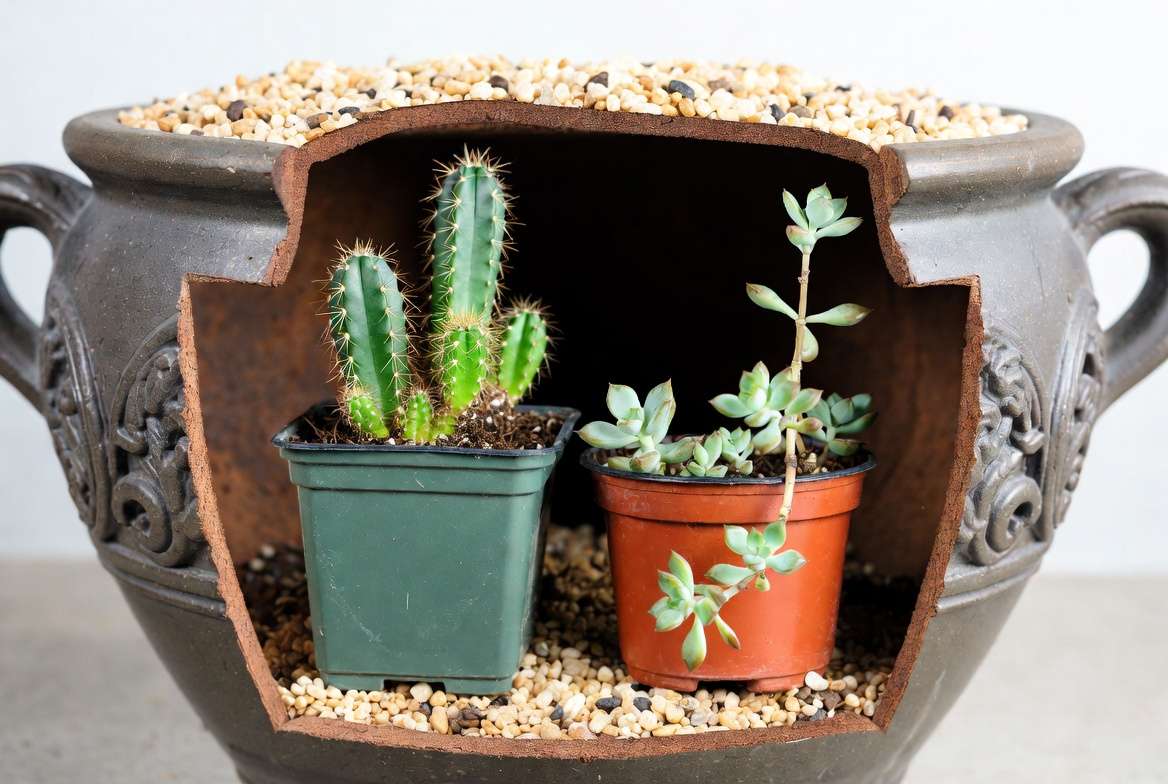
Instead of taking the plants out of their plastic nursery pots and planting them directly into one shared mass of soil, you leave them in their individual containers.
-
Select a Large Decorative Container: Fill the bottom third with a layer of gravel or pumice for drainage, then add a layer of your gritty soil mix.
-
Bury the Nursery Pots: Place the succulents and cacti—still inside their individual plastic nursery pots—into the large container. Arrange them exactly how you want them to look.
-
Fill the Gaps: Pack your gritty soil mix tightly around the outside of the nursery pots to lock them in place.
-
Hide the Evidence: Add a thick layer of top dressing (like polished pebbles or decorative moss) over the entire surface, completely hiding the plastic rims.
The Genius Benefit 🧠
To the untrained eye, it looks like a beautifully woven, single arrangement! But below the surface, each plant has its own isolated environment.
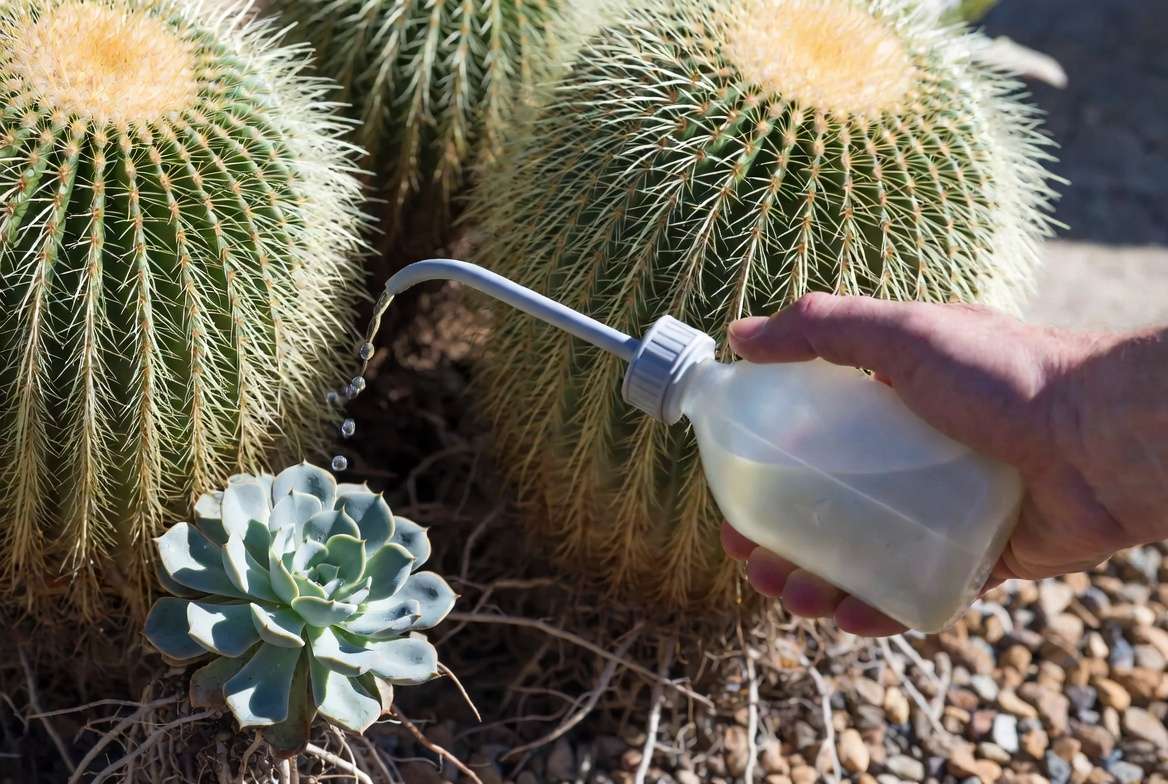
When it’s time to water the thirsty succulent, you can use a narrow-spout watering can to pour water directly into its specific nursery pot. The water stays contained, and the cactus sitting two inches away remains bone dry and happy. Plus, if one plant outgrows the arrangement or sadly passes away, you can simply lift its plastic pot out and drop a new one in without disturbing the roots of its neighbors! 🔄
7. 🚿 How to Water a Mixed Arrangement (Without Causing Root Rot)
If you chose to plant your cacti and succulents together in a shared soil environment (without using the cheat code above), watering is where you must be incredibly strategic. Overwatering is the number one cause of succulent death. ☠️
The “Soak and Dry” Method
Desert plants hate having “wet feet.” You should only water them when the soil is 100% dry all the way to the bottom of the pot. When it is time to water, you don’t just give them a tiny sip; you mimic a desert flash flood. Drench the soil completely until water pours out of the drainage hole, and then do not water them again until the soil is bone dry. Depending on your home’s humidity and temperature, this could take anywhere from two weeks to a full month. 🗓️
Targeted Watering 🎯
Because fleshy succulents might need water slightly more often than a hardcore cactus, you can use targeted watering. Buy a plastic squeeze bottle with a long, curved nozzle (often sold as succulent watering bottles) or a large garden syringe. Use this to inject water directly into the soil at the base of the succulent, completely bypassing the cactus’s root zone.
Signs You’re Doing it Wrong 🚨
Your plants will tell you how they are feeling if you know what to look for:
-
Wrinkled, crispy, or deflated leaves: This means the plant is thirsty and consuming its own water reserves. It’s time for a deep drink! 🚰
-
Yellow, translucent, or mushy leaves/stems: Stop watering immediately! This is the universal sign of overwatering and impending root rot. If a cactus feels squishy at the base, you must remove it from the wet soil, let it dry out, and pray you caught it in time.
8. ☀️ Light Requirements: Finding the Sweet Spot
Lighting is the second biggest hurdle when combining cacti and succulents in arrangements. Cacti generally want as much blazing, direct sunlight as they can get. Many fleshy succulents, however, will get severe sunburns (white or brown scorch marks) if left in the intense midday sun. 🥵
The Compromise Zone 🌤️
To keep everyone happy, you need to find the sweet spot. The ideal location for a mixed planter is a spot that receives bright, indirect sunlight for most of the day, with perhaps a few hours of gentle, direct morning sun.
An East-facing or South-facing window (with a sheer curtain during the hottest part of the afternoon) is usually perfect. If you are keeping them outdoors on a patio, place the arrangement under a covered porch or the dappled shade of a larger tree.
Warning Signs of Low Light 🕵️♀️
If your arrangement isn’t getting enough light, the plants will experience etiolation (stretching). The succulents will lose their tight, compact rosette shapes, and the cacti will grow skinny, pale, and elongated as they reach frantically for the nearest light source. If you see this, gradually move the pot to a brighter location!
9. 🩺 Troubleshooting Common Mixed Planter Problems
Even the most experienced plant parents run into issues. Here is how to troubleshoot the most common mixed arrangement woes:
-
Problem: One plant is dying, but the rest are thriving. 🥀
-
Solution: Don’t sacrifice the whole pot for one sick plant! Carefully dig out the dying plant with a spoon, being mindful of the surrounding roots. Fill the empty hole with fresh gritty soil and pop in a new, better-suited companion.
-
-
Problem: Pests! (Specifically, Mealybugs) 🐛
-
Solution: The tight spaces between mixed succulents are cozy hiding spots for mealybugs (they look like tiny bits of white cotton). If you spot them, isolate the planter immediately. Spray the affected plants thoroughly with a mixture of 70% isopropyl alcohol and water, or treat the soil with an organic Neem oil solution.
-
-
Problem: The arrangement outgrew the pot. 🪴
-
Solution: Succulents grow faster than cacti. If your Echeveria is suffocating your cactus, it is time to prune! Use sterile shears to snip off overgrown succulent rosettes. You can then try your hand at plant propagation—let the cut ends callous over for a few days, stick them in fresh soil, and voilà! Free plants! 🌱
-
10. 🙋♀️ Expert FAQs on Combining Cacti and Succulents
Can you put an Aloe Vera and a Cactus in the same pot? Yes! Aloe Vera is a highly drought-tolerant succulent that enjoys the same infrequent watering and bright light conditions as many desert cacti. They make fantastic roommates in a gritty, well-draining soil mix.
How long do mixed succulent arrangements last? With proper care, a mixed arrangement can last for years! However, because succulents grow at different rates, they usually look their absolute best for about 12 to 18 months. After that, they may become overcrowded and require pruning, repotting, or a little rearranging to keep them looking fresh. ✂️
Should I mist my mixed cactus arrangement? Absolutely not! 🚫 Desert plants do not absorb water through their leaves like tropical houseplants do. Misting increases surface humidity, which can lead to fungal infections, powdery mildew, and rot. Always water the soil, never the leaves.
Do succulents and cacti need fertilizer in a shared pot? Yes, but very sparingly. During their active growing season (usually Spring and Summer), you can feed your mixed planter once a month using a specialized cactus and succulent fertilizer diluted to half-strength. Do not fertilize them during their winter dormancy. 💤
11. Conclusion: Ready to Create Your Desert Masterpiece? 🌅
Combining cacti and succulents in arrangements is a fantastic way to bring a slice of desert beauty into your home. While it requires a bit more thought than just tossing random plants into a bowl, the results are incredibly rewarding.
Just remember the three golden rules of mixed planters:
-
Pair strictly by water and light needs.
-
Use a gritty, highly porous soil mix.
-
Prioritize drainage above all else!
And if you fall in love with two totally incompatible plants? Just use the genius Pot-in-Pot cheat code! 😉
Plant care is a continuous learning process. Even experts lose a plant occasionally, so don’t be too hard on yourself if your first arrangement isn’t perfect.
Now it’s your turn! Are you planning to build a mixed arrangement this weekend? Have you tried the Pot-in-Pot method before? Share your photos and experiences in the comments below! And if you want to make sure you get your soil right, don’t forget to check out my comprehensive guide on the Best DIY Soil Mixes for Indoor Plants. Happy planting! 💚











