
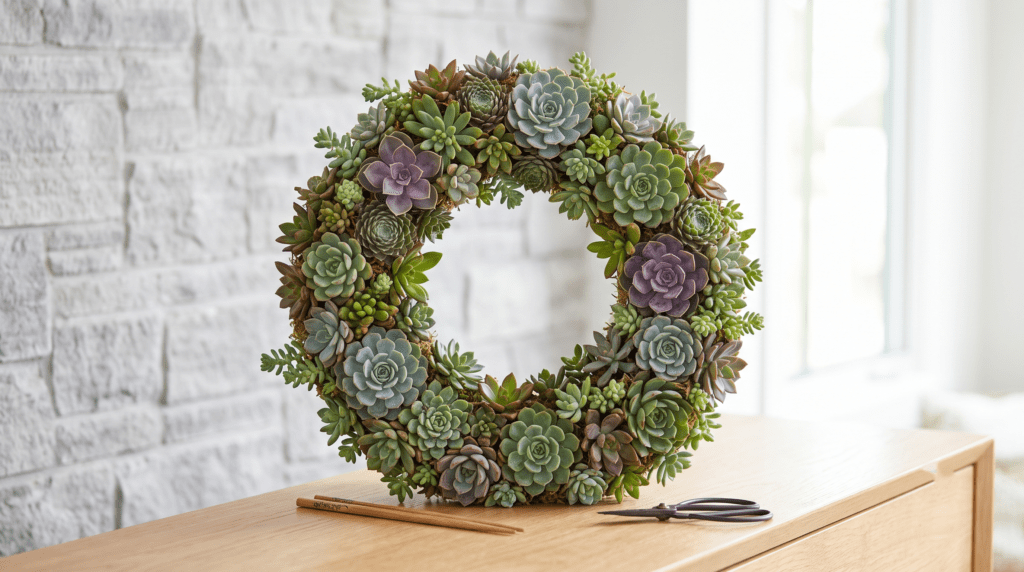
There is an undeniable magic in bringing nature indoors, but let’s face a frustrating reality: traditional floral wreaths and cut flower arrangements fade, wilt, and find their way to the compost bin within a mere week or two. If you are looking for a sustainable, breathtaking alternative that actually grows more beautiful with time, making a succulent wreath for decor is the ultimate weekend project.
However, many DIY plant lovers and crafters run into a heartbreaking problem. They spend hours designing gorgeous, Pinterest-worthy wreaths, only to watch them rot, stretch out of shape, or completely fall apart within a month. Why does this happen? Usually, it comes down to poor foundation building and a misunderstanding of how succulents root.
As a dedicated plant care and tree care specialist, I approach DIY plant crafts a little differently. I believe that when we work with living things, we need to build an environment where they can thrive, not just survive for a photoshoot. This comprehensive guide won’t just teach you the basic mechanics of assembling a wreath; it will reveal the horticultural secrets to ensure your arrangement establishes a robust root system and lasts for years.
What You’ll Learn in This Expert Guide:
-
How to select the right materials for a sturdy, moisture-retaining foundation.
-
The non-negotiable “callusing” secret to prevent stem rot.
-
Professional design and pinning techniques for a lush, gap-free look.
-
Long-term watering and lighting care to keep your living art thriving.
Why Succulent Wreaths are the Ultimate Living Decor 💚
Before we get our hands dirty, it’s worth understanding why this specific type of living decor has taken the interior design and gardening worlds by storm.
The Benefits of Decorating with Living Succulents 🌍
In an era where sustainability is more important than ever, living decor offers a zero-waste alternative to synthetic decorations and imported cut flowers. Succulent wreaths don’t rely on plastic foams or artificial dyes. Instead, they utilize natural sphagnum moss and living plants that continuously purify the air and adapt to their environment. Furthermore, their year-round aesthetic appeal means you aren’t restricted to displaying them only during the holidays—a succulent wreath looks just as stunning at a summer garden party as it does adorning a cozy winter tablescape.
How Long Will a Succulent Wreath Actually Last? ⏳
Expert Insight: When clients ask me about the lifespan of their succulent crafts, I always clarify the difference between “glued” and “rooted” designs. A temporary wreath—where succulent cuttings are hot-glued onto a grapevine base—will survive off the moisture stored in its leaves for about 4 to 8 weeks before it inevitably shrivels.
However, a properly constructed moss-and-wire wreath (which we are building today) allows the succulents to grow a permanent root system. With appropriate seasonal pruning and proper watering, a rooted succulent wreath can last three to five years, or even longer!
Materials You’ll Need: The Expert’s Toolkit 🛠️
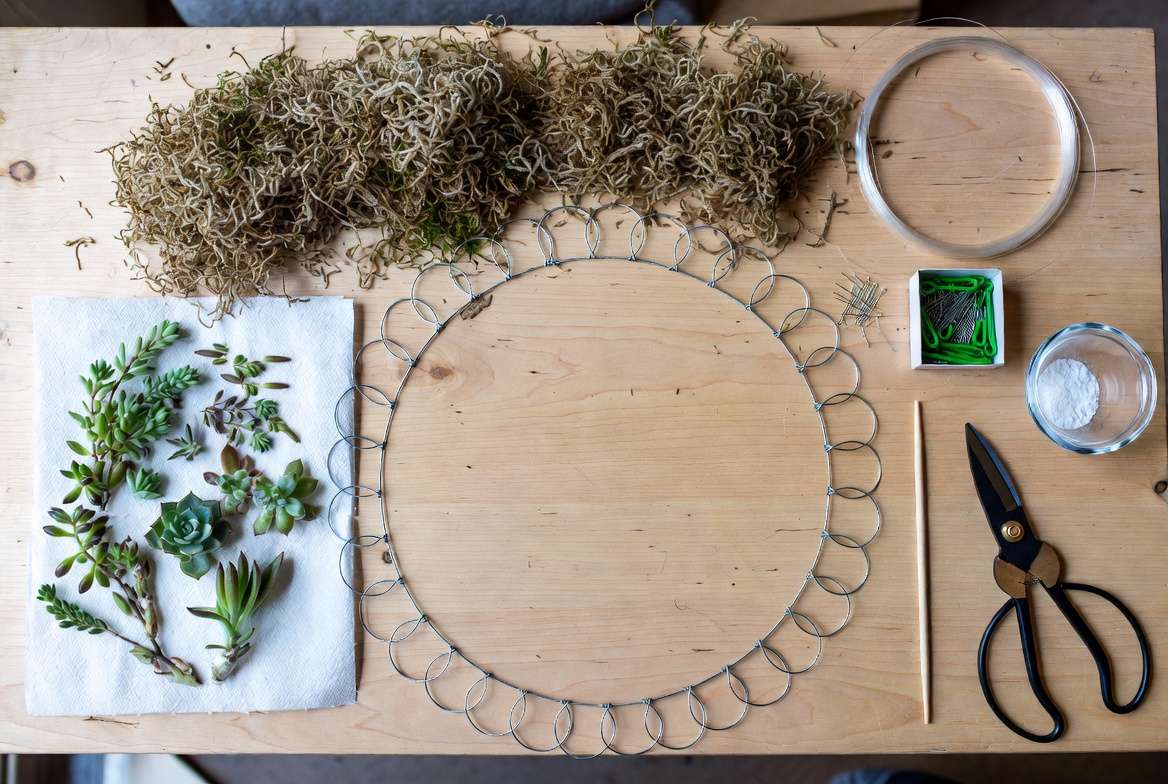
Creating a masterpiece requires the right tools. Skip the standard floral foam (which holds too much water and causes root rot) and gather these specific supplies to build a thriving ecosystem.
The Frame & Foundation 🪵
-
Sphagnum Peat Moss: This is the lifeblood of your wreath. Sphagnum moss is highly absorbent, holding just enough moisture to encourage aerial roots to grow while allowing excess water to drain away freely.
-
Wire Wreath Frame: I recommend starting with a 12-inch or 14-inch frame for beginners. Anything larger becomes incredibly heavy once saturated with water. A standard raised or 3D wire frame provides the best structural support.
-
Monofilament (Fishing Line) or Floral Wire: You will use this to securely bind the moss to your metal frame. Fishing line is fantastic because it becomes entirely invisible.
The Best Succulent Varieties for Wreaths 🌸
Not all succulents are created equal when it comes to wreath-making. You want a mix of structural “thrillers” and trailing “spillers.”
-
Rosette Shapes (The Stars): Echeveria, Sempervivum (Hens and Chicks), and Graptopetalum. These look like blooming flowers and serve as your bold focal points. Sempervivum is particularly excellent if you plan to keep your wreath outdoors in cooler climates, as they are incredibly cold-hardy.
-
Fillers & Trailers: Sedum (like Jelly Beans or Burro’s Tail) and Crassula varieties. These smaller, branching plants are perfect for covering exposed moss and softening the edges of your wreath.
-
E-E-A-T Tip: Always choose succulents with similar light and water requirements. Mixing desert cacti with moisture-loving tropical succulents in the same wreath will inevitably lead to one of them dying.
Essential Crafting Tools ✂️
-
Floral Pins (Greening Pins): These U-shaped pins are the secret to holding your cuttings in place while they root.
-
Sterilized Pruning Snips: Always wipe your blades with rubbing alcohol before cutting to prevent the spread of fungal diseases.
-
Rooting Hormone (Optional): While not strictly necessary, dipping the ends of your cuttings in rooting powder can speed up root development by a week or two.
-
A Wooden Chopstick or Pencil: Your best friend for poking perfectly sized planting holes into tightly packed moss.
Preparing Your Succulents: The Crucial First Step 🌱
If you want your wreath to last, you cannot rush the preparation phase. This is where most beginners make their fatal mistake.
Taking Cuttings Like a Pro 🔪
Unless you are using miniature plug plants, you will be working with succulent cuttings. Using your sterilized snips, cut the rosette from the mother plant, leaving about 1 to 2 inches of bare stem. This bare stem is what you will anchor into the moss. Gently peel away the lower 2 or 3 leaves to expose the nodes (the bumps on the stem where leaves used to be). Roots are most likely to sprout directly from these nodes.
Why “Callusing” is Non-Negotiable 🛑
Expert Warning: Never, under any circumstances, plant a freshly snipped succulent directly into damp moss. When you cut a succulent, it creates an open “wound.” If that fresh wound is exposed to moisture and soil bacteria, the stem will almost certainly develop black rot, traveling up the plant and turning your beautiful rosette into a pile of mush.
The Solution: Lay your fresh cuttings on a dry tray in a cool, shaded area (away from direct sunlight) for 3 to 7 days. You are waiting for the cut end to dry out, scab over, and form a hardened seal—this is called a “callus.” Once callused, the plant is naturally protected against rot and is officially ready to be planted into your wreath.
Step-by-Step Guide: Making a Succulent Wreath for Decor 🎨
Now that your foundation materials are gathered and your cuttings are fully callused, the real fun begins. This is where your living art comes to life.
Step 1: Soaking and Packing the Moss Ring 💦
Start by submerging your sphagnum peat moss in a large bucket of water. Let it soak for about 15 to 20 minutes until it feels like a heavy, saturated sponge. Take a handful of the wet moss, squeeze out the excess dripping water, and press it firmly into your wire wreath frame.
You must pack the moss tightly. If the moss is too loose, it will shrink significantly as it dries, causing your succulents to sag and eventually fall out. Once the frame is overstuffed with moss, wrap your monofilament (fishing line) or floral wire tightly around the ring in a spiral pattern to secure everything in place. The finished base should feel firm and solid to the touch.
Step 2: Designing Your Layout 📐
Before you poke a single hole, lay your succulents out on a table next to the moss ring to visualize your design.
-
Design Tip: Group your largest, most colorful rosettes (like Echeveria) in clusters of three. Odd numbers are inherently more pleasing to the human eye.
-
Place these focal points first, distributing them evenly around the ring or creating an asymmetrical, crescent-moon design by clustering them heavily on one side. Use contrasting colors—like pairing a deep purple Aeonium next to a pale green Sedum—to make the textures pop.
Step 3: Planting and Pinning the Succulents 📌
This is the core technique for making a succulent wreath for decor that holds together beautifully.
-
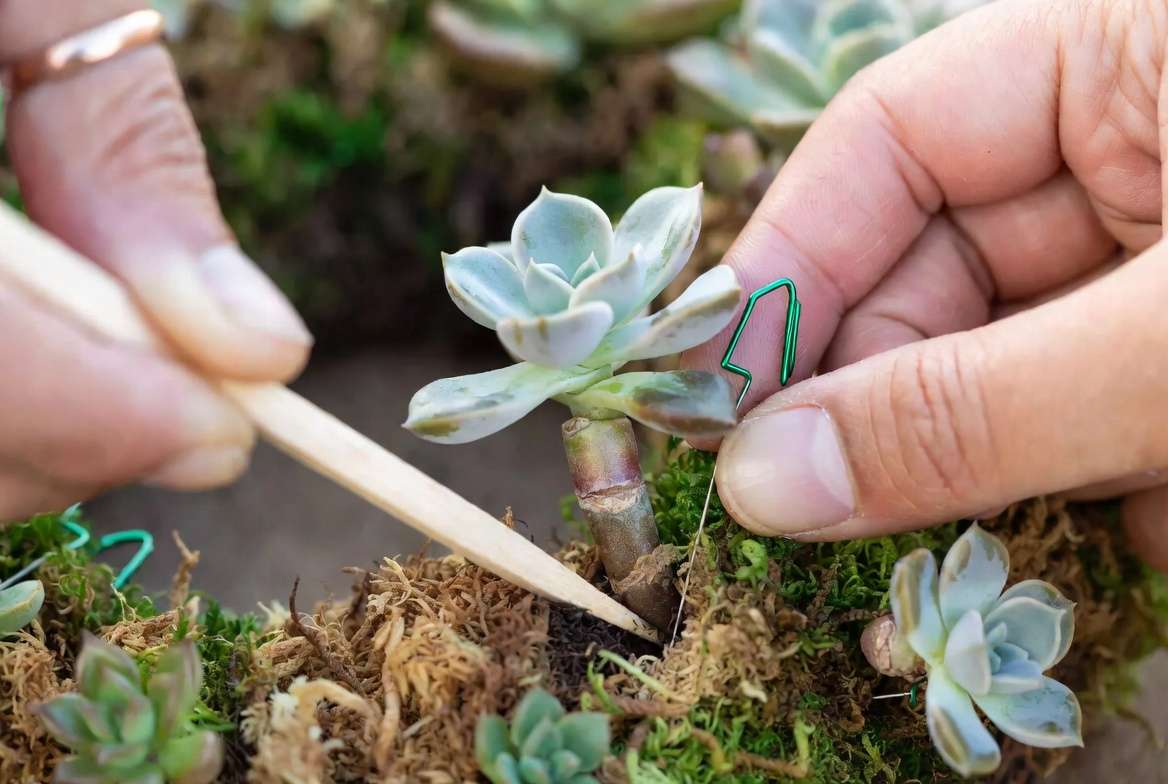
Take your wooden chopstick or pencil and poke a hole deep into the compacted moss where you want your first plant to go.
-
Insert the callused stem of your succulent into the hole.
-
Take a U-shaped floral greening pin and gently press it over the stem of the succulent, pushing the pins deep into the moss. The pin should act like a tiny seatbelt, holding the plant firmly against the moss without crushing its stem.
Step 4: Filling the Gaps 🌿
Once your large focal succulents are pinned in place, start weaving in your smaller “spillers” and “fillers.” Use trailing varieties like String of Pearls or Burro’s Tail around the inner and outer edges to soften the harsh lines of the wire frame. If you still have tiny patches of visible wire or bald spots, tuck in small pieces of dry sheet moss or Spanish moss to hide the mechanics. The goal is a lush, seamless circle of greenery.
The Critical “Rooting Phase”: How to Avoid Early Rot 🛌
Your wreath is assembled and looks stunning! Your first instinct will be to hang it proudly on your front door or above your mantle. Stop right there. This is the most crucial period in your wreath’s lifecycle.
Laying It Flat vs. Hanging It Up ⚖️
Because your cuttings do not have roots yet, gravity is your worst enemy. If you hang the wreath immediately, the heavy rosettes will slowly wiggle loose and fall out. You must lay the wreath completely flat in a bright, dry location (out of direct, harsh sunlight) for at least 4 to 6 weeks. This flat rooting phase gives the stems time to push out new pink roots and firmly anchor themselves into the sphagnum moss. You can gently tug on a succulent after a month; if it resists, it is rooted!
Watering During the First Month 💧
E-E-A-T Insight: Do not water your newly assembled wreath! I see this mistake often in the plant care community. Remember, cuttings without roots cannot absorb water. If you soak the moss while the plants are unrooted, you are only inviting stem rot. Wait at least two to three weeks before lightly misting the moss. A little bit of drought stress actually forces the plant to send out roots faster in search of moisture.
Long-Term Care: Keeping Your Living Art Alive for Years ☀️
Once rooted, succulent wreaths transition from a delicate craft to a robust piece of living decor. Proper ongoing care is simple if you follow these horticultural guidelines.
Optimal Lighting Conditions for Wreaths 🌤️
Succulents crave sunlight, but their moss foundation dries out rapidly in scorching heat. The ideal location is somewhere that receives bright, indirect light or gentle morning sun. If placed indoors, a south-facing or east-facing window is perfect. If the wreath doesn’t get enough light, the plants will stretch out (etiolate) and lose their beautiful, compact shape.
The “Soak-and-Dry” Watering Method for Wreaths 🛁
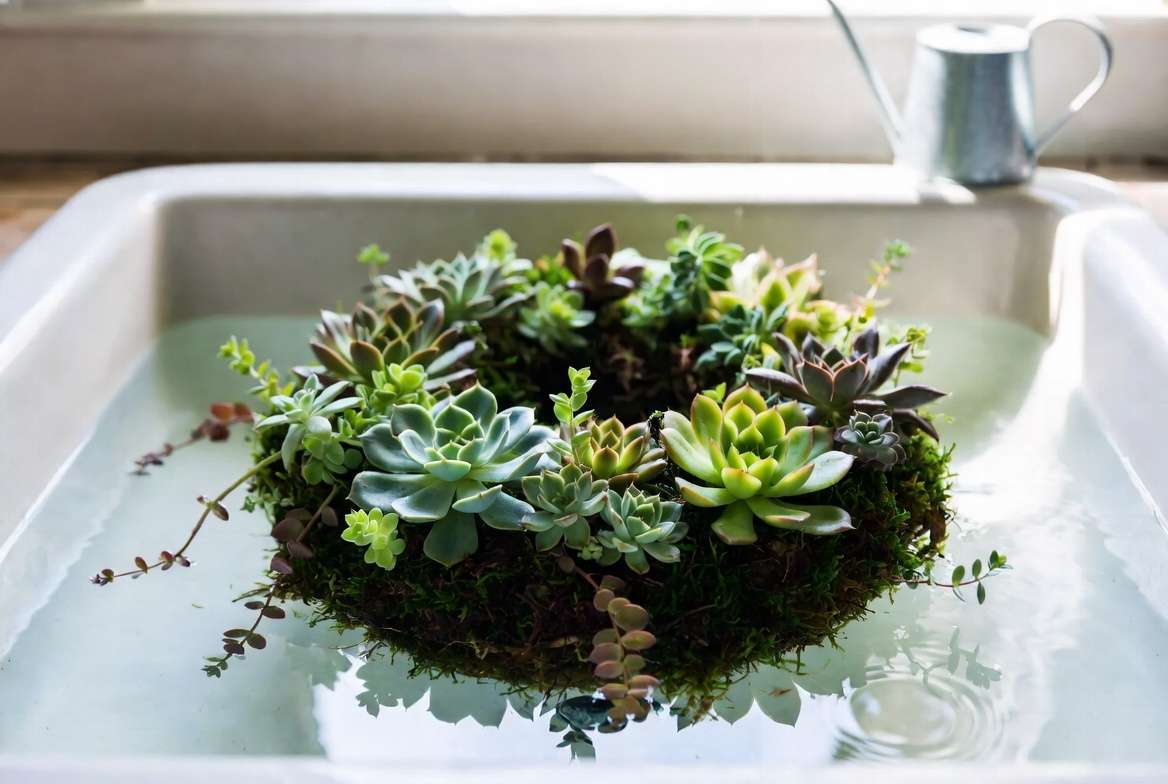
Forget the spray bottle—misting mature succulents only wets the surface and encourages shallow, weak roots. When your wreath is completely bone-dry and feels light to pick up (usually every 2 to 4 weeks depending on your climate), it’s time to water.
-
Fill a shallow basin, large tray, or your sink with a few inches of room-temperature water.
-
Gently lay the wreath flat in the water.
-
Allow it to soak for 15 to 20 minutes until the moss is fully hydrated.
-
Remove it and let it drain completely on a drying rack for several hours before hanging it back up. Never hang a dripping wet wreath against a wall, as it can cause water damage to your paint or wood.
Seasonal Maintenance and Pruning ✂️
As your living art grows, it will evolve. Some plants may grow long and “leggy,” while lower leaves will naturally shrivel and die.
-
Use long tweezers to pull out dead, crispy leaves to maintain good airflow and prevent pests.
-
If a succulent grows too tall, simply “behead” it (snip the top rosette off), let it callus, and pin it right back into the moss.
-
You can continually refresh your wreath by tucking new cuttings into any gaps that appear over the years.
Expert Decorating Ideas: Displaying Your Wreath 🏡
A living succulent wreath is incredibly versatile. Here are a few ways to elevate your space:
Front Doors and Porches 🚪
A succulent wreath makes a breathtaking, welcoming statement on a front door. However, keep weather in mind. If you live in an area with harsh afternoon heat, ensure your porch is covered. If you experience freezing winters, you must either bring the wreath indoors before the first frost or build it entirely out of cold-hardy Sempervivum and Sedum spurium varieties, which can survive beneath the snow.
Indoor Tablescapes and Wall Art 🕯️
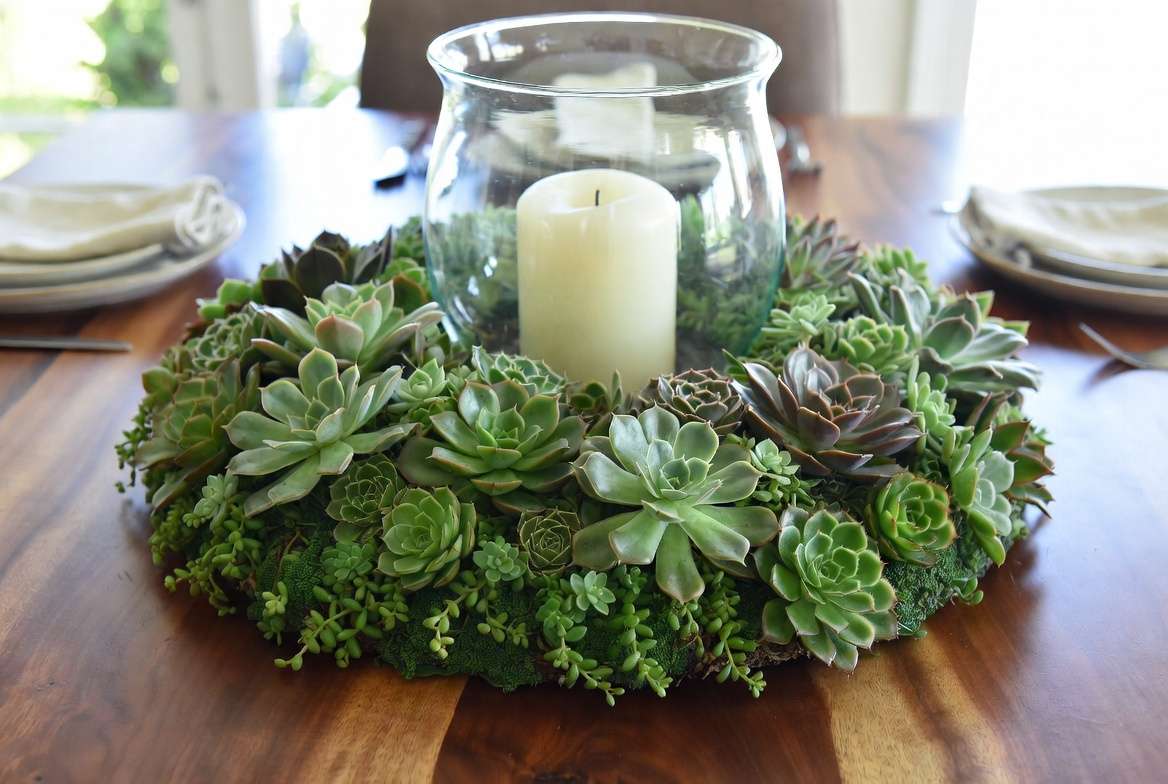
Don’t limit yourself to vertical displays! Succulent wreaths make extraordinary horizontal centerpieces for dining tables or holiday feasts. Lay the wreath flat and place a tall glass hurricane vase with a pillar candle in the center. It instantly becomes a sophisticated, high-end living tablescape.
Troubleshooting Common Succulent Wreath Problems 🚑
Even with the best care, you might run into a few hiccups. Here is how to diagnose and fix them like a pro:
-
Yellowing, Mushy, Translucent Leaves 🍂
-
Diagnosis: Overwatering. The roots are suffocating.
-
Fix: Stop watering immediately. Place the wreath in a warmer, brighter spot with good air circulation to dry out the moss. Remove the rotted plants and replace them with fresh callused cuttings once dry.
-
-
Stretched, “Leggy” Succulents with Wide Gaps 🦒
-
Diagnosis: Etiolation (Lack of sufficient sunlight).
-
Fix: Move the wreath to a brighter location. You can prune the stretched heads, let them callus, and replant them compactly.
-
-
Succulents Falling Out of the Frame 📉
-
Diagnosis: The wreath was hung up too soon, or the moss was packed too loosely.
-
Fix: Lay the wreath flat, re-pin the loose plants securely, and wait an additional 3-4 weeks for strong roots to form before hanging again.
-
Frequently Asked Questions (FAQs) 🙋♀️
Can I use hot glue to make a succulent wreath? While you can use floral glue to attach succulents to a grapevine base for temporary event decor (like a wedding), it is not recommended for long-term living decor. The glue prevents proper root growth. The moss-and-pin method is required if you want your wreath to live for years.
Do succulent wreaths survive the winter outside? This depends entirely on the plants you choose. “Soft” succulents (like Echeveria and Crassula) will die if exposed to freezing temperatures and must be brought indoors. “Hardy” succulents (like Sempervivum and some Sedums) can survive extreme winter freezes outdoors.
How long does it take for the cuttings to root? Usually, it takes between 4 to 6 weeks for cuttings to develop a root system strong enough to hold themselves securely in a vertical position.
Can I use faux succulents mixed with real ones? Absolutely! If you have tricky spots on your frame or want to add a specific pop of color that you don’t have a live cutting for, high-quality faux succulents can easily be pinned into the moss alongside the real ones. Just make sure the faux stems won’t rust when you soak the wreath.
Conclusion: Ready to Craft Your Own Living Masterpiece? 🌟
The process of making a succulent wreath for decor is deeply rewarding. It merges the creativity of floral design with the satisfying patience of gardening. By using the right foundation, respecting the crucial callusing and rooting phases, and understanding proper soak-and-dry watering, you are guaranteed to create a stunning piece of living art that defies the short lifespan of traditional floral arrangements.
Whether you hang it on your front door to greet guests or use it as a striking centerpiece for your dining table, your living wreath will continue to grow, adapt, and amaze you season after season.
Have you ever tried making a living wreath before? What are your favorite succulent varieties to use? Share your experiences or your beautiful finished creations in the comments below! And if you want to expand your plant care knowledge, be sure to check out our other expert guides on Propagating Succulents and The Ultimate Guide to Indoor Plant Lighting. Happy planting! 🪴✨











