
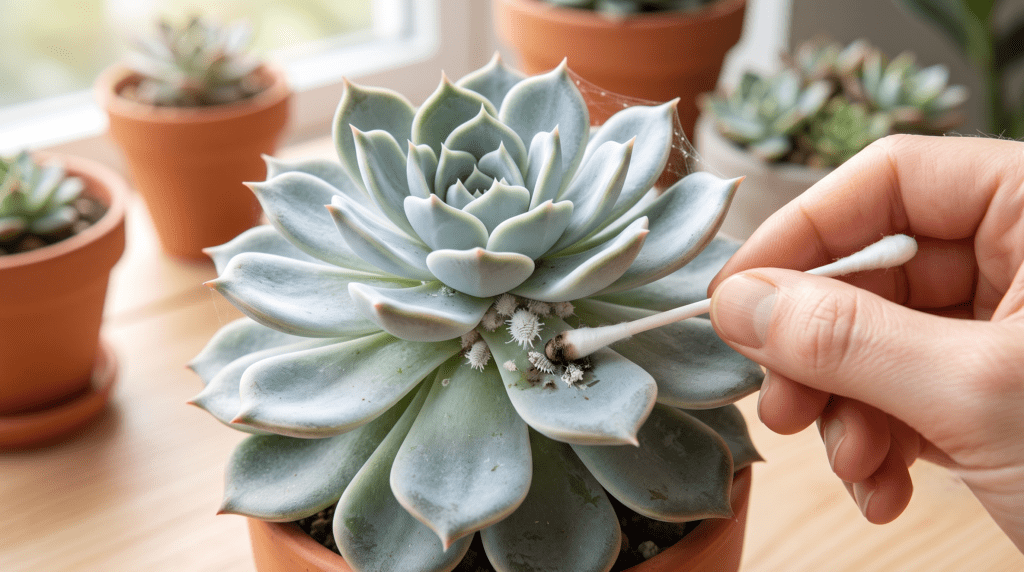
You are doing your weekly watering routine, admiring your prized Echeveria, when you see it: a tiny, white, cottony mass nestled deep inside the rosette. Or perhaps it’s a faint, sticky residue on the leaves of your favorite Jade plant. Your heart sinks. You have pests.
Take a deep breath. Succulent pests are a completely normal part of indoor gardening and plant parenthood. Finding bugs does not mean you are a bad plant owner; it simply means nature found a way indoors. However, succulent pests multiply with terrifying speed. When panic sets in, what you really need are reliable, quick solutions for succulent pest infestations to save your collection before the damage becomes irreversible.
This comprehensive guide will walk you through identifying your enemy, choosing the right eradication method, and executing scientifically backed treatments to restore your plants to full health.
🛑 Immediate Action Step: Before you read any further, pick up the infected plant and move it away from your other succulents. Quarantine starts right now. Stagnant indoor environments allow pests to jump from pot to pot in a matter of days. Isolate the victim, wash your hands, and let’s get to work.
II. Identify the Invader: The 5 Most Common Succulent Pests 🔍
To effectively treat an infestation, you must first know what you are fighting. Different pests require different approaches. Here are the five most notorious succulent destroyers.
1. Mealybugs (The “White Fuzz” Menace) ☁️
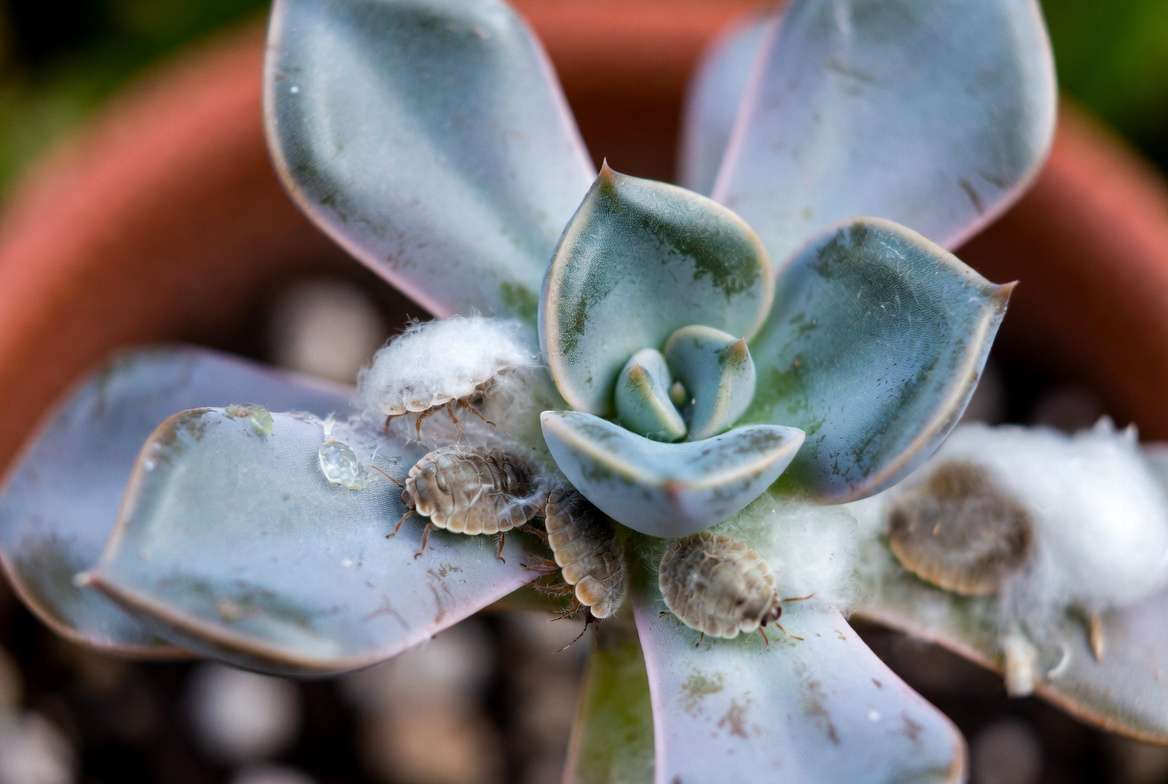
Mealybugs are by far the most common enemy of the succulent grower. These tiny, unarmored scale insects feed on plant sap and hide in tight spaces.
-
What they look like: Tiny, soft-bodied, oval bugs covered in a white, powdery wax. They often leave behind a cotton-like webbing, usually nestled in the tight crevices, leaf axils, or the very center of rosettes.
-
Damage caused: As they suck the sap from your plant, they excrete a sticky substance called honeydew. This honeydew promotes the growth of black sooty mold. You will also notice stunted growth, misshapen new leaves, and overall plant decline.
2. Spider Mites (The Invisible Web-Spinners) 🕸️
Spider mites thrive in hot, dry conditions—making your indoor succulent garden their perfect paradise.
-
What they look like: They are arachnids, not insects, and are so small they look like moving specks of red or brown dust. The most obvious sign is ultra-fine webbing stretched between the leaves or stems.
-
Damage caused: They feed by piercing the plant tissue and sucking out the fluids. This causes “stippling”—tiny yellow or white dots across the leaves. Over time, the succulent will take on a dull, grey, or rusty appearance and eventually drop its leaves.
3. Scale Insects (The Stubborn Bumps) 🛡️
Scale insects are masters of camouflage and often go unnoticed until a severe infestation has taken hold.
-
What they look like: They appear as flat, hard, brown, or tan bumps that look like scabs or raised blisters on the stems or undersides of leaves. Unlike mealybugs, adult scale insects do not move.
-
Damage caused: Like mealybugs, they drain the plant’s sap and secrete honeydew. Leaves will begin to turn yellow, shrivel, and drop prematurely.
4. Fungus Gnats (The Annoying Flyers) 🪰
While the flying adults are a nuisance, the real threat lies beneath the soil surface.
-
What they look like: Tiny, mosquito-like black flies buzzing erratically around the soil of your plants.
-
Damage caused: The adult flies are harmless to the plant. However, they lay eggs in damp soil. When the larvae hatch, they feed on organic matter—including the fragile, shallow root systems of your succulents. This root damage invites bacterial rot and causes sudden plant collapse.
5. Aphids (The Sap-Suckers) 🧃
Aphids are less common on thick-leaved succulents but love to target tender new growth and flower stalks.
-
What they look like: Tiny, pear-shaped insects that can be green, black, yellow, or pink. They congregate in dense clusters on flower stems and new buds.
-
Damage caused: Severe sap loss leads to twisted, deformed leaves and ruined blooms. They also spread plant viruses and excrete honeydew.
III. The Arsenal: Fast and Effective Treatments ⚔️
Once you have identified the pest, it is time to build your toolkit. When dealing with delicate succulents, chemical warfare requires a balanced approach to avoid damaging the plant itself.
1. 70% Isopropyl Alcohol (The Succulent Holy Grail) 🧪
Rubbing alcohol is the absolute best first line of defense for succulents, particularly against mealybugs and aphids.
-
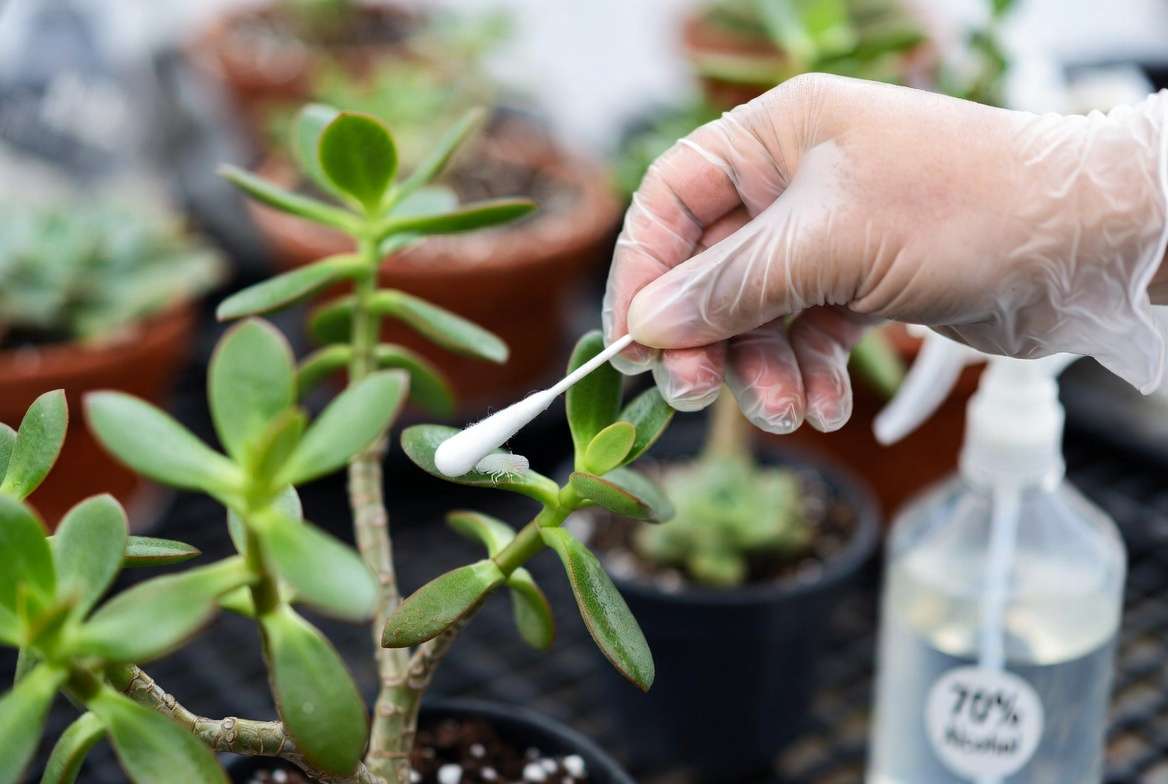
Expert Insight: Always use 70% isopropyl alcohol. Do not use 91% or 99%. Higher concentrations evaporate too quickly to effectively penetrate the pest’s waxy outer shell. The 70% solution contains enough water to slow evaporation, ensuring the alcohol destroys the bug on contact without burning the plant tissue.
-
How to apply: Dip a cotton swab (Q-tip) in alcohol and dab individual bugs to kill them instantly. For larger infestations, pour the 70% alcohol directly into a spray bottle and mist the entire plant.
2. Neem Oil & Horticultural Soaps: Use with Caution! 🌿
Neem oil is a fantastic organic, cold-pressed remedy that disrupts the hormonal life cycle of pests. Horticultural soaps break down the cell membranes of soft-bodied insects.
-
E-E-A-T Warning: Succulents and oils do not mix well in sunlight. Neem oil acts like a magnifying glass on the leaves. If you apply neem oil or heavy insecticidal soap and place the succulent back in bright light, severe sunburn will occur within hours. Always apply these treatments in the evening and keep the plant out of direct sun for at least 48 hours.
3. Systemic Insecticides (The Heavy Artillery) 💊
For chronic infestations or massive indoor collections, systemic treatments are a lifesaver.
-
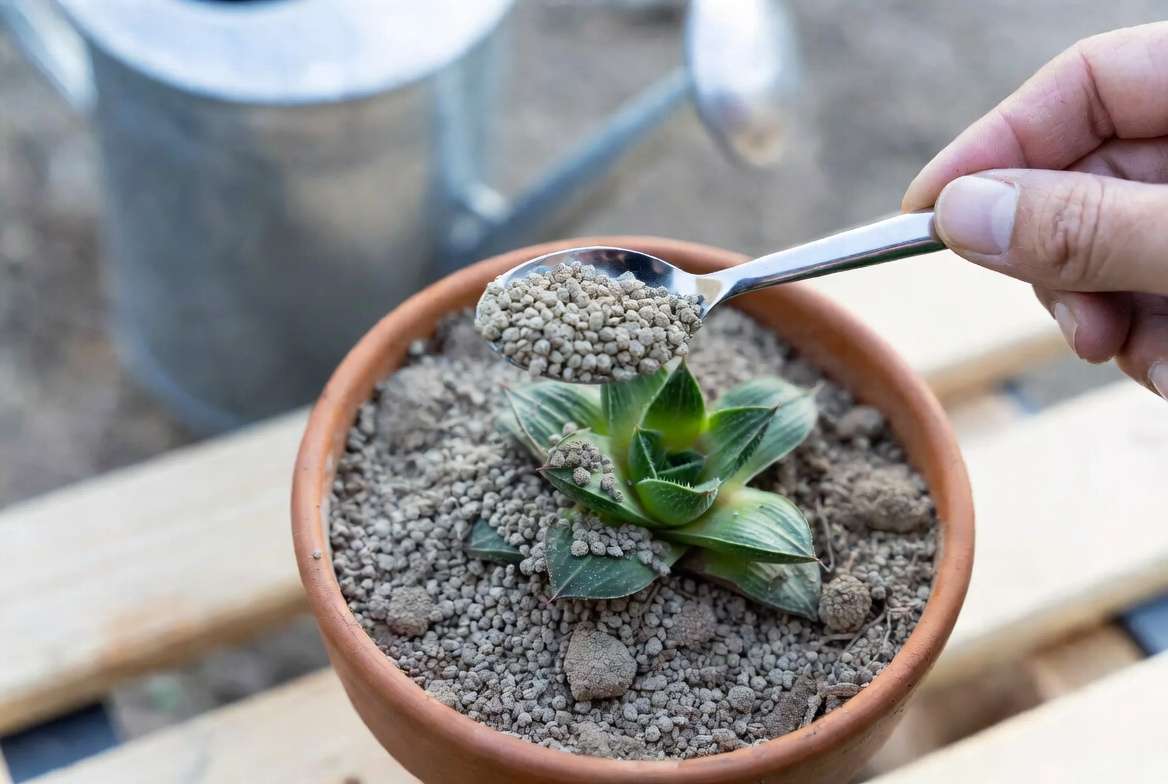
How they work: Products containing imidacloprid (often sold as systemic granules) are mixed into the soil. When you water the plant, the roots absorb the chemical, turning the plant’s sap toxic to pests.
-
Best for: Hidden mealybugs, scale, and preventing future outbreaks. Note: Never use systemic insecticides on outdoor succulents that are flowering, as they are highly toxic to bees and beneficial pollinators.
4. The Soil Swap & Root Wash 🚿
If you have root mealybugs (white fuzz found on the roots) or a severe fungus gnat infestation, topical sprays won’t help.
-
The Fix: Unpot the plant completely. Throw away the infested potting mix. Wash the bare roots under a gentle stream of tepid water, spray the roots with 70% alcohol, and repot in a fresh, gritty, well-draining succulent soil mix.
IV. Step-by-Step Eradication Guides (Targeted Action Plans) 📋
Here is exactly how to execute your treatment plan based on the specific pest you are fighting.
The 48-Hour Mealybug Eradication Protocol
-
Isolate: Move the plant to a quarantine area.
-
Spot Treat: Use an alcohol-soaked Q-tip to manually remove and kill every visible mealybug and web.
-
Spray Down: Lightly mist the entire plant, getting into the tight crevices, with 70% isopropyl alcohol.
-
Wait and Repeat: Alcohol only kills on contact. Eggs will hatch in a few days. Repeat this process every 2-3 days for a full two weeks until no new bugs appear.
How to Suffocate Spider Mites Fast
-
Shower: Spider mites hate humidity and water. Gently rinse the succulent under a tap to physically knock off the webs and mites.
-
Treat: Spray the plant thoroughly with a diluted horticultural soap or neem oil solution (in the evening to avoid sunburn).
-
Adjust Environment: Improve airflow and slightly increase humidity around the quarantine area to make the environment hostile to mites. Repeat weekly.
The “Scrape & Swab” Method for Scale
-
Manual Removal: Because scale insects have hard armor, sprays often bounce right off. Use a dull toothpick, your fingernail, or a soft toothbrush to gently scrape the scale bumps off the stem.
-
Swab: Follow up immediately by swabbing the scraped areas with 70% alcohol to kill the crawlers (microscopic babies).
-
Systemic Support: Apply systemic granules to the soil to kill any remaining scale from the inside out.
Breaking the Fungus Gnat Life Cycle
-
Dry It Out: Stop watering! Fungus gnats need damp soil to breed. Let your succulent soil dry completely bone-dry.
-
Yellow Sticky Traps: Place yellow sticky stakes in the soil to catch the flying adults.
-
Mosquito Dunks: Soak a Mosquito Dunk (which contains BTI, a natural bacteria toxic to gnat larvae) in your watering can overnight. Water your plant with this BTI-infused water to kill the larvae in the soil without harming the roots.
V. ⚠️ Expert Warning: Protecting Your Succulent’s Farina ✨
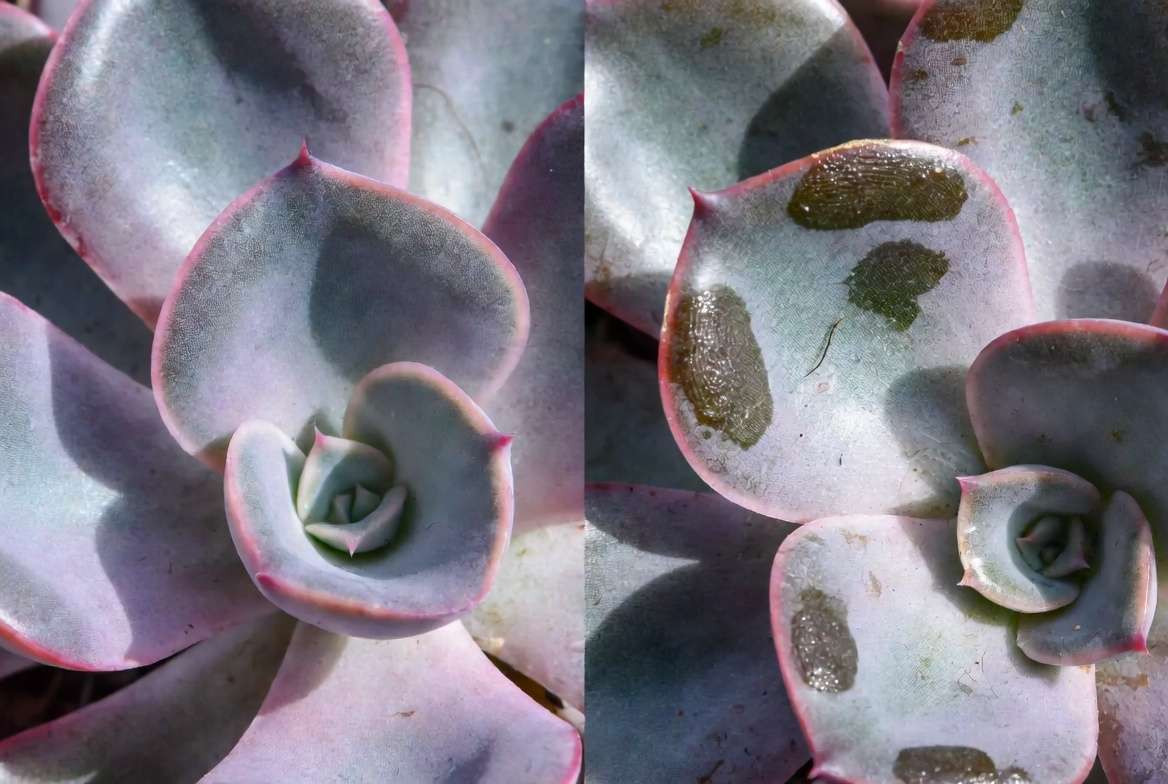
If you are a serious plant collector, you must understand farina. Farina is the powdery, chalky, silvery-white substance that coats the leaves of many succulents, particularly Echeveria, Pachyphytum, and Graptopetalum.
This epicuticular wax is the plant’s natural sunscreen and water-repellent shield. Once farina is wiped off, it will never grow back on those specific leaves.
The Danger of Pest Treatment: Rubbing leaves with Q-tips, spraying heavy neem oils, or using harsh dish soaps will permanently strip the farina, leaving your succulent cosmetically damaged and vulnerable to severe sunburn.
How to treat without ruining farina:
-
Never wipe the leaves.
-
Use a fine-mist spray bottle filled with 70% isopropyl alcohol. The alcohol will evaporate cleanly without heavily disturbing the wax layer.
-
Rely on systemic granules mixed into the soil rather than topical leaf sprays whenever possible.
VI. Post-Treatment Care: Helping Your Succulent Recover 🏥
Killing the bugs is only half the battle. Your plant has just been through a traumatic event and needs specific care to bounce back.
Keep Out of Direct Sunlight ☀️🚫
Treated plants are highly susceptible to light burns, especially if they have lost sap, lost their farina, or been treated with oils. Keep your recovering succulent in bright, indirect light for at least a week before slowly reintroducing it to its normal sunny windowsill.
Hold Off on Fertilizer 💧
Do not feed a stressed plant. Fertilizer forces the plant to push out new growth. A succulent that is actively recovering from pest damage does not have the energy reserves to support new growth. Wait at least one month after the last pest sighting before resuming a weak fertilizer regimen.
Monitoring for the Second Wave 🌊
Pest life cycles are relentless. You might kill all the adults today, but the eggs hidden in the soil or deep in the leaf axils will hatch next week. Continued monitoring and follow-up treatments every 7-10 days are mandatory to break the reproductive cycle entirely.
VII. Future-Proofing: Stop Pests Before They Start 🛡️🪴
Prevention is always the best cure. Implement these habits to keep your indoor garden pest-free.
-
Quarantine is Non-Negotiable: Never place a newly purchased plant next to your existing collection. Keep new nursery arrivals in a separate room for 14 days to monitor for hitchhikers.
-
The Airflow Factor: Pests, powdery mildew, and fungal rots thrive in stagnant air. Ensure your plant room has good ventilation. A small clip-on fan can do wonders for an indoor plant shelf.
-
Proper Watering Habits: Overwatered, bloated succulents are a magnet for sap-sucking insects. Ensure you are using the “soak and dry” method and planting in pots with drainage holes. A healthy plant has a naturally strong immune system against pests.
VIII. Frequently Asked Questions (FAQs) ❓
Can I use dish soap to kill bugs on my succulents? While highly diluted mild castile soap is okay, heavy dish degreasers (like Dawn) should be avoided. They are formulated to strip thick grease from pans and will brutally strip the protective farina and cuticle layer from your succulent’s leaves.
Why do my succulents keep getting mealybugs? Recurring mealybugs usually mean the pests are hiding in the root system or the eggs are surviving your initial treatments. Try unpotting the plant, washing the roots, and treating with systemic granules for long-term protection.
Can succulent pests spread to my other houseplants? Yes. Mealybugs, spider mites, and fungus gnats are not picky. They will easily spread to your Monsteras, Pothos, and Philodendrons if given the chance.
Do I need to throw my infested succulent away? Not necessarily! However, if a common, inexpensive succulent is 100% covered in scale or mealybugs, and the structural integrity of the plant is rotting away, it is often safer for your other plants to simply bag it up and throw it out. Know when to cut your losses.
IX. Conclusion: Reclaiming Your Indoor Garden 💚
Discovering a pest infestation on your favorite plants can feel overwhelming, but it doesn’t have to be a death sentence for your indoor garden. By reacting quickly, identifying the specific bug correctly, and applying these quick solutions for succulent pest infestations, you can completely eradicate the invaders.
Remember the golden rules: isolate immediately, use 70% isopropyl alcohol for quick contact kills, protect the farina, and be relentless with your follow-up treatments. One bug doesn’t mean the end of your collection—it just means it’s time to roll up your sleeves and protect your plants!











