

We have all been there: staring at a beautifully curated patio garden online, feeling inspired, and proceeding to plant an entire packet of seeds into a single, gorgeous terracotta pot. Fast forward a few weeks, and instead of a bountiful harvest, you are looking at leggy, yellowing stems desperately fighting for survival. More plants do not equal more food. In fact, if you want to guarantee a massive, healthy harvest this season, you must strictly follow the proper spacing requirements for container veggies. Overcrowding is the silent killer of container gardens, leading to stunted growth, disease, and total crop failure.
Whether you are growing on a sunny balcony, a concrete patio, or an urban rooftop, understanding how much room your vegetables actually need is the foundational secret to successful plant care. In this comprehensive guide, we will break down the exact spatial needs for your favorite crops, explore the science of soil health in confined spaces, and show you how to maximize your yield without suffocating your plants.
Why Spacing Matters in Container Gardening (The Science) 🔬
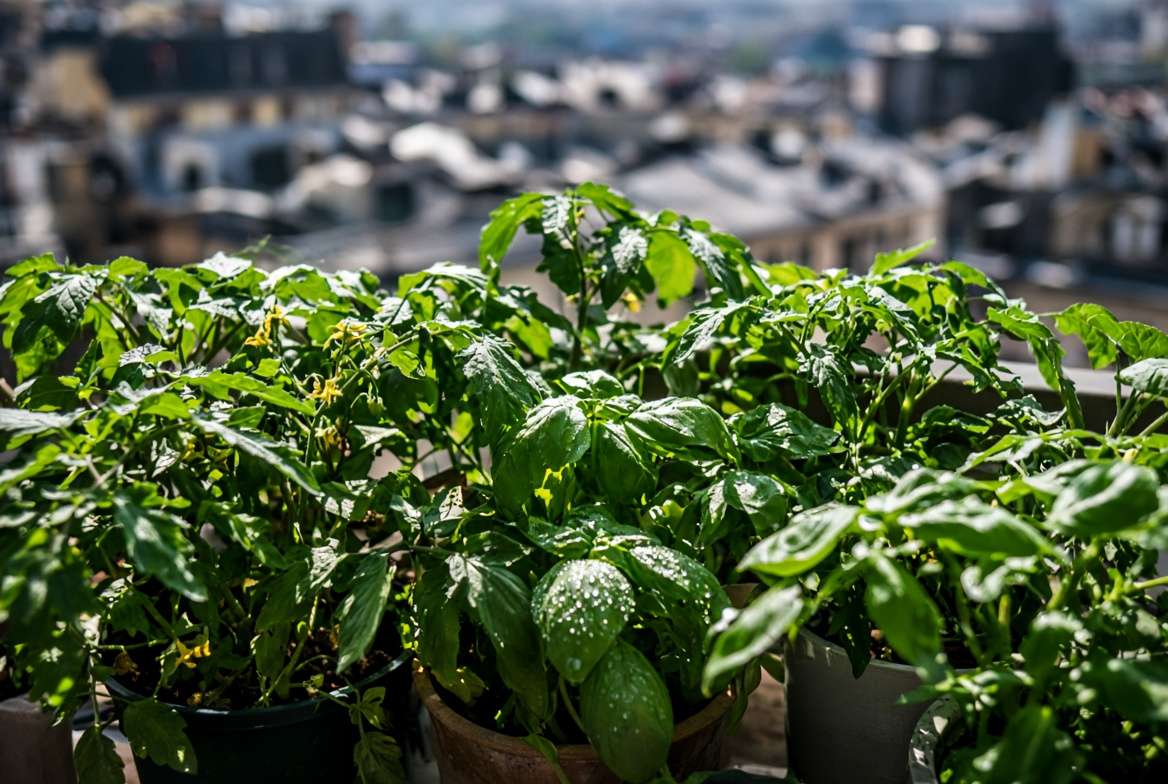
When you plant vegetables in an open garden bed, their roots have the luxury of stretching deep into the earth to forage for nutrients and moisture. In a container, the environment is strictly bounded. The potting mix in that container is the entire universe for your plant.
Resource Competition and Soil Health 🪱
Every vegetable requires a specific baseline of nitrogen, phosphorus, and potassium (NPK) to thrive, alongside vital micronutrients like calcium and magnesium. When you overcrowd a pot, you force multiple root systems into a fierce battle for these limited resources. This intense competition rapidly depletes the soil microbiome, breaking down the organic matter in your potting mix faster than the plants can uptake the nutrients. The result? Stunted plants that fail to produce flowers or fruit.
The Airflow Factor and Disease Prevention 🌬️
Spacing is not just about what happens beneath the soil; it is equally critical for above-ground plant health. Dense, overlapping foliage restricts ambient airflow. When leaves cannot dry properly after a rainstorm or a morning watering, the stagnant moisture creates a perfect breeding ground for fungal pathogens like powdery mildew, early blight, and damping-off disease. Proper spacing ensures each leaf receives adequate sunlight and ventilation.
The Soil Volume Rule 📏
A fundamental principle of botanical science is that above-ground growth is directly dictated by below-ground root space. If a tomato plant’s taproot hits the bottom of a shallow pot prematurely and begins circling (becoming rootbound), it sends chemical stress signals to the upper plant to halt foliage and fruit production. To grow a large, robust vegetable, you must provide the corresponding volume of soil.
Decoding Seed Packets for Container Gardeners 🏷️
One of the biggest hurdles for container gardeners is that seed packets are almost always written for traditional row farming. Translating these instructions for a circular pot requires a bit of adaptation.
“Thin To” vs. “Row Spacing” ✂️
When a seed packet says “Row Spacing: 36 inches,” you can generally ignore this for containers, as you won’t be planting in long rows. However, pay strict attention to the “Thin To” or “Plant Spacing” metric. If the packet says “Thin to 12 inches apart,” this means each individual plant requires a 12-inch radius of space to thrive. In a standard 12-inch wide pot, that means you can only grow one of those plants.
The Square Foot Gardening Adaptation 🟩
The popular Square Foot Gardening (SFG) method is highly adaptable to container gardening. As a general rule, a standard 5-gallon bucket or a 12-inch wide round pot roughly equals one square foot of growing space. If an SFG guide says you can grow 9 bush beans per square foot, you can safely plant 9 bush beans in that 5-gallon container.
The Master Spacing Chart for Container Veggies 📊
Use this quick-reference cheat sheet when planning your container layout. The container sizes listed are the absolute minimums required for a healthy crop yield.
| Vegetable Type | Minimum Container Size | Number of Plants per Pot | Expert Soil Health Note |
| Tomatoes (Indeterminate) | 10–15 Gallons (18″+ deep) | 1 Plant | Requires heavy calcium to prevent blossom end rot. |
| Tomatoes (Determinate) | 5–7 Gallons | 1 Plant | Needs rich, loamy potting mix with good drainage. |
| Peppers (Bell or Hot) | 3–5 Gallons | 1 Plant | Benefits from added perlite for oxygenation. |
| Cucumbers (Bush) | 5 Gallons | 1–2 Plants | Keep soil consistently moist, never soggy. |
| Zucchini / Summer Squash | 10–15 Gallons | 1 Plant | Very heavy feeder; requires rich compost topping. |
| Carrots | 2-3 Gallons (12″ Deep) | 12–15 Plants | Needs loose, stone-free soil to grow straight. |
| Radishes | 1 Gallon (6″ Deep) | 10–15 Plants | Fast growers; do not over-fertilize with nitrogen. |
| Lettuce & Leafy Greens | 2 Gallons (8″ Deep) | 3–4 Plants | High nitrogen requirement for vigorous leafy growth. |
| Bush Beans | 3 Gallons | 4–5 Plants | Fixes its own nitrogen; inoculate seeds for best results. |
Pro Tip: Never use native garden dirt in your containers. It will compact and suffocate your plants. Always use a high-quality, lightweight potting mix tailored for container vegetables.
Deep Dive: Managing Heavy Feeders and Sprawlers 🍅
Certain summer crops are notoriously greedy when it comes to space and nutrients. Trying to cheat the spacing rules with these heavy feeders will guarantee a disappointing harvest.
Tomatoes and Peppers: The Solitary Kings 🌶️
Members of the nightshade family are aggressive growers. A single indeterminate tomato plant can easily grow an extensive root system that commands a 15-gallon container. Because they are heavy feeders, planting two tomatoes in a single pot will result in both plants producing fewer, smaller fruits than one plant grown alone. They simply cannot share the limited calcium and phosphorus. Give them their own pot, provide a sturdy cage or trellis for vertical support, and watch them thrive.
Vining Veggies: Cucumbers and Squash 🥒
Squash, melons, and vining cucumbers present a unique challenge because of their massive horizontal footprint. While a single zucchini plant absolutely requires a 10-gallon pot to support its root system, the above-ground vines will easily spill over and take up ten square feet of patio space.
To optimize space, choose “bush” varieties bred specifically for containers. Alternatively, utilize heavy-duty trellises to train vining cucumbers upward. This maximizes your vertical space while ensuring the roots have the exclusive, uncrowded soil volume they need below.
Deep Dive: Root Vegetables and Leafy Greens 🥕
Not all container veggies need massive, deep pots. Understanding the specific growth habits of your crops allows you to choose the right container geometry.
Surface Area vs. Depth 🥬
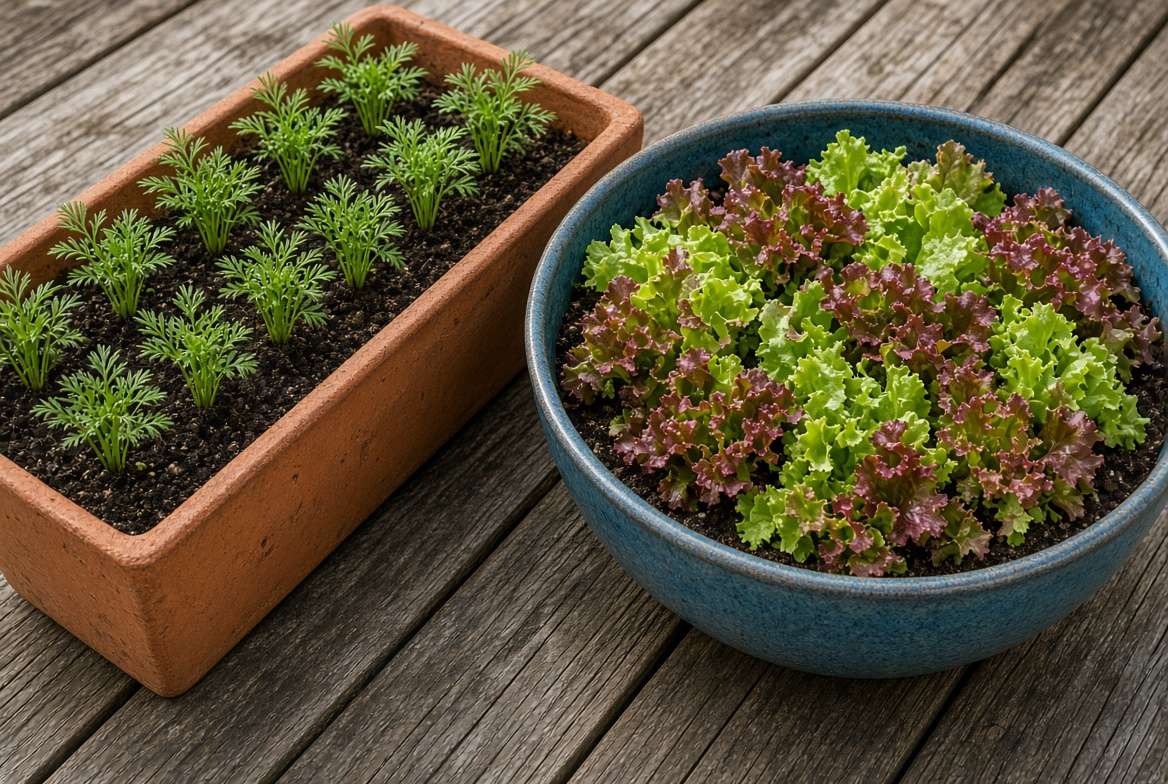
Leafy greens like spinach, arugula, and leaf lettuce have shallow, fibrous root systems. They do not require a deep 15-gallon bucket. Instead, they thrive in wide, shallow containers (often called “window boxes” or “pan pots”) that are only 6 to 8 inches deep but offer a massive surface area.
Conversely, root vegetables like carrots, parsnips, and daikon radishes require depth above all else. A carrot planted in a shallow pot will bend, fork, and stunt the moment its taproot hits the plastic bottom. For standard carrots, you need a container that is at least 12 inches deep, though the surface area can be packed quite densely (spacing them about 2 to 3 inches apart).
The Cut-and-Come-Again Method ✂️🌿
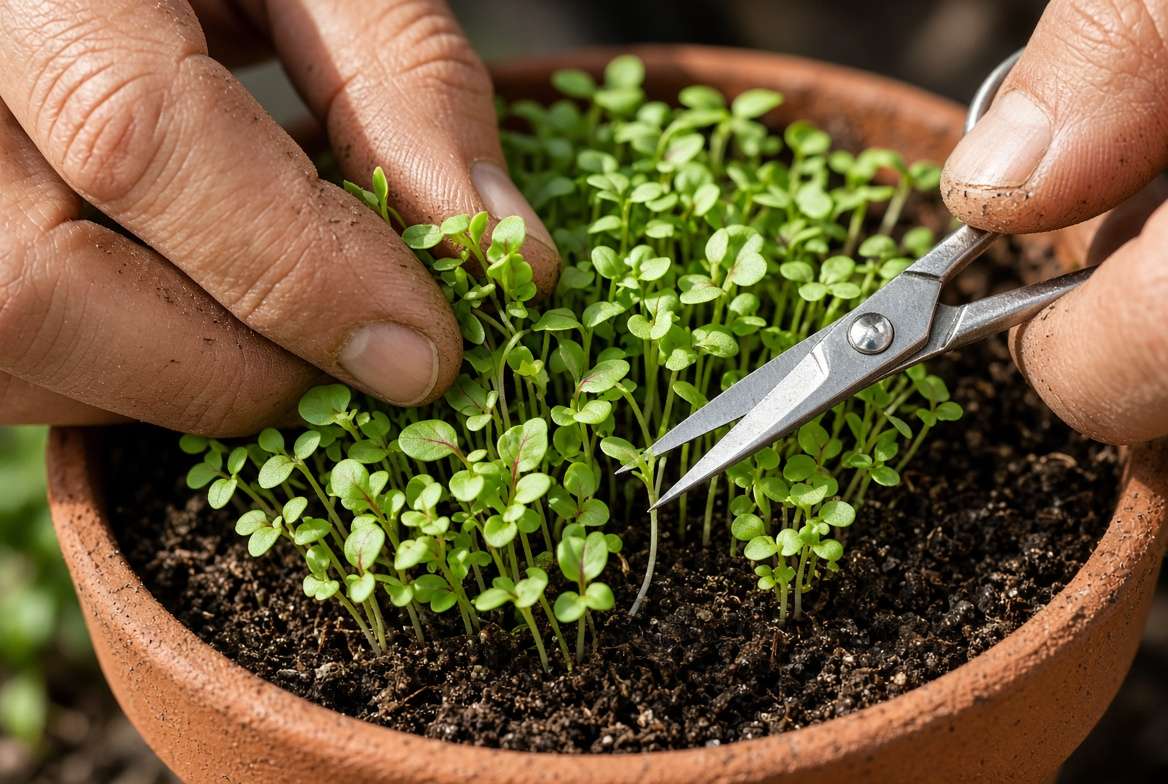
If you are growing leafy greens, you can actively cheat standard spacing requirements by using the “cut-and-come-again” harvesting method. Instead of spacing lettuce heads 8 inches apart to reach full maturity, broadcast the seeds thickly across the surface of the soil. As the plants grow to about 3 or 4 inches tall, trim the outer leaves with scissors for a baby greens salad. By continually harvesting the foliage, you prevent the plants from overcrowding each other, allowing you to grow a dense, continuous carpet of greens.
The Art of Container Companion Planting (Maximizing Space Safely) 🌼
While overcrowding is detrimental, strategic companion planting allows you to maximize the utility of a single large container without causing harmful competition. The secret is pairing plants that do not fight for the same real estate.
The Depth Pairing Strategy 🧅
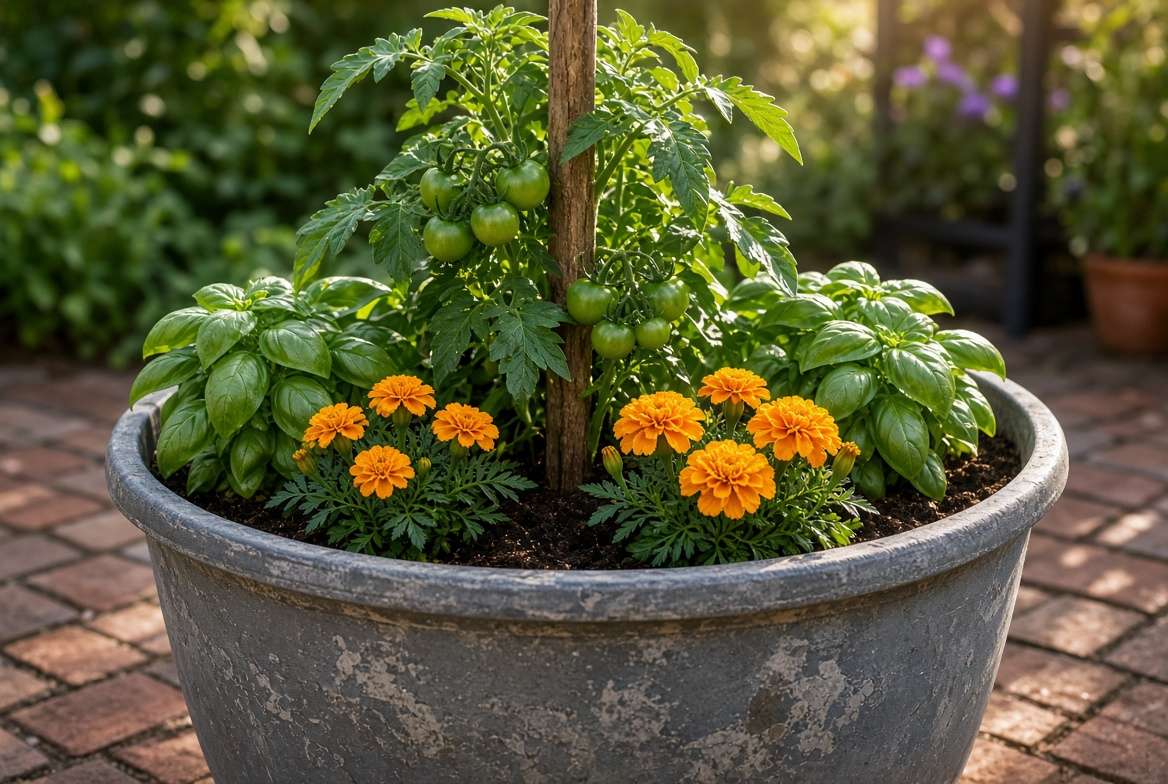
The most effective way to combine plants in a single pot is to pair a deep-rooted, long-season crop with a shallow-rooted, short-season crop. For example, if you have a tomato plant in a large 15-gallon container, the top few inches of the soil around the base of the tomato are largely unoccupied. You can safely plant shallow-rooted basil, radishes, or scallions around the perimeter. By the time the tomato grows large enough to shade them out, the radishes will already be harvested.
Pest-Deterring Combos 🐛
Incorporating specific herbs and flowers into your vegetable containers is excellent for organic pest control.
-
Marigolds: Planting a small French marigold at the base of your pepper or tomato plants helps repel root-knot nematodes and deters whiteflies.
-
Nasturtiums: These beautiful trailing flowers act as a “trap crop,” drawing aphids away from your precious zucchini and cucumbers.
Because these companion plants are relatively small, they do not violate the primary spacing rules of the main vegetable crop.
Expert Diagnostics: Is Your Pot Already Overcrowded? 🚑
If you have already planted your garden and suspect you might have been a bit too heavy-handed with the seeds, your plants and soil will show clear signs of distress. Here is how to diagnose an overcrowded container:
-
Rapid Soil Drying (The Thirst Trap): If a pot requires watering twice a day just to keep the plants from wilting, and the water immediately runs out the drainage holes, the container is likely completely filled with roots. There is simply no soil matrix left to hold moisture.
-
Yellowing Lower Leaves (Nitrogen Starvation): When plants are strangled together, they quickly exhaust the nitrogen in the soil. The plant will begin cannibalizing itself, pulling nitrogen from its older, lower leaves to support the new growth at the top.
-
Escaping Roots (The Breakout): Look at the drainage holes at the bottom of your pot. If thick, tangled roots are aggressively pushing out of the bottom, or if roots are visibly circling the surface of the topsoil, the plants are severely rootbound and fighting for space.
-
Failure to Set Fruit: If your eggplants or tomatoes are producing dozens of blossoms but they all drop off without forming fruit, the plants do not have the root capacity or nutritional reserves to support reproduction.

How to Rescue an Overcrowded Container ✂️
If you diagnose an overcrowding issue early enough, you can step in and save your harvest. It requires a bit of tough love, but your remaining plants will thank you.
Strategic Thinning (Don’t Pull!) 🌱
If you planted six cucumber seeds in a pot meant for two, you must thin the herd. Never pull the extra seedlings out by the roots. Because the roots are already tangled together beneath the soil, pulling one plant will severely damage the delicate root systems of the plants you want to keep. Instead, take a pair of sharp, sterilized scissors and snip the weaker seedlings flush with the soil line. The leftover roots will harmlessly decompose, adding organic matter back into the soil microbiome.
Mid-Season Up-Potting 🪴➡️🛢️
If you have a single pepper or tomato plant that has clearly outgrown its nursery pot, you need to up-pot it. Wait for an overcast day or wait until late evening to reduce transplant shock. Gently slide the rootball out of the current container. If the roots are tightly wound in a circle, gently tease them apart with your fingers before placing the plant into a significantly larger container filled with fresh, pre-moistened potting soil.
Aggressive Supplemental Feeding 🧪
If you absolutely cannot up-pot or thin your plants, your only recourse is to compensate for the lack of soil volume by spoon-feeding nutrients. Use a high-quality liquid organic fertilizer, like fish emulsion or compost tea, every 7 to 10 days. Slow-release granular fertilizers will not break down fast enough to support severely overcrowded, starving plants.
Frequently Asked Questions (FAQ) ❓
Can I put two tomato plants in a 5-gallon bucket?
Absolutely not. While they might survive for a few weeks, they will quickly choke each other out. The foliage will become dense and susceptible to blight, and the roots will exhaust the soil nutrients. You will likely get a few tiny, blossom-end-rot-afflicted tomatoes before the plants give up. Stick to one tomato per 5-gallon (or larger) bucket.
How close is too close for herbs and vegetables?
It depends on the herb. Woody, shrub-like herbs (like rosemary or lavender) require their own containers as they prefer dry, sandy soil. Leafy herbs like basil, cilantro, and parsley can be tucked into the margins of larger vegetable pots, provided they are kept at least 4 to 6 inches away from the main stem of the primary vegetable.
Does container shape (square vs. round) affect spacing requirements?
Yes. Square containers technically offer more soil volume and surface area than a round container of the same width. A 12-inch square planter gives you about 25% more workable corner space for tucking in companion plants compared to a 12-inch round pot.
Do I need to leave space between the pots themselves?
Yes! Spacing isn’t just about the roots inside the pot. If you jam ten containers tightly together on your patio, the foliage will intertwine, severely restricting ambient airflow. Leave at least a few inches of visible space between the physical containers to allow the wind to breeze through the leaves, which is critical for preventing fungal diseases.
Conclusion: Give Your Veggies Room to Breathe ✨
Mastering the spacing requirements for container veggies is the single most impactful adjustment you can make to improve your gardening success. It is incredibly tempting to squeeze just one more seed into that pot, but resisting that urge is the hallmark of an expert gardener.
By respecting the soil volume, understanding the root habits of your crops, and resisting the urge to overcrowd, you are setting the stage for strong, disease-resistant plants. When in doubt, remember the golden rule of container gardening: Give the plant its own pot.
Now is the perfect time to head out to your patio, evaluate your current container layouts, and make sure your veggies have the room they need to thrive. Happy growing! 👩🌾🌻











