

Welcome to the most common, yet most misunderstood, puzzle in gardening: the transitional light zone. Most planting guides and nursery tags focus heavily on two extremes—full, blazing sun or deep, dark shade. But what about those spaces in your yard that sit somewhere in between? If you have a spot that gets just 3 to 6 hours of morning light or is protected by dappled afternoon shade, you are going to need specific flowering plants for partial sun to bring that area to life.
It’s a frustrating scenario for many beginners. Planting full-sun lovers (like lavender or coneflowers) in these dimmer spots results in leggy, weak stems and zero blooms. Conversely, placing true shade-lovers (like delicate ferns) here often leads to crispy, scorched foliage.
In my years of designing woodland edges and transitional light gardens, I’ve found that the secret to a thriving, colorful border isn’t forcing plants to adapt to the wrong environment. The secret is choosing the right plants from the start. Let’s dive into my top field-tested picks and expert tips for transforming those dimly lit garden spots into vibrant focal points. ✨
🌤️ What Exactly Is “Partial Sun”? (Solving the Biggest Garden Mystery)
Before we start digging in the dirt, we need to clarify what “partial sun” actually means. Walk into any garden center, and you’ll see tags labeled “Partial Sun” and “Partial Shade.” While they are often used interchangeably by novices, they mean two very different things to a horticulturist.
🌗 Partial Sun vs. Partial Shade: The Golden Rule
-
Partial Sun: This term means the plant requires some direct sunlight to thrive and produce blooms, typically between 3 to 6 hours of direct sun per day. These plants do best when this light is delivered in the cooler morning hours, followed by relief from the harsh, baking afternoon heat.
-
Partial Shade: This term focuses on the plant’s need for protection. A plant labeled “partial shade” also needs 3 to 6 hours of sun, but it is highly sensitive to heat and will quickly burn if exposed to midday rays. It prefers dappled sunlight filtering through the canopy of a larger tree.
🗺️ How to Map the Light in Your Garden
One of the biggest mistakes I see gardeners make is guessing their light levels. To be certain, I highly recommend doing a simple “Light Audit” on a sunny day.
-
9:00 AM: Check the spot. Is the morning sun hitting it directly?
-
12:00 PM (Noon): Is the sun overhead and harsh? Is the spot protected by a building or tree canopy?
-
3:00 PM: Is the area in deep shadow, or is it getting blasted by the intense afternoon sun?
By tracking the light every few hours, you can confidently determine if you truly have a partial sun environment.

🌺 The 15 Best Flowering Plants for Partial Sun
To make planning your garden easier, I’ve broken down my favorite selections into specific categories. Let’s start with the dependable backbone of any garden: perennials.
🌼 Reliable Perennials for Year-After-Year Color
Perennials are the gift that keeps on giving. Once established, these plants will return every spring, bringing reliable color and structure to your partial sun borders.
1. Astilbe (Astilbe spp.) 🪶
If you want to add fluffy, touchable texture to your garden, Astilbe is an absolute must. These plants produce tall, feathery plumes of pink, red, purple, or white flowers that stand proudly above fern-like foliage.
-
USDA Hardiness Zones: 3–9
-
Bloom Time: Early to late summer (depending on the variety).
-
Soil Needs: Rich, organically dense, and consistently moist.
-
Expert Care Tip: Astilbes are incredibly thirsty plants. If placed in partial sun, their soil must never be allowed to dry out completely. If the edges of the leaves turn crispy and brown, they are begging for water! Add a thick layer of mulch to help retain soil moisture.
2. Bleeding Heart (Dicentra spectabilis) 💖
There is nothing quite as romantic or nostalgic as a Bleeding Heart. They feature elegant, arching stems dripping with perfectly heart-shaped pink and white blooms. They are practically tailor-made for woodland gardens and morning sun spots.
-
USDA Hardiness Zones: 3–9
-
Bloom Time: Late spring to early summer.
-
Soil Needs: Moist, well-draining, slightly acidic soil.
-
Expert Care Tip: Bleeding Hearts are spring ephemerals. This means that as the summer heat turns up, their foliage will naturally yellow and die back to the ground. Design trick: Plant them next to late-emerging perennials like Hosta or ferns, which will grow large enough to fill the empty visual gap left behind in mid-summer.
3. Columbine (Aquilegia) 🐦
Columbines are whimsical, intricate, and absolutely irresistible to hummingbirds and butterflies. Their bell-shaped, spurred flowers look like tiny, colorful crowns floating above delicate, clover-like leaves.
-
USDA Hardiness Zones: 3–9
-
Bloom Time: Mid-spring to early summer.
-
Soil Needs: Average, medium moisture, well-draining soil.
-
Expert Care Tip: Columbines are relatively short-lived perennials (often only lasting 3-4 years), but they are enthusiastic self-seeders. Leave the spent flower heads on the plant to drop seeds, and you will have a continuous, naturalized colony for years to come.
4. Coral Bells (Heuchera) 🍁
While Heuchera is primarily celebrated for its astonishing foliage—which comes in shades of lime green, deep plum, caramel, and silver—it also produces lovely, delicate bell-shaped flowers on tall, wiry stems that dance in the breeze.
-
USDA Hardiness Zones: 4–9
-
Bloom Time: Late spring to mid-summer.
-
Soil Needs: Humus-rich, well-drained soil. They hate sitting in winter wetness.
-
Expert Care Tip: In areas with cold winters, Coral Bells have a tendency to “heave” out of the frozen ground. Check them in early spring; if you see exposed roots, gently press them back into the soil and add a protective ring of compost.
5. Hellebore (Helleborus) ❄️
Also known as the Lenten Rose, Hellebores are the undisputed queens of the late winter and early spring garden. While the rest of the garden is still asleep, Hellebores push up nodding, cup-shaped flowers in shades of creamy white, dusty rose, and even deep, nearly black purples.
-
USDA Hardiness Zones: 4–9
-
Bloom Time: Late winter to early spring.
-
Soil Needs: Rich, well-drained soil. They are highly tolerant of dry shade once established.
-
Expert Care Tip: The leathery evergreen leaves from the previous year often look battered by late winter. Cut the old foliage down to the ground just as the new flower buds begin to emerge from the soil in late winter. This prevents diseases and lets the spectacular flowers take center stage.

🏵️ Easy-Care Annuals for Instant, Season-Long Impact
While perennials take a year or two to truly establish and put on a show, annuals provide instant gratification. Planting annuals in your partial sun borders guarantees continuous, unbroken color from the last spring frost all the way to autumn.
6. Fuchsia (Fuchsia magellanica) 💃
Fuchsias look like exotic, dancing fairies in the garden. Their intricate, teardrop-shaped buds burst open into spectacular bi-color blooms featuring vibrant pinks, purples, and whites. They are classic favorites for hanging baskets and window boxes situated under the eaves of a porch where they receive dappled morning light.
-
USDA Hardiness Zones: Grown as annuals in most zones (Perennial in 8–10).
-
Bloom Time: Early summer to first frost.
-
Soil Needs: Consistently moist, rich potting mix with excellent drainage.
-
Expert Care Tip: Fuchsias absolutely despise the hot midday sun, which will cause their flowers to drop prematurely. Keep them in a spot that receives only gentle morning rays, and feed them with a water-soluble, bloom-boosting fertilizer every two weeks to keep the heavy flower production going.
7. Impatiens (New Guinea Hybrids) 🌺
Forget the old-school standard impatiens that melt in the sun and succumb to downy mildew. New Guinea Impatiens are robust, disease-resistant powerhouses. They feature larger, brilliantly colored flowers and stunning, dark green or bronze lance-shaped foliage that can tolerate significantly more sunlight than their traditional cousins.
-
USDA Hardiness Zones: Annuals in all zones.
-
Bloom Time: Spring to fall.
-
Soil Needs: Well-draining soil rich in organic matter.
-
Expert Care Tip: While they tolerate more sun (up to half a day), they are not drought-tolerant. If they wilt in the afternoon heat, a quick, deep watering will usually bounce them back within an hour.
8. Tuberous Begonias (Begonia × tuberhybrida) 🌹
If you want the lush, romantic look of roses in a spot that doesn’t get enough sun for actual roses, tuberous begonias are your answer. They produce massive, double blooms in vivid shades of red, yellow, orange, white, and pink.
-
USDA Hardiness Zones: Annuals in most zones (tubers can be overwintered indoors).
-
Bloom Time: Mid-summer to frost.
-
Soil Needs: Light, airy, slightly acidic soil.
-
Expert Care Tip: Overwatering is the number one killer of tuberous begonias. Their fleshy stems are highly susceptible to stem rot. Always water the soil directly, keeping water off the leaves, and allow the top inch of soil to dry out before watering again.
9. Lobelia (Lobelia erinus) 🦋
True blue is one of the rarest colors in the garden, but Lobelia delivers it in spades. This trailing, mounding annual forms a dense carpet of tiny, electric blue, purple, or white flowers. It’s the perfect “spiller” plant to soften the edges of containers or raised beds in partial sun.
-
USDA Hardiness Zones: Annuals in all zones.
-
Bloom Time: Spring and early summer (often rests in peak heat, returning in fall).
-
Soil Needs: Rich, moist, well-drained soil.
-
Expert Care Tip: Lobelia prefers cooler weather. If your plant begins to look stringy and stops blooming during a July heatwave, grab a pair of scissors and shear the entire plant back by half. It will flush out with fresh green growth and reward you with a second massive bloom cycle as the weather cools in September.
🌿 Flowering Shrubs for Structure and Height
Every garden needs a “bones” structure—larger plants that anchor the space and provide winter interest. These shrubs thrive beautifully on the woodland edge, bridging the gap between heavy canopy shade and the open lawn.
10. Oakleaf Hydrangea (Hydrangea quercifolia) 🍂
This North American native is a true four-season showstopper. In early summer, it produces massive, cone-shaped panicles of white flowers that slowly age to a dusty rose. In autumn, its deeply lobed, oak-like leaves turn breathtaking shades of crimson, mahogany, and purple.
-
USDA Hardiness Zones: 5–9
-
Bloom Time: Early to mid-summer.
-
Soil Needs: Well-drained, slightly acidic soil fortified with compost.
-
Expert Care Tip: Oakleaf hydrangeas bloom on old wood (stems that grew the previous year). If you need to prune them to control their size, do so immediately after they finish blooming in the summer. If you prune them in fall or winter, you will accidentally cut off next year’s flower buds!
11. Azaleas and Rhododendrons (Rhododendron spp.) 🌸
No list of shade-tolerant or partial sun plants is complete without these woodland royalty. Ranging from compact groundcovers to towering bushes, they burst into glorious, fiery color in the spring.
-
USDA Hardiness Zones: 4–9 (varies heavily by species).
-
Bloom Time: Spring.
-
Soil Needs: Highly acidic (pH 4.5 to 6.0), rich, and exceptionally well-drained.
-
Expert Care Tip: Azaleas and Rhododendrons have very shallow, fine root systems. Never cultivate or dig deeply around their base. Instead, apply a thick layer of pine straw or bark mulch to keep their delicate roots cool and suppress weeds naturally.
12. Camellias (Camellia japonica) 🍵
When everything else in the garden looks bleak, Camellias step up to steal the show. These evergreen shrubs boast glossy, dark green leaves and produce exquisite, symmetrical flowers that look like they belong in a botanical painting.
-
USDA Hardiness Zones: 7–9
-
Bloom Time: Late winter to early spring.
-
Soil Needs: Acidic, organically rich, moist but well-drained.
-
Expert Care Tip: Plant Camellias in a sheltered location that protects them from cold winter winds and early morning winter sun, which can thaw frosted buds too rapidly and turn the beautiful flowers to mush.
🪴 Unique Beauties for the Plant Collector
If you want your partial sun garden to spark conversations, try adding a few of these unusual, architectural stunners.
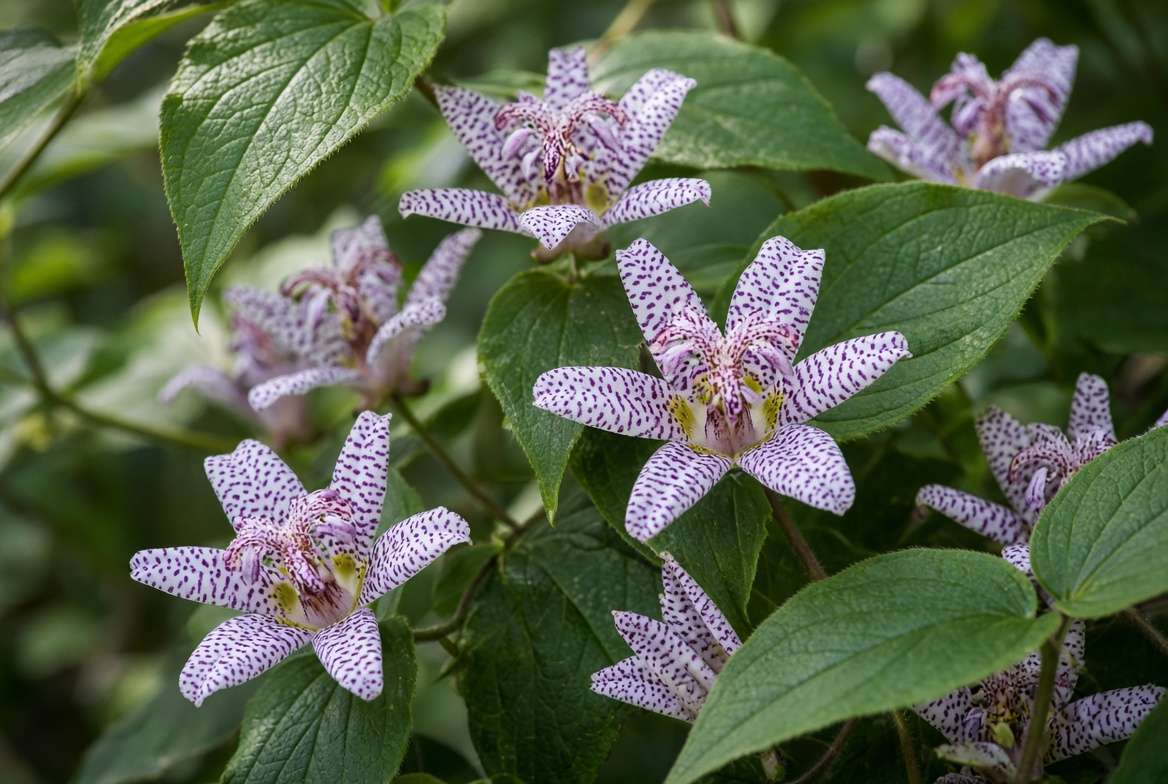
13. Toad Lily (Tricyrtis hirta) 🐸
Don’t let the unappealing name fool you; this is one of the most exotic-looking plants you can grow in a temperate garden. Blooming late in the season when most other plants are fading, the Toad Lily produces star-shaped flowers heavily speckled with purple and pink, resembling rare tropical orchids.
-
USDA Hardiness Zones: 4–8
-
Bloom Time: Late summer to early fall.
-
Soil Needs: Moist, slightly acidic, humus-rich soil.
-
Expert Care Tip: Because the flowers are relatively small and intricately detailed, plant Toad Lilies near the front of a border or along a frequently used woodland path where their delicate beauty can be appreciated up close.
14. Foxglove (Digitalis purpurea) 🗼
Foxgloves provide essential vertical drama to the partial sun garden. Sending up tall, stately spires covered in tubular, freckled bells, they are a classic staple of the English cottage garden design.
-
USDA Hardiness Zones: 4–8 (Usually grown as a biennial).
-
Bloom Time: Early to mid-summer.
-
Soil Needs: Rich, moist, well-drained soil.
-
Expert Care Tip & 🐾 Safety Warning: Foxgloves are biennials, meaning they grow only a rosette of leaves in their first year and bloom in their second year before dying. Let them drop their seeds to keep the cycle going. Important: All parts of the Foxglove plant are highly toxic if ingested. Exercise extreme caution if you have curious pets or young children who frequent the garden.
15. Japanese Anemone (Anemone hupehensis) 🌬️
As summer winds down, Japanese Anemones step into the spotlight. They produce tall, wiry stems topped with elegant, cup-shaped pink or white flowers that sway beautifully in the autumn breeze. They add a graceful, airy movement to heavier shrub borders.
-
USDA Hardiness Zones: 4–8
-
Bloom Time: Late summer to mid-fall.
-
Soil Needs: Consistently moist, rich, well-draining soil.
-
Expert Care Tip: Japanese Anemones can be slow to establish, but once they settle in, they spread vigorously via underground rhizomes. Give them plenty of room to roam, or plant them in a contained area if you want to restrict their footprint.
🌱 Expert Tips: How to Care for Plants in Transitional Light
Choosing the right flowering plants for partial sun is only half the battle. To truly succeed and push these plants to their maximum blooming potential, you need to tailor your care routine to this specific micro-climate. Here are my top professional strategies for transitional light zones.
🪱 Getting the Soil Right (Drainage is Key)
Areas that only receive a few hours of sun naturally hold onto moisture much longer than spaces baking in the midday heat. While this is great during a drought, it can be a death sentence during a rainy spring. If your partial sun spot has heavy clay soil, roots can easily rot.
-
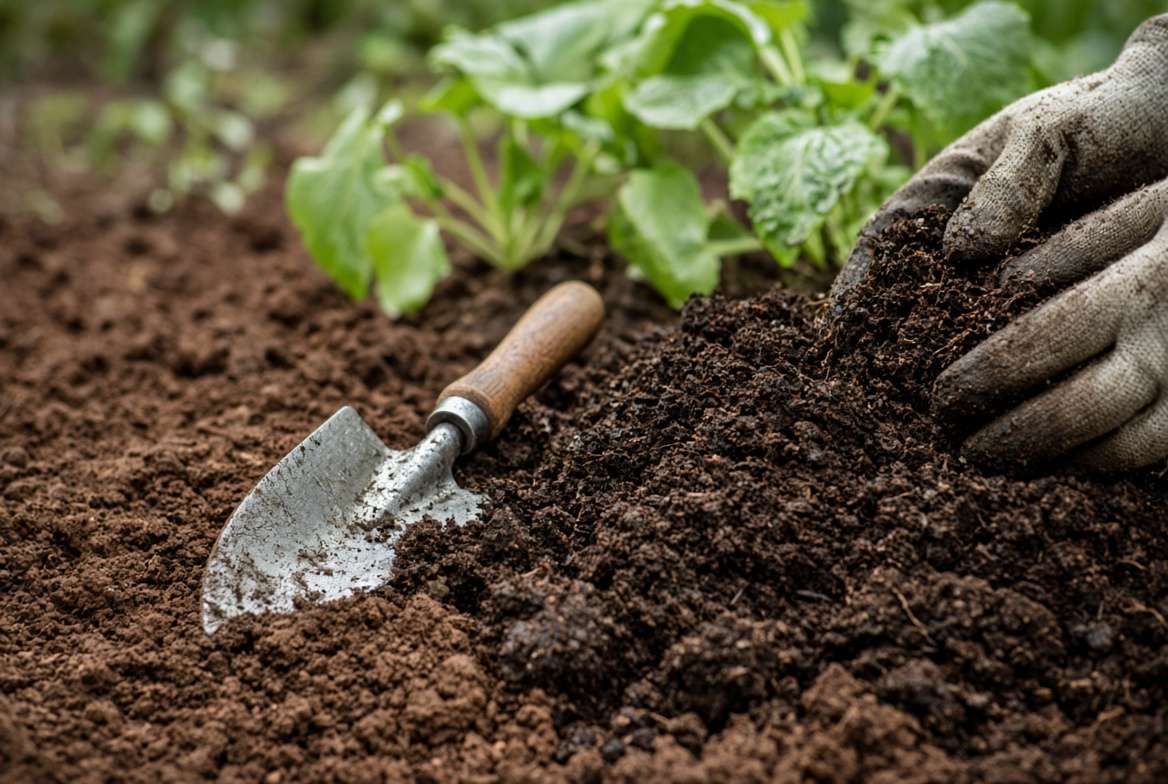
The Fix: Before planting, generously amend the area with organic matter. Work in a 2- to 3-inch layer of high-quality compost, leaf mold, or aged manure. This improves drainage in clay soils while simultaneously boosting the water-holding capacity of sandy soils.
💧 Watering Practices for Partial Sun
Because the sun isn’t evaporating surface moisture as quickly, you must adjust your watering habits. Watering on a strict schedule (like “every other day”) is a fast track to overwatering.
-
The Finger Test: Always check the soil before turning on the hose. Stick your index finger about two inches into the soil. If it feels moist, wait. If it feels dry to the touch, it’s time to water.
-
Water Deeply, Not Frequently: When you do water, soak the base of the plant deeply to encourage roots to grow further down into the soil profile. Shallow, frequent watering encourages weak, surface-level roots that struggle during dry spells.
🌿 Feeding and Fertilizing Without Burning
Plants growing in lower light conditions generally grow a bit slower than those in full sun, meaning they require slightly less fertilizer. Over-fertilizing, particularly with high-nitrogen formulas, will result in massive, floppy green leaves at the expense of your beautiful flowers!
-
The Fix: Rely on a slow-release, granular organic fertilizer applied once in early spring. If your plants need a boost mid-season, use a balanced, water-soluble bloom booster mixed at half-strength.
🎨 Companion Planting: Designing Your Partial Sun Oasis
Knowing which flowering plants for partial sun to buy is a great start, but arranging them into a cohesive, professional-looking design is where the true garden magic happens. The key to a stunning transitional border is layering contrasting textures, heights, and bloom times.
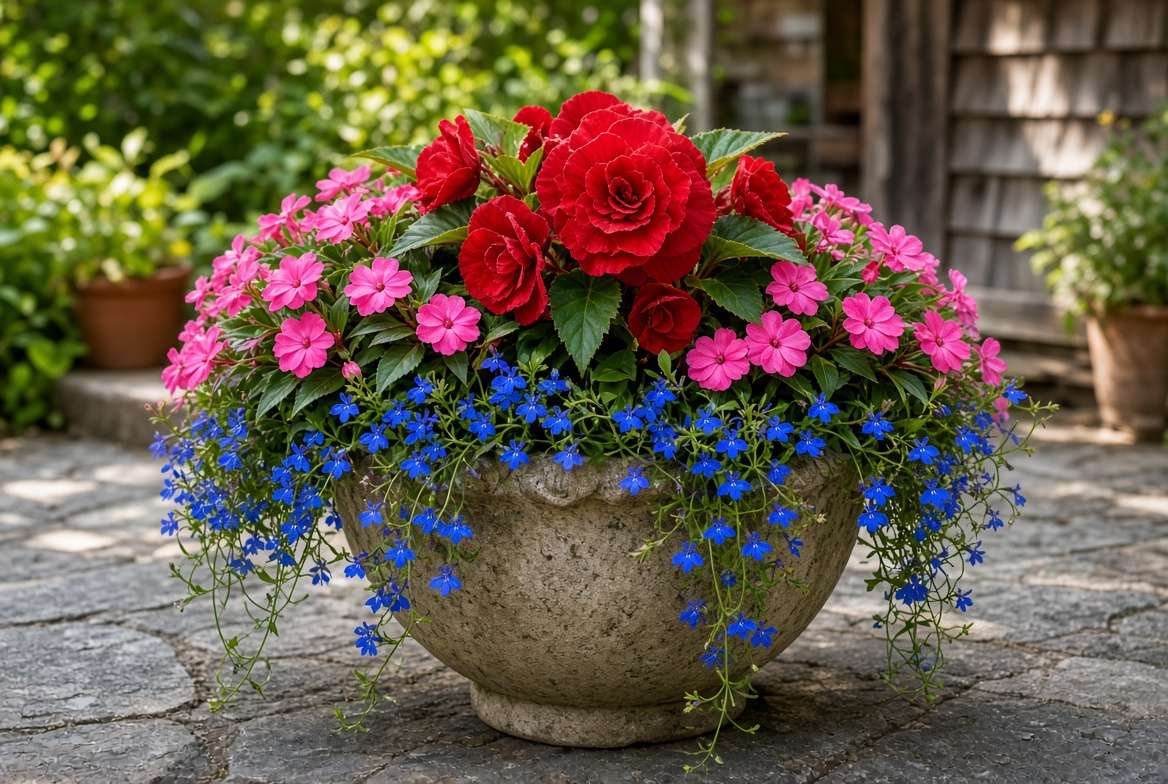
Here are three field-tested “recipe” ideas for combining the plants on this list into gorgeous vignettes:
The Classic Cottage Edge 🏡
This combination provides a highly structured, tiered look with non-stop visual interest from spring through late summer.
-
The Background (Height): Plant a cluster of Foxgloves. Their tall, vertical spires draw the eye upward and create a dramatic backdrop.
-
The Mid-Ground (Texture): In front of the Foxgloves, place a sweeping drift of pink or white Astilbe. The fluffy, soft plumes contrast beautifully against the rigid spikes of the Foxgloves.
-
The Foreground (Edging): Line the very front of the bed with Coral Bells. Their striking, low-mounding foliage will hide the bare lower stems of the taller plants behind them and hold the space beautifully even when the other plants finish blooming.
The Spring Woodland Awakening 🌳
If your partial sun spot is under the dappled canopy of a large deciduous tree, this combination will give you a breathtaking spring show before the tree fully leafs out.
-
The Anchor: A classic pink or white Azalea serves as the woody anchor.
-
The Dancer: Nestle Bleeding Hearts around the base of the Azalea. As the Azalea finishes its bloom cycle, the elegant, arching stems of the Bleeding Heart will take over the show.
-
The Carpet: Plant a carpet of Hellebores throughout. They will bloom first in late winter, and their thick, evergreen leaves will provide a lush groundcover year-round.
The Container Color Explosion 🪴
Don’t have a garden bed? You can still utilize transitional light on a patio or porch.
-
The Thriller (Center): Use a large, vibrantly colored Tuberous Begonia as the centerpiece.
-
The Filler (Middle): Surround the Begonia with bright New Guinea Impatiens for constant, mounding color.
-
The Spiller (Edge): Tuck Lobelia around the rim of the pot so its electric blue flowers cascade beautifully over the side.
❓ Frequently Asked Questions (FAQs)
Even seasoned gardeners run into issues when dealing with transitional lighting. Here are the most common questions I get asked about managing these spaces.
Will full-shade plants grow in partial sun?
Generally, no. True full-shade plants, such as delicate ferns or certain varieties of hostas, have thin leaves adapted to capture ambient light. If you place them in a spot that receives 3 to 6 hours of direct sun—especially midday or afternoon sun—they will suffer from leaf scorch. Their leaves will turn crispy, bleach out to a sickly yellow, or develop brown, burned edges. It’s always safer to choose plants explicitly bred for partial sun.
What is the longest-blooming plant for partial sun?
If you want non-stop color, you need to rely on annuals. New Guinea Impatiens and Tuberous Begonias are the undisputed champions of longevity in dim spots. As long as you keep them fed, watered, and protected from frost, they will push out continuous blooms from late spring until the first freeze in autumn. For perennials, Corydalis and certain re-blooming varieties of Astilbe offer excellent, extended bloom times.
Why are my partial sun plants not blooming?
If your plants are growing lush, green foliage but stubbornly refusing to flower, check these three common culprits:
-
Not Enough Light: While they tolerate lower light, they still absolutely require a minimum of 3 hours of direct sun to generate the energy needed to produce flowers. If a nearby tree has grown and cast deeper shade over the bed, your plant may now be in full shade.
-
Too Much Nitrogen: If you applied a heavy lawn fertilizer nearby, the nitrogen run-off will cause your plants to prioritize leafy green growth over flower production.
-
Improper Pruning: For shrubs like the Oakleaf Hydrangea, pruning in the fall or winter removes the buds that were setting up for the next summer’s display. Always check if your shrub blooms on “old wood” or “new wood” before grabbing the shears! ✂️
Having a garden with tricky, transitional lighting isn’t a curse—it’s an incredible opportunity. By stepping away from the standard full-sun daisies and full-shade ferns, you get to cultivate some of the most vibrant, unique, and texturally interesting plants available. The secret is simply observing your light, improving your soil drainage, and leaning into the natural strengths of the micro-climate you have.











