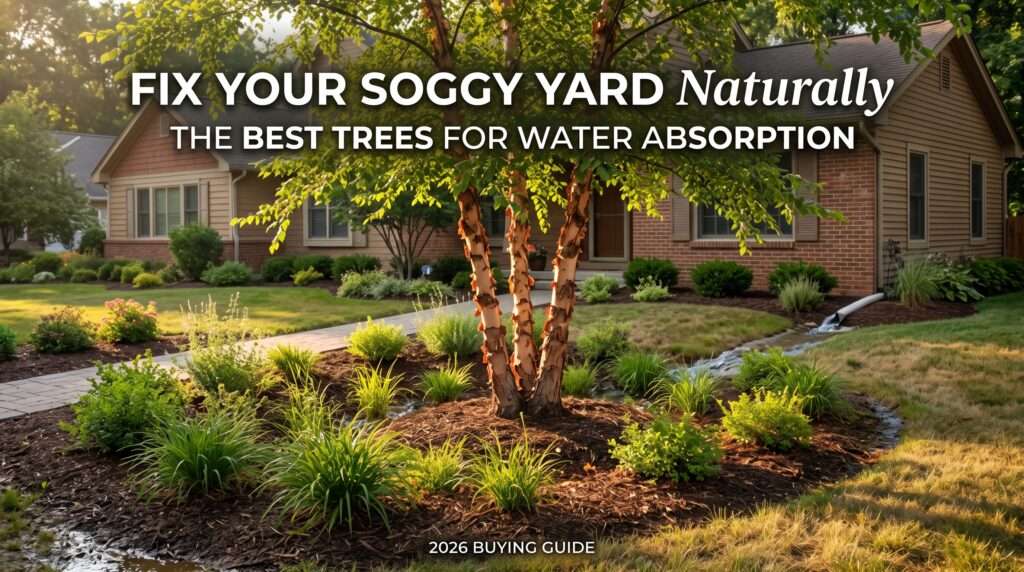
Tired of stepping into a soggy, muddy mess every time it rains? A poorly draining yard is more than just an eyesore—it’s a relentless mosquito breeding ground, a death sentence for your lawn grass, and a guarantee of muddy footprints tracking through your hallway. While landscaping contractors will happily charge thousands of dollars to regrade your property or install complex French drains, there is a beautiful, cost-effective alternative.
Hydrophytic (water-loving) trees act like massive, deep-rooted sponges that actively pull excess moisture out of the soil. To help you naturally dry out your landscape, we have evaluated the best 10 trees for water absorption that you can order right now as live saplings.
Whether you are dealing with seasonal puddles after a storm or a permanently swampy low spot in your backyard, planting the right tree can completely transform your property. In this guide, we break down the top-rated bare-root and potted trees available on Amazon, detailing their growth rates, climate requirements, and exactly how much standing water they can handle. By choosing the right species for your hardiness zone, you can permanently fix your drainage issues while simultaneously boosting your home’s curb appeal.
II. Buying Guide: How to Choose the Right Water-Absorbing Tree
Before you add a tree to your Amazon cart, it is crucial to understand that not all water-loving trees are created equal. Planting the wrong tree in the wrong spot can lead to property damage or a dead sapling. Here is what you need to evaluate to make an informed decision:
-
USDA Hardiness Zone: The single most important factor. A tropical Eucalyptus will freeze to death in Michigan, while a River Birch might scorch in the deep Texas heat. Always check your local USDA zone and match it to the tree’s requirements before ordering live plants online.
-
Root Systems & Proximity to Homes: Trees that drink a lot of water usually have aggressive, wide-spreading root systems. Species like the Weeping Willow will actively seek out moisture, which means if planted too close to your house, they can invade septic tanks, leach fields, underground plumbing, and even foundations. A general rule of thumb is to plant large water-absorbing trees at least 30 to 50 feet away from structures.
-
Mature Size & Spacing: That tiny bare-root sapling arriving in an Amazon box won’t stay small for long. Plan for the mature canopy size. Do not plant massive shade trees directly under power lines or too close to property borders.
-
Soil Type & Flood Duration: Does your yard have standing water for weeks, or is it just heavy clay that stays damp? Trees like the Bald Cypress can live in literal ponds, whereas a Red Maple prefers consistently moist soil but doesn’t want to be submerged year-round.
-
Deciduous vs. Evergreen: Deciduous trees (which lose their leaves) absorb less water during winter dormancy. If you have severe winter or early spring flooding, consider incorporating an evergreen species that processes water year-round.
III. Detailed Product Reviews: The Best 10 Trees for Water Absorption
1. Weeping Willow (Salix babylonica)
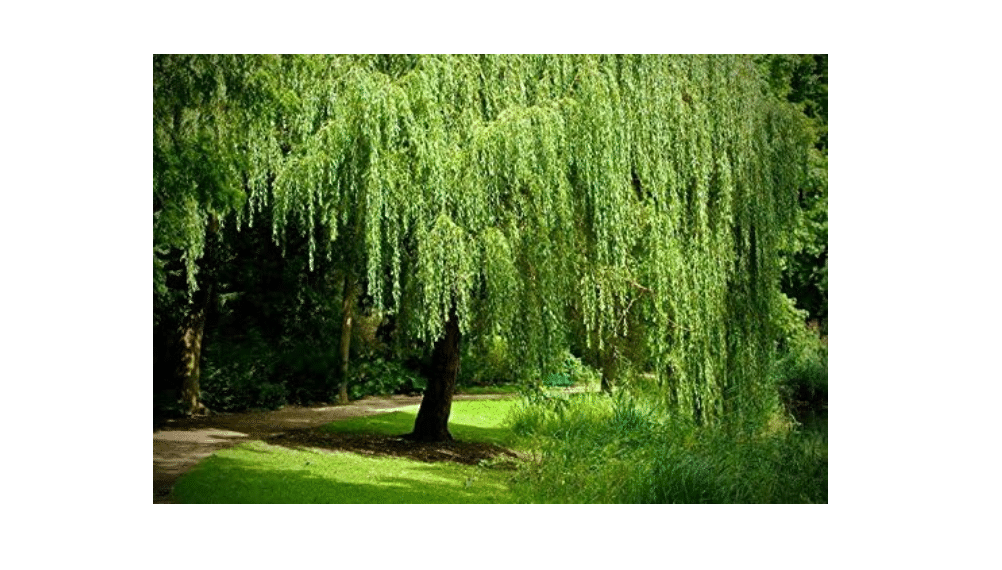
Product Description: The Weeping Willow is the undisputed heavyweight champion of water absorption. Recognized instantly by its graceful, cascading branches and shimmering silver-green foliage, this iconic tree is a staple in massive landscapes, parks, and waterfronts. When ordered as a bare-root sapling or cutting, it explodes with growth the moment it touches wet soil, establishing itself faster than almost any other shade tree on the market.
Price:
Key Features & Benefits:
-
Unmatched Growth Rate: Can grow 3 to 8 feet in a single year under optimal conditions.
-
Massive Thirst: A mature Weeping Willow can absorb over 100 gallons of water per day.
-
Erosion Control: The sprawling, dense root mat acts as a permanent anchor for dissolving stream banks and washing-away topsoil.
Pros and Cons:
-
Pros: The fastest natural solution for drying out a large, boggy area; beautiful, romantic aesthetic; very easy to root from cuttings.
-
Cons: Highly invasive root system that will destroy underground pipes; weak wood is susceptible to snapping during heavy ice storms or high winds.
Amazon Customer Ratings & Reviews: Rated 4.3/5 Stars. Buyers consistently rave about how fast the cuttings arrive and take root. Several reviewers note that within three years, their swampy backyards were transformed into usable, dry lawns. Some negative reviews mention the high maintenance required to clean up fallen twigs.
Why It’s a Good Choice for Water Absorption: Its aggressive, shallow root system acts like a massive botanical sponge, actively seeking out and sucking up immense volumes of ground moisture daily.
Ideal Use Case / Who Should Buy It: Homeowners with large, rural properties or acreage who need to dry out a massive area and can plant the tree at least 50 feet away from septic systems, plumbing, and house foundations.
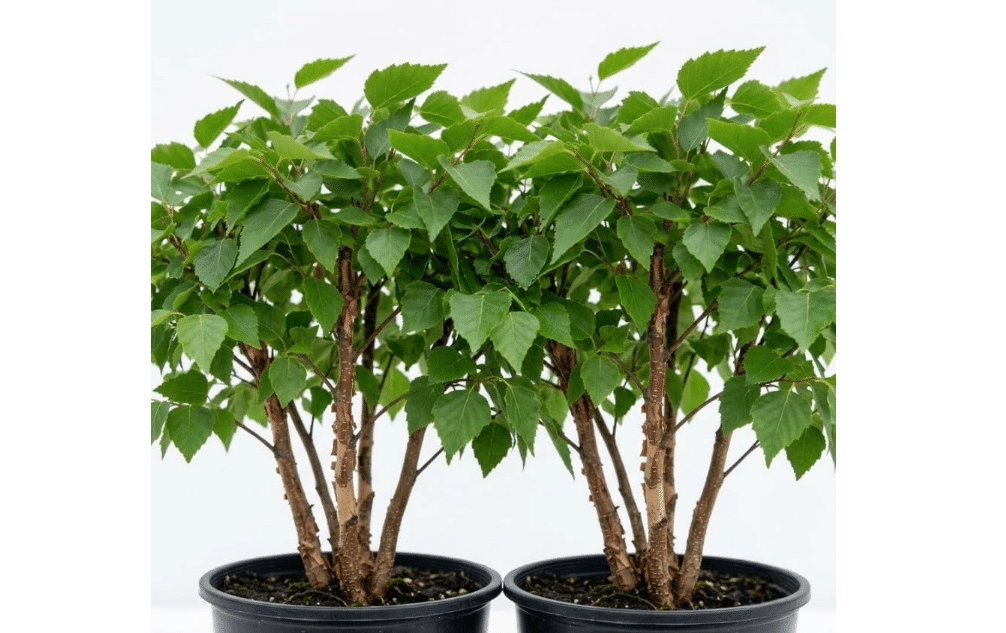
2. River Birch (Betula nigra)
Product Description: If you want an elegant, mid-sized tree that combines drainage utility with year-round aesthetic appeal, the River Birch is top-tier. Native to the riverbanks and floodplains of the eastern United States, this tree is famous for its striking, curling, cinnamon-colored peeling bark. It provides a stunning focal point in the winter landscape and unfurls beautiful, fluttering diamond-shaped green leaves in the spring.
Price:
Key Features & Benefits:
-
Pest Resistance: Highly resistant to the Bronze Birch Borer, a pest that notoriously kills other white birch varieties.
-
Multi-Trunk Option: Often grown with multiple trunks, creating a beautiful architectural look.
-
Heat Tolerance: Handles heat significantly better than other birch species, making it viable down to Zone 9.
Pros and Cons:
-
Pros: Incredible multi-season visual interest; stabilizes heavy clay and wet soils; fast grower (13-24 inches per year).
-
Cons: Drops a significant amount of small twigs and yellow leaves in late summer/fall; struggles if the soil ever completely dries out.
Amazon Customer Ratings & Reviews: Rated 4.5/5 Stars. Customers love the peeling bark texture and note that Amazon shipments of River Birch saplings arrive remarkably healthy. Many reviewers highlight its success in rain gardens and naturalized front yard depressions.
Why It’s a Good Choice for Water Absorption: As its name implies, the River Birch evolved in riparian zones (riverbanks). Its dense, fibrous root system is perfectly adapted to extracting moisture from heavy, wet clay that would drown lesser trees.
Ideal Use Case / Who Should Buy It: Suburban homeowners looking for a highly ornamental, medium-sized focal tree for a soggy front yard, rain garden, or slightly damp property line.
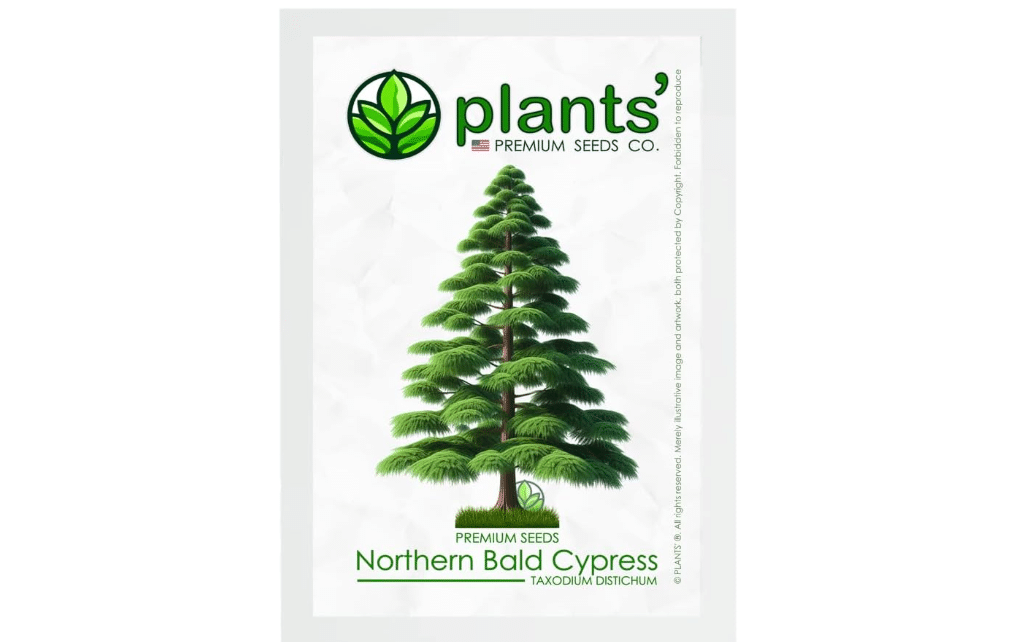
3. Bald Cypress (Taxodium distichum)
Product Description: The Bald Cypress is a tough, majestic, and long-lived survivor. While it looks like a traditional evergreen conifer with soft, feathery needles, it is actually a deciduous conifer—meaning it drops its needles in the fall after turning a spectacular, rusty-orange color. In its native southern swamps, this tree thrives in literal standing water, developing famous “cypress knees” (knobby root outgrowths) to help stabilize itself in the mud.
Price:
Key Features & Benefits:
-
Extreme Flood Tolerance: Can survive in stagnant, standing water for months at a time.
-
Hurricane Resistance: Remarkably wind-resistant due to its deep taproot and wide, fluted base.
-
Long Lifespan: Can live for hundreds of years, making it a true legacy planting.
Pros and Cons:
-
Pros: The ultimate solution for permanent standing water; gorgeous rust-orange fall color; highly adaptable to various soil pH levels.
-
Cons: If planted in a wet environment, it will eventually produce “knees” above the soil, which can make mowing the lawn around it very difficult.
Amazon Customer Ratings & Reviews: Rated 4.6/5 Stars. Gardeners highly praise the Bald Cypress for its sheer hardiness. Several Amazon reviewers mentioned planting these directly into 6 inches of standing puddle water where they thrived immediately.
Why It’s a Good Choice for Water Absorption: It is one of the only widely available landscape trees that doesn’t just tolerate wet soil, but actually thrives in environments entirely lacking soil oxygen due to severe flooding.
Ideal Use Case / Who Should Buy It: Perfect for the absolute lowest, wettest spots on your property where water pools deeply and refuses to drain for days or weeks after a storm.
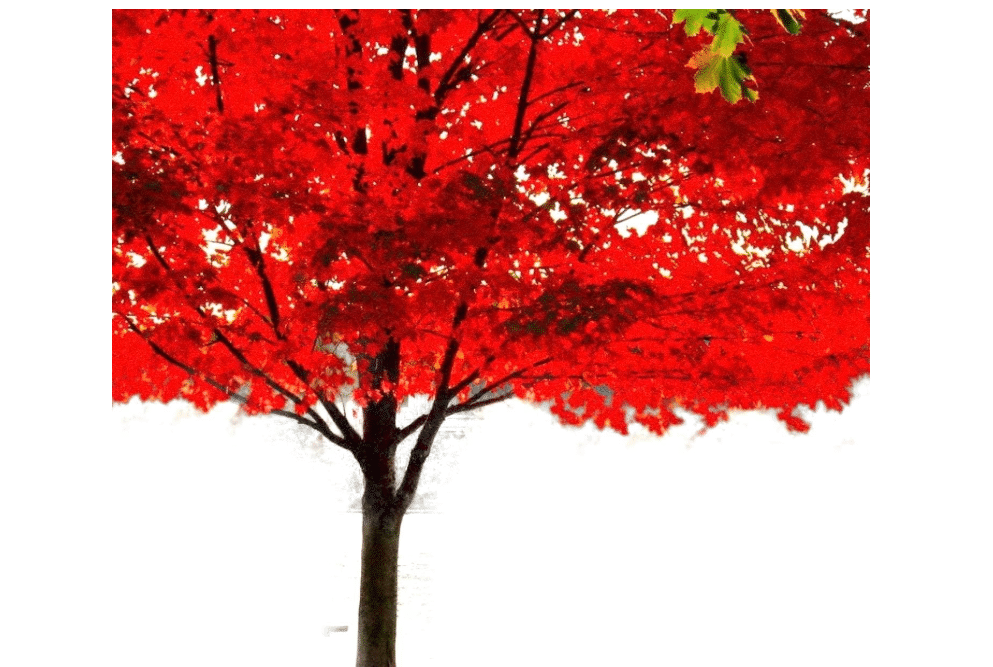
4. Red Maple (Acer rubrum)
Product Description: Often referred to in the wild as the “Swamp Maple,” the Red Maple is a North American classic celebrated for its brilliant, fiery-red autumn foliage. It offers an incredible balance of striking landscape beauty, dense shade, and a high tolerance for boggy, poorly drained soils. It is highly adaptable, growing naturally in both swamps and on dry ridges, making it a very forgiving tree for beginner gardeners ordering online.
Price:
Key Features & Benefits:
-
Spectacular Fall Color: Provides some of the most vibrant red and orange foliage of any native shade tree.
-
Adaptability: Thrives in a massive range of climates from Florida to Maine (Zones 3-9).
-
Fast Canopy Growth: Quickly establishes a wide canopy to shade your yard and cool your home.
Pros and Cons:
-
Pros: Stunning visual appeal; relatively easy to transplant and grow; excellent shade provider.
-
Cons: Has a shallow root system that can eventually surface and crack nearby sidewalks or driveways if planted too closely.
Amazon Customer Ratings & Reviews: Rated 4.4/5 Stars. Buyers frequently compliment the beautiful foliage and the speed at which these saplings establish themselves. A common piece of feedback is ensuring you buy from a highly-rated Amazon nursery to ensure the tree arrives undamaged in transit.
Why It’s a Good Choice for Water Absorption: It actively draws excess moisture out of the topsoil. Because its roots sit relatively close to the surface, it effectively acts as a pump, pulling sitting water out of the upper layers of a soggy lawn.
Ideal Use Case / Who Should Buy It: Homeowners looking for a classic, colorful, all-American shade tree that doubles as a reliable top-soil drainage solution for standard suburban yards.
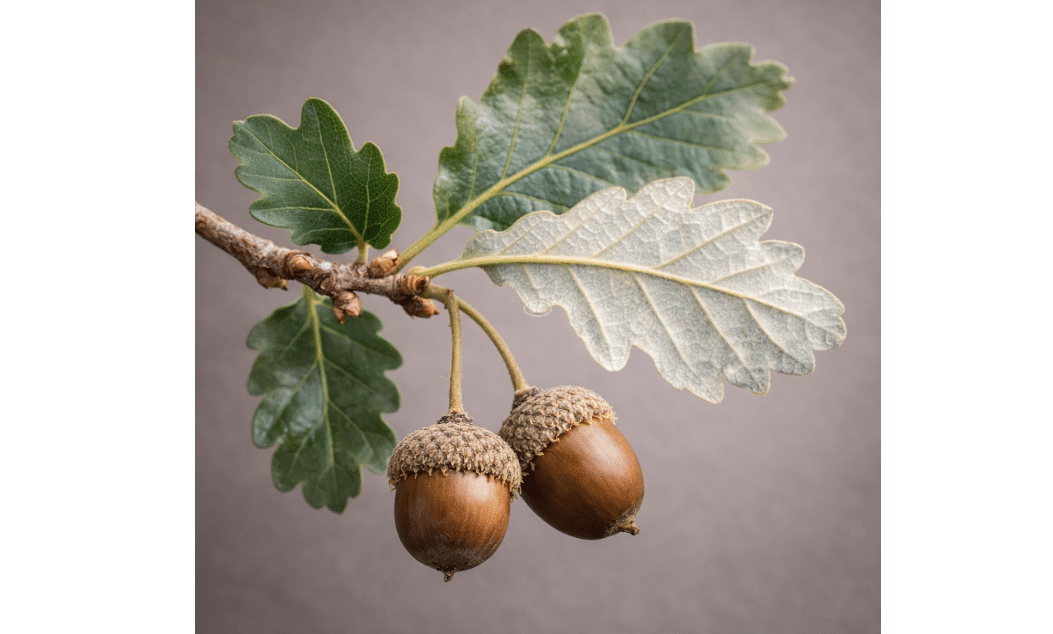
5. Swamp White Oak (Quercus bicolor)
Product Description:
The Swamp White Oak is a rugged, majestic shade tree that offers incredible longevity. Distinguished by its two-toned leaves—shiny dark green on top and silvery-white underneath—this tree is a powerhouse for large, wet properties. Unlike most oak varieties that demand well-drained soil, this species thrives in poorly drained, compacted clay, and wet environments, making it a brilliant long-term landscaping investment.
Price:
Key Features & Benefits:
-
Extreme Durability: Highly resistant to wind, ice, and storm damage.
-
Wildlife Support: Produces sweet acorns that attract deer, turkeys, and songbirds.
-
Longevity: Can live well over 300 years, providing generations of shade.
Pros and Cons:
-
Pros: Creates a permanent, legacy shade canopy; excellent for compacted urban soils; beautiful two-toned foliage.
-
Cons: Moderate growth rate compared to Willows or Maples; requires patience to reach full shade potential.
Amazon Customer Ratings & Reviews:
Rated 4.4/5 Stars. Reviewers highlight the strong, healthy root systems upon arrival. Many buyers in the Midwest and Northeast commend its ability to survive heavy spring rains and dense clay yards.
Why It’s a Good Choice for Water Absorption:
It is specifically adapted to low-lying areas and floodplains, utilizing a deep and extensive root network to pull water from heavy soils without succumbing to root rot.
Ideal Use Case / Who Should Buy It:
Homeowners looking for a permanent, high-value legacy tree that can handle seasonal yard flooding without the root-heaving issues of faster-growing species.
6. Black Gum / Tupelo (Nyssa sylvatica)
Product Description:
Often overlooked in commercial landscaping, the Black Gum (or Tupelo) is a hidden gem for wet yards. It boasts some of the most vibrant, show-stopping fall colors in the plant kingdom, transitioning through shades of yellow, orange, bright scarlet, and deep purple—often all on the same branch. It is a tough, adaptable native tree that tolerates “wet feet” exceptionally well.
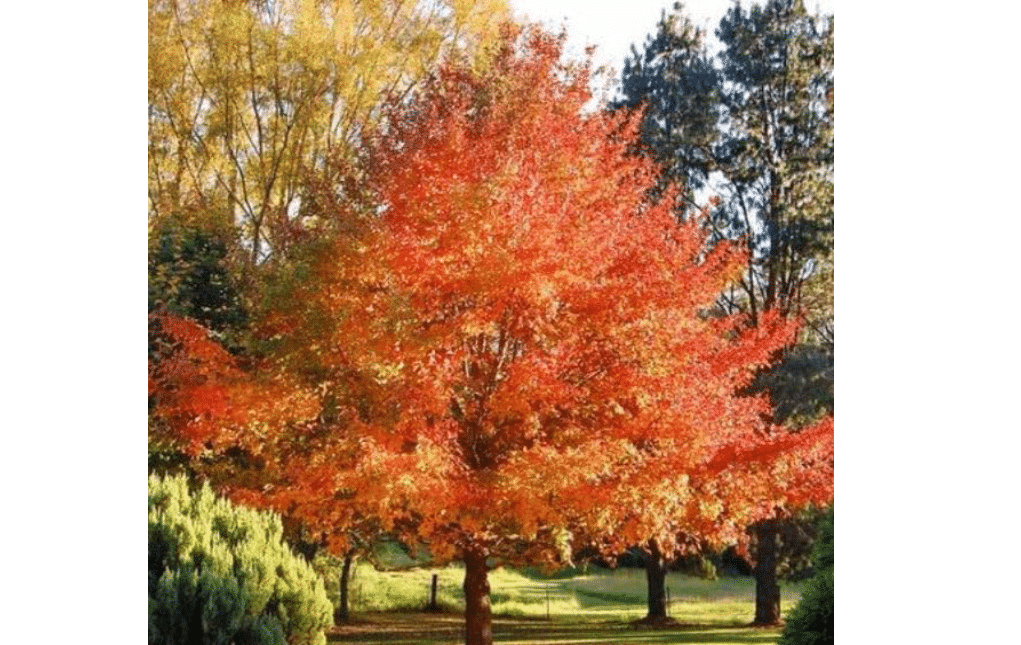
Price: $29.99
Key Features & Benefits:
-
Vibrant Autumn Foliage: Unrivaled fall color display.
-
Pollinator Magnet: Small spring flowers are highly attractive to bees (Tupelo honey is world-famous).
-
Strong Branch Structure: Grows with a distinct, straight trunk and horizontal branches.
Pros and Cons:
-
Pros: Incredible visual appeal; highly adaptable to swampy spots; strong storm resistance.
-
Cons: Develops a deep taproot, making it very difficult to transplant once established in your yard.
Amazon Customer Ratings & Reviews:
Rated 4.5/5 Stars. Gardeners praise the exceptional fall color and the tree’s overall hardiness. A few reviewers note that purchasing smaller saplings on Amazon yields better long-term results because the taproot establishes itself naturally in the ground.
Why It’s a Good Choice for Water Absorption:
As a natural wetlands native, it thrives in environments that stay saturated for extended periods, drawing up excess moisture to fuel its dense foliage.
Ideal Use Case / Who Should Buy It:
Landscapers and homeowners who want maximum autumn color and a highly ornamental tree for a persistently wet yard.
7. Eucalyptus (Eucalyptus camaldulensis / ovata)
Product Description:
For those in warmer climates struggling with severe drainage issues, the Eucalyptus is an absolute workhorse. Known globally as the “swamp gum,” this fragrant, evergreen tree was historically planted across the world specifically to dry out malaria-ridden marshlands. It grows at an astronomical rate and features stunning, peeling bark and aromatic, minty leaves.
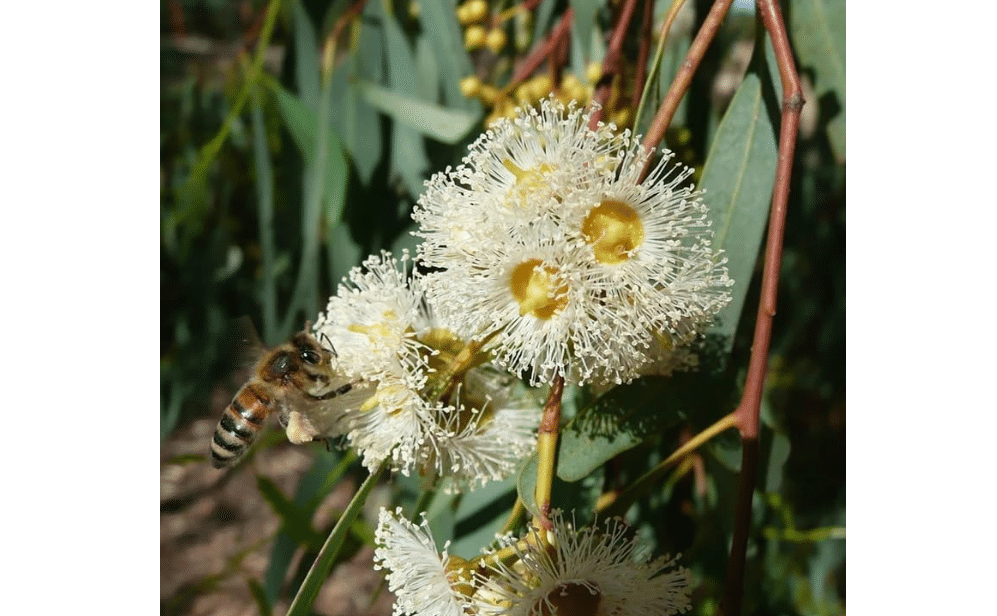
Price: $10.00
Key Features & Benefits:
-
Astronomical Growth: Can grow up to 6–10 feet in a single year.
-
Aromatic Foliage: Leaves emit a fresh, minty scent that can deter certain pests.
-
Evergreen: Processes water 365 days a year.
Pros and Cons:
-
Pros: One of the fastest botanical ways to dry out a boggy area; unique aesthetic and fragrance.
-
Cons: Only hardy in warm climates (Zones 8-11); can become overly massive and potentially invasive in certain regions.
Amazon Customer Ratings & Reviews:
Rated 4.2/5 Stars. Southern and West Coast buyers love the rapid growth and beautiful scent. Some reviews warn that the tree grows so fast it requires structural pruning in its first few years to prevent wind damage.
Why It’s a Good Choice for Water Absorption:
It is a hyper-accumulator of water. Its massive, aggressive root system works overtime, sucking up immense volumes of standing water year-round.
Ideal Use Case / Who Should Buy It:
Homeowners in warm, southern climates with large properties, severe drainage issues, and plenty of space for a giant evergreen.
8. Sweetbay Magnolia (Magnolia virginiana)
Product Description:
If you want to dry out a wet spot but only have space for a smaller, ornamental tree, the Sweetbay Magnolia is the perfect fit. Unlike standard Magnolias that rot in wet soil, the Sweetbay flourishes in boggy environments. It features elegant, silvery-green leaves and produces creamy-white, lemon-scented blooms throughout the late spring and summer.
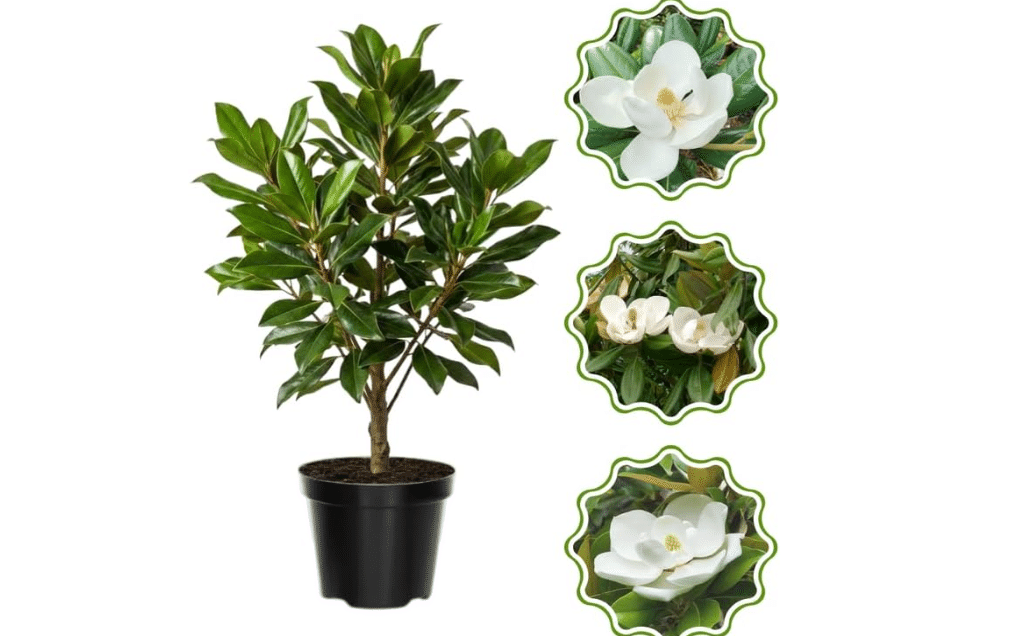
Price:
Key Features & Benefits:
-
Fragrant Blooms: Large, cup-shaped flowers that smell like lemon and vanilla.
-
Manageable Size: Typically tops out at 15–25 feet in northern climates (taller in the deep South).
-
Semi-Evergreen: Retains its foliage year-round in milder climates.
Pros and Cons:
-
Pros: Fits perfectly into small yards; stunning flowers and fragrance; highly tolerant of saturated soils.
-
Cons: Requires slightly acidic soil to truly thrive; slower growing than a maple or willow.
Amazon Customer Ratings & Reviews:
Rated 4.6/5 Stars. Customers are thrilled with the condition in which these arrive from Amazon nurseries. Many highlight how beautifully it performs near downspouts and in low-lying garden beds.
Why It’s a Good Choice for Water Absorption:
It naturally grows in coastal swamps and wet woodlands, making it one of the few flowering ornamentals that actively utilizes excess soil moisture.
Ideal Use Case / Who Should Buy It:
Gardeners with small-to-medium yards looking for an elegant, flowering focal point to fix a soggy depression near a patio or downspout.
9. American Sycamore (Platanus occidentalis)
Product Description:
The American Sycamore is a massive, incredibly fast-growing shade tree easily identified by its striking, mottled bark that peels away in irregular patches of white, gray, and green. It is a dominant presence in any landscape, offering an enormous, spreading canopy that provides deep, cooling shade.
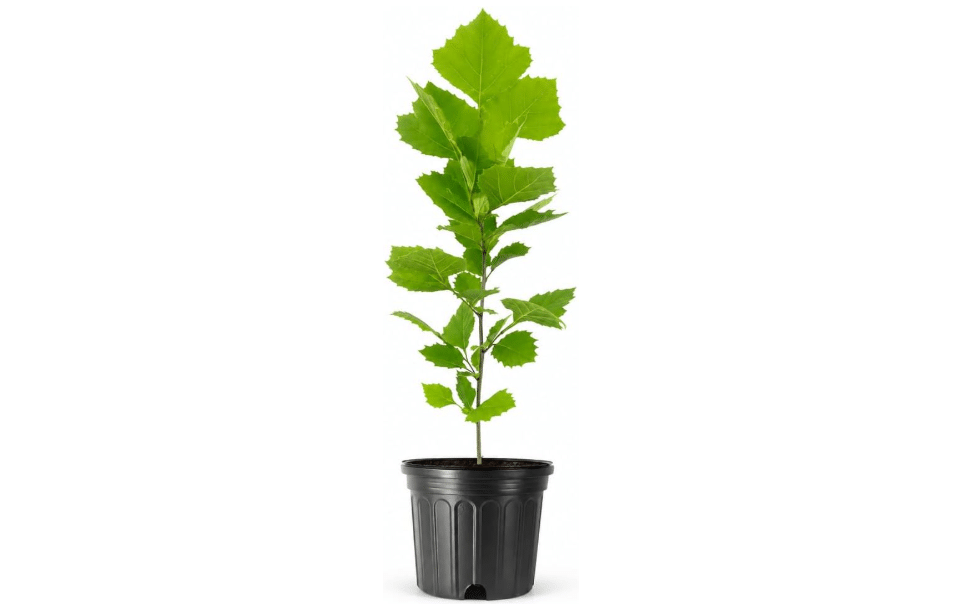
Price: $69.97
Key Features & Benefits:
-
Enormous Canopy: Provides massive amounts of shade very quickly.
-
Striking Winter Bark: The brilliant white upper branches look incredible against a winter sky.
-
Rapid Growth: Easily adds 2 to 4 feet of height per year.
Pros and Cons:
-
Pros: Establishes quickly; excellent for drying out large floodplains; highly resilient.
-
Cons: High maintenance (drops large leaves, twigs, and fuzzy seed balls); requires a massive amount of space.
Amazon Customer Ratings & Reviews:
Rated 4.3/5 Stars. Reviewers consistently praise the size and health of bare-root shipments. Many note that the tree exploded with growth immediately after planting in wet areas.
Why It’s a Good Choice for Water Absorption:
Sycamores are natural stream-bank dwellers. Their vast, aggressive root systems effortlessly suck up excess groundwater and prevent soil erosion.
Ideal Use Case / Who Should Buy It:
People with very large yards or estates who need to dry out a wide, open area and want a giant, majestic focal point.
10. Green Giant Arborvitae (Thuja standishii x plicata)
Product Description:
While not traditionally thought of as a swamp tree, the Green Giant Arborvitae is a robust, incredibly fast-growing evergreen that demands a lot of water to fuel its rapid expansion. It is the premier choice for creating dense, towering privacy screens. When planted in a row, their combined root networks act as a natural water barrier.
![Greenwood Nursery: Live Trees - Green Giant Arborvitae Tree + Thuja Standishii X Plicata - [Qty: 5X 2.5 Pots] - (Click for Other Available Plants](https://treecarezone.com/wp-content/uploads/2026/09/Screenshot-2026-09-23-191932.png)
Price: $67.95
Key Features & Benefits:
-
Year-Round Greenery: Dense, rich green foliage that doesn’t brown in winter.
-
Rapid Screening: Grows up to 3 feet a year, quickly blocking out neighbors.
-
Disease Resistant: Highly resistant to deer and traditional cedar pests.
Pros and Cons:
-
Pros: Solves privacy and drainage issues simultaneously; very low maintenance (rarely needs pruning).
-
Cons: Tolerates wet soil beautifully, but cannot survive in permanent, stagnant, swamp-like standing water (unlike a Cypress).
Amazon Customer Ratings & Reviews:
Rated 4.7/5 Stars. One of the highest-rated live plants on Amazon. Buyers love ordering these in bulk for property lines, noting that they establish quickly in damp soils and create an impenetrable green wall.
Why It’s a Good Choice for Water Absorption:
Because it grows so fast, it is incredibly thirsty. Planting a row of Green Giants along a soggy property line intercepts groundwater runoff before it can flood the rest of your lawn.
Ideal Use Case / Who Should Buy It:
Homeowners who need to dry out a soggy, damp property line while simultaneously creating a fast, dense privacy hedge.
IV. Quick Comparison Table
| Tree Species | Best For… | Growth Rate |
| Weeping Willow | Fast results on large acreage | Extremely Fast |
| River Birch | Rain gardens & clay soils | Fast |
| Bald Cypress | Severe standing water/swamps | Moderate |
| Red Maple | Classic shade & fall color | Fast |
| Swamp White Oak | Permanent legacy planting | Moderate |
| Black Gum (Tupelo) | Vibrant autumn foliage | Moderate |
| Eucalyptus | Warm climates (Zones 8-11) | Extremely Fast |
| Sweetbay Magnolia | Small yards & fragrant flowers | Moderate to Slow |
| American Sycamore | Massive spaces & large canopies | Fast |
| Green Giant Arborvitae | Privacy screens & wet borders | Fast |
V. Frequently Asked Questions (FAQs)
How close to my house can I plant a water-absorbing tree?
Because trees that absorb large amounts of water typically have aggressive, wide-spreading roots, you must plant them at a safe distance to protect your home’s foundation and plumbing. Large trees like the Weeping Willow or Sycamore should be planted at least 40 to 50 feet away from structures, underground pipes, and septic drain fields. Smaller trees like the Sweetbay Magnolia can safely be planted 15 to 20 feet away.
Can I plant bare-root trees from Amazon directly in the mud?
Yes, but with caveats. Bare-root trees are dormant and must be planted in the early spring or late fall. While they love moisture, planting them in thick, anaerobic mud can suffocate the roots before they wake up. It is best to dig a wide hole, mix in some organic compost to improve soil aeration, and plant the sapling when the water has slightly receded. Keep them well-watered but ensure the crown (where the trunk meets the roots) isn’t buried under stagnant water.
Will planting these trees increase the mosquito population in my yard?
No, it does the exact opposite. Mosquitoes require stagnant, standing water to breed and lay their eggs. By planting thirsty trees that actively pull that sitting water out of the ground, you are eliminating the puddles and muddy depressions that mosquitoes rely on, naturally reducing their population in your yard.
Transforming a chronically wet yard doesn’t have to involve heavy machinery or expensive drainage pipes. By strategically utilizing nature’s own botanical pumps, you can reclaim your lawn. The River Birch stands out as the most balanced, visually appealing option for standard suburban yards, while the Bald Cypress remains the undefeated champion for properties plagued by severe, lasting floods. Before you click checkout on your Amazon cart, double-check your USDA hardiness zone and ensure you have mapped out a planting spot safely distanced from your home’s plumbing.
Are you ready to map out your yard and choose the perfect species to dry out your landscape this season?