
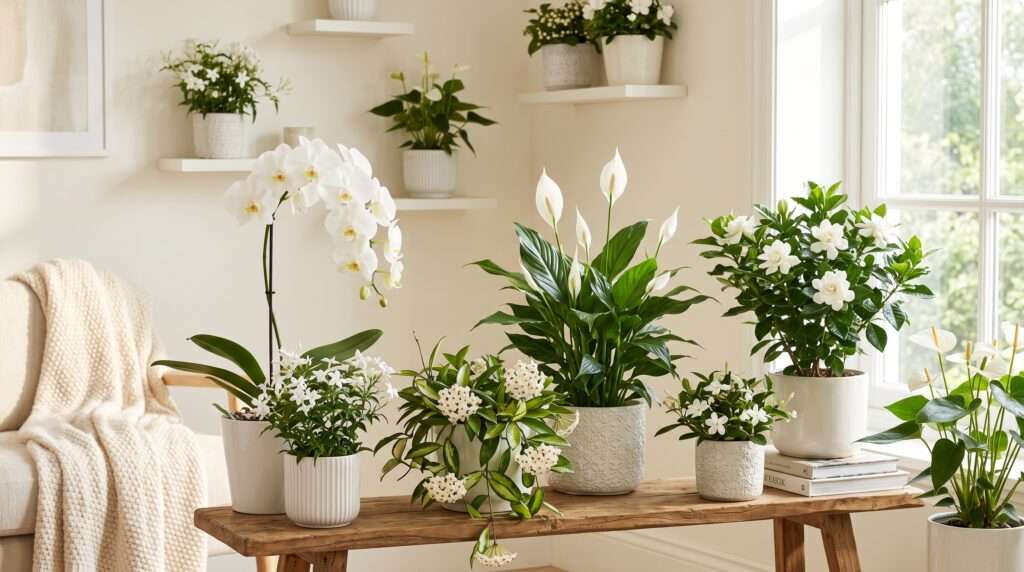
White flowers are the ultimate symbol of elegance, purity, and minimalist design. They bring a breath of fresh air into any living space, acting as natural focal points that brighten up dark corners and add a touch of serenity. However, if you are looking to elevate your interior design, incorporating house plants with white flowers is one of the most sophisticated choices you can make—but getting them to bloom reliably indoors can often feel like an impossible puzzle.
The struggle is incredibly common. Most indoor gardeners buy beautiful flowering plants from the nursery in full, glorious bloom, only to watch the flowers slowly fade away and never return. You are left with a pot of green leaves and a lot of frustration.
But it doesn’t have to be this way! As a plant care specialist who has spent years studying indoor horticulture and natural blooming cycles, I am here to share that coaxing flowers out of your indoor greenery is entirely possible when you understand their native environments. In this comprehensive guide, I am sharing the top 10 most stunning house plants with white flowers, plus the exact lighting, humidity, and fertilizing secrets you need to trigger year-round indoor blooms. Whether you have a bright, sun-drenched sunroom or a low-light apartment, there is a perfect white-flowering companion waiting for you. Let’s dive in! 🪴
Why Choose House Plants with White Flowers? 🕊️
Before we get into the care guides, it is worth exploring why white indoor blooms are so highly coveted by interior designers and plant enthusiasts alike.
1. Unmatched Design & Aesthetics 🏡
White is a universal neutral. Unlike vibrant neon pinks or bold reds that might clash with your wallpaper or furniture, white blooms complement absolutely any interior design style. Whether your home leans toward Boho Chic, Scandinavian Minimalism, or Mid-Century Modern, white flowers add a layer of crisp, clean texture. They also reflect light, making small or dimly lit rooms feel larger and brighter.
2. Psychological Benefits & Stress Relief 🧘♀️
Nature has a profound impact on our mental health. Studies in horticultural therapy show that caring for indoor plants lowers cortisol levels and reduces stress. White, in color psychology, represents peace, cleanliness, and tranquility. A vibrant green plant adorned with delicate white petals acts as a visual palate cleanser after a long, chaotic day, promoting a sense of calm in your personal sanctuary.
3. Intoxicating Natural Fragrance 🌬️
Many species that produce white flowers evolved to be pollinated by night-flying moths. Because colors are hard to see in the dark, these plants rely on incredibly strong, sweet fragrances to attract pollinators. By bringing plants like Jasmine or Gardenias indoors, you are investing in a living, breathing air freshener that outshines any synthetic candle.
The Top 10 House Plants with White Flowers (Expert Care & Blooming Guide) 🪴
Here is my expertly curated list of the best white-flowering indoor plants, complete with the specific botanical secrets required to make them bloom.
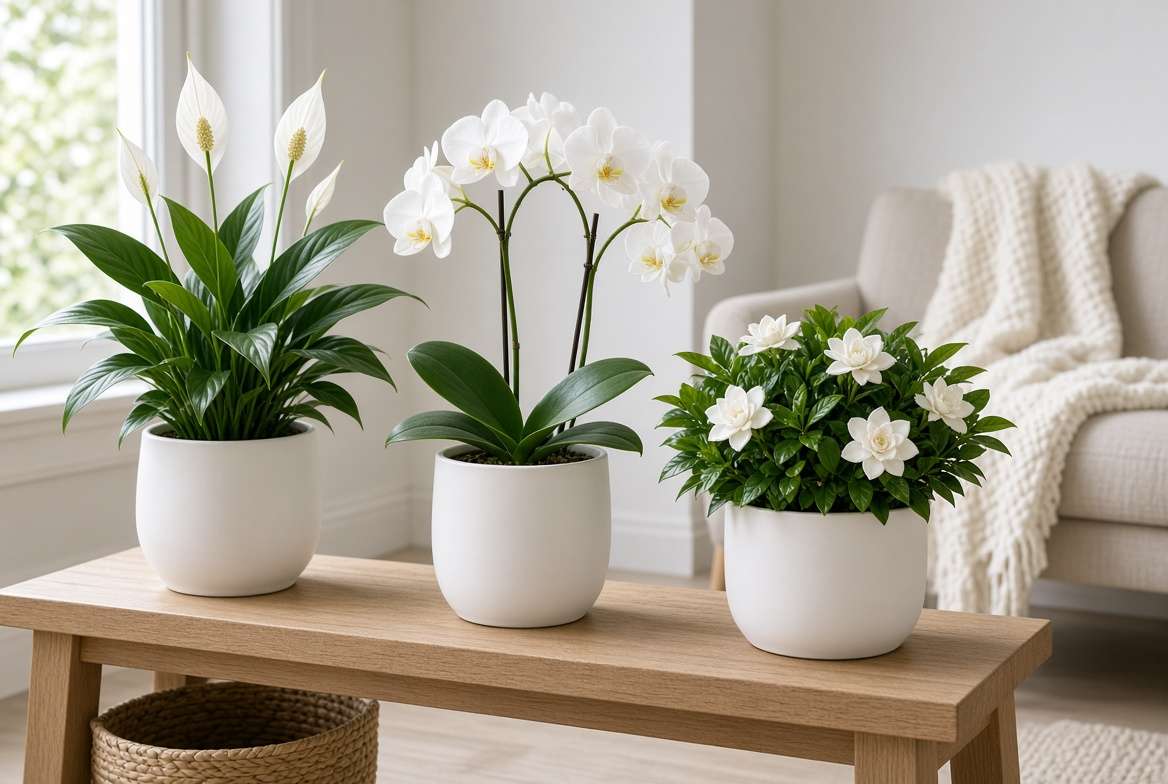
1. The Peace Lily (Spathiphyllum) 🕊️
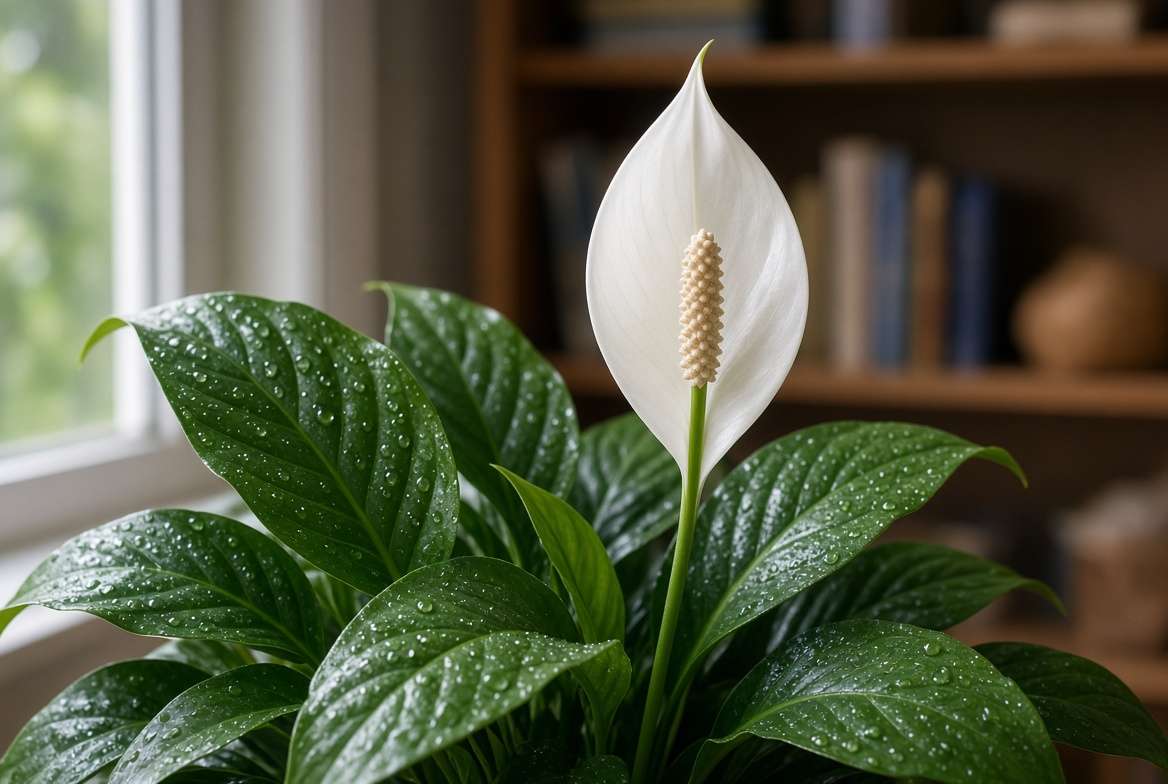
The Vibe: Classic, forgiving, and an absolute powerhouse for air-purification. The Peace Lily features glossy, lance-shaped dark green leaves and striking white spathes (which are actually modified leaves that protect the tiny, spiky true flowers inside).
Ideal Conditions: Peace lilies are famous for their dramatic wilting when they are thirsty, making them great communicators. They prefer consistently moist, but not soggy, well-draining soil.
🌱 Expert Blooming Secret: You will often read that Peace Lilies are “low-light” plants. While they will survive in a dark corner, they absolutely will not bloom there. To trigger those iconic white spathes, move your plant 3–5 feet away from a bright, East or West-facing window (bright indirect light). Furthermore, in early spring, apply a high-phosphorus liquid fertilizer (look for an N-P-K ratio like 10-30-20) diluted to half strength. Phosphorus is the essential macro-nutrient for flower development.
2. White Moth Orchid (Phalaenopsis) 🦋
The Vibe: Architectural, modern, and incredibly long-lasting. The white Moth Orchid is a staple in luxury hotels and spas because a single flower spike can hold its pristine blooms for three to four months.
Ideal Conditions: As epiphytes (plants that grow on trees in the wild), orchids hate sitting in dense potting soil. They require a chunky orchid bark mix for maximum root aeration. Water them thoroughly only when the plump, green roots turn a silvery-gray color. They thrive in bright, indirect sunlight.
🌱 Expert Blooming Secret: Most people throw their orchids away after the flowers drop, thinking the plant is dead. Don’t do this! Orchids need a temperature drop to trigger new flower spikes. In early autumn, expose your orchid to cooler night temperatures (around 55-65°F or 13-18°C) by placing it near a slightly drafty window for 2 to 3 weeks. This mimics the seasonal change in their natural habitat and will jolt the plant into producing a new stem.
3. White Anthurium (Anthurium andraeanum) 🤍
The Vibe: Tropical, waxy, and highly unique. While red is the most common color, white Anthuriums offer a sophisticated, muted tropical aesthetic. The flowers have a heart-shaped spathe with a prominent spadix protruding from the center.
Ideal Conditions: Anthuriums originate from tropical rainforests. They demand high humidity (60% or higher), bright indirect light, and a very airy, well-draining “aroid” potting mix (a blend of orchid bark, perlite, and peat moss).
🌱 Expert Blooming Secret: Anthuriums are incredibly heavy feeders when it comes to producing their waxy blooms. Instead of fertilizing once a month, adopt the “weakly, weekly” approach. Use a liquid orchid or flowering houseplant fertilizer diluted to just one-quarter strength, and apply it with every watering during the spring and summer growing seasons.
4. Wax Plant (Hoya carnosa ‘Alba’ or similar) 🌟
The Vibe: Trailing vines with thick, succulent-like leaves and incredible, star-shaped, porcelain-like flower clusters that look almost fake. The white blooms often have a sweet, chocolate or vanilla-like scent at night.
Ideal Conditions: Hoyas love tight spaces, so keep them slightly root-bound. They need very bright, indirect light—even an hour or two of gentle morning direct sun is beneficial. Because of their semi-succulent nature, allow the soil to dry out almost completely between waterings to prevent root rot.
🌱 Expert Blooming Secret: Here is the most critical rule of Hoya care: Never cut off the old flower stems! These little woody nubs are called peduncles. Hoyas are unique because they re-bloom from the exact same peduncle year after year. If you prune them off after the flowers fade, your plant will have to waste years of energy growing new ones before it can ever flower again.
5. Madagascar Jasmine (Stephanotis floribunda) 🌸
The Vibe: A romantic, twining climber that produces clusters of heavily scented, tubular, pure white flowers. It is frequently used in bridal bouquets because of its pristine appearance and classic floral perfume.
Ideal Conditions: This plant requires a sturdy trellis or hoop to climb on. It needs very bright light, ideally with some direct morning sun, and consistently warm temperatures. High humidity is a must for this tropical vine.
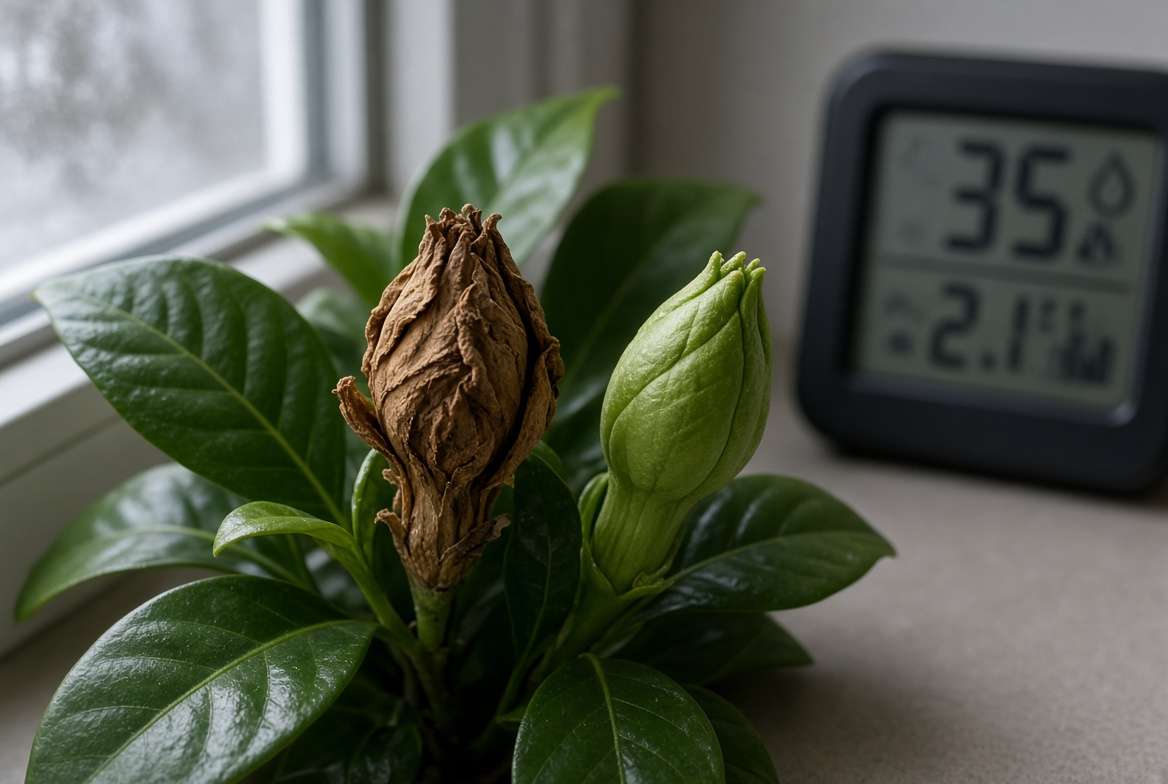
🌱 Expert Blooming Secret: Madagascar Jasmine is notorious for “bud blast”—meaning it will form beautiful flower buds, only to drop them on the floor before they open. To prevent this, keep the plant’s environment exceptionally stable during bud formation. Do not move the pot to a different room, do not rotate it aggressively, and protect it from any cold drafts from AC units. Stability is the key to holding onto those fragrant blooms.
6. White African Violet (Saintpaulia) ☁️
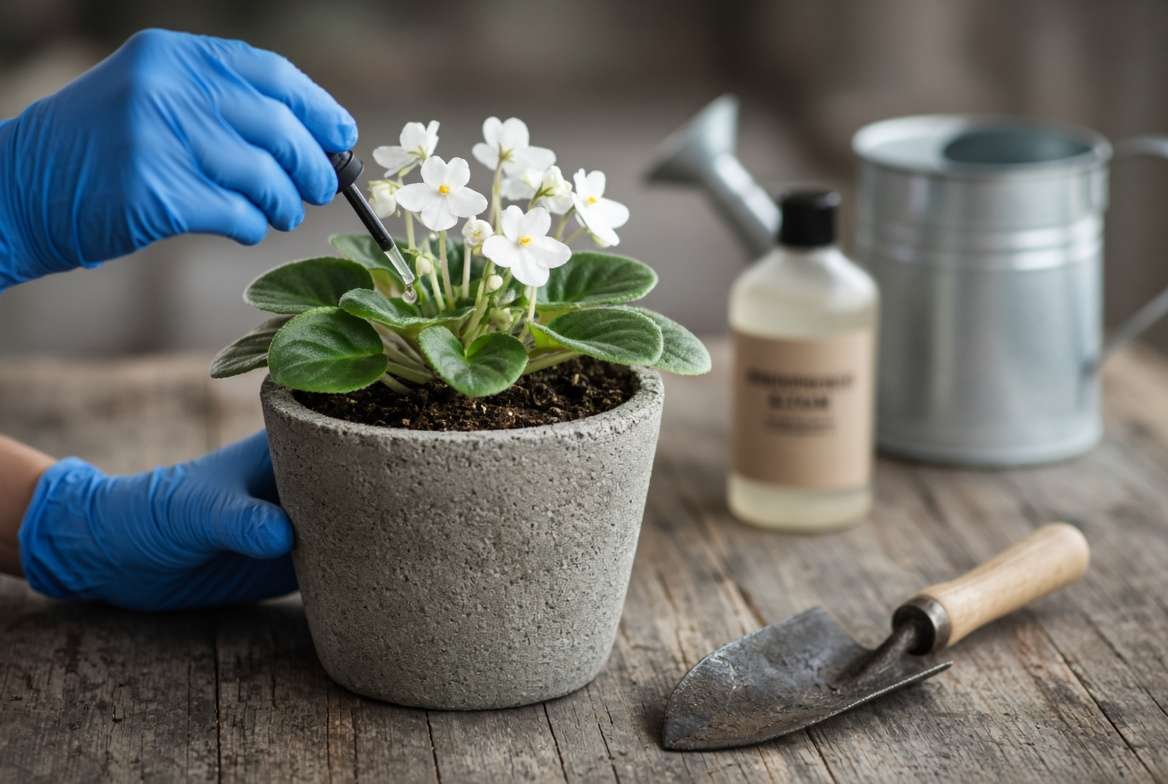
The Vibe: Compact, cozy, and featuring softly fuzzed leaves, the African Violet is a retro classic that is making a huge comeback. The pure white varieties look like tiny clouds resting on deep green velvet, making them perfect for office desks or narrow windowsills.
Ideal Conditions: These petite beauties despise getting their leaves wet, which can cause crown rot and fungal spots. Always bottom-water them by placing the pot in a saucer of water for 20 minutes, allowing the roots to soak up what they need. They prefer bright, indirect light to thrive.
🌱 Expert Blooming Secret: African Violets love to be slightly root-bound. If you repot them into a large container, they will spend all their energy growing a massive root system to fill the space, entirely neglecting flower production. Keep them in a snug pot and feed them continuously with a specialized, urea-free African Violet fertilizer for near-constant blooms.
7. Gardenia (Gardenia jasminoides) 🌿
The Vibe: The undisputed crown jewel of fragrant houseplants. Gardenias feature glossy, leathery evergreen leaves and exquisite, rosette-shaped white flowers that emit a heavy, intoxicating, and creamy perfume. They are undeniably challenging to grow indoors, but the reward is worth the effort.
Ideal Conditions: Gardenias require a delicate balance: very bright light (ideally a South-facing window with a sheer curtain), high ambient humidity, and soil that is consistently damp but perfectly drained.
🌱 Expert Blooming Secret: Gardenias are notoriously picky about soil chemistry. They require acidic soil (a pH between 5.0 and 6.0) to absorb the nutrients necessary for flowering. Use an acid-loving plant fertilizer (often labeled for Azaleas or Camellias) and keep the humidity strictly above 60% with a dedicated room humidifier. Misting the leaves manually is not enough and can actually encourage fungal leaf spot.
8. White Holiday Cactus (Schlumbergera) 🌵
The Vibe: A reliable, cascading succulent that bursts into bloom during the darkest months of the year. The white varieties of Thanksgiving or Christmas cacti feature tiered, exotic-looking flowers that droop beautifully from the tips of their segmented stems.
Ideal Conditions: Unlike desert cacti, these are epiphytic jungle cacti. They prefer bright, indirect sunlight and soil that remains slightly moist. Do not let them dry out to the point of shriveling.
🌱 Expert Blooming Secret: Holiday cacti are “short-day” plants, meaning their blooming cycle is triggered by the lengthening nights of autumn. To force winter blooms, they require 12 to 14 hours of complete, uninterrupted darkness every single night starting in October, along with cooler room temperatures (around 55–65°F). Even a nearby streetlamp or a living room reading light can disrupt this dark period and stop buds from forming!
9. Cape Primrose (Streptocarpus) 🧚♀️
The Vibe: A close relative of the African Violet, the Cape Primrose features long, textured, ruffled leaves and tall, wiry stems that hold delicate, orchid-like flowers. The white varieties often have stunning yellow or purple throat markings.
Ideal Conditions: They excel in cooler environments and do beautifully in an East or West-facing window. Plant them in shallow pots (their root systems do not grow deep) and allow the top inch of the soil to dry out before watering.
🌱 Expert Blooming Secret: The secret to continuous, prolific blooming is aggressive deadheading. The moment a flower begins to fade or wilt, pinch or snip it off at the base of the stem. If you allow the flower to go to seed, the plant will signal that its reproductive job is done for the season and stop pushing out new flower stalks.
10. White Amaryllis (Hippeastrum) 🎺
The Vibe: Pure, dramatic architecture. A white Amaryllis produces thick, towering stalks topped with massive, star-shaped, trumpet-like blooms that can measure up to 8 inches across. They are quintessential holiday centerpieces.
Ideal Conditions: During its active growth phase, an Amaryllis needs bright sunlight and a snug pot. When potting the bulb, ensure that the top one-third of the bulb remains exposed above the soil line to prevent rotting.
🌱 Expert Blooming Secret: Getting an Amaryllis to re-bloom the following year requires a strict dormancy period. After the winter flowers fade, cut off the flower stalk but leave the large green leaves intact. Feed the plant heavily with liquid fertilizer all summer to help the leaves recharge the bulb with energy. In early fall, stop watering, let the leaves die back, and place the pot in a cool, dark closet for 8 to 10 weeks to let it “sleep.” Bring it back into the light and water it to restart the spectacular blooming cycle.
The Secret to Indoor Blooms: 5 Golden Rules for Flowering Plants 🌼
Now that you have chosen your ideal house plants with white flowers, it is crucial to understand the foundational science of indoor blooming. Merely keeping a plant alive is very different from encouraging it to flower. Follow these five expert rules to master the bloom cycle.
The Light Equation: Light is plant food. Fertilizer is just the vitamin supplement. A plant uses photosynthesis to generate the massive amount of energy required to push out a flower. While a plant might survive in “low light,” it will rarely have the energy surplus required to bloom. Always push your flowering plants as close to bright, indirect light as their specific care guidelines allow.
Phosphorus is Your Friend (Decoding N-P-K): When you look at a bottle of fertilizer, you will see three numbers (e.g., 10-10-10), representing Nitrogen (N), Phosphorus (P), and Potassium (K). Nitrogen fuels leafy green growth, Potassium supports overall cellular health, and Phosphorus is the critical element that stimulates root development and flower production. To encourage white blooms, switch to a fertilizer where the middle number is higher during the active growing season.
The Temperature Drop Trick: In nature, seasonal shifts in temperature tell a plant what time of year it is. Indoor environments, which are typically kept at a static 70°F year-round, can confuse plants. Mimicking a natural 10 to 15-degree temperature drop at night during the autumn months is the biological trigger needed for many plants (especially orchids and holiday cacti) to begin forming flower buds.
Humidity Management (Preventing Bud Blast): “Bud blast” occurs when a plant successfully creates flower buds, but they dry up, turn brown, and fall off before ever opening. The number one culprit for this indoors is bone-dry air caused by central heating or air conditioning. Invest in a digital hygrometer to monitor your room’s moisture levels, and use a humidifier to keep the ambient humidity between 50% and 60%.
Patience and Rest Periods: Plants are not machines; they cannot bloom 365 days a year. The creation of flowers is exhausting. Understand that almost all flowering indoor plants require a period of dormancy—usually during the winter—where they rest, absorb nutrients, and build up energy for the next spectacular show. Do not fertilize a dormant plant; let it sleep!
Troubleshooting: Why Won’t My White Plant Flower? 🥀
Even with the best intentions, indoor gardening comes with a learning curve. If you are struggling, use this quick diagnostic guide to get your plant back on track:
-
Symptom: Lots of lush, massive green leaves, but absolutely zero flowers.
-
Diagnosis: You are likely using a fertilizer that is too high in Nitrogen, which encourages foliage at the expense of blooms. Alternatively, the plant simply isn’t receiving enough bright indirect light to generate the energy needed to flower.
-
-
Symptom: Beautiful flower buds form, but they quickly turn brown, shrivel, and fall off.
-
Diagnosis: This is classic bud blast. It is usually caused by sudden environmental shifts: extreme temperature fluctuations, cold drafts from a window, entirely dried-out soil, or dangerously low ambient humidity.
-
-
Symptom: The white flowers open up beautifully, but they fade, brown, or drop very quickly.
-
Diagnosis: The room temperature might be far too hot, accelerating the flower’s lifecycle. Alternatively, the delicate white petals might be sitting in direct, scorching afternoon sunlight, which is literally burning the blooms.
-
Frequently Asked Questions (FAQs) 🙋♀️
Are house plants with white flowers toxic to cats and dogs? It depends entirely on the species! If you have curious pets, stick to pet-safe options like the White African Violet, Wax Plant (Hoya), or the Moth Orchid. You must strictly avoid the Peace Lily and Amaryllis, as both contain compounds that are highly toxic to cats and dogs if ingested. Always check the ASPCA toxic plant list before bringing a new botanical friend home.
How often should I fertilize my flowering houseplants? During the active growing season (Spring and Summer), a diluted liquid fertilizer applied every two to four weeks is generally ideal. However, once the days get shorter in late Autumn and Winter, you should stop fertilizing completely to allow the plant to enter its natural dormancy.
Can artificial grow lights trigger blooming indoors? Absolutely. If your home lacks natural sunlight, a full-spectrum LED grow light is a game-changer. Ensure the light provides the proper spectrum (including red wavelengths, which stimulate flowering) and keep it on a timer for 12 to 14 hours a day to simulate a bright, sunny summer environment.
Final Thoughts: Cultivating Your Indoor White Garden 🏡
Cultivating house plants with white flowers is one of the most rewarding endeavors in indoor gardening. The stark, elegant contrast of pristine white petals against lush green foliage instantly elevates the aesthetic of any room, bringing a sense of calm and natural sophistication to your home.
If you are new to flowering houseplants, I highly recommend starting with a forgiving variety like the Peace Lily or the incredibly long-lasting Moth Orchid. As you build your confidence and master the golden rules of lighting, humidity, and proper fertilizing, you can graduate to the more challenging, fragrant wonders like the Gardenia or Madagascar Jasmine. The effort required to mimic their natural environments will reward you with spectacular, mood-boosting blooms that no store-bought bouquet could ever rival.
Which of these elegant white-flowering beauties are you planning to add to your indoor jungle first? Have you ever successfully coaxed an orchid or a Hoya into re-blooming? Let me know in the comments below, or share your success stories with your indoor blooms!











