
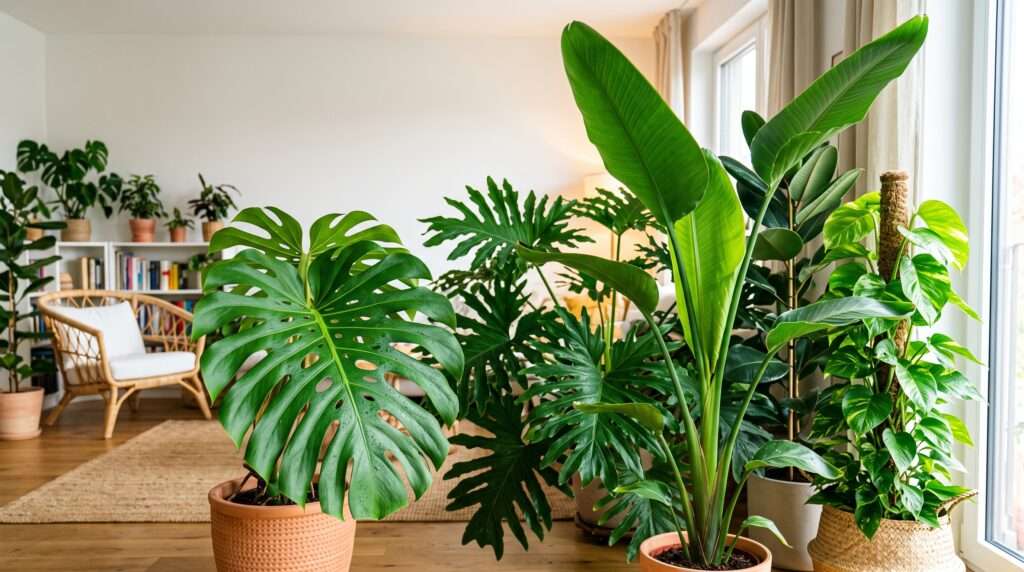
Scrolling through Instagram or Pinterest, you’ve likely paused to admire those sun-drenched, airy living rooms anchored by massive, vibrant green foliage. The indoor jungle aesthetic is undeniably captivating, bringing life and energy into any space. But for many, this dream comes with a creeping sense of dread and hesitation.
You might be thinking, “I just don’t have a green thumb. I’d definitely kill something that beautiful.” It’s a fair concern. Many popular exotic houseplants, like the notorious Fiddle Leaf Fig (Ficus lyrata) or fussy Calatheas, can be absolute divas that break your heart and your budget the moment you look at them the wrong way.
But here is the closely guarded secret that plant influencers don’t always share: you don’t need a botany degree to grow stunning large leaf tropical plants. You simply need to choose the right resilient varieties that will readily forgive the occasional forgotten watering or less-than-perfect lighting.
After years of working in interior plantscaping, rescuing neglected indoor trees, and consulting on biophilic design, I’ve curated this foolproof list. I’ve seen firsthand which giant houseplants thrive in typical home conditions and which ones are destined to struggle. In this comprehensive skyscraper guide, I will introduce you to 7 breathtaking, easy-care botanical giants and give you an expert-level masterclass on how to keep them thriving with minimal effort. Let’s turn your space into a lush, tropical sanctuary! ✨
Why Large Leaf Tropical Plants Are the Ultimate Interior Upgrade ✨
Before we dive into the specific plants, it is important to understand why oversized foliage is such a powerful tool for your home environment. Bringing in a giant houseplant isn’t just a trend; it’s a profound upgrade to your living space for several reasons.
1. Maximum Visual Impact with Minimal Clutter 🛋️
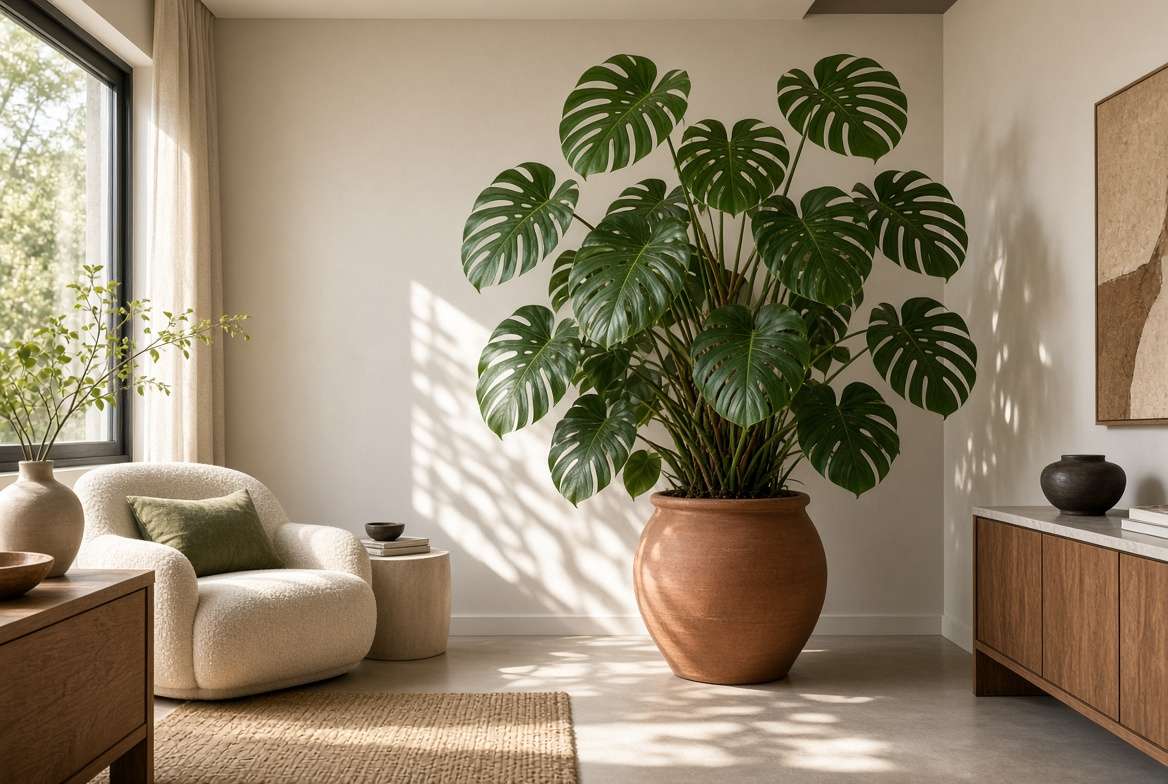
In interior design, scale is everything. A common mistake new plant parents make is buying dozens of tiny succulents or small trailing plants and clustering them on a single shelf. While cute, this can quickly look chaotic and cluttered. A single statement plant with massive leaves acts as a living architectural feature. It draws the eye upward, fills empty corners with sculptural elegance, and anchors a room much like a high-end piece of furniture or a large painting would.
2. Superior Indoor Air Purification 🌬️
All plants photosynthesize, but when it comes to cleaning your indoor air, surface area matters. Large leaf tropical plants act as highly efficient biological filters. Through their massive foliage, they absorb airborne toxins (like formaldehyde and benzene off-gassing from furniture and carpets) and release fresh oxygen. Furthermore, the high rate of transpiration (water evaporating from the leaves) acts as a natural humidifier, soothing dry skin and respiratory tracts during harsh winter months.
3. Profound Psychological Benefits 🧠
Biophilic design—the concept of integrating nature into our built environments—is proven to reduce cortisol (stress hormone) levels, lower blood pressure, and increase focus and creativity. Surrounding yourself with broad, sweeping green leaves triggers an evolutionary response in our brains that signals safety, abundance, and tranquility. A bold indoor jungle literally makes you happier.
The 7 Best Low-Maintenance Large Leaf Tropical Plants 🪴
The following seven plants have been selected not just for their breathtaking size and beauty, but for their hardy genetics, resistance to common pests, and ability to adapt to standard household conditions.
1. Monstera deliciosa (Swiss Cheese Plant) 🧀
The Vibe: The undisputed king of the indoor jungle. If you want an instant tropical aesthetic, this is your plant. Light: Bright, indirect light is best, but it will tolerate medium light (it just won’t grow as fast). Water: Allow the top 2-3 inches of soil to dry out completely before watering.
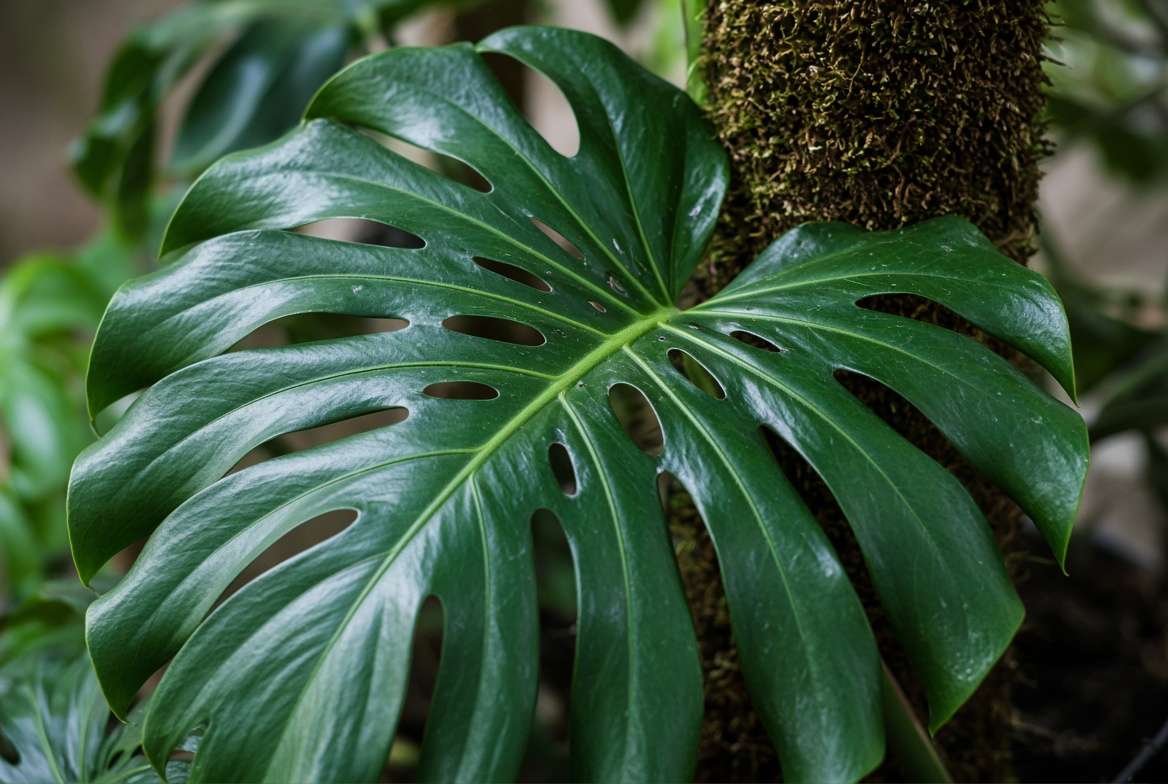
The Monstera deliciosa is famous for its massive, heart-shaped leaves that develop deep splits and dramatic holes as the plant matures. Botanically, these holes are called “fenestrations.” In their natural rainforest habitat, these fenestrations allow hurricane winds to pass through the leaves without tearing them, and they let dappled sunlight reach the lower leaves of the plant.
Why it’s easy: The Monstera is incredibly forgiving. If you forget to water it for an extra week, it will patiently wait for you. It isn’t overly sensitive to standard household humidity levels, making it a rugged survivor.
Pro Tip 💡: In the wild, Monsteras are vining epiphytes that climb up massive jungle trees. If you want your indoor Monstera to produce truly giant leaves (we’re talking two to three feet wide!), you must provide it with a sturdy moss pole or cedar plank to climb. Once its aerial roots attach to a vertical support, the plant receives a biological signal to size up its foliage.
2. Strelitzia nicolai (White Bird of Paradise) 🕊️
The Vibe: Towering, elegant, and evocative of a luxury Caribbean resort. Light: Bright light to full direct indoor sun. A large South or West-facing window is ideal. Water: Water thoroughly when the top two inches of soil are dry. They drink a lot of water during the spring and summer growing seasons.
If you have high ceilings and a bright sunny window, the Strelitzia nicolai is unmatched. Producing massive, paddle-shaped leaves that resemble banana trees, this plant can easily reach 7 to 9 feet tall indoors.
Why it’s easy: Unlike many tropicals that wither under direct sunlight, the Bird of Paradise thrives in it. It has thick, tuberous roots that store water efficiently, making it quite resilient to minor drought periods. It is also surprisingly resistant to common household pests.
Pro Tip 💡: Many new plant owners panic when they see the leaves of their Bird of Paradise splitting from the edges inward. Don’t worry! Just like the Monstera’s holes, this leaf-splitting is a natural evolutionary adaptation designed to let wind pass through the massive leaves without snapping the stem. Embrace the perfectly imperfect, fringed look!
3. Thaumatophyllum bipinnatifidum (Tree Philodendron) 🦖
The Vibe: Wild, prehistoric, and deeply sculptural. Light: Bright, indirect light to medium light. Water: Allow the soil to dry out about halfway down the pot before giving it a deep soak.
Formerly classified as Philodendron selloum, the Thaumatophyllum is a sprawling giant with deeply lobed, ruffled leaves that look like something out of Jurassic Park. As it ages, it develops a thick, woody trunk covered in eye-catching “eye” marks where old leaves have fallen off.
Why it’s easy: This plant is tough as nails. It is incredibly robust, highly resistant to pests like spider mites that plague other large plants, and it handles the dry, artificially heated air of modern homes far better than ferns, calatheas, or alocasias.
Pro Tip 💡: Give this plant plenty of horizontal space. While the Bird of Paradise grows strictly upward, the Thaumatophyllum spreads out wide. It makes a spectacular standalone piece in an entryway or a wide living room corner.
4. Ficus elastica (Rubber Tree) 🎈
The Vibe: Sleek, moody, and sophisticated with glossy, structural foliage. Light: Bright, indirect light. Will tolerate a few hours of gentle morning direct sun. Water: Let the top 50% of the soil dry out completely. Overwatering is its only real enemy.
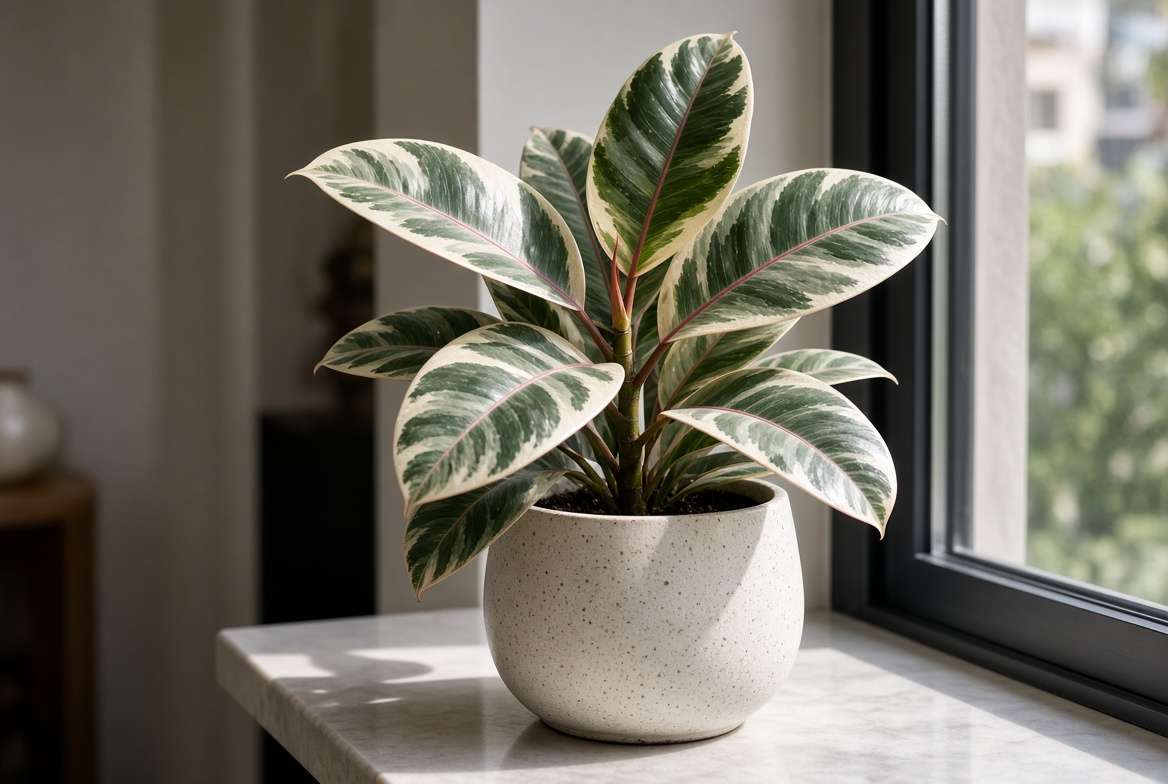
If you love the tree-like look of the Fiddle Leaf Fig but don’t want the stress of dropped leaves and brown spots, the Ficus elastica is your ultimate alternative. The Rubber Tree produces thick, leathery, oversized oval leaves. You can choose from the deep, almost black foliage of the ‘Burgundy’ variety, the classic emerald green, or the stunning watercolor-like variegation of the ‘Tineke’ or ‘Ruby’.
Why it’s easy: The thick, waxy cuticle on its leaves means it retains moisture exceptionally well, requiring far less frequent watering than thinner-leaved plants. It is also much less prone to “shock”—meaning you can move it to a different room without it throwing a temper tantrum and dropping all its leaves.
Pro Tip 💡: Those massive, dark, glossy leaves are magnets for household dust. Because the leaves are so large, dust buildup can actually block sunlight and inhibit photosynthesis, stunting the plant’s growth. Wipe the leaves down once a month with a damp microfiber cloth to keep the plant breathing well and looking brilliantly shiny.
5. Spathiphyllum ‘Sensation’ (Giant Peace Lily) 🏳️
The Vibe: Lush, elegant, and deeply ribbed, offering a classic rainforest understory feel. Light: Thrives in medium, indirect light. It can tolerate lower light but needs bright, indirect light to produce its famous white flowers. Water: Keep the soil consistently, lightly moist but never soggy.
While you might be familiar with the standard tabletop Peace Lily, the ‘Sensation’ cultivar is a true giant. Its deeply textured, dark green leaves can grow over two feet long each, creating a dramatic, sweeping canopy that adds instant luxury to any shaded corner of your home.
Why it’s easy: It takes all the guesswork out of watering. The Spathiphyllum is famously communicative—when it is thirsty, the entire plant will dramatically “faint” and droop over the edges of its pot. Once you give it a good soak, it springs back up to full attention within a few hours.
Pro Tip 💡: To prevent those dreaded crispy brown tips that Peace Lilies are known for, try watering your ‘Sensation’ with filtered water, rainwater, or tap water that has been left out overnight. They are sensitive to the chlorine and fluoride found in municipal tap water.
6. Dieffenbachia ‘Tropic Snow’ (Giant Dumb Cane) ❄️
The Vibe: Striking, bold, and heavily patterned, perfect for breaking up a sea of solid green. Light: Highly adaptable; prefers medium indirect light but handles lower light exceptionally well. Water: Allow the top 2-3 inches of soil to dry out between waterings.
The ‘Tropic Snow’ is a massive cultivar of the classic Dieffenbachia, featuring broad, paddle-shaped leaves heavily mottled with stunning creamy white and pale green variegation. It grows upright on a thick, cane-like stem and can easily reach 5 to 6 feet tall indoors.
Why it’s easy: While many variegated plants require intense sunlight to maintain their colors, the ‘Tropic Snow’ retains its striking patterns even in medium-to-low light conditions where other large tropicals would stretch, fade, and suffer.
Pro Tip 💡: The common name “Dumb Cane” comes from the calcium oxalate crystals in its sap, which can cause temporary swelling and loss of speech if ingested. Keep this plant away from curious pets and toddlers, and always wash your hands after pruning it.
7. Epipremnum aureum (Giant Hawaiian Pothos) 🧗
The Vibe: Wild, untamed jungle vines that can conquer walls and trellises. Light: Bright, indirect light for maximum leaf size and variegation. Water: Let the soil dry out completely before watering.
You likely already know the Pothos as the ultimate beginner trailing plant. However, the Giant Hawaiian Pothos (or a mature Golden Pothos) is a completely different beast, featuring massive, deeply split leaves that can rival a Monstera in size and visual impact, splashed with brilliant gold and yellow variegation.
Why it’s easy: It possesses the exact same bulletproof, unkillable genetics as the tiny pothos sitting on your desk. It survives missed waterings, fluctuating temperatures, and low humidity with ease.
Pro Tip 💡: The “secret” expert trick to getting those giant leaves: Pothos vines will only produce massive foliage when they are trained to climb upward. In nature, they start small on the forest floor and size up as they climb trees toward the sun. Secure the vines to a sturdy moss pole, keep the pole moist, and watch the leaves double in size with every new node!
The Expert’s Universal Care Guide for Giant Tropicals 💧
Investing in large leaf tropical plants is exciting, but keeping them vibrant requires understanding their foundational needs. Because these plants are housed in massive pots, the rules of care change slightly compared to small tabletop succulents. Here is your expert masterclass on giant plant maintenance.
Decoding Light Requirements for Big Foliage ☀️
Light is plant food. Without enough of it, massive leaves simply cannot sustain themselves.
-
Bright Indirect Light: This is the sweet spot for 90% of tropicals. It means placing your plant directly next to an East-facing window, or a few feet back from a South or West-facing window. The plant should cast a distinct shadow, but the sun’s actual rays shouldn’t hit the leaves directly (which causes sunburn).
-
The Shadow Test: Hold your hand 12 inches above the plant’s leaves at midday. If the shadow is sharp and crisp, the light is bright. If it’s fuzzy but visible, it’s medium light. If you can barely see a shadow, the light is too low for large plants to thrive.
Watering Large Planters (Without Causing Root Rot) 🚿
The number one killer of large indoor trees is overwatering leading to root rot. Massive pots retain moisture at the bottom for weeks, even when the topsoil feels bone dry.
-
The “Soak and Dry” Method: Never give your big plants a little “sip” of water. When it’s time to water, take them to the shower or outdoor patio and drench the soil until water runs freely out of the drainage holes. Then, leave them alone entirely until the top few inches are totally dry.
-
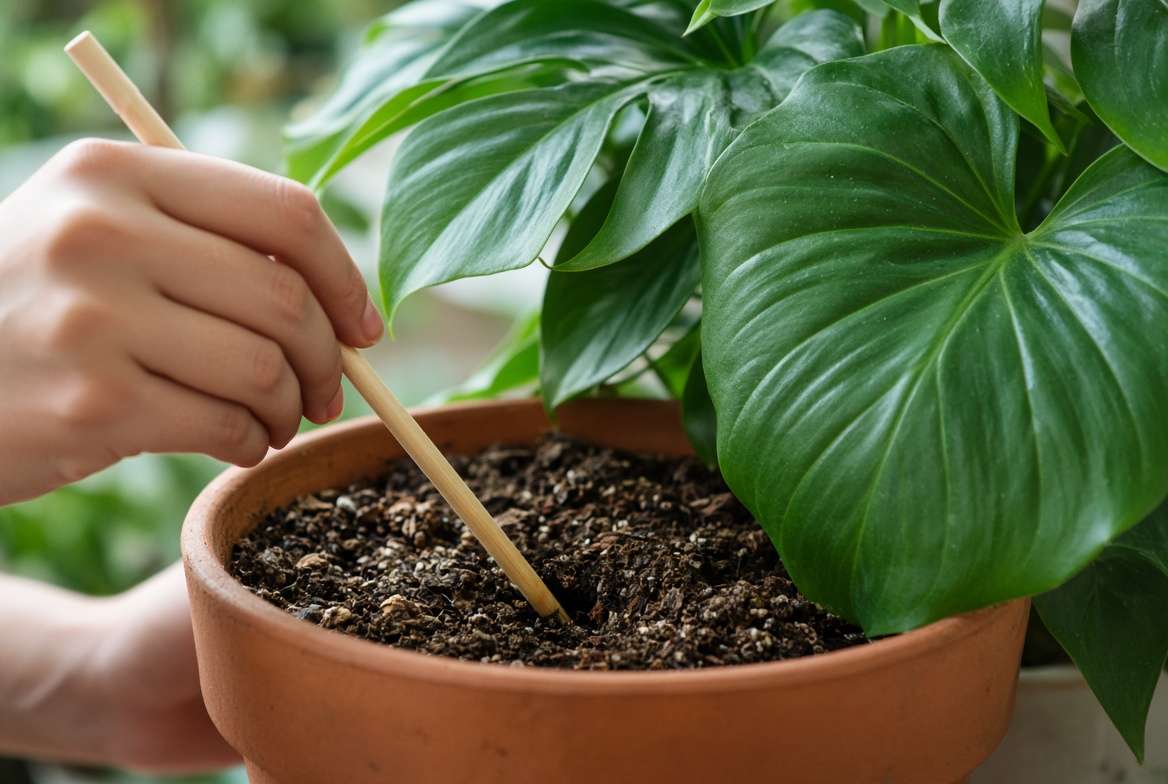
The Chopstick Trick: To test soil moisture deep in a large pot, gently push a plain wooden chopstick down to the bottom. Wait five minutes and pull it out. If the wood is dark and wet, do not water! If it comes out clean and dry, it’s time for a soak.
The Secret to Indoor Humidity 🌫️
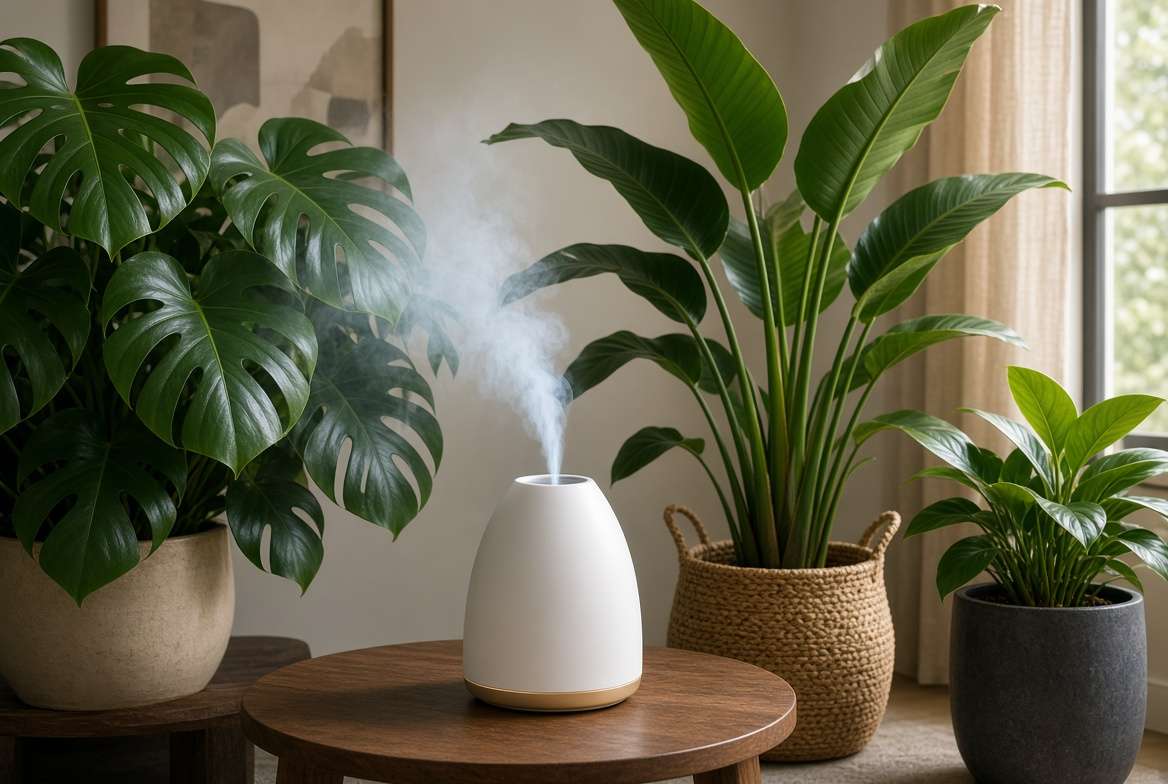
Tropical plants with massive leaves evolved in rainforests with 70–90% ambient humidity. The dry air in our homes (especially when the heater is on) draws moisture out of the broad leaves, resulting in crispy, brown edges.
-
Expert Debunking: Misting your plants with a spray bottle does not effectively raise humidity; it only wets the leaves temporarily, which can actually invite fungal diseases.
-
The Real Solution: Invest in an evaporative or ultrasonic humidifier and place it near your indoor jungle. Alternatively, group your plants closely together so they can share the microclimate of humidity created through their collective transpiration.
Mixing the Ultimate “Chunky” Tropical Soil 🪨
Most commercial potting soils are far too dense for large tropical roots. They compact over time, suffocating the plant. You need a soil mix that drains quickly while retaining just enough moisture. The Expert Recipe:
-
40% High-quality indoor potting soil (the base)
-
30% Orchid bark (provides massive air pockets for roots to breathe)
-
20% Perlite or Pumice (ensures rapid drainage)
-
10% Horticultural charcoal and worm castings (filters impurities and provides natural fertilizer)
Troubleshooting Common Big-Leaf Problems 🚨
Even with the best care, your indoor jungle might occasionally send out an SOS. Here is how to diagnose and fix the most common issues based on visual symptoms.
Why Are My Plant’s Leaf Edges Turning Brown? 🍂
Crispy brown edges are incredibly common on large leaves.
-
Underwatering: If the entire leaf is drooping and the edges are crispy, the plant is too dry.
-
Lack of Humidity: If the soil is adequately moist but the edges are still crisping up, the ambient air is too dry. Add a humidifier.
-
Chemical Burn: If the brown spots have a slight yellow halo around them, your plant might be reacting to the fluoride, salts, or chlorine in tap water. Switch to filtered water.
Yellowing Leaves: Overwatering or Natural Aging? 🟡
A yellow leaf usually induces panic, but context matters.
-
Natural Aging: If just one single leaf at the very bottom of the plant slowly turns yellow and falls off while the rest of the plant is pushing out new growth, this is normal senescence. The plant is shedding old foliage to redirect energy upward.
-
Overwatering: If multiple leaves all over the plant are rapidly turning yellow, and the soil is damp and heavy, you are likely dealing with root rot. Stop watering immediately, check the roots for mushiness, and repot into a chunkier, dry soil mix if necessary.
Keeping Big Leaves Dust-Free and Pest-Free 🧽
Massive leaves collect dust, which acts as a barrier to sunlight and prevents the plant from photosynthesizing efficiently. Furthermore, dry, dusty leaves are a breeding ground for spider mites.
-
DIY Leaf Shine & Pest Preventative: Mix one quart of lukewarm water with one drop of mild dish soap and half a teaspoon of cold-pressed neem oil. Dip a soft microfiber cloth into this mixture and gently wipe down the front and back of your massive leaves every 3-4 weeks. This keeps them brilliantly shiny, allows them to breathe, and naturally repels pests!
Pro Design Tips: Styling Statement Plants in Your Home 🛋️
Now that you know how to keep your tropical giants alive, let’s talk about making them look incredible in your space.
-
Scale and Proportion: Match the plant to the room. A massive, sprawling Thaumatophyllum needs a large, open living room. A tall, sleek Bird of Paradise is perfect for drawing the eye up in a room with vaulted ceilings or next to a narrow bookshelf.
-
The Magic of Cachepots: Never pot a plant directly into a decorative ceramic pot unless it has drainage holes. Instead, keep the plant in its plastic nursery pot (which has great drainage) and slip that plastic pot inside a slightly larger, beautiful decorative pot (a cachepot). When it’s time to water, just lift the plastic pot out!
-
Elevation: If you have a medium-sized tropical plant that you want to feel massive, use a mid-century modern wooden plant stand. Elevating the pot immediately gives the illusion of a much larger, more mature tree.
Frequently Asked Questions (FAQs) 💬
Which large leaf tropical plant is best for low light? If you are dealing with a North-facing window or a dim room, your best bets are the Giant Peace Lily (Spathiphyllum ‘Sensation’) or the Giant Dumb Cane (Dieffenbachia ‘Tropic Snow’). While they prefer brighter light, they are highly adaptable to shadier conditions.
Are large leaf indoor plants safe for cats and dogs? Many tropicals are toxic to pets. The Monstera, Dieffenbachia, Ficus, and Pothos all contain compounds that can cause severe oral irritation or gastrointestinal distress if chewed. If you have “nibblers” at home, opt for pet-safe large plants like the Calathea orbifolia, the Parlor Palm, or the Money Tree (Pachira aquatica).
How fast do large leaf tropicals grow indoors? Growth rates depend entirely on light and temperature. During the spring and summer growing seasons, a well-lit Monstera or Bird of Paradise can push out a massive new leaf every 3 to 4 weeks. During the winter dormancy period, growth will halt entirely. Be sure to use a balanced liquid fertilizer during the active growing season to support those massive leaves!
Conclusion: Ready to Grow Your Indoor Jungle? 💚
Creating a breathtaking, architectural indoor jungle doesn’t require a master’s degree in horticulture or hours of daily maintenance. By intentionally selecting low-maintenance large leaf tropical plants—like the forgiving Monstera, the resilient Rubber Tree, or the dramatic Bird of Paradise—you can transform your home into a lush, air-purifying sanctuary with minimal stress.
Remember, the key to huge, healthy foliage comes down to mimicking their natural environment: provide bright, indirect light, use a chunky soil mix that lets the roots breathe, and practice the “soak and dry” watering method.
Which of these bold botanical giants are you bringing home first to start your indoor jungle? Let me know in the comments below, and if you found this guide helpful, be sure to check out our step-by-step tutorial on mixing the perfect chunky tropical soil! Happy planting! 🌱✨











