
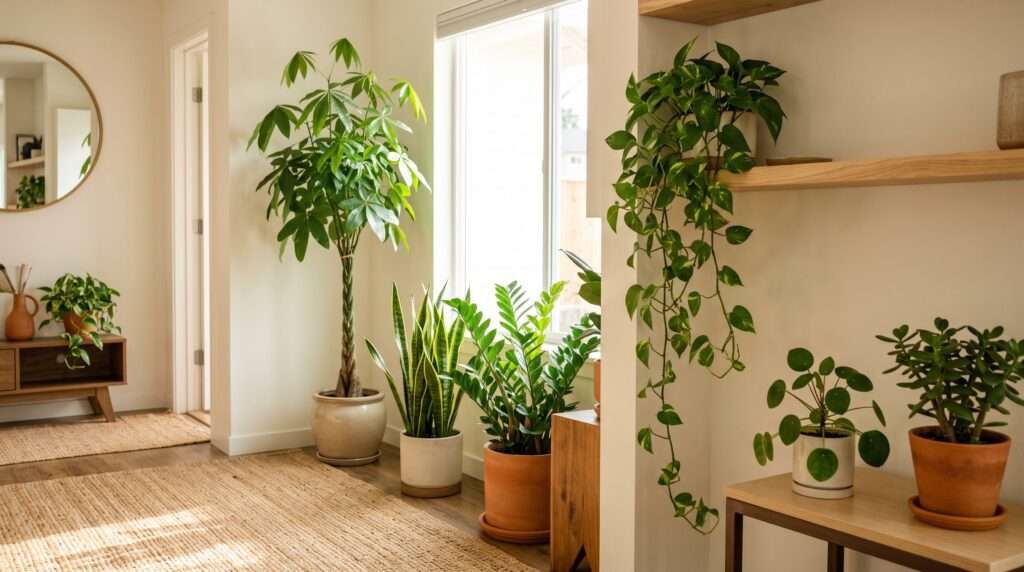
You bring home a gorgeous, lush Money Tree, hoping to attract wealth and prosperity. You place it precisely in the designated “wealth corner” of your living room, eager for the magic to happen. Two weeks later, the leaves are turning yellow and dropping to the floor. What went wrong?
The truth is, mastering plants and feng shui requires much more than just following a spatial map. Good feng shui relies entirely on thriving living energy, not just well-placed objects. Too often, indoor gardening enthusiasts treat their houseplants like furniture, shoving them into dark corners to correct bad energy.
But when botanical health clashes with spatial design, the plant always loses—and so does your home’s energy. As experts in plant care and arboriculture, we know that the ultimate secret to a harmonious home is marrying traditional Bagua (energy map) placement with actual horticultural needs like light, humidity, and proper soil aeration.
Here are the 7 placement secrets to maximize your home’s Chi (energy) while ensuring your indoor jungle stays genuinely healthy, vibrant, and growing. 🌿
Understanding the Connection Between Plants and Feng Shui ☯️🌿
Before moving a single pot, it is crucial to understand why plants are used in feng shui design. They are not merely decorative; they are active, living tools that manipulate the flow of energy in your space.
What Do Plants Represent in Feng Shui? 🌱
In the traditional five-element system of feng shui, living plants represent the Wood element. The Wood element is the embodiment of growth, vitality, flexibility, and upward mobility. Think of a mighty tree pushing its way through the soil toward the sun—that is the exact energy you are inviting into your home.
Furthermore, plants generate positive Chi (life force energy). Through the biological process of photosynthesis and respiration, they literally filter stagnant indoor air, release fresh oxygen, and bring the dynamic energy of nature indoors.
The Golden Rule: Dead Plants = Dead Energy 🥀
Here is the most critical piece of expert advice you will read today: A dying plant is worse for your home’s feng shui than having no plant at all.
When a plant is suffering from root rot, pest infestations, or severe light deprivation, it emits Sha Chi—a negative, draining, and stagnant energy. If you place a sun-loving citrus tree in a pitch-black corner just because it’s your “fame and reputation” sector, the plant will slowly die. Instead of boosting your reputation, it will broadcast a slow, decaying energy into your living space.
💡 Expert Insight: Always prioritize a plant’s biological needs—like indirect sunlight, proper drainage, and optimal NPK nutrients—over strict feng shui mapping. A thriving plant in an “okay” feng shui spot will always generate better energy than a dying plant in the “perfect” feng shui spot.
The 7 Placement Secrets to Attract Positive Energy 🗺️🌟
To create a true skyscraper of positive energy, we need to bridge the gap between spatial harmony and practical plant care. Here are the secrets to placing your plants where they will structurally support your home’s energy while biologically thriving.
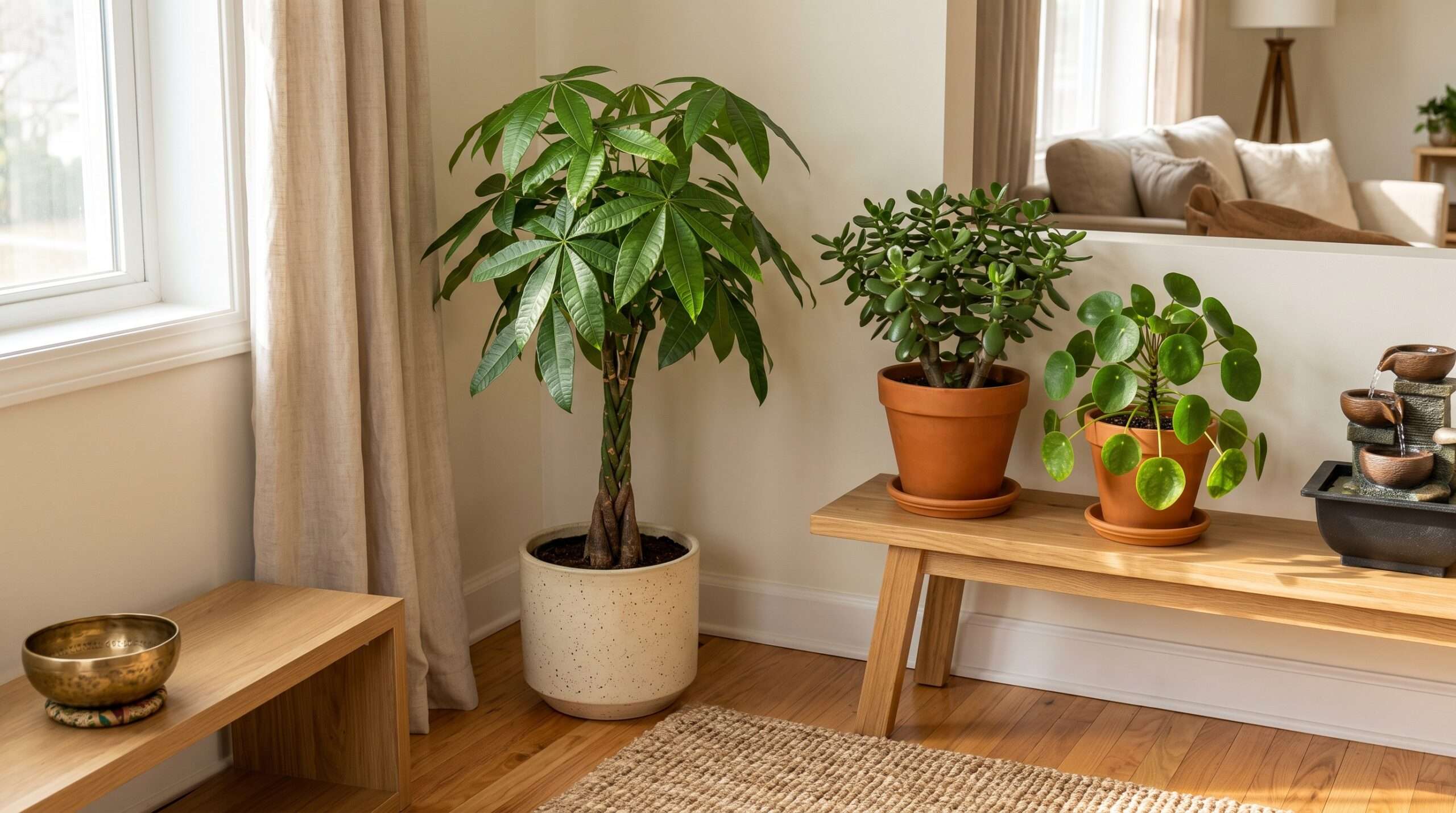
Secret 1: Activate the Wealth Area (Xun) with Upward-Growing Foliage 💰
The Feng Shui Placement: The wealth and prosperity area is located in the far-left corner of your home (or individual room) when looking in from the primary entrance. Activating this area with lush, upward-growing foliage symbolizes your finances growing and multiplying.
The Best Plants:
-
Pachira aquatica (Money Tree)
-
Crassula ovata (Jade Plant)
-
Pilea peperomioides (Chinese Money Plant)
The Plant Care Reality Check: Almost all popular “wealth” plants are either succulents (like the Jade Plant) or tropicals (like the Money Tree). They require bright, indirect light to maintain their compact, bushy shape. If your wealth corner happens to be a dark, windowless nook, do not put a live Jade plant there; it will become leggy and eventually rot from overwatering in low light. The Fix: If your wealth sector lacks natural light, install a high-quality, full-spectrum LED grow light directly above the plant. This not only keeps the plant photosynthesizing beautifully but also adds the Fire element (light), which further activates the energy of prosperity.
Secret 2: Shield Your Entryway to Filter Incoming Energy 🚪
The Feng Shui Placement: The front door is the “Mouth of Chi,” where all energy enters your home. Placing strong, structured plants in the foyer or just inside the entryway helps to filter rushing, chaotic energy from the outside world, slowing it down and purifying it before it enters your living spaces.
The Best Plants:
-
Ficus elastica (Rubber Plant)
-
Sansevieria trifasciata (Snake Plant)
-
Zamioculcas zamiifolia (ZZ Plant)
The Plant Care Reality Check: Entryways are notoriously difficult microclimates for houseplants. They are subject to sudden cold drafts in the winter, blasts of hot air in the summer, and frequently lack large windows. Delicate tropicals will drop their leaves in shock here. The Fix: Choose incredibly hardy species. The Snake Plant and ZZ Plant are drought-tolerant, handle low light exceptionally well, and laugh in the face of drafty doors. The Rubber Plant is excellent if your entryway features a glass door that lets in bright, indirect light.
Secret 3: Soften “Poison Arrows” with Trailing Vines 🏹🌿
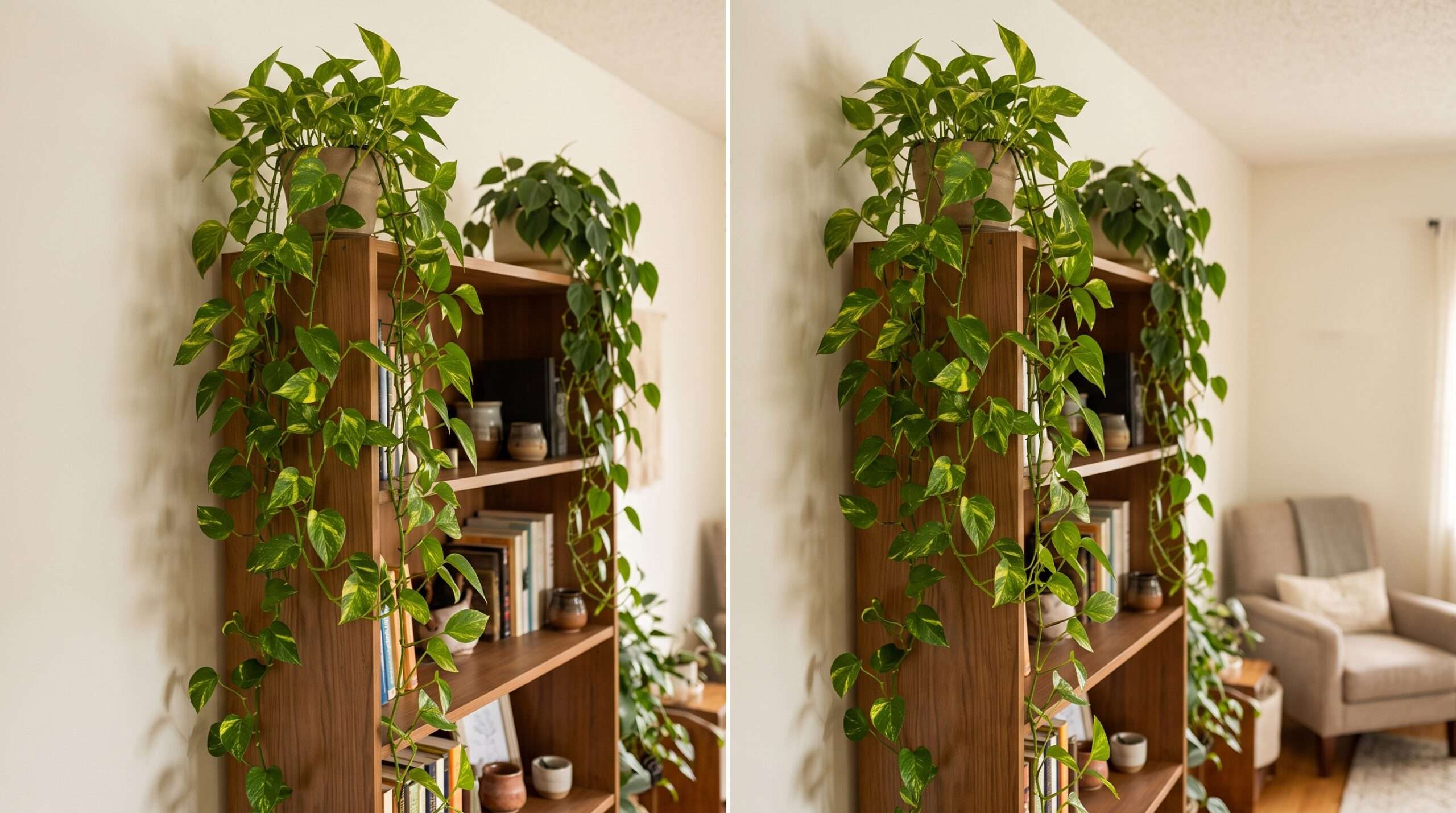
The Feng Shui Placement: In feng shui, sharp corners—such as the edge of a structural pillar, a jutting wall, or a square bookshelf pointing directly at your sofa or bed—create “poison arrows.” These sharp angles direct aggressive, cutting energy into the room. Trailing plants are the perfect cure to soften these harsh lines.
The Best Plants:
-
Epipremnum aureum (Golden Pothos)
-
Philodendron hederaceum (Heartleaf Philodendron)
-
Hedera helix (English Ivy)
The Plant Care Reality Check: Because poison arrows often occur on bookshelves or interior walls, these locations are usually far from windows. Luckily, Pothos and Heartleaf Philodendrons are highly adaptable to low-light conditions. The Fix: When placing trailing vines on high shelves, remember that heat rises. The air near the ceiling will dry out the soil much faster than you think. Use a well-aerating soil mix with plenty of perlite, and check the moisture levels frequently. Water propagation is also a great way to display Pothos cuttings in glass vials along sharp edges, eliminating the mess of soil entirely.
Secret 4: Cultivate Focus in the Home Office (Knowledge Area) 📚
The Feng Shui Placement: Your home office or study space correlates to the Gen (Knowledge and Self-Cultivation) area, located in the front-left sector of your home. To boost concentration, mental clarity, and productivity, this space requires structured, calming energy.
The Best Plants:
-
Dracaena sanderiana (Lucky Bamboo)
-
Zamioculcas zamiifolia (ZZ Plant)
-
Spathiphyllum (Peace Lily)
The Plant Care Reality Check: Lucky Bamboo is a classic office staple, but it is frequently sold in glass vases filled with pebbles and water. Over time, stagnant water leads to bacterial buildup and severe root rot—which instantly converts your positive office energy into draining Sha Chi. The Fix: If you are utilizing water propagation techniques or growing bamboo in water, change the water weekly and rinse the pebbles to maintain oxygenation. If you decide to transition your bamboo to soil, use a highly aerated potting mix. For desk plants, utilizing clear plastic pots inside decorative cachepots is a phenomenal expert trick; it allows you to monitor root health and moisture levels without disturbing the plant, ensuring your knowledge area remains vibrant.
Secret 5: Use Soft, Purifying Leaves in the Bedroom (Yin Energy) 🛏️
The Feng Shui Placement: The bedroom is your sanctuary for rest and romance. It requires soft, restorative Yin energy. Feng shui experts warn against placing massive, overbearing trees or sharp, spiky plants near the bed, as their highly active Yang energy can disrupt sleep.
The Best Plants:
-
Chlorophytum comosum (Spider Plant)
-
Nephrolepis exaltata (Boston Fern)
The Plant Care Reality Check: Many people worry about having plants in the bedroom due to nighttime oxygen consumption. However, certain plants utilize CAM (Crassulacean Acid Metabolism) photosynthesis, meaning they release oxygen at night, purifying the air while you sleep. The Fix: Spider plants are perfect for bedroom hanging baskets. Their soft, cascading leaves gently circulate energy. Plus, they are incredibly easy to multiply. You can practice spider plant pup propagation by snipping off the babies (spiderettes) and rooting them in water or soil. This continuous cycle of new life brings exceptionally fresh, renewing energy to your personal sanctuary.
Secret 6: Create Balance and Symmetry (The Rule of Pairs) ⚖️
The Feng Shui Placement: Symmetry is a foundational pillar of good design and good feng shui. Framing a main doorway, a fireplace, or a large architectural feature with two identical plants creates a powerful threshold of balanced, harmonious energy.
The Best Plants:
-
Ravenea rivularis (Majesty Palm)
-
Strelitzia nicolai (White Bird of Paradise)
The Plant Care Reality Check: Buying two identical plants is easy; keeping them identical is the challenge. If one plant is closer to an AC vent or a sunny window, they will grow at different rates, throwing off the visual symmetry and the energetic balance. The Fix: Rotate your twin plants every two weeks so they receive equal light exposure. To maintain a grounded, earthy feel, plant them in shallow terra cotta planters. Terra cotta is highly porous, wicking away excess moisture and preventing the soil from staying waterlogged, which keeps your large statement plants healthy and symmetrically matched.
Secret 7: Keep Windows Clear for Energy Flow 🪟
The Feng Shui Placement: Windows are the “eyes” of the home. While it is tempting to crowd all your houseplants onto a single windowsill to maximize their sun exposure, blocking a window entirely creates a “jungle block.” This traps energy inside the home, causing the space to feel stagnant, heavy, and claustrophobic.
The Plant Care Reality Check: Plants need light, but they don’t all need to be pressed against the glass. Sunburning is a real threat for tropical understory plants placed in direct south-facing windows. The Fix: Stagger your plant heights. Place sun-loving succulents on the sill, but move indirect-light lovers (like Monstera or Calathea) onto plant stands or side tables a few feet back into the room. This ensures every plant gets the correct light intensity without obstructing your view or blocking the natural flow of energy into the room.
Plants to Avoid in Feng Shui (And How to Fix Them) 🚫🌵
Not all plants bring good vibes. Certain botanical choices can accidentally introduce harsh or dead energy into your carefully curated space.
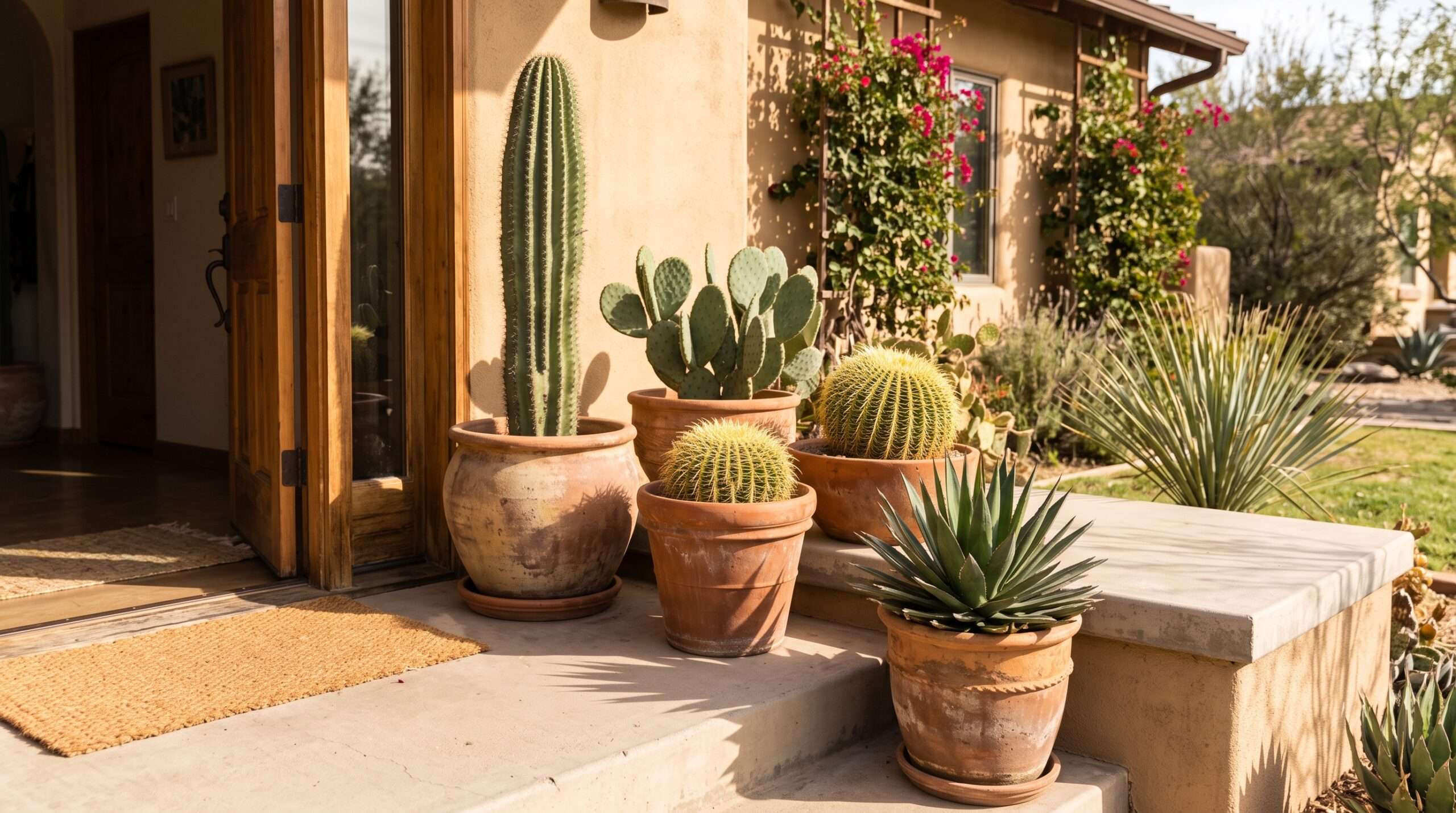
The Spiky Plant Dilemma (Cacti and Agave) 🌵
In feng shui, sharp spines and prickly leaves act as miniature poison arrows, radiating defensive and aggressive energy. You should never place a cactus in a bedroom, living room, or wealth corner, as it creates tension and conflict. The Fix: You don’t have to throw away your beloved cactus collection. Reposition them as “protectors.” Place spiky plants on a sunny front porch, an outdoor balcony, or a windowsill facing a busy street. Here, their defensive energy works for you, pushing negative outside energy away from your home.
Artificial and Dried Plants 🍂
Fake plastic plants represent artificial, stagnant energy. They gather dust and offer no living Chi. Dried flowers, while aesthetically pleasing to some, represent dead, decaying energy—the exact opposite of what you want to attract. The Fix: If you struggle to keep plants alive and usually resort to fakes, opt for near-indestructible live plants instead. The Aspidistra elatior (Cast Iron Plant) thrives in deep shade and requires minimal watering. It brings living energy into your home without the stress of a high-maintenance care routine.
The Feng Shui Plant Placement Chart 📊✨
For quick reference, use this guide to match the right plant to the right room, ensuring both your interior design and your indoor jungle flourish.
Expert Plant Care Tips to Keep Your “Chi” Thriving 💧☀️
To maintain positive energy, your plants must be actively growing. Implement these horticultural best practices to keep the Chi flowing:
-
Dust the Leaves: In feng shui, dust represents neglected areas of your life. Botanically, dust clogs the stomata (pores) on the leaves, blocking photosynthesis. Wipe large leaves down monthly with a damp microfiber cloth.
-
Prune Regularly: Snip off yellowing or brown leaves immediately. In life, holding onto dead weight prevents new opportunities from arriving. For your plant, removing dead foliage redirects the plant’s energy into pushing out healthy new growth.
-
Monitor Soil Chemistry: A plant struggling in depleted soil brings sluggish energy. During the growing season, apply a balanced, water-soluble fertilizer with the correct NPK ratio (Nitrogen for leaves, Phosphorus for roots, Potassium for overall health) to ensure robust, vibrant growth.
-
Repot When Rootbound: A severely rootbound plant represents constricted growth and feeling “stuck” in life. When roots begin circling the bottom of the pot, step up to a container one to two inches larger, ensuring you use a mix that promotes proper soil aeration.
Frequently Asked Questions (FAQs) ❓🌱
Can I put plants in my bathroom for Feng Shui? Yes, absolutely! Bathrooms have a lot of “down the drain” water energy. Lush, humidity-loving plants like Boston Ferns or trailing Pothos are excellent at absorbing this excess moisture and balancing the room’s energy.
Is a Snake Plant good or bad for Feng Shui? It is fantastic for feng shui. While the tips are pointed, they grow straight upward, representing strong, rising energy. Because of its sword-like leaves, it is highly protective and best placed near entryways or large windows to guard the home.
What if my wealth corner has zero natural light? Do not force a high-light plant into a dark corner just because the Bagua map dictates it. If your wealth corner is pitch-black, use a high-quality grow light. If that isn’t possible, use artificial lighting, a mirror, or a water feature to activate the space instead, and keep your living plants where they can naturally thrive.
Growing a Harmonious Home 🏡💚
True feng shui is not a rigid set of rules; it is the art of cultivating a living, breathing ecosystem within your walls. You cannot manifest positive energy, wealth, or health by forcing plants into dark corners where they will ultimately suffer. The real secret to plants and feng shui is synergy: placing the right plant in the right energetic zone only if the lighting, humidity, and airflow allow it to thrive.
Take a walk through your home today. Do you have a dying plant tucked away in a corner? Is there a trailing vine suffocating from root rot on a bookshelf? Relocate them to a better light source, refresh their soil, and watch how quickly the energy in your room—and your life—begins to flourish.











